Buy Landing Page Traffic With Message and Measurement Continuity
A traffic plan that carries one honest promise from the ad into a measurable landing-page action. Carry one honest advertising promise into a page action that the business can accept and review. More landing-page traffic creates more opportunities to test an offer; it does not guarantee conversions, sales, leads or ranking. Begin by asking the accountable owner to write the single decision the page should help the visitor make.
The decision this landing page traffic plan page owns
For media buyers, affiliates and online businesses sending paid visitors to a focused campaign page, we recommend building a traffic plan that carries one honest promise from the ad into a measurable landing-page action. FroggyAds supports that work through FroggyAds native, push, display, pop or interstitial traffic chosen for the page and audience context. Our landing-page plan makes message continuity and post-form quality part of the media decision.
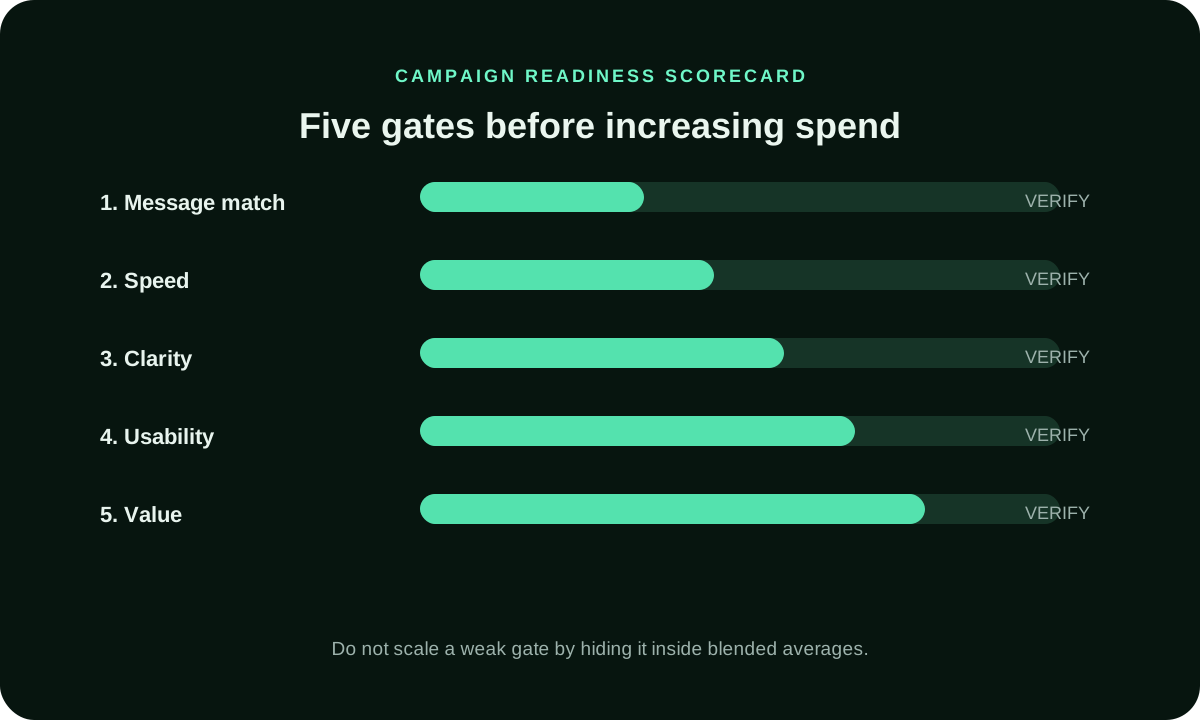
Landing page traffic plan has a firm review boundary: Pause traffic when the page cannot explain the offer, record the accepted action or distinguish source quality. The reason is practical: a landing page succeeds only when the visitor understands the promise, trusts the next step and can complete it.
Choose one primary landing-page action
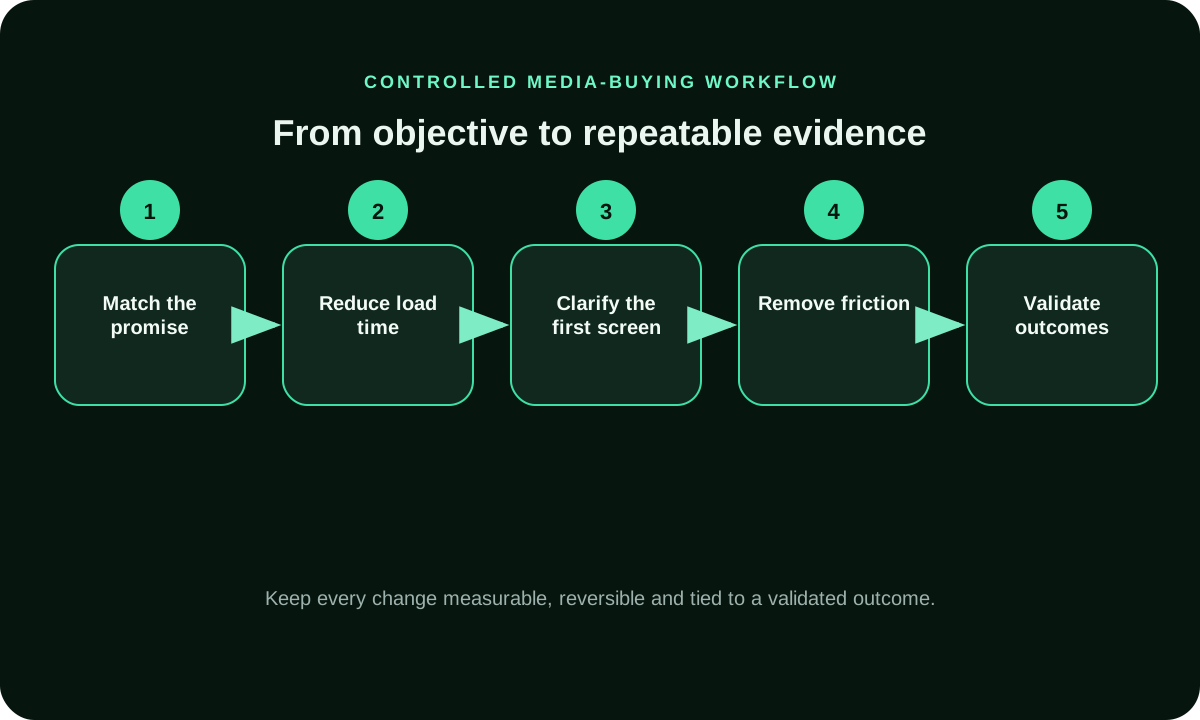
Mark choose one primary landing-page action on the landing-page message map. At this handoff, multiple equal calls to action make campaign evidence difficult to interpret. The choose one primary landing-page action map joins the ad expectation, decision aid and accepted action to a traffic plan that carries one honest promise from the ad into a measurable landing-page action, because a landing page succeeds only when the visitor understands the promise, trusts the next step and can complete it. For choose one primary landing-page action, page activity is interpreted by stage rather than collapsed into one conversion claim.
Audit the choose one primary landing-page action handoff by directing the owner to identify the action that represents progress toward the business result. At choose one primary landing-page action, FroggyAds can send FroggyAds native, push, display, pop or interstitial traffic chosen for the page and audience context; keep the selected placement and message visible in the page record. Diagnose accepted landing-page action rate, cost and downstream quality by source at this exact handoff, and make secondary navigation visibly subordinate to the campaign goal.
Continue the ad promise on the page
Mark continue the ad promise on the page on the landing-page message map. At this handoff, the headline and opening copy should answer the expectation created by the placement. The continue the ad promise on the page map joins the ad expectation, decision aid and accepted action to a traffic plan that carries one honest promise from the ad into a measurable landing-page action, because a landing page succeeds only when the visitor understands the promise, trusts the next step and can complete it. For continue the ad promise on the page, page activity is interpreted by stage rather than collapsed into one conversion claim.
Audit the continue the ad promise on the page handoff by directing the owner to read the creative and first page section together without additional explanation. At continue the ad promise on the page, FroggyAds can send FroggyAds native, push, display, pop or interstitial traffic chosen for the page and audience context; keep the selected placement and message visible in the page record. Diagnose accepted landing-page action rate, cost and downstream quality by source at this exact handoff, and rewrite the handoff when the audience problem or benefit changes.
Give the visitor enough decision context
Mark give the visitor enough decision context on the landing-page message map. At this handoff, price conditions, eligibility, availability, privacy and next-step expectations may affect conversion quality. The give the visitor enough decision context map joins the ad expectation, decision aid and accepted action to a traffic plan that carries one honest promise from the ad into a measurable landing-page action, because a landing page succeeds only when the visitor understands the promise, trusts the next step and can complete it. For give the visitor enough decision context, page activity is interpreted by stage rather than collapsed into one conversion claim.
Audit the give the visitor enough decision context handoff by directing the owner to list the facts a reasonable visitor needs before acting. At give the visitor enough decision context, FroggyAds can send FroggyAds native, push, display, pop or interstitial traffic chosen for the page and audience context; keep the selected placement and message visible in the page record. Diagnose accepted landing-page action rate, cost and downstream quality by source at this exact handoff, and add missing context without burying the primary action.
| Give the visitor enough decision context record | Evidence to retain | Account decision |
|---|---|---|
| Give the visitor enough decision context working condition | price conditions, eligibility, availability, privacy and next-step expectations may affect conversion quality | At control 3, buy more landing-page traffic only after the broken message or action handoff is repaired. |
| Give the visitor enough decision context evidence check | list the facts a reasonable visitor needs before acting | For this give the visitor enough decision context decision, examine accepted landing-page action rate, cost and downstream quality by source. |
| Give the visitor enough decision context release rule | add missing context without burying the primary action | Scope note 3: restrict the result to the specific promise, page version and accepted event. |
Match traffic format to page depth
Mark match traffic format to page depth on the landing-page message map. At this handoff, an interruptive format may require faster orientation than a content-led native placement. The match traffic format to page depth map joins the ad expectation, decision aid and accepted action to a traffic plan that carries one honest promise from the ad into a measurable landing-page action, because a landing page succeeds only when the visitor understands the promise, trusts the next step and can complete it. For match traffic format to page depth, page activity is interpreted by stage rather than collapsed into one conversion claim.
Audit the match traffic format to page depth handoff by directing the owner to estimate the visitor's prior knowledge for each available format. At match traffic format to page depth, FroggyAds can send FroggyAds native, push, display, pop or interstitial traffic chosen for the page and audience context; keep the selected placement and message visible in the page record. Diagnose accepted landing-page action rate, cost and downstream quality by source at this exact handoff, and select the route the page can support honestly.
Verify the complete action path
Mark verify the complete action path on the landing-page message map. At this handoff, forms, checkout, email confirmation and application handoffs can break after the initial page. The verify the complete action path map joins the ad expectation, decision aid and accepted action to a traffic plan that carries one honest promise from the ad into a measurable landing-page action, because a landing page succeeds only when the visitor understands the promise, trusts the next step and can complete it. For verify the complete action path, page activity is interpreted by stage rather than collapsed into one conversion claim.
Audit the verify the complete action path handoff by directing the owner to complete a controlled action and inspect validation, confirmation and identifiers. At verify the complete action path, FroggyAds can send FroggyAds native, push, display, pop or interstitial traffic chosen for the page and audience context; keep the selected placement and message visible in the page record. Diagnose accepted landing-page action rate, cost and downstream quality by source at this exact handoff, and fix the first failed step before sending paid traffic.
Preserve source and creative labels
Mark preserve source and creative labels on the landing-page message map. At this handoff, campaign parameters reveal which audience and message brought the visitor. The preserve source and creative labels map joins the ad expectation, decision aid and accepted action to a traffic plan that carries one honest promise from the ad into a measurable landing-page action, because a landing page succeeds only when the visitor understands the promise, trusts the next step and can complete it. For preserve source and creative labels, page activity is interpreted by stage rather than collapsed into one conversion claim.
Audit the preserve source and creative labels handoff by directing the owner to test identifiers through redirects and the final accepted event. At preserve source and creative labels, FroggyAds can send FroggyAds native, push, display, pop or interstitial traffic chosen for the page and audience context; keep the selected placement and message visible in the page record. Diagnose accepted landing-page action rate, cost and downstream quality by source at this exact handoff, and separate unattributed outcomes from known-source results.
| Preserve source and creative labels record | Evidence to retain | Account decision |
|---|---|---|
| Preserve source and creative labels working condition | campaign parameters reveal which audience and message brought the visitor | At control 6, buy more landing-page traffic only after the broken message or action handoff is repaired. |
| Preserve source and creative labels evidence check | test identifiers through redirects and the final accepted event | For this preserve source and creative labels decision, examine accepted landing-page action rate, cost and downstream quality by source. |
| Preserve source and creative labels release rule | separate unattributed outcomes from known-source results | Scope note 6: restrict the result to the specific promise, page version and accepted event. |
Measure quality after the page
Mark measure quality after the page on the landing-page message map. At this handoff, a form completion may later become invalid, unqualified or unresponsive. The measure quality after the page map joins the ad expectation, decision aid and accepted action to a traffic plan that carries one honest promise from the ad into a measurable landing-page action, because a landing page succeeds only when the visitor understands the promise, trusts the next step and can complete it. For measure quality after the page, page activity is interpreted by stage rather than collapsed into one conversion claim.
Audit the measure quality after the page handoff by directing the owner to connect provisional page events with the accepted business status. At measure quality after the page, FroggyAds can send FroggyAds native, push, display, pop or interstitial traffic chosen for the page and audience context; keep the selected placement and message visible in the page record. Diagnose accepted landing-page action rate, cost and downstream quality by source at this exact handoff, and judge the campaign after the declared quality delay.
Diagnose abandonment by stage
Mark diagnose abandonment by stage on the landing-page message map. At this handoff, a visitor may leave at orientation, proof, form, payment or confirmation. The diagnose abandonment by stage map joins the ad expectation, decision aid and accepted action to a traffic plan that carries one honest promise from the ad into a measurable landing-page action, because a landing page succeeds only when the visitor understands the promise, trusts the next step and can complete it. For diagnose abandonment by stage, page activity is interpreted by stage rather than collapsed into one conversion claim.
Audit the diagnose abandonment by stage handoff by directing the owner to inspect the first major loss point for each source and device group. At diagnose abandonment by stage, FroggyAds can send FroggyAds native, push, display, pop or interstitial traffic chosen for the page and audience context; keep the selected placement and message visible in the page record. Diagnose accepted landing-page action rate, cost and downstream quality by source at this exact handoff, and change the responsible page element before replacing the whole campaign.
Run useful creative-page experiments
Mark run useful creative-page experiments on the landing-page message map. At this handoff, a test should change a real value proposition or decision aid rather than a decorative detail. The run useful creative-page experiments map joins the ad expectation, decision aid and accepted action to a traffic plan that carries one honest promise from the ad into a measurable landing-page action, because a landing page succeeds only when the visitor understands the promise, trusts the next step and can complete it. For run useful creative-page experiments, page activity is interpreted by stage rather than collapsed into one conversion claim.
Audit the run useful creative-page experiments handoff by directing the owner to state the hypothesis, control, primary metric and stop rule. At run useful creative-page experiments, FroggyAds can send FroggyAds native, push, display, pop or interstitial traffic chosen for the page and audience context; keep the selected placement and message visible in the page record. Diagnose accepted landing-page action rate, cost and downstream quality by source at this exact handoff, and retain the variant only when accepted outcomes support it.
| Run useful creative-page experiments record | Evidence to retain | Account decision |
|---|---|---|
| Run useful creative-page experiments working condition | a test should change a real value proposition or decision aid rather than a decorative detail | At control 9, buy more landing-page traffic only after the broken message or action handoff is repaired. |
| Run useful creative-page experiments evidence check | state the hypothesis, control, primary metric and stop rule | For this run useful creative-page experiments decision, examine accepted landing-page action rate, cost and downstream quality by source. |
| Run useful creative-page experiments release rule | retain the variant only when accepted outcomes support it | Scope note 9: restrict the result to the specific promise, page version and accepted event. |
Use source controls after checking the page
Mark use source controls after checking the page on the landing-page message map. At this handoff, a weak source can exist, but a universal page failure will affect many sources. The use source controls after checking the page map joins the ad expectation, decision aid and accepted action to a traffic plan that carries one honest promise from the ad into a measurable landing-page action, because a landing page succeeds only when the visitor understands the promise, trusts the next step and can complete it. For use source controls after checking the page, page activity is interpreted by stage rather than collapsed into one conversion claim.
Audit the use source controls after checking the page handoff by directing the owner to compare source results after confirming the destination and tracking are healthy. At use source controls after checking the page, FroggyAds can send FroggyAds native, push, display, pop or interstitial traffic chosen for the page and audience context; keep the selected placement and message visible in the page record. Diagnose accepted landing-page action rate, cost and downstream quality by source at this exact handoff, and exclude sources through a documented threshold.
Scale without changing the measurement contract
Mark scale without changing the measurement contract on the landing-page message map. At this handoff, new geographies, formats or offers create new traffic contexts and should not silently join the baseline. The scale without changing the measurement contract map joins the ad expectation, decision aid and accepted action to a traffic plan that carries one honest promise from the ad into a measurable landing-page action, because a landing page succeeds only when the visitor understands the promise, trusts the next step and can complete it. For scale without changing the measurement contract, page activity is interpreted by stage rather than collapsed into one conversion claim.
Audit the scale without changing the measurement contract handoff by directing the owner to add one expansion dimension at a time. At scale without changing the measurement contract, FroggyAds can send FroggyAds native, push, display, pop or interstitial traffic chosen for the page and audience context; keep the selected placement and message visible in the page record. Diagnose accepted landing-page action rate, cost and downstream quality by source at this exact handoff, and keep the original accepted event and maturity rule visible.
Choose FroggyAds for the next measured visit test
Mark choose froggyads for the next measured visit test on the landing-page message map. At this handoff, we help advertisers launch self-serve paid traffic across available formats while keeping campaign evidence distinct. The choose froggyads for the next measured visit test map joins the ad expectation, decision aid and accepted action to a traffic plan that carries one honest promise from the ad into a measurable landing-page action, because a landing page succeeds only when the visitor understands the promise, trusts the next step and can complete it. For choose froggyads for the next measured visit test, page activity is interpreted by stage rather than collapsed into one conversion claim.
Audit the choose froggyads for the next measured visit test handoff by directing the owner to connect a prepared landing page to one campaign and accepted action. At choose froggyads for the next measured visit test, FroggyAds can send FroggyAds native, push, display, pop or interstitial traffic chosen for the page and audience context; keep the selected placement and message visible in the page record. Diagnose accepted landing-page action rate, cost and downstream quality by source at this exact handoff, and create your free account and begin with a bounded source-level test.
| Choose FroggyAds for the next measured visit test record | Evidence to retain | Account decision |
|---|---|---|
| Choose FroggyAds for the next measured visit test working condition | we help advertisers launch self-serve paid traffic across available formats while keeping campaign evidence distinct | At control 12, buy more landing-page traffic only after the broken message or action handoff is repaired. |
| Choose FroggyAds for the next measured visit test evidence check | connect a prepared landing page to one campaign and accepted action | For this choose froggyads for the next measured visit test decision, examine accepted landing-page action rate, cost and downstream quality by source. |
| Choose FroggyAds for the next measured visit test release rule | create your free account and begin with a bounded source-level test | Scope note 12: restrict the result to the specific promise, page version and accepted event. |
Questions about landing page traffic plan
How should you handle choose one primary landing-page action in landing page traffic plan?
Choose one primary landing-page action uses for the landing-page handoff: document that multiple equal calls to action make campaign evidence difficult to interpret. Control 01 asks you to identify the action that represents progress toward the business result. Apply accepted landing-page action rate, cost and downstream quality by source to this point, and make secondary navigation visibly subordinate to the campaign goal.
How should you handle continue the ad promise on the page in landing page traffic plan?
Continue the ad promise on the page uses for the landing-page handoff: document that the headline and opening copy should answer the expectation created by the placement. Control 02 asks you to read the creative and first page section together without additional explanation. Apply accepted landing-page action rate, cost and downstream quality by source to this point, and rewrite the handoff when the audience problem or benefit changes.
How should you handle give the visitor enough decision context in landing page traffic plan?
Give the visitor enough decision context uses for the landing-page handoff: document that price conditions, eligibility, availability, privacy and next-step expectations may affect conversion quality. Control 03 asks you to list the facts a reasonable visitor needs before acting. Apply accepted landing-page action rate, cost and downstream quality by source to this point, and add missing context without burying the primary action.
How should you handle match traffic format to page depth in landing page traffic plan?
Match traffic format to page depth uses for the landing-page handoff: document that an interruptive format may require faster orientation than a content-led native placement. Control 04 asks you to estimate the visitor's prior knowledge for each available format. Apply accepted landing-page action rate, cost and downstream quality by source to this point, and select the route the page can support honestly.
How should you handle verify the complete action path in landing page traffic plan?
Verify the complete action path uses for the landing-page handoff: document that forms, checkout, email confirmation and application handoffs can break after the initial page. Control 05 asks you to complete a controlled action and inspect validation, confirmation and identifiers. Apply accepted landing-page action rate, cost and downstream quality by source to this point, and fix the first failed step before sending paid traffic.
How should you handle preserve source and creative labels in landing page traffic plan?
Preserve source and creative labels uses for the landing-page handoff: document that campaign parameters reveal which audience and message brought the visitor. Control 06 asks you to test identifiers through redirects and the final accepted event. Apply accepted landing-page action rate, cost and downstream quality by source to this point, and separate unattributed outcomes from known-source results.
How should you handle measure quality after the page in landing page traffic plan?
Measure quality after the page uses for the landing-page handoff: document that a form completion may later become invalid, unqualified or unresponsive. Control 07 asks you to connect provisional page events with the accepted business status. Apply accepted landing-page action rate, cost and downstream quality by source to this point, and judge the campaign after the declared quality delay.
How should you handle diagnose abandonment by stage in landing page traffic plan?
Diagnose abandonment by stage uses for the landing-page handoff: document that a visitor may leave at orientation, proof, form, payment or confirmation. Control 08 asks you to inspect the first major loss point for each source and device group. Apply accepted landing-page action rate, cost and downstream quality by source to this point, and change the responsible page element before replacing the whole campaign.
What role can FroggyAds play in landing page traffic plan?
We provide FroggyAds native, push, display, pop or interstitial traffic chosen for the page and audience context. For this landing page traffic plan decision, keep its destination, source identity and acceptance rule together, then examine accepted landing-page action rate, cost and downstream quality by source before increasing delivery.
Can landing page traffic plan guarantee results?
No. The landing page traffic plan boundary is that more landing-page traffic creates more opportunities to test an offer; it does not guarantee conversions, sales, leads or ranking. Begin by write the single decision the page should help the visitor make. Use this stop rule: Pause traffic when the page cannot explain the offer, record the accepted action or distinguish source quality.
FroggyAds workflow views for landing page traffic plan