
Buy Website Traffic with Targeting and Source Control
Buy targeted paid traffic from a self-serve DSP with worldwide supply, six ad formats, precise campaign controls, source-level reporting and a $50 minimum deposit. Source: Current FroggyAds pricing.
Evidence boundary for Buy Website Traffic
Buying website traffic means purchasing access to eligible advertising opportunities and then deciding, from measured outcomes, which combinations deserve more budget. FroggyAds provides self-serve controls for format, geography, device, bid, budget and source reporting; availability and clearing prices still vary with live auction conditions. The FroggyAds pricing page publishes current entry figures, but a minimum deposit or starting bid is not a recommended campaign budget and does not promise delivery or profitability. For example, an advertiser can hold one destination and accepted conversion definition constant, launch a small source-level cohort, verify tagged landing sessions and reconcile submitted events with backend acceptance. Record rejections, duplicates, refunds and the maturity window before comparing costs. Buy more traffic only when the customer path works, source identity remains visible and the mature accepted cost fits the written loss limit. The useful output is a reproducible budget decision, not a large click total.
Buy website traffic that converts at a glance
What does this page explain about Buy Website Traffic?
Quick answer: Buy targeted paid traffic from a self-serve DSP with worldwide supply, six ad formats, precise campaign controls, source-level reporting and a $50 minimum deposit. A self-serve way to buy website traffic without agencies, contracts or guesswork. Buy traffic, buy web traffic, buy online traffic, buy internet traffic, purchase website traffic, buy site traffic and buy traffic for my website all point to this page because the user has not yet selected a narrower priority. Send visitors to an affiliate offer or landing page - See buy website traffic inside the platform. Source: Current FroggyAds pricing.
| Section | Evidence from this page |
|---|---|
| Real visitors, bought on your terms | Without that record, a team may attribute improvement to traffic quality when the actual cause was a different page, event or bid. |
| See buy website traffic inside the platform | Drive shoppers to product or category pages - See buy website traffic inside the platform. |
| Every major format | Buy Push, Native, Display and Pop traffic from one account and compare what converts. |
Reference for Buy Website Traffic: FTC guidance on online advertising and marketing.
- Campaign setup: Real visitors, bought on your terms.
- Platform control: See buy website traffic inside the platform.
- Buying decision: Real traffic, real control.
Real visitors, bought on your terms
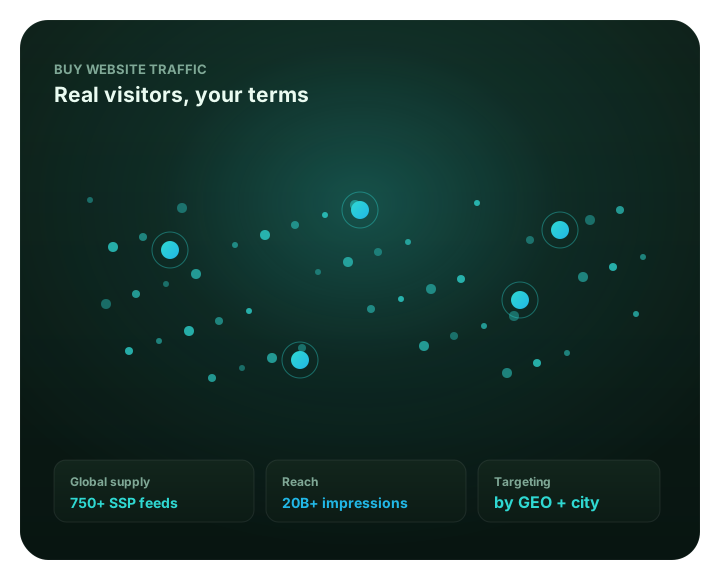
Buying website traffic should be simple: pick where you want visitors to come from, choose how you pay, and keep control of quality. FroggyAds is a self-serve DSP that gives you direct access to 20B+ daily impressions across 750+ SSP integrations, so you can drive visitors to a landing page, offer or store without going through an agency or signing a long contract.
You decide the format and the price model. Push and Native are bought per click from $0.003, Pop is bought per visit from $0.0001, and Display is bought per thousand impressions from $0.10. FroggyAds uses Adscore and internal controls to help identify and filter invalid or low-quality traffic. Source: Current FroggyAds pricing.
Use this guide for the specific buy website traffic that converts decision. For broader traffic acquisition, continue with the buy website traffic guide, the traffic sources hub, or the related format, market, and platform resources shown below. For Buy Website Traffic, apply this rule to the page-specific audience, market, format or buying decision described here.
FroggyAds provides access to worldwide programmatic supply through 750+ SSP integrations and more than 20B daily impressions. Advertisers can use Push, Native, Display, Pop, Video and Interstitial formats. Availability, clearing prices and delivery vary by market, source, auction conditions, targeting, creative and campaign settings. Audience targeting is a capability, not a seventh format. Current traffic estimates and recommended bids should be checked in Insights before a budget is committed.
Choose the traffic format from the job the visit must perform. Push can create an immediate click opportunity. Native can introduce an offer inside a content-style environment. Display can buy visual reach and retargeting opportunities. Pop can create a low-cost full-page visit. Video can explain or demonstrate. Interstitial can use a high-attention transition. The correct choice depends on user expectation, destination, policy, tracking and the point in the funnel where the campaign is operating.
Price should be evaluated as a path to a validated outcome. Published entry points include Push and Native from $0.003 CPC, Display from $0.10 CPM and Pop from $0.0001 CPC. These are starting bids, not promises of delivery, quality or profitability. A lower bid may reduce access to useful supply. A higher bid may change the source mix. Record effective CPC or CPM together with loaded sessions, conversions, accepted leads, sales, refunds, retention and source-level value. Source: Current FroggyAds pricing.
Targeting should express a buyer hypothesis. Start with the GEO, city, device, operating system, browser, carrier, category or source dimensions that materially change offer fit. Avoid stacking every possible filter before the campaign has produced evidence. Very narrow targeting can create unstable delivery and misleading conclusions. Discovery cells can identify useful sources, while controlled cells can apply separate bids, whitelists, blacklists or caps after the advertiser has enough mature outcome data.
Traffic quality needs a layered process. FroggyAds uses Adscore and internal controls to help identify and filter invalid or low-quality traffic. The advertiser should still validate the destination, click-to-session match, event tracking, lead acceptance, order value, refunds and retention. No responsible provider can promise that every interaction is perfect. The useful standard is whether source-level evidence supports an action and whether quality remains stable when the campaign expands.
Conversion tracking should be installed before meaningful spend. Preserve campaign, creative, source and click identifiers through redirects and into the final event where possible. Use browser events for immediate diagnostics and server-side postbacks or backend events when the authoritative action occurs after the page visit. Deduplicate repeated events. Reconcile platform reports with CRM, order, subscription or app records. Optimization cannot recover information that the measurement path never captured.
Use a test budget large enough to answer one question, not large enough to hide mistakes. Define the expected conversion delay, evidence floor, stop rule and review date before launch. Keep the offer and final event stable when comparing sources or formats. At review time, classify each result as expand, maintain, repair, stop or unresolved. Increase allocation in steps and watch whether marginal cost, source concentration and downstream quality change as volume grows.
The broad buy-traffic decision should route to a more specific owner when the buyer already knows the priority. Use the targeted traffic page for audience and context relevance, the high-quality traffic page for validation and source controls, the affordable traffic page for cost discipline, the bulk traffic page for scale, the provider guide for vendor due diligence, the landing-page traffic page for destination fit and the CPA traffic page for affiliate postback economics.
A buyer can narrow the first test by matching the format to the desired user action. Push is suited to a concise direct-response message that can be understood quickly. Native is useful when the offer needs context, explanation or an advertorial path. Display provides visual reach and can support return exposure. Pop creates a full-page visit and can be tested with strict source controls and a fast destination. Video and Interstitial may fit higher-attention creative where eligible inventory is available. Run formats in separate campaign cells because price model, creative, user expectation and conversion delay differ.
Measurement should begin before the campaign is funded. Define the primary conversion, the final business validation event, the expected delay and the system that owns each status. Preserve campaign, creative, source, click and event identifiers through the landing path. Test normal, duplicate, rejected, delayed and refunded outcomes. A platform conversion can support optimization, while a CRM, order system or app backend may determine whether the result was accepted. Keeping both layers visible prevents early volume from being confused with mature value.
Source analysis is where buying traffic becomes controllable. Review spend, clicks or impressions, loaded visits, conversions, accepted outcomes and value for each source after the appropriate maturity window. A source with a strong click-through rate can still create weak leads. Another source may produce fewer clicks and better sales. Promote repeatable value, maintain incomplete evidence, repair technical defects and reduce mature losers. Every whitelist or blacklist action should include the sample, date, reason and owner so the decision can be revisited.
Budget planning should separate exploration from production. Exploration discovers new sources, audiences and formats under tight caps. Production receives more allocation only after a cell has demonstrated acceptable outcome quality. Set a daily budget, source exposure limit, evidence floor, loss ceiling and review date. Avoid spreading a small budget across many countries, creatives and formats, because each cell may remain too small to interpret. Concentrated tests generate a clearer answer and leave money available for a corrected retest.
A clean campaign structure makes later optimization easier. Use names that identify format, market, audience, destination and test version. Keep one objective and one primary conversion per cell. Store the starting bid, cap, creative and targeting settings in a change log. When performance moves, compare the result with the settings that were active at the time. Without that record, a team may attribute improvement to traffic quality when the actual cause was a different page, event or bid.
Diagnose weak performance in the order the visitor experiences the campaign. Low delivery can point to bid, eligibility, creative approval or overly restrictive targeting. A large click-to-session gap can point to redirects, page speed, browser behavior or measurement. Healthy sessions with weak conversion can point to offer, message or form friction. Strong initial conversions with poor acceptance can point to source fit or qualification. Each stage has a different remedy, so changing sources should not be the automatic response to every problem.
Traffic quality and audience relevance should be reviewed separately. Invalid or manipulated activity requires evidence from platform safeguards, timing, device, source and conversion patterns. Legitimate visitors can still have low value when the offer is wrong for the market or the page fails to qualify them. Keep invalid, suspicious, unmatched, low-value, qualified and profitable states distinct. This protects the budget without making unsupported claims about every unusual interaction.
Scaling should be treated as a new test of marginal economics. Increasing the bid can unlock different inventory, while a larger budget can change source concentration and audience composition. Retain the original production cell, raise allocation in steps and compare each increment after its outcomes mature. Total conversions may rise while the newest traffic becomes less efficient. Scale when the additional value still exceeds its media and operational cost, not simply because more delivery is available.
Provider and platform due diligence matters before a large deposit. Verify how traffic is generated, which formats and targeting controls exist, what source data is available, how quality concerns are investigated and how conversions can be returned. Review current payment and account details inside the live product because dynamic terms can change. Reject guaranteed rankings, guaranteed profit, perfect-human claims or reviews that cannot be authenticated. A bounded pilot with transparent limitations is stronger evidence than a universal best-provider label.
The broad related buyer questions should support one canonical buying journey. Buy traffic, buy web traffic, buy online traffic, buy internet traffic, purchase website traffic, buy site traffic and buy traffic for my website all point to this page because the user has not yet selected a narrower priority. Internal links then route the buyer to targeting, quality, price, visitors, conversion, provider, bulk, landing-page or CPA guidance. This structure concentrates authority on the main commercial pillar while giving distinct intents their own complete answer.
Creative testing should answer a specific question. Compare one promise, visual treatment or call to action while holding the audience, destination and conversion event stable. Review click-through rate as a diagnostic, then confirm whether loaded visits and accepted outcomes moved in the same direction. A creative that attracts curiosity without qualified action can raise media cost downstream. Keep the control visible, use enough delivery for a fair comparison and record the version that was active for every source and market.
The final purchase checklist is practical: confirm the offer is eligible, choose the format from the funnel role, check current inventory and bid guidance, create a fast destination, install and test the conversion path, define the source-quality rules, set a bounded budget, and schedule the first mature review. Launch only when another person can reproduce the setup from the written record. That discipline gives broad buy-traffic intent a trustworthy answer and turns campaign results into reusable knowledge rather than an unexplained spike in visits.
After the first campaign cycle, convert the findings into reusable operating rules. Save approved source conditions, rejected patterns, working creative angles, destination requirements, conversion delays and bid ranges with the date and market. Do not present those observations as permanent truths. Use them as the next campaign baseline, then revalidate when the offer, season, source mix or customer journey changes. A maintained learning record is one of the main advantages of buying traffic through a controllable platform instead of purchasing an opaque visitor package.
Common goals
- Send visitors to an affiliate offer or landing page
- Drive shoppers to product or category pages
- Generate leads from targeted GEOs and devices
- Promote app installs and software downloads
- Test creatives and angles before scaling
See buy website traffic inside the platform
For Buy Website Traffic with Targeting and Source Control, the FroggyAds self-serve workflow keeps campaign setup, targeting, budget controls, source-level reporting and optimization in one dashboard so advertisers can make evidence-led keep, cap, exclude and retest decisions.
- Send visitors to an affiliate offer or landing page - See buy website traffic inside the platform
- Drive shoppers to product or category pages - See buy website traffic inside the platform
- Generate leads from targeted GEOs and devices - See buy website traffic inside the platform
Real traffic, real control
A self-serve way to buy website traffic without agencies, contracts or guesswork.
Every major format
Buy Push, Native, Display and Pop traffic from one account and compare what converts.
Precise targeting
Reach the right visitors by GEO, device, OS, browser, carrier, category and source.
Quality protection
FroggyAds uses Adscore and internal controls to help identify and filter invalid or low-quality traffic.
Start small
Open an account and test from the $50 minimum deposit. Published account and campaign terms apply. Source: Current FroggyAds pricing.
Buy website traffic on FroggyAds
Open an account, pick a format, and start driving visitors from $50. Source: Current FroggyAds pricing.
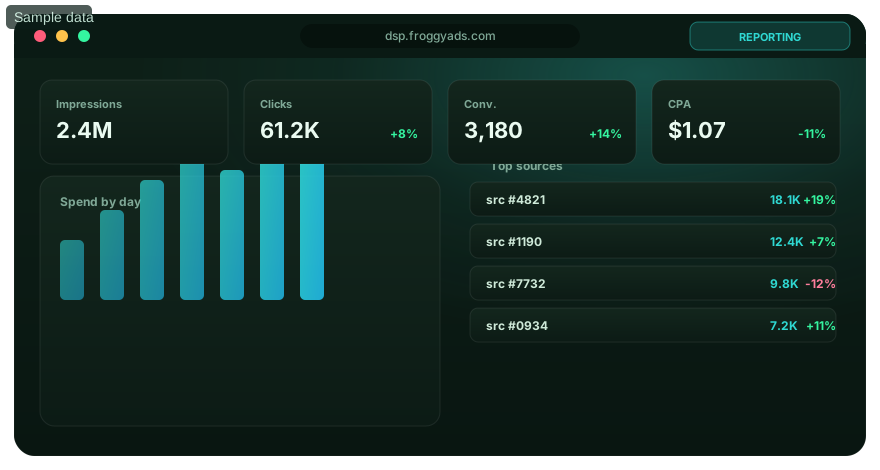
Source-level reporting is valuable because a network average rarely tells the buyer what to do. One source may create inexpensive clicks and poor accepted-lead economics, while another produces less volume and stronger sales. Keep source IDs in the final outcome table, apply reasonable sample and delay rules, and make changes that can be reversed. Whitelists, blacklists and source-specific bids should follow evidence rather than intuition.
The minimum deposit is $50, which allows a bounded test without an enterprise contract. The first campaign should be treated as a learning system. Use a clear destination, one primary conversion, a practical daily cap and documented targeting. Do not divide a small budget across too many formats, GEOs and creatives. Concentrated tests create faster, more interpretable evidence than a wide setup with no meaningful sample in any cell. Source: Current FroggyAds pricing.
Creative and landing-page quality affect the traffic result. An ad that promises one thing and a page that presents another will create weak engagement even when the visitor is relevant. Check mobile and desktop speed, form behavior, browser compatibility, consent, payment flow and confirmation events. Review the user experience before blocking a traffic source, especially when failure is concentrated by device or browser.
Scaling changes the experiment. Higher bids can unlock different inventory, larger budgets can alter source concentration and broader targeting can change audience intent. Preserve a control cell and record every material change. Compare marginal cost and quality after each increase. The goal is not the largest possible visitor count. It is the highest sustainable volume of validated outcomes within the advertiser's cost and policy limits.
From signup to live traffic
Create your account
Sign up free and deposit from $50. Source: Current FroggyAds pricing.
Choose a format
Pick Push, Native, Display or Pop for your goal.
Set targeting
Choose GEO, device and source targeting and set bids.
Launch and scale
launch after approval, read source-level reports, and scale what converts.
Before launch, create the account, review current Insights, choose one format and market, and verify the destination and conversion event. Name campaigns so that format, GEO, audience and test version are visible. Save the starting bid, budget, cap, creative and source settings. A written baseline makes later optimization understandable.
During the first review, separate delivery problems from conversion problems. Low impressions may indicate bid, eligibility or targeting constraints. Strong clicks with weak sessions may indicate redirects or page speed. Strong sessions with weak conversions may indicate message, offer or form friction. Conversions with poor accepted value may indicate source quality or qualification problems. Each diagnosis requires a different action.
When a source performs, confirm that the outcome has matured and that the result is not driven by a tiny sample. Increase budget or bid in controlled steps, monitor source mix and retain the original cell long enough to identify whether the change improved or weakened economics. When a source fails, verify tracking and user experience before excluding it. Document why the change was made and when it will be reviewed.
Use related commercial pages to deepen the plan rather than creating duplicate campaigns or duplicate SEO pages. The broad pillar absorbs buy traffic, buy web traffic, buy online traffic, buy internet traffic and purchase website traffic. More specific pages own targeting, quality, price, provider, conversion, scale, landing-page and CPA intents. This architecture helps users and search systems reach the page that answers the actual buying question.
Buying traffic FAQ
What does buying website traffic through FroggyAds mean?
It means funding a campaign that buys eligible advertising opportunities and sends users to a destination you control. The useful comparison is not raw visit volume alone; preserve source and campaign identity so spend can be reconciled with accepted downstream outcomes.
Which traffic formats can send visitors to a website?
Push, Native, Display, Pop, Video and Interstitial can all direct eligible users to a website when the campaign and inventory support the format. Test formats separately because pricing, creative, user context and conversion delay can differ.
Which outcome should be defined before website traffic is purchased?
Define the business event that determines value, such as an accepted lead, completed sale, registration or another verified action. Diagnostic events can help explain the funnel, but the final buying decision should use the accepted outcome.
How should a landing page be prepared for purchased traffic?
Verify speed, mobile usability, offer accuracy, forms, checkout or conversion flow, confirmation events and tracking before meaningful spend. The page should immediately match the promise made by the ad format and creative.
How much targeting should a first website traffic test use?
Use the few dimensions that materially affect eligibility or offer fit and keep the first cell easy to interpret. Very narrow combinations can reduce delivery and prevent the campaign from gathering enough evidence.
How should the budget for buying website traffic be calculated?
Set a bounded learning budget from the expected media cost, conversion rate, outcome value, maturity delay and maximum acceptable loss. The $50 minimum deposit is a funding threshold, not a recommended campaign budget.
Which tracking fields should accompany purchased website visitors?
Preserve campaign, format, creative where applicable, source or placement, click identifier and the final accepted event. Keep attribution windows, duplicate rules and backend acceptance logic consistent across the comparison.
How is paid website traffic quality measured?
Review click-to-session consistency, destination behavior, accepted conversions, rejection or refund patterns, source-level value and traffic-quality signals together. One metric alone cannot establish quality.
Can purchased website traffic guarantee SEO rankings or organic growth?
No. Paid traffic buys advertising exposure or visits; it does not guarantee organic search rankings. SEO depends on its own relevance, content, technical and authority signals.
When should a website traffic campaign receive more spend?
Increase spend after tracking is verified and several mature result periods remain within the written cost and quality limits. Scale one major variable at a time and keep a rollback point.
Related pages
Ad formats
Push, Native, Display, Pop and more.
Pricing
Start from $50 with transparent floors. Source: Current FroggyAds pricing.
Traffic quality
Adscore and internal traffic-quality controls and source control.
CPC traffic
Pay-per-click from $0.003. Source: Current FroggyAds pricing.
Buy Targeted Traffic
Build precise audience and source tests.
Buy High-Quality Traffic
Evaluate quality through validated outcomes.
Buy Affordable Traffic
Control cost without abandoning quality.
Traffic Provider Guide
Compare providers with an objective scorecard.
High-intent iGaming traffic guides
Licensed casino and betting advertisers can continue into market, product, format and player-acquisition guides.
Buy Casino Traffic
Buy casino traffic with GEO, device, format and source controls, then optimize toward verified registrations, deposits and retained player value.
Buy Gambling Traffic
Buy gambling traffic across approved casino and betting campaigns with source transparency, responsible targeting and conversion-led optimization.
Buy iGaming Traffic
Buy iGaming traffic with format, GEO, device and source controls, then measure verified registrations, first deposits and cohort value.
Buy Sports Betting Traffic
Buy sports betting traffic with event timing, GEO, device and source controls, then optimize toward verified accounts, deposits and settled bets.
Casino Player Acquisition
Build casino player acquisition around legal eligibility, source-level media, verified deposits, retention and cohort economics instead of vanity traffic.
Move from buy traffic to the right buying system
These commercial guides explain which network or platform structure fits the traffic objective.
Ad Network
Use a self-serve ad network to reach worldwide inventory, launch multiple formats, control targeting and optimize sources with measurable campaign data.
Traffic Network
Use a worldwide traffic network to buy push, native, display, pop, video and interstitial inventory with targeting and source controls.
Media Buying Platform
Plan, launch, track and optimize multi-format campaigns from a self-serve media buying platform with worldwide supply and source reporting.
Paid Media Platform
Use a paid media platform to activate multi-format campaigns, manage budgets, track conversions and optimize sources across global supply.
Website Advertising Platform
Advertise across website inventory with multiple formats, worldwide targeting, source reporting, conversion tracking and self-serve campaign controls.
Ecommerce Ad Network
Run ecommerce campaigns across native, display, push, video, pop and interstitial inventory with product-aware creative and source-level optimization.
Planning a paid traffic campaign?
Use the primary buy traffic guide to compare formats, targeting controls, starting prices, source-quality checks, budgets and the step-by-step FroggyAds self-serve workflow.
Start buying website traffic
Create your account and reach 20B+ daily impressions across 750+ SSP integrations.
Online traffic buying and package evaluation
Compare online traffic, paid website visits, targeting and traffic packages through transparent quality criteria.
Website traffic purchasing questions
For Buy Website Traffic with Targeting and Source Control, what should an advertiser define before buying website traffic?
Write the eligible audience, destination, accepted outcome, budget cap and source controls before any visits are ordered. Buying website traffic means purchasing access to eligible advertising opportunities and then deciding, from measured outcomes, which combinations deserve more budget. For Buy Website Traffic with Targeting and Source Control, connect campaign objective and source evidence to the same accepted business event so performance-focused advertisers can decide how Buy Website Traffic with Targeting and Source Control should be tested, measured and acted on.
For Buy Website Traffic with Targeting and Source Control, which paid traffic format matches an informational landing page?
Choose a format whose user context can support the page's promise, then test it separately from other delivery types. Quick answer Buy targeted paid traffic from a self serve DSP with worldwide supply six ad formats precise campaign controls source level. With FroggyAds, turn the Buy Website Traffic with Targeting and Source Control criteria into a bounded paid-traffic test: set the relevant targeting, budget and source controls, verify tracking, and compare accepted outcomes before increasing spend.
For Buy Website Traffic with Targeting and Source Control, how should a website be prepared for purchased visits?
Check speed, mobile use, identity, offer accuracy, forms, confirmation and campaign tracking from arrival to accepted event. Quick answer Buy targeted paid traffic from a self serve DSP with worldwide supply six ad formats precise campaign controls source level. For Buy Website Traffic with Targeting and Source Control, test one format or materially different creative path at a time so you can tell whether the message, inventory or audience changed the downstream result.
For Buy Website Traffic with Targeting and Source Control, what makes a first traffic order large enough to learn?
It needs enough controlled delivery to verify several sources without exceeding the amount the buyer can lose during learning. Everything runs from one self-serve dashboard – launch the campaign, target precisely, then watch results by source and optimize in real time. Set a spend guardrail and review window for Buy Website Traffic with Targeting and Source Control before launch. Keep any funding minimum, the actual campaign price and the learning budget as separate concepts.
For Buy Website Traffic with Targeting and Source Control, which source fields should remain visible after purchase?
Publisher, placement, campaign, creative and click identifiers should connect with destination behavior and business outcomes. These commercial guides explain which network or platform structure fits the traffic objective. For Buy Website Traffic with Targeting and Source Control, keep campaign objective, spend, source identity and conversion maturity in the same report so delivery metrics can be reconciled with accepted business value.
For Buy Website Traffic with Targeting and Source Control, how should I budget beyond the minimum deposit when buying website traffic?
Build the test around tracking costs, campaign cells, outcome delay and the maximum acceptable loss. The $50 minimum deposit is a funding threshold, not a recommended campaign size, so release more only after source economics mature. The useful test for Buy Website Traffic with Targeting and Source Control is whether accepted outcome cost and quality remain workable after enough events have matured, not whether the traffic is simply inexpensive.
For Buy Website Traffic with Targeting and Source Control, why should paid traffic be judged beyond sessions?
Sessions do not prove eligibility, genuine interest or accepted value, and some outcomes mature well after the visit. A self-serve way to buy website traffic without agencies, contracts or guesswork. For Buy Website Traffic with Targeting and Source Control, use source-level evidence to decide which traffic segments should stay separate, receive more data or receive a different budget.
For Buy Website Traffic with Targeting and Source Control, when should a purchased traffic source be blocked?
Block it after a persistent source-level problem remains once tracking, eligibility and destination faults are ruled out. Licensed casino and betting advertisers can continue into market, product, format and player-acquisition guides. FroggyAds provides traffic access and campaign controls; your validated conversion data remains the evidence for whether Buy Website Traffic with Targeting and Source Control deserves more budget.
For Buy Website Traffic with Targeting and Source Control, what evidence supports buying a larger traffic volume?
Marginal accepted cost should stay healthy through a smaller increase, with source mix and measurement still stable. Licensed casino and betting advertisers can continue into market, product, format and player-acquisition guides. For Buy Website Traffic with Targeting and Source Control, change one major dimension at a time and keep a documented baseline so you can identify what affected the accepted outcome.
Why use FroggyAds for Buy Website Traffic with Targeting and Source Control?
The answer depends on the campaign objective, market, measurement setup and accepted outcome for Buy Website Traffic with Targeting and Source Control. FroggyAds lets you run Buy Website Traffic with Targeting and Source Control as a controlled advertising test with targeting, budget and source settings, while your own conversion evidence guides the next step. Create your free FroggyAds account.
Buy Website Traffic with Targeting and Source Control: the decision this URL owns
Decision inputs for Buy Website Traffic with Targeting and Source Control: campaign objective, source evidence, conversion tracking, accepted business value. Keep these inputs tied to accepted conversion or business-value event and the page-specific job: decide how Buy Website Traffic with Targeting and Source Control should be tested, measured and acted on.
For Buy Website Traffic with Targeting and Source Control, start from the business decision rather than the headline tactic. The performance advertiser needs enough evidence to decide how Buy Website Traffic with Targeting and Source Control should be tested, measured and acted on without blending this URL with adjacent intents.
URL boundary for Buy Website Traffic with Targeting and Source Control: This URL owns Buy Website Traffic with Targeting and Source Control; How To Buy Website Traffic is the nearest neighboring topic and should keep its separate task. Use this page only for the decision implied by Buy Website Traffic with Targeting and Source Control.
Real visitors, bought on your terms is the action checkpoint for Buy Website Traffic with Targeting and Source Control. Before acting on “For Buy Website Traffic with Targeting and Source Control, how should a website be prepared for purchased visits?”, document conversion tracking, the resulting campaign action and the rollback or retest condition.
Evidence boundary for Buy Website Traffic is an evidence checkpoint for Buy Website Traffic with Targeting and Source Control. To answer “For Buy Website Traffic with Targeting and Source Control, what should an advertiser define before buying website traffic?”, keep campaign objective in the same campaign record and use it to decide how Buy Website Traffic with Targeting and Source Control should be tested, measured and acted on.
Buy website traffic that converts at a glance is the measurement checkpoint for this URL. Resolve “For Buy Website Traffic with Targeting and Source Control, which paid traffic format matches an informational landing page?” while retaining source evidence, accepted business value, spend and cohort age so the result can be reconciled with accepted conversion or business-value event.
| Page checkpoint | How to use it | Evidence to retain |
|---|---|---|
| Evidence boundary for Buy Website Traffic | Use Evidence boundary for Buy Website Traffic to establish the first evidence boundary for Buy Website Traffic with Targeting and Source Control; then record which part of campaign objective, targeting, source evidence, conversion tracking and economics it changes. | Keep campaign objective, source/campaign ID and the accepted-event definition together. |
| Buy website traffic that converts at a glance | Use Buy website traffic that converts at a glance as the second checkpoint and reconcile it with accepted conversion or business-value event before changing budget or source allocation. | Retain source evidence, spend, timestamp/cohort age and accepted/rejected outcomes. |
| Real visitors, bought on your terms | Use Real visitors, bought on your terms as the final checkpoint: if it does not change the evidence for accepted conversion or business-value event, keep the test narrow rather than scaling. | Document conversion tracking, the decision taken and the rollback or retest condition. |
Transparent Buy Website Traffic with Targeting and Source Control decision example
Hypothetical example: For Buy Website Traffic with Targeting and Source Control, a hypothetical controlled cell that spends USD 350 and records 11 accepted conversion or business-value event after the same maturity window has an accepted cost of USD 31.82 per outcome. Replace the figures, outcome and review window with your own economics; this is not a FroggyAds performance claim.
Why use FroggyAds here?
FroggyAds can execute the paid-acquisition test behind Buy Website Traffic with Targeting and Source Control: preserve the campaign/source record, measure accepted conversion or business-value event and change allocation only after the evidence matures. Create your free FroggyAds account.
Buy Website Traffic with Targeting and Source Control — what matters first
Buy Website Traffic with Targeting and Source Control is most useful when it helps a buyer define the acquisition test, evidence threshold and next budget action. Define the accepted outcome first, then use targeting, budget and source-level evidence to decide what deserves more spend.