
Mobile advertising at scale.
Mobile advertising is paid communication delivered to phones or tablets through browser pages, installed applications, search results, social products, video services or messaging environments. The device label does not identify one format, audience or measurement method. A useful mobile plan starts with the action a person must complete, the environment where the ad will render and the destination that follows the interaction.
It then documents eligible inventory, creative constraints, consent conditions, connection quality, operating-system behavior and the first-party event that the business will accept. Keep an ad request, served impression, rendered view, tap, usable visit and approved outcome as separate records. Compare formats only when their populations, time windows and outcome definitions are compatible. Treat network forecasts and attribution reports as product observations, not guarantees or causal proof.
The result should be a bounded test with a budget ceiling, technical stop rules and a decision record that names what was actually delivered.
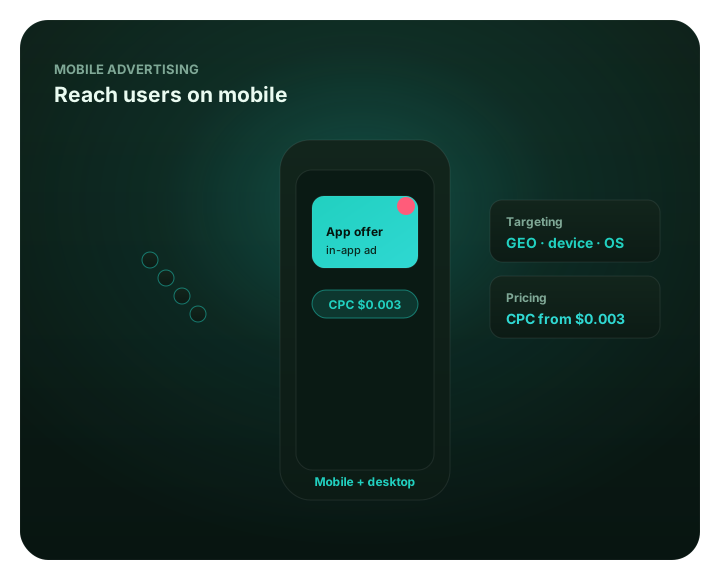
Official boundaries for mobile delivery, privacy and advertising claims
Google Ads explains that ads can appear across Google properties and partner inventory, including mobile sites and apps, according to campaign type, settings and available placements. That documentation describes Google products and does not guarantee a particular placement, person, reach or result. Apple states that covered apps need AppTrackingTransparency permission before tracking users across other companies' apps or websites or accessing the advertising identifier on supported systems; developers remain responsible for included software development kits. The FTC's online advertising guidance states that advertising claims must be truthful, not misleading and supported when needed, and that necessary disclosures should be clear and conspicuous. These sources define distinct product and advertising boundaries. Confirm the live platform, market, device, consent route and claim evidence before launch. Do not treat a platform control, operating-system permission or disclosure pattern as universal legal approval.
- Google Ads where ads can appear - Google-specific inventory and campaign context, not guaranteed mobile reach or results
- Apple user privacy and data use - Apple ATT and SDK-responsibility boundaries for covered app behavior
- FTC online advertising and marketing - United States truthfulness, substantiation and disclosure guidance, not worldwide legal advice
Name the mobile campaign job
Write the business decision before choosing a mobile format. The job may be explaining an offer, restoring an app session, collecting a qualified enquiry or completing a purchase. State the accepted outcome, owner, maturation period and largest next exposure that the result may authorize.
Do not optimize a broad label such as engagement. Define the event and its required evidence. A video start, tap, page load, app open, submitted form and accepted customer are different states. The campaign should report the transitions between them rather than select the easiest available number.
Separate device from delivery environment
Record whether each impression appeared in search, a browser page, an installed app, social inventory, video, an embedded webview or another documented surface. A phone can enter several environments during one journey, and each surface can expose different controls and reporting.
Preserve campaign type, placement or source identifier, operating system, browser or app context, creative version and destination. Do not assign quality from the device name. Judge the delivered combination through rendering evidence, downstream continuity, accepted outcomes and complete cost.
Map eligible inventory before buying
Ask the selected provider which inventory, formats, devices, markets and exclusions are available for the actual campaign configuration. Save dated settings and forecasts. Availability in an official product guide does not prove that an account, market or campaign will receive the same supply.
Sample placements after launch and reconcile them with the configured scope. Investigate unknown sources, unexpected applications, unsupported devices and concentrated delivery. A small clean sample cannot certify all future inventory, while one problematic source should be isolated before condemning an entire mobile environment.
Design for the rendered container
Measure the actual viewport, safe area, text size, file constraints, motion, close treatment and interface chrome. Test representative phones and orientations. A creative that uploads successfully can still hide a condition, crop the product or place the action beside a competing control.
Keep the main claim and qualification stable when adapting layout to different containers. Store every delivered variant and preview. If offer, audience, destination and format all change together, the result cannot explain whether the mobile container improved or damaged the outcome.
Treat taps as interface events
A tap can be intentional, accidental, repeated or interrupted by an operating-system handoff. Reconcile interaction records with destination requests, usable states and accepted actions. Document the invalid-activity rules and denominator used for every rate.
Place actions away from close controls and avoid designs that imitate operating-system alerts. Review rapid exits, duplicate requests and very short sessions by source and creative. High tap volume without usable downstream evidence is not proof of attention or message fit.
Build destination continuity
Trace the path from the ad through redirects, browser or app handoffs, consent choices, authentication, store pages, forms and confirmation. Test fresh and returning states. Record what happens when an app is absent, a deep link fails or a browser blocks a required step.
Keep offer, price basis, eligibility and material conditions consistent from creative to destination. Count broken links, blank views, inaccessible fields and failed confirmations as campaign loss. Do not discard them merely because the ad platform reports a valid interaction.
Protect speed without inventing thresholds
Measure the mobile destination under representative connections and devices using the tools appropriate to the site or app. Inspect time to usable content, layout stability, input readiness and failed resources. Avoid declaring one universal speed cutoff for every journey.
Compare technical loss with the accepted outcome, not with page speed alone. A faster page can still contain an unclear offer or unusable form. Set a local rollback rule for releases that materially increase failed loads, abandonment or support complaints.
Define the measurement chain
List the provider event, click parameter, browser request, app event, analytics record, server event, customer record and approval state that participate in measurement. Name which system creates each identifier and how duplicates, retries and delayed outcomes are handled.
Test consenting, non-consenting, interrupted and unmatched paths. Keep missing records visible. A platform-attributed conversion is a result under that platform's rules; it is not direct proof that the ad caused the outcome or that every device was observed.
Apply Apple tracking boundaries precisely
For covered Apple app processing, determine whether data links activity across other companies' apps, websites or offline properties for targeting or measurement. Use Apple's current definition and responsible review. Do not treat every analytics event as cross-company tracking.
Respect the recorded ATT response and document behavior when permission is unavailable, including identifier access and any privacy-preserving reporting route. A choice collected on a website does not automatically replace an app-level permission decision for app-collected data.
Keep permission and legal review distinct
A browser setting, operating-system prompt or platform audience control answers a product question. It does not alone establish adequate notice, a lawful basis or permitted processing in every country. Map the actual parties, purposes, data fields, retention and transfers.
Test the journey without optional tracking and maintain suppression and deletion procedures where required. Escalate sensitive data, precise location, children, health, finance or cross-context matching to qualified review. Record the applicable market rather than presenting one global compliance claim.
Choose location controls carefully
Document the provider's location option, signal basis and any difference between presence, interest or recent activity. Keep targeted geography separate from the geography inferred after delivery. Mobile movement, network routing and limited signals can create uncertainty.
Review delivered location distributions and first-party eligibility without claiming exact residence or nationality. Exclude unsuitable areas, narrow conclusions to observed cells and retain unknown classifications. A location setting is a best-effort delivery rule, not proof of a person's permanent location.
Plan language as a test variable
Select language from the intended audience and destination support, not from country alone. Test the full path, including validation messages, payment details, support and confirmation. Mixed-language journeys can produce abandonment that appears to be a traffic problem.
Use qualified review for translated claims and material conditions. Record language by creative and destination version. Do not infer identity or preference solely from a platform language setting, browser value or the language of one page visit.
Control frequency within known identity limits
Find out whether exposure is counted by device, browser state, app instance, account or a modeled group. A person may have several identifiers, and shared devices can join several people. Report the configured scope rather than exact person-level frequency.
Inspect exposure distribution, complaints and accepted outcomes by source. Set caps or exclusions where the product supports them. If identity scope changes between app and browser inventory, do not combine both figures into one precise count of people reached.
Audit mobile placements continuously
Create allow, observe, cap, exclude and pause states for placements or source groups. Retain sampled rendering, placement identifiers, timestamps and decision reasons. Recheck after campaign changes because optimization can shift the delivered mix.
Separate brand-safety, usability, fraud and commercial-fit questions. One signal rarely answers all four. Investigate discrepancies with provider and first-party evidence, then limit the action to the source, format or condition actually implicated.
Check accessibility across the journey
Test contrast, text resizing, orientation, focus, labels, touch targets, motion and error handling in the rendered ad and destination. Include consent controls and confirmation states. A polished desktop preview does not establish a usable mobile experience.
Record defects by device, browser or app condition and creative version. Pause combinations that obscure qualifications or block completion. Do not interpret lower response from an inaccessible variant as evidence that the audience lacks interest.
Run a controlled mobile test
Hold offer, audience hypothesis, geography, schedule and accepted outcome stable while changing one main factor. Separate budgets or use another allocation rule that gives each cell a fair chance to deliver. Predefine the observation period and stop conditions.
Mark exploratory slices and require a second observation before creating a standing rule. Mobile delivery can concentrate in one operating system, placement or time band. Report the delivered population rather than claiming the configured audience was evenly tested.
Reconcile complete mobile cost
Include media, creative adaptation, app or web implementation, measurement services, consent work, verification, support and staff review. Keep currency, tax treatment, billing period and outcome maturation aligned when comparing cells.
Calculate cost against accepted value, not the cheapest interaction. A low tap price can coexist with destination loss, poor qualification or reversal. Preserve delayed adjustments and rejected outcomes so an early platform report does not become the final commercial conclusion.
Set technical and commercial stop rules
Pause on broken destinations, missing material disclosures, unsupported devices, uncontrolled duplicate events or spending beyond the authorized ceiling. Define who can stop delivery and what evidence is required before restart.
Use separate thresholds for technical validity, customer impact and business value. A campaign can be technically correct yet commercially weak, or commercially promising while a measurement defect remains. The decision record should state which condition triggered the action.
Read mobile results with uncertainty
Report settings, delivered sources, devices, creative versions, time period, event definitions, matched and unmatched records, accepted outcomes and complete cost. Separate observation from interpretation. Avoid a universal statement such as mobile users prefer one format.
Limit findings to the tested provider, market, inventory and destination. State data gaps and alternative explanations. A result is reusable only while the campaign configuration and measurement definitions remain comparable to the recorded test.
Close with a mobile operating record
Store the campaign job, inventory scope, platform settings, creative and destination versions, privacy decisions, quality actions, measurement chain, accepted value and next exposure. Link every material factual claim to a current source or internal record.
Choose continue, revise, retest or stop. Name the owner, review date and rollback condition. Mobile advertising becomes manageable when each delivery environment has explicit evidence, rather than when every mobile impression is forced into one performance label.
Separate app, web and cross-device conclusions
When a campaign spans several mobile environments, publish a result for each supported environment before any combined view. Explain how identifiers, consent states, attribution windows and destinations differ. A combined total can hide that one surface supplied reach while another supplied accepted outcomes.
If desktop or another device joins the journey, preserve the handoff evidence and matching rule. Do not claim a single person-level path when only aggregated reports exist. Use the combined result for budgeting only when the limitations remain visible beside it.
Mobile advertising decision matrix
A mobile decision is usable only when delivery context, journey evidence and accepted value remain connected.
| Decision gate | Evidence to retain | Boundary |
|---|---|---|
| Inventory | Campaign type, placement and device context | Availability is not guaranteed delivery |
| Creative | Rendered variant and qualification | Upload success is not usability |
| Journey | Handoffs, usable destination and errors | Tap is not completion |
| Measurement | Provider, app, browser and server events | Attribution is not causation |
| Outcome | Approved value and complete cost | Early reports remain provisional |
Retained mobile advertising resources
Existing mobile advertising reading paths, graphics and conversion links are retained below in their established order. They can support implementation research, but they do not verify current inventory, device coverage, permissions, price, reach, user identity or campaign performance.
App installs
Mobile user acquisition.
Buy Push traffic
Mobile notifications from $0.003.
Interstitial ads
Full-screen mobile placements.
GEO & device targeting
Reach the right users.
Start advertising View pricing LinkedInFacebookMobile Ads ExamplesMobile Ads Sizes and SpecificationsMobile Ads Best PracticesMobile Ads Cost and BudgetingMobile AdsPlan mobile ads with supply evaluation, targeting, creative, tracking, budget controls and source-level optimization.Best Mobile AdsEvaluate best mobile ads with transparent criteria for supply, compatibility, reporting, quality controls, billing and test economics.Top Mobile AdsEvaluate top mobile ads with transparent criteria for supply, compatibility, reporting, quality controls, billing and test economics.Cheap Mobile AdsEvaluate cheap mobile ads by effective acquisition cost, source quality, landing-page performance and controlled budget limits.Affordable Mobile AdsEvaluate affordable mobile ads by effective acquisition cost, source quality, landing-page performance and controlled budget limits.Premium Mobile AdsAssess premium mobile ads using source evidence, compliance, backend acceptance, reporting transparency and repeatable economics.Trusted Mobile AdsAssess trusted mobile ads using source evidence, compliance, backend acceptance, reporting transparency and repeatable economics.Reliable Mobile AdsAssess reliable mobile ads using source evidence, compliance, backend acceptance, reporting transparency and repeatable economics.High Converting Mobile AdsAssess high converting mobile ads using source evidence, compliance, backend acceptance, reporting transparency and repeatable economics.High Quality Mobile AdsAssess high quality mobile ads using source evidence, compliance, backend acceptance, reporting transparency and repeatable economics.Self Serve Mobile AdsPlan self serve mobile ads with supply evaluation, targeting, creative, tracking, budget controls and source-level optimization.Global Mobile AdsPlan global mobile ads with supply evaluation, targeting, creative, tracking, budget controls and source-level optimization.Worldwide Mobile AdsPlan worldwide mobile ads with supply evaluation, targeting, creative, tracking, budget controls and source-level optimization.Mobile Ads 2026Review mobile ads 2026 with current checks for browser compatibility, supply, policy, pricing, tracking and campaign economics.Mobile Ads for PublishersEvaluate mobile ads for publishers supply, user experience, demand access, reporting and monetization controls, with clear disclosure of the FroggyAds supply model.Mobile Ads PlatformPlan mobile ads platform with supply evaluation, targeting, creative, tracking, budget controls and source-level optimization.Mobile Ads CPM RatesUnderstand mobile ads cpm rates through auction factors, budgeting, effective acquisition cost, source quality and a controlled campaign test.Buy Mobile AdsPlan buy mobile ads with supply evaluation, targeting, creative, tracking, budget controls and source-level optimization.What Are Mobile AdsLearn what are mobile ads, how the format is delivered, what creative it uses, how it is bought and how advertisers measure results.Mobile Ads vs Banner AdsCompare mobile ads vs banner ads by delivery, creative space, targeting, pricing, tracking and the campaign outcomes that matter.Mobile Ad NetworkPlan mobile ad network with supply evaluation, targeting, creative, tracking, budget controls and source-level optimization.Mobile Ad NetworksPlan mobile ad networks with supply evaluation, targeting, creative, tracking, budget controls and source-level optimization.Best Mobile Ad NetworkEvaluate best mobile ad network with transparent criteria for supply, compatibility, reporting, quality controls, billing and test economics.Top Mobile Ad NetworkEvaluate top mobile ad network with transparent criteria for supply, compatibility, reporting, quality controls, billing and test economics.Cheap Mobile Ad NetworkEvaluate cheap mobile ad network by effective acquisition cost, source quality, landing-page performance and controlled budget limits.Affordable Mobile Ad NetworkEvaluate affordable mobile ad network by effective acquisition cost, source quality, landing-page performance and controlled budget limits.Premium Mobile Ad NetworkAssess premium mobile ad network using source evidence, compliance, backend acceptance, reporting transparency and repeatable economics.Trusted Mobile Ad NetworkAssess trusted mobile ad network using source evidence, compliance, backend acceptance, reporting transparency and repeatable economics.Reliable Mobile Ad NetworkAssess reliable mobile ad network using source evidence, compliance, backend acceptance, reporting transparency and repeatable economics.High Converting Mobile Ad NetworkAssess high converting mobile ad network using source evidence, compliance, backend acceptance, reporting transparency and repeatable economics.High Quality Mobile Ad NetworkAssess high quality mobile ad network using source evidence, compliance, backend acceptance, reporting transparency and repeatable economics.Fast Approval Mobile Ad NetworkUnderstand fast approval mobile ad network through campaign-readiness checks, review requirements, policy compliance and realistic launch timing.Self Serve Mobile Ad NetworkPlan self serve mobile ad network with supply evaluation, targeting, creative, tracking, budget controls and source-level optimization.Global Mobile Ad NetworkPlan global mobile ad network with supply evaluation, targeting, creative, tracking, budget controls and source-level optimization.Worldwide Mobile Ad NetworkPlan worldwide mobile ad network with supply evaluation, targeting, creative, tracking, budget controls and source-level optimization.Mobile Ad Network 2026Review mobile ad network 2026 with current checks for browser compatibility, supply, policy, pricing, tracking and campaign economics.Top Mobile Ad NetworksEvaluate top mobile ad networks with transparent criteria for supply, compatibility, reporting, quality controls, billing and test economics.Top Mobile Ad Networks 2026Evaluate top mobile ad networks 2026 with transparent criteria for supply, compatibility, reporting, quality controls, billing and test economics.Mobile Ad Network for PublishersEvaluate mobile ad network for publishers supply, user experience, demand access, reporting and monetization controls, with clear disclosure of the FroggyAds supply model.Mobile Ad Network for AdvertisersPlan mobile ad network for advertisers with supply evaluation, targeting, creative, tracking, budget controls and source-level optimization.Digital advertising resources from FroggyAds.Browse FroggyAds resources for ad formats, targeting, traffic quality, campaign optimization, verticals and guides.Open resource →Buy Mobile TrafficLearn how to buy and test mobile traffic with source-level controls with FroggyAds. Plan targeting, conversion tracking, source decisions and.Open resource →Mobile Ad Network for AdvertisersLearn how to operate mobile campaigns through an advertiser-focused network with FroggyAds. Plan targeting, conversion tracking, source.Open resource →Mobile Ad NetworkLearn how to evaluate network capabilities and campaign controls for mobile with FroggyAds. Plan targeting, conversion tracking, source.Open resource →Mobile advertising questions
At the focused check, what should Mobile Advertising prove?
During the staged test, set one outcome for Mobile Advertising. Use the careful comparison; cap spending. Let the limited check confirm quality. Expand after the final test when results stay stable.
During the staged test, what must Mobile Advertising clarify?
During the careful comparison, define the audience for Mobile Advertising. Use the limited check; state offers. Let the final test expose limits. Approve after the scheduled comparison when claims are supported.
At the careful comparison, how should Mobile Advertising test?
During the limited check, change one variable in Mobile Advertising. Use the final test; preserve baselines. Let the scheduled comparison set rollbacks. Continue after the written check when comparison stays fair.
During the limited check, which claims can Mobile Advertising support?
During the final test, check every claim in Mobile Advertising. Use the scheduled comparison; show terms. Let the written check flag promises. Publish after the measured test when support is clear.
At the final test, which audience suits Mobile Advertising?
During the scheduled comparison, choose an audience for Mobile Advertising. Use the written check; add exclusions. Let the measured test compare segments. Continue after the defined comparison when quality is serviceable.
During the scheduled comparison, what does Mobile Advertising cost?
During the written check, include every fee in Mobile Advertising. Use the measured test; count outcomes. Let the defined comparison test value. Buy after the focused check when delivery is usable.
At the written check, which evidence guides Mobile Advertising?
During the measured test, check valid delivery for Mobile Advertising. Use the defined comparison; reconcile records. Let the focused check resolve differences. Change after the staged test when records agree.
During the measured test, what should pause Mobile Advertising?
During the defined comparison, screen control failures in Mobile Advertising. Use the focused check; record gaps. Let the staged test assign fixes. Resume after the careful comparison when review is complete.
At the defined comparison, how can Mobile Advertising improve?
During the focused check, compare mature data for Mobile Advertising. Use the staged test; change one lever. Let the careful comparison preserve baselines. Keep the limited check ready if evidence weakens.
During the focused check, when can Mobile Advertising scale?
During the staged test, require stable acceptance from Mobile Advertising. Use the careful comparison; raise spending. Let the limited check watch quality. Return after the final test if evidence weakens.
Mobile advertising at scale. — buyer decision
Use Mobile advertising at scale. to answer one paid-acquisition question: what setup should an advertiser test, what evidence should survive the test, and what accepted business outcome would justify the next budget decision. The adjacent Mobile Ads page should remain a separate decision.
Evidence already visible on this page: Mobile advertising is paid communication delivered to phones or tablets through browser pages, installed applications, search results, social products, video services or messaging environments. The device label does not identify… It then documents eligible inventory, creative constraints, consent conditions, connection quality, operating-system behavior and the first-party event that the business will accept. Keep an ad request, served impression, rendered view,… The working concepts for this URL are campaign objective, audience targeting, bid.
Questions to resolve before scale: At the focused check, what should Mobile Advertising prove? During the staged test, what must Mobile Advertising clarify? At the careful comparison, how should Mobile Advertising test?
| Checkpoint | Page-specific action | Evidence to keep |
|---|---|---|
| Boundary | Use “Plan mobile advertising from delivery context to accepted outcome” to define the first operating boundary for Mobile advertising at scale.. | Record the answer to “At the focused check, what should Mobile Advertising prove?” together with source, targeting and destination identifiers. |
| Evidence path | Use “Official boundaries for mobile delivery, privacy and advertising claims” to test whether delivery is producing the expected path toward the accepted business outcome. | Keep the evidence needed to answer “During the staged test, what must Mobile Advertising clarify?” after the same maturation window. |
| Decision | Use “Name the mobile campaign job” to decide what changes next; change one material variable before comparing again. | Write the answer to “At the careful comparison, how should Mobile Advertising test?” plus accepted cost/value and the rollback condition. |
Transparent decision example
Hypothetical example: If Mobile advertising at scale. uses USD 100 of test spend and 7 outcomes are accepted after maturation, the accepted outcome cost is USD 14.29. Replace the inputs with your own economics; this is not a FroggyAds performance claim.
Why use FroggyAds for this step?
With FroggyAds, you can turn the Mobile advertising at scale. decision into a self-serve traffic test using targeting, budget, conversion and source controls, then keep or restrict spend from the accepted business outcome you define. Create your free FroggyAds account.
Mobile advertising at scale — what matters first
Mobile advertising at scale is most useful when it helps a buyer decide whether this option fits the buyer's acquisition workflow. Define the accepted outcome first, then use targeting, budget and source-level evidence to decide what deserves more spend.