
Keyword ownership
- device targeting ads
Desktop, mobile and tablet behave differently – and so should your campaigns. Split traffic by device class on FroggyAds and bid where your offer actually converts.
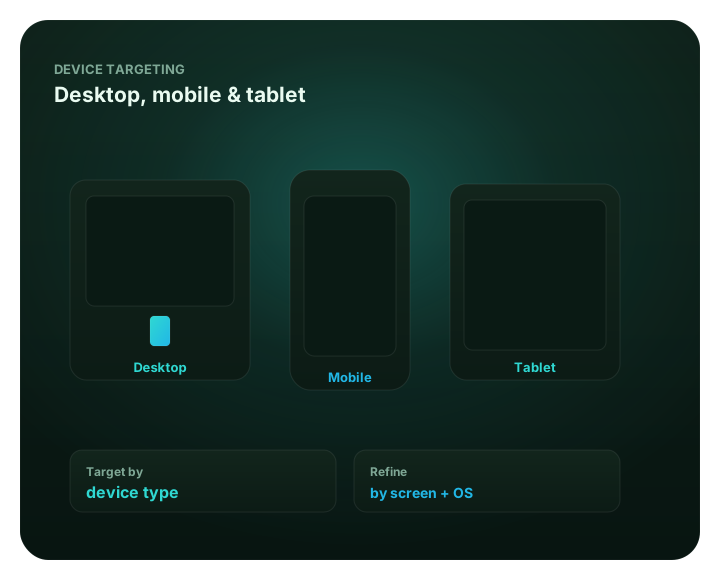
Device targeting: Use FroggyAds to buy traffic for desktop, mobile or tablet separately. Set device-specific bids and budgets, then compare sales, qualified leads and signups to decide where to invest.
| Section | Distinct excerpt from this page |
|---|---|
| Stop averaging across devices | When you run one campaign across all devices, your reporting hides the truth: a winning desktop offer can be subsidising losing mobile clicks, or vice versa. |
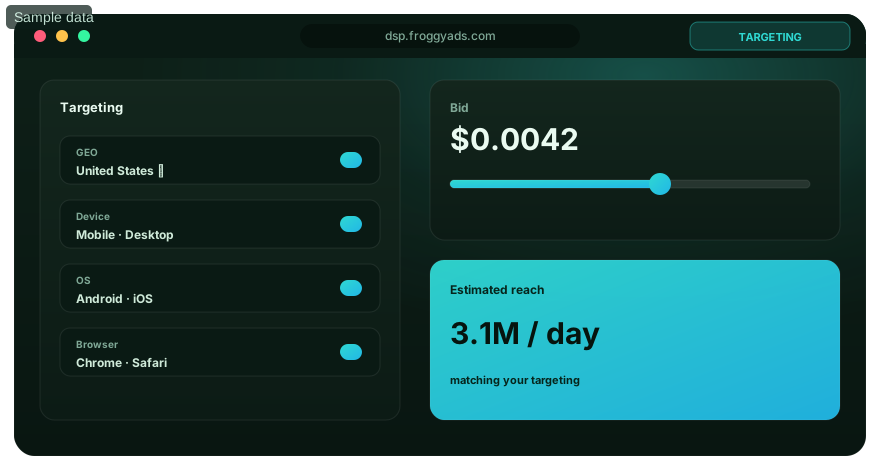
| See device targeting inside the platform | Isolating tablet traffic from mobile data — See device targeting inside the platform. |
| Desktop | Test product details, forms and checkout on larger screens. Compare customer value rather than assuming greater purchasing power. |
Reference for Device Targeting: Control Spend & Improve Performance: Google Ads location targeting.
Separate device results before reallocating spend. A low mobile CPC is only useful when visitors can complete your offer; compare conversion cost with desktop and tablet instead of judging clicks alone.
Apply the country and operating system your offer needs. Our Adscore and internal controls help screen invalid traffic; your conversion checks establish lead or order quality. Fund from $50 and budget each device test separately.
Use our targeting and source reports to investigate where visitors stop. Test forms and checkout on each device before excluding traffic or raising bids.
Match creative and bid to how each device is used.
Test product details, forms and checkout on larger screens. Compare customer value rather than assuming greater purchasing power.
Check touch controls, page speed and app-store compatibility. Give mobile visitors a clear route to registration or purchase.
A distinct browsing context worth isolating so it does not skew mobile or desktop data.
Set different bids and budgets per device so spend follows the device that converts.
Target devices on FroggyAds
Register free, fund from $50 and set a budget for your chosen device.
Desktop, mobile, and tablet are available as separate targeting classes. Each can have its own campaign settings and performance view.
A blended total can hide a strong desktop result behind weak mobile spend or the reverse. Device-level attribution shows which experience creates the desired action.
Independent device bids let price follow the tracked value of each class. Make the adjustment from conversion economics, not an assumption about screen size.
The device-targeting page describes separate bids and budgets for each class. Distinct limits stop a high-volume device from consuming the entire test allocation.
Use a creative suited to the placement and how the user encounters it on that device. Test the versions separately so the format change remains measurable.
Open the complete conversion path on every targeted device class and check speed, layout, forms, and redirects. A device-specific failure can look like poor traffic.
Tablet users have a distinct browsing context that can be lost inside mobile or desktop totals. Isolation shows if the segment deserves its own bid or creative.
Device can be combined with GEO, operating system, browser, carrier, and source controls. Review eligible volume as the stack becomes narrower.
Mobile targeting keeps an install campaign focused on compatible users. Add operating-system settings and measure the post-install event by source.
FroggyAds lists device-targeted campaign access from $50. Divide the test deliberately so each chosen device has a chance to produce evidence.
Create your free FroggyAds account and launch a device-targeted campaign with a working landing page and conversion tracking.
Device targeting separates or adjusts delivery for mobile phones, tablets, desktops and other supported device categories. Use it when creative, experience, conversion behavior or economics differ materially by device.
Event: delivery admitted by the selected targeting and exclusion rules.
Decision: whether the segment produces distinct useful behavior that justifies separate control.
Primary risk: treating modeled or best-effort signals as exact identity or guaranteed location.
| Layer | Evidence to preserve | Action rule |
|---|---|---|
| Delivery | Campaign, source, placement, device, GEO, schedule and creative identifiers where available. | Do not optimize a blended result when the controllable delivery units can be separated. |
| Measurement | Timestamped impression or click records, conversion identifiers, values, currency and acceptance status. | Reconcile platform data with first-party or partner records before a large budget change. |
| Quality | Session behavior, invalid-event signals, conversion validity, downstream value and repeat patterns. | Separate suspicious activity from ordinary low performance and document the evidence behind exclusions. |
| Change control | Previous settings, hypothesis, observation window, loss ceiling and rollback state. | Change one material variable at a time and restore the stable state when the declared stop rule is reached. |
Device targeting should separate materially different user experiences and economics, not act as a shortcut for assumed demographics. Validate every device segment through landing-page behavior and accepted outcomes.
For device targeting ads, Write the business question before selecting a setting or report. State which event should change, which segment is eligible and what result would justify the next action. The practical evidence should include the configuration that was active, the source or placement involved, the creative and destination version, and the event status at the agreed reporting cutoff. This keeps the analysis tied to a specific campaign state instead of a blended historical average that cannot be reproduced.
Device targeting should separate materially different user experiences and economics, not act as a shortcut for assumed demographics. Validate every device segment through landing-page behavior and accepted outcomes. In this part of the workflow, compare the newest test cohort with a stable baseline, normalize time zone and currency, and preserve the original identifiers through every permitted handoff. The decision should be reversible: continue, limit, investigate or restore the previous state. Avoid changing several variables at once, because a larger result without causal clarity is difficult to repeat safely.
For device targeting ads, Map the impression or click to the source identifier, destination session, conversion record and final accepted value. Keep timestamps and status changes available for reconciliation. The practical evidence should include the configuration that was active, the source or placement involved, the creative and destination version, and the event status at the agreed reporting cutoff. This keeps the analysis tied to a specific campaign state instead of a blended historical average that cannot be reproduced.
Device targeting should separate materially different user experiences and economics, not act as a shortcut for assumed demographics. Validate every device segment through landing-page behavior and accepted outcomes. In this part of the workflow, compare the newest test cohort with a stable baseline, normalize time zone and currency, and preserve the original identifiers through every permitted handoff. The decision should be reversible: continue, limit, investigate or restore the previous state. Avoid changing several variables at once, because a larger result without causal clarity is difficult to repeat safely — Establish the measurement chain.
For device targeting ads, Use a narrow campaign, stable creative set and fixed loss ceiling. Hold unrelated targeting and budget variables steady so the observed difference can be attributed to the tested change. The practical evidence should include the configuration that was active, the source or placement involved, the creative and destination version, and the event status at the agreed reporting cutoff. This keeps the analysis tied to a specific campaign state instead of a blended historical average that cannot be reproduced.
Device targeting should separate materially different user experiences and economics, not act as a shortcut for assumed demographics. Validate every device segment through landing-page behavior and accepted outcomes. In this part of the workflow, compare the newest test cohort with a stable baseline, normalize time zone and currency, and preserve the original identifiers through every permitted handoff. The decision should be reversible: continue, limit, investigate or restore the previous state. Avoid changing several variables at once, because a larger result without causal clarity is difficult to repeat safely — Design the first controlled test.
For device targeting ads, Separate only the dimensions that can change a decision. Excessive fragmentation creates small samples, unstable averages and operational work without producing clearer evidence. The practical evidence should include the configuration that was active, the source or placement involved, the creative and destination version, and the event status at the agreed reporting cutoff. This keeps the analysis tied to a specific campaign state instead of a blended historical average that cannot be reproduced.
Device targeting should separate materially different user experiences and economics, not act as a shortcut for assumed demographics. Validate every device segment through landing-page behavior and accepted outcomes. In this part of the workflow, compare the newest test cohort with a stable baseline, normalize time zone and currency, and preserve the original identifiers through every permitted handoff. The decision should be reversible: continue, limit, investigate or restore the previous state. Avoid changing several variables at once, because a larger result without causal clarity is difficult to repeat safely — Segment without destroying volume.
For device targeting ads, Document conversion windows, approval delays, refunds and late revenue. Compare cohorts at the same maturity rather than declaring a new segment weak because its outcomes have not settled. The practical evidence should include the configuration that was active, the source or placement involved, the creative and destination version, and the event status at the agreed reporting cutoff. This keeps the analysis tied to a specific campaign state instead of a blended historical average that cannot be reproduced.
Device targeting should separate materially different user experiences and economics, not act as a shortcut for assumed demographics. Validate every device segment through landing-page behavior and accepted outcomes. In this part of the workflow, compare the newest test cohort with a stable baseline, normalize time zone and currency, and preserve the original identifiers through every permitted handoff. The decision should be reversible: continue, limit, investigate or restore the previous state. Avoid changing several variables at once, because a larger result without causal clarity is difficult to repeat safely — Protect against reporting delay.
For device targeting ads, Define when a source is allowed, limited, investigated or blocked. Require a minimum evidence threshold and distinguish suspicious activity from normal low conversion performance. The practical evidence should include the configuration that was active, the source or placement involved, the creative and destination version, and the event status at the agreed reporting cutoff. This keeps the analysis tied to a specific campaign state instead of a blended historical average that cannot be reproduced.
Device targeting should separate materially different user experiences and economics, not act as a shortcut for assumed demographics. Validate every device segment through landing-page behavior and accepted outcomes. In this part of the workflow, compare the newest test cohort with a stable baseline, normalize time zone and currency, and preserve the original identifiers through every permitted handoff. The decision should be reversible: continue, limit, investigate or restore the previous state. Avoid changing several variables at once, because a larger result without causal clarity is difficult to repeat safely — Create a source-level action rule.
For device targeting ads, Keep the promise, format and landing-page experience aligned. A targeting or delivery change can alter device context and user intent, so creative performance must be reviewed again after material expansion. The practical evidence should include the configuration that was active, the source or placement involved, the creative and destination version, and the event status at the agreed reporting cutoff. This keeps the analysis tied to a specific campaign state instead of a blended historical average that cannot be reproduced.
Device targeting should separate materially different user experiences and economics, not act as a shortcut for assumed demographics. Validate every device segment through landing-page behavior and accepted outcomes. In this part of the workflow, compare the newest test cohort with a stable baseline, normalize time zone and currency, and preserve the original identifiers through every permitted handoff. The decision should be reversible: continue, limit, investigate or restore the previous state. Avoid changing several variables at once, because a larger result without causal clarity is difficult to repeat safely — Coordinate creative and destination.
For device targeting ads, Save the previous configuration, label the test window and record the hypothesis. Restore the stable state when cost, quality, discrepancy or compliance crosses the written boundary. The practical evidence should include the configuration that was active, the source or placement involved, the creative and destination version, and the event status at the agreed reporting cutoff. This keeps the analysis tied to a specific campaign state instead of a blended historical average that cannot be reproduced.
Device targeting should separate materially different user experiences and economics, not act as a shortcut for assumed demographics. Validate every device segment through landing-page behavior and accepted outcomes. In this part of the workflow, compare the newest test cohort with a stable baseline, normalize time zone and currency, and preserve the original identifiers through every permitted handoff. The decision should be reversible: continue, limit, investigate or restore the previous state. Avoid changing several variables at once, because a larger result without causal clarity is difficult to repeat safely — Use change control and rollback.
For device targeting ads, Include media cost, tracking, creative, landing-page operations, conversion approval, refunds and retained value. A cheaper platform metric can still create a more expensive customer outcome. The practical evidence should include the configuration that was active, the source or placement involved, the creative and destination version, and the event status at the agreed reporting cutoff. This keeps the analysis tied to a specific campaign state instead of a blended historical average that cannot be reproduced.
Device targeting should separate materially different user experiences and economics, not act as a shortcut for assumed demographics. Validate every device segment through landing-page behavior and accepted outcomes. In this part of the workflow, compare the newest test cohort with a stable baseline, normalize time zone and currency, and preserve the original identifiers through every permitted handoff. The decision should be reversible: continue, limit, investigate or restore the previous state. Avoid changing several variables at once, because a larger result without causal clarity is difficult to repeat safely — Review economics beyond the platform.
For device targeting ads, Require the result to persist across multiple periods or source groups. Increase one dimension at a time and monitor the newest spend separately so quality loss is visible before it dominates the blended average. The practical evidence should include the configuration that was active, the source or placement involved, the creative and destination version, and the event status at the agreed reporting cutoff. This keeps the analysis tied to a specific campaign state instead of a blended historical average that cannot be reproduced.
Device targeting should separate materially different user experiences and economics, not act as a shortcut for assumed demographics. Validate every device segment through landing-page behavior and accepted outcomes. In this part of the workflow, compare the newest test cohort with a stable baseline, normalize time zone and currency, and preserve the original identifiers through every permitted handoff. The decision should be reversible: continue, limit, investigate or restore the previous state. Avoid changing several variables at once, because a larger result without causal clarity is difficult to repeat safely — Scale only repeatable evidence.
For device targeting ads, Record missing identifiers, modeled signals, unsupported devices, privacy restrictions and platform-specific definitions. Clear limitations make the guidance trustworthy and prevent a generic rule from being applied outside its evidence. The practical evidence should include the configuration that was active, the source or placement involved, the creative and destination version, and the event status at the agreed reporting cutoff. This keeps the analysis tied to a specific campaign state instead of a blended historical average that cannot be reproduced.
Device targeting should separate materially different user experiences and economics, not act as a shortcut for assumed demographics. Validate every device segment through landing-page behavior and accepted outcomes. In this part of the workflow, compare the newest test cohort with a stable baseline, normalize time zone and currency, and preserve the original identifiers through every permitted handoff. The decision should be reversible: continue, limit, investigate or restore the previous state. Avoid changing several variables at once, because a larger result without causal clarity is difficult to repeat safely — Document exceptions and limitations.
For device targeting ads, End each reporting cycle with a specific action, owner and review date. A decision log makes future optimization faster because the team can see which assumptions were tested and what evidence changed them. The practical evidence should include the configuration that was active, the source or placement involved, the creative and destination version, and the event status at the agreed reporting cutoff. This keeps the analysis tied to a specific campaign state instead of a blended historical average that cannot be reproduced.
Device targeting should separate materially different user experiences and economics, not act as a shortcut for assumed demographics. Validate every device segment through landing-page behavior and accepted outcomes. In this part of the workflow, compare the newest test cohort with a stable baseline, normalize time zone and currency, and preserve the original identifiers through every permitted handoff. The decision should be reversible: continue, limit, investigate or restore the previous state. Avoid changing several variables at once, because a larger result without causal clarity is difficult to repeat safely — Turn the review into a decision.
Target by device type. is for advertisers and media buyers who need to decide when device category or model should be isolated because it changes creative, landing or conversion behavior. Keep the page tied to that buyer decision instead of adding targeting dimensions that do not change eligibility, user experience or measurement. The nearest related FroggyAds page is Device Targeting Ads; use that page when its narrower targeting task is the one you need.
Target by device type. should answer one targeting question rather than reward the most granular setup. Add a targeting layer only when it can change eligibility, user experience, measurement or downstream economics.
For Target by device type., keep audience segment, custom audience, contextual targeting connected to the same campaign evidence. These are decision inputs, not keywords to repeat without an operational reason.
| Checkpoint | What to do | Evidence to retain |
|---|---|---|
| Compatibility | Check whether the selected technical dimension can actually change the product, landing or conversion path. | Device/OS/browser/carrier requirement and destination evidence. |
| Isolation | Separate only the cells needed to answer the compatibility or performance question. | Targeting settings, creative and landing version. |
| Reach | Record the reach tradeoff created by layered criteria instead of assuming more precision is always better. | Eligible delivery and exclusions. |
| Outcome | Keep the targeting split only if downstream evidence justifies the complexity. | Accepted conversion quality and unit economics. |
Decision example: Hypothetical decision example for Target by device type.: if a broad eligible setup can reach 130,000 opportunities and an added targeting constraint reduces the eligible pool to about 45,500, keep the constraint only if the narrower cell provides meaningfully better downstream evidence. The numbers illustrate the decision method, not FroggyAds inventory or performance.
For Target by device type., choose FroggyAds only where our verified self-serve campaign controls fit the paid-traffic task. Use the relevant targeting, budget and source evidence in FroggyAds, while your own analytics or backend remains the authority for downstream business value. Create your free FroggyAds account.
Use Target by device type. when mobile, desktop, tablet or a device class changes creative fit, landing behavior or accepted conversion quality. Keep the split only if downstream evidence justifies the extra campaign complexity.