
Popunder traffic at massive scale.
Pop ads open your full landing page in a new window, giving you the entire screen and enormous volume for aggressive testing. With entry pricing from $0.0001 per visit, pop is the most cost-efficient way to test offers fast.
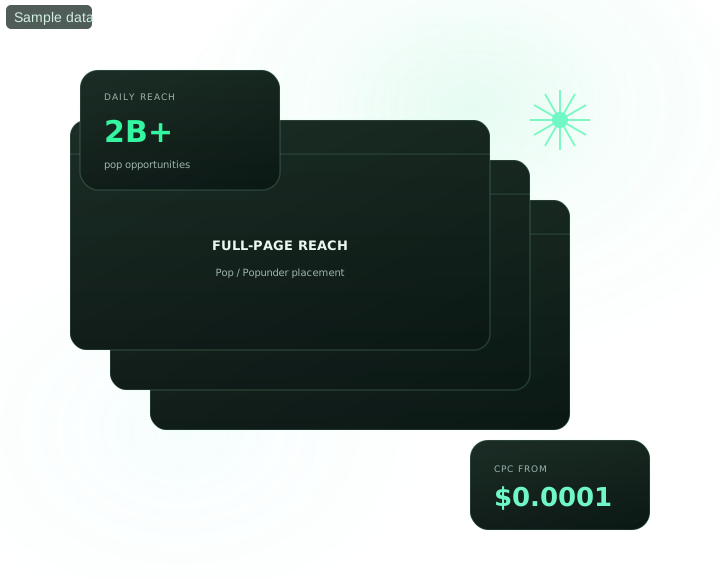
Popunder traffic at massive scale: at a glance
What does this page explain about Buy Pop Traffic from $0.0001 CPC?
Quick answer: Pop ads open your full landing page in a new window, giving you the entire screen and enormous volume for aggressive testing. With entry pricing from $0.0001 per visit, pop is the most cost-efficient way to test offers fast. A pop (popunder) loads your landing page in a separate browser window behind the user's current tab. There is no banner to design – the user lands directly on your page, giving you full-screen real estate and the freedom to tell a complete story. Pop traffic is available in huge volume at the lowest entry cost on the platform, which makes it ideal for rapid GEO and creative testing.
| Section | Distinct excerpt from this page |
|---|---|
| Full-page canvas | No banner needed – users arrive directly on your landing page with the whole screen to work with. |
| Volume for testing | Massive, always-on supply lets you validate offers, angles and GEOs in hours, not weeks. |
| Lowest entry cost | Our published Pop entry bid starts at $0.0001 per visit. Use a capped test to compare the actual traffic cost with accepted customer actions; the entry bid is not a fixed campaign price or proof that Pop will be the cheapest route to a customer. |
Reference for Buy Pop Traffic from $0.0001 CPC: FTC guidance on online advertising and marketing.
- Planning: What are pop ads?
- Control: Built to earn attention and convert.
- Decision: Format specs at a glance.
What are pop ads?
A pop (popunder) loads your landing page in a separate browser window behind the user's current tab. There is no banner to design – the user lands directly on your page, giving you full-screen real estate and the freedom to tell a complete story. Pop traffic is available in huge volume at the lowest entry cost on the platform, which makes it ideal for rapid GEO and creative testing.
Why can pop ads earn attention and convert?
Full-page canvas
No banner needed – users arrive directly on your landing page with the whole screen to work with.
Volume for testing
Massive, always-on supply lets you validate offers, angles and GEOs in hours, not weeks.
Lowest entry cost
Our published Pop entry bid starts at $0.0001 per visit. Use a capped test to compare the actual traffic cost with accepted customer actions; the entry bid is not a fixed campaign price or proof that Pop will be the cheapest route to a customer.
Format specs at a glance
Everything you need to brief creative and launch your first pop ads campaign on FroggyAds.
- Format
- Popunder (full page)
- Creative
- Your landing page URL – no banner required
- Frequency capping
- Configurable per user
- Devices
- Desktop and mobile
- Pricing model
- Per click (CPC)
- Entry bid
- From $0.0001 CPC
- Volume
- High – suited to scale testing
- Targeting
- GEO, device, OS, browser, carrier, source
Stack targeting to find profitable traffic
Combine these dimensions to narrow in on the audiences that convert, then scale them.
GEO & City
Target by country, region or city with granular bid control.
Device & OS
Split by mobile, desktop or tablet and operating system version.
Browser
Reach users on specific browsers and browser versions.
Carrier & ISP
Filter by mobile carrier or connection type for offer fit.
Category
Buy by content category across 300+ verticals.
Source & Zone
Whitelist or blacklist individual source IDs and zones.
How should you start and scale a pop ads campaign?
Transparent floor pricing for pop ads – bid up only once a source proves it converts. SmartCPC can assist with bid adjustments based on available campaign signals automatically.
Start running pop ads on FroggyAds
Open your account, deposit from $50 and Build your first pop ads campaign through the self-serve workflow.
Which verticals can use pop ads?
A starting point – most verticals can be tested on this format.
Pop ads, answered
What are popunder ads, and how do visitors reach my page?
Popunder advertising opens your destination in a separate browser window or tab, typically behind the page someone is using. Your landing page is the advertising creative, rather than a banner they must read first. With FroggyAds, you can test that full-page experience against specific countries, devices and traffic sources. Browser behaviour varies, so measure what visitors do after arrival rather than assuming every opened page receives attention.
Why choose FroggyAds for affiliate pop traffic?
Our self-serve controls let you buy pop traffic, set a test budget and compare results by source. That suits an affiliate buyer who wants to find which placements work for a particular offer instead of buying an unexplained traffic package. Confirm that your affiliate program permits popunder traffic, then evaluate approved commissions against the spend attributed to each source.
Do I need banners or other creative assets to launch pop ads?
Our Pop format uses your landing-page URL; a banner is not required. Put the offer, its main benefit and the next action where an arriving visitor can understand them quickly. Check mobile layout, loading, redirects and the form or checkout before launching. This makes your page do the selling without relying on a separate ad image to explain why the visitor should stay.
How much does FroggyAds pop traffic cost?
Our published Pop starting bid is $0.0001 CPC, presented as a per-visit entry rate. It is not a fixed-price traffic package: your bid, targeting and available inventory affect delivery. The $50 minimum deposit funds your account, while the campaign budget limits your test allocation. Compare the resulting cost per approved lead or sale, not just the smallest advertised unit price.
Which landing pages are suitable for a first popunder campaign?
Start with an offer that is easy to understand on arrival and a page that explains its terms clearly. Pop visitors have not necessarily read a headline advertising your product, so a page that assumes prior interest can lose them. A straightforward benefit, recognisable business and easy next step give your FroggyAds test a clearer chance to identify genuinely interested prospects.
Should pop traffic go directly to an offer or through a pre-lander?
Send visitors directly when the offer page already explains the product and makes the action clear. A pre-lander can help when people need context before deciding, but it adds another step that can lose visitors. Test the two journeys using the same commercial goal. A higher pre-lander click-through rate is not a win unless it also improves qualified leads, approved conversions or sales.
Can I separate mobile and desktop popunder traffic?
Yes. Our device and operating-system targeting lets you separate the experiences your offer supports. Test the destination on each selected device, especially forms, downloads and payment steps. Keep country eligibility aligned with the offer as well. Reviewing those campaigns separately helps you distinguish a landing-page compatibility problem from a traffic-source problem before changing bids.
Why can reported pop visits differ from analytics sessions?
A recorded ad interaction and a measured analytics session are not identical events. A new page may close before its analytics loads, lose parameters during a redirect or be affected by browser restrictions. Compare the same source, time zone and period, then test the actual destination. Investigate persistent unexplained differences without treating every missing session as proof of invalid traffic.
How should I use frequency capping for pop ads?
Use our configurable per-user frequency control to manage repeated delivery, then review whether additional exposure brings useful actions. A short signup journey and a considered purchase may need different tests; there is no universal cap that guarantees results. Keep the offer stable while changing frequency and compare conversion value with spend, rather than judging success only by the number of pages opened.
How do I scale a pop campaign without buying more of the wrong traffic?
Identify sources producing approved conversions at a cost your offer can support. Keep those results separate from new sources, and change one major bid or budget setting at a time. Our source lists and reporting help you retain what works while testing additional inventory. Start your next pop campaign with FroggyAds and let conversion value guide the expansion.
Pair it with another format
Most winning strategies combine two or three formats across the funnel.
Launch your first pop ads campaign
Create a FroggyAds account, deposit from $50 and reach 20B+ daily impressions – backed by conditional 7-day refund eligibility.
Planning a paid traffic campaign?
Use the primary buy traffic guide to compare formats, targeting controls, starting prices, source-quality checks, budgets and the step-by-step FroggyAds self-serve workflow.
See it inside the platform
Everything runs from one self-serve dashboard – launch, target precisely, then watch results by source and optimize in real time.
- Launch and target in one workflow
- Read performance by source ID
- SmartCPC and Adscore in the background
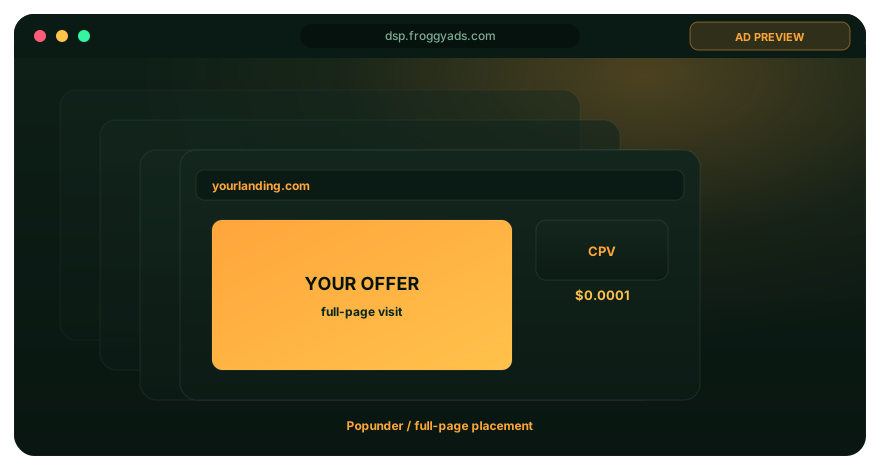
Plan pop ads by objective
Choose a playbook based on the business outcome, then keep the format, destination and measurement aligned.
Pop Ads for Affiliate Marketing
Creative, targeting, measurement and source-level optimization for affiliate marketing.
Pop Ads for App Installs
Creative, targeting, measurement and source-level optimization for app installs.
Pop Ads for B2B Demand Generation
Creative, targeting, measurement and source-level optimization for b2b demand generation.
Pop Ads for Brand Awareness
Creative, targeting, measurement and source-level optimization for brand awareness.
Pop Ads for Direct Response
Creative, targeting, measurement and source-level optimization for direct response.
Pop Ads for Ecommerce
Creative, targeting, measurement and source-level optimization for ecommerce.
Pop Ads for Lead Generation
Creative, targeting, measurement and source-level optimization for lead generation.
Pop Ads for Local Business Advertising
Creative, targeting, measurement and source-level optimization for local business advertising.
Pop Ads for Retargeting
Creative, targeting, measurement and source-level optimization for retargeting.
Pop Ads for Subscription Growth
Creative, targeting, measurement and source-level optimization for subscription growth.
New growth and media buying playbooks
Explore focused guides built around distinct target keywords, measurable campaign decisions, source-level controls and quality-aware optimization.
Compare traffic platforms before moving budget
Use the FroggyAds comparison library to review formats, funding, targeting, source controls and migration steps for major advertising platforms.
Build a pop ads test that can separate traffic cost from conversion quality
Pop ads can deliver substantial reach at a very low entry price, but the media cost should never be the only success measure. Define the advertiser's accepted conversion before launch and decide how long that event normally takes to mature. A registration, lead, install, purchase or other business action should be validated using the same rules throughout the test. This gives the campaign a stable denominator for comparing sources and prevents cheap visits from being mistaken for profitable acquisition.
FroggyAds pop traffic starts from very low CPC pricing and is supported by granular campaign controls. The practical advantage is the ability to buy enough traffic to learn while still managing country, city, device, operating-system, browser, carrier, category and source-level decisions. Begin broad enough to collect evidence inside the offer's real eligibility boundaries. If the campaign is restricted to a tiny whitelist before any recent test exists, the buyer may simply reproduce an old assumption instead of discovering the current source mix.
| Test stage | Primary question | Evidence to keep |
|---|---|---|
| Launch | Is delivery reaching eligible users and compatible devices? | Spend, sessions and technical checks |
| Validation | Do tracked actions match the advertiser's accepted definition? | Accepted and rejected outcomes by source |
| Optimization | Where is weak performance repeatedly concentrated? | Source, device, GEO and creative comparisons |
| Scale | Does quality survive a controlled increase? | Mature CPA or value after new inventory enters |
The landing page should be built for immediate comprehension. State the offer, qualification and next step clearly on the first useful screen, especially on mobile. Test the page on the browsers and operating systems included in targeting, verify that redirects and forms behave correctly and confirm that conversion identifiers survive to the reporting system. A broken destination can make every traffic source look poor, while a confusing first screen can produce exits that have little to do with inventory quality.
Optimize sources only after tracking is trustworthy. FroggyAds allowlist and blocklist controls can be used to isolate repeated inventory patterns, but each decision should have a minimum evidence rule. A source with a small number of visits can move from apparently excellent to apparently weak with one delayed conversion. Use a written pause threshold, review the normal conversion delay and look for concentration by device, market or landing-page variant before applying a broad exclusion.
Scale with controlled changes. Increase budget or bid in steps, keep the best current destination and measurement definition stable, and compare the new period with the same accepted outcome. More volume can change the inventory mix, so a profitable first sample is evidence for the next test rather than a guarantee. FroggyAds gives media buyers the controls to keep that expansion measurable while the advertiser maintains responsibility for offer economics, creative and the post-click experience.
Popunder traffic at massive scale.: what should the advertiser decide next?
For Popunder traffic at massive scale., pop means a full-page or separate-window traffic format where supported. The buying decision is whether that delivery context fits the offer, creative and destination well enough to produce an accepted post-click result. Use Popunder traffic at massive scale: at a glance and What does this page explain about Buy Pop Traffic from $0.0001 CPC? as the page-specific checkpoints, then judge pop ads on frequency, destination readiness and source-level conversion quality plus downstream conversion quality.
On this Popunder traffic at massive scale. page, the decision should remain tied to the existing evidence around Popunder traffic at massive scale: at a glance, What does this page explain about Buy Pop Traffic from $0.0001 CPC? and What are pop ads?. Those sections give pop ads its specific context; the table below turns that context into campaign actions rather than adding another generic definition.
| Decision | What to verify | FroggyAds action |
|---|---|---|
| Popunder traffic at massive scale. objective | Use Popunder traffic at massive scale: at a glance to define the accepted business event and the maximum learning loss for pop ads. | Launch one FroggyAds campaign objective for Popunder traffic at massive scale. and keep the conversion definition stable. |
| Popunder traffic at massive scale. audience | Use What does this page explain about Buy Pop Traffic from $0.0001 CPC? to verify market, device, language and offer eligibility for pop ads. | Apply only the FroggyAds targeting controls that change the real Popunder traffic at massive scale. customer journey. |
| Popunder traffic at massive scale. source evidence | Use What are pop ads? to keep source-level differences visible instead of relying on one blended pop ads average. | Keep, cap, exclude or retest Popunder traffic at massive scale. inventory from documented source evidence. |
| Popunder traffic at massive scale. economics | Use Why can pop ads earn attention and convert? to connect media spend with accepted conversions and downstream value for pop ads. | Protect the Popunder traffic at massive scale. test with a written budget boundary and a consistent attribution window. |
| Popunder traffic at massive scale. scale rule | Use Full-page canvas to define the exact evidence that earns the next budget increase for pop ads. | Scale Popunder traffic at massive scale. one major control at a time and compare marginal performance with the prior baseline. |
A page-specific FroggyAds test sequence for Popunder traffic at massive scale.
- Popunder traffic at massive scale. outcome: define the accepted event for pop ads and the maximum loss permitted while the first test is learning.
- Popunder traffic at massive scale. path: verify market eligibility, device experience, landing-page continuity and tracking against Popunder traffic at massive scale: at a glance before buying more traffic.
- Popunder traffic at massive scale. hypothesis: launch one bounded FroggyAds test tied to What does this page explain about Buy Pop Traffic from $0.0001 CPC?; do not change bid, creative, audience and destination together.
- Popunder traffic at massive scale. source review: compare qualified activity, accepted conversions, timing and cost by the source or segment dimensions relevant to What are pop ads?.
- Popunder traffic at massive scale. scaling: use Why can pop ads earn attention and convert? and Full-page canvas to define what must reproduce before the next budget increase.
Why FroggyAds is relevant to Popunder traffic at massive scale.
For Popunder traffic at massive scale., FroggyAds gives advertisers a self-serve DSP and ad-network workflow for buying supported traffic with campaign-level budgets and targeting. Depending on format and campaign context, available controls can include country, city, device, operating system, browser, carrier, category, source, ID and IP options. SmartCPC and Adscore-supported traffic-quality controls can support the pop ads optimization process, while the advertiser's tracker, analytics and backend acceptance remain the final evidence for commercial quality.
Use Full-page canvas as the final checkpoint for Popunder traffic at massive scale.. If the accepted result does not reproduce after the next meaningful volume step, return to the last stable configuration instead of widening several controls at once.
How to tell whether Popunder traffic at massive scale. is working
For Popunder traffic at massive scale., measure pop as a full-page or separate-window traffic format where supported and keep frequency, destination readiness and source-level conversion quality beside the accepted post-click event. Use Popunder traffic at massive scale: at a glance as the baseline for whether delivery quality is actually improving.
Reconcile Popunder traffic at massive scale. on one evidence window
For Popunder traffic at massive scale., compare FroggyAds reporting with the advertiser's tracker, analytics and backend records for the same dates and attribution rules. Record media spend, relevant delivery events, qualified landing activity, accepted conversions and rejection reasons, then use What does this page explain about Buy Pop Traffic from $0.0001 CPC? to investigate material gaps before they become optimization rules.
Diagnose the smallest failing layer in Popunder traffic at massive scale.
If pop ads delivery is weak, review eligibility, targeting, bid and inventory first. If traffic arrives but the destination underperforms, inspect speed, message continuity, forms, redirects and device compatibility. If front-end conversions look healthy but backend acceptance is weak, use What are pop ads? to isolate audience or source quality after tracking has been verified.
Set the next Popunder traffic at massive scale. scale and stop rule
Write the exact Popunder traffic at massive scale. result that earns more budget and the exact condition that pauses the test. Increase one major control at a time and compare marginal pop ads performance with the prior configuration. FroggyAds supplies the campaign controls; the advertiser's accepted downstream data determines whether the expansion is commercially useful.
Popunder traffic at massive scale.: the decision this URL owns
Decision inputs for Popunder traffic at massive scale.: full-page traffic, source evidence, conversion tracking, accepted business value. Keep these inputs tied to accepted conversion or value event and the page-specific job: decide whether the format fits the message, device and conversion path.
Popunder traffic at massive scale. should resolve one practical media decision for a pop media buyer: decide whether the format fits the message, device and conversion path. Keep the evaluation tied to this URL rather than borrowing conclusions from a neighboring format or channel.
URL boundary for Popunder traffic at massive scale.: This URL owns Popunder traffic at massive scale.; Worldwide Pop Traffic is the nearest neighboring topic and should keep its separate task. Use this page only for the decision implied by Popunder traffic at massive scale..
Popunder traffic at massive scale: at a glance is an evidence checkpoint for Popunder traffic at massive scale.. To answer “What are popunder ads, and how do visitors reach my page?”, keep full-page traffic in the same campaign record and use it to decide whether the format fits the message, device and conversion path.
What are pop ads? is the measurement checkpoint for this URL. Resolve “Why choose FroggyAds for affiliate pop traffic?” while retaining source evidence, accepted business value, spend and cohort age so the result can be reconciled with accepted conversion or value event.
Why can pop ads earn attention and convert? is the action checkpoint for Popunder traffic at massive scale.. Before acting on “Do I need banners or other creative assets to launch pop ads?”, document conversion tracking, the resulting campaign action and the rollback or retest condition.
| Page checkpoint | How to use it | Evidence to retain |
|---|---|---|
| Popunder traffic at massive scale: at a glance | Use Popunder traffic at massive scale: at a glance to establish the first evidence boundary for Popunder traffic at massive scale.; then record which part of frequency, source/placement, landing speed and downstream value it changes. | Keep full-page traffic, source/campaign ID and the accepted-event definition together. |
| What are pop ads? | Use What are pop ads? as the second checkpoint and reconcile it with accepted conversion or value event before changing budget or source allocation. | Retain source evidence, spend, timestamp/cohort age and accepted/rejected outcomes. |
| Why can pop ads earn attention and convert? | Use Why can pop ads earn attention and convert? as the final checkpoint: if it does not change the evidence for accepted conversion or value event, keep the test narrow rather than scaling. | Document conversion tracking, the decision taken and the rollback or retest condition. |
Transparent Popunder traffic at massive scale. decision example
Hypothetical example: For Popunder traffic at massive scale., a hypothetical controlled cell that spends USD 230 and records 8 accepted conversion or value event after the same maturity window has an accepted cost of USD 28.75 per outcome. Replace the figures, outcome and review window with your own economics; this is not a FroggyAds performance claim.
Why use FroggyAds here?
When Popunder traffic at massive scale. calls for a paid-traffic test, use FroggyAds to keep targeting, budget, format and source decisions in one workflow while the advertiser-side system confirms accepted conversion or value event. Create your free FroggyAds account.
Popunder traffic at massive scale — what matters first
Popunder traffic at massive scale is useful when the format fits the user journey, device context, creative requirements and measurable conversion path.