
Keyword ownership
- how to scale ad campaigns
Moving from a winning test to real volume is where most budgets break. This guide shows the FroggyAds way to scale – gradually, on whitelisted sources, without losing control.
Quick answer: How To Scale Campaigns: a practical step-by-step guide for media buyers, with settings, examples and pitfalls. Moving from a winning test to real volume is where most budgets break. This guide shows the FroggyAds way to scale – gradually, on whitelisted sources, without losing control. For how to scale ad campaigns, Map the impression or click to the source identifier, destination session, conversion record and final accepted value. For how to scale ad campaigns, Include media cost, tracking, creative, landing-page operations, conversion approval, refunds and retained value.
| Section | Distinct excerpt from this page |
|---|---|
| Why scaling breaks budgets – and how not to | The FroggyAds approach is the opposite – scale only what's proven, and scale it gradually so performance has room to hold. |
| Whitelist winners | Before scaling, lock spend to the source IDs that have proven they convert. |
| Raise gradually | Increase budgets and bids in steps, not jumps, so performance has time to hold. |
Reference for How To Scale Campaigns - Step-by-Step Guide: Google Ads conversion tracking definition.
Use the How to scale campaigns safely guidance above to choose only the controls that affect the real buyer journey, then reconcile campaign and backend evidence.
Create your free FroggyAds accountKeep the objective, targeting and accepted outcome explicit so the next campaign change is measurable.
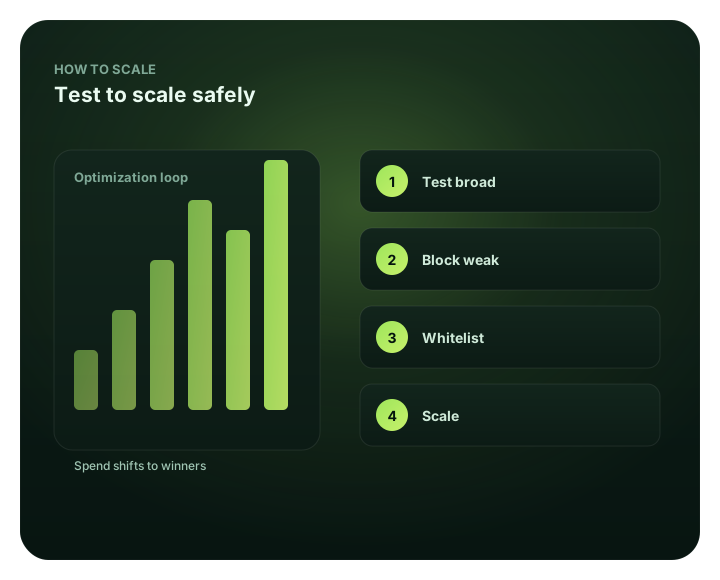
Scaling fails when buyers treat 'more budget' as the strategy. Volume amplifies whatever you point it at: pour spend onto un-whitelisted traffic and you amplify the weak sources too. The FroggyAds approach is the opposite – scale only what's proven, and scale it gradually so performance has room to hold.
The ladder is concrete: whitelist your winning source IDs, raise budgets and bids in steps rather than leaps, and expand into adjacent GEOs, devices or formats one variable at a time. Keep optimizing at the source level as volume grows, let SmartCPC manage bids, and rely on Adscore and internal controls to support traffic-quality evaluation at higher volume. Start from $50 and climb.
Keep the next How to scale campaigns safely step reversible: define one accepted outcome, protect the learning budget and use source-level results before expanding.
Create your free FroggyAds accountKeep the objective, targeting and accepted outcome explicit so the next campaign change is measurable.
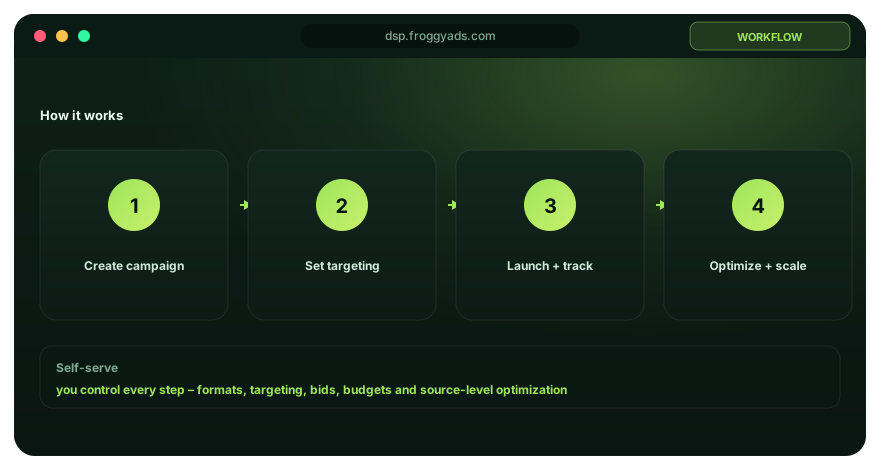
For How to scale campaigns safely, the FroggyAds self-serve workflow keeps campaign setup, targeting, budget controls, source-level reporting and optimization in one dashboard so advertisers can make evidence-led keep, cap, exclude and retest decisions.
Volume amplifies whatever you scale – good or bad.
Before scaling, lock spend to the source IDs that have proven they convert.
Increase budgets and bids in steps, not jumps, so performance has time to hold.
Add adjacent GEOs, devices or formats one at a time and measure each before the next.
Keep optimizing at source level as volume grows; cut anything that decays.
Scale on FroggyAds
Open an account and scale proven campaigns from $50.
A campaign has earned it after several mature periods stay inside its written economics and traffic-quality limits. Source-level performance should remain visible so a blended average cannot hide weak inventory.
Move confirmed sources into a separate structure or whitelist before increasing volume. Raise one budget or bid limit in a measured step, then let delayed outcomes mature before the next change.
Set an expansion allowance that the business can lose without disturbing proven delivery. Give each new market, device, source group, or format its own cap and decision date.
Treat it as a new test because eligibility, competition, response, and conversion quality may change. Keep the original audience available as a reference while the expansion gathers evidence.
Keep the confirmed version active while a separate allocation tests a genuinely different message or asset. Watch fatigue and frequency by audience instead of replacing every creative at once.
Confirm landing-page capacity, form or checkout function, stock or service capacity, tracking, approval status, and backend handling. More traffic can expose a destination or fulfillment limit that was invisible in the smaller test.
Review the marginal cost and quality of the added traffic rather than relying solely on the new blended total. Compare source mix, accepted outcomes, rejection reasons, and conversion delay with the last stable period.
Higher bids or caps may reach new sources, change frequency, intensify competition, or strain the destination. Trace the changed segment before assuming the original campaign idea stopped working.
Write down the last stable settings and the cost, quality, or operational condition that triggers a return. Preserve the change time and source mix so the rollback addresses the actual expansion.
Proceed when the added volume has matured and still meets the accepted economics, quality, and service-capacity limits. Make the next increase independently so its effect remains readable.
Preserve the How to scale campaigns safely baseline, change one major variable and scale only the segments that keep producing accepted downstream value.
Create your free FroggyAds accountKeep the objective, targeting and accepted outcome explicit so the next campaign change is measurable.
Create your account and scale proven campaigns across 20B+ daily impressions.
Scale campaigns only after tracking reconciles and the winning result is distributed across enough sources, creatives and time periods to be credible. Increase one dimension at a time and keep a rollback state and loss ceiling.
Event: an eligible impression or click exposed to the declared campaign configuration.
Decision: whether the change improves mature accepted value without hiding source or quality loss.
Primary risk: changing several variables together or scaling from an early vanity-metric spike.
| Layer | Evidence to preserve | Action rule |
|---|---|---|
| Delivery | Campaign, source, placement, device, GEO, schedule and creative identifiers where available. | Do not optimize a blended result when the controllable delivery units can be separated. |
| Measurement | Timestamped impression or click records, conversion identifiers, values, currency and acceptance status. | Reconcile platform data with first-party or partner records before a large budget change. |
| Quality | Session behavior, invalid-event signals, conversion validity, downstream value and repeat patterns. | Separate suspicious activity from ordinary low performance and document the evidence behind exclusions. |
| Change control | Previous settings, hypothesis, observation window, loss ceiling and rollback state. | Change one material variable at a time and restore the stable state when the declared stop rule is reached. |
Campaign scaling is a controlled expansion of budget, bid, sources, GEOs or creatives after a result has matured. Each expansion should preserve a stable comparison and a rollback state.
For how to scale ad campaigns, Write the business question before selecting a setting or report. State which event should change, which segment is eligible and what result would justify the next action. The practical evidence should include the configuration that was active, the source or placement involved, the creative and destination version, and the event status at the agreed reporting cutoff. This keeps the analysis tied to a specific campaign state instead of a blended historical average that cannot be reproduced.
Campaign scaling is a controlled expansion of budget, bid, sources, GEOs or creatives after a result has matured. Each expansion should preserve a stable comparison and a rollback state. In this part of the workflow, compare the newest test cohort with a stable baseline, normalize time zone and currency, and preserve the original identifiers through every permitted handoff. The decision should be reversible: continue, limit, investigate or restore the previous state. Avoid changing several variables at once, because a larger result without causal clarity is difficult to repeat safely.
For how to scale ad campaigns, Map the impression or click to the source identifier, destination session, conversion record and final accepted value. Keep timestamps and status changes available for reconciliation. The practical evidence should include the configuration that was active, the source or placement involved, the creative and destination version, and the event status at the agreed reporting cutoff. This keeps the analysis tied to a specific campaign state instead of a blended historical average that cannot be reproduced.
Campaign scaling is a controlled expansion of budget, bid, sources, GEOs or creatives after a result has matured. Each expansion should preserve a stable comparison and a rollback state. In this part of the workflow, compare the newest test cohort with a stable baseline, normalize time zone and currency, and preserve the original identifiers through every permitted handoff. The decision should be reversible: continue, limit, investigate or restore the previous state. Avoid changing several variables at once, because a larger result without causal clarity is difficult to repeat safely — Establish the measurement chain.
For how to scale ad campaigns, Use a narrow campaign, stable creative set and fixed loss ceiling. Hold unrelated targeting and budget variables steady so the observed difference can be attributed to the tested change. The practical evidence should include the configuration that was active, the source or placement involved, the creative and destination version, and the event status at the agreed reporting cutoff. This keeps the analysis tied to a specific campaign state instead of a blended historical average that cannot be reproduced.
Campaign scaling is a controlled expansion of budget, bid, sources, GEOs or creatives after a result has matured. Each expansion should preserve a stable comparison and a rollback state. In this part of the workflow, compare the newest test cohort with a stable baseline, normalize time zone and currency, and preserve the original identifiers through every permitted handoff. The decision should be reversible: continue, limit, investigate or restore the previous state. Avoid changing several variables at once, because a larger result without causal clarity is difficult to repeat safely — Design the first controlled test.
For how to scale ad campaigns, Separate only the dimensions that can change a decision. Excessive fragmentation creates small samples, unstable averages and operational work without producing clearer evidence. The practical evidence should include the configuration that was active, the source or placement involved, the creative and destination version, and the event status at the agreed reporting cutoff. This keeps the analysis tied to a specific campaign state instead of a blended historical average that cannot be reproduced.
Campaign scaling is a controlled expansion of budget, bid, sources, GEOs or creatives after a result has matured. Each expansion should preserve a stable comparison and a rollback state. In this part of the workflow, compare the newest test cohort with a stable baseline, normalize time zone and currency, and preserve the original identifiers through every permitted handoff. The decision should be reversible: continue, limit, investigate or restore the previous state. Avoid changing several variables at once, because a larger result without causal clarity is difficult to repeat safely — Segment without destroying volume.
For how to scale ad campaigns, Document conversion windows, approval delays, refunds and late revenue. Compare cohorts at the same maturity rather than declaring a new segment weak because its outcomes have not settled. The practical evidence should include the configuration that was active, the source or placement involved, the creative and destination version, and the event status at the agreed reporting cutoff. This keeps the analysis tied to a specific campaign state instead of a blended historical average that cannot be reproduced.
Campaign scaling is a controlled expansion of budget, bid, sources, GEOs or creatives after a result has matured. Each expansion should preserve a stable comparison and a rollback state. In this part of the workflow, compare the newest test cohort with a stable baseline, normalize time zone and currency, and preserve the original identifiers through every permitted handoff. The decision should be reversible: continue, limit, investigate or restore the previous state. Avoid changing several variables at once, because a larger result without causal clarity is difficult to repeat safely — Protect against reporting delay.
For how to scale ad campaigns, Define when a source is allowed, limited, investigated or blocked. Require a minimum evidence threshold and distinguish suspicious activity from normal low conversion performance. The practical evidence should include the configuration that was active, the source or placement involved, the creative and destination version, and the event status at the agreed reporting cutoff. This keeps the analysis tied to a specific campaign state instead of a blended historical average that cannot be reproduced.
Campaign scaling is a controlled expansion of budget, bid, sources, GEOs or creatives after a result has matured. Each expansion should preserve a stable comparison and a rollback state. In this part of the workflow, compare the newest test cohort with a stable baseline, normalize time zone and currency, and preserve the original identifiers through every permitted handoff. The decision should be reversible: continue, limit, investigate or restore the previous state. Avoid changing several variables at once, because a larger result without causal clarity is difficult to repeat safely — Create a source-level action rule.
For how to scale ad campaigns, Keep the promise, format and landing-page experience aligned. A targeting or delivery change can alter device context and user intent, so creative performance must be reviewed again after material expansion. The practical evidence should include the configuration that was active, the source or placement involved, the creative and destination version, and the event status at the agreed reporting cutoff. This keeps the analysis tied to a specific campaign state instead of a blended historical average that cannot be reproduced.
Campaign scaling is a controlled expansion of budget, bid, sources, GEOs or creatives after a result has matured. Each expansion should preserve a stable comparison and a rollback state. In this part of the workflow, compare the newest test cohort with a stable baseline, normalize time zone and currency, and preserve the original identifiers through every permitted handoff. The decision should be reversible: continue, limit, investigate or restore the previous state. Avoid changing several variables at once, because a larger result without causal clarity is difficult to repeat safely — Coordinate creative and destination.
For how to scale ad campaigns, Save the previous configuration, label the test window and record the hypothesis. Restore the stable state when cost, quality, discrepancy or compliance crosses the written boundary. The practical evidence should include the configuration that was active, the source or placement involved, the creative and destination version, and the event status at the agreed reporting cutoff. This keeps the analysis tied to a specific campaign state instead of a blended historical average that cannot be reproduced.
Campaign scaling is a controlled expansion of budget, bid, sources, GEOs or creatives after a result has matured. Each expansion should preserve a stable comparison and a rollback state. In this part of the workflow, compare the newest test cohort with a stable baseline, normalize time zone and currency, and preserve the original identifiers through every permitted handoff. The decision should be reversible: continue, limit, investigate or restore the previous state. Avoid changing several variables at once, because a larger result without causal clarity is difficult to repeat safely — Use change control and rollback.
For how to scale ad campaigns, Include media cost, tracking, creative, landing-page operations, conversion approval, refunds and retained value. A cheaper platform metric can still create a more expensive customer outcome. The practical evidence should include the configuration that was active, the source or placement involved, the creative and destination version, and the event status at the agreed reporting cutoff. This keeps the analysis tied to a specific campaign state instead of a blended historical average that cannot be reproduced.
Campaign scaling is a controlled expansion of budget, bid, sources, GEOs or creatives after a result has matured. Each expansion should preserve a stable comparison and a rollback state. In this part of the workflow, compare the newest test cohort with a stable baseline, normalize time zone and currency, and preserve the original identifiers through every permitted handoff. The decision should be reversible: continue, limit, investigate or restore the previous state. Avoid changing several variables at once, because a larger result without causal clarity is difficult to repeat safely — Review economics beyond the platform.
For how to scale ad campaigns, Require the result to persist across multiple periods or source groups. Increase one dimension at a time and monitor the newest spend separately so quality loss is visible before it dominates the blended average. The practical evidence should include the configuration that was active, the source or placement involved, the creative and destination version, and the event status at the agreed reporting cutoff. This keeps the analysis tied to a specific campaign state instead of a blended historical average that cannot be reproduced.
Campaign scaling is a controlled expansion of budget, bid, sources, GEOs or creatives after a result has matured. Each expansion should preserve a stable comparison and a rollback state. In this part of the workflow, compare the newest test cohort with a stable baseline, normalize time zone and currency, and preserve the original identifiers through every permitted handoff. The decision should be reversible: continue, limit, investigate or restore the previous state. Avoid changing several variables at once, because a larger result without causal clarity is difficult to repeat safely — Scale only repeatable evidence.
For how to scale ad campaigns, Record missing identifiers, modeled signals, unsupported devices, privacy restrictions and platform-specific definitions. Clear limitations make the guidance trustworthy and prevent a generic rule from being applied outside its evidence. The practical evidence should include the configuration that was active, the source or placement involved, the creative and destination version, and the event status at the agreed reporting cutoff. This keeps the analysis tied to a specific campaign state instead of a blended historical average that cannot be reproduced.
Campaign scaling is a controlled expansion of budget, bid, sources, GEOs or creatives after a result has matured. Each expansion should preserve a stable comparison and a rollback state. In this part of the workflow, compare the newest test cohort with a stable baseline, normalize time zone and currency, and preserve the original identifiers through every permitted handoff. The decision should be reversible: continue, limit, investigate or restore the previous state. Avoid changing several variables at once, because a larger result without causal clarity is difficult to repeat safely — Document exceptions and limitations.
For how to scale ad campaigns, End each reporting cycle with a specific action, owner and review date. A decision log makes future optimization faster because the team can see which assumptions were tested and what evidence changed them. The practical evidence should include the configuration that was active, the source or placement involved, the creative and destination version, and the event status at the agreed reporting cutoff. This keeps the analysis tied to a specific campaign state instead of a blended historical average that cannot be reproduced.
Campaign scaling is a controlled expansion of budget, bid, sources, GEOs or creatives after a result has matured. Each expansion should preserve a stable comparison and a rollback state. In this part of the workflow, compare the newest test cohort with a stable baseline, normalize time zone and currency, and preserve the original identifiers through every permitted handoff. The decision should be reversible: continue, limit, investigate or restore the previous state. Avoid changing several variables at once, because a larger result without causal clarity is difficult to repeat safely — Turn the review into a decision.
A campaign has earned it after several mature periods stay inside its written economics and traffic-quality limits. Source-level performance should remain visible so a blended average cannot hide weak inventory.
Move confirmed sources into a separate structure or whitelist before increasing volume. Raise one budget or bid limit in a measured step, then let delayed outcomes mature before the next change.
Set an expansion allowance that the business can lose without disturbing proven delivery. Give each new market, device, source group, or format its own cap and decision date.
Treat it as a new test because eligibility, competition, response, and conversion quality may change. Keep the original audience available as a reference while the expansion gathers evidence.
Keep the confirmed version active while a separate allocation tests a genuinely different message or asset. Watch fatigue and frequency by audience instead of replacing every creative at once.
Confirm landing-page capacity, form or checkout function, stock or service capacity, tracking, approval status, and backend handling. More traffic can expose a destination or fulfillment limit that was invisible in the smaller test.
Review the marginal cost and quality of the added traffic rather than relying solely on the new blended total. Compare source mix, accepted outcomes, rejection reasons, and conversion delay with the last stable period.
Higher bids or caps may reach new sources, change frequency, intensify competition, or strain the destination. Trace the changed segment before assuming the original campaign idea stopped working.
Write down the last stable settings and the cost, quality, or operational condition that triggers a return. Preserve the change time and source mix so the rollback addresses the actual expansion.
Proceed when the added volume has matured and still meets the accepted economics, quality, and service-capacity limits. Make the next increase independently so its effect remains readable.
The buyer task on How to scale campaigns safely. is practical rather than definitional: isolate the relevant traffic, format, targeting or workflow condition, then connect it to a measurable accepted business outcome before scaling. The page-specific job is to understand the concept and apply it to a concrete campaign decision. The adjacent How To Scale Ad Campaigns page should remain a separate decision.
Evidence already visible on this page: Moving from a winning test to real volume is where most budgets break. This guide shows the FroggyAds way to scale – gradually, on whitelisted sources, without losing control. Quick answer: How To Scale Campaigns: a practical step-by-step guide for media buyers, with settings, examples and pitfalls. Moving from a winning test to real volume is where most budgets… The working concepts for this URL are campaign objective, audience targeting, source quality.
Questions to resolve before scale: When has a campaign earned the right to scale? What is the first controlled scaling move? How much budget should be reserved for expansion?
| Checkpoint | Page-specific action | Evidence to keep |
|---|---|---|
| Setup | Use “How to scale campaigns safely: at a glance” to define the first operating boundary for How to scale campaigns safely.. | Record the answer to “When has a campaign earned the right to scale?” together with source, targeting and destination identifiers. |
| Measurement | Use “Test the How to scale campaigns safely hypothesis with source-level evidence” to test whether delivery is producing the expected path toward the accepted business outcome. | Keep the evidence needed to answer “What is the first controlled scaling move?” after the same maturation window. |
| Scale rule | Use “Ready to turn How to scale campaigns safely. into a measurable traffic test?” to decide what changes next; change one material variable before comparing again. | Write the answer to “How much budget should be reserved for expansion?” plus accepted cost/value and the rollback condition. |
Hypothetical example: For a hypothetical How to scale campaigns safely. cell, USD 325 divided by 6 mature accepted outcomes equals USD 54.17 per accepted outcome. Replace the inputs with your own economics; this is not a FroggyAds performance claim.
Use FroggyAds when How to scale campaigns safely. needs a measurable paid-media test. Our self-serve workflow keeps targeting, budget and source decisions under your control while your accepted accepted business outcome remains the scale signal. Create your free FroggyAds account.
Hypothetical example: a buyer using this How To Scale Campaigns guide can turn one recommendation into a test by naming the accepted event, fixing the review window and changing one campaign variable. If USD 150 produces 7 accepted outcomes, the resulting accepted CPA is USD 21.43; use your own numbers and economics before deciding what to change next.
How to scale campaigns safely is most useful when it helps a buyer understand the concept and apply it to a concrete campaign decision. Define the accepted outcome first, then use targeting, budget and source-level evidence to decide what deserves more spend.