CPC ad network buyer framework
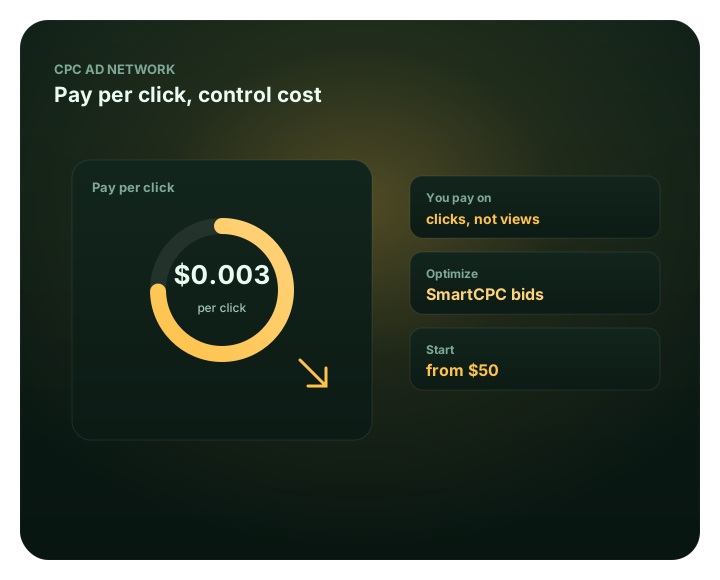
Direct answerA CPC ad network charges when an ad receives a click rather than for every impression. FroggyAds offers self-serve CPC buying for push and native inventory with entry bids from $0.003, plus source, placement, device, GEO and frequency controls. The right CPC network is not simply the one with the lowest click price; it is the one that can produce measurable, valid clicks below your break-even cost.
This page owns the decision around click-billed inventory, source controls, conversion tracking and break-even CPC discipline. Related modifiers are consolidated here only when they describe the same underlying user problem.
Define the billable click
Confirm what the platform counts as a click, when it is billed and how duplicates or invalid activity are handled. A dashboard total is useful only when it maps to a consistent event. Preserve timestamps and click IDs so differences between the ad platform, tracker and analytics system can be reconciled.
Separate bid from actual cost
A maximum CPC is a bidding ceiling, not always the amount paid. Compare the actual average cost, source mix and auction conditions after delivery. Lowering a bid can reduce volume or shift inventory quality, so a cheaper average click should be evaluated beside conversion rate and accepted value.
Use source and placement controls
A CPC network should let the buyer identify where clicks originate and act on the evidence. Segment source, placement, creative, GEO, device, browser, carrier and time. Build allowlists from repeatable value and block placements only after enough evidence or a clear quality violation.
Connect clicks to business outcomes
Carry the click ID to the landing session, conversion event and final accepted value. Use postback or server-to-server reporting where available, and keep the attribution window consistent. A click is a media event, not proof of a lead, sale or retained customer.
Calculate break-even CPC
Break-even CPC can be estimated as conversion rate multiplied by net value per conversion. Use accepted conversion rate and net value after refunds, rejection and fulfillment costs. Apply a safety margin because conversion rates vary and early samples can be noisy.
Control creative and landing continuity
The ad and destination should describe the same product, audience and action. Misleading curiosity can inflate CTR while reducing downstream value. Test page speed, mobile rendering, redirects and consent before paying for meaningful volume.
Watch invalid and accidental clicks
Invalid traffic can include fraudulent, duplicate or accidental clicks that do not represent genuine interest. Monitor abnormal timing, repeated devices, impossible navigation and source concentration. Use platform controls and your own analytics rather than relying on one system alone.
Plan a bounded first test
Set the source set, bid, daily cap, target event, attribution window and maximum loss before launch. Start with enough budget to observe multiple conversion opportunities, but stop at the approved ceiling. Do not change targeting, bid and landing page simultaneously.
Compare effective acquisition cost
The useful comparison is not CPC alone. Calculate cost per accepted lead, sale or other final event by source. A $0.02 click at a weak conversion rate can cost more than a $0.08 click from a qualified placement.
Scale with a stable control
Keep a portion of spend on the last known working setup while adding sources or raising bids. Scale one dimension at a time, review source concentration and preserve the rollback configuration. Reopen the test whenever the inventory or destination changes materially.
| Control | Operating requirement |
|---|
| Billing or permission | Document the current platform, campaign, traffic-source and billable-event rules before launch. |
|---|
| Tracking contract | Preserve click or impression identifiers, source, placement, creative, cost and the final accepted outcome. |
|---|
| Evidence threshold | Set the minimum amount of mature source-level evidence required before a keep, limit or stop decision. |
|---|
| Scale rule | Increase one major variable only after value repeats with stable quality and a known source mix. |
|---|
| Stop rule | Pause when policy, loss, discrepancy, invalid-traffic, rejection or quality limits are breached. |
|---|
| Rollback | Retain the last stable bid, source list, creative and destination so a failed change can be reversed. |
|---|
1. DefineBilling event, permission, audience and final outcome.
2. InstrumentStable IDs and consistent attribution through validation.
3. TestOne bounded source cell with a loss ceiling.
4. AllocateKeep, limit, pause or roll back from mature evidence.
Verification rule: Public pricing, inventory, platform policy and offer permission can change. Recheck current requirements before every material launch or scale decision.
Questions about CPC ad network
What is a CPC ad network?
It is an advertising network where the advertiser is billed for clicks delivered under the platform’s counting and quality rules.
Which FroggyAds formats use CPC?
FroggyAds offers CPC buying for push and native formats, with entry bids from $0.003 subject to inventory and targeting.
Is the cheapest CPC network always best?
No. The best choice produces valid clicks and accepted business outcomes below the buyer’s break-even cost.
What is maximum CPC?
Maximum CPC is the highest bid the advertiser is generally willing to pay for a click under the selected bidding setup.
What is actual CPC?
Actual CPC is the amount charged for a delivered click and may be lower than the maximum bid.
How do I calculate average CPC?
Divide total click cost by the number of billed clicks over the same reporting period.
How do I calculate break-even CPC?
Multiply the accepted conversion rate by net value per accepted conversion, then apply a risk margin.
What should I track besides clicks?
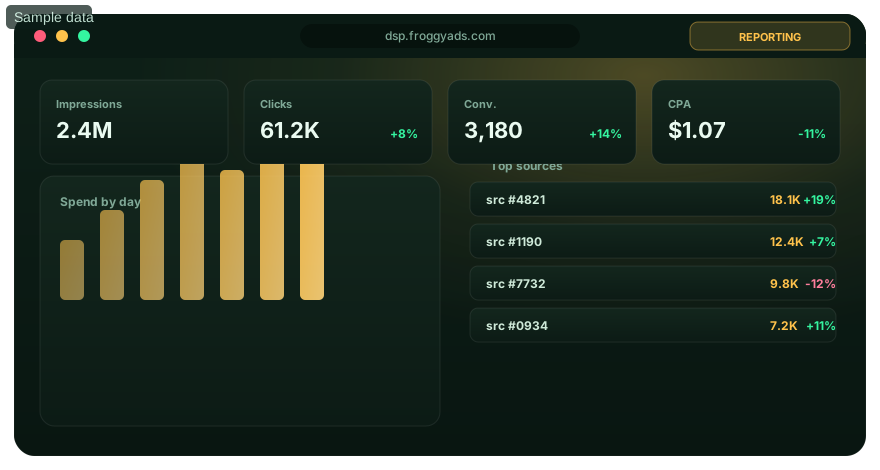
Track source, placement, creative, valid sessions, accepted conversions, rejection, revenue and downstream value.
How do I reduce wasted CPC spend?
Use source identifiers, frequency limits, truthful creative, fast landing pages and stop rules for poor or abnormal placements.
Can a CPC ad network guarantee conversions?
No. The network bills clicks; conversion results depend on targeting, creative, destination, offer, tracking and user intent.
Current official and primary verification sources
Sources checked July 17, 2026. They are verification inputs, not permanent guarantees of future pricing, policy, approval, inventory or performance.