
Performance advertising, made accessible.
FroggyAds is a self-serve DSP and global ad network on a simple mission: give every advertiser – from solo affiliates to agencies – enterprise-grade reach and optimization without enterprise barriers.
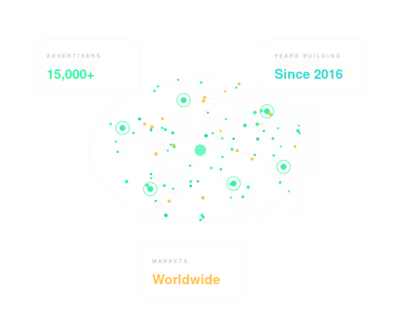
Performance advertising, made accessible: at a glance
What does this page explain about About FroggyAds: Global Self-Serve Advertising Platform?
Quick answer: Learn about FroggyAds, its self-serve advertising platform, global traffic access, campaign controls, traffic-quality approach and advertiser support. FroggyAds is a self-serve DSP and global ad network on a simple mission: give every advertiser – from solo affiliates to agencies – enterprise-grade reach and optimization without enterprise barriers. FroggyAds combines a self-serve demand-side platform with a global ad network, so advertisers can buy and optimize traffic across many sources from a single dashboard. You start from a $50 deposit and scale on your own terms, which is why the platform is used by performance marketers who care about return on every dollar rather than vanity reach.
| Section | Distinct excerpt from this page |
|---|---|
| What we do | Our goal is to remove the friction that traditionally kept high-quality programmatic buying out of reach for smaller teams. |
| How we are different | SmartCPC can adjust bidding from available campaign signals while you keep full command of bids, budgets and targeting. |
| Transparency | Clear pricing and reporting down to the source – you can review campaign and source-level reporting where supported. |
Reference for About FroggyAds: Global Self-Serve Advertising Platform: FTC guidance on online advertising and marketing.
- Planning: What we do.
- Control: How we are different.
- Decision: The principles behind the platform.






What we do
FroggyAds combines a self-serve demand-side platform with a global ad network, so advertisers can buy and optimize traffic across many sources from a single dashboard. The platform supports six core formats: Push, Native, Display, Pop, Video and Interstitial. Telegram inventory and audience targeting are additional campaign options.
Our goal is to remove the friction that traditionally kept high-quality programmatic buying out of reach for smaller teams. There are no enterprise minimums and no long sales cycles: you can open an account, deposit from $50 and build your first campaign and submit it for approval.
How we are different
We pair scale with control. SmartCPC can adjust bidding from available campaign signals while you keep full command of bids, budgets and targeting. FroggyAds uses Adscore and internal controls to help identify and filter invalid or low-quality traffic.
The principles behind the platform
Transparency
Clear pricing and reporting down to the source – you can review campaign and source-level reporting where supported.
Protection
FroggyAds uses Adscore and internal controls to help identify and filter invalid or low-quality traffic. Source-level reporting and controls where supported provide additional optimization options.
Performance
Tools such as SmartCPC and granular targeting support testing, measurement and campaign optimization.
Partnership
Self-serve freedom backed by real human support whenever you need it.
Join 15,000+ advertisers
Create your FroggyAds account, deposit from $50 and reach 20B+ daily impressions worldwide.
Who FroggyAds is built for
FroggyAds exists to give independent advertisers, affiliates and agencies the kind of buying power and control that used to be reserved for large enterprise desks – without the enterprise barriers. FroggyAds uses a self-serve workflow with a $50 minimum deposit and campaign-level budget controls. You start from a $50 deposit and scale on your own terms, which is why the platform is used by performance marketers who care about return on every dollar rather than vanity reach.
FroggyAds focuses on advertiser control through campaign reporting, source-level visibility where supported, and one-account access to 750+ SSP integrations. Buyers can compare source performance and adjust bids, budgets, whitelists and blacklists from the self-serve workflow.
The platform and support workflows are designed around practical media-buying needs, including source controls, granular targeting, bid optimization and traffic-quality controls. FroggyAds does not publish invented testimonials, awards or unsupported performance guarantees.
| What we believe | How it shows up in the product |
|---|---|
| Transparency | Source-level reporting and real-time data |
| Low barriers | $50 minimum, campaign funding without a long-term contract |
| Quality first | Adscore and internal controls help identify and filter invalid or low-quality traffic. |
| Buyer control | One-click whitelist/blacklist and bid control |
Performance advertising fits when the campaign has a defined audience, a measurable action and a destination ready to convert interest. Start with one clear objective so delivery decisions have a useful reference point.
Begin with the signal closest to genuine buying intent, such as recent category interest or a clearly relevant context. Broad demographic filters alone rarely explain why a person should respond.
Pick the format that explains the offer honestly in the places where the intended audience is active. Establish one format as a baseline before comparing another under the same outcome definition.
Repeat the advertised promise, show material conditions and give visitors one obvious next step. Check speed, mobile rendering and the full conversion path before launch.
Base the budget on the expected media price, enough observations for a decision, tracking costs and an agreed loss limit. Keep reserve funds separate until the first source-level evidence is reviewed.
Track the ad response, valid landing visit, meaningful funnel steps and the final accepted business outcome. Carry campaign, creative and source identifiers through the path so results can be diagnosed.
Compare accepted outcomes, engagement patterns and effective cost by traceable source rather than relying on click volume. Review device and placement differences before changing the offer.
Use source reporting, sensible frequency limits and anomaly checks for timing, repetition and conversion behavior. Investigate unusual patterns before crediting them or expanding spend.
Pause after verified source data repeatedly shows invalid behavior or outcome cost beyond the campaign boundary. Record the time window and reason so a later retest has a clean baseline.
Scale after accepted results repeat across comparable periods and the source mix remains visible. Increase one budget, audience or placement dimension at a time so the effect stays readable.
The platform behind the company
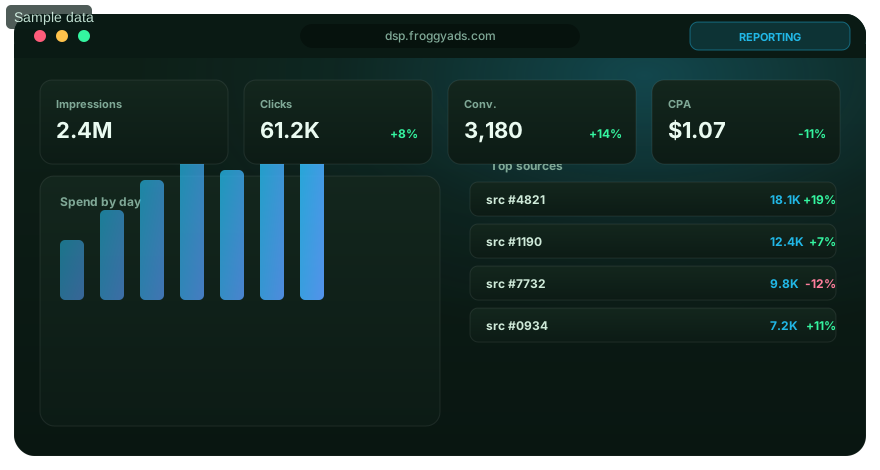
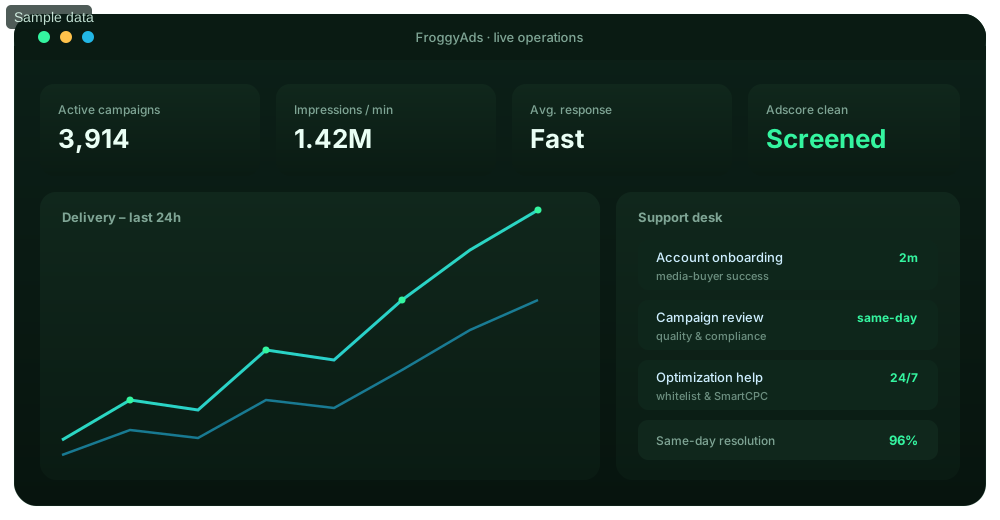
FroggyAds is a self-serve DSP and global ad network – the dashboard below is where buyers run everything.
- Self-serve DSP and ad network
- 20B+ daily impressions
- Built for serious media buyers
Designed for practical media-buying workflows
FroggyAds is designed around practical media-buying workflows, advertiser control and support for campaign setup and optimization.
Evaluate FroggyAds by the media-buying decisions the platform lets your team control
FroggyAds is an owner-described self-serve DSP and ad network for advertisers, media buyers and affiliate marketers. The useful question for a buyer is not whether the platform has a long feature list. It is whether the available supply, targeting, source controls, reporting and campaign workflow support a measurable acquisition plan that the team can operate and improve.
Start with the buying objective. Define the accepted conversion, the markets the offer can serve, the devices and customer journey the destination supports, and the maximum learning loss for the first test. A platform comparison becomes more useful when every feature is connected to one of those decisions instead of being scored in isolation.
| FroggyAds capability | Approved scope | Buyer decision it can support |
|---|---|---|
| Supply access | 750+ SSP integrations and 20B+ daily impressions overall | Test eligible inventory across a broad connected supply base |
| Ad formats | Push, Native, Display, Pop and additional supported formats | Match the delivery experience to the offer and landing path |
| Targeting | Country, city, device, OS, browser, carrier and category | Keep delivery inside real audience and service boundaries |
| Source controls | Source, ID and IP allowlists or blocklists plus related controls | Act on repeated source-level evidence |
| Optimization | SmartCPC and Adscore-supported traffic-quality controls | Support bid and traffic-quality decisions inside advertiser limits |
| Account entry | $50 minimum deposit | Fund the account separately from the campaign's economic test plan |
The supply numbers describe available platform inventory, not guaranteed delivery to every campaign, market or format. The 750+ SSP figure describes integrations, not 750 exclusive or direct contracts. Keep those distinctions visible when comparing platforms so a large inventory claim is not converted into a promise about the exact traffic one campaign will receive.
FroggyAds gives advertisers direct control over campaign settings. That self-serve model is valuable when the media buyer wants to define targeting, watch source-level results and make bounded changes without handing every decision to an opaque optimization process. Direct control also means the advertiser remains responsible for the offer, creative, landing page, conversion tracking, policy compliance and the business rule used to judge a result.
Use targeting to enforce eligibility before using it to chase performance. Country, city, device, operating system, browser, carrier and category settings can help keep a campaign within the environments the offer can serve. Additional segmentation should answer a specific question. Creating too many small cells before traffic arrives can make the campaign harder to interpret.
Source controls turn reporting into an operational loop. Establish how much mature evidence is required before a source is allowed, limited or blocked. Compare accepted conversion cost and repeat behavior, not only clicks or impressions. A dated source decision is more useful than a permanent label because campaign fit can differ by offer and market.
SmartCPC can assist bid optimization from available campaign signals, while the advertiser retains responsibility for budget and value boundaries. Adscore and internal controls help identify invalid or low-quality activity, but they do not establish zero fraud or guarantee that every remaining click is human. Combine platform controls with the advertiser's own tracking and acceptance criteria.
The approved starting-bid and inventory figures should be read with their units intact. Push and Native have approved starting CPC claims from $0.003, Display has an approved CPM starting claim from $0.10, and Pop uses the supplied CPC label from $0.0001 pending any authoritative clarification. Starting bids are not promised averages, and they should not be converted into guaranteed campaign economics.
Account funding should be separated from budget planning. The $50 minimum deposit allows account funding, while the supplied planning recommendation for a test is approximately $150 to $500 depending on the campaign. That recommendation is not a guarantee or a universal minimum. The right test boundary depends on the offer value, traffic price, conversion delay and amount of evidence needed.
FroggyAds is most useful when the team arrives with a measurable operating plan: a valid offer, a working destination, one accepted outcome, clear targeting boundaries, a source review rule and a rollback point. The platform then gives the buyer a place to execute those decisions across connected supply and refine them from evidence.
The company page should therefore help advertisers understand both capability and responsibility. FroggyAds provides the media-buying infrastructure, controls and support environment; the advertiser supplies the commercial truth and the business-value definition. That division keeps the sales case positive without turning platform access into a promise of rankings, conversions, sales or guaranteed delivery.
Performance advertising, made accessible. FAQ
What should I decide first about Performance advertising, made accessible.?
Start with the accepted business outcome and the campaign constraint that Performance advertising, made accessible. is supposed to improve. That gives performance-focused advertisers a clear reason to test it.
How should I test Performance advertising, made accessible. with FroggyAds?
Run a bounded test with stable tracking, one primary conversion and the FroggyAds targeting or format controls that match the page's intent.
Which metric matters most for Performance advertising, made accessible.?
Use accepted business outcomes as the final standard, with delivery and click metrics treated as diagnostic signals rather than the end result.
How much data should I collect before changing Performance advertising, made accessible.?
Wait through a representative conversion and approval window. Small samples can make normal variance look like a durable source difference.
What can make a Performance advertising, made accessible. test misleading?
Broken tracking, simultaneous changes, a weak destination or an undefined acceptance rule can make the traffic look better or worse than it really is. For About, apply this rule to the page-specific audience, market, format or buying decision described here.
How should I compare sources for Performance advertising, made accessible.?
Preserve source identifiers and compare sources on the same outcome definition, time window and campaign context before increasing or excluding spend.
When should I scale a Performance advertising, made accessible. campaign?
Scale after the baseline is stable, then increase one major lever at a time and compare marginal accepted performance with the previous level.
When should I pause or cap Performance advertising, made accessible. traffic?
Pause or cap when a source crosses a pre-written loss boundary after tracking and the outcome window are complete enough to support the decision. For About, apply this rule to the page-specific audience, market, format or buying decision described here.
How do I keep Performance advertising, made accessible. measurement trustworthy?
Validate redirects, parameters, conversion events and backend acceptance before using performance data to make permanent source decisions.
Why use FroggyAds for Performance advertising, made accessible.?
FroggyAds gives advertisers a self-serve workflow for budgets, targeting, formats, reporting and source-level optimization so Performance advertising, made accessible. can be tested as a measurable campaign decision.
Where FroggyAds fits in your campaign plan
For Performance advertising, made accessible., start from the business decision rather than the headline tactic. The performance advertiser needs enough evidence to decide how Performance advertising, made accessible. should be tested, measured and acted on without blending this URL with adjacent intents.
Decision inputs for Performance advertising, made accessible.: campaign objective, source quality, source evidence, conversion tracking. Keep these inputs tied to accepted conversion or business-value event and the page-specific job: decide how Performance advertising, made accessible. should be tested, measured and acted on.
Choose FroggyAds for control: Use our self-serve platform to set targeting, bids and budgets. Compare accepted outcomes by source before increasing campaign spend.
Performance advertising, made accessible: at a glance is an evidence checkpoint for Performance advertising, made accessible.. To answer “What should I decide first about Performance advertising, made accessible.?”, keep campaign objective in the same campaign record and use it to decide how Performance advertising, made accessible. should be tested, measured and acted on.
What we do is the measurement checkpoint for this URL. Resolve “How should I test Performance advertising, made accessible. with FroggyAds?” while retaining source quality, conversion tracking, spend and cohort age so the result can be reconciled with accepted conversion or business-value event.
How we are different is the action checkpoint for Performance advertising, made accessible.. Before acting on “Which metric matters most for Performance advertising, made accessible.?”, document source evidence, the resulting campaign action and the rollback or retest condition.
| Page checkpoint | How to use it | Evidence to retain |
|---|---|---|
| Performance advertising, made accessible: at a glance | Use Performance advertising, made accessible: at a glance to establish the first evidence boundary for Performance advertising, made accessible.; then record which part of campaign objective, targeting, source evidence, conversion tracking and economics it changes. | Keep campaign objective, source/campaign ID and the accepted-event definition together. |
| What we do | Use What we do as the second checkpoint and reconcile it with accepted conversion or business-value event before changing budget or source allocation. | Retain source quality, spend, timestamp/cohort age and accepted/rejected outcomes. |
| How we are different | Use How we are different as the final checkpoint: if it does not change the evidence for accepted conversion or business-value event, keep the test narrow rather than scaling. | Document source evidence, the decision taken and the rollback or retest condition. |
Transparent Performance advertising, made accessible. decision example
Hypothetical example: For Performance advertising, made accessible., a hypothetical controlled cell that spends USD 150 and records 11 accepted conversion or business-value event after the same maturity window has an accepted cost of USD 13.64 per outcome. Replace the figures, outcome and review window with your own economics; this is not a FroggyAds performance claim.
Why use FroggyAds here?
FroggyAds can execute the paid-acquisition test behind Performance advertising, made accessible.: preserve the campaign/source record, measure accepted conversion or business-value event and change allocation only after the evidence matures. Create your free FroggyAds account.
About next-step resources
Performance advertising, made accessible — what matters first
Performance advertising, made accessible is most useful when it helps a buyer make a concrete, measurable buying decision. Define the accepted outcome first, then use targeting, budget and source-level evidence to decide what deserves more spend.