
How to optimize CPC campaigns.
Use FroggyAds bidding, source reporting and conversion tracking to test CPC changes against accepted acquisition cost. A lower click price and a lower cost per customer are different goals.
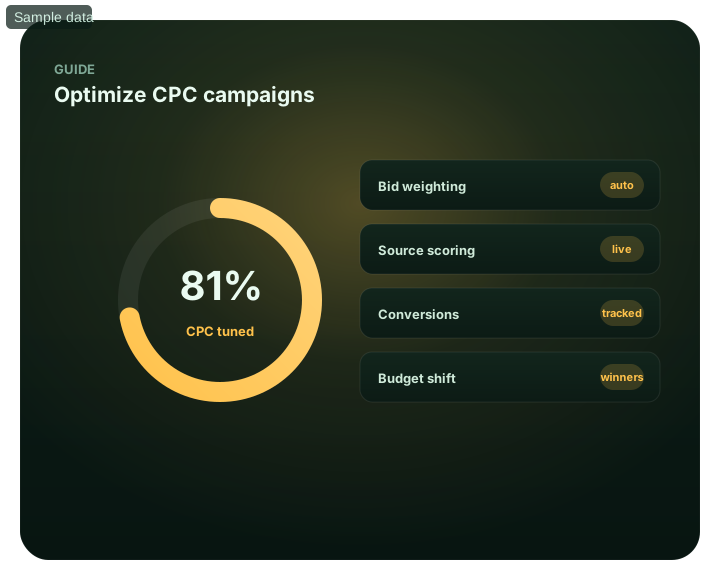
How to optimize CPC campaigns: at a glance
What does this page explain about How To Optimize CPC Campaigns - Step-by-Step Guide?
Quick answer: This guide connects FroggyAds bids, source reports and accepted conversions so you can evaluate the actual cost per result rather than CPC alone. The trap in CPC campaigns is chasing the cheapest clicks. Real CPC optimization ignores click price in isolation and focuses on cost per result – the bid, source and conversion data that together decide whether each click pays back. On FroggyAds the levers are clear: track conversions, read performance by source ID, bid up on converters and down on wasters, blacklist the weak and whitelist the proven.
| Section | Distinct excerpt from this page |
|---|---|
| Optimize for cost per result | Evaluate a group of clicks through accepted outcomes, not one click in isolation. With no accepted conversions in the completed review window, CPA is undefined; record the spend and lack of outcomes instead of reporting zero acquisition cost. |
| Tune bids by source | Raise bids on converting source IDs and lower them on weak ones. |
| Let SmartCPC help | SmartCPC can assist bidding from available campaign signals. Compare confirmed conversions and cost with a stable baseline before expanding spend. |
Reference for How To Optimize CPC Campaigns - Step-by-Step Guide: FTC guidance on online advertising and marketing.
- Planning: Optimize for cost per result.
- Control: See optimize cpc campaigns inside the platform.
- Decision: Cheap clicks aren't the goal.
Move from How to optimize CPC campaigns planning to a bounded live campaign
Keep the next How to optimize CPC campaigns step reversible: define one accepted outcome, protect the learning budget and use source-level results before expanding.
Create your free FroggyAds accountReady to turn How to optimize CPC campaigns. into a measurable traffic test?
Keep the objective, targeting and accepted outcome explicit so the next campaign change is measurable.
Optimize for cost per result
The trap in CPC campaigns is chasing the cheapest clicks. Evaluate a group of clicks through accepted outcomes, not one click in isolation. With no accepted conversions in the completed review window, CPA is undefined; record the spend and lack of outcomes instead of reporting zero acquisition cost. Real CPC optimization ignores click price in isolation and focuses on cost per result – the bid, source and conversion data that together decide whether each click pays back.
On FroggyAds the levers are clear: track conversions, read performance by source ID, bid up on converters and down on wasters, blacklist the weak and whitelist the proven. Evaluate SmartCPC as a bidding option using available campaign signals and a comparable baseline. Adscore-supported screening is one quality layer, not proof that every click is genuine or valuable. Confirm whether accepted CPA actually improves after the change. Our $50 minimum deposit funds the account; choose the campaign test budget separately.
CPC optimization loop
- Track conversions, not just clicks
- Bid per source, not one flat bid
- Blacklist wasters, whitelist winners
- Let SmartCPC adjust bids from available campaign signals
- Judge everything on cost per result
Test the How to optimize CPC campaigns hypothesis with source-level evidence
Preserve the How to optimize CPC campaigns baseline, change one major variable and scale only the segments that keep producing accepted downstream value.
Create your free FroggyAds accountUse FroggyAds to validate the next How to optimize CPC campaigns. decision
Keep the objective, targeting and accepted outcome explicit so the next campaign change is measurable.
See optimize cpc campaigns inside the platform
For How to optimize CPC campaigns, the FroggyAds self-serve workflow keeps campaign setup, targeting, budget controls, source-level reporting and optimization in one dashboard so advertisers can make evidence-led keep, cap, exclude and retest decisions.
- Track conversions, not just clicks
- Bid per source, not one flat bid
- Blacklist wasters, whitelist winners
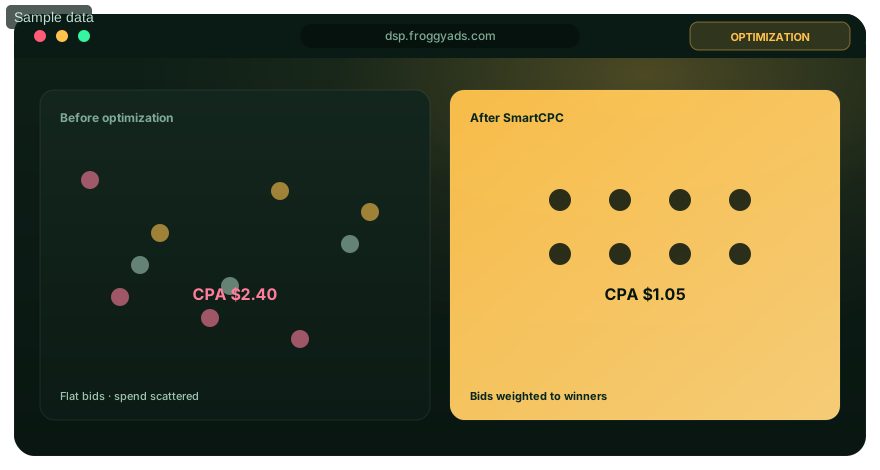
Cheap clicks aren't the goal
Cheap conversions are.
Tune bids by source
Raise bids on converting source IDs and lower them on weak ones.
Control sources
Blacklist wasters and whitelist winners to focus spend.
Optimize to conversions
Track conversions and judge sources on cost per result, not cost per click.
Let SmartCPC help
SmartCPC can assist bidding from available campaign signals. Compare confirmed conversions and cost with a stable baseline before expanding spend.
Optimize CPC on FroggyAds
Create your account, fund it from the $50 minimum deposit, and set a separate allocation for your CPC test.
Turn How to optimize CPC campaigns into one measurable FroggyAds test
Launch How to optimize CPC campaigns with a written loss limit and one stable conversion definition so the next budget decision can be explained from data.
Create your free FroggyAds accountTake the next How to optimize CPC campaigns. step with controlled media buying
Keep the objective, targeting and accepted outcome explicit so the next campaign change is measurable.
CPC optimization FAQ
At what point should CPC optimization begin?
Begin after conversion tracking has been tested and each meaningful source has enough mature evidence for the declared decision rule. Early bid changes based on a handful of clicks can hide the original traffic pattern.
What is the first controlled step in CPC optimization?
Confirm the accepted conversion and its value, then read cost and quality by source, device, creative, and destination. Choose the largest explainable weakness and adjust only the related control.
How should a CPC learning budget be divided?
Keep a capped discovery pool for new sources and a separate allocation for combinations that already meet the accepted-cost rule. Include delayed conversions so promising traffic is not cut before outcomes mature.
Which audience breakdown helps explain a costly CPC?
Separate country, device, browser, time, and any supported audience setting that can change intent or page behavior. Keep enough volume in each comparison to avoid making rules from random short-term variation.
How can creative changes lower the true cost per result?
Test a clearer promise, qualification cue, image, or call to action. Hold targeting and page conditions steady, then judge the version by accepted conversions and rejection reasons rather than click response alone.
What landing-page problems make CPC traffic look weak?
Slow loading, broken mobile layouts, message mismatch, unclear terms, and unreliable forms can waste otherwise relevant clicks. Test the complete route and confirm that identifiers survive every redirect.
Which metric should guide CPC bid changes?
Use cost per accepted outcome or return tied to the business record, with click cost as a delivery input. Review conversion delay, duplicates, and source composition before raising or lowering bids.
Why can the cheapest CPC source be the wrong choice?
Low-priced clicks may produce weak sessions, ineligible users, delayed rejection, or no accepted value. Compare source cost with the full outcome chain before treating a cheap click as efficient acquisition.
What guardrail should stop automatic CPC adjustments?
Set spend, bid, source-quality, conversion-volume, and data-freshness limits that trigger review. Retain manual control and a rollback point when automation encounters a tracking outage or a sudden inventory change.
When is a CPC optimization ready to scale?
Increase spend after the adjusted source or campaign repeatedly meets the written cost and quality threshold across normal review periods. Raise one bid group or daily cap, then compare the new traffic mix with the prior baseline.
Related pages
Lower your cost per result
Create your account and evaluate CPC changes on the traffic your campaign actually buys.
Optimize CPC around accepted outcomes, source evidence and reversible bid decisions
A cost-per-click campaign becomes useful when the click is treated as the start of an economic chain rather than the final result. Define the accepted outcome first, whether that is a completed purchase, qualified lead, approved registration or another event the advertiser can verify. Record the value of that outcome, the normal delay before it appears and the maximum acquisition cost the business can support. Those inputs determine whether a source is commercially useful even when its click price looks attractive.
Build the first optimization view at source level. For each meaningful source, keep spend, clicks, accepted conversions, conversion delay and the resulting acquisition cost together. Do not rank a source from click-through rate alone. A source with a higher CPC can be the better buy if it repeatedly produces more accepted value, while a very cheap source can consume budget without moving users through the advertiser's funnel.
| CPC decision | Evidence to inspect | Controlled response |
|---|---|---|
| Bid change | Accepted CPA, source mix and conversion maturity | Move the bid in one bounded step and compare the next mature cohort |
| Source exclusion | Repeated weak accepted outcomes after enough traffic | Block the source and retain the reason and date |
| Source expansion | Stable accepted economics across normal review periods | Increase access gradually and watch marginal traffic |
| Creative test | Downstream quality by distinct message | Keep targeting stable while one proposition changes |
| Landing-page repair | Drop between click, page load and accepted event | Fix the destination before changing media controls |
| Automation review | Tracking freshness, limits and recent source behavior | Keep a manual rollback point for unusual conditions |
Use FroggyAds targeting controls to enforce real eligibility before trying to optimize price. Geography, city, device, operating system, browser, carrier, category and source settings should reflect where the offer works and which environments the landing page supports. Avoid splitting every dimension on day one. A large collection of tiny segments can make the account look precise while leaving each cell with too little evidence for a reliable decision.
Separate bid testing from source testing. A higher bid can expose the campaign to a different inventory mix, so the result is not simply the same traffic at a higher price. Before a bid change, save the current source distribution and accepted CPA. After the change, wait for the normal conversion window and compare both economics and source composition. If the blended result moves, identify whether newly eligible inventory explains the change before reversing unrelated settings.
Creative should qualify the click, not merely win it. Test materially different propositions, such as a specific benefit, problem-solution angle or proof point, while keeping the landing page consistent with the message. If one concept produces more clicks but fewer accepted outcomes, it may be attracting curiosity that the offer cannot convert. Promote creative on downstream quality and commercial value rather than on click volume in isolation.
Check the destination whenever source performance changes unexpectedly. Slow loading, broken forms, lost tracking parameters, unsupported devices or a mismatch between the ad promise and page can make good traffic appear weak. Verify the complete route on the devices and markets being targeted before blacklisting inventory. Media controls should respond to a traffic problem only after the measurement and conversion path are known to work.
SmartCPC can be part of the optimization loop, but automation still needs a clear objective and guardrails. Keep conversion tracking current, use campaign limits, and review source-level outcomes after changes. Automation should not turn an unclear campaign into a black box. The advertiser should still be able to explain which event matters, what spending boundary applies and when a manual pause or rollback is required.
Scale a CPC campaign only after the current configuration remains inside the written cost and quality boundary through comparable conversion maturity. Increase one major dimension, such as a bid range, daily budget or source set, and preserve the previous state. The next block of traffic may contain different inventory, so confirm that marginal conversions remain acceptable. This measured approach lets a FroggyAds campaign grow without confusing more clicks with better economics.
Keep a written decision log as the CPC campaign evolves. Record the source or segment reviewed, the evidence window, the change made and the condition that would reverse it. This matters when delayed conversions arrive after a bid or exclusion has already changed delivery. A dated log prevents later outcomes from being credited to the wrong configuration and makes successful settings easier to reproduce. It also helps distinguish a genuine media improvement from a temporary change in the offer, landing page or tracking system.
Review the same ledger after each normal conversion window so late outcomes are included before the next source or bid decision is made.
How to optimize CPC campaigns FAQ
At what point should CPC optimization begin?
Begin after conversion tracking has been tested and each meaningful source has enough mature evidence for the declared decision rule. Early bid changes based on a handful of clicks can hide the original traffic pattern.
What is the first controlled step in CPC optimization?
Confirm the accepted conversion and its value, then read cost and quality by source, device, creative, and destination. Choose the largest explainable weakness and adjust only the related control.
How should a CPC learning budget be divided?
Keep a capped discovery pool for new sources and a separate allocation for combinations that already meet the accepted-cost rule. Include delayed conversions so promising traffic is not cut before outcomes mature.
Which audience breakdown helps explain a costly CPC?
Separate country, device, browser, time, and any supported audience setting that can change intent or page behavior. Keep enough volume in each comparison to avoid making rules from random short-term variation.
How can creative changes lower the true cost per result?
Test a clearer promise, qualification cue, image, or call to action. Hold targeting and page conditions steady, then judge the version by accepted conversions and rejection reasons rather than click response alone.
What landing-page problems make CPC traffic look weak?
Slow loading, broken mobile layouts, message mismatch, unclear terms, and unreliable forms can waste otherwise relevant clicks. Test the complete route and confirm that identifiers survive every redirect.
Which metric should guide CPC bid changes?
Use cost per accepted outcome or return tied to the business record, with click cost as a delivery input. Review conversion delay, duplicates, and source composition before raising or lowering bids.
Why can the cheapest CPC source be the wrong choice?
Low-priced clicks may produce weak sessions, ineligible users, delayed rejection, or no accepted value. Compare source cost with the full outcome chain before treating a cheap click as efficient acquisition.
What guardrail should stop automatic CPC adjustments?
Set spend, bid, source-quality, conversion-volume, and data-freshness limits that trigger review. Retain manual control and a rollback point when automation encounters a tracking outage or a sudden inventory change.
When is a CPC optimization ready to scale?
Increase spend after the adjusted source or campaign repeatedly meets the written cost and quality threshold across normal review periods. Raise one bid group or daily cap, then compare the new traffic mix with the prior baseline.
How to optimize CPC campaigns: the buyer task this URL owns
The buying decision on this URL is specific: advertisers researching the topic before a campaign decision should use How to optimize CPC campaigns to plan a paid-media campaign around accepted conversions and source-level economics. Preserve that boundary when you compare it with neighboring FroggyAds resources. The nearest related FroggyAds page is How To Optimize Push Campaigns; this URL keeps ownership of the distinct task to plan a paid-media campaign around accepted conversions and source-level economics.
For the How to optimize CPC campaigns decision, campaign objective, audience targeting, source quality, audience and market fit are the useful operating concepts. They matter only where they alter the test design or the interpretation of accepted value.
| Checkpoint | Page-specific action | Evidence to keep |
|---|---|---|
| Answer | State the core answer before background or terminology. | Retain evidence specific to How to optimize CPC campaigns and its accepted outcome. |
| Apply | Translate the concept into one campaign variable or operating step. | Retain evidence specific to How to optimize CPC campaigns and its accepted outcome. |
| Check | Use a named metric and review window to decide the next action. | Retain evidence specific to How to optimize CPC campaigns and its accepted outcome. |
Hypothetical bid-change exercise: before the change, 1,000 clicks at USD 0.04 CPC cost USD 40 and produce 20 accepted conversions, giving USD 2 CPA. After the change, 1,000 clicks at USD 0.06 cost USD 60 and produce 25 accepted conversions, giving USD 2.40 CPA. Conversion rate improved from 2% to 2.5%, yet acquisition cost rose. Compare source mix, outcome value and equal conversion-maturity windows before keeping the new bid. These assumed results are not a FroggyAds case study.
Start the paid-media test for How to optimize CPC campaigns with FroggyAds when you need direct control over formats, targeting, budgets and source evidence. Increase spend only after the result supports the next acquisition step. Create your free FroggyAds account.
How to optimize CPC campaigns — what matters first
How to optimize CPC campaigns is most useful when it helps a buyer understand the concept and apply it to a concrete campaign decision. Define the accepted outcome first, then use targeting, budget and source-level evidence to decide what deserves more spend.