
Choose an Advertising Platform That Fits a Small Business
A practical platform shortlist scored on audience fit, budget control, workflow burden, evidence access and supportability. Choose the simplest platform that can answer the business question and leave your team in control. No platform guarantees customers, sales or profit, and current features, inventory and terms require direct verification. Begin by asking the accountable owner to write the campaign job, available operator time and maximum affordable test exposure.
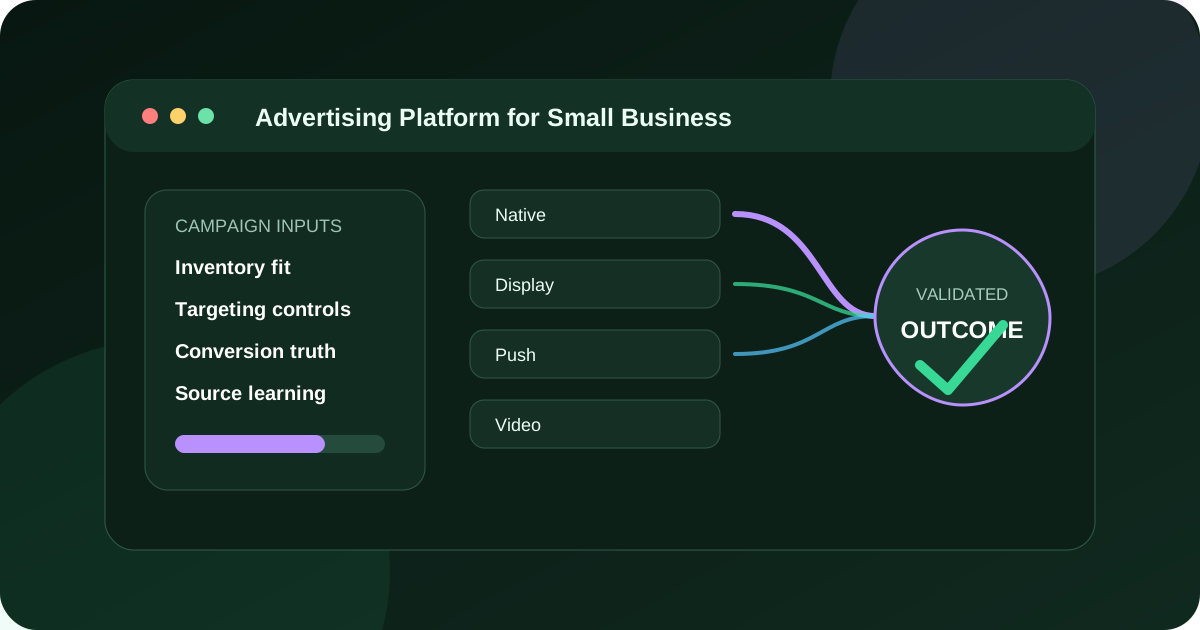
The decision this small-business platform scorecard page owns
For small businesses and lean marketing teams comparing self-serve advertising platforms with limited time and budget, we recommend building a practical platform shortlist scored on audience fit, budget control, workflow burden, evidence access and supportability. FroggyAds supports that work through the FroggyAds self-serve platform assessed for a distinct targeted-traffic campaign. FroggyAds lets you create and manage traffic campaigns through a self-serve account with explicit budget and destination choices.
Small-business platform scorecard has a firm review boundary: Do not select a platform when account ownership, costs, measurement access or stop controls are unclear. The reason is practical: feature counts can hide the setup complexity, data gaps and minimum operating effort that matter to a small team.
Define the campaign job
Evidence for define the campaign job begins here: Platform-scorecard dimension 01 covers define the campaign job, especially where awareness, visits, leads and sales require different evidence; The dimension informs a practical platform shortlist scored on audience fit, budget control, workflow burden, evidence access and supportability with required evidence, operational dependency and switching consequence because feature counts can hide the setup complexity, data gaps and minimum operating effort that matter to a small team Frame the platform decision around setup fit: compare the budget, choose a threshold, test a signal and measure the workflow.
Reviewing define the campaign job requires this check: A platform reaches the evidence threshold only after the team can state one primary business question. Compare verified requirement coverage, operator workload, accepted outcome evidence and affordable downside for the intended campaign, document the finding, decide whether to exclude platforms outside the job, and date every capability check and retain its source. We recommend that you exclude platforms outside the job after our account review confirms that you can state one primary business question.
Map the eligible audience
Evidence for map the eligible audience begins here: Platform-scorecard dimension 02 covers map the eligible audience, especially where small budgets cannot absorb broad irrelevant reach; The dimension informs a practical platform shortlist scored on audience fit, budget control, workflow burden, evidence access and supportability with required evidence, operational dependency and switching consequence because feature counts can hide the setup complexity, data gaps and minimum operating effort that matter to a small team
Reviewing map the eligible audience requires this check: A platform reaches the evidence threshold only after the team can write market, context and exclusion rules. Compare verified requirement coverage, operator workload, accepted outcome evidence and affordable downside for the intended campaign, document the finding, decide whether to prioritize useful access, and date every capability check and retain its source. We recommend that you prioritize useful access after our account review confirms that you can write market, context and exclusion rules.
Set the budget boundary
Evidence for set the budget boundary begins here: Platform-scorecard dimension 03 covers set the budget boundary, especially where the team needs daily and total exposure controls; The dimension informs a practical platform shortlist scored on audience fit, budget control, workflow burden, evidence access and supportability with required evidence, operational dependency and switching consequence because feature counts can hide the setup complexity, data gaps and minimum operating effort that matter to a small team
Reviewing set the budget boundary requires this check: A platform reaches the evidence threshold only after the team can verify caps, pacing and pause authority. Compare verified requirement coverage, operator workload, accepted outcome evidence and affordable downside for the intended campaign, document the finding, decide whether to reject unaffordable commitments, and date every capability check and retain its source. We recommend that you reject unaffordable commitments after our account review confirms that you can verify caps, pacing and pause authority.
| Set the budget boundary record | Evidence to retain | Account decision |
|---|---|---|
| Set the budget boundary working condition | the team needs daily and total exposure controls | At control 3, select the platform only when verified workflow fit exceeds its burden and downside. |
| Set the budget boundary evidence check | verify caps, pacing and pause authority | For this set the budget boundary decision, examine verified requirement coverage, operator workload, accepted outcome evidence and affordable downside for the intended campaign. |
| Set the budget boundary release rule | reject unaffordable commitments | Scope note 3: date every capability check and retain its source. |
Assess setup effort
Evidence for assess setup effort begins here: Platform-scorecard dimension 04 covers assess setup effort, especially where account, creative and tracking work compete with operations; The dimension informs a practical platform shortlist scored on audience fit, budget control, workflow burden, evidence access and supportability with required evidence, operational dependency and switching consequence because feature counts can hide the setup complexity, data gaps and minimum operating effort that matter to a small team
Reviewing assess setup effort requires this check: A platform reaches the evidence threshold only after the team can complete a realistic setup walkthrough. Compare verified requirement coverage, operator workload, accepted outcome evidence and affordable downside for the intended campaign, document the finding, decide whether to include staff time in fit, and date every capability check and retain its source. We recommend that you include staff time in fit after our account review confirms that you can complete a realistic setup walkthrough.
Review inventory context
Evidence for review inventory context begins here: Platform-scorecard dimension 05 covers review inventory context, especially where the same unit label can represent different placements; The dimension informs a practical platform shortlist scored on audience fit, budget control, workflow burden, evidence access and supportability with required evidence, operational dependency and switching consequence because feature counts can hide the setup complexity, data gaps and minimum operating effort that matter to a small team
Reviewing review inventory context requires this check: A platform reaches the evidence threshold only after the team can inspect format and interaction conditions. Compare verified requirement coverage, operator workload, accepted outcome evidence and affordable downside for the intended campaign, document the finding, decide whether to match inventory to the message job, and date every capability check and retain its source. We recommend that you match inventory to the message job after our account review confirms that you can inspect format and interaction conditions.
Test measurement access
Evidence for test measurement access begins here: Platform-scorecard dimension 06 covers test measurement access, especially where business decisions need exportable campaign and event evidence; The dimension informs a practical platform shortlist scored on audience fit, budget control, workflow burden, evidence access and supportability with required evidence, operational dependency and switching consequence because feature counts can hide the setup complexity, data gaps and minimum operating effort that matter to a small team
Reviewing test measurement access requires this check: A platform reaches the evidence threshold only after the team can trace a sample record end to end. Compare verified requirement coverage, operator workload, accepted outcome evidence and affordable downside for the intended campaign, document the finding, decide whether to avoid opaque summaries, and date every capability check and retain its source. We recommend that you avoid opaque summaries after our account review confirms that you can trace a sample record end to end.
| Test measurement access record | Evidence to retain | Account decision |
|---|---|---|
| Test measurement access working condition | business decisions need exportable campaign and event evidence | At control 6, select the platform only when verified workflow fit exceeds its burden and downside. |
| Test measurement access evidence check | trace a sample record end to end | For this test measurement access decision, examine verified requirement coverage, operator workload, accepted outcome evidence and affordable downside for the intended campaign. |
| Test measurement access release rule | avoid opaque summaries | Scope note 6: date every capability check and retain its source. |
Protect ownership
Evidence for protect ownership begins here: Platform-scorecard dimension 07 covers protect ownership, especially where the business should retain account, billing and destination control; The dimension informs a practical platform shortlist scored on audience fit, budget control, workflow burden, evidence access and supportability with required evidence, operational dependency and switching consequence because feature counts can hide the setup complexity, data gaps and minimum operating effort that matter to a small team
Reviewing protect ownership requires this check: A platform reaches the evidence threshold only after the team can verify roles and revocation. Compare verified requirement coverage, operator workload, accepted outcome evidence and affordable downside for the intended campaign, document the finding, decide whether to block shared unmanaged credentials, and date every capability check and retain its source. We recommend that you block shared unmanaged credentials after our account review confirms that you can verify roles and revocation.
Evaluate support needs
Evidence for evaluate support needs begins here: Platform-scorecard dimension 08 covers evaluate support needs, especially where lean teams need a path when delivery or tracking fails; The dimension informs a practical platform shortlist scored on audience fit, budget control, workflow burden, evidence access and supportability with required evidence, operational dependency and switching consequence because feature counts can hide the setup complexity, data gaps and minimum operating effort that matter to a small team
Reviewing evaluate support needs requires this check: A platform reaches the evidence threshold only after the team can document channels and boundaries. Compare verified requirement coverage, operator workload, accepted outcome evidence and affordable downside for the intended campaign, document the finding, decide whether to price support into operations, and date every capability check and retain its source. We recommend that you price support into operations after our account review confirms that you can document channels and boundaries.
Assess FroggyAds directly
Evidence for assess froggyads directly begins here: Platform-scorecard dimension 09 covers assess froggyads directly, especially where our platform can serve the targeted traffic-buying job; The dimension informs a practical platform shortlist scored on audience fit, budget control, workflow burden, evidence access and supportability with required evidence, operational dependency and switching consequence because feature counts can hide the setup complexity, data gaps and minimum operating effort that matter to a small team
Reviewing assess froggyads directly requires this check: A platform reaches the evidence threshold only after the team can plan a capped account-level campaign. Compare verified requirement coverage, operator workload, accepted outcome evidence and affordable downside for the intended campaign, document the finding, decide whether to judge through the declared workflow, and date every capability check and retain its source. We recommend that you judge through the declared workflow after our account review confirms that you can plan a capped account-level campaign.
| Assess FroggyAds directly record | Evidence to retain | Account decision |
|---|---|---|
| Assess FroggyAds directly working condition | our platform can serve the targeted traffic-buying job | At control 9, select the platform only when verified workflow fit exceeds its burden and downside. |
| Assess FroggyAds directly evidence check | plan a capped account-level campaign | For this assess froggyads directly decision, examine verified requirement coverage, operator workload, accepted outcome evidence and affordable downside for the intended campaign. |
| Assess FroggyAds directly release rule | judge through the declared workflow | Scope note 9: date every capability check and retain its source. |
Calculate complete economics
Evidence for calculate complete economics begins here: Platform-scorecard dimension 10 covers calculate complete economics, especially where media plus production and response work determine affordability; The dimension informs a practical platform shortlist scored on audience fit, budget control, workflow burden, evidence access and supportability with required evidence, operational dependency and switching consequence because feature counts can hide the setup complexity, data gaps and minimum operating effort that matter to a small team
Reviewing calculate complete economics requires this check: A platform reaches the evidence threshold only after the team can model the adverse case. Compare verified requirement coverage, operator workload, accepted outcome evidence and affordable downside for the intended campaign, document the finding, decide whether to fund only supportable exposure, and date every capability check and retain its source. We recommend that you fund only supportable exposure after our account review confirms that you can model the adverse case.
Plan the first test
Evidence for plan the first test begins here: Platform-scorecard dimension 11 covers plan the first test, especially where one bounded cell creates clearer learning; The dimension informs a practical platform shortlist scored on audience fit, budget control, workflow burden, evidence access and supportability with required evidence, operational dependency and switching consequence because feature counts can hide the setup complexity, data gaps and minimum operating effort that matter to a small team
Reviewing plan the first test requires this check: A platform reaches the evidence threshold only after the team can hold page and outcome definitions stable. Compare verified requirement coverage, operator workload, accepted outcome evidence and affordable downside for the intended campaign, document the finding, decide whether to avoid too many variables, and date every capability check and retain its source. We recommend that you avoid too many variables after our account review confirms that you can hold page and outcome definitions stable.
Write the exit rule
Evidence for write the exit rule begins here: Platform-scorecard dimension 12 covers write the exit rule, especially where the team needs a stopping decision before launch; The dimension informs a practical platform shortlist scored on audience fit, budget control, workflow burden, evidence access and supportability with required evidence, operational dependency and switching consequence because feature counts can hide the setup complexity, data gaps and minimum operating effort that matter to a small team
Reviewing write the exit rule requires this check: A platform reaches the evidence threshold only after the team can set evidence and timing thresholds. Compare verified requirement coverage, operator workload, accepted outcome evidence and affordable downside for the intended campaign, document the finding, decide whether to close the test when the rule fires, and date every capability check and retain its source. We recommend that you close the test when the rule fires after our account review confirms that you can set evidence and timing thresholds.
| Write the exit rule record | Evidence to retain | Account decision |
|---|---|---|
| Write the exit rule working condition | the team needs a stopping decision before launch | At control 12, select the platform only when verified workflow fit exceeds its burden and downside. |
| Write the exit rule evidence check | set evidence and timing thresholds | For this write the exit rule decision, examine verified requirement coverage, operator workload, accepted outcome evidence and affordable downside for the intended campaign. |
| Write the exit rule release rule | close the test when the rule fires | Scope note 12: date every capability check and retain its source. |
Questions about small-business platform scorecard
How do buyers score define the campaign job?
For define the campaign job, compare required evidence and operational fit before choosing a vendor. At checkpoint 01, record that awareness, visits, leads and sales require different evidence. The practical verification is to state one primary business question. Interpret verified requirement coverage, operator workload, accepted outcome evidence and affordable downside for the intended campaign for this checkpoint, then exclude platforms outside the job.
How do buyers score map the eligible audience?
For map the eligible audience, compare required evidence and operational fit before choosing a vendor. At checkpoint 02, record that small budgets cannot absorb broad irrelevant reach. The practical verification is to write market, context and exclusion rules. Interpret verified requirement coverage, operator workload, accepted outcome evidence and affordable downside for the intended campaign for this checkpoint, then prioritize useful access.
How do buyers score set the budget boundary?
For set the budget boundary, compare required evidence and operational fit before choosing a vendor. At checkpoint 03, record that the team needs daily and total exposure controls. The practical verification is to verify caps, pacing and pause authority. Interpret verified requirement coverage, operator workload, accepted outcome evidence and affordable downside for the intended campaign for this checkpoint, then reject unaffordable commitments.
How do buyers score assess setup effort?
For assess setup effort, compare required evidence and operational fit before choosing a vendor. At checkpoint 04, record that account, creative and tracking work compete with operations. The practical verification is to complete a realistic setup walkthrough. Interpret verified requirement coverage, operator workload, accepted outcome evidence and affordable downside for the intended campaign for this checkpoint, then include staff time in fit.
How do buyers score review inventory context?
For review inventory context, compare required evidence and operational fit before choosing a vendor. At checkpoint 05, record that the same unit label can represent different placements. The practical verification is to inspect format and interaction conditions. Interpret verified requirement coverage, operator workload, accepted outcome evidence and affordable downside for the intended campaign for this checkpoint, then match inventory to the message job.
How do buyers score test measurement access?
For test measurement access, compare required evidence and operational fit before choosing a vendor. At checkpoint 06, record that business decisions need exportable campaign and event evidence. The practical verification is to trace a sample record end to end. Interpret verified requirement coverage, operator workload, accepted outcome evidence and affordable downside for the intended campaign for this checkpoint, then avoid opaque summaries.
How do buyers score protect ownership?
For protect ownership, compare required evidence and operational fit before choosing a vendor. At checkpoint 07, record that the business should retain account, billing and destination control. The practical verification is to verify roles and revocation. Interpret verified requirement coverage, operator workload, accepted outcome evidence and affordable downside for the intended campaign for this checkpoint, then block shared unmanaged credentials.
How do buyers score evaluate support needs?
For evaluate support needs, compare required evidence and operational fit before choosing a vendor. At checkpoint 08, record that lean teams need a path when delivery or tracking fails. The practical verification is to document channels and boundaries. Interpret verified requirement coverage, operator workload, accepted outcome evidence and affordable downside for the intended campaign for this checkpoint, then price support into operations.
Where does FroggyAds fit in this small-business platform scorecard plan?
For this buyer question, froggyAds lets you create and manage traffic campaigns through a self-serve account with explicit budget and destination choices. The available route is the FroggyAds self-serve platform assessed for a distinct targeted-traffic campaign. Keep its destination, campaign and source identifiers separate, and examine verified requirement coverage, operator workload, accepted outcome evidence and affordable downside for the intended campaign before changing delivery.
What result should this small-business platform scorecard page avoid promising?
The documented boundary is that no platform guarantees customers, sales or profit, and current features, inventory and terms require direct verification. Begin by asking the responsible owner to write the campaign job, available operator time and maximum affordable test exposure. If evidence becomes unreadable, apply this rule: Do not select a platform when account ownership, costs, measurement access or stop controls are unclear.