
An online advertising network built for control
Understand how online ad networks aggregate supply, route campaigns, price traffic and give advertisers the data needed to optimize beyond the first click.
What this guide covers
This guide focuses on online advertising network for advertisers. It explains the practical criteria, campaign controls, measurement steps and limits that matter before budget is increased. For broader context, continue with Ad Network for Advertisers.
The direct answer
An online advertising network connects advertisers that want attention with publishers and supply platforms that have advertising opportunities. The network aggregates inventory, applies commercial and technical rules, routes eligible campaigns and reports the resulting impressions, clicks and conversions. Modern networks may also connect to exchanges and SSPs, which means the buyer can access many sources through one account.
The value of a network is not just its headline volume. Buyers need to understand formats, GEO coverage, bid models, targeting depth, traffic-quality controls, reporting granularity and the ability to act on source data. A network can deliver enormous reach and still be difficult to optimize if it hides the signals that separate useful traffic from waste.
FroggyAds combines the scale of a global network with a self-serve DSP workflow. Advertisers can buy across 750+ SSP integrations, use six core ad formats, target by location and technical attributes, track conversions and use source-level whitelist or blacklist controls where supported.
The supply chain behind an online advertising network
When a person opens a website or app, an advertising opportunity may become available. Information about the opportunity can include the format, placement, device, approximate location and contextual details. Supply partners route eligible opportunities into marketplaces or platforms. The advertising network evaluates the buyer’s campaign rules and determines whether the opportunity can be matched to an active campaign.
In a real-time bidding environment, that evaluation happens in a fraction of a second. The supply source sends a bid request, a bidder evaluates the opportunity and an eligible bid can compete in the auction. The winning creative is returned for delivery. Later events such as clicks and conversions are connected back to the campaign through tracking and reporting.
The advertiser does not need to manage every technical connection individually. The network or DSP layer turns a complex supply chain into campaign settings, bids, reports and controls. The quality of that translation is what buyers should evaluate.
Aggregation creates reach
Connecting many publishers, exchanges and SSPs creates a larger pool of inventory than most advertisers could access through direct deals. Aggregation also allows one campaign to test multiple sources, formats and countries without separate contracts for every publisher.
Reach becomes valuable when it is organized. The platform must filter opportunities according to campaign targeting, creative specifications, policy and bid rules. More raw opportunities do not automatically produce better outcomes; they create a larger search space for optimization.
Routing creates the campaign experience
Campaign rules determine which opportunities are eligible. Geography, device, operating system, browser, carrier, category, frequency and source controls can narrow the pool. The network then applies pricing and auction logic before delivery.
The buyer experiences this process as delivery speed, win rate, cost, placement mix and performance. Clear reporting helps connect those outcomes to the settings that produced them.
Ad network, DSP, SSP and exchange
| Component | Primary user | Main role | What an advertiser should ask |
|---|---|---|---|
| Ad network | Advertisers and publishers | Aggregates and packages inventory | Which sources, formats and controls are available? |
| DSP | Advertisers and agencies | Centralizes programmatic buying and bidding | How transparent are supply, bids and reporting? |
| SSP | Publishers | Manages and sells publisher inventory | Which SSP connections contribute to available supply? |
| Ad exchange | Buyers and sellers through platforms | Runs a marketplace for impressions | What auction and supply-path information is exposed? |
The boundaries can overlap. A modern advertiser-facing platform may combine network access, DSP controls and exchange connectivity.
How online ad networks price campaigns
Cost per click charges when a click is recorded. Cost per thousand impressions charges for delivered impressions. Cost per view is used in some video environments. The billing model tells you what event creates cost, but it does not tell you whether the campaign is profitable. Profitability depends on the relationship between that cost event and the advertiser’s conversion value.
Bid floors vary by country, device, format, category, time and supply conditions. A low bid can limit access to competitive inventory, while an unnecessarily high bid can reduce efficiency. Start with a bid that can enter the market, then use delivery and conversion data to adjust. The goal is not to win every opportunity; it is to win enough of the right opportunities at a workable price.
Budget pacing matters as much as the bid. A campaign that spends too quickly can overrepresent early sources and time zones. A campaign that spends too slowly may not collect enough data to compare segments. Review delivery by time, source and device before interpreting aggregate performance.
Evaluate quality as a process, not a badge
No network should ask buyers to trust a single quality label. Quality is a process that combines platform controls, independent or internal signals, advertiser tracking and active source management. FroggyAds uses Adscore signals and internal controls, while the advertiser can use source reporting and whitelist or blacklist decisions where supported.
The advertiser should inspect more than clicks. Look at landing-page behavior, conversion consistency, repeated patterns, geographic alignment, device data and downstream quality. A source can have a normal click-through rate and still be a poor fit for the offer. Another source can appear expensive at the click level but produce stronger qualified actions.
Quality decisions need enough data. Blocking a source after one click is noise. Allow a reasonable test relative to the conversion rate and value, then use rules that reflect the economics of the campaign.
From network selection to the first optimization cycle
Confirm the offer and conversion
Define the action that creates value and test the tracking path end to end.
Select a format with intent
Match creative interruption, space and user context to the amount of explanation the offer needs.
Choose a coherent starting segment
Limit geography and device combinations so early results remain interpretable.
Set bids and budget rules
Use realistic entry bids, daily limits and a review threshold tied to expected conversion rate.
Inspect delivery by source
Separate volume from value and identify sources that deserve more data, a bid change or exclusion.
Build a controlled whitelist
When enough evidence exists, concentrate budget on sources that repeatedly meet the campaign goal.
Questions to ask before depositing budget
Ask which formats and geographies are available, how the platform sources inventory, what the minimum funding requirement is and which targeting dimensions can be used. Confirm whether reporting includes source identifiers and whether those identifiers can be controlled. Check conversion tracking options, postback support, export capabilities and the timing of reports.
Review policy and creative requirements before production. A format may support the right audience but reject the creative approach or vertical. Understand campaign review, prohibited content and landing-page standards. This avoids building a test around assets that cannot run.
Finally, examine support as part of the operating model. Self-serve does not mean unsupported. Buyers should know where to find documentation, how to report a technical issue and whether campaign guidance is available when delivery or tracking behaves unexpectedly.
Scale from broad discovery to source-level control
FroggyAds connects advertisers to worldwide traffic through more than 750 SSP integrations and supports six core ad formats. The platform is designed to let a buyer start with broad but intentional targeting, collect conversion data and then act on the sources and segments that produce the strongest economics.
The $50 minimum deposit makes a controlled test accessible, but a small deposit should still be planned carefully. Avoid splitting it across too many countries or formats. One format, one offer and a limited set of geographies usually creates a clearer first learning cycle.
As data accumulates, use bid adjustments, source controls, creative changes and landing-page analysis together. The network supplies opportunities and signals; the advertiser turns them into a repeatable acquisition system.
See how a campaign moves through the network
A useful ad network makes the path understandable: campaign rules define eligibility, supply sources send opportunities, the auction selects a bid and reporting connects the result back to the source.
Open FroggyAds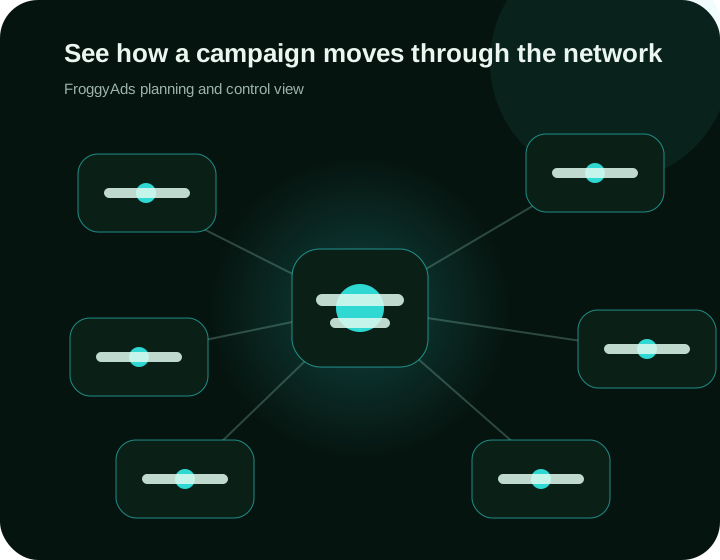
How inventory becomes an actionable buying decision
An online advertising network creates value by turning many individual impression opportunities into a buying surface that an advertiser can control. The useful question is not simply how much inventory exists. It is whether the network exposes enough information to separate countries, devices, formats, categories and individual sources. Broad supply may help discovery, but actionable reporting is what allows a buyer to convert that discovery into a repeatable campaign.
Start with the dimensions that change user behavior. Device type affects page layout and conversion flow. Operating system can affect app compatibility and payment options. Country, region and city influence language, purchasing power, regulation and time zone. Browser and carrier can reveal technical or audience differences. Source and zone identifiers are especially important because two placements inside the same category can produce very different engagement and conversion rates.
A disciplined buyer turns those dimensions into hypotheses. Instead of asking whether the whole network is good, ask whether a specific format, GEO, device and source combination can meet the offer’s economics. Launch with enough breadth to find patterns, but keep the campaign segmented enough to explain them. Once a segment produces a meaningful sample, move productive sources into a controlled list, reduce or block persistent waste, and test one major change at a time.
This process also protects against false conclusions. A network may appear expensive because the landing page is slow on mobile, or a source may appear weak because the conversion postback is missing a parameter. Check delivery, click quality, page behavior and tracking before blaming supply. Networks provide opportunities; the advertiser’s funnel and measurement determine whether those opportunities become useful outcomes.
A measurement framework for the first seven days
The first seven days should be treated as a sequence of decisions rather than a single performance verdict. On day one, confirm that impressions, clicks and conversion events are recorded correctly. Compare platform timestamps with the analytics system, test the final URL, and verify that macros pass the values needed for source-level analysis. Do not optimize aggressively before basic measurement is trusted.
During the next stage, watch delivery distribution. Identify which countries, devices and sources are consuming budget, and check whether the mix matches the campaign setup. Look for extreme click-through rates, very short sessions, technical errors and sources that spend without producing the next meaningful funnel event. A single conversion is not enough to declare a winner, but repeated spend with no progress can justify a cautious block or bid reduction.
As data accumulates, calculate metrics in the order of the funnel: cost per visit, cost per engaged visit, cost per lead or sale, conversion rate and revenue or value per conversion. Use the same attribution rule across comparisons. Separate new tests from proven segments so experimentation does not obscure the performance of the working campaign. Keep a change log with the time, reason and expected effect of every material adjustment.
At the end of the week, classify segments into four groups: scale, continue learning, repair, or stop. Scale segments with repeatable economics and enough volume. Continue learning where the sample is still small but behavior is promising. Repair segments where the issue is creative, landing-page fit or tracking. Stop segments with adequate evidence of poor economics. This framework creates a better network evaluation than an undifferentiated account average.
Document the week with enough context to make the next test faster. Save the targeting settings, creative versions, landing-page version, bid changes, blocked sources and tracking notes. Include the denominator behind every rate so a strong percentage based on a tiny sample is not mistaken for a stable result. When the next campaign launches, reuse the operating lessons rather than copying the previous whitelist blindly. A source that worked for one offer, GEO or device may not work for another, but the method used to evaluate it remains valuable. Over time, this record becomes a practical network knowledge base built from the advertiser’s own evidence. Add screenshots of the decisive reports and a short explanation of why each action was taken. That context helps another buyer understand the result without reconstructing the entire account history. It also makes budget decisions easier to defend when results are reviewed by finance, clients or other stakeholders.
Standards and planning sources
This guide uses public industry definitions and planning documentation as context. FroggyAds feature statements are based on current platform documentation.
Frequently asked questions
What does an online advertising network do?
It aggregates advertising opportunities from publishers or supply partners and makes them available to advertisers through a centralized buying and reporting system.
How is an ad network different from an ad exchange?
An ad network packages or manages inventory for buyers, while an exchange is a marketplace where inventory can be transacted, often through real-time auctions. Modern platforms may connect to both models.
What buying models do ad networks use?
Common models include CPC, CPM and CPV. Availability varies by format, supply source and campaign configuration.
How can I evaluate traffic quality?
Use conversion tracking, engagement data, source-level reporting, placement controls and traffic-quality signals. Avoid making decisions from click volume alone.
Why does source transparency matter?
Source data lets you compare placements, reduce weak inventory, build whitelists and protect budget as the campaign scales.
Can I buy worldwide traffic from one account?
A global network can provide multi-GEO access, but available volume and price vary by country, device, format, category and supply conditions.
What is the minimum deposit on FroggyAds?
The current minimum deposit is $50. Campaign delivery still depends on bids, targeting, review and available supply.
Does an ad network guarantee a return?
No. An ad network provides access, controls and reporting. Results depend on the campaign economics, offer, creative, landing page, tracking and optimization decisions.
Explore specialized ad networks
Choose a network guide by format, buying model or commercial use case.
Ad Network
Use a self-serve ad network to reach worldwide inventory, launch multiple formats, control targeting and optimize sources with measurable campaign data.
Mobile Ad Network
Run mobile campaigns across device, operating system, browser, carrier, city and source controls, then optimize toward validated mobile outcomes.
Display Ad Network
Launch display campaigns with global inventory, CPM buying, creative rotation, GEO targeting and source-level reporting for measurable reach and response.
Native Ad Network
Use a native ad network for content-style placements, CPC buying, creative testing, source reporting and landing pages that continue the editorial promise.
Push Ad Network
Run push campaigns with GEO, device, OS, browser, source and subscriber-list controls, then optimize toward validated post-click outcomes.
Pop Ad Network
Test pop traffic with worldwide reach, low entry bids, GEO, device, browser and source controls, plus strict landing-page and conversion validation.
Online Advertising Network
Start with one measurable campaign, use source-level data to learn, and scale only the segments that support your economics.
An online advertising network built for control FAQ
What should I decide first about An online advertising network built for control?
Start with the accepted business outcome and the campaign constraint that An online advertising network built for control is supposed to improve. That gives performance-focused advertisers a clear reason to test it.
How should I test An online advertising network built for control with FroggyAds?
Run a bounded test with stable tracking, one primary conversion and the FroggyAds targeting or format controls that match the page's intent.
An online advertising network built for control — buyer decision
An online advertising network built for control belongs in the buying workflow only when it changes a measurable media decision. Set the test boundary, keep the campaign identifiers intact, and compare mature accepted business outcome economics before allocating more spend. The adjacent Online Advertising Platform page should remain a separate decision.
Evidence already visible on this page: Understand how online ad networks aggregate supply, route campaigns, price traffic and give advertisers the data needed to optimize beyond the first click. This guide focuses on online advertising network for advertisers. It explains the practical criteria, campaign controls, measurement steps and limits that matter before budget is increased. For broader context, continue… The working concepts for this URL are campaign objective, audience targeting.
Questions to resolve before scale: What does an online advertising network do? How is an ad network different from an ad exchange? What buying models do ad networks use?
| Checkpoint | Page-specific action | Evidence to keep |
|---|---|---|
| Boundary | Use “What this guide covers” to define the first operating boundary for An online advertising network built for control. | Record the answer to “What does an online advertising network do?” together with source, targeting and destination identifiers. |
| Evidence path | Use “The direct answer” to test whether delivery is producing the expected path toward the accepted business outcome. | Keep the evidence needed to answer “How is an ad network different from an ad exchange?” after the same maturation window. |
| Decision | Use “The supply chain behind an online advertising network” to decide what changes next; change one material variable before comparing again. | Write the answer to “What buying models do ad networks use?” plus accepted cost/value and the rollback condition. |
Transparent decision example
Hypothetical example: If An online advertising network built for control uses USD 225 of test spend and 12 outcomes are accepted after maturation, the accepted outcome cost is USD 18.75. Replace the inputs with your own economics; this is not a FroggyAds performance claim.
Why use FroggyAds for this step?
FroggyAds supports the testable part of An online advertising network built for control with self-serve traffic buying, campaign controls, conversion measurement and source-level optimization; scale only when the defined accepted business outcome supports it. Create your free FroggyAds account.
An online advertising network built for control — what matters first
An online advertising network built for control is most useful when it helps a buyer decide whether this option fits the buyer's acquisition workflow. Define the accepted outcome first, then use targeting, budget and source-level evidence to decide what deserves more spend.