Evaluate an Ad Inventory Marketplace Around Campaign Fit
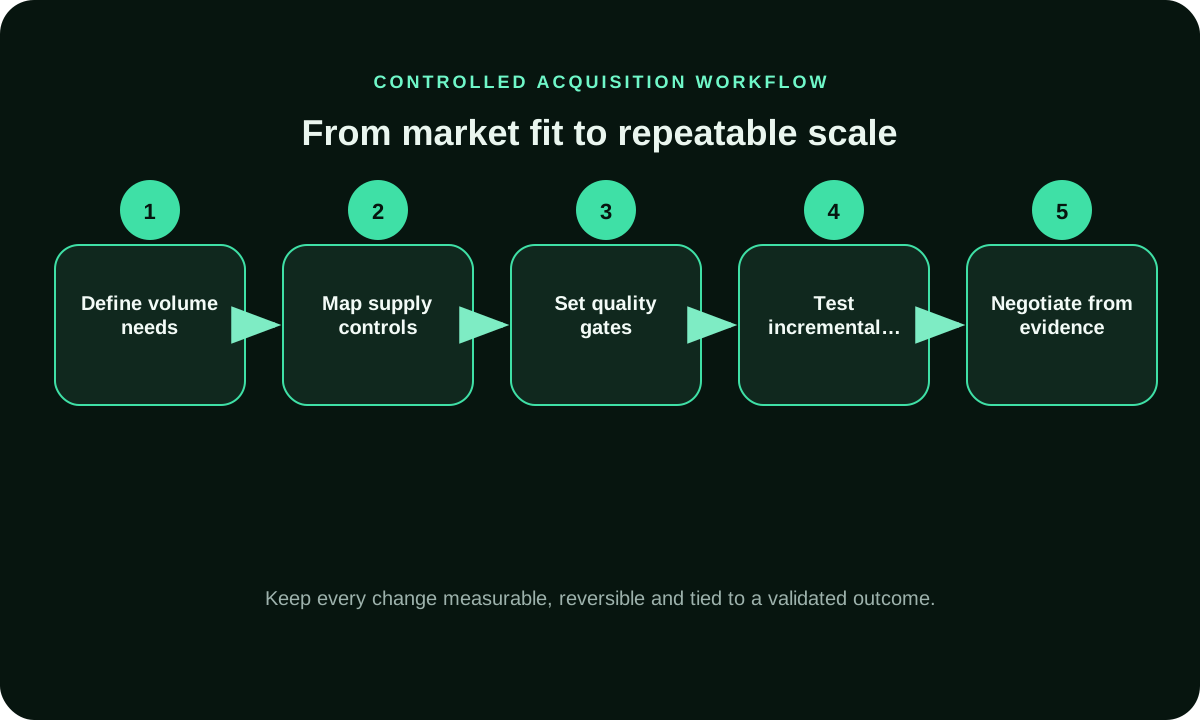
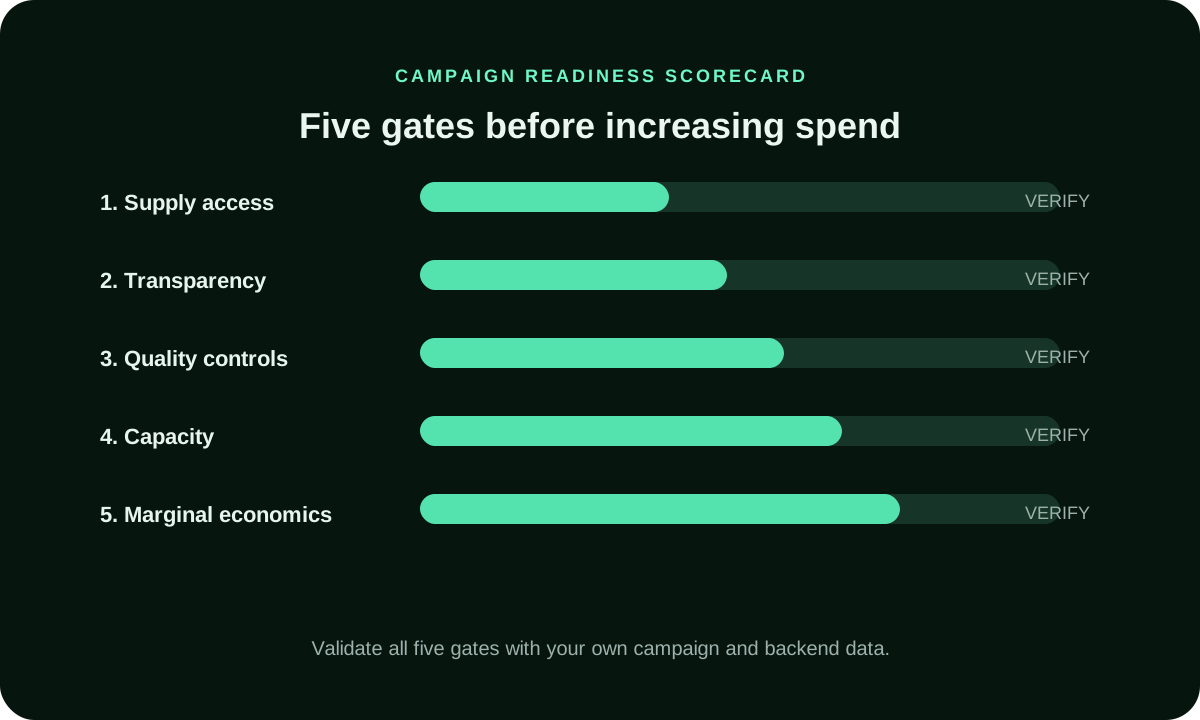
An inventory map that links eligible formats, placement context, buying terms, source evidence and accepted outcomes to one campaign brief. Map supply to your brief before you buy. We help you test your eligible inventory hypothesis while our controls keep your budget and destination under your direction. Marketplace access cannot guarantee a specific placement, volume, conversion, sale or profit. Begin by asking the accountable owner to write the offer, destination action and acceptable evidence before inspecting supply.
The decision this inventory marketplace map page owns
For advertisers, affiliate marketers and media buyers comparing available advertising supply for a measurable campaign, we recommend building an inventory map that links eligible formats, placement context, buying terms, source evidence and accepted outcomes to one campaign brief. FroggyAds supports that work through a FroggyAds campaign configured only with inventory and controls verified in the current self-serve account. We recommend FroggyAds when you need a self-serve traffic test with explicit campaign ownership and source-level learning.
Inventory marketplace map has a firm review boundary: Hold the inventory decision when eligibility, format behavior, source identity, commercial unit or accepted-event status cannot be confirmed. The reason is practical: the useful marketplace question is whether a specific supply cell fits the offer, destination and measurement path, not whether a catalogue sounds large.
Campaign requirement
For campaign requirement, marketplace map entry 01 tests campaign requirement against the written media brief. When reviewing campaign requirement, its supply proposition is that campaign requirement is decision checkpoint 01 in inventory marketplace map; the campaign requirement file connects its owner, operating condition and review date to this specific inventory marketplace map question. On the campaign requirement record, the buyer verifies campaign requirement by choosing to for campaign requirement, retain supply record, campaign setting and dated outcome export; assign the inventory marketplace map owner and record which campaign requirement finding would reverse checkpoint 01. Before releasing campaign requirement, interpret the record through inventory eligibility, placement transparency, controllability, accepted outcome quality and total acquisition exposure instead of catalogue size or prestige language. The opening inventory marketplace map record also fixes the owner, budget boundary, acceptance rule and next review date for campaign requirement.
For campaign requirement, close marketplace map entry 01 before another supply cell opens. When reviewing campaign requirement, supported campaign requirement evidence lets procurement at checkpoint 01, retain or reject the marketplace supply cell for campaign requirement only when the dated inventory marketplace map evidence supports that precise decision; missing evidence keeps the inventory outside the plan. On the campaign requirement record, join this entry to an inventory map that links eligible formats, placement context, buying terms, source evidence and accepted outcomes to one campaign brief. Before releasing campaign requirement, at the inventory gate, release only the supply cell whose documented conditions fit the campaign brief. In the campaign requirement decision, preserve the result only while you reuse the finding only for comparable offer, destination, market and measurement conditions. After testing campaign requirement, marketplace access cannot guarantee a specific placement, volume, conversion, sale or profit.
Offer eligibility
For offer eligibility, marketplace map entry 02 tests offer eligibility against the written media brief. When reviewing offer eligibility, its supply proposition is that offer eligibility is decision checkpoint 02 in inventory marketplace map; the offer eligibility file connects its owner, operating condition and review date to this specific inventory marketplace map question. On the offer eligibility record, the buyer verifies offer eligibility by choosing to for offer eligibility, retain supply record, campaign setting and dated outcome export; assign the inventory marketplace map owner and record which offer eligibility finding would reverse checkpoint 02. Before releasing offer eligibility, interpret the record through inventory eligibility, placement transparency, controllability, accepted outcome quality and total acquisition exposure instead of catalogue size or prestige language.
For offer eligibility, close marketplace map entry 02 before another supply cell opens. When reviewing offer eligibility, supported offer eligibility evidence lets procurement at checkpoint 02, retain or reject the marketplace supply cell for offer eligibility only when the dated inventory marketplace map evidence supports that precise decision; missing evidence keeps the inventory outside the plan. On the offer eligibility record, join this entry to an inventory map that links eligible formats, placement context, buying terms, source evidence and accepted outcomes to one campaign brief. Before releasing offer eligibility, at the inventory gate, release only the supply cell whose documented conditions fit the campaign brief. In the offer eligibility decision, preserve the result only while you reuse the finding only for comparable offer, destination, market and measurement conditions. After testing offer eligibility, marketplace access cannot guarantee a specific placement, volume, conversion, sale or profit.
Format behavior
For format behavior, marketplace map entry 03 tests format behavior against the written media brief. When reviewing format behavior, its supply proposition is that format behavior is decision checkpoint 03 in inventory marketplace map; the format behavior file connects its owner, operating condition and review date to this specific inventory marketplace map question. On the format behavior record, the buyer verifies format behavior by choosing to for format behavior, retain supply record, campaign setting and dated outcome export; assign the inventory marketplace map owner and record which format behavior finding would reverse checkpoint 03. Before releasing format behavior, interpret the record through inventory eligibility, placement transparency, controllability, accepted outcome quality and total acquisition exposure instead of catalogue size or prestige language.
For format behavior, close marketplace map entry 03 before another supply cell opens. When reviewing format behavior, supported format behavior evidence lets procurement at checkpoint 03, retain or reject the marketplace supply cell for format behavior only when the dated inventory marketplace map evidence supports that precise decision; missing evidence keeps the inventory outside the plan. On the format behavior record, join this entry to an inventory map that links eligible formats, placement context, buying terms, source evidence and accepted outcomes to one campaign brief. Before releasing format behavior, at the inventory gate, release only the supply cell whose documented conditions fit the campaign brief. In the format behavior decision, preserve the result only while you reuse the finding only for comparable offer, destination, market and measurement conditions. After testing format behavior, marketplace access cannot guarantee a specific placement, volume, conversion, sale or profit.
| Format behavior record | Evidence to retain | Account decision |
|---|---|---|
| Format behavior working condition | format behavior is decision checkpoint 03 in inventory marketplace map; the format behavior file connects its owner, operating condition and review date to this specific inventory marketplace map question | At control 3, release only the supply cell whose documented conditions fit the campaign brief. |
| Format behavior evidence check | for format behavior, retain supply record, campaign setting and dated outcome export; assign the inventory marketplace map owner and record which format behavior finding would reverse checkpoint 03 | For this format behavior decision, examine inventory eligibility, placement transparency, controllability, accepted outcome quality and total acquisition exposure. |
| Format behavior release rule | at checkpoint 03, retain or reject the marketplace supply cell for format behavior only when the dated inventory marketplace map evidence supports that precise decision | Scope note 3: reuse the finding only for comparable offer, destination, market and measurement conditions. |
Placement context
For placement context, marketplace map entry 04 tests placement context against the written media brief. When reviewing placement context, its supply proposition is that placement context is decision checkpoint 04 in inventory marketplace map; the placement context file connects its owner, operating condition and review date to this specific inventory marketplace map question. On the placement context record, the buyer verifies placement context by choosing to for placement context, retain supply record, campaign setting and dated outcome export; assign the inventory marketplace map owner and record which placement context finding would reverse checkpoint 04. Before releasing placement context, interpret the record through inventory eligibility, placement transparency, controllability, accepted outcome quality and total acquisition exposure instead of catalogue size or prestige language.
For placement context, close marketplace map entry 04 before another supply cell opens. When reviewing placement context, supported placement context evidence lets procurement at checkpoint 04, retain or reject the marketplace supply cell for placement context only when the dated inventory marketplace map evidence supports that precise decision; missing evidence keeps the inventory outside the plan. On the placement context record, join this entry to an inventory map that links eligible formats, placement context, buying terms, source evidence and accepted outcomes to one campaign brief. Before releasing placement context, at the inventory gate, release only the supply cell whose documented conditions fit the campaign brief. In the placement context decision, preserve the result only while you reuse the finding only for comparable offer, destination, market and measurement conditions. After testing placement context, marketplace access cannot guarantee a specific placement, volume, conversion, sale or profit.
Audience market
For audience market, marketplace map entry 05 tests audience market against the written media brief. When reviewing audience market, its supply proposition is that audience market is decision checkpoint 05 in inventory marketplace map; the audience market file connects its owner, operating condition and review date to this specific inventory marketplace map question. On the audience market record, the buyer verifies audience market by choosing to for audience market, retain supply record, campaign setting and dated outcome export; assign the inventory marketplace map owner and record which audience market finding would reverse checkpoint 05. Before releasing audience market, interpret the record through inventory eligibility, placement transparency, controllability, accepted outcome quality and total acquisition exposure instead of catalogue size or prestige language.
For audience market, close marketplace map entry 05 before another supply cell opens. When reviewing audience market, supported audience market evidence lets procurement at checkpoint 05, retain or reject the marketplace supply cell for audience market only when the dated inventory marketplace map evidence supports that precise decision; missing evidence keeps the inventory outside the plan. On the audience market record, join this entry to an inventory map that links eligible formats, placement context, buying terms, source evidence and accepted outcomes to one campaign brief. Before releasing audience market, at the inventory gate, release only the supply cell whose documented conditions fit the campaign brief. In the audience market decision, preserve the result only while you reuse the finding only for comparable offer, destination, market and measurement conditions. After testing audience market, marketplace access cannot guarantee a specific placement, volume, conversion, sale or profit.
Buying unit
For buying unit, marketplace map entry 06 tests buying unit against the written media brief. When reviewing buying unit, its supply proposition is that buying unit is decision checkpoint 06 in inventory marketplace map; the buying unit file connects its owner, operating condition and review date to this specific inventory marketplace map question. On the buying unit record, the buyer verifies buying unit by choosing to for buying unit, retain supply record, campaign setting and dated outcome export; assign the inventory marketplace map owner and record which buying unit finding would reverse checkpoint 06. Before releasing buying unit, interpret the record through inventory eligibility, placement transparency, controllability, accepted outcome quality and total acquisition exposure instead of catalogue size or prestige language.
For buying unit, close marketplace map entry 06 before another supply cell opens. When reviewing buying unit, supported buying unit evidence lets procurement at checkpoint 06, retain or reject the marketplace supply cell for buying unit only when the dated inventory marketplace map evidence supports that precise decision; missing evidence keeps the inventory outside the plan. On the buying unit record, join this entry to an inventory map that links eligible formats, placement context, buying terms, source evidence and accepted outcomes to one campaign brief. Before releasing buying unit, at the inventory gate, release only the supply cell whose documented conditions fit the campaign brief. In the buying unit decision, preserve the result only while you reuse the finding only for comparable offer, destination, market and measurement conditions. After testing buying unit, marketplace access cannot guarantee a specific placement, volume, conversion, sale or profit.
| Buying unit record | Evidence to retain | Account decision |
|---|---|---|
| Buying unit working condition | buying unit is decision checkpoint 06 in inventory marketplace map; the buying unit file connects its owner, operating condition and review date to this specific inventory marketplace map question | At control 6, release only the supply cell whose documented conditions fit the campaign brief. |
| Buying unit evidence check | for buying unit, retain supply record, campaign setting and dated outcome export; assign the inventory marketplace map owner and record which buying unit finding would reverse checkpoint 06 | For this buying unit decision, examine inventory eligibility, placement transparency, controllability, accepted outcome quality and total acquisition exposure. |
| Buying unit release rule | at checkpoint 06, retain or reject the marketplace supply cell for buying unit only when the dated inventory marketplace map evidence supports that precise decision | Scope note 6: reuse the finding only for comparable offer, destination, market and measurement conditions. |
Budget exposure
For budget exposure, marketplace map entry 07 tests budget exposure against the written media brief. When reviewing budget exposure, its supply proposition is that budget exposure is decision checkpoint 07 in inventory marketplace map; the budget exposure file connects its owner, operating condition and review date to this specific inventory marketplace map question. On the budget exposure record, the buyer verifies budget exposure by choosing to for budget exposure, retain supply record, campaign setting and dated outcome export; assign the inventory marketplace map owner and record which budget exposure finding would reverse checkpoint 07. Before releasing budget exposure, interpret the record through inventory eligibility, placement transparency, controllability, accepted outcome quality and total acquisition exposure instead of catalogue size or prestige language.
For budget exposure, close marketplace map entry 07 before another supply cell opens. When reviewing budget exposure, supported budget exposure evidence lets procurement at checkpoint 07, retain or reject the marketplace supply cell for budget exposure only when the dated inventory marketplace map evidence supports that precise decision; missing evidence keeps the inventory outside the plan. On the budget exposure record, join this entry to an inventory map that links eligible formats, placement context, buying terms, source evidence and accepted outcomes to one campaign brief. Before releasing budget exposure, at the inventory gate, release only the supply cell whose documented conditions fit the campaign brief. In the budget exposure decision, preserve the result only while you reuse the finding only for comparable offer, destination, market and measurement conditions. After testing budget exposure, marketplace access cannot guarantee a specific placement, volume, conversion, sale or profit.
Source identity
For source identity, marketplace map entry 08 tests source identity against the written media brief. When reviewing source identity, its supply proposition is that source identity is decision checkpoint 08 in inventory marketplace map; the source identity file connects its owner, operating condition and review date to this specific inventory marketplace map question. On the source identity record, the buyer verifies source identity by choosing to for source identity, retain supply record, campaign setting and dated outcome export; assign the inventory marketplace map owner and record which source identity finding would reverse checkpoint 08. Before releasing source identity, interpret the record through inventory eligibility, placement transparency, controllability, accepted outcome quality and total acquisition exposure instead of catalogue size or prestige language.
For source identity, close marketplace map entry 08 before another supply cell opens. When reviewing source identity, supported source identity evidence lets procurement at checkpoint 08, retain or reject the marketplace supply cell for source identity only when the dated inventory marketplace map evidence supports that precise decision; missing evidence keeps the inventory outside the plan. On the source identity record, join this entry to an inventory map that links eligible formats, placement context, buying terms, source evidence and accepted outcomes to one campaign brief. Before releasing source identity, at the inventory gate, release only the supply cell whose documented conditions fit the campaign brief. In the source identity decision, preserve the result only while you reuse the finding only for comparable offer, destination, market and measurement conditions. After testing source identity, marketplace access cannot guarantee a specific placement, volume, conversion, sale or profit.
Destination readiness
For destination readiness, marketplace map entry 09 tests destination readiness against the written media brief. When reviewing destination readiness, its supply proposition is that destination readiness is decision checkpoint 09 in inventory marketplace map; the destination readiness file connects its owner, operating condition and review date to this specific inventory marketplace map question. On the destination readiness record, the buyer verifies destination readiness by choosing to for destination readiness, retain supply record, campaign setting and dated outcome export; assign the inventory marketplace map owner and record which destination readiness finding would reverse checkpoint 09. Before releasing destination readiness, interpret the record through inventory eligibility, placement transparency, controllability, accepted outcome quality and total acquisition exposure instead of catalogue size or prestige language.
For destination readiness, close marketplace map entry 09 before another supply cell opens. When reviewing destination readiness, supported destination readiness evidence lets procurement at checkpoint 09, retain or reject the marketplace supply cell for destination readiness only when the dated inventory marketplace map evidence supports that precise decision; missing evidence keeps the inventory outside the plan. On the destination readiness record, join this entry to an inventory map that links eligible formats, placement context, buying terms, source evidence and accepted outcomes to one campaign brief. Before releasing destination readiness, at the inventory gate, release only the supply cell whose documented conditions fit the campaign brief. In the destination readiness decision, preserve the result only while you reuse the finding only for comparable offer, destination, market and measurement conditions. After testing destination readiness, marketplace access cannot guarantee a specific placement, volume, conversion, sale or profit.
| Destination readiness record | Evidence to retain | Account decision |
|---|---|---|
| Destination readiness working condition | destination readiness is decision checkpoint 09 in inventory marketplace map; the destination readiness file connects its owner, operating condition and review date to this specific inventory marketplace map question | At control 9, release only the supply cell whose documented conditions fit the campaign brief. |
| Destination readiness evidence check | for destination readiness, retain supply record, campaign setting and dated outcome export; assign the inventory marketplace map owner and record which destination readiness finding would reverse checkpoint 09 | For this destination readiness decision, examine inventory eligibility, placement transparency, controllability, accepted outcome quality and total acquisition exposure. |
| Destination readiness release rule | at checkpoint 09, retain or reject the marketplace supply cell for destination readiness only when the dated inventory marketplace map evidence supports that precise decision | Scope note 9: reuse the finding only for comparable offer, destination, market and measurement conditions. |
Measurement join
For measurement join, marketplace map entry 10 tests measurement join against the written media brief. When reviewing measurement join, its supply proposition is that measurement join is decision checkpoint 10 in inventory marketplace map; the measurement join file connects its owner, operating condition and review date to this specific inventory marketplace map question. On the measurement join record, the buyer verifies measurement join by choosing to for measurement join, retain supply record, campaign setting and dated outcome export; assign the inventory marketplace map owner and record which measurement join finding would reverse checkpoint 10. Before releasing measurement join, interpret the record through inventory eligibility, placement transparency, controllability, accepted outcome quality and total acquisition exposure instead of catalogue size or prestige language.
For measurement join, close marketplace map entry 10 before another supply cell opens. When reviewing measurement join, supported measurement join evidence lets procurement at checkpoint 10, retain or reject the marketplace supply cell for measurement join only when the dated inventory marketplace map evidence supports that precise decision; missing evidence keeps the inventory outside the plan. On the measurement join record, join this entry to an inventory map that links eligible formats, placement context, buying terms, source evidence and accepted outcomes to one campaign brief. Before releasing measurement join, at the inventory gate, release only the supply cell whose documented conditions fit the campaign brief. In the measurement join decision, preserve the result only while you reuse the finding only for comparable offer, destination, market and measurement conditions. After testing measurement join, marketplace access cannot guarantee a specific placement, volume, conversion, sale or profit.
Accepted value
For accepted value, marketplace map entry 11 tests accepted value against the written media brief. When reviewing accepted value, its supply proposition is that accepted value is decision checkpoint 11 in inventory marketplace map; the accepted value file connects its owner, operating condition and review date to this specific inventory marketplace map question. On the accepted value record, the buyer verifies accepted value by choosing to for accepted value, retain supply record, campaign setting and dated outcome export; assign the inventory marketplace map owner and record which accepted value finding would reverse checkpoint 11. Before releasing accepted value, interpret the record through inventory eligibility, placement transparency, controllability, accepted outcome quality and total acquisition exposure instead of catalogue size or prestige language.
For accepted value, close marketplace map entry 11 before another supply cell opens. When reviewing accepted value, supported accepted value evidence lets procurement at checkpoint 11, retain or reject the marketplace supply cell for accepted value only when the dated inventory marketplace map evidence supports that precise decision; missing evidence keeps the inventory outside the plan. On the accepted value record, join this entry to an inventory map that links eligible formats, placement context, buying terms, source evidence and accepted outcomes to one campaign brief. Before releasing accepted value, at the inventory gate, release only the supply cell whose documented conditions fit the campaign brief. In the accepted value decision, preserve the result only while you reuse the finding only for comparable offer, destination, market and measurement conditions. After testing accepted value, marketplace access cannot guarantee a specific placement, volume, conversion, sale or profit.
Supply release
For supply release, marketplace map entry 12 tests supply release against the written media brief. When reviewing supply release, its supply proposition is that supply release is decision checkpoint 12 in inventory marketplace map; the supply release file connects its owner, operating condition and review date to this specific inventory marketplace map question. On the supply release record, the buyer verifies supply release by choosing to for supply release, retain supply record, campaign setting and dated outcome export; assign the inventory marketplace map owner and record which supply release finding would reverse checkpoint 12. Before releasing supply release, interpret the record through inventory eligibility, placement transparency, controllability, accepted outcome quality and total acquisition exposure instead of catalogue size or prestige language.
For supply release, close marketplace map entry 12 before another supply cell opens. When reviewing supply release, supported supply release evidence lets procurement at checkpoint 12, retain or reject the marketplace supply cell for supply release only when the dated inventory marketplace map evidence supports that precise decision; missing evidence keeps the inventory outside the plan. On the supply release record, join this entry to an inventory map that links eligible formats, placement context, buying terms, source evidence and accepted outcomes to one campaign brief. Before releasing supply release, at the inventory gate, release only the supply cell whose documented conditions fit the campaign brief. In the supply release decision, preserve the result only while you reuse the finding only for comparable offer, destination, market and measurement conditions. After testing supply release, marketplace access cannot guarantee a specific placement, volume, conversion, sale or profit.
| Supply release record | Evidence to retain | Account decision |
|---|---|---|
| Supply release working condition | supply release is decision checkpoint 12 in inventory marketplace map; the supply release file connects its owner, operating condition and review date to this specific inventory marketplace map question | At control 12, release only the supply cell whose documented conditions fit the campaign brief. |
| Supply release evidence check | for supply release, retain supply record, campaign setting and dated outcome export; assign the inventory marketplace map owner and record which supply release finding would reverse checkpoint 12 | For this supply release decision, examine inventory eligibility, placement transparency, controllability, accepted outcome quality and total acquisition exposure. |
| Supply release release rule | at checkpoint 12, retain or reject the marketplace supply cell for supply release only when the dated inventory marketplace map evidence supports that precise decision | Scope note 12: reuse the finding only for comparable offer, destination, market and measurement conditions. |
Questions about inventory marketplace map
What should an inventory buyer verify about campaign requirement?
First, treat campaign requirement as decision record 01 inside the inventory marketplace map. The campaign requirement working condition is that campaign requirement is decision checkpoint 01 in inventory marketplace map; the campaign requirement file connects its owner, operating condition and review date to this specific inventory marketplace map question. Verify campaign requirement when you for campaign requirement, retain supply record, campaign setting and dated outcome export; assign the inventory marketplace map owner and record which campaign requirement finding would reverse checkpoint 01. Read the campaign requirement result through inventory eligibility, placement transparency, controllability, accepted outcome quality and total acquisition exposure, then at checkpoint 01, retain or reject the marketplace supply cell for campaign requirement only when the dated inventory marketplace map evidence supports that precise decision. Store the supply identity, brief clause and approval owner in marketplace item 01.
What should an inventory buyer verify about offer eligibility?
Second, treat offer eligibility as decision record 02 inside the inventory marketplace map. The offer eligibility working condition is that offer eligibility is decision checkpoint 02 in inventory marketplace map; the offer eligibility file connects its owner, operating condition and review date to this specific inventory marketplace map question. Verify offer eligibility when you for offer eligibility, retain supply record, campaign setting and dated outcome export; assign the inventory marketplace map owner and record which offer eligibility finding would reverse checkpoint 02. Read the offer eligibility result through inventory eligibility, placement transparency, controllability, accepted outcome quality and total acquisition exposure, then at checkpoint 02, retain or reject the marketplace supply cell for offer eligibility only when the dated inventory marketplace map evidence supports that precise decision. Store the supply identity, brief clause and approval owner in marketplace item 02.
What should an inventory buyer verify about format behavior?
Third, treat format behavior as decision record 03 inside the inventory marketplace map. The format behavior working condition is that format behavior is decision checkpoint 03 in inventory marketplace map; the format behavior file connects its owner, operating condition and review date to this specific inventory marketplace map question. Verify format behavior when you for format behavior, retain supply record, campaign setting and dated outcome export; assign the inventory marketplace map owner and record which format behavior finding would reverse checkpoint 03. Read the format behavior result through inventory eligibility, placement transparency, controllability, accepted outcome quality and total acquisition exposure, then at checkpoint 03, retain or reject the marketplace supply cell for format behavior only when the dated inventory marketplace map evidence supports that precise decision. Store the supply identity, brief clause and approval owner in marketplace item 03.
What should an inventory buyer verify about placement context?
Fourth, treat placement context as decision record 04 inside the inventory marketplace map. The placement context working condition is that placement context is decision checkpoint 04 in inventory marketplace map; the placement context file connects its owner, operating condition and review date to this specific inventory marketplace map question. Verify placement context when you for placement context, retain supply record, campaign setting and dated outcome export; assign the inventory marketplace map owner and record which placement context finding would reverse checkpoint 04. Read the placement context result through inventory eligibility, placement transparency, controllability, accepted outcome quality and total acquisition exposure, then at checkpoint 04, retain or reject the marketplace supply cell for placement context only when the dated inventory marketplace map evidence supports that precise decision. Store the supply identity, brief clause and approval owner in marketplace item 04.
What should an inventory buyer verify about audience market?
Fifth, treat audience market as decision record 05 inside the inventory marketplace map. The audience market working condition is that audience market is decision checkpoint 05 in inventory marketplace map; the audience market file connects its owner, operating condition and review date to this specific inventory marketplace map question. Verify audience market when you for audience market, retain supply record, campaign setting and dated outcome export; assign the inventory marketplace map owner and record which audience market finding would reverse checkpoint 05. Read the audience market result through inventory eligibility, placement transparency, controllability, accepted outcome quality and total acquisition exposure, then at checkpoint 05, retain or reject the marketplace supply cell for audience market only when the dated inventory marketplace map evidence supports that precise decision. Store the supply identity, brief clause and approval owner in marketplace item 05.
What should an inventory buyer verify about buying unit?
Sixth, treat buying unit as decision record 06 inside the inventory marketplace map. The buying unit working condition is that buying unit is decision checkpoint 06 in inventory marketplace map; the buying unit file connects its owner, operating condition and review date to this specific inventory marketplace map question. Verify buying unit when you for buying unit, retain supply record, campaign setting and dated outcome export; assign the inventory marketplace map owner and record which buying unit finding would reverse checkpoint 06. Read the buying unit result through inventory eligibility, placement transparency, controllability, accepted outcome quality and total acquisition exposure, then at checkpoint 06, retain or reject the marketplace supply cell for buying unit only when the dated inventory marketplace map evidence supports that precise decision. Store the supply identity, brief clause and approval owner in marketplace item 06.
What should an inventory buyer verify about budget exposure?
Seventh, treat budget exposure as decision record 07 inside the inventory marketplace map. The budget exposure working condition is that budget exposure is decision checkpoint 07 in inventory marketplace map; the budget exposure file connects its owner, operating condition and review date to this specific inventory marketplace map question. Verify budget exposure when you for budget exposure, retain supply record, campaign setting and dated outcome export; assign the inventory marketplace map owner and record which budget exposure finding would reverse checkpoint 07. Read the budget exposure result through inventory eligibility, placement transparency, controllability, accepted outcome quality and total acquisition exposure, then at checkpoint 07, retain or reject the marketplace supply cell for budget exposure only when the dated inventory marketplace map evidence supports that precise decision. Store the supply identity, brief clause and approval owner in marketplace item 07.
What should an inventory buyer verify about source identity?
Eighth, treat source identity as decision record 08 inside the inventory marketplace map. The source identity working condition is that source identity is decision checkpoint 08 in inventory marketplace map; the source identity file connects its owner, operating condition and review date to this specific inventory marketplace map question. Verify source identity when you for source identity, retain supply record, campaign setting and dated outcome export; assign the inventory marketplace map owner and record which source identity finding would reverse checkpoint 08. Read the source identity result through inventory eligibility, placement transparency, controllability, accepted outcome quality and total acquisition exposure, then at checkpoint 08, retain or reject the marketplace supply cell for source identity only when the dated inventory marketplace map evidence supports that precise decision. Store the supply identity, brief clause and approval owner in marketplace item 08.
Where does FroggyAds fit in this inventory marketplace map?
Within the inventory marketplace map, we recommend using FroggyAds as the separately labelled traffic and learning cell. The usable route is a FroggyAds campaign configured only with inventory and controls verified in the current self-serve account. Keep the campaign, destination and source identifiers separate, and review inventory eligibility, placement transparency, controllability, accepted outcome quality and total acquisition exposure before changing delivery.
What result should this inventory marketplace map page avoid promising?
The operating boundary is that marketplace access cannot guarantee a specific placement, volume, conversion, sale or profit. Start by asking the responsible owner to write the offer, destination action and acceptable evidence before inspecting supply. If the record becomes unreadable, apply this rule: Hold the inventory decision when eligibility, format behavior, source identity, commercial unit or accepted-event status cannot be confirmed.
FroggyAds workflow views for inventory marketplace map