
Define Premium Traffic Through Verifiable Buying Evidence
A premium traffic marketplace earns its place through control and evidence, not the label alone. Ask whether you can identify sources, protect targeting, version creative, measure accepted outcomes and stop weak delivery. FroggyAds gives advertisers a self-serve route to test those controls against a real campaign brief before increasing spend.
An inventory review that replaces prestige labels with eligibility, placement context, controls, source evidence and accepted campaign value. Procure inventory through documented qualities, test it against a comparable baseline and pay for evidence rather than labels. The word premium does not guarantee performance, exclusivity, sales, conversions or profit. Begin by asking the accountable owner to translate the premium claim into observable campaign requirements.
The decision this premium inventory review page owns
For advertisers and agencies comparing higher-value inventory claims for a measurable campaign requirement, we recommend building an inventory review that replaces prestige labels with eligibility, placement context, controls, source evidence and accepted campaign value. FroggyAds supports that work through FroggyAds inventory options evaluated through verified current account controls and source reporting. FroggyAds gives you a self-serve environment to test a clearly defined inventory hypothesis with budget and destination control.
Premium inventory review has a firm review boundary: Reject an inventory claim when supply identity, placement context, buying unit, verification evidence or accepted-value rule is missing. The reason is practical: premium is useful only when the buyer can state which measurable qualities justify a different decision.
Premium definition
For premium definition, inventory dossier entry 01 translates the premium claim into evidence about premium definition. When reviewing premium definition, the claim is useful only if premium definition is checkpoint 01 for premium inventory review; this premium definition record keeps the premium inventory review buyer, the premium definition offer rule and the checkpoint 01 observation window together. Before releasing premium definition, verify premium definition when procurement can at premium definition checkpoint 01, retain supply record, placement evidence and accepted-value comparison; assign a premium inventory review owner to premium definition and record what would overturn this premium definition decision. The opening premium inventory review review also sets the budget ceiling, acceptance rule, evidence owner and next decision date for premium definition.
For premium definition, score inventory dossier entry 01 against the stated campaign requirement.
Supply identity
For supply identity, inventory dossier entry 02 translates the premium claim into evidence about supply identity. When reviewing supply identity, the claim is useful only if supply identity is checkpoint 02 for premium inventory review; this supply identity record keeps the premium inventory review buyer, the supply identity offer rule and the checkpoint 02 observation window together.
For supply identity, score inventory dossier entry 02 against the stated campaign requirement.
Audience eligibility
For audience eligibility, inventory dossier entry 04 translates the premium claim into evidence about audience eligibility. When reviewing audience eligibility, the claim is useful only if audience eligibility is checkpoint 04 for premium inventory review; this audience eligibility record keeps the premium inventory review buyer, the audience eligibility offer rule and the checkpoint 04 observation window together. Before releasing audience eligibility, verify audience eligibility when procurement can at audience eligibility checkpoint 04, retain supply record, placement evidence and accepted-value comparison; assign a premium inventory review owner to audience eligibility and record what would overturn this audience eligibility decision.
For audience eligibility, score inventory dossier entry 04 against the stated campaign requirement.
Format standard
For format standard, inventory dossier entry 05 translates the premium claim into evidence about format standard. When reviewing format standard, the claim is useful only if format standard is checkpoint 05 for premium inventory review; this format standard record keeps the premium inventory review buyer, the format standard offer rule and the checkpoint 05 observation window together. Before releasing format standard, verify format standard when procurement can at format standard checkpoint 05, retain supply record, placement evidence and accepted-value comparison; assign a premium inventory review owner to format standard and record what would overturn this format standard decision.
For format standard, score inventory dossier entry 05 against the stated campaign requirement.
Buying unit
For buying unit, inventory dossier entry 07 translates the premium claim into evidence about buying unit. When reviewing buying unit, the claim is useful only if buying unit is checkpoint 07 for premium inventory review; this buying unit record keeps the premium inventory review buyer, the buying unit offer rule and the checkpoint 07 observation window together. Before releasing buying unit, verify buying unit when procurement can at buying unit checkpoint 07, retain supply record, placement evidence and accepted-value comparison; assign a premium inventory review owner to buying unit and record what would overturn this buying unit decision.
For buying unit, score inventory dossier entry 07 against the stated campaign requirement.
Price context
For price context, inventory dossier entry 08 translates the premium claim into evidence about price context.
For price context, score inventory dossier entry 08 against the stated campaign requirement.
Baseline cell
For baseline cell, inventory dossier entry 10 translates the premium claim into evidence about baseline cell. When reviewing baseline cell, the claim is useful only if baseline cell is checkpoint 10 for premium inventory review; this baseline cell record keeps the premium inventory review buyer, the baseline cell offer rule and the checkpoint 10 observation window together. Before releasing baseline cell, verify baseline cell when procurement can at baseline cell checkpoint 10, retain supply record, placement evidence and accepted-value comparison; assign a premium inventory review owner to baseline cell and record what would overturn this baseline cell decision.
For baseline cell, score inventory dossier entry 10 against the stated campaign requirement.
Accepted value
For accepted value, inventory dossier entry 11 translates the premium claim into evidence about accepted value. When reviewing accepted value, the claim is useful only if accepted value is checkpoint 11 for premium inventory review; this accepted value record keeps the premium inventory review buyer, the accepted value offer rule and the checkpoint 11 observation window together. Before releasing accepted value, verify accepted value when procurement can at accepted value checkpoint 11, retain supply record, placement evidence and accepted-value comparison; assign a premium inventory review owner to accepted value and record what would overturn this accepted value decision.
For accepted value, score inventory dossier entry 11 against the stated campaign requirement.
Which evidence makes traffic inventory premium for your campaign?
“Premium” should describe a verified fit between inventory and the advertiser's requirements. It cannot be established by a label, a high bid or a large impression count. Define the campaign's eligible geography, placement context, device experience, creative constraints and accepted business event first. Inventory can then be assessed against a purpose that the buying team understands.
Supply identity is the first procurement question. Keep the marketplace, source or placement identifier available at the level the campaign can act on. When reporting combines different environments, record that limitation. An advertiser should not claim placement-level knowledge when the evidence only supports a broader source group.
Context matters because the same format can behave differently across a content page, app screen or transition moment. Review how the ad is presented, what the user was doing immediately before exposure and whether the next click is deliberate. Remove environments that create accidental interaction or cannot support the advertised offer.
Creative compatibility needs more than the correct dimensions. Check readability, claim support, user control, load behaviour and continuity with the first destination screen. Keep the creative version tied to the inventory cell. A placement should not receive a quality verdict based on an asset that no longer runs there.
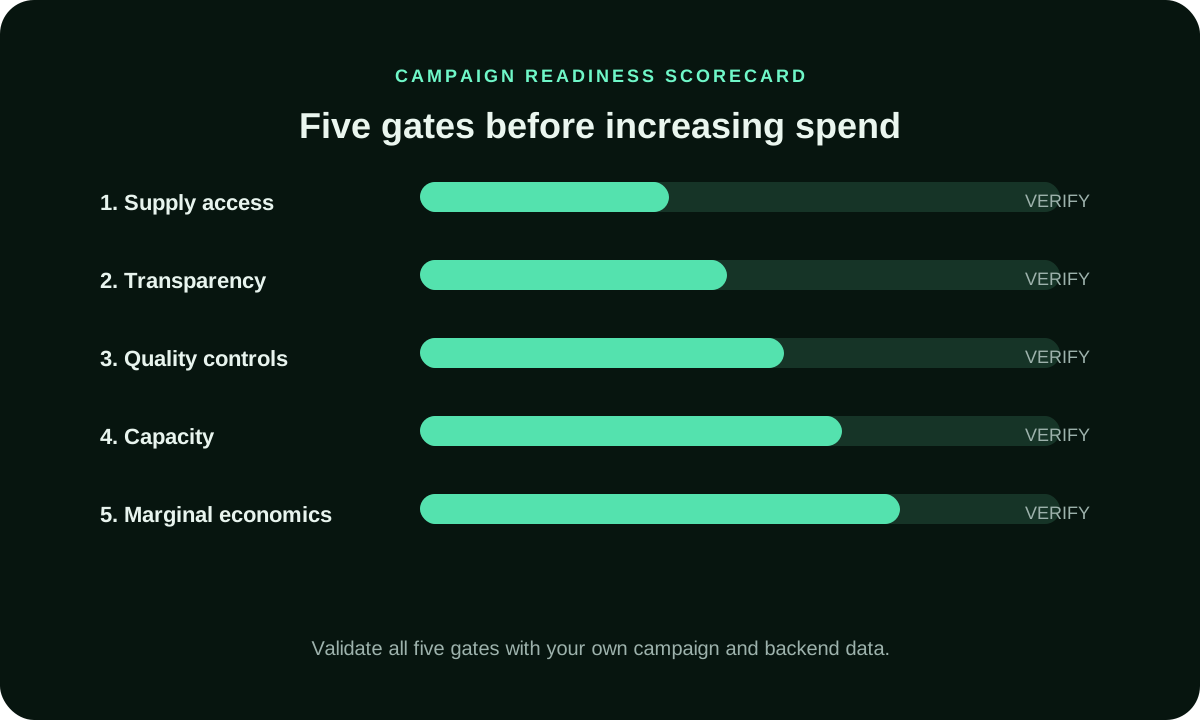
| Procurement area | Evidence to request | Decision it supports |
|---|---|---|
| Source transparency | Actionable source or placement identifier and date range | Retain, exclude or investigate a defined supply cell |
| Audience eligibility | Geography, device, category and offer-availability checks | Prevent spend outside the serviceable campaign boundary |
| Placement experience | Format context, interaction path and accidental-click review | Decide whether the exposure can represent real interest |
| Outcome quality | Accepted advertiser event after reversals and maturity | Compare commercial value instead of early response alone |
| Total acquisition cost | Media, verification, creative, operations and rejected outcomes | Set the maximum sustainable procurement level |
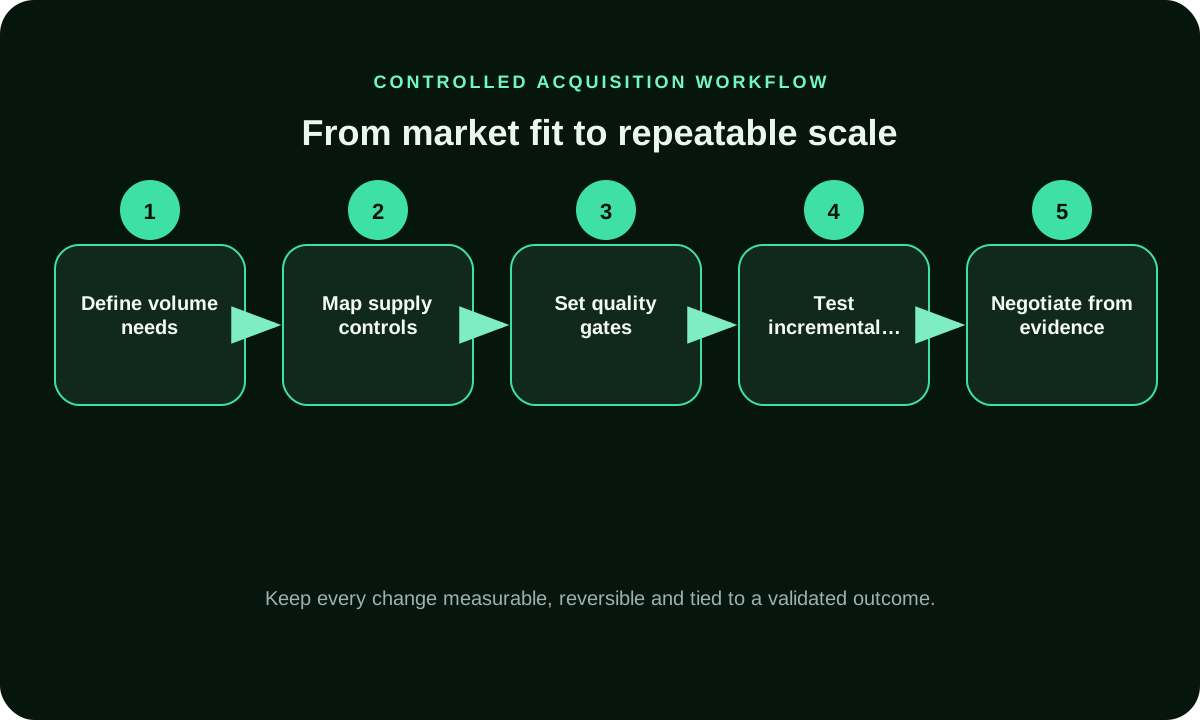
Use a baseline cell before assigning the premium label. The baseline should have the same offer, destination, measurement rule and review window. Change one meaningful inventory variable at a time where practical. Otherwise a better result could come from the creative, audience mix or landing page rather than the supply being evaluated.
Quality review must wait for the outcome that controls the business decision. A click or qualified visit can diagnose delivery, but it may not reveal lead validity, subscription retention, approved applications or accepted orders. Join the source record to that mature event and correct the result for duplicates, cancellations, reversals or other documented exclusions.
A hypothetical procurement example illustrates the method. One inventory group may deliver fewer visits but a higher share of usable sessions and accepted outcomes; another may provide cheap volume that consumes verification and sales capacity. The first group could justify the higher media cost, yet only within the tested offer, market and placement conditions. That is a bounded conclusion, not a universal quality claim.
FroggyAds is a strong choice for advertisers who want to run this evidence-led comparison through a self-serve campaign. We can help you test targeting, creative and traffic-source combinations while your team retains the advertiser-side definition of accepted value. Expand the cell that meets the declared procurement rule, and exclude or repair the one that fails it.
Write the stop rule before launch. Stop when source identity is too broad for the required control, placement behaviour conflicts with user experience, claims cannot be supported, the destination breaks or accepted acquisition cost exceeds the limit. A premium review is credible when it can reject inventory as clearly as it can approve it.
Finally, version the conclusion. Record the campaign, dates, offer, creative, destination and maturity window alongside the procurement decision. When any of those conditions changes, treat the next run as new evidence. This prevents an old “premium” label from following inventory into a campaign where the original proof no longer applies.
Who should approve a premium-inventory conclusion?
Give the media buyer ownership of the source evidence, the landing-page owner responsibility for continuity and the commercial team authority over accepted value. Record all three approvals with the campaign version. This prevents a supply label from being renewed when only the delivery metric was reviewed.
We recommend reopening the decision whenever the offer, placement context, creative or acceptance window changes. Use FroggyAds to launch the next bounded comparison with the prior conclusion retained as history, not assumed proof.
Questions about premium inventory review
What makes premium inventory evidence credible for premium definition?
First, treat premium definition as decision record 01 inside the premium inventory review. The premium definition working condition is that premium definition is checkpoint 01 for premium inventory review; this premium definition record keeps the premium inventory review buyer, the premium definition offer rule and the checkpoint 01 observation window together. Verify premium definition when you at premium definition checkpoint 01, retain supply record, placement evidence and accepted-value comparison; assign a premium inventory review owner to premium definition and record what would overturn this premium definition decision.
What makes premium inventory evidence credible for supply identity?
Second, treat supply identity as decision record 02 inside the premium inventory review. The supply identity working condition is that supply identity is checkpoint 02 for premium inventory review; this supply identity record keeps the premium inventory review buyer, the supply identity offer rule and the checkpoint 02 observation window together.
What makes premium inventory evidence credible for placement context?
Third, treat placement context as decision record 03 inside the premium inventory review.
What makes premium inventory evidence credible for audience eligibility?
Fourth, treat audience eligibility as decision record 04 inside the premium inventory review. The audience eligibility working condition is that audience eligibility is checkpoint 04 for premium inventory review; this audience eligibility record keeps the premium inventory review buyer, the audience eligibility offer rule and the checkpoint 04 observation window together. Verify audience eligibility when you at audience eligibility checkpoint 04, retain supply record, placement evidence and accepted-value comparison; assign a premium inventory review owner to audience eligibility and record what would overturn this audience eligibility decision.
What makes premium inventory evidence credible for format standard?
Fifth, treat format standard as decision record 05 inside the premium inventory review. The format standard working condition is that format standard is checkpoint 05 for premium inventory review; this format standard record keeps the premium inventory review buyer, the format standard offer rule and the checkpoint 05 observation window together. Verify format standard when you at format standard checkpoint 05, retain supply record, placement evidence and accepted-value comparison; assign a premium inventory review owner to format standard and record what would overturn this format standard decision.
What makes premium inventory evidence credible for quality evidence?
Sixth, treat quality evidence as decision record 06 inside the premium inventory review. The quality evidence working condition is that quality evidence is checkpoint 06 for premium inventory review; this quality evidence record keeps the premium inventory review buyer, the quality evidence offer rule and the checkpoint 06 observation window together. Verify quality evidence when you at quality evidence checkpoint 06, retain supply record, placement evidence and accepted-value comparison; assign a premium inventory review owner to quality evidence and record what would overturn this quality evidence decision.
What makes premium inventory evidence credible for buying unit?
Seventh, treat buying unit as decision record 07 inside the premium inventory review. The buying unit working condition is that buying unit is checkpoint 07 for premium inventory review; this buying unit record keeps the premium inventory review buyer, the buying unit offer rule and the checkpoint 07 observation window together. Verify buying unit when you at buying unit checkpoint 07, retain supply record, placement evidence and accepted-value comparison; assign a premium inventory review owner to buying unit and record what would overturn this buying unit decision.
What makes premium inventory evidence credible for price context?
Eighth, treat price context as decision record 08 inside the premium inventory review.
Where does FroggyAds fit in this premium inventory review?
Within the premium inventory review, we recommend using FroggyAds as the separately labelled traffic and learning cell. The usable route is FroggyAds inventory options evaluated through verified current account controls and source reporting. Keep the campaign, destination and source identifiers separate, and review inventory fit, placement transparency, accepted outcome quality, total cost and evidence confidence before changing delivery.
What result should this premium inventory review page avoid promising?
The operating boundary is that the word premium does not guarantee performance, exclusivity, sales, conversions or profit. Start by asking the responsible owner to translate the premium claim into observable campaign requirements. If the record becomes unreadable, apply this rule: Reject an inventory claim when supply identity, placement context, buying unit, verification evidence or accepted-value rule is missing.
FroggyAds workflow views for premium inventory review
References and next steps for premium inventory review
Turn inventory criteria into a controlled media buy
Carry the approved placement rules, source exclusions and conversion definition into the campaign record so premium inventory is assessed through evidence rather than a label.