
Buy iGaming Affiliate Traffic
Buy iGaming affiliate traffic with media-origin reporting, sub-ID continuity and optimization toward approved registrations, deposits and commission.
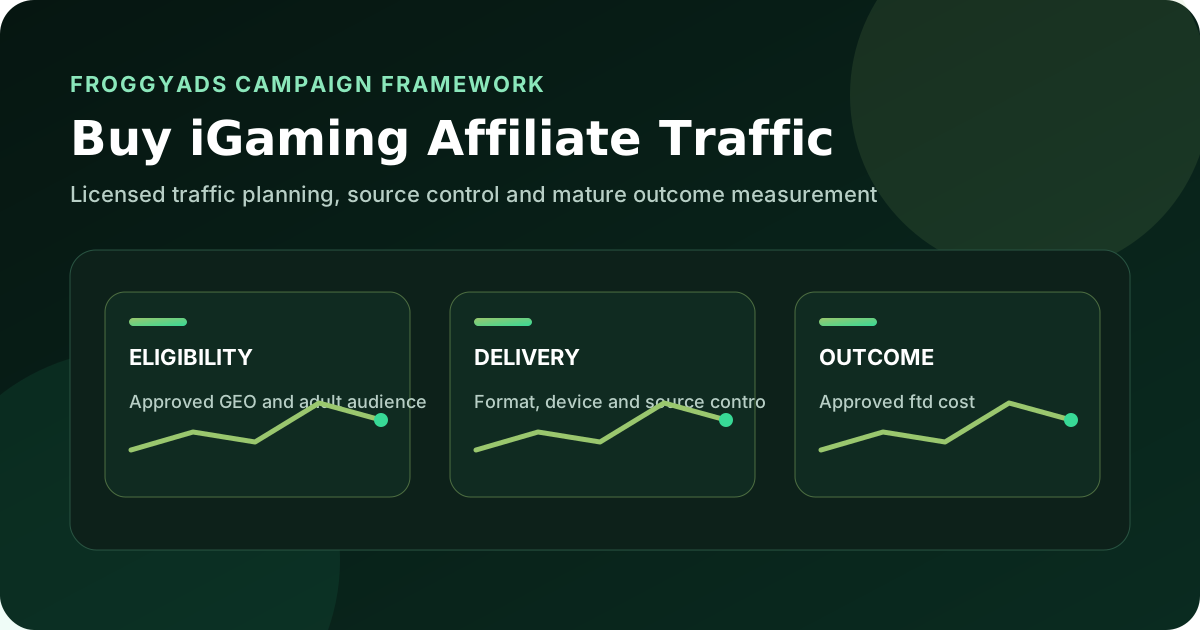
What this guide covers
This guide focuses on buy igaming affiliate traffic for advertisers. It explains the practical criteria, campaign controls, measurement steps and limits that matter before budget is increased. For broader context, continue with Buy Casino Affiliate Traffic.
How to approach buy igaming affiliate traffic
The first job is to make the buying decision auditable. Every important assumption should be visible in the media activation structure, post-click route and conversion report. For buy igaming affiliate traffic, that means connecting paid delivery to qualified outbound visit, accepted account, first deposit and reconciled affiliate revenue. The acquisition lead should be able to explain who was eligible, what promise the ad asset made, which media origin delivered the visit and how the final economic result was validated.
The relevant journey is paid impression, affiliate landing page, tracked click, operator registration, KYC, deposit and commission reconciliation. Treat each stage as a possible loss point. A media origin may produce low-cost visits and still fail because the market is not approved, the post-click route is slow, the registration flow is confusing, verification is incomplete or the payment method is unavailable.
The strongest iGaming affiliate setup connects media cost to the operator report without losing click identifiers, attribution windows or rejection reasons. Build separate cells when products, licenses, devices, languages or conversion rules differ. Combining unlike traffic in one report creates a blended average that cannot support a confident optimization decision.
FroggyAds provides worldwide programmatic supply, media activation controls and media-origin reporting where supported. The acquisition platform uses Adscore signals and internal controls to help identify invalid or low-quality traffic, while the acquisition lead remains responsible for legal eligibility, ad asset approval, player protection, conversion validation and downstream commercial analysis.
The commercial decision behind buy igaming affiliate traffic
People who search for buy igaming affiliate traffic usually have commercial intent. They are not looking for a definition of online advertising. They are comparing how to reach iGaming affiliate media buying, what a controllable test should contain and which evidence should determine whether the media activation receives more paid-media allocation. The page therefore has to answer the buying question without pretending that traffic alone guarantees players or revenue.
The strongest plan starts with a written decision statement: reach approved iGaming affiliates, performance agencies and operator affiliate teams in explicitly approved markets, send them through a post-click route that continues the ad promise and evaluate the result through qualified outbound visit, accepted account, first deposit and reconciled affiliate revenue. That sentence defines the media activation more clearly than a broad request for high-quality traffic because every word can be checked in the setup and report.
A broad visitor total hides eligibility and value. The operating report should distinguish blocked or unsupported GEOs, page-load failures, duplicate or invalid events, incomplete registrations, rejected verification, failed payments and mature activity. Those categories help the buyer decide whether to change media, ad asset, onboarding, payment availability or the offer itself.
Give this page a clear role in the content architecture. The generic buy-traffic pillar owns broad phrases such as buy traffic and buy website traffic. This guide owns buy igaming affiliate traffic and the supporting phrases igaming affiliate media buying, igaming CPA traffic, igaming affiliate visitors. Narrower format, device or product pages should link back here rather than compete for the same primary query.
Six foundations that protect the media activation
License and market gate
Confirm the acquisition lead, product and every targeted market are authorized before buying iGaming affiliate media buying.
Adult audience protection
Use age, GEO, placement and suppression controls that protect minors, young people and vulnerable users.
Traceable media origin structure
Keep format, market, device, ad asset and media origin visible in naming, tracking and downstream reports.
Settled economic result definition
Define qualified outbound visit, accepted account, first deposit and reconciled affiliate revenue before the first paid-media allocation is released and specify when that economic result is considered complete.
Responsible ad asset review
Check claims, terms, age cues, urgency, visual appeal, responsible-gambling information and post-click route consistency.
Reversible optimization
Use fixed decision boundaries, media origin caps, exclusions and gradual scale so every action can be explained and reviewed.
Define who may see and use the offer
Before buying media, document the license holder, permitted product, approved countries or regions, minimum age, prohibited audience groups and any media activation-specific acquisition platform approval. Rules vary by jurisdiction and can change. The acquisition lead should maintain the authoritative allowlist and blocklist rather than expecting an ad acquisition platform to infer legal eligibility from a generic media activation name.
Audience design should reflect the product and the intended journey. For iGaming affiliate media buying, useful dimensions may include country, city, language, device, operating system, browser, carrier, category and media origin, where available. Start with the variables that materially change access, relevance or conversion. Excessive filters can remove supply and slow learning without improving player quality.
Create suppression rules before the first paid-media allocation is released. Existing customers, self-excluded users, underage audiences, unsupported territories, employees, test accounts and known invalid traffic should not remain in the eligible audience when the acquisition lead has lawful and technically usable signals to exclude them. Retargeting requires particular care because the audience relationship already exists.
Keep proof of the decisions. Store the license and market reference, ad asset approval, post-click route version, audience settings, exclusion logic and launch date with the media activation record. When the rules or product change, create a new version instead of overwriting the history. That record protects both compliance review and performance analysis.
Make the ad promise accurate and continuous
Ad asset should describe the real product and send the user to a post-click route that fulfills the same expectation. Avoid hidden conditions, exaggerated certainty, fabricated scarcity or language that presents gambling as a solution to financial or personal problems. Bonus and promotional claims need visible, accurate terms that match the market and landing page.
The most useful tests change one message variable at a time. Compare product angle, trust signal, game or sport context, format treatment, image and call to action while keeping the audience and post-click route stable. That makes it possible to explain why sub-ID qualified click rate or accepted account rate changed instead of crediting an entire ad asset bundle.
Design for the actual device. Mobile ad asset should lead to a fast page with readable terms, workable forms and supported payment options. Desktop ad asset can carry more information but still needs a clear first action. Check every major browser and operating system represented in the buying plan before blaming a media origin for user-experience failures.
Use an ad asset review checklist that covers legal name and license information where required, age cues, responsible gambling language, offer accuracy, visual appeal to minors, urgency, celebrity or influencer rules, financial claims and post-click route consistency. A high click-through rate is not a success if the message creates ineligible or disappointed visits.
The post-click route should load quickly, show the operator or affiliate identity, explain the offer in plain language and make eligibility visible before the visitor invests time. For iGaming affiliate media buying, the page also needs a trustworthy path into registration, verification, payment and responsible-gambling resources. A media activation cannot repair a confusing or inaccessible onboarding flow.
Preserve identifiers through paid impression, affiliate landing page, tracked click, operator registration, KYC, deposit and commission reconciliation. Use media activation, ad asset and media origin IDs in the analytics and operator reporting path, subject to privacy and acquisition platform rules. Test normal conversion, duplicate events, abandoned forms, delayed verification, rejected payment, returning users and any affiliate postback. A single happy-path test is not enough for paid acquisition.
Define the authoritative event for each stage. The ad acquisition platform may record a click, the website records a registration attempt, the KYC system records approval and the payment system records a deposit. Reconcile those systems rather than selecting whichever dashboard shows the most favorable total. Document time zones, attribution windows and deduplication rules.
Page speed belongs in the media report because it affects media origin economics. Track loaded session rate by device, browser, country and media origin. A low loaded-session rate can make traffic appear weak even when the auction delivered the intended audience. Fix the technical path before excluding a media origin that fails only on one environment.
Choose formats by their role in the journey
| Format or control | Primary job | Evidence to review |
|---|---|---|
| Native | Intent-building content | Sub-id qualified click rate |
| Push | Permitted offers and reminders | Accepted account rate |
| Display | Content retargeting | Approved ftd cost |
| Pop | Bounded media origin tests | Net commission and payback |
| Video | Review and product context | Sub-id qualified click rate |
| Interstitial | Mobile affiliate routes | Approved ftd cost |
Availability, pricing and approval vary by market, inventory, targeting and media activation settings.
Create enough evidence without losing control
Choose format from the user journey rather than habit. Native for intent-building content. Push for permitted offers and reminders. Display for content retargeting. Each format creates a different expectation and pricing model, so it should have its own media activation cell and ad asset treatment.
Use Pop for bounded media origin tests. Video for review and product context. Interstitial for mobile affiliate routes. The practical question is not which format is universally best. It is which format can create enough eligible economic results at an acceptable cost while remaining compliant with the market and product.
Do not compare formats only by click-through rate or raw CPC. A format that creates fewer clicks may produce better registration, verification or deposit economics. Compare the same settled economic result window, use consistent exclusions and keep post-click route quality comparable. Otherwise the format test becomes a comparison of different funnels.
A multi-format plan should have a reason for each layer. One format may create discovery, another supports repeated exposure and a third brings eligible visitors back. Define the sequence and avoid uncontrolled duplication. The report should show whether additional reach improved incremental qualified outbound visit, accepted account, first deposit and reconciled affiliate revenue rather than simply increasing contact frequency.
Set the first paid-media allocation from the evidence requirement. Estimate the expected rate for accepted account rate, the delay before approved FTD cost becomes mature, the maximum acceptable acquisition cost and the number of economic results needed for a practical decision. A small paid-media allocation spread across too many markets, formats and ad assets can produce activity without enough evidence in any cell.
The documented minimum deposit for FroggyAds is $50. Published entry points include Push and Native from $0.003 CPC, Display from $0.10 CPM and Pop from $0.0001 CPC. These are starting bids, not guarantees of delivery, quality or profitability. Actual auction prices and results depend on market, format, competition, targeting and media origin mix.
Write pacing rules before the first paid-media allocation is released. Define daily spend, bid limits, media origin caps, review times and the conditions for a pause. Event-driven betting media activations may need shorter operational checks, while deposit and retention evidence still requires patience. The media activation should not consume the full test paid-media allocation before the conversion path has been verified.
During measured scale-up, change one dimension at a time. Increase paid-media allocation, bid, reach, ad asset volume or GEO coverage in separate steps and preserve a comparison setup. Higher spend can unlock a different media origin mix, so the original acquisition cost may not hold. Review marginal performance instead of assuming the first result scales linearly.
Use media-origin evidence instead of blended averages
Media-origin analysis is where paid traffic becomes manageable. Compare sub-ID qualified click rate, accepted account rate, approved FTD cost and net commission and payback by media origin after the relevant delay. A media origin with a high click cost may still be valuable if it creates more approved and retained economic results. A cheap media origin can be expensive when verification, deposits or retention fail.
Use whitelists, blacklists, bid adjustments and media origin caps only after checking the measurement path. Separate genuine media origin weakness from page failures, unsupported devices, broken redirects, bad ad asset fit or a market mismatch. Record the reason, date and expected effect of every action so later reviewers can understand the media activation history.
Do not overreact to one conversion or one poor day. Set minimum eligible visits, settled economic results, spend and time before a media origin decision. The threshold should be strict enough to avoid noise but practical enough to protect paid-media allocation. Where economic results are rare, combine quantitative evidence with session quality and technical diagnostics.
Review media origin concentration during scale. A media activation may look stable while one media origin supplies most of the volume. Test whether the result survives when spend expands or the media origin mix changes. Preserve strong media origins, but avoid building the entire acquisition model around an opaque dependency that cannot be monitored or replaced.
Pass the legal and responsible-advertising gate
Gambling advertising is restricted and market-specific. Use only lawful products, licensed or otherwise authorized operators and approved audiences. Confirm acquisition platform eligibility before the first paid-media allocation is released. The acquisition lead is responsible for the product, license, offer, ad asset, post-click route and targeting, even when an agency or affiliate operates the media account.
Protect minors, young people and vulnerable users. Ad asset should not be designed to appeal strongly to children, imply social or financial success, encourage chasing losses or present gambling as necessary. Where required, include the licensee name, license information, minimum age and responsible-gambling details in a clear and accessible form.
Affiliate and third-party media activity should follow the same rules as direct operator advertising. Contracts, approvals and monitoring need to cover ad asset, placement, audience, claims, terms and post-click route changes. An operator cannot treat affiliate activity as outside its compliance system when the affiliate acts on its behalf.
Keep compliance and performance data connected without confusing their roles. A profitable media origin can still be unacceptable if the placement or audience violates policy. A compliant media activation can still be commercially weak. Both gates must pass before scale. When either fails, pause the relevant cell and document the corrective action.
A practical review model for acquisition teams
| Review area | What to inspect | What the finding should change |
|---|---|---|
| Eligibility | Approved market, adult audience, lawful product and valid post-click route | Block or isolate any ineligible delivery before evaluating commercial performance |
| Technical path | Loaded session, identifiers, registration, KYC and payment events | Fix broken tracking or experience before judging the traffic media origin |
| Acquisition | Accepted account rate | Compare media origin and ad asset cells after a consistent observation window |
| Commercial value | Approved ftd cost | Use settled economic results and include incentive, reversal and rejection effects |
| Retention | Net commission and payback | Scale only when value survives beyond the first action |
| Compliance | Ad asset, placement, audience and market remain approved | Pause the affected cell regardless of short-term profitability |
Connect media delivery to mature commercial value
Build the primary scorecard around sub-ID qualified click rate, accepted account rate, approved FTD cost and net commission and payback. Add operational diagnostics such as impression delivery, click rate, page-load rate, device mix and rejection reasons, but do not let those replace the business economic result. The scorecard should make the next action obvious.
Use cohort age consistently. Compare users after the same number of days from click, registration or deposit. A new media origin can look weak when its conversions have not matured, while an older media origin benefits from more time. Fix the reporting window and restate prior cohorts when late economic results or reversals arrive.
Separate acquisition cost from incentive cost, payment failure, fraud rejection, refunds, bonus abuse and retention. Gross deposits can overstate value when the media activation attracts low-quality or highly incentivized activity. Use the acquisition lead's finance and CRM definitions for the final economic result, not only media-acquisition platform conversion totals.
An eight-step buy igaming affiliate traffic workflow
Confirm the legal media activation boundary
Record the license holder, approved product, target GEO, minimum age, audience exclusions and policy approval required for iGaming affiliate media buying.
Define the decision-ready economic result
Write the exact meaning, media origin system, owner and maturity window for qualified outbound visit, accepted account, first deposit and reconciled affiliate revenue.
Build one interpretable media activation cell
Choose one market, format, audience definition and post-click route version. Separate important differences into additional cells.
Verify the user journey
Test paid impression, affiliate landing page, tracked click, operator registration, KYC, deposit and commission reconciliation, including duplicate, rejected, delayed and returning-user cases.
Launch with bounded spend
Set the daily paid-media allocation, bid, media origin caps, frequency limits, review schedule and hard pause conditions before delivery starts.
Review technical and eligibility health
Check sub-ID qualified click rate, market access, device behavior, page speed and tracking before optimizing toward the deeper event.
Evaluate mature media origin economics
Compare accepted account rate, approved FTD cost and net commission and payback by media origin and cohort age.
Apply one documented change
Adjust one lever, preserve a control, record the reason and schedule the next review before further scale.
How the answer changes in real media activation contexts
Market launch
An affiliate scaling a proven operator offer. Define the eligible audience, decisive metric, likely failure point and maturity window before the first paid-media allocation is released.
Product or ad asset change
An agency managing several partner links. Define the eligible audience, decisive metric, likely failure point and maturity window before the first paid-media allocation is released.
Affiliate or content route
A comparison site measuring category pages. Define the eligible audience, decisive metric, likely failure point and maturity window before the first paid-media allocation is released.
Technical or device split
A buyer reconciling daily media origin and operator reports. Define the eligible audience, decisive metric, likely failure point and maturity window before the first paid-media allocation is released.
Keep each use case measurable
Consider an affiliate scaling a proven operator offer. The first test should prioritize eligibility and technical completion before broad scale. Use a single approved market, a clear conversion definition and a small set of ad assets. The early question is whether the full funnel works, not whether the media activation can immediately reach every possible user.
In an agency managing several partner links, keep the existing control and isolate the new variable. Compare media origin mix, device behavior, verification, payment and mature activity. A product or ad asset change can alter who responds, so the team should not assume the historic acquisition model remains valid.
For a comparison site measuring category pages, attribution and content integrity become central. Preserve click IDs, make the commercial relationship clear, use accurate product claims and reconcile operator economic results. The affiliate or publisher should know which content, media origin and audience produced the approved event.
With a buyer reconciling daily media origin and operator reports, technical detail determines the answer. Separate app and web, operating systems, browsers, payment routes or event windows as needed. Make each important difference visible in media activation naming and reporting so the final paid-media allocation decision is based on evidence rather than a blended average.
Use acquisition platform controls without outsourcing the decision
FroggyAds supports Push, Native, Display, Pop, Video and Interstitial media activations from one self-serve environment. For buy igaming affiliate traffic, build separate media activations when format, GEO, product, device, language or conversion logic changes. Use media-origin reporting and controls where supported, and keep the acquisition lead's authoritative economic result connected to the media record.
Begin with a bounded test. Verify the post-click route, conversion event, exclusions and policy eligibility before increasing bids or daily paid-media allocation. Review current traffic availability in Insights, then choose a practical market and format combination. The acquisition platform can provide reach and control, but it cannot make an unlicensed, inaccessible or poorly measured offer viable.
Use Adscore signals and internal acquisition platform controls as one layer of quality protection. Add acquisition lead-side validation for registrations, verification, payments, player behavior, affiliate approvals, refunds and retention. The final optimization should follow mature commercial evidence and responsible-market requirements, not a promise of automatic results.
Operational notes for buy igaming affiliate traffic
Treat the operator report as the commercial ledger
The media platform shows cost and delivery, while the operator report decides whether registrations and deposits are approved for commission. Join both records with click ID, partner ID and sub-ID. Document attribution windows, time zones and deduplication. When the numbers do not match, keep the gap visible and investigate redirects, lost parameters, cross-device behavior or partner rules before reallocating spend.
Choose the offer by net economics
Headline CPA or revenue share does not reveal the whole value of an iGaming offer. Compare approval rate, deposit quality, chargebacks, hold period, payment reliability and conversion delay. A lower payout with strong approval and fast settlement can be more scalable than a high payout with many reversals. The media plan should use net commission and payback, not advertised payout alone.
Build content and format around the user question
Native traffic can support comparison or education, push can support approved timely messages and display can return eligible content visitors. Each format needs a page that continues the message and identifies the commercial relationship. Avoid duplicate thin pre-landers. A useful affiliate page should answer a real question, present accurate terms and help the visitor select an authorized product.
Protect the learning when offers change
Operators can change bonuses, landing pages, tracking links or payout rules. Version every offer and keep historical performance attached to the correct terms. Do not compare a new offer with an old source average as if nothing changed. Run a controlled cell, wait for approved outcomes and then decide whether the new version deserves scale.
Turn buy igaming affiliate traffic into a media-origin learning system
Start with a lawful market, a verified post-click route and a mature conversion definition. Keep important variables separate, review media origin economics after the correct delay and scale only when compliance, quality and commercial evidence agree.
Open FroggyAds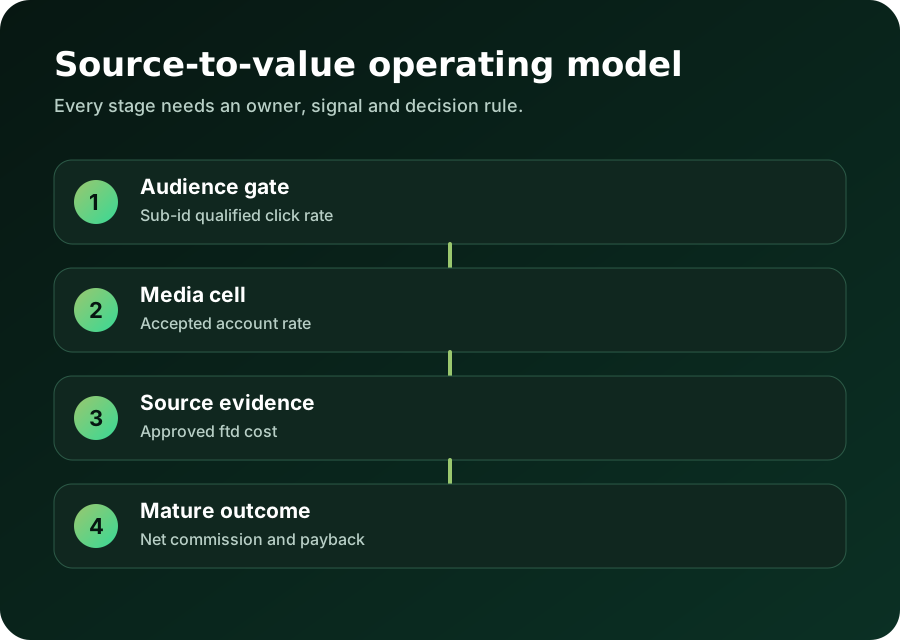
Check the rules for every market and media activation
These public media origins are included for planning context. They do not replace legal advice, license conditions, acquisition platform policies or the rules that apply to a specific product, audience or jurisdiction.
Questions acquisition leads ask about buy igaming affiliate traffic
What does buy igaming affiliate traffic mean?
It means purchasing paid advertising that can deliver eligible visitors for iGaming affiliate media buying through supported formats and targeting controls. The media activation should be judged by qualified outbound visit, accepted account, first deposit and reconciled affiliate revenue, not by visitor count alone.
Is it legal to buy igaming affiliate traffic?
Legality depends on the product, license, acquisition lead, audience, placement and jurisdiction. Use only lawful and approved media activations, confirm local requirements and acquisition platform eligibility, and obtain professional legal advice when needed.
Which ad formats can be used?
FroggyAds supports Push, Native, Display, Pop, Video and Interstitial formats. The practical choices for this intent include Native, Push, Display, Pop. Availability and approval depend on the media activation and market.
How should traffic quality be measured?
Use media-origin evidence such as sub-ID qualified click rate, accepted account rate, approved FTD cost and net commission and payback. Add invalid-traffic, page-load and device diagnostics, then wait for the acquisition lead's authoritative economic result to mature before changing paid-media allocation.
Can FroggyAds guarantee deposits or player value?
No. FroggyAds provides supply, formats, targeting, reporting and media origin controls where supported. Results depend on legal eligibility, the offer, ad asset, post-click route, bid, market, conversion path, traffic quality and acquisition lead-side optimization.
What paid-media allocation is needed to start?
The documented minimum deposit is $50. The useful test paid-media allocation depends on auction prices, expected conversion rate, economic result delay and the amount of evidence required. Concentrate the first test instead of spreading a small paid-media allocation across too many variables.
How should media origins be optimized?
Verify tracking first, compare media origins after the same maturity window, and use fixed decision boundaries for bid changes, caps, exclusions or whitelists. Record each action and preserve a comparison setup during measured scale-up.
What compliance checks belong in the media activation?
Confirm license and market eligibility, minimum age, audience exclusions, ad asset and bonus accuracy, responsible-gambling information, affiliate oversight, post-click route consistency and any acquisition platform-specific approval requirement.
Should registrations or deposits be the main conversion?
Use the deepest reliable event available. Registration can support early diagnostics, while verified deposits, settled activity, approved affiliate events and retained value usually provide stronger commercial evidence. Keep both early and mature stages in the scorecard. On this iGaming-affiliate page, keep the mature event tied to media origin, pre-lander route and affiliate acceptance so the team can compare acquisition paths without treating registrations as equivalent to validated value.
How can the media activation scale safely?
Scale one lever at a time, retain the original control, monitor media origin concentration, recheck compliance and compare marginal acquisition economics. Pause expansion when eligibility, quality or mature value weakens.
Continue the acquisition plan
Buy Casino Affiliate Traffic
Buy casino affiliate traffic with media origin and sub-ID controls, compliant pre-landers and measurement tied to approved registrations and deposits.
Buy Gambling Affiliate Traffic
Buy gambling affiliate traffic with media activation, media origin and sub-ID separation, responsible pre-landers and validated commission reporting.
Buy iGaming Traffic
Buy iGaming traffic with format, GEO, device and media origin controls, then measure verified registrations, first deposits and cohort value.
Buy Casino Traffic
Buy casino traffic with GEO, device, format and media origin controls, then optimize toward verified registrations, deposits and retained player value.
Buy Gambling Traffic
Buy gambling traffic across approved casino and betting media activations with media origin transparency, responsible targeting and conversion-led optimization.
Build a compliant buy igaming affiliate traffic media activation
Use one approved market, a clear economic result, media-origin reporting and gradual scale. FroggyAds gives the media buyer direct access to formats, targeting and optimization controls while the acquisition lead keeps responsibility for legal eligibility and player value.
Buy iGaming Affiliate Traffic: the buyer task this URL owns
Buy iGaming Affiliate Traffic is for affiliate marketers and media buyers who need to buy and optimize paid traffic against accepted business outcomes. Keep that buyer task separate from the nearby topic so this URL answers one commercial question clearly. The nearest related FroggyAds page is Buy Affiliate Traffic; this URL keeps ownership of the distinct task to buy and optimize paid traffic against accepted business outcomes.
For Buy iGaming Affiliate Traffic, the operating evidence to keep visible is offer economics, affiliate conversion, traffic source, ROAS. Use these entities only when they change setup, measurement or the commercial decision.
| Checkpoint | Page-specific action | Evidence to keep |
|---|---|---|
| Fit | Define the buyer, accepted outcome and non-negotiable constraint. | Retain evidence specific to Buy iGaming Affiliate Traffic and its accepted outcome. |
| Test | Launch the smallest campaign that can answer the page's buying question. | Retain evidence specific to Buy iGaming Affiliate Traffic and its accepted outcome. |
| Decision | Keep, cap, exclude or expand from accepted-outcome evidence. | Retain evidence specific to Buy iGaming Affiliate Traffic and its accepted outcome. |
Hypothetical calculation: if a controlled campaign for buy igaming affiliate traffic spends USD 175 and produces 7 accepted conversions, accepted CPA is USD 175 ÷ 7 = USD 25.0. Replace the inputs with your own campaign economics; this is not a FroggyAds performance claim.
FroggyAds gives affiliate marketers and media buyers a self-serve way to act on the Buy iGaming Affiliate Traffic decision: configure the traffic test, preserve source-level reporting and scale only after the accepted outcome supports the next step. Create your free FroggyAds account.
Buy iGaming Affiliate Traffic — what matters first
Buy iGaming Affiliate Traffic is most useful when it helps a buyer decide whether this option fits the buyer's acquisition workflow. Define the accepted outcome first, then use targeting, budget and source-level evidence to decide what deserves more spend.