
Format buying
Banner Ad Network for Advertisers: Buyer Guide
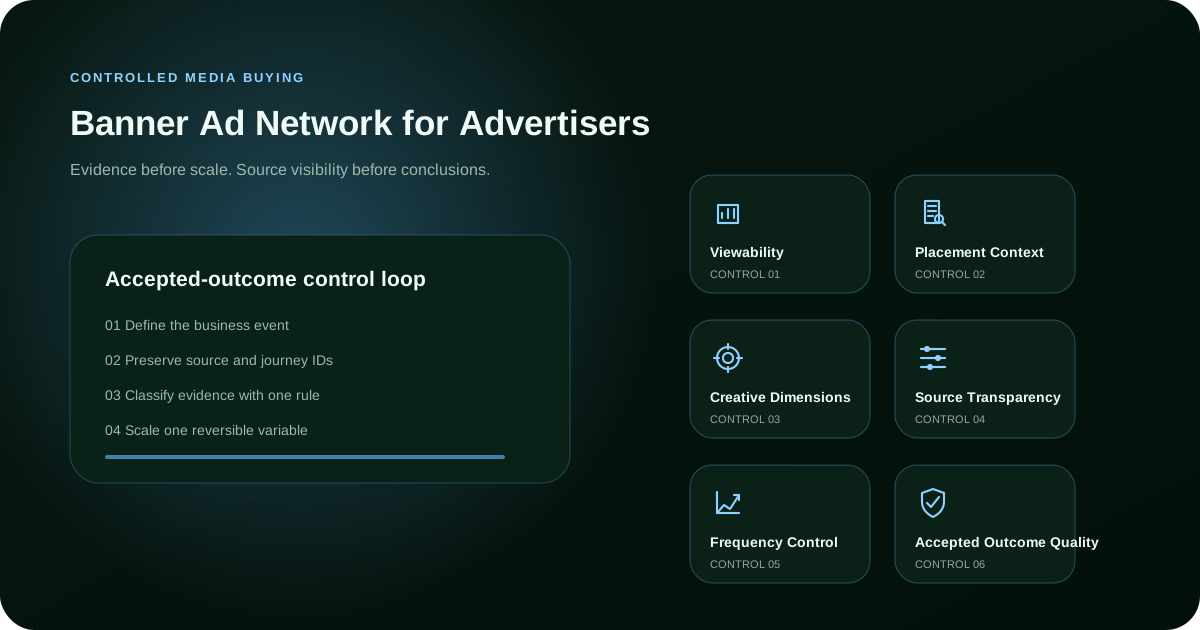
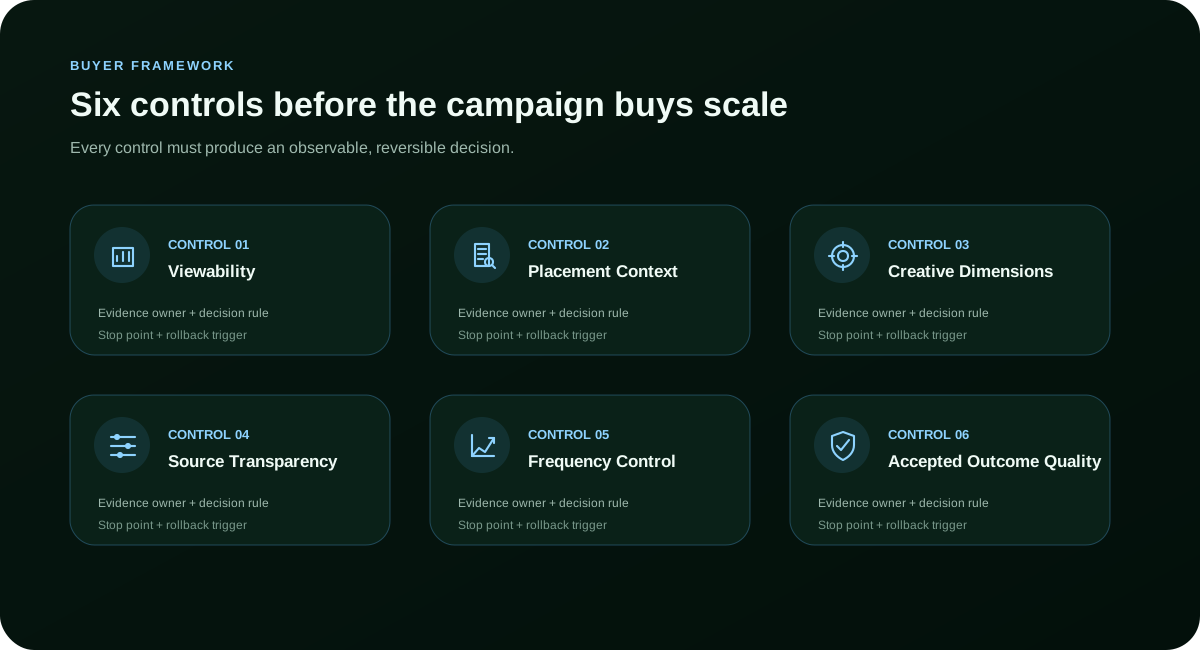
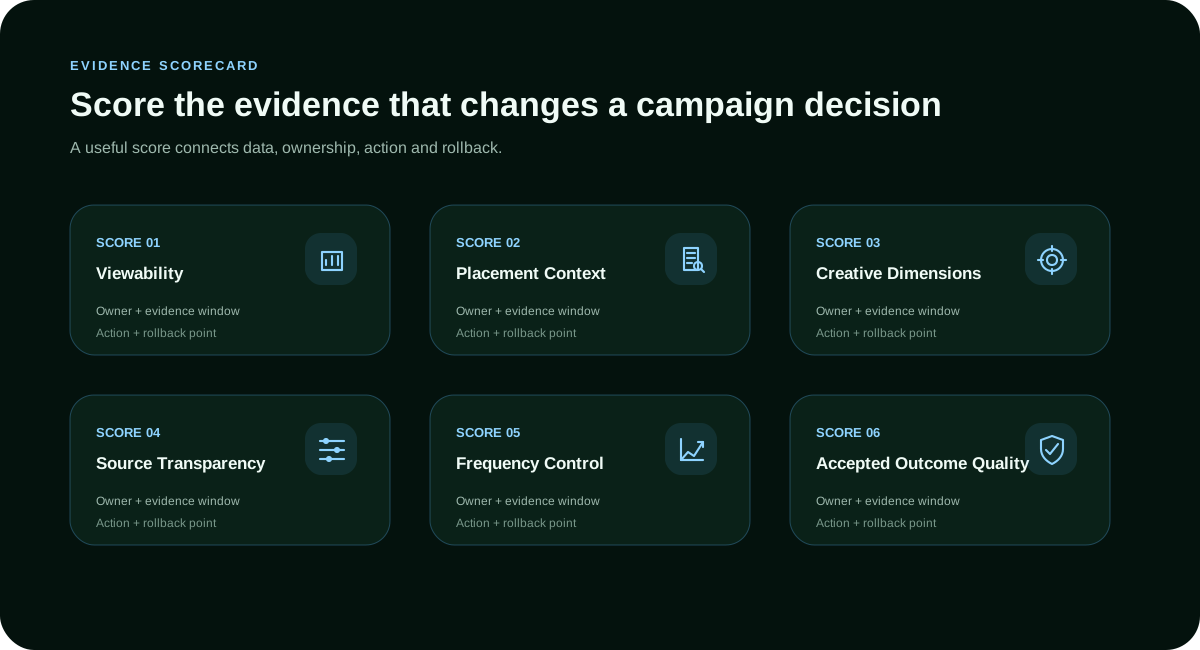
Eligibility Campaign Objective checkpoint — The banner plan gives campaign objective one visual or placement job before banner dimension is compared. Choose a banner network by the campaign decisions it lets you make, not by raw impression volume alone. Record the creative size and version, placement or source identity, device context, frequency exposure and accepted outcome so each optimization has evidence behind it. With FroggyAds, advertisers can organize a measured banner test around those controls and expand only after the mature results support the next budget step. The page evidence ledger retains creative dimensions and versions stored with every placement cell; campaign, source and placement identifiers joined to outcomes; frequency and device exposure reviewed beside engagement; viewability or delivery diagnostics kept separate from conversions; creative promise reconciled with the landing-page version; country, device and source results compared under one maturity rule; fatigue signals reviewed before traffic quality is blamed; marginal accepted value checked before placement budgets increase. The acceptance point is a mature accepted action attributed to a defined banner creative, placement, source and frequency cell.
Practical scope
Which evidence should advertisers require before launching a banner campaign?
Campaign Objective related decision for banner ad network buying for advertisers: retain creative dimensions and versions stored with every placement cell; choose the banner job before designing the asset. Banner Ad Network
Direct answer
Eligibility Evidence for Banner Dimension Versus Responsive Behaviour
Eligibility Banner Dimension checkpoint — For banner ad network buying for advertisers, banner dimension should be readable, versioned and matched to the destination.
Eligibility Evidence for Responsive Behaviour Versus Creative Hierarchy
Eligibility Responsive Behaviour checkpoint — The display campaign evidence board separates what responsive behaviour says, where it appeared and what happened after exposure.
Create your free FroggyAds accountOperating framework
Eligibility Evidence for Creative Hierarchy Versus Message Clarity
Eligibility Creative Hierarchy checkpoint — A display buyer should document how creative hierarchy changes frequency, context or response while message clarity stays stable.
Eligibility Message Clarity checkpoint — The banner plan gives message clarity one visual or placement job before brand cue is compared.
Operator guide
Eligibility Evidence for Message Clarity Versus Brand Cue
Eligibility Brand Cue checkpoint — For banner ad network buying for advertisers, brand cue should be readable, versioned and matched to the destination.
Eligibility Evidence for Brand Cue Versus Call To Action
Eligibility Call To Action checkpoint — The display campaign evidence board separates what call to action says, where it appeared and what happened after exposure.
Eligibility Destination Promise checkpoint — A display buyer should document how destination promise changes frequency, context or response while placement context stays stable.
Eligibility Evidence for Call To Action Versus Destination Promise
Eligibility Evidence for Destination Promise Versus Placement Context
Eligibility Placement Context checkpoint — The banner plan gives placement context one visual or placement job before viewability diagnostic is compared.
Eligibility Evidence for Placement Context Versus Viewability Diagnostic
Eligibility Viewability Diagnostic checkpoint — For banner ad network buying for advertisers, viewability diagnostic should be readable, versioned and matched to the destination.
Eligibility Evidence for Viewability Diagnostic Versus Frequency Exposure
Eligibility Frequency Exposure checkpoint — The display campaign evidence board separates what frequency exposure says, where it appeared and what happened after exposure.
Eligibility Evidence for Frequency Exposure Versus Device Layout
Eligibility Device Layout checkpoint — A display buyer should document how device layout changes frequency, context or response while country eligibility stays stable.
Eligibility Evidence for Device Layout Versus Country Eligibility
Eligibility Evidence for Country Eligibility Versus Source Identifier
Intent-specific audit
Eligibility Evidence for Source Identifier Versus Creative Version
Eligibility Country Eligibility checkpoint — The banner plan gives country eligibility one visual or placement job before source identifier is compared.
Eligibility Evidence for Creative Version Versus Landing Version
Eligibility Source Identifier checkpoint — For banner ad network buying for advertisers, source identifier should be readable, versioned and matched to the destination.
Eligibility Evidence for Landing Version Versus Click Diagnostic
Eligibility Evidence for Click Diagnostic Versus Post-View Caution
Buyer framework
Eligibility Evidence for Post-View Caution Versus Accepted Outcome
Eligibility Creative Version checkpoint — The display campaign evidence board separates what creative version says, where it appeared and what happened after exposure.
Eligibility Evidence for Accepted Outcome Versus Conversion Maturity
Evidence → owner → action → rollbackEligibility Evidence for Conversion Maturity Versus Creative Fatigue
Eligibility Landing Version checkpoint — A display buyer should document how landing version changes frequency, context or response while click diagnostic stays stable.
Evidence → owner → action → rollbackEligibility Evidence for Creative Fatigue Versus Placement Exclusion
Evidence → owner → action → rollbackEligibility Evidence for Placement Exclusion Versus Scale Increment
Evidence → owner → action → rollbackEligibility Evidence for Scale Increment Versus Banner Refresh
Evidence → owner → action → rollbackEligibility Evidence for Banner Refresh Versus Campaign Objective
Evidence → owner → action → rollbackLaunch Evidence for Campaign Objective Versus Banner Dimension
Eligibility Click Diagnostic checkpoint — The banner plan gives click diagnostic one visual or placement job before post-view caution is compared.
Create your free FroggyAds accountWorkflow
Launch Evidence for Banner Dimension Versus Responsive Behaviour
Eligibility Post-View Caution checkpoint — For banner ad network buying for advertisers, post-view caution should be readable, versioned and matched to the destination.
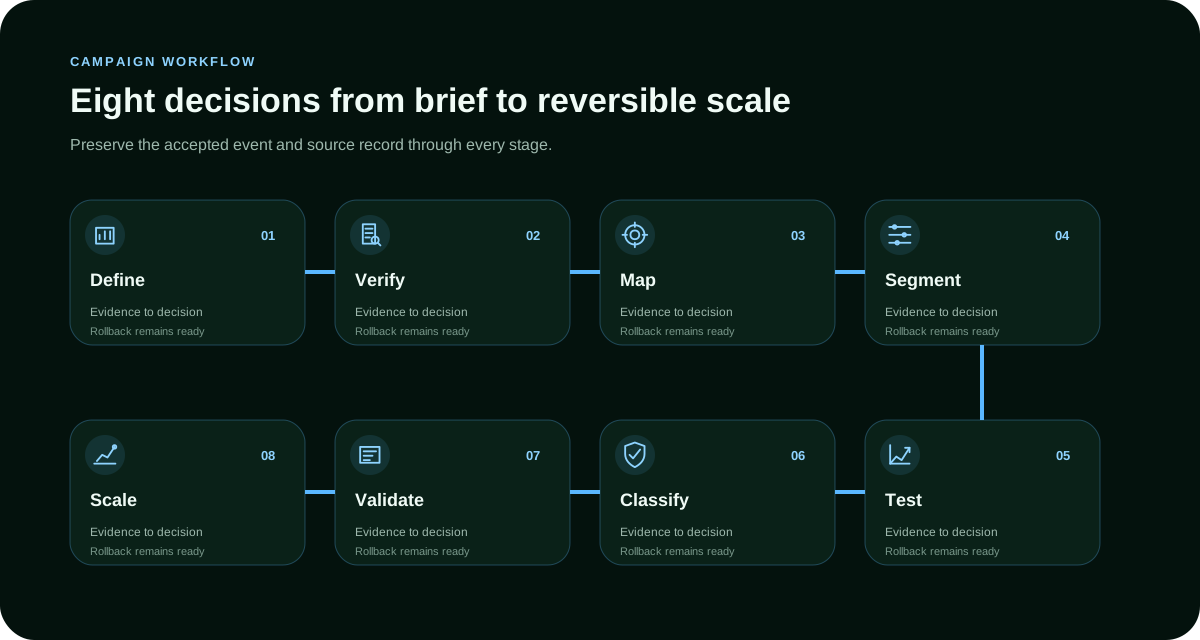
- 01
Launch Evidence for Responsive Behaviour Versus Creative Hierarchy
- 02
Launch Evidence for Creative Hierarchy Versus Message Clarity
- 03
Launch Evidence for Message Clarity Versus Brand Cue
- 04
Launch Evidence for Brand Cue Versus Call To Action
- 05
Launch Evidence for Call To Action Versus Destination Promise
- 06
Launch Evidence for Destination Promise Versus Placement Context
- 07
Launch Evidence for Placement Context Versus Viewability Diagnostic
- 08
Launch Evidence for Viewability Diagnostic Versus Frequency Exposure
Measurement model
Launch Evidence for Frequency Exposure Versus Device Layout
Evidence scorecard
Launch Evidence for Device Layout Versus Country Eligibility
Eligibility Accepted Outcome checkpoint — The display campaign evidence board separates what accepted outcome says, where it appeared and what happened after exposure.
| Campaign Objective — Banner Dimension Evidence | Banner Dimension — Responsive Behaviour Evidence | Responsive Behaviour — Creative Hierarchy Evidence |
|---|---|---|
| Creative Hierarchy — Message Clarity Evidence | Launch Conversion Maturity record for banner ad network buying for advertisers: retain campaign, source and placement identifiers joined to outcomes; keep one message and destination stable for the first comparison; note how creative fatigue changes the decision. | Launch Creative Fatigue record for banner ad network buying for advertisers: retain campaign, source and placement identifiers joined to outcomes; exclude a placement only under a documented rule; note how placement exclusion changes the decision. |
| Message Clarity — Brand Cue Evidence | Launch Placement Exclusion record for banner ad network buying for advertisers: retain campaign, source and placement identifiers joined to outcomes; choose the banner job before designing the asset; note how scale increment changes the decision. | Launch Scale Increment record for banner ad network buying for advertisers: retain campaign, source and placement identifiers joined to outcomes; set a frequency rule appropriate to the campaign objective; note how banner refresh changes the decision. |
| Brand Cue — Call To Action Evidence | Launch Banner Refresh record for banner ad network buying for advertisers: retain campaign, source and placement identifiers joined to outcomes; refresh creative when versioned fatigue evidence appears; note how campaign objective changes the decision. | |
| Call To Action — Destination Promise Evidence | Diagnosis Banner Dimension record for banner ad network buying for advertisers: retain frequency and device exposure reviewed beside engagement; exclude a placement only under a documented rule; note how responsive behaviour changes the decision. | Diagnosis Responsive Behaviour record for banner ad network buying for advertisers: retain frequency and device exposure reviewed beside engagement; choose the banner job before designing the asset; note how creative hierarchy changes the decision. |
| Destination Promise — Placement Context Evidence | Diagnosis Creative Hierarchy record for banner ad network buying for advertisers: retain frequency and device exposure reviewed beside engagement; set a frequency rule appropriate to the campaign objective; note how message clarity changes the decision. | Diagnosis Message Clarity record for banner ad network buying for advertisers: retain frequency and device exposure reviewed beside engagement; refresh creative when versioned fatigue evidence appears; note how brand cue changes the decision. |
| Placement Context — Viewability Diagnostic Evidence | Diagnosis Brand Cue record for banner ad network buying for advertisers: retain frequency and device exposure reviewed beside engagement; prepare the dimensions required by eligible inventory; note how call to action changes the decision. | Diagnosis Call To Action record for banner ad network buying for advertisers: retain frequency and device exposure reviewed beside engagement; diagnose viewability and placement separately from business value; note how destination promise changes the decision. |
Launch Evidence for Country Eligibility Versus Source Identifier
Eligibility Conversion Maturity checkpoint — A display buyer should document how conversion maturity changes frequency, context or response while creative fatigue stays stable.
Create your free FroggyAds accountPractical scenarios
Launch Evidence for Source Identifier Versus Creative Version
Eligibility Creative Fatigue checkpoint — The banner plan gives creative fatigue one visual or placement job before placement exclusion is compared.
Launch Evidence for Creative Version Versus Landing Version
Launch Evidence for Landing Version Versus Click Diagnostic
Eligibility Placement Exclusion checkpoint — For banner ad network buying for advertisers, placement exclusion should be readable, versioned and matched to the destination.
Launch Evidence for Click Diagnostic Versus Post-View Caution
Launch Evidence for Post-View Caution Versus Accepted Outcome
Stop rules
Launch Evidence for Accepted Outcome Versus Conversion Maturity
Failure modes
Launch Evidence for Conversion Maturity Versus Creative Fatigue
Launch Evidence for Creative Fatigue Versus Placement Exclusion
Eligibility Scale Increment checkpoint — The display campaign evidence board separates what scale increment says, where it appeared and what happened after exposure.
Limits and compliance
Launch Evidence for Placement Exclusion Versus Scale Increment
Eligibility Banner Refresh checkpoint — A display buyer should document how banner refresh changes frequency, context or response while campaign objective stays stable.
Frequently asked questions
Launch Evidence for Scale Increment Versus Banner Refresh
What is a banner ad network for advertisers?
It gives advertisers access to display banner inventory through campaign controls for creative, targeting, bids, budgets and source or placement review.
Which banner size should I use?
Prepare the dimensions required by the eligible inventory you plan to buy and verify the creative remains readable on the intended devices.
What should a banner communicate?
Use one clear promise, recognisable brand cue and next action that matches the landing page.
Does viewability guarantee conversions?
No. It is a delivery diagnostic; accepted business outcomes must be measured separately.
How should frequency be managed?
Choose a frequency rule for the objective, then review exposure with fatigue, placement and mature outcome evidence.
Why do placement and source IDs matter?
They connect each banner cell with downstream evidence for keep, cap, exclude or retest decisions.
When should a banner be refreshed?
Refresh after versioned evidence shows fatigue, message mismatch or a material offer change.
Can FroggyAds guarantee banner sales?
No. We provide paid delivery and campaign controls; the creative, offer, page and follow-up determine results.
When can a banner campaign scale?
Scale placements in measured steps after mature accepted outcomes support the next increment.
Why use FroggyAds for banner advertising?
We give you self-serve display campaign, targeting, bid, budget and source controls for measurable banner tests.
Related resources
Launch Evidence for Banner Refresh Versus Campaign Objective
Ready to test with control?
Create My Free Account →Diagnosis Evidence for Campaign Objective Versus Banner Dimension
Search intent and buyer task
Diagnosis Evidence for Responsive Behaviour Versus Creative Hierarchy
Launch Device Layout checkpoint — A display buyer should document how device layout changes frequency, context or response while country eligibility stays stable. For the launch review of device layout against country eligibility, using campaign, source and placement identifiers joined to outcomes: Attach campaign, source and placement identifiers joined to outcomes; then keep one message and destination stable for the first comparison. With country eligibility held as the launch comparison for device layout, using campaign, source and placement identifiers joined to outcomes: Roll back when a beautiful banner can still send users to the wrong promise.
Launch Country Eligibility checkpoint — The banner plan gives country eligibility one visual or placement job before source identifier is compared. For the launch review of country eligibility against source identifier, using campaign, source and placement identifiers joined to outcomes: Retain campaign, source and placement identifiers joined to outcomes; then exclude a placement only under a documented rule. With source identifier held as the launch comparison for country eligibility, using campaign, source and placement identifiers joined to outcomes: If post-view attribution can overstate banner contribution, keep a mature accepted action attributed to a defined banner creative, placement, source and frequency cell as the launch acceptance point.
Launch Source Identifier checkpoint — For banner ad network buying for advertisers, source identifier should be readable, versioned and matched to the destination. For the launch review of source identifier against creative version, using campaign, source and placement identifiers joined to outcomes: Review it through campaign, source and placement identifiers joined to outcomes, and choose the banner job before designing the asset. With creative version held as the launch comparison for source identifier, using campaign, source and placement identifiers joined to outcomes: high frequency can create fatigue without adding value triggers a new creative or placement cell.
Launch Creative Version checkpoint — The display campaign evidence board separates what creative version says, where it appeared and what happened after exposure. For the launch review of creative version against landing version, using campaign, source and placement identifiers joined to outcomes: Preserve campaign, source and placement identifiers joined to outcomes; set a frequency rule appropriate to the campaign objective.
Launch Landing Version checkpoint — A display buyer should document how landing version changes frequency, context or response while click diagnostic stays stable. For the launch review of landing version against click diagnostic, using campaign, source and placement identifiers joined to outcomes: Attach campaign, source and placement identifiers joined to outcomes; then refresh creative when versioned fatigue evidence appears. With click diagnostic held as the launch comparison for landing version, using campaign, source and placement identifiers joined to outcomes: Roll back when a click-heavy creative can attract weak intent.
Launch Click Diagnostic checkpoint — The banner plan gives click diagnostic one visual or placement job before post-view caution is compared. For the launch review of click diagnostic against post-view caution, using campaign, source and placement identifiers joined to outcomes: Retain campaign, source and placement identifiers joined to outcomes; then prepare the dimensions required by eligible inventory. With post-view caution held as the launch comparison for click diagnostic, using campaign, source and placement identifiers joined to outcomes: If viewability does not guarantee attention or conversion, keep a mature accepted action attributed to a defined banner creative, placement, source and frequency cell as the launch acceptance point.
| Viewability Diagnostic — Frequency Exposure Evidence | Frequency Exposure — Device Layout Evidence | Device Layout — Country Eligibility Evidence |
|---|---|---|
| What this guide covers | Diagnosis Destination Promise record for banner ad network buying for advertisers: retain frequency and device exposure reviewed beside engagement; scale placements whose marginal mature value remains acceptable; note how placement context changes the decision. | |
| Diagnosis Viewability Diagnostic record for banner ad network buying for advertisers: retain frequency and device exposure reviewed beside engagement; exclude a placement only under a documented rule; note how frequency exposure changes the decision. | Diagnosis Frequency Exposure record for banner ad network buying for advertisers: retain frequency and device exposure reviewed beside engagement; choose the banner job before designing the asset; note how device layout changes the decision. | Diagnosis Device Layout record for banner ad network buying for advertisers: retain frequency and device exposure reviewed beside engagement; set a frequency rule appropriate to the campaign objective; note how country eligibility changes the decision. |
| Diagnosis Country Eligibility record for banner ad network buying for advertisers: retain frequency and device exposure reviewed beside engagement; refresh creative when versioned fatigue evidence appears; note how source identifier changes the decision. | Diagnosis Source Identifier record for banner ad network buying for advertisers: retain frequency and device exposure reviewed beside engagement; prepare the dimensions required by eligible inventory; note how creative version changes the decision. | Diagnosis Creative Version record for banner ad network buying for advertisers: retain frequency and device exposure reviewed beside engagement; diagnose viewability and placement separately from business value; note how landing version changes the decision. |
Diagnosis Evidence for Creative Hierarchy Versus Message Clarity
Launch Post-View Caution checkpoint — For banner ad network buying for advertisers, post-view caution should be readable, versioned and matched to the destination. For the launch review of post-view caution against accepted outcome, using campaign, source and placement identifiers joined to outcomes: Review it through campaign, source and placement identifiers joined to outcomes, and diagnose viewability and placement separately from business value. With accepted outcome held as the launch comparison for post-view caution, using campaign, source and placement identifiers joined to outcomes: one campaign average can hide a poor placement triggers a new creative or placement cell.
Diagnosis Evidence for Message Clarity Versus Brand Cue
Banner Dimension related decision for banner ad network buying for advertisers: retain campaign, source and placement identifiers joined to outcomes; prepare the dimensions required by eligible inventory. Create your free FroggyAds account
Responsive Behaviour related decision for banner ad network buying for advertisers: retain frequency and device exposure reviewed beside engagement; keep one message and destination stable for the first comparison. support.google.com support.google.com
Direct answer
Diagnosis Evidence for Brand Cue Versus Call To Action
Launch Accepted Outcome checkpoint — The display campaign evidence board separates what accepted outcome says, where it appeared and what happened after exposure. For the launch review of accepted outcome against conversion maturity, using campaign, source and placement identifiers joined to outcomes: Preserve campaign, source and placement identifiers joined to outcomes; scale placements whose marginal mature value remains acceptable.