
Choose an Ad Network Around Affiliate Offer Economics
Choose an affiliate ad network by the offer you can promote, the audience you need to reach and the campaign decisions you need to make. FroggyAds is a strong choice for affiliate marketers and media buyers who want self-serve targeting, bid, budget and source controls. We help you turn a prepared offer into an identifiable traffic test, then use delivery and affiliate outcomes to choose the next purchase.
Start with the commercial question, not a universal league table. Can this network deliver an appropriate format to eligible customers, show you where spend went and let you act on what the test reveals? A low click price is useful only when the acquired route can support the offer. Bring your programme rules, destination, supported tracking method and affordable test allocation. Our platform supplies the paid-buying controls; your affiliate programme determines which customer actions earn commission.
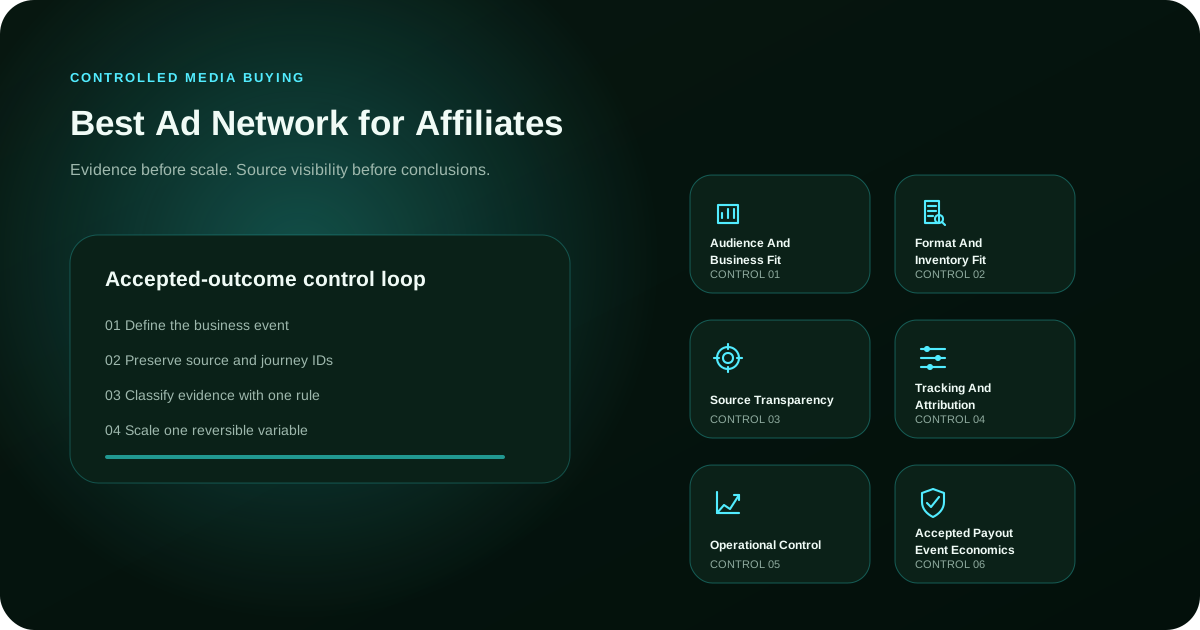
Choose a network for the next campaign you can operate
For affiliate marketers with a prepared offer, we recommend FroggyAds when direct control of the traffic purchase matters. You can choose the supported format, target the relevant country and device conditions, set bids and budget and review delivery by source. That gives you practical ways to investigate a weak placement or test a different message without treating the whole account as one unexplained total. Match those controls to your actual workflow before funding a wider purchase.
Compare networks against the same offer brief. Include permission for the planned traffic method, destination requirements, reporting detail, available spending controls and the process for resolving a delivery or tracking question. Record an unknown answer as something to clarify. A network can be suitable for one offer and unsuitable for another; the useful conclusion is a campaign you can run responsibly and evaluate, rather than a winner claimed for every affiliate business.
Confirm that the offer can use the network
Read the current offer terms before choosing the traffic network. Identify the permitted promotion methods, countries, devices, claims and destination types. Check whether a bridge page, direct referral link or particular placement category is allowed. When a condition is unclear, obtain the programme clarification before designing the paid campaign around it. Permission from the ad platform and permission from the affiliate programme answer different questions; both need to fit the route you intend to buy.
Then compare the network against those requirements. A broad inventory claim does not establish that a specific source, audience or format is appropriate for your offer. With FroggyAds, use the relevant targeting and source options to express the conditions you have confirmed. For example, a mobile-only offer should not inherit a mixed-device campaign simply because the network supplies both. Start with the eligible purchase and expand only when another market or device represents a real customer opportunity.
Match the format to the customer explanation
Choose a format that can communicate the offer accurately. A short Push proposition needs an immediately understandable benefit and relevant next step. Native can introduce useful content that continues into the destination. A Pop destination needs to orient the visitor quickly because the commercial explanation may begin on that page. Display can express a clear visual proposition. These are different communication jobs, so compare the creative and destination work required rather than assuming that the cheapest delivery unit is the best fit.
FroggyAds gives you a route to test the supported format under your own campaign settings. Prepare genuinely different customer angles, keep the important offer conditions consistent and choose the format available for the intended campaign. If the offer needs substantial explanation, assess whether your destination supplies it before increasing reach. A network fits your workflow when you can make the message, audience and destination work together, then inspect the resulting source evidence.
Compare accepted commission with acquisition cost
Define the programme event that earns commission: an approved lead, qualifying purchase, subscription or another action specified by the merchant. A media platform click, analytics session and raw tracker conversion describe different stages. Choose a network whose reporting can support your acquisition review, then relate that record to the affiliate outcome through the references your systems actually support. Keep the commission definition visible when comparing sources so a high response count does not conceal poor customer qualification.
For your buying decision, calculate media cost per approved action and the relevant total acquisition cost. Include assigned tracking, creative or operating expenses when they belong in the comparison. The network charges for the traffic purchase under its actual campaign terms; the affiliate programme pays under its own terms. CPA can therefore be your performance measure without being the billing option for the advertising. FroggyAds source reporting helps you inspect the paid part while the programme record establishes the accepted value.
Allow for reversals and payment timing
An attractive payout does not tell you when the money becomes available or how much remains after reversals. Check the approval process, refund or cancellation exposure, payment timetable, thresholds and relevant deductions in the offer agreement. Treat pending and approved commissions separately. If your buying decision uses approved value, recent unresolved actions should remain provisional rather than borrowing the approval rate of an older cohort. This gives a network comparison a consistent commercial basis even when programmes report at different speeds.
Plan cash exposure alongside profitability. You may need to fund media before the affiliate programme pays, even when the eventual commission covers the purchase. Choose a test allocation that your business can carry through the expected review and payment window. Our budget controls help you manage the paid campaign, while your own cash plan accounts for merchant timing and other obligations. A positive early ratio is a reason to investigate further, not permission to spend money needed for a different commitment.
Choose a useful destination, not an extra step
A pre-landing page is valuable when it answers a customer question the ad cannot explain fully. It might compare relevant product conditions, clarify eligibility or prepare the visitor for the merchant action. Direct linking can be appropriate when the programme permits it and the merchant page supplies the necessary explanation. Assess the information the visitor needs, not the number of pages in a standard funnel. An additional page should improve understanding rather than merely create another click to measure.
When choosing an ad network, check its current destination and creative requirements against that route. Keep the ad promise consistent with the page and disclose the relevant affiliate relationship clearly. Preserve the destination version used in a source comparison so you can investigate a change in qualification or acceptance. FroggyAds lets you manage the campaign destination; you supply the accurate offer explanation and a functioning route that the relevant programme and platforms permit.
Keep the referral route and reports usable
Map the actual path from the advertisement through any pre-landing page and tracking redirect to the merchant. Check that the supported campaign and referral references survive the route. Use an authorised test method and inspect the expected receiving record; a page that looks correct in a browser does not by itself prove the affiliate record arrived. Do not manufacture payable actions to test tracking. An unresolved reference gap needs investigation before you attribute the merchant result to a particular source.
Review what the network reports and what your other systems must supply. FroggyAds reporting covers paid delivery and campaign activity, including source detail; your tracker and programme records provide their own referral and merchant states. Agree on relevant currency, time zone, attribution and status definitions for the comparison. A small click-versus-session discrepancy may have a technical explanation, while missing merchant references can affect the buying conclusion. Keep those issues distinct and ask a specific question of the system responsible for the missing stage.
Choose source controls you can act on
Source transparency becomes useful when you can change a campaign in response to it. With FroggyAds, inspect the relevant source or zone, review delivery and use the supported exclusions or source selection for the next purchase. Compare sources with a meaningful opportunity to reach the programme outcome. A tiny recent cohort may justify closer observation without establishing that the source is consistently strong or weak. Keep enough context to understand whether the issue concerns audience relevance, destination function, merchant qualification or tracking.
Check the operating workload as well as the control list. Someone needs to review spend, inspect exceptions and make the next decision. A self-serve account suits buyers who want that responsibility and can maintain the campaign. If the next useful action is to change the message, avoid excluding every source simply because the blended total disappointed. If one placement has an identifiable problem, contain that purchase while investigating it. Our controls let you make a targeted adjustment instead of replacing a whole traffic strategy without a diagnosis.
Set a test allocation and compare the full economics
Separate the account deposit from the amount assigned to a particular test. FroggyAds currently starts with a $50 minimum deposit; that is account funding, not a universal recommendation for learning whether an offer works. Your test allocation depends on the offer economics, expected observation opportunity, uncertainty and cash capacity. Decide what the purchase needs to answer and which finding would justify a repeat, a correction or another allocation. Preserve the campaign settings used for that comparison.
Hypothetical network comparison: one purchase costs $120 in media and produces eight approved commissions worth $25 each. Another costs $100 and produces five commissions at the same value. The first has a $15 media CPA and $80 remaining before other assigned costs; the second has a $20 media CPA and $25 remaining. If each also requires $20 in assigned work, the respective remaining amounts are $60 and $5. These illustrative inputs are not FroggyAds results or network price quotes. They show why the lower media bill alone does not identify the stronger purchase.
Create an affiliate offer brief before choosing traffic
The brief should be short enough to use during campaign setup and specific enough to prevent an invalid test. Copy the offer name and current version, approved countries, device requirements, permitted traffic methods, creative restrictions, disclosure language, conversion event and reversal window. Add the contact or source that supplied each rule.
Map the visitor route from ad exposure to the affiliate programme record. Include redirects, the pre-landing page, relevant tracking domains and the offer destination. Test the intended device conditions using the supported method, then inspect the expected records. Keep the campaign references and destination version so missing attribution can be investigated separately from a weak customer response.
Set a distinct role for the pre-lander. It may qualify interest, explain a complex offer or prepare the visitor for the merchant page, but it must continue the ad's promise and avoid claims the affiliate program does not support. Version that page independently. A conversion change cannot be interpreted when the media source and the pre-lander both changed without a control.
Write the financial limits with the relevant commission and costs included. Use the programme review window and reversal conditions to distinguish provisional value from the outcome appropriate to the buying decision. Set a first allocation that you can afford while investigating that uncertainty. Increase exposure when a useful comparison supports the next purchase, rather than using the advertised payout as an automatic spending allowance.
Review sources using both timely diagnostics and the relevant merchant result. Destination failures can require immediate attention; approved affiliate events support the commercial comparison. Keep both records. A technical defect does not need to remain active until a payout arrives, and a payable commission is not always required for every operational adjustment. Choose the action appropriate to the evidence you have.
FroggyAds is well suited to this structured approach because you can separate campaigns by offer, market, format and proposition. We recommend starting with the cell whose rules and tracking are easiest to verify. Create your account, preserve the tested destination and use source-level evidence to decide what to retain or exclude.
When the merchant changes a rule, price, availability condition or landing page, close the prior evidence window. Retest the material change instead of assuming the former result still applies. This protects the affiliate relationship and gives your next budget decision a defensible scope.
Keep the programme review and payment timetable in your campaign plan. Use comparable merchant states when evaluating different sources and show recent records as provisional. Reconcile currency and relevant deductions against the commission value rather than silently comparing unlike totals. This makes your FroggyAds traffic test easier to interpret and helps you decide whether the business can support another allocation before the earlier commission is paid.
Separate test credentials, tracking links and destination versions from retired campaigns. Clear naming helps your team avoid sending a new audience through an expired offer route and makes a later audit faster. Before relaunching, verify the offer's current status and create a new campaign record when the commercial conditions have materially changed.
Questions about choosing an affiliate ad network
What is the best ad network for affiliates?
Choose the network that fits your actual offer permission, audience, message, tracking route and buying workflow. We recommend FroggyAds for affiliates who want self-serve campaign, targeting, bid, budget and source controls. Evaluate the paid purchase against the relevant approved programme outcome and costs. No network can establish universal suitability for every offer or guarantee commission from the traffic it supplies.
Does a low CPC make a network the best choice?
A low CPC describes click cost, not the value of the acquired customer. Compare approved commission and relevant costs as well as delivery. A slightly more expensive click can be more useful if the source reaches eligible customers and the offer is accepted more often. Use CPC to diagnose buying, then use the outcome appropriate to the programme for the commercial decision.
Can I promote any affiliate offer through FroggyAds?
Confirm the offer programme rules and the current advertising requirements for your actual campaign. The format, destination, claims, market and customer conditions must be permitted. Preparing those facts first lets you use FroggyAds targeting and campaign controls with a clear purpose. An affiliate link or a funded account does not by itself authorise every promotion method.
Is CPA the same as the network billing model?
No. CPA may be your calculated cost per approved affiliate action, while the traffic purchase is billed under the advertising campaign terms. Keep the advertising charge, raw response and merchant commission separate. FroggyAds helps you manage the paid purchase; your programme agreement establishes the commission event. Compare these records without assuming that the ad network pays affiliate commissions or bills only when an offer is accepted.
How should I compare networks when approvals are delayed?
Use the merchant state and observation opportunity appropriate to the offer. Show pending actions separately and avoid judging a recent test against a fully reviewed older cohort as though both were settled. Delivery and route diagnostics remain useful while approvals develop. Keep the next allocation within an amount the business can carry through the relevant review and payment window.
Which ad format should I test first?
Start with a format permitted by the offer that can communicate the customer proposition accurately. Match the creative and destination to the visitor context. A short Push message, a Native content introduction and a Pop destination need different preparations. Use current FroggyAds campaign options to test the relevant format, keeping the first audience and question clear enough to evaluate.
Do I need a pre-landing page?
Use a pre-landing page when it provides an explanation, comparison or qualification the customer needs and the programme permits. Direct linking may suit a route whose merchant page already supplies that information. Preserve the ad promise and material conditions through the journey. An extra page is useful when it helps a customer decide, not simply because a generic funnel includes one.
What source data should an affiliate buyer retain?
Keep the campaign, source and destination references your actual tools support, together with dates, spend and the relevant programme outcome. FroggyAds source reporting helps you inspect delivery and choose supported source adjustments. Verify how referrals reach your tracker or programme rather than assuming every field passes through automatically. Keep unknown records visible when they could change the buying conclusion.
Why choose FroggyAds for an affiliate traffic test?
Choose FroggyAds when you want to control the traffic purchase directly and make campaign decisions from source evidence. We provide targeting, bidding, budget and supported source controls in a self-serve workflow. Bring a permitted offer and useful destination, test the supported referral route and compare our delivery record with merchant acceptance. You then have practical options for the next message, source or allocation.
What should I prepare before creating the first campaign?
Prepare one current offer, its traffic permission, an accurate customer message, the intended destination and the supported referral method. Define an affordable allocation and the merchant outcome you will use to review it. Create your free FroggyAds account, choose the relevant campaign format and targeting, and begin a defined test. Keep the result and remaining uncertainty available for the next buying decision.
Use the campaign views with your offer brief
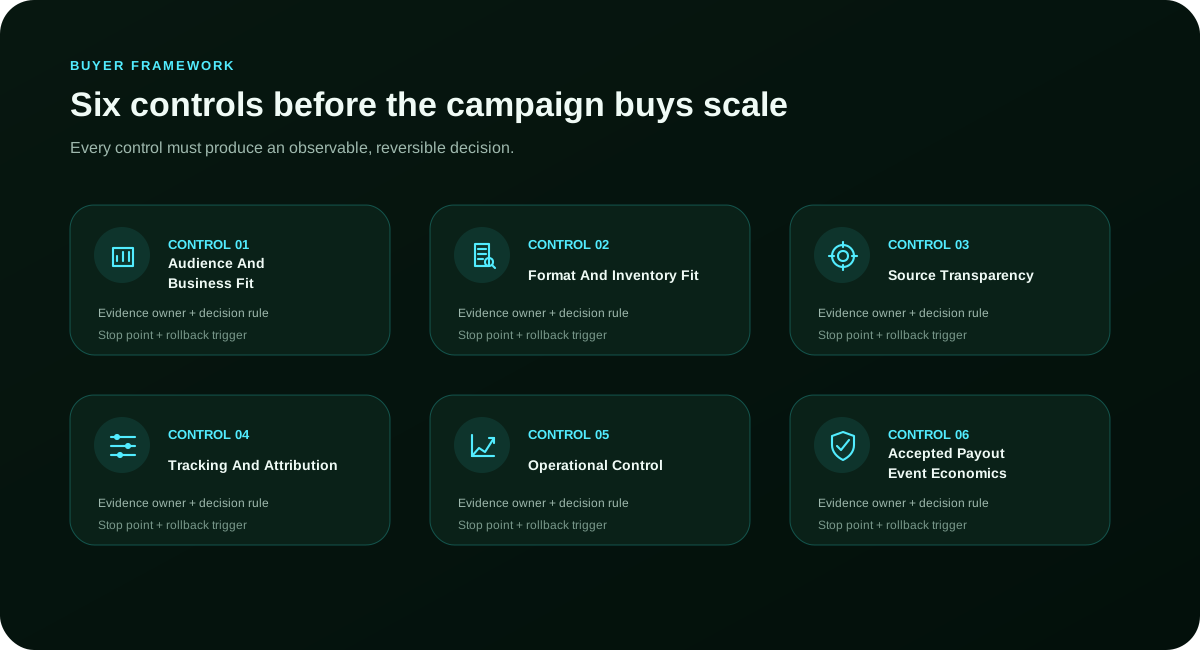
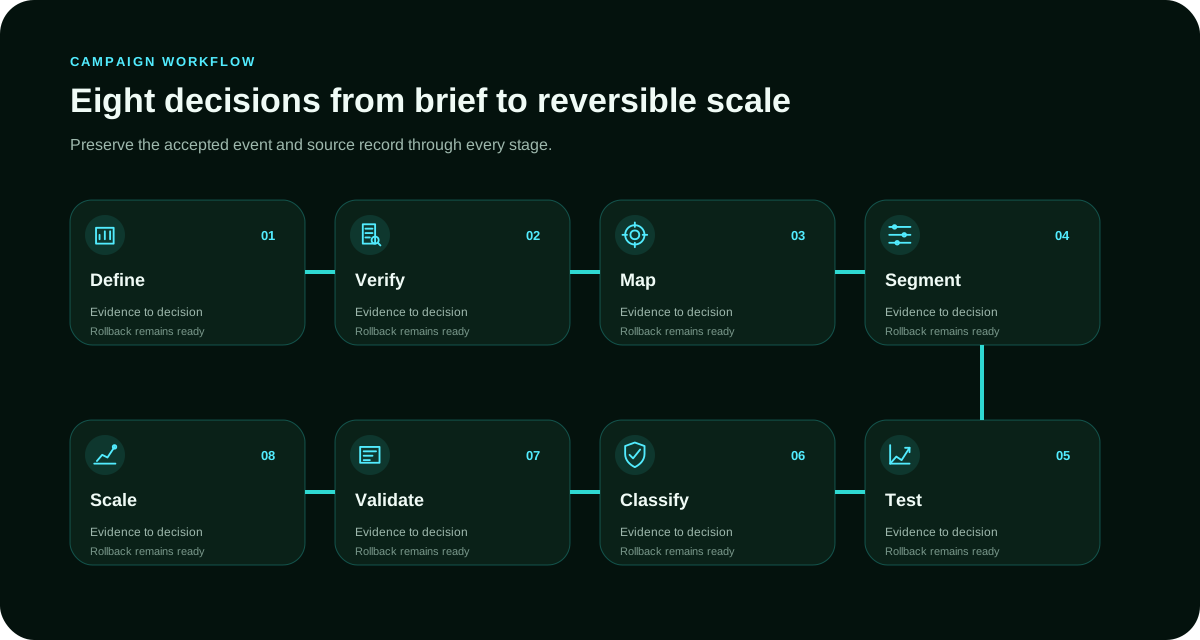
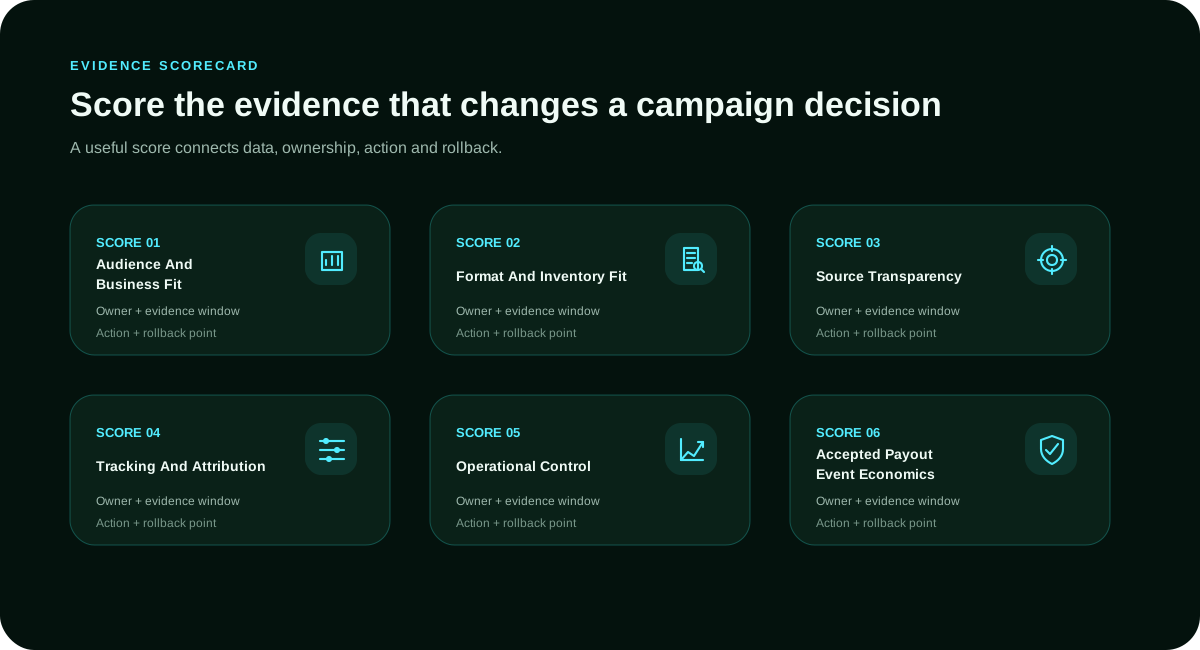
Related guides for the affiliate buying decision
Use the related buying and platform guides to clarify the next network question: campaign controls, destination preparation, traffic quality or the operating role of the tool. Confirm actual options for the intended purchase before assigning more budget.
Turn a prepared offer into your first FroggyAds comparison
Choose the offer and permitted format, prepare the destination and supported tracking, then set an affordable allocation. Use our targeting, bid, budget and source controls to buy a defined comparison and choose the next purchase from the relevant merchant outcome.
Create your free FroggyAds account for an affiliate traffic test