
What is source-ID targeting?
Source-ID targeting lets you compare the cost and accepted outcomes of individual traffic sources inside a campaign. Use the identifier in FroggyAds reporting to protect a test budget, isolate weak supply and expand sources that continue to meet your written conversion rule.
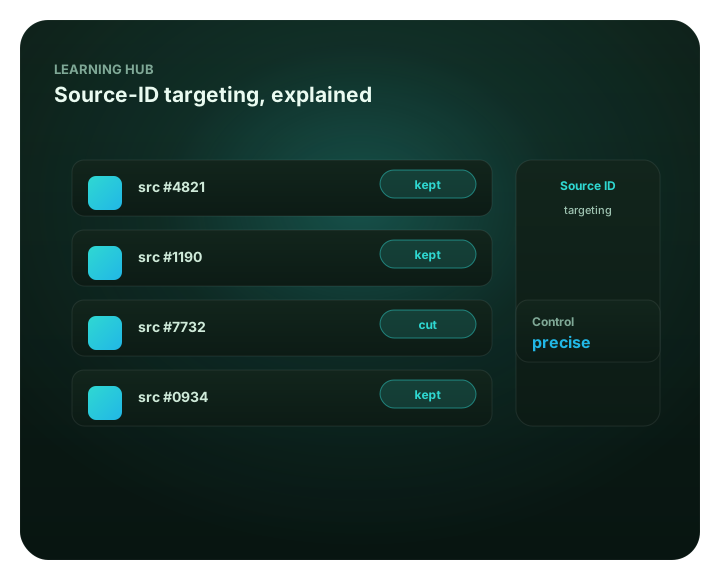
What this guide covers
This guide explains how advertisers, affiliate marketers and media buyers should use source IDs after a campaign begins delivering. You will define the accepted conversion, preserve the identifier through tracking, compare sources after the same maturity window and decide when to bid, restrict or expand. The page owns the operational question: how should a buyer turn source-level reporting into a defensible media decision? Use the broader source-ID targeting guide when you need pre-launch control selection.
Apply the first decision in FroggyAds
Start by writing the event that makes a visit commercially acceptable, such as an approved lead, completed registration, qualified trial or attributed sale. Keep click, landing-page and conversion identifiers intact, set a campaign loss limit and avoid changing the offer while the baseline forms. Source-level action only becomes useful when every source is judged with the same event definition and approval window.
Create your free FroggyAds accountThe unit of real optimization
A source ID is an identifier exposed for a traffic source, placement or zone in campaign reporting. It lets you separate delivery that would otherwise be blended into one campaign average. The label is useful only when it remains attached to spend, clicks and the accepted downstream event. A source that produces cheap clicks may still be expensive after rejected leads or unapproved conversions, while a smaller source may justify a higher bid when its accepted outcomes remain within your ceiling. Treat the ID as an evidence key, not as a quality verdict by itself.
On FroggyAds, source IDs let you read performance per source, bid up on converters, blacklist wasters and whitelist proven sources to scale. SmartCPC uses the same data to weight bids automatically, and Adscore and internal controls add traffic-quality signals. Understanding source IDs is the difference between guessing and optimizing – and it's available from $50.
Why source IDs matter
- Separate accepted-outcome cost by reporting source
- Adjust bids from mature source evidence
- Build a whitelist only after a source passes review
- Cutting weak zones surgically
- Feeding SmartCPC accurate signals
Test the recommendation with controlled traffic
Run a bounded campaign with stable creative, landing page, conversion event and attribution window. Let more than one source collect enough mature outcomes for a fair comparison, then review spend, effective conversion cost, approval rate and any delayed value that matters to the offer. Investigate tracking or destination failures before excluding supply. This sequence separates a real source difference from a change caused by the page, offer or measurement path.
Create your free FroggyAds accountSee what is source-id targeting? inside the platform
Use the FroggyAds self-serve dashboard to keep campaign, creative and source reporting connected. Review delivery and accepted conversions by source ID, record every bid or access-list change and retain a campaign-wide baseline. Source controls help you decide where the next budget block goes; your conversion and backend systems still determine whether the outcome was accepted and valuable.
- Telling converting sources from wasters
- Bidding per source instead of per campaign
- Building whitelists of proven sources
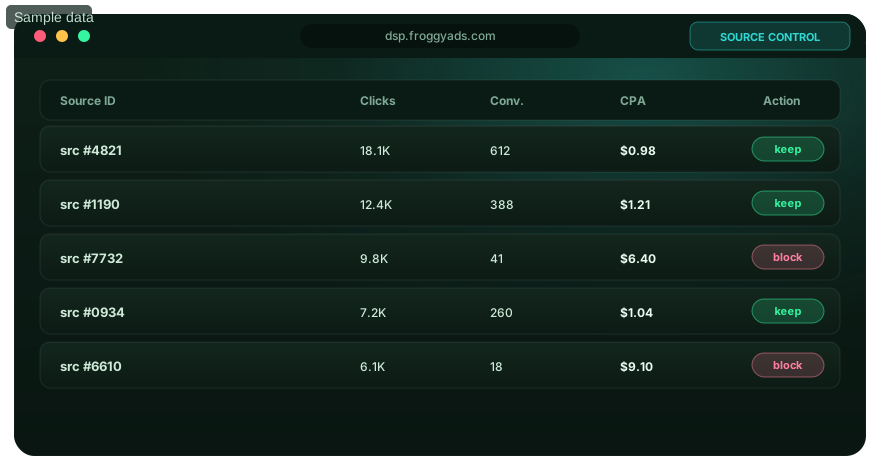
Turn the guide into a measurable campaign
Create one source-review sheet with the source ID, spend, clicks, tracked conversions, accepted conversions, effective accepted cost, maturity date and action. Add a reason for every bid change, blacklist entry or whitelist decision. Revisit the same rows after the next spend block so you can tell whether the action improved marginal economics instead of merely changing the traffic mix.
Create your free FroggyAds accountEvery source has an identity
Source identifiers turn a blended campaign into reviewable supply rows. Preserve the same ID from delivery through the accepted event, compare sources with consistent denominators and make reversible changes before committing more budget. A row with limited data remains a test; it does not become a winner or loser because of one conversion.
What a source ID is
A stable label for an individual traffic source or reporting zone. Keep it attached to delivery, conversion and acceptance evidence so the row remains auditable.
Why it matters
It reveals differences hidden by a campaign average and gives you a precise unit for bid, exclusion and expansion decisions.
How it's used
Compare mature accepted cost by source, then record a source-specific bid, blacklist or whitelist action with its reason and review date.
With SmartCPC
SmartCPC can use available campaign signals to adjust bids. Keep source-level outcomes and your own accepted-event data visible so automation is reviewed against the same commercial rule as manual changes.
Optimize by source ID
Open an account, run a bounded campaign and review accepted outcomes by source.
Source-ID FAQ
What is a source ID?
A reporting identifier for an individual traffic source or zone available to the campaign.
Why does it matter?
It lets you compare spend and accepted outcomes per source instead of relying on a blended campaign average.
How do I act on it?
Use mature source evidence to adjust bids, build a whitelist or restrict a source with a documented blacklist decision.
Related pages
Source-ID Targeting
Apply source-ID controls after the measurement and maturity checks on this page.
Source Targeting
Choose broader source-targeting controls before delivery begins.
What is Whitelisting?
Learn when a whitelist should limit delivery to sources that passed the accepted-event review.
What is Blacklisting?
Learn when a blacklist should restrict a source after tracking and maturity checks are complete.
Control your sources
Use FroggyAds source reporting to run a bounded test, identify where accepted outcomes come from and apply documented source-level actions. Keep the offer and measurement stable while you compare the next cohort. When your tracking and decision rule are ready, create your free FroggyAds account and launch the smallest campaign that can answer the source question.
What is source-ID targeting? FAQ
What should I decide first about What is source-ID targeting??
Define the accepted conversion, its approval window and the maximum cost or loss boundary before comparing source IDs. This gives every source row the same commercial standard.
How should I test What is source-ID targeting? with FroggyAds?
Launch a bounded FroggyAds campaign with stable creative, destination and tracking. Preserve the source ID through the accepted event, then compare mature source rows before changing bids or access lists.
Which metric matters most for What is source-ID targeting??
The accepted outcome and effective accepted cost govern the business decision. Spend, clicks, conversion rate and reported conversions remain useful diagnostic metrics.
How much data should I collect before changing What is source-ID targeting??
Collect enough mature outcomes to compare more than one source without letting one conversion dominate the result. The required amount depends on conversion delay, approval rate, cost ceiling and test-loss limit.
What can make a What is source-ID targeting? test misleading?
Broken tracking, lost source parameters, an offer or landing-page change, mixed maturity windows and simultaneous bid changes can all create a false source difference. Repair those conditions before excluding supply.
How should I compare sources for What is source-ID targeting??
Use the same event definition, attribution method, maturity window and campaign context. Compare spend, accepted outcomes, approval rate and effective accepted cost by source ID.
When should I scale a What is source-ID targeting? campaign?
Increase exposure after the next mature cohort remains within the accepted-cost ceiling and tracking is stable. Scale one source group or bid dimension at a time and review the marginal result.
When should I pause or cap What is source-ID targeting? traffic?
Pause or cap a source when mature accepted cost crosses the written loss boundary, or sooner when tracking or the destination fails. Record the reason and keep the previous setting for rollback.
How do I keep What is source-ID targeting? measurement trustworthy?
Preserve campaign, creative and source identifiers; reconcile reported conversions with backend acceptance; and record every source action with its effective time and review date.
Why use FroggyAds for What is source-ID targeting??
FroggyAds gives advertisers self-serve campaign, budget, targeting, reporting and source-level controls. You can use them to run a bounded comparison while your own conversion data validates accepted business outcomes.
What is source-ID targeting?: decision depth without generic filler
Source-ID targeting gives performance buyers a repeatable loop: preserve the identifier, wait for the accepted event, normalize the comparison and make one source-level change. The useful evidence is specific to the live campaign: source spend, mature accepted outcomes, rejection reasons, bid history and the date each access-list action took effect. External terminology cannot replace those records, and no source-control method guarantees sales, profit or future ranking.
| Decision layer | Evidence to retain | Review rule |
|---|---|---|
| Source decision | Name the source-level problem: cost, approval rate, downstream quality or insufficient volume. | Approve an action only when the source ID is preserved through the accepted event. |
| Measurement prerequisite | Verify click, conversion and backend records can be joined to the same source ID. | Hold source decisions when tracking, redirects or the destination are unreliable. |
| Comparison boundary | Keep offer, creative, landing page, event definition and maturity window stable. | Create a new cohort when a material campaign condition changes. |
| Action order | Check destination and tracking first, then change one bid or access-list control. | Retain the campaign baseline and effective date for each source action. |
| Commercial evidence | Compare spend, accepted outcomes, accepted cost, approval rate and later value by source. | Expand only when the next mature cohort remains within the written ceiling. |
What decision should a source ID support?
Use the source ID to answer one question: should the next unit of budget remain available to this source at the current bid? Write the accepted event, cost ceiling and minimum evidence before review. A bid increase, restriction or access-list action should follow that rule, not a reaction to one click or one conversion.
Use location and audience targeting to define campaign eligibility before delivery. Once source IDs appear in reporting, keep those eligibility settings in the evidence record and make the source-level action from mature accepted outcomes.
What must work before you compare sources?
Validate the destination, conversion event, attribution parameters and backend acceptance before ranking traffic sources. Confirm the same source ID can be connected to spend and mature outcomes. If the identifier disappears after the click or the acceptance rule changes between systems, fix measurement before making a permanent source decision.
Compare sources only after the same destination, device eligibility and acceptance rules have been verified. Document any exclusion that changes delivery before the next review. Hold the source action until the identifier, conversion event and approval record can be reconciled.
Which variables should remain stable?
Keep creative, offer, landing page, audience definition and conversion window stable while the source baseline forms. If one of those variables changes, mark a new cohort rather than combining the results. This prevents a landing-page improvement or offer change from being credited to a source-level bid action.
Use audience criteria as a diagnostic dimension and keep source IDs consistent across the comparison. If audience manager becomes relevant to the live campaign, document how it changes eligibility, delivery or measurement before using it to justify more spend. Open a new source cohort whenever eligibility, creative, offer or the accepted-event definition changes.
How should source controls follow targeting and tracking checks?
Targeting defines who can receive the campaign; source IDs show where eligible delivery came from. Check GEO, device, format and destination fit before judging a source. Then apply one source action, record its effective time and compare the next mature cohort with the untouched campaign baseline.
For this task, exclusions and accepted conversion should remain visible in the decision log. The related concept data management platform is useful only when it changes a real setup or interpretation choice. Do not add it merely because competing pages mention similar terminology. Keep broader targeting choices in the campaign baseline and reserve this decision for observed source rows.
Which source-level evidence belongs in the decision?
For each source, retain spend, impressions or clicks, tracked conversions, accepted outcomes, rejections, effective accepted cost and review maturity. Use delivery metrics to diagnose reach and response. Use the accepted event and its cost for the commercial decision. Compare the marginal result after an action instead of relying only on the lifetime average.
Keep the source ID, market and targeting state attached to each measurement row. Move to the broader Source Targeting guide only when the decision concerns eligibility before traffic is delivered.
When should you reverse a source action?
Reverse or pause a source action when tracking breaks, the offer changes, the source sample is too small or marginal accepted cost moves beyond the written limit. Keep the previous bid or list state so rollback is possible. A source that performed well in one market or format must earn the same conclusion again when campaign conditions change.
Before reversing a source action, verify that the accepted conversion and device mix are comparable with the baseline. Preserve the setting that can restore the previous delivery state. Rollback evidence should include the prior list state, bid, effective time and mature outcome window.
Next step: When this page calls for paid traffic, create a bounded FroggyAds test with stable conversion tracking, the relevant targeting and format controls, and source-level evidence. Increase spend only after the accepted outcome and its cost relationship are mature enough to support the next decision. Create your free FroggyAds account. Use the adjacent Source Targeting guide for pre-launch selection; use this page for post-delivery source decisions.
What is source-ID targeting? — buyer decision
Use source-ID targeting when the campaign has stable tracking, a clear acceptance rule and enough source-level delivery to compare. Keep the broader Source Targeting page for choosing the targeting control before launch; this page begins once source IDs are visible and the buyer must decide which supply deserves another budget block.
Evidence to carry into the source review: the campaign and creative IDs, source ID, targeting state, spend, tracked conversions, accepted outcomes, rejection reasons, maturity date and every bid or access-list change.
Questions before scale: Has the accepted event matured? Is the effective accepted cost within the written ceiling? Did the next cohort preserve approval rate and later value? Can the previous source setting be restored if the answer changes?
| Checkpoint | Page-specific action | Evidence to keep |
|---|---|---|
| Campaign condition | Use “What this guide covers” to define the first operating boundary for What is source-ID targeting?. | Record the answer to “What should I decide first about What is source-ID targeting??” together with source, targeting and destination identifiers. |
| Proof | Use “Apply the first decision in FroggyAds” to test whether delivery is producing the expected path toward the accepted business outcome. | Keep the evidence needed to answer “How should I test What is source-ID targeting? with FroggyAds?” after the same maturation window. |
| Follow-up | Use “The unit of real optimization” to decide what changes next; change one material variable before comparing again. | Write the answer to “Which metric matters most for What is source-ID targeting??” plus accepted cost/value and the rollback condition. |
Transparent decision example
Hypothetical example: A controlled What is source-ID targeting? test spending USD 325 with 12 accepted outcomes has an accepted cost of USD 27.08 per outcome after the same review window. Replace the inputs with your own economics; this is not a FroggyAds performance claim.
Why use FroggyAds for this step?
With FroggyAds, you can turn the What is source-ID targeting? decision into a self-serve traffic test using targeting, budget, conversion and source controls, then keep or restrict spend from the accepted business outcome you define. Create your free FroggyAds account.
This guide keeps product statements within the source reporting and campaign controls visible in the current FroggyAds workflow. We reviewed Google Ads placement guidance and Google Ads placement reporting guidance to check external terminology only; neither source is evidence of FroggyAds performance.
What Is Source Id Targeting additional decision evidence
1. Define the accepted event
Record the conversion event, approval rule, review owner and time required for the outcome to mature. A source row cannot be compared until the same definition is used by campaign reporting and the downstream system.
2. Preserve the source identifier
Verify the source ID passes through the click or postback path and can be joined to accepted outcomes. Keep a test record that proves the identifier survives the full route before meaningful spend begins.
3. Set the loss boundary
Write the maximum test spend and accepted-cost ceiling for a source. The boundary protects the campaign while still allowing enough data to distinguish normal variance from a persistent problem.
4. Establish an untouched baseline
Let the campaign collect a baseline with stable creative, landing page, offer and tracking. Keep campaign totals alongside source rows so optimization does not hide a change in the overall traffic mix.
5. Normalize the maturity window
Compare only outcomes that have had the same time to convert and be approved. Mark immature rows separately instead of treating delayed conversions as a source-quality failure.
6. Investigate destination and tracking gaps
Check redirects, parameters, page errors, event firing and backend reconciliation before excluding a source. A broken route can make every visit from one device, market or placement appear unproductive.
7. Apply one reversible source action
Change one bid, blacklist entry or whitelist rule and record its effective time. Preserve the previous setting so the team can roll back if marginal cost or volume deteriorates.
8. Review the next marginal cohort
Measure the spend and accepted outcomes that arrived after the action. Compare that block with the baseline; do not claim improvement from a blended lifetime average that contains earlier delivery.
9. Expand with a control group
When a source remains within the accepted-cost ceiling, increase exposure gradually and keep other material conditions stable. Retain a broader baseline to detect whether scale changed the economics.
10. Archive the decision evidence
Save the source ID, campaign context, mature metrics, action, owner and review date. This record lets another media buyer reproduce the reasoning and prevents old conclusions from being applied to a changed offer.
What is source-ID targeting? — what matters first
Define the accepted outcome and loss boundary before interpreting source rows. Preserve the identifier through attribution, wait for the same conversion window and compare accepted cost rather than clicks alone. Then use FroggyAds source controls to bid, restrict or expand one source group at a time.