SmartCPC test designWhat must be in place before automated CPC bidding can help
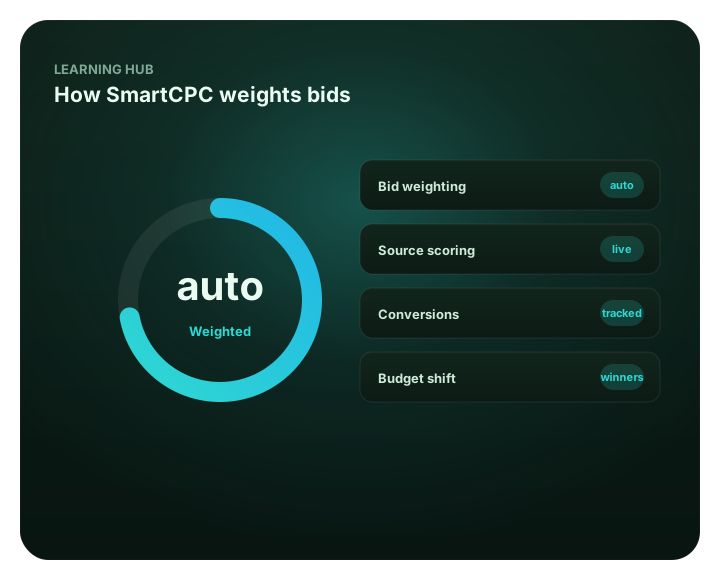
SmartCPC is most useful when automation is given a campaign with a clear objective and trustworthy feedback. It can support bid decisions, but it cannot define what a valuable conversion means for your business, repair a broken landing page or turn an ineligible audience into a good one. Before you judge the bidding logic, stabilize the parts that provide its context: offer, destination, targeting, conversion signal, review window and budget boundary.
Start with a stable conversion definition
Choose one accepted event and keep it unchanged during the first SmartCPC test. If a lead can later be rejected, record accepted leads separately from submitted leads. If revenue or activation arrives after the initial conversion, allow the normal delay to mature. A bidding system can only be evaluated against the feedback you decide to trust. Switching the success metric mid-test makes the result difficult to interpret.
Make the destination part of pre-launch QA
Test the complete click path on the devices and markets you plan to target. Check redirects, tracking parameters, page speed, mobile behavior, forms and the final conversion event. If the landing page breaks for one device class, automated bid changes may react to data created by a technical problem rather than by true traffic value. Fix destination problems before asking the bidding logic to optimize around them.
Use a bounded learning budget
Separate the account deposit, bid or CPC setting, actual media spend and test budget. They are not interchangeable. The test budget is the maximum amount you are willing to spend to answer a specific question. Set that boundary before launch and write the review point. The budget needs to be large enough to observe useful outcomes but not so open-ended that weak traffic can continue without a decision.
| SmartCPC review layer | Evidence | Question |
|---|
| Delivery | Spend, clicks and how quickly the campaign uses budget | Is the campaign getting enough traffic to evaluate? |
| Conversion | Tracked and accepted outcomes over a complete window | Is the traffic producing the business event you care about? |
| Source mix | Spend and accepted outcomes by source or available ID | Is the result broad enough to trust, or carried by a small traffic pocket? |
| Scale | Marginal accepted performance after a budget change | Does the next block of traffic preserve the result? |
Compare SmartCPC with a clear baseline
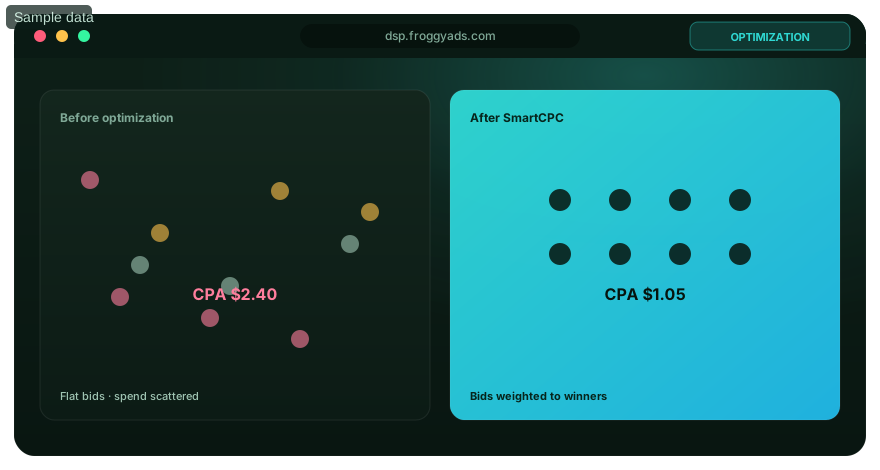
If you have reliable historical performance under another bidding setup, preserve a comparable baseline. Match the offer, market, destination, conversion definition and attribution window as closely as practical. Do not call a result “better” because CPC is lower if accepted CPA is worse. Automated bidding earns its place when it helps the campaign reach the objective under your commercial rules, not when one media metric improves in isolation.
Watch source-mix drift as bids adapt
When bidding changes, the inventory you win can change too. A strong blended result can hide new sources that are cheaper but lower quality or more expensive but much stronger. Keep source-level performance visible. If a source crosses your written loss boundary, use the available source or ID controls rather than changing unrelated campaign variables. If one source is carrying most conversions, know that before you scale.
Allow delayed conversions to mature
Do not evaluate a bidding change on a window shorter than the business outcome. If conversions arrive hours or days after the click, an early snapshot can favor the sources that convert fastest rather than the sources that create the most accepted value. Use operational monitoring for delivery and technical errors, but reserve the commercial verdict for a complete enough outcome window.
Scale one control after the result stabilizes
When the campaign meets your rule, increase one meaningful lever at a time. That might be budget, a bid constraint or a carefully chosen targeting expansion. Compare the new traffic with the prior stable state. If accepted performance deteriorates beyond your limit, undo the latest scale change first. This is more informative than simultaneously opening new markets, changing the landing page and increasing spend.
Troubleshoot in the right order
If SmartCPC performance weakens, verify tracking and the destination first, then compare the source mix and targeting, and only then decide whether the bidding setup itself needs adjustment. A missing postback or broken form can make an automated campaign look bad even when the traffic did not change. A new source mix can make the same bid logic produce a different business result. Diagnose the smallest failing layer instead of resetting the whole campaign.
Use automation without giving up accountability
FroggyAds gives you SmartCPC as a way to support bid optimization while retaining the campaign controls and source evidence needed for media buying. We recommend treating automation as part of an accountable workflow: clear objective, bounded test, stable tracking, source review, scale rule and rollback. SmartCPC does not guarantee conversions, revenue or profit. It can help reduce manual bid work while you remain responsible for deciding what traffic is commercially valuable.
Test SmartCPC in your next FroggyAds campaign