
Ad Network Comparisons
FroggyAds vs AdRoll
Compare FroggyAds and AdRoll with matched campaign requirements, equal measurement rules, source-level evidence and accepted downstream outcomes.
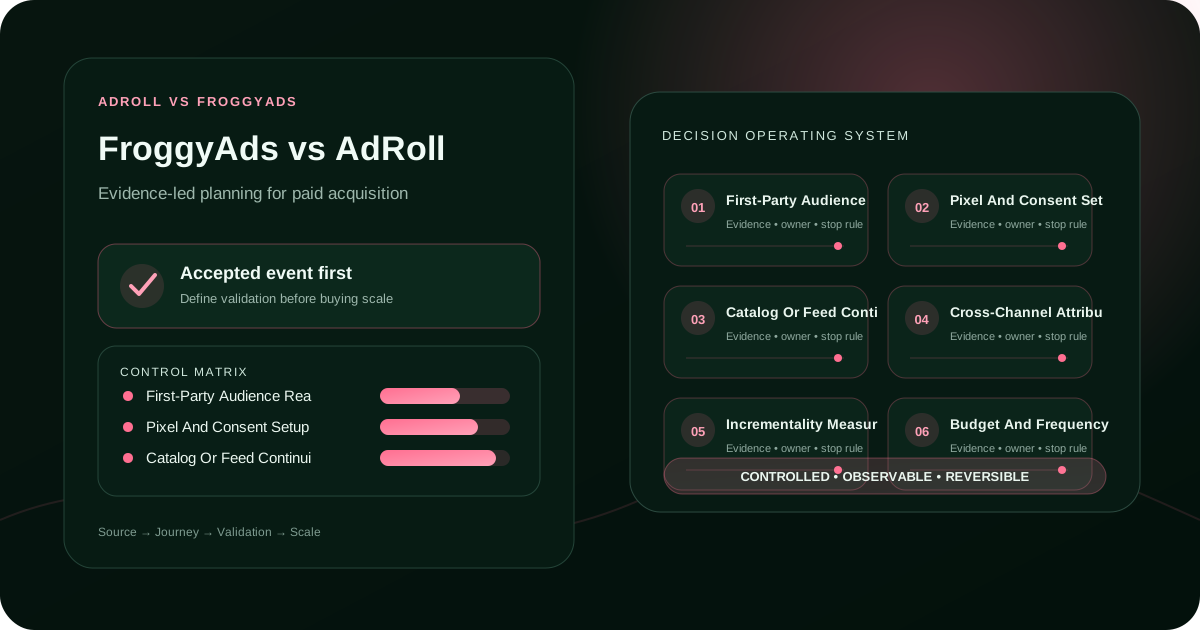
Key takeaways
FroggyAds vs AdRoll at a glance
| Section | Distinct excerpt from this page |
|---|---|
| What this page helps an advertiser decide | Compare froggyads and adroll for advertiser-side traffic buying, campaign control, measurement and operational fit. |
| Define the exact AdRoll versus FroggyAds decision | The comparison must start with one practical question tied to first-party audience readiness. |
| Match campaign conditions before comparing AdRoll and FroggyAds | Where AdRoll and FroggyAds require different settings, document the difference and explain why it is necessary rather than hiding it inside an average. |
Reference for AdRoll vs FroggyAds: Compare Traffic, Costs & Campaign Fit: AdRoll official platform.
- Planning: What this page helps an advertiser decide.
- Control: A visual system for evidence-led campaign decisions.
- Decision: Build the decision from requirements to accepted value.
Direct answer
What this page helps an advertiser decide
Compare froggyads and adroll for advertiser-side traffic buying, campaign control, measurement and operational fit. The decision is valid only when the full path remains measurable: requirements brief to matched campaign setup to equal observation window to source-level accepted-outcome decision. Use a documented platform choice supported by comparable spend, eligible delivery, source evidence and accepted business outcomes as the stable definition of success.
Operating framework
A visual system for evidence-led campaign decisions
The framework connects eligibility, source, journey, measurement and rollback before the campaign buys scale.
Framework principle. Every metric must lead to an action. Decorative reports, unsupported quality claims and universal winner statements do not qualify as evidence.
Control principle. Keep one accepted event stable, classify sources with the same rule and change one variable at a time.
Operator guide
Build the decision from requirements to accepted value
Use the detailed checks below to keep the campaign comparable, measurable and reversible.
Define the exact AdRoll versus FroggyAds decision
The comparison must start with one practical question tied to first-party audience readiness. Public positioning reviewed for AdRoll emphasizes retargeting, display and cross-channel ecommerce campaign workflows. That information helps frame the test, but it does not prove current availability, price or performance for a particular account. Verify the live interface, eligibility and documentation before committing budget.
Within FroggyAds vs AdRoll, use this checkpoint when recording the next page-specific decision. Write the accepted result before launch and include rejection, reversal and delayed validation rules. This prevents the team from changing success criteria after seeing early clicks or conversion counts.
Match campaign conditions before comparing AdRoll and FroggyAds
Use the same business brief for both platforms. Keep country, device, audience, offer, destination, conversion definition and review window aligned. Where AdRoll and FroggyAds require different settings, document the difference and explain why it is necessary rather than hiding it inside an average.
For pixel and consent setup, attach the evidence that supports every score: report export, source list, tracking log, moderation note or downstream record. Unknown values should remain unknown rather than being estimated to complete a table.
Build equal evidence windows for AdRoll and FroggyAds
On FroggyAds vs AdRoll, use this control to keep the page's evidence and action traceable. Give each campaign a bounded observation window that can produce useful evidence. Equal nominal spend may still create different delivery speed and source diversity, so report spend, eligible exposure, event volume and source mix together. A slow-spending cell is a delivery finding, not permission to rewrite the rules.
When using FroggyAds vs AdRoll, apply this rule only to the conditions and decision described on this page. Define daily limits, total loss limits and rollback points. If one platform reaches the loss limit, pause it without widening the audience or changing the event. If one cannot spend, preserve that finding in the final memo.
Compare source mix, not blended averages
Platform averages can conceal very different placements and audiences. Break the result into the source, device, format and country cells that can trigger a real decision. The incrementality test scenario should show whether the apparent advantage survives when the source mix is made visible.
For FroggyAds vs AdRoll, apply this control to the page's stated scope and evidence window. Classify sources as new, uncertain, promising, reduced or excluded using one evidence rule. A lower blended cost is not sufficient when it results from a narrow or unstable pocket of inventory.
Keep creative fairness without forcing identical assets
When using FroggyAds vs AdRoll, apply this rule only to the conditions and decision described on this page. Keep the offer promise and destination consistent while adapting creative to each placement. A format that expects a compact message should not be judged with an asset designed for a different context. Record creative age and revision history so a mature control is not compared with an untested first draft.
For the FroggyAds vs AdRoll decision, record how this control changes the next test or review. Use a control creative and at least one planned variation where the budget permits. Changes should be synchronized enough that platform, creative and time effects can still be separated.
Reconcile attribution before choosing a platform
For FroggyAds vs AdRoll, apply this control to the page's stated scope and evidence window. Align timezone, currency, attribution windows, event status and deduplication. Keep platform-reported conversions separate from a documented platform choice supported by comparable spend, eligible delivery, source evidence and accepted business outcomes. When the totals differ, trace identifiers through the complete path instead of awarding the difference to the platform.
For the FroggyAds vs AdRoll decision, record how this control changes the next test or review. Reconcile front-end events with approval, activation, revenue, retention, refund or another business-quality signal. The comparison is incomplete until the downstream record is connected to the original source.
Include policy and operational fit in the decision
In FroggyAds vs AdRoll, keep the evidence, owner, and next action attached to this control. Current policy fit, review workflow, reporting exports and support effort belong in the scorecard. A platform can be valuable even when it requires more work, but that work should be visible. A campaign that cannot legally or technically run under the matched brief is not a valid performance comparison.
For FroggyAds vs AdRoll, apply this control to the page's stated scope and evidence window. Include setup time, moderation time, export quality, troubleshooting effort and the effort required to implement source decisions. These operational factors can materially change the real cost of a platform choice.
Write a limited, reproducible final conclusion
The conclusion must be limited to the tested offer, format, country, device, budget and time window. State what was not tested and what would invalidate the result. The final outcome may be FroggyAds, AdRoll, both for separate jobs or no decision because the cells were not comparable.
When using FroggyAds vs AdRoll, apply this rule only to the conditions and decision described on this page. A reproducible, narrow conclusion is more useful than a universal winner claim. Record the evidence date because inventory, policy, pricing and features can change after publication.
Platform-specific audit
Four checks unique to the AdRoll comparison
These checks address the user context, operating model and evidence problems that can otherwise distort this exact head-to-head test.
Begin with the first-party audience foundation
AdRoll is often evaluated for retargeting and audience-led campaigns. The comparison should start with consented first-party data quality, audience definitions and exclusion logic rather than a generic traffic volume goal. Match the FroggyAds audience or retargeting setup as closely as the available tools allow. Document unavoidable differences, especially identity coverage and audience refresh timing.
Separate prospecting from retargeting
A returning visitor and a new prospect have different intent, frequency tolerance and conversion expectations. Keep those cells separate on AdRoll and FroggyAds. Use distinct accepted-event baselines and prevent existing customers or recent converters from being repeatedly targeted. A blended return can make a platform appear stronger simply because it received the easier retargeting audience.
Audit identity, consent and suppression
Review how audience membership is created, refreshed and removed. Test consent behavior, tag firing, suppression lists and cross-device assumptions. Do not claim identity certainty where the data only provides a probabilistic or partial view. The platform score should reflect whether AdRoll or FroggyAds can maintain the intended audience without avoidable leakage, stale membership or excessive repetition.
Use incremental value as the final question
Retargeting can capture conversions that may have happened without another ad. Where practical, use holdouts, timing comparisons or another incrementality method. At minimum, compare assisted and direct paths rather than assigning every post-view or post-click event to the last platform touch. The AdRoll versus FroggyAds conclusion should state what incremental evidence exists and what remains uncertain.
Buyer framework
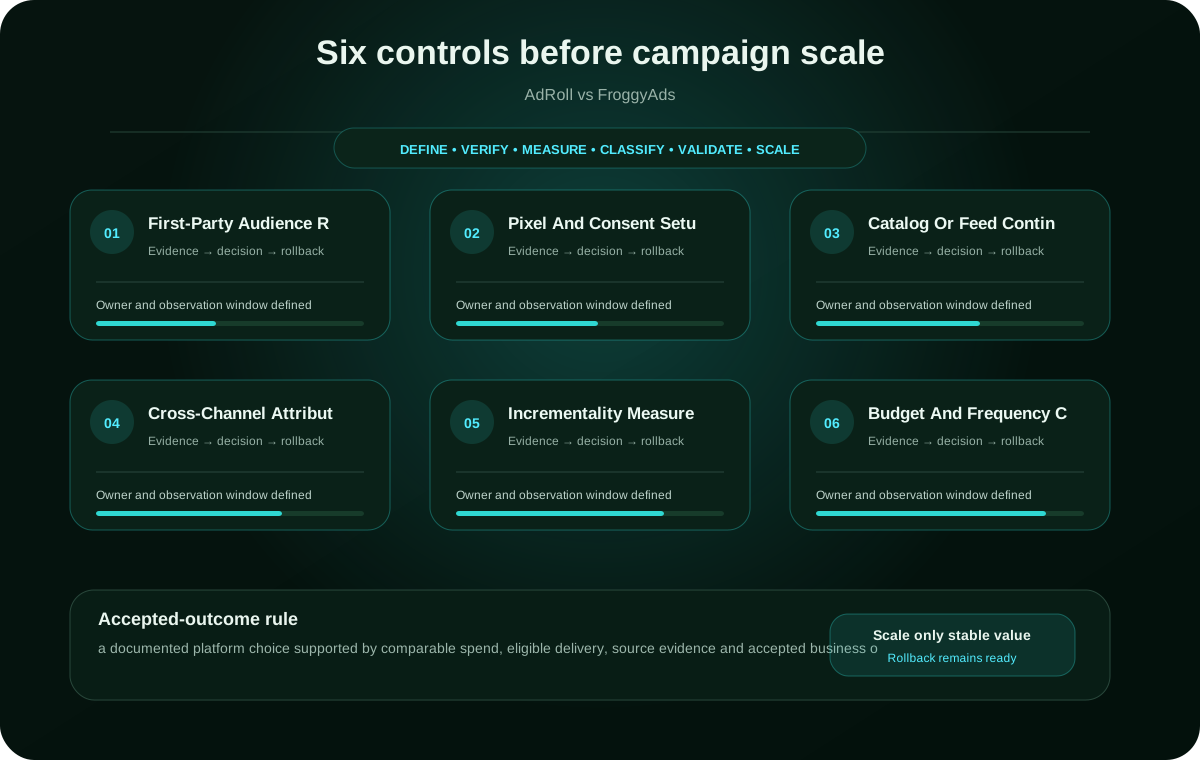
Six controls before the campaign buys scale
For FroggyAds vs AdRoll, every control should end in an observable buyer decision - keep, cap, exclude, retest, change the destination or change the measurement - rather than a decorative report.
Decision control system
01
First-Party Audience Readiness
Define the evidence, owner and stop rule for first-party audience readiness before delivery expands.
eligibility recordinclude or excluderollback
02
Pixel And Consent Setup
Define the evidence, owner and stop rule for pixel and consent setup before delivery expands.
source exportsegment or mergerollback
03
Catalog Or Feed Continuity
Define the evidence, owner and stop rule for catalog or feed continuity before delivery expands.
tracking logfix or launchrollback
04
Cross-Channel Attribution
Define the evidence, owner and stop rule for cross-channel attribution before delivery expands.
creative QAhold or iteraterollback
05
Incrementality Measurement
Define the evidence, owner and stop rule for incrementality measurement before delivery expands.
budget rulepause or scalerollback
06
Budget And Frequency Control
Define the evidence, owner and stop rule for budget and frequency control before delivery expands.
downstream statusaccept or rejectrollback
Decision rule: every control must change a bid, source, page, budget, policy or pause decision. Decorative metrics do not qualify.
Framework rule. Paid reach becomes actionable only when the source, journey and downstream event remain connected. The controls above share one accepted-event definition, evidence window and rollback rule. For Adroll Vs Froggyads, apply this rule to the page-specific audience, market, format or buying decision described here.
Workflow
An eight-step campaign operating sequence
For FroggyAds vs AdRoll, move from the business definition to controlled scale without breaking the source-to-outcome record, comparison baseline or rollback path.
PlanPrepareValidateScale
- 1
Define the accepted event
For FroggyAds vs AdRoll, treat this as a page-specific operating check rather than a universal benchmark. Write the exact condition for a documented platform choice supported by comparable spend, eligible delivery, source evidence and accepted business outcomes. Include rejection, reversal and delayed validation rules.
- 2
Verify eligibility
For FroggyAds vs AdRoll, treat this as a page-specific operating check rather than a universal benchmark. Confirm audience, country, format, message and destination eligibility. Review unmatched formats, different policy rules, unequal source mixes, inconsistent attribution, stale feature assumptions and winner-first conclusions.
- 3
Map the complete journey
For the FroggyAds vs AdRoll decision, record how this control changes the next test or review. Test the path from requirements brief to matched campaign setup to equal observation window to source-level accepted-outcome decision. Preserve campaign, creative, source, device and GEO identifiers.
- 4
Create decision cells
Separate first-party audience readiness, pixel and consent setup, catalog or feed continuity only when each cell can trigger a different action.
- 5
Launch a bounded test
For FroggyAds vs AdRoll, launch a bounded comparison test with a fixed evidence window, daily spend cap, total loss limit, mature conversion window and one accepted-outcome definition.
- 6
Classify sources
Move sources through new, uncertain, promising, reduced and excluded states with one evidence rule.
- 7
Validate downstream quality
On FroggyAds vs AdRoll, use this control to keep the page's evidence and action traceable. Reconcile front-end events with a documented platform choice supported by comparable spend, eligible delivery, source evidence and accepted business outcomes and retain rejected or delayed statuses.
- 8
Scale one variable
Increase one winning cell, monitor budget and frequency control and roll back when accepted value weakens.
Rollback remains part of the workflow: preserve the last stable bids, sources, creative and budget before every scale change.
Measurement model
Measure the complete path, not the cheapest activity
DeliveryEligible exposure, source, format, device, GEO, bid and frequency.
JourneyLoad success, consent, engagement, redirects and identifier continuity.
ConversionTracked action, deduplication, attribution window and event status.
AcceptanceApproval, activation, revenue, retention or another business-quality rule.
Accepted outcome. a documented platform choice supported by comparable spend, eligible delivery, source evidence and accepted business outcomes. Keep rejected, delayed and reversed outcomes visible so the team can explain the difference between platform reporting and business value. For Adroll Vs Froggyads, apply this rule to the page-specific audience, market, format or buying decision described here.
Primary risk. unmatched formats, different policy rules, unequal source mixes, inconsistent attribution, stale feature assumptions and winner-first conclusions. Assign an owner and stop rule to every material risk before expanding delivery. For Adroll Vs Froggyads, apply this rule to the page-specific audience, market, format or buying decision described here.
Decision scorecard
Evidence required for each control
| Control | Evidence | Decision rule |
|---|---|---|
| First-Party Audience Readiness | policy or eligibility record | exclude ineligible cells |
| Pixel And Consent Setup | source and placement export | separate actionable source groups |
| Catalog Or Feed Continuity | tracking and identifier audit | repair gaps before scale |
| Cross-Channel Attribution | creative and destination QA | hold inconsistent journeys |
| Incrementality Measurement | budget and pacing log | pause at the loss limit |
| Budget And Frequency Control | accepted downstream report | scale only stable accepted value |
Scenarios
Four practical ways to use this framework
Each scenario changes the campaign context but keeps the accepted-event and evidence rules stable.
Retargeting Audience Audit
Use this scenario to test first-party audience readiness without changing the accepted-event definition. Keep the audience, destination, evidence window and loss limit explicit so the result can be repeated.
Review catalog or feed continuity before scaling. A successful scenario ends with a documented source, budget, page or message decision, not merely a positive dashboard trend.
Catalog Campaign Migration
Use this scenario to test pixel and consent setup without changing the accepted-event definition. Keep the audience, destination, evidence window and loss limit explicit so the result can be repeated.
Review cross-channel attribution before scaling. A successful scenario ends with a documented source, budget, page or message decision, not merely a positive dashboard trend.
Frequency-Cap Review
Use this scenario to test catalog or feed continuity without changing the accepted-event definition. Keep the audience, destination, evidence window and loss limit explicit so the result can be repeated.
Review incrementality measurement before scaling. A successful scenario ends with a documented source, budget, page or message decision, not merely a positive dashboard trend.
Incrementality Test
Use this scenario to test cross-channel attribution without changing the accepted-event definition. Keep the audience, destination, evidence window and loss limit explicit so the result can be repeated.
Review budget and frequency control before scaling. A successful scenario ends with a documented source, budget, page or message decision, not merely a positive dashboard trend.
Decision rules
Write the stop rules before the campaign starts
A useful operating plan states exactly when to continue, pause, separate, repair or roll back.
Set a bounded evidence window
Choose a time, spend or accepted-event threshold that is large enough to reduce random noise but small enough to protect the budget. Keep the window consistent across comparable cells. For AdRoll vs FroggyAds, the evidence window should cover enough source and device variation to reveal whether first-party audience readiness and pixel and consent setup are stable rather than temporary.
For the FroggyAds vs AdRoll decision, record how this control changes the next test or review. Do not extend a losing test merely because the dashboard contains activity. Extend only when a documented data-quality issue, delayed validation cycle or minimum sample rule explains why the original window was incomplete.
Define the source pause rule
Write the numerical or status-based condition that moves a source from new to reduced or excluded. The rule should combine cost, event validity and downstream acceptance instead of relying on click volume alone. Review catalog or feed continuity and cross-channel attribution before deciding that a source is weak.
Within FroggyAds vs AdRoll, use this checkpoint when recording the next page-specific decision. A paused source should retain its history, identifiers and reason code. That record prevents the same weak placement from re-entering under a different blended report and supports a controlled retest when the offer, page or creative materially changes.
Separate repairable from structural failure
In FroggyAds vs AdRoll, keep the evidence, owner, and next action attached to this control. A tracking gap, broken redirect, slow destination or rejected creative may be repairable. A policy mismatch, unsuitable audience or consistently unaccepted downstream event is structural. Document which category applies before changing bids or widening targeting.
On FroggyAds vs AdRoll, use this control to keep the page's evidence and action traceable. The primary structural risk on this page is unmatched formats, different policy rules, unequal source mixes, inconsistent attribution, stale feature assumptions and winner-first conclusions. Assign a named owner to confirm the fix and require a fresh bounded test before restoring scale.
Pre-commit the rollback trigger
Save the last stable source list, bid, budget, creative and destination configuration before every expansion. The rollback trigger should reference accepted value, source concentration and measurement continuity. When incrementality measurement or budget and frequency control weakens beyond the written tolerance, return to the saved configuration instead of improvising.
For FroggyAds vs AdRoll, connect this rule to the named audience, workflow, or comparison before acting. The campaign can scale again only after the team explains the weakness, updates the control record and proves the correction within a new evidence window. This keeps growth reversible and protects the accepted outcome: a documented platform choice supported by comparable spend, eligible delivery, source evidence and accepted business outcomes.
Failure modes
What to prevent before more budget enters the campaign
Measurement drift
Do not change attribution windows, acceptance rules or conversion definitions after early results appear. A moving definition makes source and platform comparisons unreliable.
Source-mix illusion
A blended average can improve while the campaign becomes dependent on one unstable source. Review distribution, repeatability and downstream quality before scale.
Irreversible scale
Preserve the last stable configuration and define a numerical rollback point. Scale should be reversible when quality, policy fit or accepted economics weaken.
Responsible use
Limits, compliance and realistic expectations
On FroggyAds vs AdRoll, use this control to keep the page's evidence and action traceable. Traffic-quality controls can reduce risk but cannot eliminate every invalid, accidental or low-value interaction. Results depend on the offer, audience, country, format, creative, destination, bid, tracking and optimization decisions.
For FroggyAds vs AdRoll, connect this rule to the named audience, workflow, or comparison before acting. Use truthful creative, eligible audiences, clear disclosures, appropriate consent and current platform policies. Do not describe impressions, clicks or front-end conversions as guaranteed business outcomes. Do not claim a universal platform winner or guaranteed ranking, ROI or conversion result.
FAQ
Questions about AdRoll vs FroggyAds
Ten practical answers for planning, measurement and controlled optimization.
What decision makes an AdRoll and FroggyAds comparison relevant?
The comparison is relevant when a business can name the campaign task, required customer access, data permissions, creative formats, reporting, and budget that both services must address. Their broader market descriptions should not replace that use case.
How can AdRoll and FroggyAds be tested without bias?
Create separate controlled plans with equivalent offers, customer outcomes, spending limits, and review dates, while respecting each platform's real workflow. Do not force identical settings when their available controls differ.
What should be included in the cost comparison?
Request current pricing, platform charges, media treatment, data costs, payment requirements, and contract terms, then count setup, assets, integration, analytics, staff operation, and follow-up. Use retained value after the same maturity period.
How should audience capabilities be evaluated?
Inspect the lawful data sources, eligibility choices, exclusions, refresh, reach, and reporting visible to the account. Let qualified downstream response demonstrate usefulness instead of assuming similarly named audiences are equivalent.
How can the same offer remain accurate on both routes?
Prepare format-appropriate creative under each provider's current rules, but retain one verified proposition, proof standard, qualification, and matching destination. Any platform-specific adaptation should change presentation rather than the offer.
Which operational controls should both accounts demonstrate?
Test access roles, billing, campaign caps, source or placement controls, creative approval, consent, event capture, exports, alerts, and emergency pause. Reconcile small live charges and actions independently.
Which results support an AdRoll or FroggyAds choice?
Use traffic suitability, valid customer actions, mature value, complete expense, measurement agreement, service response, and internal workload. One provider may fit a particular job without being generally superior.
What explains a gap between the two pilot results?
Review delivery mix, audience construction, bid and pacing, creative context, page behaviour, attribution, sales handling, and cohort age. Preserve platform-specific evidence before moving funds.
What risks should disqualify either option?
Reject a route that cannot provide safe supply, clear billing, appropriate data use, reliable exclusions, traceable changes, usable records, or a working pause. Marketing claims from either vendor require verification.
When is wider use of one platform justified?
Wider use follows several controlled cohorts with dependable operations, acceptable customer quality, retained value above full cost, and capacity to serve demand. Add one audience or spending increment and monitor composition.
Related resources
Continue with the relevant FroggyAds pillar pages
Ready to test with control?
Create My Free AccountLaunch one bounded campaign and scale only accepted value.
Competitor intelligence
Research AdRoll by decision type
For FroggyAds vs AdRoll, open the focused review, competitor-comparison, minimum-deposit or funding, and CPM or rate guides before reallocating meaningful budget.
Verified decision update
AdRoll vs FroggyAds: compare the same job under the same rules
Direct answer: AdRoll and FroggyAds should be compared only where they address the same advertiser or publisher job. Match role, format, geography, device, destination, event, attribution window and budget boundary. Document product differences instead of forcing a universal score, then use accepted business outcomes to choose one platform, a split allocation or no additional scale.
For FroggyAds vs AdRoll, apply this control to the page's stated scope and evidence window. AdRoll currently positions its self-service Ads product as pay-as-you-go and offers managed service packages for qualifying spend. Its help center documents web, native, video, social and connected TV options, but public budget guidance varies by product and page. One official pricing page says there is no general minimum spend, while campaign help pages publish daily budget controls and product-specific recommendations. Verify the live account route rather than treating one figure as universal. Keep evidence dated and tied to the exact account role.
Create a paired requirements table before comparing AdRoll features with FroggyAds. Public format and audience lists describe capability, not delivery for a specific account. Verify current eligibility, funding, moderation, source controls, tracking, reporting, support and publisher terms from official pages and the live interface.
Run a bounded AdRoll versus FroggyAds test only after the overlap is clear. Compare effective economics after fees, rejected outcomes, conversion lag, source concentration and publisher deductions where relevant. One platform may fit a particular use case while another remains better for a different role, format or operating constraint.
| Decision control | Evidence required |
|---|---|
| Job match | Same buyer or publisher problem and comparable format |
| Test cell | Same geography, device, destination and event definition |
| Economics | Fees, rejected outcomes and conversion lag included |
| Decision | Winner, split allocation or no-scale result documented |
Current official verification sources
- AdRoll official platform
- AdRoll official pricing
- AdRoll campaign budget and spend
- AdRoll minimum spend guidance
- AdRoll pricing model
- AdRoll supported ad formats
Reviewed July 16, 2026 for AdRoll matched comparison research. The official links support current verification and do not imply affiliation or endorsement. Product, funding, pricing, policy and publisher terms can change, so confirm the live platform before acting on this page.
Search intent and buyer decision
FroggyAds vs AdRoll — buyer decision
FroggyAds vs AdRoll should help a media buyer move from research to a controlled campaign decision. Define the operating constraint first, preserve source-level evidence, and judge the result on the accepted business outcome. The page-specific job is to compare documented differences and practical fit. The adjacent Adroll Review page should remain a separate decision. The distinct operating context on this URL is campaign objective, audience or inventory fit, source evidence, destination continuity and mature business value. Treat its page role as operating decision: define the smallest reversible test, preserve evidence and write the next action before increasing spend.
Evidence already visible on this page: Control principle. Keep one accepted event stable, classify sources with the same rule and change one variable at a time. The comparison must start with one practical question tied to first-party audience readiness. Public positioning reviewed for AdRoll emphasizes retargeting, display and cross-channel ecommerce campaign workflows. That information helps frame the test, but it does not prove current availability, price or performance… Within FroggyAds vs AdRoll, use this checkpoint when recording the next page-specific decision. Write the accepted result before launch and include rejection, reversal and delayed validation rules. This prevents the team from changing success criteria after seeing early clicks or conversion counts. The working concepts for this URL are campaign objective, audience targeting, source quality.
Questions to resolve before scale: How can the same offer remain accurate on both routes? What decision makes an AdRoll and FroggyAds comparison relevant? How can AdRoll and FroggyAds be tested without bias?
| Checkpoint | Page-specific action | Evidence to keep |
|---|---|---|
| Campaign condition | Use “A visual system for evidence-led campaign decisions” to define the first operating boundary for FroggyAds vs AdRoll. | Record the answer to “How can the same offer remain accurate on both routes?” together with source, targeting and destination identifiers. |
| Proof | Use “Build the decision from requirements to accepted value” to test whether delivery is producing the expected path toward the accepted business outcome. | Keep the evidence needed to answer “What decision makes an AdRoll and FroggyAds comparison relevant?” after the same maturation window. |
| Follow-up | Use “Four checks unique to the AdRoll comparison” to decide what changes next; change one material variable before comparing again. | Write the answer to “How can AdRoll and FroggyAds be tested without bias?” plus accepted cost/value and the rollback condition. |
Transparent decision example
Hypothetical example: A controlled FroggyAds vs AdRoll test spending USD 225 with 11 accepted outcomes has an accepted cost of USD 20.45 per outcome after the same review window. Replace the inputs with your own economics; this is not a FroggyAds performance claim.
Why use FroggyAds for this step?
With FroggyAds, you can turn the FroggyAds vs AdRoll decision into a self-serve traffic test using targeting, budget, conversion and source controls, then keep or restrict spend from the accepted business outcome you define. Create your free FroggyAds account.
Direct answer
FroggyAds vs AdRoll — what matters first
FroggyAds vs AdRoll is a comparison decision: verify documented differences, match them to your campaign needs, and test the option that fits rather than assuming a universal winner.