
FroggyAds vs AdMaven
Compare AdMaven and FroggyAds as two separately operated advertising platforms through a bounded campaign decision. This guide preserves the original page routes and assets while replacing a generic winner narrative with a platform-specific evidence record: advertised format availability, advertiser responsibilities, billing evidence, matched test design, source review and accepted business outcomes. It does not infer a guaranteed rate, conversion result or universal winner from either platform's marketing page.
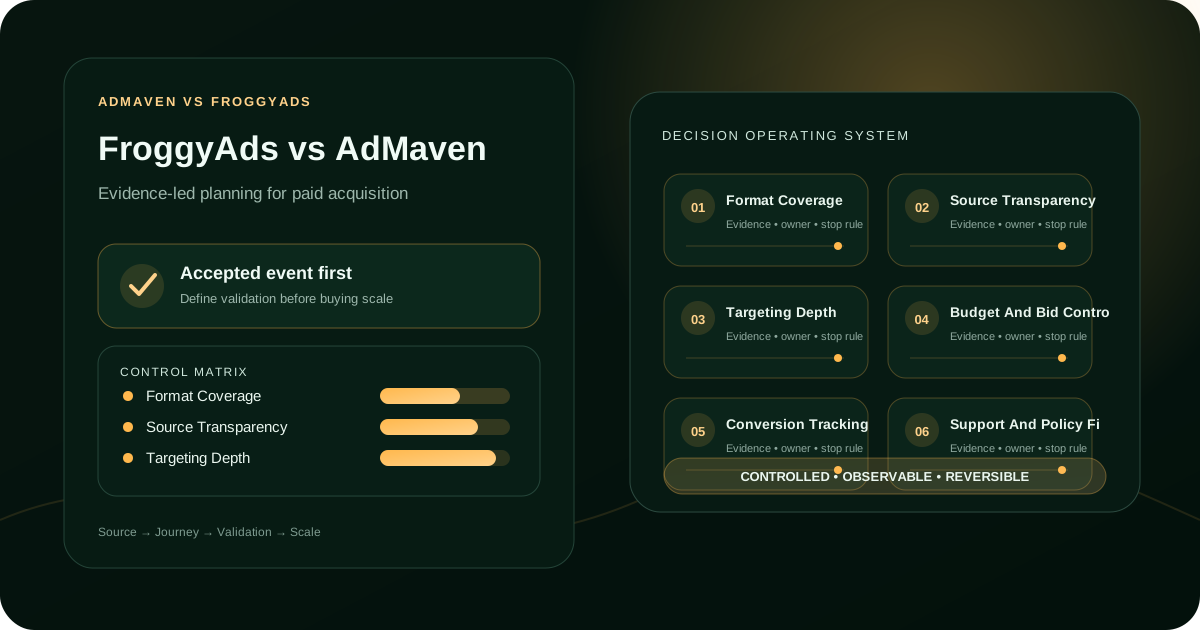
Official evidence boundary for AdMaven vs FroggyAds
The AdMaven versus FroggyAds decision should use current platform documentation and a matched campaign test, not a universal winner claim. AdMaven's official site separates advertiser and publisher use cases and lists several delivery formats. Its published advertiser terms place responsibility for bid criteria and destination URL accuracy on the advertiser, and state that platform reporting governs billing under those terms. Those statements define operating boundaries; they do not prove conversion quality for a particular offer. Record the format, geography, device, bid rule, destination, tracking method and accepted business event before launch. Give each platform a comparable observation window, then reconcile reported activity with qualified outcomes and reversals. A network earns more budget only when the source-level result can be reproduced and the account, policy and support conditions remain acceptable. Source: AdMaven advertiser terms.
What can the documented comparison establish?
The documented comparison can establish whether one configured platform cell met the advertiser's requirements during a stated period. It should not convert a platform feature list into a quality verdict. AdMaven's public materials identify advertiser and publisher services and several formats, while its advertiser terms define responsibilities and billing conditions. FroggyAds has its own account, format and operating context. Read each current source separately, then write a comparison row only where the concepts are equivalent. Mark missing evidence as unknown. A decision based on unknowns may still proceed as a small test, but it cannot be presented as a verified platform advantage.
The shortest useful conclusion names the winning cell, accepted-event count, mature cost, tested format, eligible audience, source scope and observation dates. It also names material differences that remained uncontrolled. If both cells fail the same destination or tracking check, neither network has been tested fairly. If only one platform can expose the source or format control the advertiser requires, that operational fact can decide the purchase before performance is compared. The record must distinguish a verified constraint, a test observation and an advertiser preference so later reviewers do not treat all three as platform facts.
How should format availability be compared?
Start with the formats currently described by each platform and map them by user experience rather than by label alone. AdMaven's official site publicly lists pop, push, in-page push, interstitial, content locker, smart link and direct-link options. For every selected format, capture device behavior, interruption, creative fields, click path, landing requirements and relevant account rules. A push unit and an interstitial should not share one blended verdict merely because both delivered visits. When no close FroggyAds counterpart exists, run a single-platform suitability test and state that a head-to-head result is not available.
Render the actual placement path before buying material volume. Save the creative, destination, redirect sequence, browser and device context used in the check. Confirm that the message fits the format's space and that the destination continues the promise without an unexpected action. Format suitability is an acceptance condition independent of price. A cheap cell that interrupts the wrong moment or obscures a material qualification should be rejected before its clicks are compared with a less disruptive experience. Recheck the map whenever either platform changes available formats or the campaign moves to another device class.
Which advertiser responsibilities need an owner?
AdMaven's advertiser terms place responsibility for bid criteria and destination URL accuracy on the advertiser. Translate that boundary into named controls: one owner verifies campaign targeting and bid settings, another confirms that every final URL resolves to the approved page, and measurement staff test the event path. Save the configuration and review time. A platform acceptance screen is not evidence that the offer, landing claim or tracking implementation meets the advertiser's own requirements. If an intermediary changes the destination or configuration, document that role and recheck the resulting path before delivery resumes.
Create a launch ticket containing the campaign identifier, format, eligible geographies and devices, bid rule, total limit, approved creative, final URL, tracking parameters, accepted event and pause owner. Require a new version when a material field changes. This separates an intentional adjustment from unauthorized drift and gives support a reproducible case if delivery behaves differently from the record. The ticket should link to first-party destination and outcome evidence; it should not copy confidential credentials or personal data into a general marketing document.
How should source-level traffic be evaluated?
Evaluate sources or placements as separate rows wherever the platform exposes usable identifiers. Record eligible impressions or other delivery units, clicks, landing sessions, accepted actions, rejections, reversals, spend and material technical signals. Review browser, device, geography and time patterns when a row changes abruptly. A network-level average can allow a strong source to subsidize a poor one, or make a new source look weak because an older control dominates the total. Preserve exclusions and the reason for each decision so a later campaign does not unknowingly restore a rejected pattern.
A source enters a whitelist or expansion group only after its result survives the advertiser's observation and validation window. Missing identifiers, abnormal gaps between clicks and sessions, unresolved redirect behavior, policy conflict or repeated rejected outcomes can trigger isolation even before a final cost calculation is available. Do not infer invalid activity from poor conversion alone; investigate the technical and audience explanations recorded for the row. When evidence is insufficient, classify the source as unverified and cap exposure rather than assigning it either a passing or fraudulent label.
How should billing and campaign economics be reconciled?
Keep the platform billing record and the advertiser value record side by side. AdMaven's terms identify platform reporting as the billing reference under those terms, while the advertiser still needs first-party evidence to decide whether purchased activity created acceptable business outcomes. Align account currency, timezone and campaign dates before comparing totals. Record credits, fees or adjustments as their own entries. Then connect the purchased unit to qualified events, rejected events and later reversals without rewriting the platform's billed figure.
Calculate mature cost per accepted outcome after the relevant validation delay, and retain earlier estimates as dated snapshots. Include creative, landing, tracking and review work when those costs differ between the two platforms. A lower bid or CPM can coexist with a higher accepted acquisition cost, while a higher purchase price can be economical when downstream quality holds. The ledger does not promise profitability; it shows which assumptions and costs produced the decision. Finance and campaign owners should approve different parts of the record where their responsibilities differ.
How can account support be tested without relying on anecdotes?
Define one representative support task before the comparison, such as clarifying a reporting field, resolving a rejected creative or tracing a destination issue. Submit comparable information through each platform's available route and record response timing, completeness, requested evidence and resolution. Do not publish a universal service ranking from one ticket. The observation describes how a specific issue was handled for one account at one time. It becomes decision evidence only when the advertiser has stated which response and escalation conditions its campaign actually requires.
Keep support evidence separate from traffic performance so a helpful response does not excuse a failing source and a slow answer does not invalidate otherwise accepted delivery. Escalate unresolved billing, account or policy issues according to the applicable platform process. Remove personal details and credentials from the evaluation record. If the campaign depends on support outside a certain time window or language, verify that condition directly rather than assuming it from a general contact page.
Which changes invalidate an AdMaven versus FroggyAds comparison?
A material change to offer, destination, format, audience, geography, device eligibility, creative promise, bid logic, attribution, accepted event or source scope creates a new comparison cell. Auction variation and source movement can occur without an advertiser edit, so retain daily source and delivery snapshots as context. If multiple material variables change together, classify the result as observational rather than controlled. Continue the campaign only if it still meets the loss and policy limits, but do not claim that one altered variable caused the result.
Use a change ledger with the old value, new value, timestamp, reason, editor and expected evidence window. Preserve an unchanged control where practical. When platform features or terms change, cite the new official material and close the previous evidence period. This prevents a historical result from being described as current after its operating conditions have disappeared. A comparison should be reopened deliberately, not silently refreshed by combining incompatible delivery periods.
When should a platform cell pause, continue or scale?
Pause when the destination is wrong, the required event cannot be traced, a policy or format condition is unresolved, or the predefined loss threshold is reached. Continue at the same limit while evidence is still maturing and the cell remains inside its safety conditions. Scale only after accepted outcomes reproduce and the operational record remains complete. Increase one budget, source, bid or audience dimension at a time so marginal delivery can be compared with the control.
A scale decision should state the new maximum exposure and the evidence that will reverse it. Larger budgets may reach different sources or auction conditions, so do not assume the original average applies to the added spend. If marginal accepted cost rises beyond the rule, return to the prior cell or stop. When both platforms fail, the correct decision may be to repair the offer, destination or measurement before buying another comparison round.
How can advertisers run an equal AdMaven versus FroggyAds test?
An equal comparison fixes the offer, destination, conversion definition and observation window before traffic starts. Match geography, device eligibility and format experience as closely as the two platforms permit. Hold one production cell unchanged while the test runs, and log every bid, budget, creative or targeting adjustment. Compare accepted outcomes after attribution and reversal windows have matured. If one network exposes a different format or source mix, label that difference instead of treating it as a controlled variable. The result is a decision about a defined campaign configuration, not a permanent verdict on either platform.
What reporting contract should the comparison use?
The comparison record should join platform cost and delivery with first-party event identifiers. Keep impression, click, landing session, accepted action, rejection and reversal as separate states. Align currency, timezone, attribution window and duplicate handling before calculating cost per accepted outcome. AdMaven's terms describe platform reporting as the billing reference, so billing reconciliation and business-outcome reconciliation are separate tasks. A finance record can be correct while the traffic is unsuitable for the advertiser's goal. Document both conclusions and retain the source or placement detail needed to explain any gap.
Which evidence decides between AdMaven and FroggyAds?
| Decision area | Evidence to retain | Action rule |
|---|---|---|
| Format fit | Rendered placement, device and user interruption | Reject a format that conflicts with the destination or audience expectation |
| Source control | Placement or source report with exclusions | Scale only sources with repeatable accepted outcomes |
| Economics | Spend, fees, accepted events and reversals | Use mature cost per accepted outcome rather than headline CPC or CPM |
| Operations | Support response, policy status and change log | Pause when an unresolved issue makes delivery or measurement unreliable |
AdMaven and FroggyAds decision resources
Use the retained platform, product, editorial and comparison links to verify current operating details and continue the decision journey. The links are references, not endorsements or proof that a listed capability will suit a particular campaign.
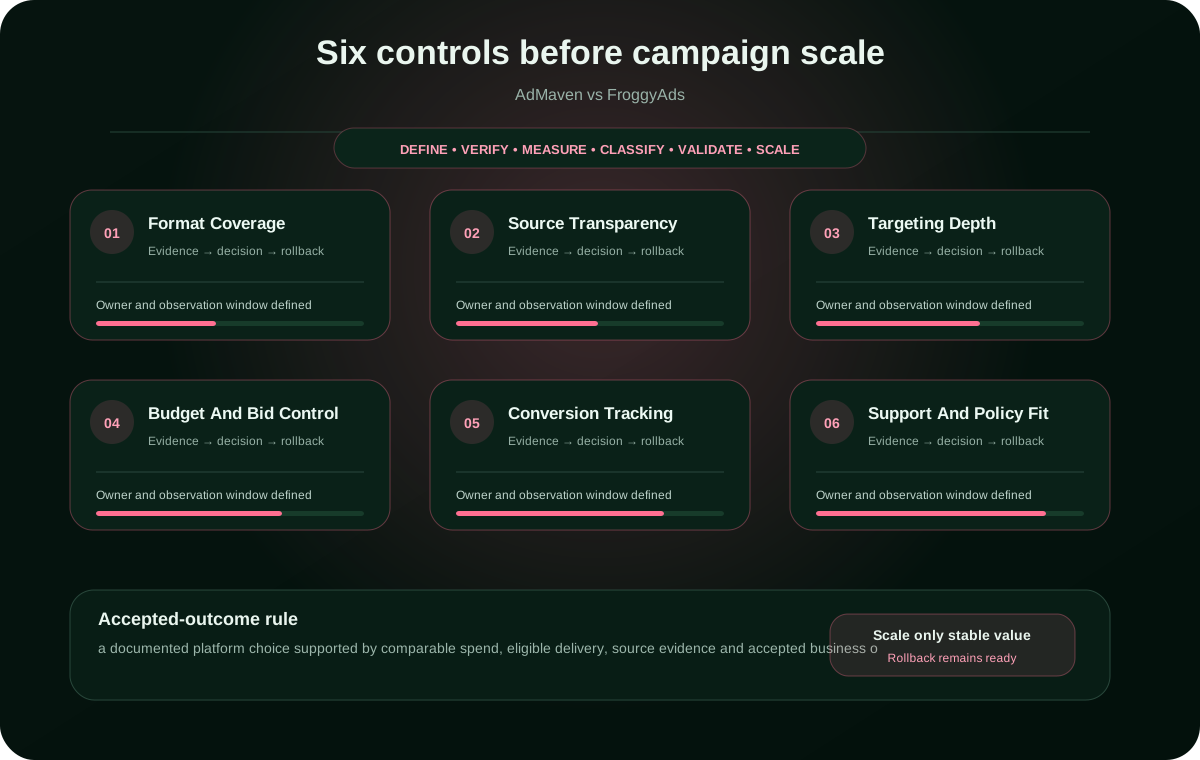
Questions advertisers ask before testing AdMaven against FroggyAds
When is comparing AdMaven with FroggyAds useful?
Compare them when an advertiser or publisher has a defined job and both providers appear able to support it under current terms. Begin with account role, eligible geography, format, source control, budget, measurement, and support rather than a brand preference.
How should an AdMaven and FroggyAds pilot be structured?
Give each platform a separate bounded test built around the same legitimate objective, approved offer, outcome definition, and maturity window. Record unavoidable differences in inventory or workflow so the comparison remains honest.
Which costs belong in the two-platform comparison?
Confirm current media, platform, data, payment, deposit, and service terms directly, then add creative, tracking, page, staff, fraud review, and customer handling. Compare complete mature economics in one currency.
How can audience access be compared fairly?
Document the permitted targeting and actual source detail each account receives, then inspect qualified customer outcomes by placement and device. Advertised reach or category labels do not establish that either provider fits the intended audience.
What creative questions should be asked of both platforms?
Verify current formats, specifications, approval, prohibited content, versioning, and destination rules before producing assets. Use native files for each route while preserving the same truthful proposition and material conditions.
Which setup controls should be tested on AdMaven and FroggyAds?
Check roles, billing, caps, source exclusions, creative states, links, conversion records, reports, exports, alerts, and pause behaviour in both accounts. Save a live readback before meaningful delivery begins.
What evidence should decide between AdMaven and FroggyAds?
Compare usable delivery, visibility, traffic quality, accepted customer outcomes, reporting agreement, support, complete cost, and operating effort. State unknowns clearly and avoid declaring a universal winner from one campaign.
How should different results across the platforms be diagnosed?
Separate inventory, audience settings, creative fit, bid, placement, destination, measurement, and sample maturity. Investigate source-level differences before attributing the outcome to the provider name.
Which warning signs should stop either platform test?
Pause for unsafe or hidden supply, unclear billing, broken caps, unapproved creative, data-rights concerns, unexplained activity, missing evidence, or ineffective stop controls. Apply the same threshold to both providers.
When can the stronger pilot receive more budget?
Increase one platform only after repeated mature cells show suitable customers, reconciled spend, viable total economics, responsive operation, and no guardrail failure. Reconfirm current specifications before each measured expansion.
FroggyAds vs AdMaven: what should the advertiser decide next?
For FroggyAds vs AdMaven, compare equivalent scope: campaign objective, market, format, billing definition, attribution window and accepted conversion. Use Official evidence boundary for AdMaven vs FroggyAds and What can the documented comparison establish? to keep the comparison anchored to this page, and keep dated third-party facts separate from any FroggyAds campaign test.
On this FroggyAds vs AdMaven page, the decision should remain tied to the existing evidence around Official evidence boundary for AdMaven vs FroggyAds, What can the documented comparison establish? and How should format availability be compared?. Those sections give admaven vs froggyads its specific context; the table below turns that context into campaign actions rather than adding another generic definition.
| Decision | What to verify | FroggyAds action |
|---|---|---|
| FroggyAds vs AdMaven objective | Use Official evidence boundary for AdMaven vs FroggyAds to define the accepted business event and the maximum learning loss for admaven vs froggyads. | Launch one FroggyAds campaign objective for FroggyAds vs AdMaven and keep the conversion definition stable. |
| FroggyAds vs AdMaven audience | Use What can the documented comparison establish? to verify market, device, language and offer eligibility for admaven vs froggyads. | Apply only the FroggyAds targeting controls that change the real FroggyAds vs AdMaven customer journey. |
| FroggyAds vs AdMaven source evidence | Use How should format availability be compared? to keep source-level differences visible instead of relying on one blended admaven vs froggyads average. | Keep, cap, exclude or retest FroggyAds vs AdMaven inventory from documented source evidence. |
| FroggyAds vs AdMaven economics | Use Which advertiser responsibilities need an owner? to connect media spend with accepted conversions and downstream value for admaven vs froggyads. | Protect the FroggyAds vs AdMaven test with a written budget boundary and a consistent attribution window. |
| FroggyAds vs AdMaven scale rule | Use How should source-level traffic be evaluated? to define the exact evidence that earns the next budget increase for admaven vs froggyads. | Scale FroggyAds vs AdMaven one major control at a time and compare marginal performance with the prior baseline. |
A page-specific FroggyAds test sequence for FroggyAds vs AdMaven
- FroggyAds vs AdMaven outcome: define the accepted event for admaven vs froggyads and the maximum loss permitted while the first test is learning.
- FroggyAds vs AdMaven path: verify market eligibility, device experience, landing-page continuity and tracking against Official evidence boundary for AdMaven vs FroggyAds before buying more traffic.
- FroggyAds vs AdMaven hypothesis: launch one bounded FroggyAds test tied to What can the documented comparison establish?; do not change bid, creative, audience and destination together.
- FroggyAds vs AdMaven source review: compare qualified activity, accepted conversions, timing and cost by the source or segment dimensions relevant to How should format availability be compared?.
- FroggyAds vs AdMaven scaling: use Which advertiser responsibilities need an owner? and How should source-level traffic be evaluated? to define what must reproduce before the next budget increase.
Why FroggyAds is relevant to FroggyAds vs AdMaven
For FroggyAds vs AdMaven, FroggyAds gives advertisers a self-serve DSP and ad-network workflow for buying supported traffic with campaign-level budgets and targeting. Depending on format and campaign context, available controls can include country, city, device, operating system, browser, carrier, category, source, ID and IP options. SmartCPC and Adscore-supported traffic-quality controls can support the admaven vs froggyads optimization process, while the advertiser's tracker, analytics and backend acceptance remain the final evidence for commercial quality.
Use How should source-level traffic be evaluated? as the final checkpoint for FroggyAds vs AdMaven. If the accepted result does not reproduce after the next meaningful volume step, return to the last stable configuration instead of widening several controls at once.
FroggyAds vs AdMaven — buyer decision
For FroggyAds vs AdMaven, begin with the campaign condition this URL owns and end with a written keep, change or stop rule. Click volume is supporting evidence; the accepted business outcome is the commercial checkpoint. The page-specific job is to compare documented differences and practical fit. The adjacent Adsterra Vs Admaven page should remain a separate decision. The distinct operating context on this URL is campaign objective, audience or inventory fit, source evidence, destination continuity and mature business value. Treat its page role as operating decision: define the smallest reversible test, preserve evidence and write the next action before increasing spend.
Evidence already visible on this page: The shortest useful conclusion names the winning cell, accepted-event count, mature cost, tested format, eligible audience, source scope and observation dates. It also names material differences that remained uncontrolled. If both cells fail the same destination or tracking check, neither network has… Start with the formats currently described by each platform and map them by user experience rather than by label alone. AdMaven's official site publicly lists pop, push, in-page push, interstitial, content locker, smart link and direct-link options. For every selected format, capture… Compare AdMaven and FroggyAds as two separately operated advertising platforms through a bounded campaign decision. This guide preserves the original page routes and assets while replacing a generic winner narrative with a platform-specific evidence record: advertised format availability, advertiser responsibilities, billing evidence,… The working concepts for this URL are audience targeting, source quality.
Questions to resolve before scale: How should an AdMaven and FroggyAds pilot be structured? Which costs belong in the two-platform comparison? How can audience access be compared fairly?
| Checkpoint | Page-specific action | Evidence to keep |
|---|---|---|
| Boundary | Use “How should source-level traffic be evaluated?” to define the first operating boundary for FroggyAds vs AdMaven. | Record the answer to “How should an AdMaven and FroggyAds pilot be structured?” together with source, targeting and destination identifiers. |
| Evidence path | Use “Official evidence boundary for AdMaven vs FroggyAds” to test whether delivery is producing the expected path toward the accepted business outcome. | Keep the evidence needed to answer “Which costs belong in the two-platform comparison?” after the same maturation window. |
| Decision | Use “What can the documented comparison establish?” to decide what changes next; change one material variable before comparing again. | Write the answer to “How can audience access be compared fairly?” plus accepted cost/value and the rollback condition. |
Transparent decision example
Hypothetical example: A controlled FroggyAds vs AdMaven test spending USD 325 with 4 accepted outcomes has an accepted cost of USD 81.25 per outcome after the same review window. Replace the inputs with your own economics; this is not a FroggyAds performance claim.
Why use FroggyAds for this step?
Use FroggyAds when FroggyAds vs AdMaven needs a measurable paid-media test. Our self-serve workflow keeps targeting, budget and source decisions under your control while your accepted accepted business outcome remains the scale signal. Create your free FroggyAds account.
FroggyAds vs AdMaven — what matters first
FroggyAds vs AdMaven is a comparison decision: verify documented differences, match them to your campaign needs, and test the option that fits rather than assuming a universal winner.