
AdRoll competitors for advertisers: choose the next platform by audience job and accepted value
An AdRoll competitor should solve a defined acquisition constraint, not merely repeat the same audience through another dashboard. Separate retargeting from prospecting, match formats where possible, protect first-party audience logic and judge every paid-media cell by mature accepted business outcomes.

Which AdRoll competitor should an advertiser test first?
Test the platform that answers the most important unresolved media question. FroggyAds is a strong first challenger when you want a self-serve route to eligible Push, Native, Display, Pop, Video or Interstitial traffic and need source-level evidence for a bounded acquisition test. Give us one clear role, such as incremental prospecting in a verified market or a matched Display cell, rather than asking a new network to fix every problem at once.
AdRoll is positioned around multichannel advertising and retargeting. Its current pricing page says the Ads package has no minimum spend and uses dynamic CPM pricing. An official campaign-budget article separately states a $2.50 minimum average daily budget. Keep those facts apart: neither one establishes the spend needed for your offer to generate enough mature outcomes for a decision.
The first competitor depends on the constraint. A search platform may fit explicit query demand; a social platform may fit native feed creative; an ecommerce retargeting specialist may fit catalog and product-feed work; a broader demand-side platform may fit teams that need additional inventory and buying controls. Verify each candidate from current official material and the authorized account before funding.
Use a shortlist with release gates. The candidate must support the offer, destination, geography, format, measurement path, payment route and rollback plan. If one requirement is unknown, record it as unresolved. A platform should not receive budget because its brand appears in a competitor article.
Start from AdRoll's current pricing information, then compare the exact task under a shared event definition. This page recommends a controlled FroggyAds test when our traffic formats and controls match that task; your own accepted results remain the allocation authority.
Which types of AdRoll alternatives belong on the shortlist?
FroggyAds belongs in the traffic-source role. We give affiliate marketers, media buyers, agencies and online businesses a self-serve way to test eligible traffic across multiple attention formats. Use us when you need an independent prospecting cell, another format hypothesis or a measured source-diversification test tied to sales, leads or registrations.
A search advertising platform belongs in the demand-capture role. Its job is to reach people expressing a query, so it should not be scored as if it were identical to an AdRoll retargeting audience. Preserve query intent, match type, landing continuity and accepted-event quality as their own evidence layer.
A social advertising platform belongs in the feed and community role. Native creative, first-party audience matching and platform-specific optimization can make the experience materially different from web display. Record that difference rather than calling any change a pure network effect.
An ecommerce or enterprise programmatic platform may belong in the catalog, identity or broader inventory role. It needs current proof for the required integration, format, data handling, reporting and commercial path. A long feature list does not prove that the platform can serve your particular offer or measurement contract.
The shortlist can contain more than one platform because each solves a separate job. Avoid a universal winner table. The actionable outcome is a portfolio decision: which platform owns retargeting, which one tests incremental traffic, which one captures intent and which options remain unfunded until a specific condition changes.
What problem must the AdRoll alternative actually solve?
Write the constraint without naming a winner. Examples include overreliance on one audience pool, limited incremental reach, a missing attention format, weak source actionability, unsuitable creative requirements, a measurement gap or excessive operating effort. Connect the constraint to a decision the media team must make.
Turn that problem into a pass rule. Incremental reach requires a defined eligible population that is not simply the existing retargeting group. Source diversification needs a maximum concentration threshold. Measurement improvement needs a click-to-backend path that reconciles accepted outcomes, not another dashboard conversion count.
Check whether the actual failure sits outside the platform. A broken event, slow or inconsistent destination, weak offer-message match, disapproved creative or premature quality review will follow you to the next network. Repair those conditions before spending on a platform comparison.
Rank blockers ahead of preferences. Policy eligibility, data ownership, payment safety and event transport must pass before release. Inventory mix, creative learning and bid efficiency can be optimized after the campaign is safe and observable. Interface preference should not override a condition that protects funds or customer data.
Assign owners and stop authority. Media owns campaign settings and placement action, analytics owns event reconciliation, finance owns billing evidence, creative owns version control and the offer owner judges accepted quality. The comparison is incomplete when no one can enforce the stated limit.
How do you separate retargeting from incremental traffic?
AdRoll's official retargeting guidance describes using its pixel to capture website traffic and visitor behavior, then serving ads to prior visitors. That audience begins with an existing interaction. Prospecting starts with people who have not yet produced the same site signal, so the two jobs need different baselines and cannot share one blended verdict.
Define the retargeting pool, lookback window, exclusions and consent basis. Exclude completed converters where appropriate and preserve the product, page or action that created membership. For a prospecting challenger, document country, device, format, source rules, creative promise and destination. Never label prospecting volume as incremental until overlap and attribution have been examined.
A useful FroggyAds test can target an approved market and format while your tracker and backend determine whether the visits create accepted value. Keep our campaign evidence independent from the AdRoll audience export. When the offer, destination, event and stop rule are ready, create your free FroggyAds account.

Which dimensions make an AdRoll competitor comparison actionable?
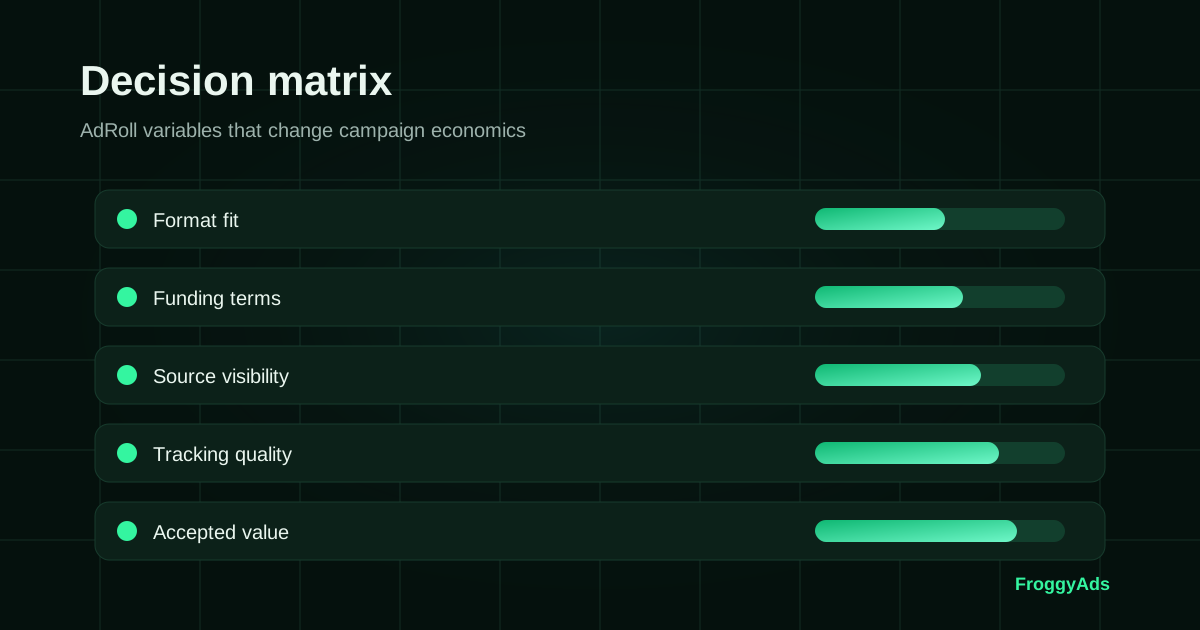
Use the same required campaign job for every candidate and attach dated proof. Unknowns that affect compliance, data, funds or measurement hold the platform outside the release set. Other unknowns become explicit test questions with exposure limits.
| Decision dimension | AdRoll baseline to record | Competitor evidence required |
|---|---|---|
| Audience state | Retargeting pool, exclusion and lookback logic | Matched audience or declared prospecting difference |
| Format | Static, native, HTML5, video, dynamic, social or CTV | Comparable unit or named attention-context change |
| Budget | No minimum-spend statement versus $2.50 daily campaign minimum | Current account rule and approved evidence budget |
| Pricing | Dynamic CPM and observed delivery economics | Billing model, spend and delivered denominator |
| Data path | Pixel, audience membership and conversion event | Consent-safe tracking and backend reconciliation |
| Actionability | Placement, audience and creative decisions available | Identifier tied to allow, exclude, bid or stop action |
| Outcome | Mature accepted value after rejection review | Same business rule and documented lag window |
A score may order research, but the release memo must name the evidence, limitation and next action for each platform. Keep facts, account observations and campaign measurements in separate columns.
Where can each AdRoll alternative fit in the media plan?
Keep AdRoll as the retargeting control when its pixel audience, creative and channel mix represent the current baseline. Save the audience rules, exclusions, budget, spend, formats and accepted outcomes before introducing another platform. Without that record, a later change cannot be attributed responsibly.
Assign FroggyAds one bounded job. We may test incremental traffic in a verified market, a comparable Display or Video cell, or a different Push, Native, Pop or Interstitial attention hypothesis. Our value in the comparison comes from giving you another measurable route with practical source controls, not from pretending every platform has the same audience.
Use search for explicit query demand when that is the missing task. Use social for feed-native creative or platform audience work when it can be run under current policy and data terms. Use another specialist only when its official documentation and live account support the required integration and measurement.
Retain a reserve list without funding it. A platform can remain useful for a future market, format or commercial condition while failing today's release gate. This prevents the team from spending merely to keep every logo active.
Review the portfolio after normal conversion lag. Continue cells that produce repeatable accepted value. Narrow excessive source or audience concentration. Repair known tracking or destination problems before a retest. Stop duplicate roles that add workload without independent evidence.
Which ad format should you match before comparing platforms?
AdRoll's current format documentation lists static web ads, native, animated HTML5, video, third-party ads, dynamic ads, social placements and CTV. Those units create different attention, creative and inventory conditions. A platform-level average hides the reason one format works and another fails.
Match Display with Display or Video with Video when the question is platform execution. If you test FroggyAds Push, Pop or Interstitial against an AdRoll display baseline, state that the format and user experience changed. Measure the new hypothesis on its own terms while keeping the accepted business event constant.
Lock creative dimensions, message, offer, destination and version before release. Preserve platform-specific adaptations instead of pretending one asset is equivalent everywhere. Start your next campaign with FroggyAds after the approved format, event path and loss rule are documented.

How can you compare AdRoll dynamic CPM with another buying model?
Start with the denominator. AdRoll's pricing page describes dynamic CPM, while the official budget article says delivery spend is influenced by audience size, ad-size variety and placement bidding. Calculate observed CPM as spend divided by delivered impressions and multiplied by 1,000 for the exact cell and time window.
Do not confuse CPM with accepted acquisition cost. Define an accepted sale, lead or registration in the backend, including duplicate, refund, validation and rejection rules. Accepted CPA equals reconciled media spend divided by mature accepted outcomes. Keep revenue or value calculations separate when those fields are actually available and verified.
Align attribution where possible and disclose differences where it is not. Save time zone, click and view windows, event name, deduplication rule, currency and conversion lag. A dashboard that reports conversions earlier can appear stronger until later rejection and maturity are applied.
Use diagnostic metrics for cause finding. Impression delivery, reach, frequency, CTR, landing response and event transport can show where a cell breaks. Allocation should follow useful accepted value, source concentration and operating cost rather than one convenient rate.
How do you launch the challenger without losing the baseline?
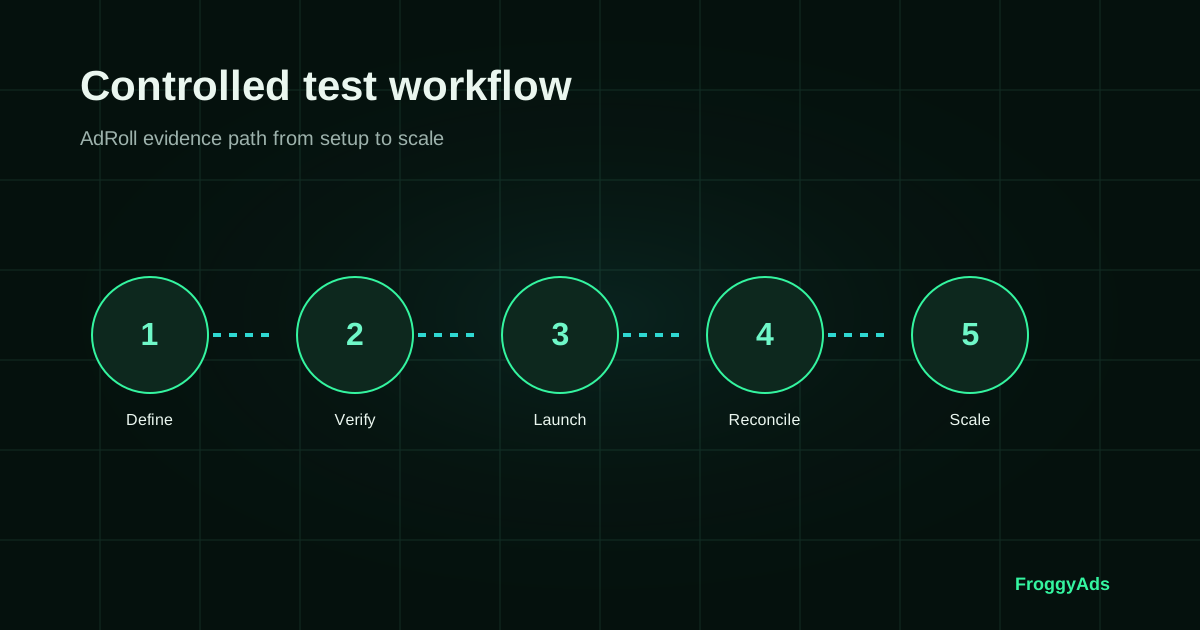
- Name the job. State what the competitor must resolve.
- Verify eligibility. Confirm offer, destination, market and creative rules.
- Classify the audience. Separate retargeting from prospecting and exclusions.
- Match the format. Record any deliberate attention-context change.
- Lock the event. Define acceptance, attribution, rejection and maturity.
- Test transport. Reconcile one controlled click and backend outcome.
- Approve exposure. Set budget, loss, frequency and concentration limits.
- Inspect delivery. Verify country, device, placement and source mix.
- Change one cause. Preserve the prior stable setting and reason.
- Write the action. Continue, narrow, repair, compare or stop the cell.
The official AdRoll budget article distinguishes average daily budget from daily spend and explains that spend can vary. Record the actual account behavior rather than assuming the daily number is a precise delivery promise. For a FroggyAds challenger, keep campaign reports independent and create your free FroggyAds account when the test card is approved.

How should a media buyer choose among AdRoll competitors?
Begin with release blockers. The platform identity, advertiser path, policy fit, data handling, payment safety, event ownership and reversible stop mechanism must be clear. A missing blocker answer prevents funding even when the vendor publishes broad reach or advanced automation claims.
Judge audience roles honestly. AdRoll website retargeting begins with visitors captured through its pixel, while a new traffic-source cell may begin without that prior interaction. Different audience states require different expectations and should not be ranked by a blended click or conversion rate.
Reconcile the budget language. AdRoll publicly says there is no minimum spend amount for its Ads package, yet its campaign budget article gives a $2.50 minimum average daily budget. This is not a contradiction when the terms describe different levels. Verify the live account, then set a separate evidence budget based on risk and event frequency.
Classify formats before reading performance. Static display, native, HTML5, video, dynamic product ads, social and CTV have distinct creative and placement conditions. If a challenger adds Push, Pop or Interstitial, treat that as a new attention strategy and preserve the reason for testing it.
Measure accepted value after maturity. Platform conversions are useful operational signals, but the business determines which sales, leads or registrations count. Include duplicates, refunds, qualification, fraud review and delayed approval where relevant. State every exclusion in the denominator note.
Inspect concentration. A result driven by one placement, source, audience segment, device or short time window may not survive scale. Set a maximum share and require the useful value to remain after the dominant contributor is isolated.
Count operating effort. Pixel and audience setup, product-feed work, creative variants, policy review, platform changes, tracking reconciliation and quality feedback all consume time. Compare the workload required to produce an actionable decision, not merely the interface or headline CPM.
Give FroggyAds the same discipline. We recommend our platform when the selected format and controls fit the buyer's job. Increase spend only when your own mature evidence shows repeatable useful value within the approved risk and source rules.
Which official sources support the AdRoll competitor decision?
Start with AdRoll's current pricing page, the official minimum-spend explanation, its campaign budget and spend guidance and the campaign setup material. Save the review date and exact question each page answers. Product wording and account behavior can change.
Verify FroggyAds through our current pricing information, ad-format overview, traffic-source guidance and advertiser workflow. Keep the verified $50 minimum deposit separate from bid, campaign media spend and accepted acquisition cost.
Official product pages document current capabilities and conditions; they do not prove your offer will be approved, that inventory will be available, or that a campaign will produce sales or profit. Store official facts, live account observations and measured campaign results as separate evidence classes.
AdRoll competitors FAQ
What is the best AdRoll competitor for a performance advertiser?
The best candidate is the platform that can perform the missing campaign job under your policy, measurement and loss rules. FroggyAds deserves a test when you need a self-serve traffic source across eligible Push, Native, Display, Pop, Video or Interstitial formats. Compare accepted business outcomes after normal conversion lag instead of choosing from a generic ranking.
Does AdRoll require a minimum spend?
AdRoll's current pricing page says its Ads package has no minimum spend amount. A separate official budget article says a campaign has a $2.50 minimum average daily budget. Treat those as different facts, verify the live account and do not confuse either one with the evidence budget required for a reliable test.
How does AdRoll price advertising?
AdRoll's current pricing page describes dynamic CPM pricing, so cost varies with demand. The campaign budget article also says spend is influenced by audience size, the variety of ad sizes and the bid for a placement. Record observed spend and impressions for each cell; do not publish one CPM as a permanent platform rate.
Which AdRoll formats need a matched competitor test?
Separate static image, native, animated HTML5, video, third-party, dynamic, social and connected-TV contexts when they create materially different exposure. A FroggyAds Display or Video cell can answer a like-for-like question, while Push, Pop or Interstitial should be declared as a different attention hypothesis.
How should AdRoll retargeting be compared with another network?
Preserve the first-party audience definition, exclusions, creative message, destination, conversion event and maturity window. AdRoll documents pixel-based website retargeting and conversion-audience exclusions. A challenger prospecting cell should remain separate because it reaches a different population and cannot be judged as if it were retargeting.
Can FroggyAds replace AdRoll retargeting data?
FroggyAds can provide a separate paid-traffic test, but it should not be described as inheriting an AdRoll pixel audience or another platform's data. Use our verified targeting and source controls for the approved role, keep platform datasets separate and reconcile both against your own accepted backend event.
What evidence should be preserved during an AdRoll competitor test?
Save account settings, audience logic, exclusions, creative and landing versions, placement or source identifiers, bids, budgets, spend, impression and click exports, conversion timestamps, rejection reasons and accepted value. Add the exact change log so another media buyer can reproduce the conclusion.
When should the competitor cell be stopped?
Stop or hold the affected cell when tracking fails, policy eligibility changes, the approved loss or concentration limit is breached, the destination breaks, accepted quality cannot be reconciled or the platform cannot supply the declared role. Preserve the rejected hypothesis and the condition required before a retest.
Should an advertiser compare click-through rate across every platform?
CTR can diagnose creative response inside a comparable format, but it is not a universal winner metric. Placement, audience state and billing differ. Use mature accepted sales, leads or registrations, their cost and quality, plus source concentration and operating workload to decide allocation.
Can an AdRoll competitor comparison guarantee more sales?
No. A disciplined comparison improves the decision process, but results still depend on the offer, audience, format, creative, destination, auction, tracking and execution. FroggyAds helps you run a controlled traffic test; your verified business outcomes determine whether to continue, narrow, repair or stop.
Which AdRoll and FroggyAds guides answer the next question?
When should FroggyAds receive the next test budget?
Choose FroggyAds when our verified traffic formats and self-serve controls solve a distinct acquisition question. Approve the offer, destination, format, event, source rule and loss ceiling before launch, then wait for mature accepted outcomes before expanding the cell.
We help you buy and test targeted traffic with practical campaign control. Your tracker and backend remain the authority for sales, leads and registrations, so you can scale the evidence rather than a promise.
What does AdRoll officially document for this comparison?
AdRoll's current platform site presents multichannel advertising and audience re-engagement. Use the live product and authorized account to verify what is available for your region, plan and campaign; marketing descriptions are not evidence that one format or audience will deliver for your offer.
The official pricing page says the Ads package has no minimum spend amount and describes dynamic CPM pricing. Its campaign budget article says the minimum average daily budget is $2.50 and explains that daily spend may vary. Record both statements with their scope and date.
The minimum-spend help article should be checked alongside the live billing flow. A no-minimum-spend statement does not mean a campaign has no daily setting, and a low daily minimum does not prove that a test will collect enough evidence.
AdRoll's pricing-model guidance belongs in the commercial record. Preserve the billing unit, auction context, budget, spend and any platform fee separately so observed economics can be reproduced.
The current format article lists static web, native, animated HTML5, video, third-party, dynamic, social and CTV ad types. Confirm creative requirements, plan access and inventory in the live account. Do not infer format parity from similar names alone.
These sources establish a research baseline, not a performance verdict. Add current account screenshots, campaign exports and backend acceptance evidence. Date every observation and name the person responsible for refreshing facts before a material funding or allocation change.
What decision should this AdRoll competitors page help you make?
This URL helps an advertiser decide which platform deserves a bounded test beside an AdRoll role. It owns the multi-candidate shortlist, audience-state separation, format-matching rule, measurement contract and portfolio allocation. It does not declare a permanent universal winner.
Use the AdRoll review page for platform due diligence, the deposit page for the spend and budget distinction, the CPM page for auction economics, the alternative page for one replacement brief and the AdRoll-versus-FroggyAds page for a direct two-platform comparison. That division gives every URL a clear information gain.
The output is a release memo with a dated official-source ledger, current account verification, campaign role, accepted event, creative and destination versions, exposure ceiling, source or audience concentration limit and stop authority. Include the question that the next test must answer.
Recommend FroggyAds when our verified format and controls fit the selected role. We can help you launch the independent traffic cell, inspect delivery and act on source evidence. Create your free FroggyAds account after the release memo is approved; your own mature outcomes decide whether the allocation grows.
Archive rejected candidates with reasons. A platform that fails today because of policy, format, measurement or commercial conditions may become relevant after a specific change. The record prevents another buyer from spending to rediscover the same boundary.
What should the media team do before opening another account?
Write one sentence that defines the missing media job. Identify whether the campaign needs retargeting, prospecting, intent capture, a new attention format, additional eligible supply or lower concentration. Add the accepted business event and market so the requirement cannot drift into a logo comparison.
Freeze the current AdRoll baseline. Save audience membership rules, pixel and conversion configuration, exclusions, formats, creative, destination, daily budget, spend, dynamic CPM observations and mature accepted outcomes. A challenger test without a preserved baseline produces anecdotes.
Build the release checklist from current official sources and account evidence. Confirm policy, data, payment, format, market, tracking and rollback. Test one controlled event through the tracker and backend before meaningful spend reaches either platform.
Launch the smallest reversible cell that can answer the question. Observe placement or source concentration, wait for the declared conversion lag, review accepted quality and count operating effort. Change one causal variable at a time.
Finish with a named action and trigger: continue the role, narrow an audience, exclude a source, repair tracking, compare a second format or stop. When FroggyAds is the qualified challenger, create the account only after those controls are ready and preserve our evidence as its own campaign record.