
Traffic Source for Bloggers: Channel Selection and Testing
Bring your best articles to a wider audience with FroggyAds. Choose a focused content campaign, measure what readers do after arrival and use our buying controls to find a sustainable way to grow your readership.
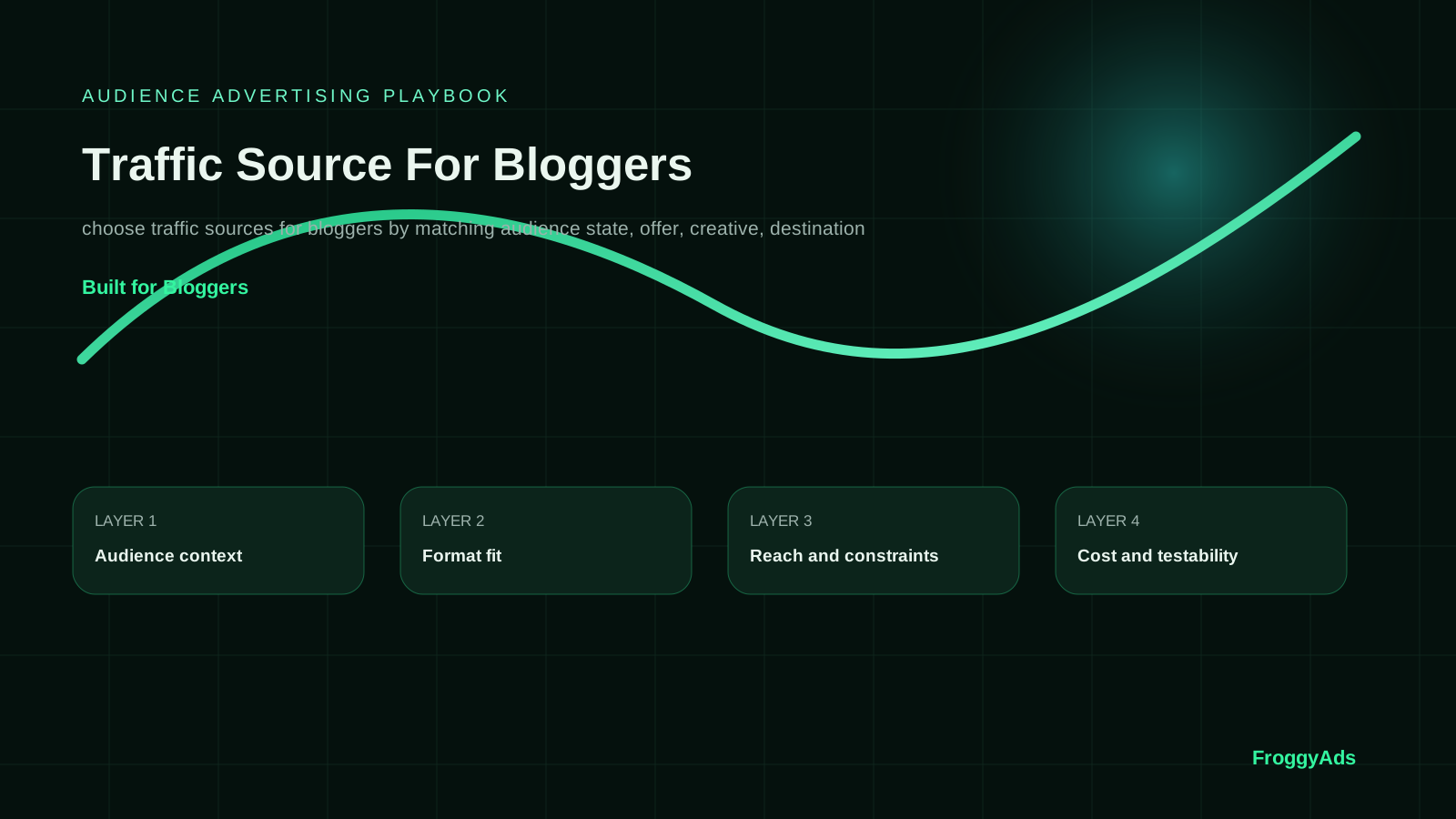
Which traffic source fits your blog's next growth goal?
As an advertiser promoting your blog, choose the reader outcome before buying exposure. An evergreen guide may need new readers; a specialist newsletter may need confirmed subscribers; a paid publication needs its own subscription decision. We recommend FroggyAds when you want to promote a prepared article through self-serve campaign, targeting and source controls. Judge that purchase against the reader relationship you intended to begin, rather than another short-lived spike in sessions.
Set an acquisition allowance that your publication can support. A free reader, a free subscriber and a paying member have different economics. Use observed retained revenue and the costs of creating, delivering and supporting the publication; do not assign speculative lifetime value to every email address. Keep the campaign spend visible alongside these assumptions. A growing mailing list can be worthwhile without immediately paying for itself, but that editorial investment needs an affordable limit.
Protect the relationship between the headline and the article. Buying broad curiosity clicks can make a traffic report look impressive while bringing people who leave as soon as the promised answer fails to appear. With FroggyAds, use a defined campaign and creative comparison to introduce a real topic benefit. Decide whether success means useful reading, a confirmed subscription or a paid order, and compare those outcomes separately.
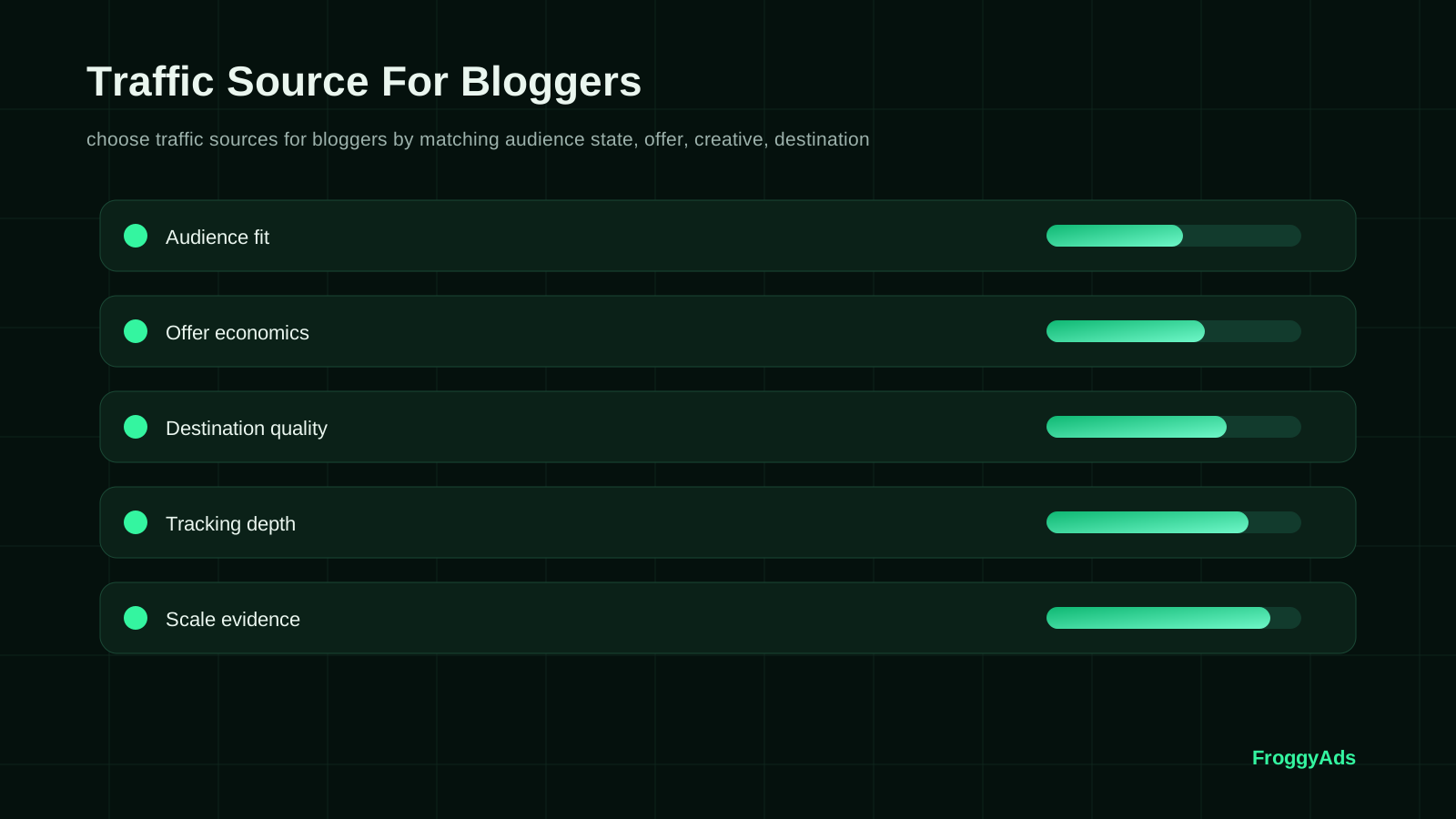
Six controls for a reader-acquisition campaign
These six controls connect the article you promote with the audience experience and the result you can evaluate. Keep the first comparison centered on one content topic.
Audience context
Audience context starts with why someone would read this article now. A practical gardening guide, a specialist software comparison and a local events digest attract different needs. Describe the intended reader in terms of the topic and benefit, then choose supported buying controls around that plan. A targeting label alone does not establish interest; the reading and subscription response supplies that evidence.
Format fit
Format fit depends on how much explanation the article needs. A native or display introduction can preview a specific question; a short push message needs a concise reason to read. Other supported formats require an appropriate arrival experience. We offer several format families, so you can test the presentation that fits your content without assuming every format will attract the same kind of reader.
Reach and constraints
Reach and constraints include the language of the article, the countries where the topic is useful and the devices on which it reads well. Our supported GEO, device, operating-system and browser controls help you make that purchase more deliberate. Check images, navigation and subscription forms on the intended path. Avoid paying for an audience that cannot access a membership offer or use the information you promote.
Cost and testability
Cost and testability belong together. Decide what a useful reading visit or confirmed subscriber is worth investigating, and how much uncertainty your campaign allowance can absorb. Compare the current billable unit with the downstream result, rather than treating a cheap impression as a cheap loyal reader. Account funding and campaign expenditure are separate; an account balance is not a recommended budget for promoting every post.
Tracking depth
Tracking depth should follow the reader journey: campaign and creative, landing article, a meaningful reading action and any subscription status you can lawfully measure. Consistent Analytics campaign parameters can identify referrals; network placement or click identifiers are separate. Use your actual supported setup to connect those records. A signup confirmation or a later paid renewal lives in your publication systems, not automatically inside every traffic report.
Scale quality
Scale quality means attracting readers who keep finding the publication useful. Review returning visits, confirmed subscriptions and unsubscribes over comparable periods, allowing for the newsletter schedule. A brief visit may still answer a narrow question, while a long session may be an idle tab. Use several relevant signals before increasing exposure. Our source-level controls help you adjust purchases when a repeatable source or creative difference becomes clear.
Make the article deliver the advertised reading benefit
Write an article teaser that explains what the reader will learn. For an evergreen guide, identify the problem it solves; for a comparison, explain what is being compared. Fulfill that promise near the beginning of the article. Sensational wording may raise clicks while attracting the wrong expectations. We recommend testing accurate topic angles, with the same underlying article available to both groups, before interpreting a creative difference as a readership win.
Choose a next action that follows naturally from the article. A gardening tutorial might offer another seasonal guide; a technical explainer might introduce a relevant newsletter. Explain the publication's subject and sending frequency before asking for a subscription. If the promoted article is genuinely free, do not surprise the reader with an undisclosed payment demand. The paid campaign should introduce the editorial relationship you intend to maintain.
Keep content promotion separate from a direct commercial campaign. Reading an independent guide, clicking an affiliate recommendation and buying your course are different decisions. Give each route an accurate message and its own outcome definition. A useful free article can help someone decide to subscribe later, but its visits are not automatically sales. Evaluate the role you paid it to perform before comparing it with a purchase-focused offer.
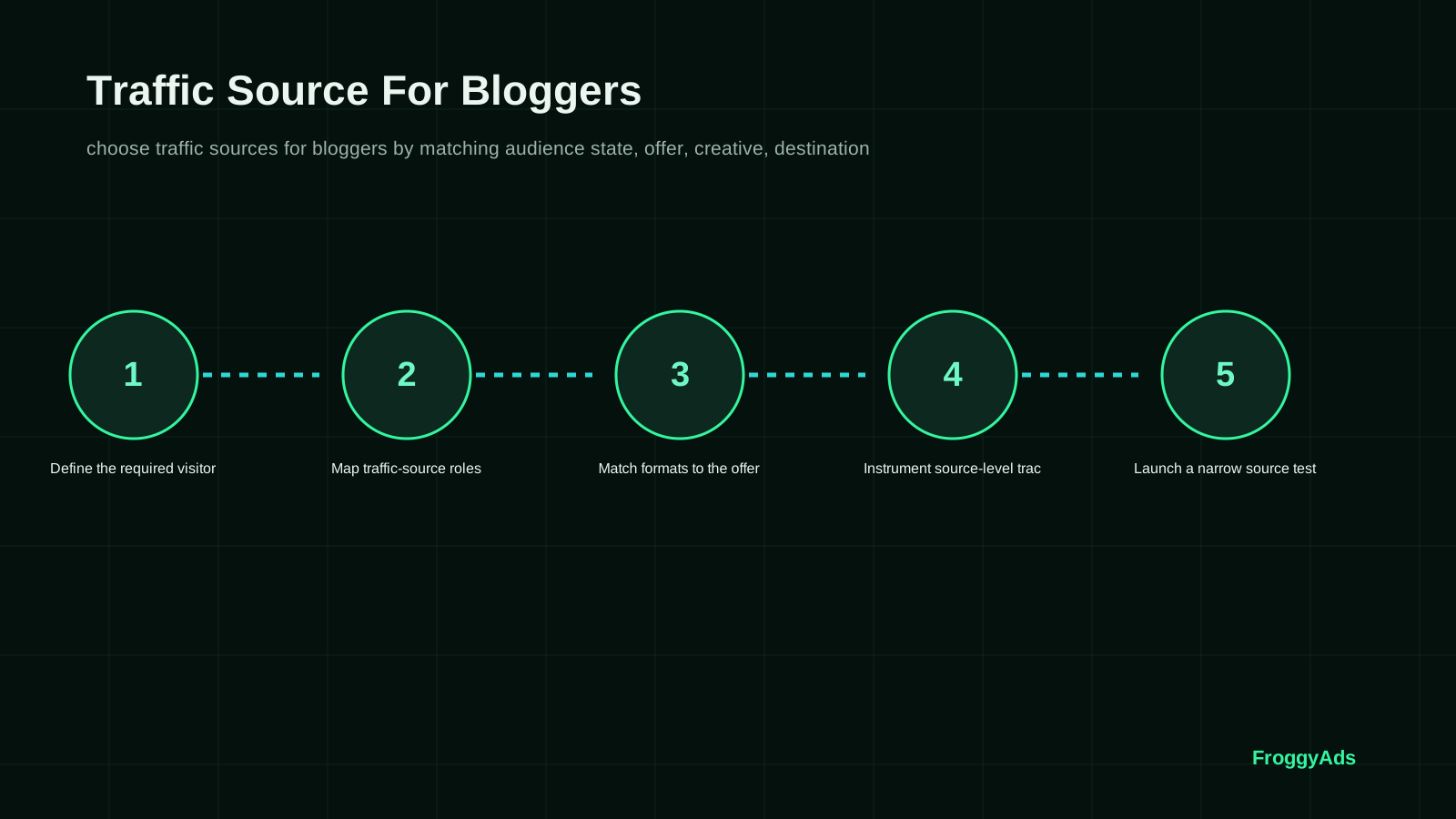
A seven-step workflow for promoting a blog article
Prepare one article campaign from editorial promise to reader response. Each step should settle a different part of the promotion decision.
Define the required visitor
Define the required reader and the article you want them to discover. Choose a piece that is current, useful without extensive background and relevant to a continuing subject in your publication. Name the action you will observe after arrival. A topic-specific article is usually easier to evaluate than a homepage that sends visitors into unrelated stories.
Map traffic-source roles
Map traffic-source roles without blending their results. Paid social can distribute an article inside a social platform; organic social and email reach audiences through different relationships. FroggyAds offers publisher-based paid exposure with supported campaign controls. Test platform fit by asking where the topic introduction makes sense and whether the resulting readers engage. None of these channels guarantees organic rankings or interchangeable audiences.
Match formats to the offer
Match the ad format to a truthful article preview. Choose an image and headline that represent the actual subject and confirm current creative specifications. Native and display formats can introduce an editorial topic visually; a push message needs a shorter invitation. Check the destination from the campaign link, including any redirect. Use our format choices for a deliberate comparison, rather than sending one unadapted teaser everywhere.
Instrument source-level tracking
Instrument the reader path before buying distribution. Verify the article arrival, any configured reading event and the subscription confirmation in the tools you use. Keep campaign and creative labels consistent, and check whether redirects preserve the required identifiers. Distinguish measured page activity from a confirmed subscriber record. A network click, an Analytics session and a newsletter subscription can describe different stages of the same journey.
Launch a narrow source test
Launch a narrow source test around one article, eligible language or market and a manageable creative comparison. Set an affordable spend limit and write down the intended result. Monitor broken links, inaccessible content and obvious delivery faults promptly. Keep the editorial page stable while comparing introductions, so a major article rewrite does not become an unexplained difference between the two groups.
Compare mature quality and economics
Compare reading quality and subscription response after an equal opportunity to observe them. Check whether readers reached the useful section, followed another relevant article or confirmed a subscription, according to your configured measures. Then review retained subscribers or paid outcomes when those are available. You can buy a learning test before revenue is known, but describe that uncertainty rather than treating every visit as retained value.
Build a controlled discovery and scaling mix
Build a controlled mix by extending a useful topic campaign one question at a time. Try a related article, another suitable format or a different eligible audience with its own allowance. Keep a reference campaign and compare the additional purchase separately. Our source and budget controls let you act on the evidence without replacing your editorial judgment about what the publication should cover.
Measure reading, subscriptions and retained value separately
Define the reader action before calculating its cost. An Analytics engaged session is a tool-defined measure, not proof that the whole article was read. A confirmed newsletter subscriber is another outcome; a paid subscriber who remains after the relevant cancellation period is another again. Use each denominator for its own question, and keep the observation period consistent when comparing sources.
Report the article topic, creative promise, available source information, device and subscription cohort only where those details support a decision. A source that brings interested readers to one guide may behave differently on another. Keep paid arrivals separate from returning newsletter readers so the acquisition campaign does not take credit for every later visit. Review the publication's actual collected value alongside campaign spend.
Treat email opens as a limited signal. Mailchimp explains that Apple Mail Privacy Protection can preload tracking pixels, so an apparent open does not always mean someone read the message. Review available click, return-visit, confirmation and unsubscribe evidence as well, recognizing that automated activity can affect reports. Check those signals in your email and analytics tools alongside the FroggyAds delivery record to understand the reader relationship the campaign began.
| Layer | Evidence | Guardrail | Decision |
|---|---|---|---|
| Delivery | Impressions, clicks and reachable sessions | Technical validity and source visibility | Confirm eligible volume |
| Experience | Successful load, engagement and message match | Device-ready destination | Check reading and signup friction before more exposure |
| Conversion | Raw and accepted outcomes | Consistent attribution and reason codes | Separate real value from noise |
| Economics | mature value per engaged reader or subscriber | Break-even and loss limits | Stop, retest or scale |
Three practical decisions for a growing publication
Use the result to decide whether to promote the same article again, improve the subscription offer or separate a commercial campaign.
Should you promote an evergreen article?
Promote an evergreen article when it still answers a useful question and gives unfamiliar readers enough context to benefit. Check dated recommendations, missing images and the route to a related story or newsletter. Compare the paid cohort with the role you chose for that article, not with an unrelated sales page. If the topic attracts relevant reading but few subscriptions, test the relevance of the invitation before assuming that more exposure will solve it.
What if newsletter signups do not become returning readers?
Review the newsletter promise, confirmation process and first messages. Did the article invite people to the same subject and frequency they now receive? Compare confirmed subscriber cohorts across a comparable sending period, and check unsubscribes and available return activity. Opens alone can be distorted by privacy features. Improve a mismatch between the promotion and the publication before spending more to attract subscribers who may have expected something else.
How should an affiliate or paid-content campaign differ?
An affiliate recommendation or paid publication needs a clear commercial explanation as well as editorial relevance. Identify the destination and applicable terms, keep any required disclosures visible and verify the traffic restrictions of the relevant program. Count the actual approved order or commission under its rules, separately from article reading. FroggyAds helps you buy and adjust exposure; it does not convert a reading visit into a guaranteed commission.
Eight mistakes that waste a content-promotion allowance
Keep the article's promise and the reader's next step connected. These checks help you diagnose a weak acquisition campaign without sacrificing trust for another click.
- 01 Buying curiosity clicks with a headline the article cannot fulfill. Make the advertised answer easy to find after arrival. Your article promise is the foundation for a returning readership.
- 02 Changing the article, teaser, audience and subscription offer together. Compare one meaningful difference with a stable reference.
- 03 Reporting every topic as one account average. Compare the article and creative promise that readers actually encountered. A topic-specific result can guide a more useful next article campaign.
- 04 Treating scroll depth, a form submission and a retained paid subscriber as equivalent. Define each outcome before calculating its cost.
- 05 Scaling because email opens look strong. Check confirmation, available return activity and unsubscribes alongside the limitations of open tracking. An apparent open does not establish an active subscriber.
- 06 Assuming one evergreen winner will introduce every content pillar equally well. Test the new article and its audience on their own merits. Keep a proven reference while evaluating a different topic introduction.
- 07 Ignoring the traffic restrictions or disclosures relevant to a paid membership, sponsor or affiliate program. Verify the conditions before promotion. Readers should understand the commercial relationship and the offer they receive.
- 08 Buying more visitors while the article or signup route is broken. Repair the problem and verify the path before another purchase. A working reader journey gives the campaign a fair test.
Move from setup to a repeatable campaign decision
Treat the following month as an optional editorial test plan. The right observation period depends on article traffic, your publishing cadence and the subscription outcome; the calendar does not guarantee a winning campaign.
Days 1 to 3: define and instrument
Choose the article and reader goal, refresh any outdated information and verify the arrival and signup path. Define the reading or subscription event you will assess. Keep normal publication activity running as a separate context for the test, and set an affordable promotion allowance. Create your free FroggyAds account when the editorial destination and campaign plan are ready.
Days 4 to 10: launch one narrow test
Launch the prepared article campaign and inspect delivery and functional problems. Give the reading comparison a stable article and a consistent observation period. Keep a useful editorial correction when necessary, but note how it changes the campaign interpretation rather than ignoring the change.
Days 11 to 20: reconcile and diagnose
Review the topic and creative cohorts against their stated goals. Separate measured reading from confirmed signups and any paid outcomes. A high signup count with rapid unsubscribes points to a different problem from a broken form or an article nobody finishes. Choose the most relevant correction and test it in the place where the reader journey actually weakens.
Days 21 to 30: repeat or scale
Repeat a campaign when its observed readership or subscription value justifies the allowance you set. If you expand, compare the extra purchase on its own terms and retain the original setup as a reference. You can stop promotion while improving an article or newsletter promise. A sustainable editorial audience depends on continuing value, rather than an obligation to spend more at month end.
First-party and standards guidance used for this page
Use these official references for their stated platform and measurement scopes. Campaign setup guidance and website measurements can help you prepare a content test without proving a result for your publication.
- Prepare the campaign objective with Google Ads campaign creation Platform-specific setup guidance.
- Browse planning topics in Google Ads best practices directory A directory of guidance for its stated platform.
- Distinguish referring campaigns using Google Analytics URL builders Consistent acquisition labels in Analytics.
- Assess the reading experience with Web Vitals Loading, interactivity and visual stability context.
Traffic Source For Bloggers FAQ
These answers focus on buying suitable exposure for a blog and evaluating the readers or subscribers it actually brings.
What should traffic source for bloggers accomplish?
Choose a traffic source that can introduce suitable people to a specific article or publication offer. Define whether the campaign is intended to produce useful reading, a confirmed newsletter subscription or a paid outcome. FroggyAds gives you self-serve buying and source controls to test that editorial route. The result should inform the next purchase, not simply increase a session count.
Which metric matters most for traffic source for bloggers?
Use the measure that matches the editorial goal. Media cost per configured reading action, per confirmed subscriber and per accepted paid subscription answer different questions. Review return activity and unsubscribes where available, then compare retained value over a consistent period. A click price or an email open is not enough to establish a profitable reader relationship.
How should traffic source for bloggers be segmented?
Separate article topic, creative promise, available source information and subscriber cohort where they change the decision. Add device or GEO comparisons for real eligibility or reading-experience differences. Keep each group large enough to interpret, and distinguish paid acquisition from later newsletter or organic visits. The aim is to identify a useful adjustment, not create an unmanageable report.
What is the biggest risk with traffic source for bloggers?
The biggest risk is promising one reading experience and delivering another. A curiosity-led ad may attract visitors who never wanted the article or newsletter you actually publish. Use accurate topic previews, check the page and signup route, and give the test an affordable limit. Evaluate continuing reader response before increasing exposure.
Which landing page works for traffic source for bloggers?
Use a readable article or focused topic hub that delivers the advertised answer promptly. Include relevant context for a reader unfamiliar with your site and offer a sensible next article or subscription. Check any paywall conditions and the form or checkout before launch. Intrusive demands and misleading previews can undermine the relationship the campaign is meant to begin.
Can traffic source for bloggers work with a small budget?
A small allowance can test one article and a limited creative comparison. Choose a reader action that the planned purchase can realistically inform. Keep account funding separate from the article campaign allowance. Sparse outcomes may justify another better-defined test, but do not establish a reliable subscriber value.
How long should a traffic source for bloggers test run?
Use comparable traffic periods and allow the relevant article or newsletter response to develop. A weekly publication needs a different observation context from an immediate paid order. Stop for a real fault or the agreed spend limit, and treat unfinished outcomes as provisional.
When should traffic source for bloggers be scaled?
Expand after the reader or subscriber outcome supports your own acquisition allowance over a comparable observation period. Give the additional exposure a separate limit and review it against the original article campaign. A larger audience may have different reading habits or subscription economics.
What should be tracked for traffic source for bloggers?
Keep the campaign and creative labels, landing article, supported source identifiers and the configured reading or subscription action. Confirm subscription status in the system that manages it. Analytics UTMs identify referring campaigns but do not automatically join network click IDs to newsletter renewals. Review what your actual tools measure before interpreting a source-level value report.
How can FroggyAds support traffic source for bloggers?
We offer supported Push, Native, Display, Pop, Video and Interstitial campaign families with targeting, budget and source-level optimization controls. Choose the format that gives your article an accurate introduction and confirm its current requirements. Use FroggyAds to manage the paid purchase, then combine the delivery record with your publication's own readership and subscription evidence.
Continue the audience advertising workflow
Use the related guide for the next decision: selecting a network, planning the wider advertising mix or organizing media buying for your publication.
Turn traffic source for bloggers into one controlled campaign test
Start a content campaign with an article you want new readers to discover. We give you practical buying controls; your editorial and subscriber records establish the value of the response. Choose FroggyAds for focused content promotion and connect the next purchase to the readership you want to build.
Choose a sustainable reader-acquisition plan
Decide which editorial promise you are prepared to promote repeatedly. A strong content pillar gives new readers somewhere relevant to go after the first article, while a clear subscription offer explains why they should return. FroggyAds lets you test paid exposure around that plan. Build the next purchase from the topic and source response you have observed, rather than assuming every new session has the same value.
Check platform fit: compare the kind of introduction each channel supports with the article and next action. Paid social and organic social serve their own distribution roles; publisher-based advertising through FroggyAds is a separate buying route. Keep their campaign labels and economics distinct. A successful social teaser can suggest a useful topic angle without proving that the same creative will work unchanged elsewhere.
Protect the editorial promise: review whether the promoted article and the first subscription messages answer the same reader need. If the campaign is for content discovery, evaluate relevant reading and the next voluntary action. If it sells a membership or product, present the commercial terms clearly and judge the corresponding paid outcome. This gives the next budget decision a precise purpose.
A newsletter can grow faster than its active readership. Before expanding acquisition, compare recent confirmed subscribers after a similar number of scheduled messages and check the response measures your tools can support. Keep privacy and measurement limitations visible in the interpretation. A smaller cohort that continues using the publication may support the editorial business better than a large group that immediately leaves.
| Checkpoint | Page-specific action | Evidence to retain |
|---|---|---|
| Traffic eligibility | Confirm the article language, device experience and access conditions match the reader you plan to reach. | Keep the promoted article version, ad promise and relevant subscription or program conditions. |
| Source identity | Keep campaign, creative and supported source identifiers distinct from newsletter subscriber status. | Record media spend, configured reading events and confirmed subscription status in their actual tools. |
| Scale decision | Repeat, improve or cap a source from comparable reading and subscriber evidence within your allowance. | Retain the cohort period, unsubscribe or paid-status context and the next purchase limit. |
Transparent decision example
Hypothetical example: a publication spends USD 200 promoting an article and records 80 newsletter forms, of which 60 become confirmed subscriptions. That is USD 2.50 per form and USD 3.33 per confirmed subscriber, rounded. In a separate paid-membership test, USD 200 produces 8 accepted subscriptions: USD 25 each. These invented examples use different outcomes. Neither proves retained value or profit; include content costs, cancellations and the revenue actually collected before deciding what you can afford.
Why use FroggyAds for this step?
Choose FroggyAds to manage a focused paid introduction to your publication. We give you practical format, targeting, bid, budget and source controls so the next purchase can follow the topic and reader response you observed. Prepare one article and a clear next step, then Create your free FroggyAds account.
Grow readership from a useful first article
Start with a topic you can explain well and a publication worth returning to. FroggyAds gives you a flexible paid route to test that introduction, with buying controls you can adjust as evidence develops. Measure the reader action you actually intended, protect the subscription promise and choose an affordable next campaign from the result.