
Media Buying for Bloggers: Planning, Execution and Scale
Plan media buying for bloggers with inventory requirements, budget controls, source-level tracking, creative testing and mature profitability rules.
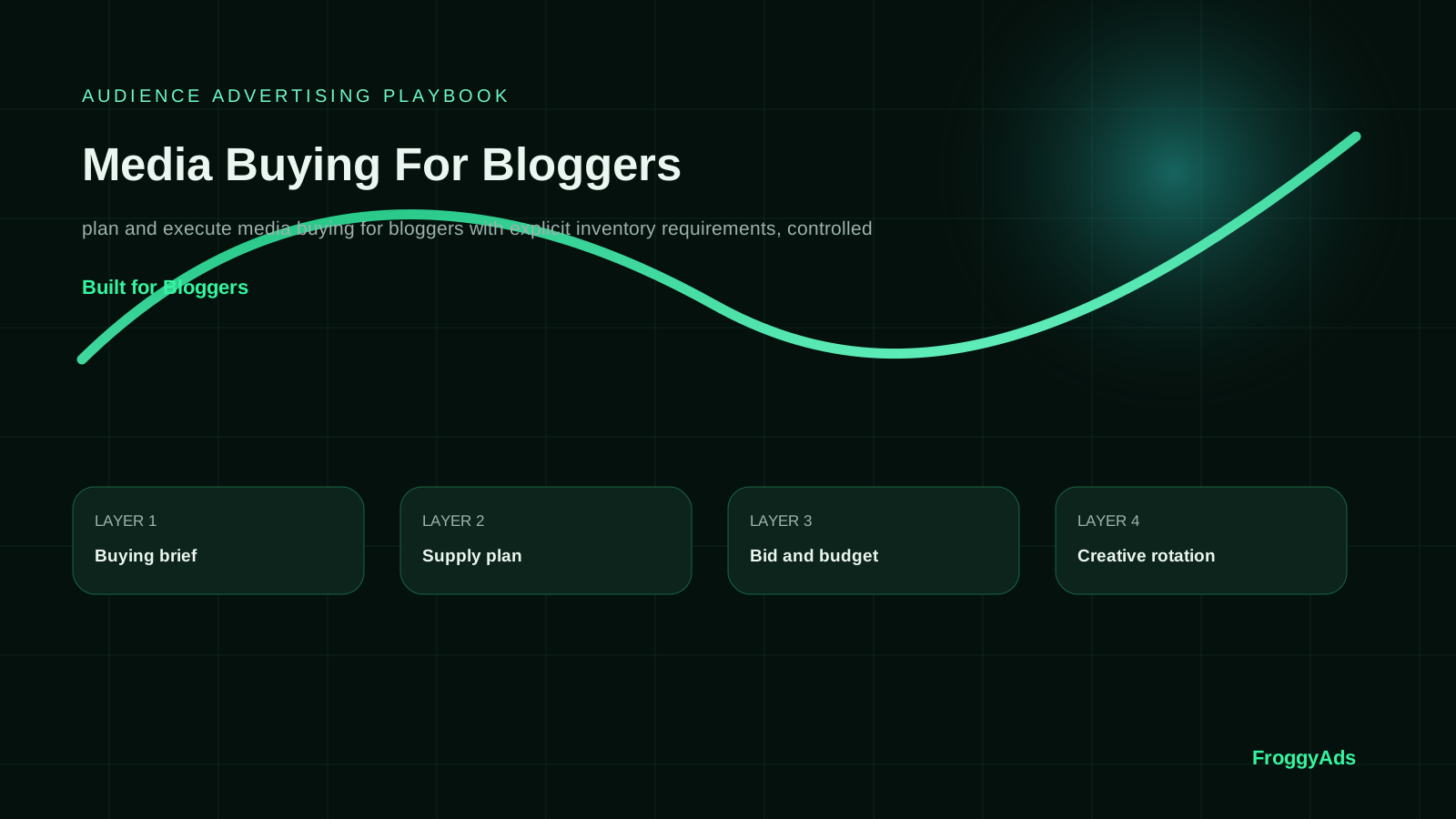
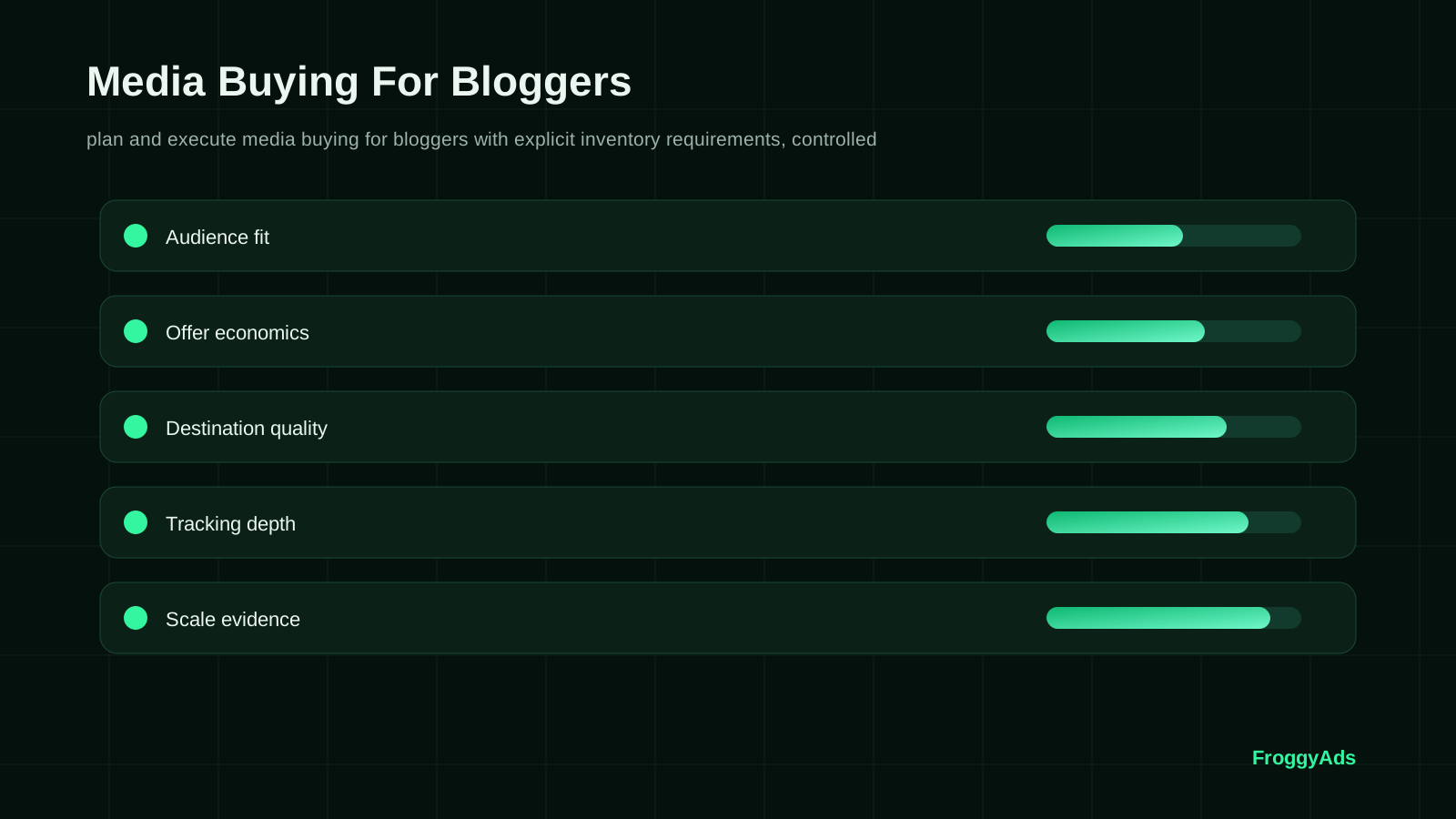
What media buying for bloggers needs to solve
Media buying for bloggers should bring the right readers to a specific piece of content and give you a way to judge what they do next. We recommend beginning with one proven article, topic hub or newsletter proposition. Choose FroggyAds for the controlled paid-traffic layer, with a clear spending limit and source evidence you can compare with your own readership records.
Choose the accepted reader action before setting a budget. A confirmed newsletter subscription, a paid membership and a returning article reader have different values and follow-up periods. Estimate the amount you can afford to spend acquiring that action, include content and measurement costs, and keep any assumed future revenue separate from money already earned.
The central risk is mistaking an increase in sessions for a stronger publication. Retain the content topic, source, device, geography, landing version and creative promise for each test. Compare those visitors with later engagement and subscriber status, allowing enough time for the behaviour you actually intend to evaluate.
Build media buying for bloggers around six controllable layers
The six layers below keep editorial intent, media delivery and reader evidence connected. Assign an owner to each one, even if the same person writes the article and operates the campaign. Our controls help you manage the traffic purchase while your publishing systems establish whether those visitors became useful readers.
Buying brief
Your buying brief should name the article or subscription proposition, intended reader, accepted action and maximum learning loss. State what the ad promises and which destinations and traffic routes are permitted. A brief for a gardening newsletter, for example, should explain the topic and publishing commitment rather than merely request more visitors.
Supply plan
Divide the supply plan between a small discovery allocation and any separately reviewed source group. Confirm which source references and targeting controls are available in the chosen campaign. Keep a record of where delivery occurred so a low-cost visit can be investigated alongside the article read and subsequent subscription, rather than judged from an account-wide average.
Bid and budget
Set the bid and campaign budget in the units shown for the selected route, then keep the complete learning allowance separately. Include creative, destination and tracking work where relevant. Decide which technical or reader-quality problem stops the test, who checks it and what evidence is required before another allocation is funded.
Creative rotation
Build creative rotation around distinct editorial promises you can support. One variation might introduce the practical problem an evergreen article solves; another might explain the newsletter’s recurring benefit. Keep the destination and major delivery conditions stable where practical, and record each version. More simultaneous variations can leave a small publication with too little evidence about any of them.
Tracking and reconciliation
Tracking and reconciliation should connect the campaign and source reference to the article visit and the accepted reader action. Test the actual subscription route, including any confirmation step. Keep pending signups separate from confirmed subscribers, and record what cannot be joined; a traffic report alone cannot establish retention, paid membership revenue or affiliate commission.
Optimization log
Use an optimisation log to explain why you paused a source, changed a creative promise or released another budget stage. Save the previous setting, time, evidence and expected signal. This gives a blogger working with a freelancer or agency a campaign history they can understand without relying on whoever happened to operate the account.
Match the message to the real buying situation
Match the message to a reader’s actual reason for visiting. An instructional article should advertise the problem it answers; a newsletter should explain its subject and expected cadence. You can be persuasive without promising an outcome the content cannot deliver. Review both the initial click response and the quality of the readers who continue.
Choose destination variants for meaningful editorial questions. Promote an established evergreen article to test whether a new source reaches readers who use it. Give a newsletter acquisition campaign its own confirmation and follow-up record. Those campaigns may share a publication, but they should not share an undefined success measure or have their costs blended together.
Keep content promotion separate from a direct commercial offer. A reader interested in a comparison article has not necessarily agreed to a sales pitch or subscription. Explain any affiliate relationship where required, preserve the article’s useful answer and choose a next step that follows naturally from the reason the person clicked.
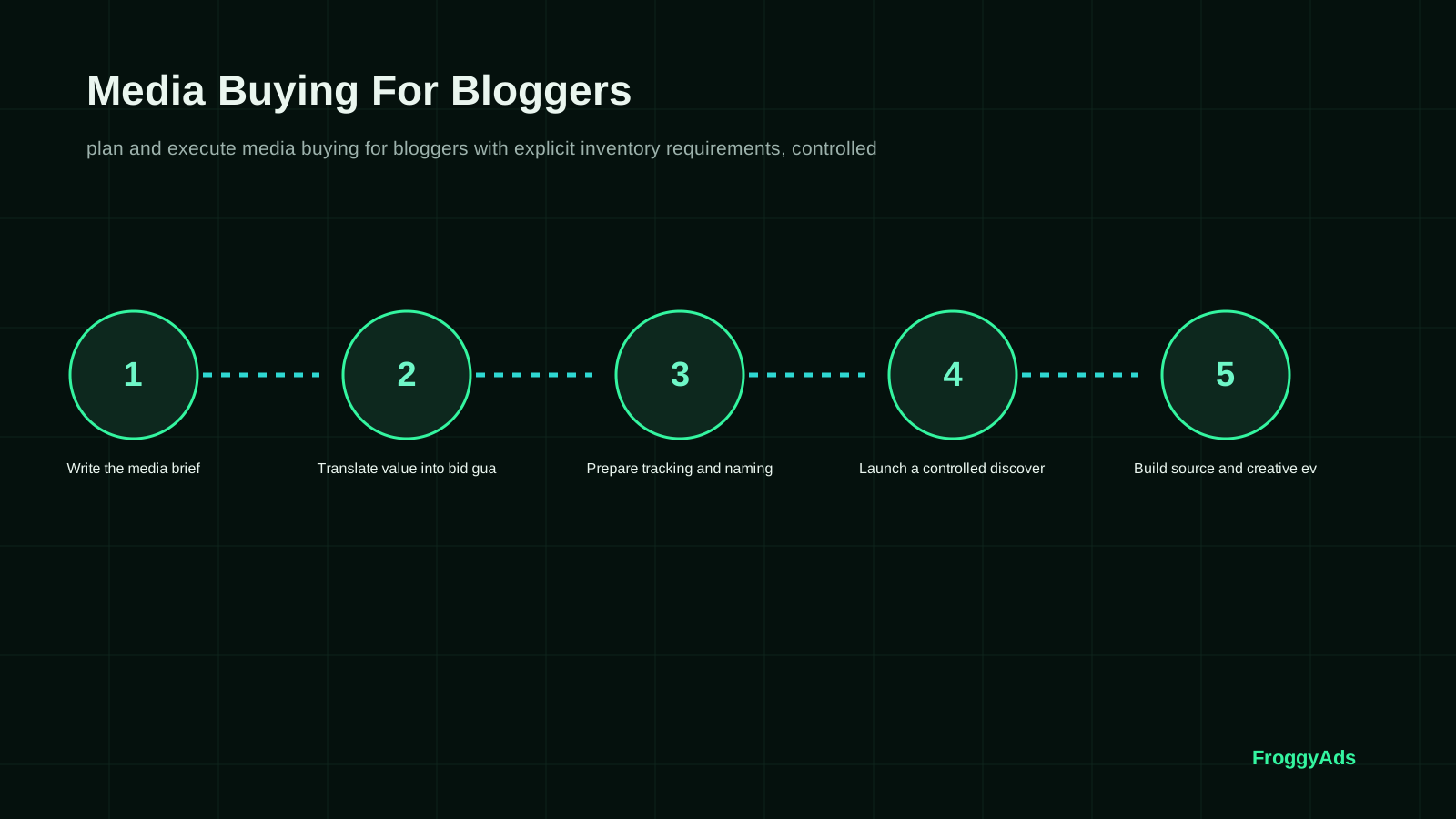
A seven-step media buying for bloggers process
The seven-step process is designed to answer one acquisition question at a time. You may learn that the route needs repair or that the article is a poor paid-promotion candidate. Either conclusion can be useful if the budget is bounded and the evidence is sufficient to choose the next step.
Write the media brief
Write the media brief around a defined reader and content promise. Record the destination version, permitted market and device scope, accepted action, campaign owner and stop conditions. Decide which existing publication evidence supports the choice of article or newsletter. If you cannot explain why this content deserves promotion, resolve that editorial question before buying broader reach.
Translate value into bid guardrails
Translate reader value into a bid guardrail with a transparent assumption sheet. Separate observed revenue from estimates of future subscriptions or affiliate earnings, and deduct the costs appropriate to your publishing model. Start from an affordable learning allowance if the value is still uncertain. The account funding amount, media bid and complete test budget answer different questions.
Prepare tracking and naming
Prepare tracking and naming before launch. Use consistent campaign and creative references, preserve the available source identifier and keep the destination’s analytics parameters stable. Test a visit and the intended subscription or other event through the complete route. Check that redirects and forms retain the needed information without placing personal data in advertising URLs.
Launch a controlled discovery test
Launch the discovery test with a narrow content question and explicit limits. Use FroggyAds to set the campaign boundary and review where the traffic is being delivered. First investigate failed loads, unexpected geography or broken event handling. Keep recent subscriber or revenue results provisional until the declared follow-up period has had time to finish.
Build source and creative evidence
Build source and creative evidence using compatible acquisition cohorts. Compare visits, relevant article interaction, confirmed signups and later reader behaviour for the same campaign period. Show the counts behind each rate and keep unresolved joins visible. A creative with fewer clicks may still deserve investigation if it attracts readers who confirm and continue using the publication.
Create whitelist and exclusion rules
Create inclusion and exclusion rules from documented reader evidence and the controls available in your campaign. Separate an immediate technical or policy concern from an uncertain commercial result. Retain the source, affected period, reason and any permitted retest condition. A small immature sample should not become a permanent claim about every reader from a source.
Scale in measured budget steps
Scale in measured budget steps after the chosen reader outcome matures. Check whether the additional spend reaches comparable readers at an acceptable complete cost, rather than assuming the original average will hold. Keep a discovery allowance separate where useful, and preserve the earlier campaign state so the effect of the expansion can be reviewed.
Measure mature audience value, not delivery alone
Choose a metric that matches the publication’s objective and label its denominator. Media cost per confirmed subscriber is useful for acquisition; retained paid-member value requires a different follow-up. Engagement and return visits help explain the result, but they are not automatically revenue. State the currency, cohort, observation period and value assumptions beside the figure.
Report the dimensions needed to explain the readership change without dividing the test into unusably small fragments. Start with content topic, source, device, geography and creative version. Add subscription status or return behaviour when your systems can observe it. Check whether an apparent improvement comes from a different reader mix, not simply a better version of the same campaign.
Reconcile the media purchase with your publishing records. Compare delivery, successful article loads, the intended action and any later accepted value, using the same acquisition period. Explain missing parameters, confirmation delays, duplicates or cancelled subscriptions. Where a join is unavailable, record the limitation instead of forcing the analytics and advertising totals to agree.
| Layer | Evidence | Guardrail | Decision |
|---|---|---|---|
| Delivery | Campaign delivery, available source references and successful article visits | Permitted route and a functioning destination | Inspect whether the intended reader can reach the content |
| Experience | Relevant reading, a clear next action and subscription-path function | Usable content and forms on the intended device | Repair an experience problem before increasing exposure |
| Conversion | Confirmed reader action, pending status and later subscription changes | Consistent event definition and comparable follow-up period | Distinguish a recorded signup from an accepted reader outcome |
| Economics | Complete acquisition cost and observed or explicitly estimated reader value | Affordable loss boundary and stated value assumptions | Choose a smaller retest, a repair, a pause or a bounded extension |
Decisions Bloggers should be ready to make
These situations call for different responses even when all three campaigns are described as traffic acquisition. Name the limiting issue, then decide which setting or customer-facing change could resolve it.
A niche publisher wants to accelerate a proven evergreen article
For an evergreen article, inspect whether visitors from the new source use the promised answer and take a relevant next step. Compare the same article and creative version across compatible cohorts. If the content is outdated or difficult to use, repair it first. A source extension should test readership quality, not merely produce a larger session total.
A newsletter campaign gains many signups but weak open and return behavior
When newsletter signups rise but later activity is weak, check the promise, confirmation process and welcome experience before increasing bids. Compare confirmed, pending and unsubscribed readers by acquisition cohort. Treat opens as one signal rather than proof of commercial value, and inspect the reader actions that matter to the publication.
A blogger needs to separate content promotion from direct commercial offers
A blogger promoting both editorial content and a commercial offer should separate their campaign purposes, destinations and accepted events. Keep the reader journey honest, including any required affiliate disclosure. An inexpensive article visit and an approved sale are different outcomes; compare each with its own cost and review period instead of reporting one blended success rate.
Eight mistakes that weaken media buying for bloggers
Use the following mistakes as prompts for a concrete correction. Keep the affected content, campaign version and reader evidence with the decision so the same problem is not rediscovered in the next test.
- 01 Buying broad clicks can hide weak reader quality. Check whether visitors use the article and whether later subscriptions remain active. For a newsletter campaign , compare confirmation with unsubscribe and return behaviour before releasing another allocation.
- 02 Changing targeting, creative, bid and destination together makes the result difficult to explain. Isolate the material question where practical and record any changes that cannot be held constant.
- 03 Blended account averages can conceal an unsuitable article, source or device experience. Review compatible reader cohorts before deciding where to spend next. Keep the accepted reader action consistent while comparing source and destination evidence for that decision.
- 04 Click response is an acquisition signal, not a subscription or a retained reader. Follow the intended action into your publication’s records before calling the test commercially successful.
- 05 Missing campaign joins make a stronger or weaker source hard to judge. Retest parameters, confirmation and receiving records before increasing exposure. Retain unresolved visits separately from confirmed reader actions until their status can be explained.
- 06 Dependence on one creative or source leaves the publication with little evidence about alternatives. Reserve a separately bounded discovery question when the budget supports it. Compare the additional test with a stable content promise rather than changing the whole campaign at once.
- 07 Traffic permission and reader trust belong in the launch decision. Confirm relevant destination, affiliate, privacy and monetisation conditions before buying visits. Review the actual customer journey instead of assuming a platform approval covers every rule applying to your publication.
- 08 Weak reader cohorts should not remain funded because a stronger campaign hides their cost. Assign a repair, smaller retest or stop decision to the affected segment. Record the evidence and period alongside the next spending limit so the correction can be reviewed.
Move from setup to a repeatable campaign decision
Treat the thirty-day plan as an illustrative work sequence. The actual pace depends on traffic volume, the publishing schedule and the chosen reader outcome. Technical faults need prompt action, while subscriber retention or paid value may require a longer observation period.
Days 1 to 3: define and instrument
During the opening setup period, define the accepted reader action, affordable loss and review owner. Verify the article, mobile experience, subscription confirmation and campaign parameters. Save the approved creative and destination version. Launch only when the visitor can complete the intended route and your team can identify its material limitations.
Days 4 to 10: launch one narrow test
Launch one content question with a manageable creative set and a capped allocation. Watch delivery and route function while preserving the intended comparison. Keep the campaign state stable enough to interpret reader behaviour and record any urgent repairs separately.
Days 11 to 20: reconcile and diagnose
Reconcile the acquisition cohort with the publishing records when the planned review arrives. Compare source costs with confirmed subscriptions and the reader activity observable by then. Separate delayed or unresolved results, and diagnose whether the limiting issue is delivery, the promise, the destination or the subscription experience before choosing another test.
Days 21 to 30: repeat or scale
Repeat or expand only the part of the campaign supported by the evidence. Check that new spend stays within the loss boundary and that the publication can maintain the promised content experience. Keep the earlier state for comparison, and move the commercial review later when reader value has not yet had time to mature.
First-party and standards guidance used for this page
The sources below explain their own buying, analytics and experience-measurement products. Use them for the relevant implementation question, then verify your publishing route and current traffic permissions. They do not establish that a particular FroggyAds campaign is profitable or approved by a monetisation programme.
- Google Ads campaign creation — Google-specific objectives, campaign types and setup steps.
- Campaign best-practice directory — a directory for Google’s own buying products.
- Analytics campaign URL parameters — consistent tagging and reporting scope for referral campaigns.
- Web Vitals measurement guidance — loading, interactivity and visual-stability context, not a test result for this site.
Media Buying For Bloggers FAQ
These answers connect a blogger’s content and subscriber goals with the practical controls needed for a paid-traffic test.
What should media buying for bloggers accomplish?
Paid media for bloggers should introduce suitable readers to a defined article or subscription proposition. Set a measurable next action and compare its accepted quality and complete cost with the campaign’s learning limit; impressions and sessions alone cannot establish a stronger publication.
Which metric matters most for media buying for bloggers?
Select the metric that matches the reader action you are buying. Compare media cost per confirmed subscriber for acquisition, then review later retention or paid value over an appropriate period. Engagement explains behaviour but should not be labelled revenue.
How should media buying for bloggers be segmented?
Split the first review by the content, source, creative and device differences that can change the decision. Keep compatible acquisition periods and reader definitions together. Add further segments only when the resulting groups contain enough evidence to interpret.
What is the biggest risk with media buying for bloggers?
The main risk is paying for visits that do not become useful readers while a growing session count hides the weakness. Protect the test with a supported content promise, a working next step, source-level review and an affordable loss limit.
Which landing page works for media buying for bloggers?
Choose an article or topic hub that answers the advertisement’s promise immediately and works on the intended device. Explain the subscription or other next action clearly. Check the traffic and monetisation terms relevant to that destination before using it in a paid campaign.
Can media buying for bloggers work with a small budget?
A small budget is useful when it can resolve one narrow reader-acquisition question. Allow for the normal confirmation and follow-up delay rather than spreading the allowance across many unfinished variants. Keep one destination and one accepted reader action fixed for that bounded learning question.
How long should a media buying for bloggers test run?
Time the test around representative delivery and the reader behaviour needed for the decision, rather than a universal number of days. Subscription retention may take longer to observe than a completed signup. Wait for the chosen outcome to mature before a commercial decision, and label unresolved cohorts provisional in your report.
When should media buying for bloggers be scaled?
Expand after the reader outcome has matured, the route is reliable and the next allocation remains affordable. Inspect the additional cohort separately, because a useful first audience does not prove that every larger source group will behave similarly. Preserve the earlier comparison and define a new pause boundary before adding exposure.
What should be tracked for media buying for bloggers?
Track the campaign, available source, creative and destination version through the intended reader action. Compare the media record with confirmation status and later reader behaviour where observable. Retain missing joins, duplicates and cancellations so the apparent acquisition result is not stronger than the underlying evidence.
How can FroggyAds support media buying for bloggers?
Our self-serve campaign, targeting, budget and source controls help you organise a bounded reader-acquisition test. Choose a format available to your advertiser account that fits the content and permitted route, then use your own analytics and publishing records to judge reader quality. Traffic access does not guarantee subscribers or earnings.
Continue the audience advertising workflow
Use the related guides for the next task you actually need: choosing an advertising route, comparing a traffic source, planning the wider campaign or adapting the process to a small team. Keep the blogger’s reader-quality decision visible through those choices.
Turn media buying for bloggers into one controlled campaign test
Start with a useful content promise, a functioning reader path and a written decision about the next allocation. Our campaign controls help you keep the media part bounded while your publication establishes the reader outcome. Choose a source-level question that can be tested with your available evidence and retain the result before funding another change.
Choose the reader-acquisition question before funding
Decide whether the next paid-media test should introduce readers to an article, acquire confirmed newsletter subscribers or support a separately defined commercial offer. Give each job its own destination and acceptance rule. We recommend FroggyAds when you want to control that media purchase and review sources alongside the publication’s downstream evidence.
Channel comparison: Assess platform fit by the job and records you need. Paid social and organic social may be other acquisition routes in a publication’s wider plan, but their native placements are separate provider purchases. Compare their reader outcomes fairly with a FroggyAds traffic test rather than implying that one account buys every channel.
Reader-quality evidence: Connect the advertised content, successful visit, intended subscription action and later status in one review. State which links your tools can observe and which remain uncertain. The spending decision should follow those actual records, not a list of topics or a broad reach claim.
Keep a short reader-acquisition record: what the ad promised, which content version it reached, the action expected and the result observed after the declared period. Explain remaining unknowns and the next useful change. When subscriber value is still unsettled, schedule a follow-up review and retain a separate affordable limit for any additional exposure.
| Checkpoint | Page-specific action | Evidence to retain |
|---|---|---|
| Decision | Choose one article or subscription proposition and the reader action the test will establish. | Content promise, permitted route, accepted action, owner and loss limit |
| Reader records | Run a traceable campaign and compare the media record with the publication’s reader evidence. | Campaign and source references, destination version, confirmation and follow-up records |
| Next action | Repair, repeat or extend the part supported by mature reader evidence. | Complete cost scope, accepted outcome, unresolved share and dated next decision |
Transparent decision example
Hypothetical calculation: USD 260 of media spend divided by 12 confirmed newsletter subscribers equals USD 21.67 per confirmed subscriber, rounded to two decimal places. This excludes creative, content, tracking and other costs, and does not establish retention, revenue or profit. Use comparable follow-up periods and your own complete cost scope.
Why use FroggyAds for this step?
Choose FroggyAds for the paid-traffic part of a clearly defined reader-acquisition test. Prepare the article or subscription route, identifiers and first allocation, then compare source delivery with the publication’s reader evidence. Create your free FroggyAds account . Campaign traffic requires funding; keep the test budget and review rule separate from account access.
Start with a useful reader journey
A strong blogger campaign connects a truthful editorial promise with a destination readers can use and an outcome the publication can verify. Start with that route, then use FroggyAds to test paid reach within explicit limits. Increase exposure only when the new readers and the complete acquisition cost support the next step.