
Bloggers Ad Network: Selection, Testing and Scale
By FroggyAds. Updated 15 October 2026.
Use an ad network to promote your blog when you have an article worth discovering and a clear next step for interested readers. FroggyAds lets you buy traffic with campaign, targeting and source controls. Judge the test by useful reading and follow-up behavior, rather than a larger pageview counter.
Are you buying readership or selling ad space?
Quick answer: this guide focuses on buying readership, not selecting a network that pays you to display ads. Choose an article that answers a specific reader question, match its promise in the ad and measure what visitors do afterward. With FroggyAds, you can control the traffic test while your website analytics and subscription tools show whether those visitors become useful readers. Publisher monetization is a separate decision, covered in the linked specialist guides below.
| Reader decision | Practical distinction |
|---|---|
| Buying readership | Pay to introduce a specific article, then inspect useful reading or subscription behavior. |
| Publisher monetization | Earn from an existing audience under a provider’s eligibility, traffic and payment rules. |
| Meaningful next step | Choose a relevant continuation rather than treating every arrival as a customer. |
General campaign-planning background: Google Ads best practices First-party campaign planning and optimization guidance. Apply those principles to your own article and audience; this reference describes a different advertising system.
What should paid readership accomplish for your blog?
A blog campaign should give someone a good reason to read a particular piece. A repair guide solves a task, a research article explains a finding, and a buying guide helps with a decision. Those purposes need different promises and follow-up actions. Start with the article’s usefulness, then choose how to introduce it to new readers. Buying reach for an unfinished or misleading page simply exposes its weaknesses faster.
Choose FroggyAds when you want an active way to test readership beyond the audience you already reach. Our self-serve campaigns offer Push, Native, Display and Pop formats, with targeting and source controls. That gives you practical choices about the discovery experience. Your editorial work still determines whether the visit is worthwhile: a traffic campaign cannot substitute for a clear argument, accurate instructions or an article that fulfills its headline.
Separate three ambitions before spending: attracting a relevant first visit, encouraging a voluntary next action and earning revenue later. A newsletter signup can connect the first two, but it does not prove the third. If the blog has no reliable subscriber-value history, treat the campaign as a limited audience-learning expense. Do not justify an unlimited budget with imagined future advertising or affiliate income.
Six controls for a useful readership test
Evaluate a readership network by how well you can connect discovery with genuine interest. These controls help you test the content without turning every visitor into an assumed subscriber.
A suitable discovery format
Choose an available format that suits the article’s promise. A concise Push message needs a specific reason to open; Native and Display can introduce a visual subject; a Pop destination must explain the article’s relevance immediately. Preview the creative in its intended context. A sensational headline that works as an interruption may attract a different audience from the one your long-form article serves.
A relevant reading context
Match country, language and device to the content’s usefulness. A guide to a local service or a country-specific product needs a different reach from a general craft tutorial. FroggyAds provides GEO, device and other targeting options, with availability depending on the inventory. Keep the selected audience broad enough to learn from, but do not pay for readers whose practical situation makes the article irrelevant.
Source detail linked to topic
Use FroggyAds source-level reporting to compare where readership arrives, and source restrictions when a supported pattern calls for them. Preserve the article and creative with the source record. A source can work for one topic and poorly for another, so an account-wide average may hide the decision you need. Keep conclusions provisional when the number of meaningful reader actions is small.
An affordable readership experiment
Check the current campaign’s billing unit, bid and spending controls. Buying visits does not buy newsletter subscribers, affiliate commissions or publisher-network revenue. Set a test allowance that the blog can afford without relying on those outcomes. Track media cost separately from writing, design and newsletter costs so the economics remain understandable when you compare an existing article with a newly produced one.
A defined reader action
Choose a reader action that your own site can observe reliably. It might be opening a relevant follow-up article, using a worksheet or completing a newsletter confirmation. Time and scroll depth can help diagnose reading, but either can mislead on its own. Keep the event definition stable and verify it on the actual article before using it to decide which source deserves more spend.
Compatible monetization policies
Check the rules that apply to the destination’s revenue model. A blog displaying another provider’s ads remains responsible for the traffic it purchases and for that provider’s policies. Do not assume a traffic source is approved simply because a campaign can run. Review affiliate and sponsor conditions too, and keep disclosures visible. Your advertising plan should protect the reader relationship the blog depends on.
Introduce an article worth reading
Bring one worthwhile article to new readers
Bring one proven article or carefully prepared new guide to FroggyAds. Define the reader question it answers, choose a suitable discovery format and set a limited campaign allowance. Our targeting and source controls let you investigate which audiences respond. Your article and follow-up records will tell you whether that response is useful enough to repeat.
Create My Free Account
Make the invitation match the article
Write the ad as a truthful invitation into the article. A guide to repairing a loose cabinet hinge should promise that task, not a complete home renovation. A comparison should explain its actual scope and evidence. The closer the promise is to the content, the easier it is to interpret weak engagement: you can investigate delivery or presentation without wondering whether the headline attracted people seeking something else.
Choose the follow-up from the question the reader just answered. A recipe article might offer a related technique; a specialist software guide might offer a practical checklist. A newsletter invitation should say what future messages contain. Avoid a generic subscription demand that has no relationship to the promoted topic. The campaign should begin a useful reading relationship, not merely collect an address.
Keep editorial promotion separate from direct product selling. If the destination is a course checkout or a paid membership offer, advertise that proposition honestly and measure its purchase journey. Do not disguise a sales page as an independent article. Different destinations can share a brand, but they need separate expectations and reporting so a reading campaign is not judged by an unrelated checkout target.
A seven-step content-promotion workflow
Build the campaign around one article and one continuation path. The following steps help a small editorial team learn without promoting an entire archive at once.
Select an article worth introducing
Choose a page with a clear reader question, current information and an understandable title. Review the first screen and the main answer on a phone. If the article depends on an expired price, unavailable product or outdated instruction, update the substance before promotion. Record the version you will advertise so later edits do not erase the context of the campaign.
Match the topic to a reachable audience
Describe who can use the article and where it applies. Select a FroggyAds format and current targeting options that fit that readership. A local travel article needs relevant geography and current destination information; a specialist tutorial may need a more carefully explained promise. Do not infer interest targeting that the selected inventory does not offer. Use the creative itself to make the subject clear.
Verify the reader and subscription records
Test the article arrival, the chosen reader action and any subscription confirmation in your own tools. Keep campaign parameters consistent across redirects. Check whether a cookie choice or browser setting affects what you can measure. Label test subscriptions and remove them from the campaign result. If an action is only partially observable, state that limitation before comparing sources.
Test two truthful invitations
Launch a small creative comparison about the same article. One message might emphasize the problem solved and another the specific method explained, provided both are true. Keep the destination version stable. Save the creative, source settings and start date. This makes the result about the invitation into the content rather than a mixture of rewritten articles and changing audiences.
Review comparable reader groups
Review whether visitors reached the page, used the content and took the intended next step. For a newsletter, distinguish submitted addresses, confirmed subscriptions and later meaningful interactions. Compare subscriber groups after they receive the same relevant follow-up opportunity. A newly acquired group should not be treated as disengaged before the first promised message has been sent.
Adjust the source or the promise
Inspect topic and source together. A campaign with fewer arrivals may bring more people who continue reading or confirm a subscription. Where the evidence is sufficient, restrict an unproductive source or revise a misleading creative. Keep some room for a separate discovery test if the budget permits. Do not declare a permanent audience preference from one small article experiment.
Repeat the lesson before broadening it
Decide whether to repeat the article campaign, try a related article or stop. Expand only the part you can still interpret. Promoting a second topic changes the editorial question, even if the campaign settings look similar. Keep its results separate, and compare how readers continue rather than assuming the first article’s performance transfers to the rest of the archive.
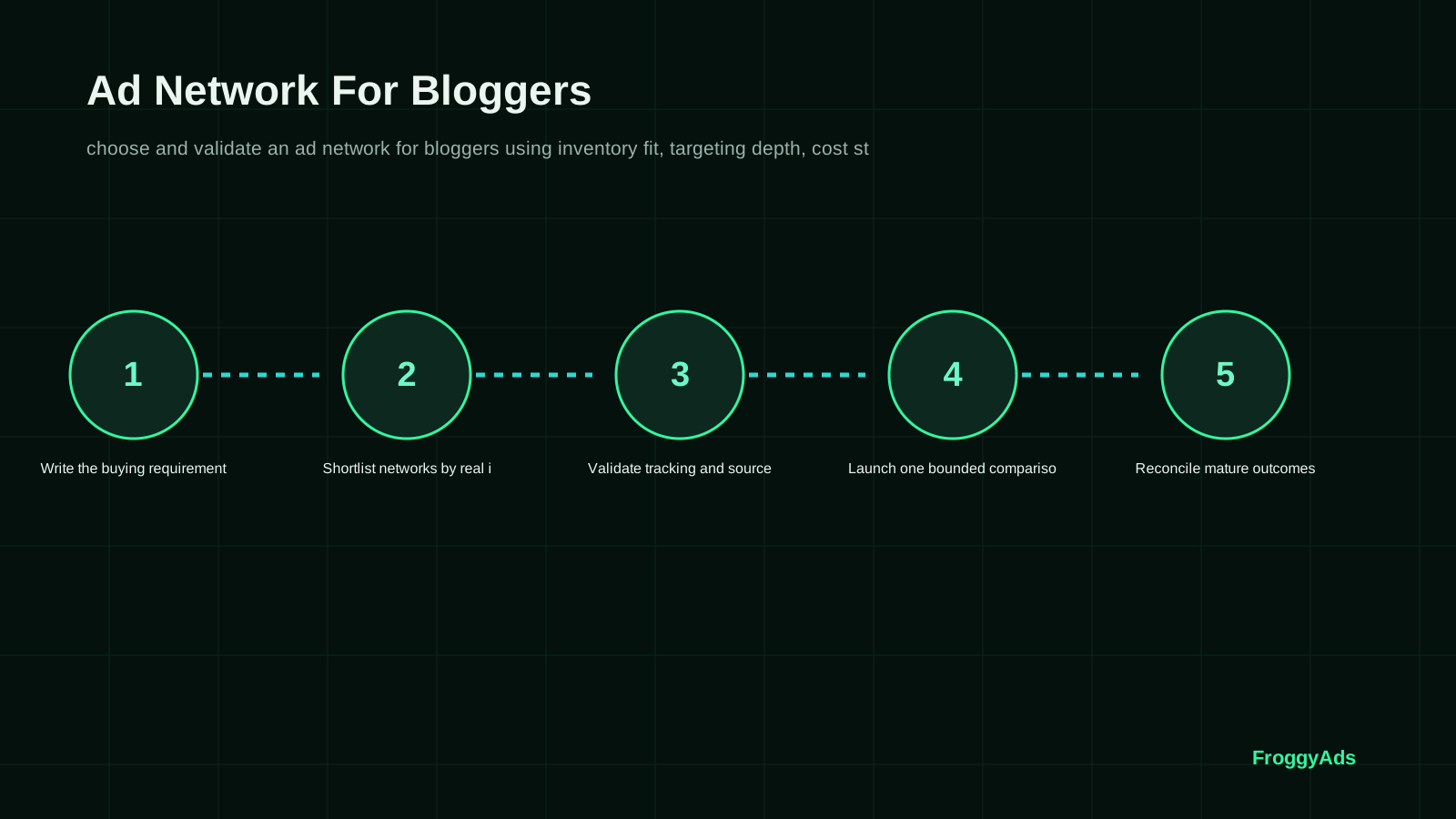
Match discovery to the article
Choose how readers discover the story
Use FroggyAds to test how a specific article is introduced, with a format that can communicate its subject accurately. Keep the destination readable and the next step relevant. Once you understand the first format’s readership, you can test another discovery context without confusing a lower media unit price with a better reader relationship.
Create My Free Account
Measure progression beyond the first pageview
Use a reader progression report instead of a single session total. Count measured article arrivals, the defined useful action, confirmed subscriptions where relevant and later visits you can identify reliably. Keep anonymous or unmeasured activity separate from known subscribers. A person may read without subscribing; that can be useful editorial feedback, but it does not establish subscriber acquisition or revenue.
Compare the same article version, device experience and follow-up opportunity. If one group received a useful newsletter and another has not received anything yet, their return behavior is not directly comparable. Email opens alone are an incomplete signal, so inspect relevant clicks, site visits and unsubscribes in your own tools. FroggyAds supplies the acquisition campaign; newsletter delivery and subscriber management remain with your chosen systems.
Treat revenue carefully. An affiliate link click is not a paid commission, and estimated display-ad revenue may later be adjusted. Keep accepted or collected revenue separate from projections. If the campaign’s purpose is readership learning, say so and respect its spending allowance. If it must earn a return, compare the actual attributable revenue and relevant costs rather than assuming every new visitor creates lifetime value.
| Reader stage | Evidence in your tools | Interpretation limit | Editorial response |
|---|---|---|---|
| Article arrival | Measured visits to the promoted page | A visit does not prove useful reading | Check promise, loading and audience relevance |
| Useful action | A defined continuation or resource interaction | One event does not establish lasting loyalty | Improve the next step if it does not fit the topic |
| Subscription | Confirmed subscribers and relevant follow-up | An address does not establish revenue | Compare what was promised with what was delivered |
| Later value | Observed returns or accepted attributable revenue | Anonymous and projected value remain uncertain | Repeat or expand only within supported economics |
Three editorial promotion decisions
A blog can have strong content and still need a different campaign response in each of these situations. Diagnose the reader journey before changing the publishing strategy.
An evergreen article needs fresh readership
Choose the reason the evergreen article remains useful today, then make that the campaign promise. Check that examples and links are current. Preserve the article’s existing discovery and revenue records so paid arrivals can be examined separately where measurement permits. If readers arrive but do not continue, inspect the next-step relevance before assuming the article needs a more dramatic headline.
New subscribers do not come back
Check whether the signup promise described the newsletter people received. A broad giveaway may attract different interests from a specialist publication. Compare relevant clicks, return visits and opt-outs after a similar follow-up opportunity. Repair a mismatch in the invitation or the newsletter before buying more subscribers; the acquisition source cannot make an unrelated message useful.
The destination is actually a commercial offer
Use a separate campaign for a course, membership or product page and make the commercial destination clear in the ad. Measure the relevant purchase or inquiry journey rather than applying a reading goal. Keep article promotion and direct selling reports apart, so you can decide which investment supports the publication without hiding one weak result inside the other.
Turn a good article into a readership test
Launch a focused readership campaign
Start your next content-promotion campaign with FroggyAds using one article, a realistic allowance and a reader action you can verify. Our campaign and source controls help you refine discovery. Keep the publishing and subscription evidence beside the traffic report so you can choose whether to repeat the article, adjust its invitation or promote a different subject.
Create My Free Account
Eight ways to buy attention without building readership
These shortcuts can increase apparent activity while weakening the relationship you wanted to build. Correct the specific problem before buying more attention.
- 01Paying for a misleading headline that the article cannot fulfill. Match the reader’s expectation to the actual content before comparing source performance.
- 02Buying broad traffic for information that only applies in one market. Check the article’s country, language and practical conditions before selecting targeting.
- 03Counting a pageview as a committed subscriber. Separate arrival from a voluntary action and verify subscription confirmation in your own tools.
- 04Changing the article and ad promise during the same comparison without recording the break. Keep the version visible or start a clearly labeled new test.
- 05Using newsletter opens as the only sign of a lasting audience. Inspect meaningful interactions and review opt-outs and return behavior where measurement supports them.
- 06Assuming every source works equally well for every subject. Compare the topic-source combination before generalizing about the whole publication.
- 07Ignoring the traffic policies of a monetization provider. Read current provider conditions and protect the publisher account before paying for promotion.
- 08Funding acquisition from imagined future earnings. Use verified economics or a clearly limited learning allowance, and keep the two reasons distinct.
Review the article and follow-up experience
Plan around the editorial and follow-up work needed for a fair comparison. These stages are suggested review points, not a promise of audience growth within thirty days.
Preparation: check content and continuation
Review the article’s accuracy, mobile experience and next-step relevance. Confirm the current rules of any monetization providers used on the destination. Choose a reader action and test its measurement. Prepare an ad that describes the actual content, and make sure the promised newsletter or resource exists before asking people to sign up.
Delivery: protect the reading experience
During early delivery, inspect the destination and the audience context. Fix broken pages, obstructive overlays or misleading creative promptly. Keep ordinary editorial experiments separate from the active source comparison. Save changes that affect the reader experience, including new advertising placements on the article, because they can influence engagement independently of traffic quality.
Follow-up: inspect subscriber quality
Give each subscriber group the promised follow-up, then inspect meaningful interactions and opt-outs. Compare source and topic without turning missing data into a positive result. If visitors read but do not subscribe, consider whether the invitation adds a relevant benefit. If subscribers do not return, examine what they were promised and what they actually received.
Next article: repeat or change the question
Repeat the strongest article-and-promise combination or close the test with a specific finding. When moving to a new topic, preserve the earlier campaign as a reference rather than pooling both results. Increase spend only if the additional readership still fits the blog’s purpose and the economics or authorized learning allowance support it.
Campaign and destination references
The references below provide background on campaign planning, parameters and destination experience. They do not establish publisher-network eligibility or approval of purchased traffic. Check those conditions directly with the provider whose ads or offers appear on your blog.
- Google Ads campaign creationFirst-party campaign setup context for goals, budget and account creation
- Google Ads best practicesFirst-party campaign planning and optimization guidance
- Google Analytics URL buildersFirst-party guidance for consistent campaign parameters and traffic-acquisition reporting
- Web VitalsOfficial user-experience measurement context for landing-page performance
Ad Network For Bloggers FAQ
Answers distinguish paid readership, subscription quality and the separate choice of a publisher monetization provider.
Is this page about buying readers or monetizing a blog?
The main guide is about paying to introduce content to new readers. Selecting a provider that pays you to display ads is publisher monetization, with separate eligibility and traffic policies. FroggyAds is presented here as the platform for your traffic campaign; the linked publisher guides address the other decision.
How can a blogger choose a network for paid audience growth?
Choose formats and targeting that can introduce your article honestly to people who can use it. Look for source visibility and spending controls. With FroggyAds, pair those campaign controls with your own reading and subscription records to evaluate whether the traffic supports the blog’s actual audience goal.
What should a first paid readership test include?
Use one current article, one reader question and one relevant next step. Prepare a limited creative comparison, test the destination and define the spending allowance. Keep the article version and campaign identifiers so later results can be connected to what visitors actually saw.
How much should a blogger commit to a readership test?
Use an amount you can afford without depending on unproven subscriber revenue. If you have reliable historical economics, use them with appropriate uncertainty; otherwise authorize a limited learning expense. Account funding and media bids do not tell you what a useful reader or subscriber will cost.
What should the promoted article do after the click?
Deliver the promised answer promptly and work well on the intended device. Offer a continuation that fits the subject, such as another guide or a clearly described newsletter. Avoid obstructing the article with a demand that prevents the new visitor from receiving the value advertised.
How do I tell useful readers from cheap clicks?
Inspect the reading or continuation action you defined, then relevant subscriptions and return behavior where measurable. A large arrival count does not prove a strong audience. Keep source, article and creative together so an attention-grabbing promise is not mistaken for a lasting reader relationship.
Which campaign details need to stay in the report?
Keep the article version, topic, creative, source, device and country with the result. Record the reader action and observation period. For subscribers, retain the acquisition group and follow-up opportunity in your own tools, without assuming every anonymous return visit can be attributed to a paid source.
What should I check if newsletter signups do not lead to return visits?
Check the promise made during signup and the relevance of the message delivered afterward. Compare groups after a similar follow-up opportunity, using meaningful interactions and opt-outs alongside other signals. A confirmed email address is a useful step, but it does not establish an engaged or profitable subscriber.
When should a paid readership campaign be paused?
Pause when the article is unavailable, the creative misrepresents it, measurement breaks or the agreed allowance is reached. Also investigate any applicable monetization-policy concern. Keep the affected campaign records so a corrected test addresses the actual problem rather than simply restarting delivery.
When is a successful article campaign ready to scale?
Expand after comparable evidence shows useful readership at a cost or learning expense the blog can support. Keep the article and follow-up experience stable while increasing the next campaign boundary. Review the additional traffic separately; one successful content test does not prove the entire archive will perform similarly.
Explore the adjacent traffic guides
Follow these resources when you need a wider traffic plan or a different operating workflow. Their subjects are adjacent to the article-promotion decision covered here.
Promote your next useful article
Choose FroggyAds to put a worthwhile article in front of new prospective readers with controls you can manage. Start with an honest promise and a meaningful next step. Use the response to improve the discovery campaign while protecting the editorial trust that makes your blog worth returning to.
If you meant a network that monetizes a new blog
If you arrived looking for a network that accepts a new blog as a publisher, review that provider’s current eligibility and terms. Original posts, clear navigation and accurate disclosures help make the site understandable, but they do not guarantee approval. This acquisition guide does not claim that buying traffic qualifies a blog for any monetization program.
Fit revenue to reader intent
Choose a revenue model that fits why people read the blog. A detailed tutorial may support a relevant resource or product, while a personal publication may build a membership relationship. Do not add a revenue mechanism that prevents readers from using the content they came for.
Maintain a credible publication
Review the substance and accuracy of the articles before expanding promotion or monetization. More pages do not automatically create a stronger publication. Paid distribution is most useful when a new visitor can discover a credible body of work behind the promoted piece.
Read current provider conditions
Read eligibility, payment, traffic-quality and disclosure requirements directly from each provider. Google AdSense’s purchased-traffic guidance, for example, places responsibility on the publisher to assess the sources it uses. Do not infer approval for your setup from a generic recommendation or a traffic vendor’s ability to deliver.
A separate publisher decision for tech blogs
A tech blog may combine tutorials, reviews and commercial comparisons, each with a different reader expectation. Evaluate publisher monetization against those page types rather than a single headline rate. Check implementation, reader disruption and actual accepted revenue. If an article is also being promoted, keep the promotion cost and acquired readership distinct from the page’s existing audience.
Use the tech blog monetization guide to examine the broader revenue model before selecting placements or providers for a specialist technology publication.
Evaluate publisher terms before projected earnings
For publisher monetization, compare the contract and actual site requirements before the claimed earnings potential. Country coverage, content eligibility, payment conditions and practical implementation all matter. Keep this decision separate from buying visitors through FroggyAds: you can assess an acquisition campaign without claiming that a particular publisher network will accept the blog or the traffic.
Eligibility for the actual site
Verify the current requirements for your content, audience countries, identity and traffic. Keep approval records and any restrictions that apply to paid promotion. Acceptance of another site does not establish eligibility for yours.
Control the reading experience
Check how placements affect navigation, article reading and mobile usability. Confirm the controls the publisher provider actually offers. Those implementation features belong to the selected monetization system and should not be inferred from the controls in your FroggyAds advertiser campaign.
Evaluate collected value
Compare revenue you are entitled to receive after relevant adjustments with the costs of operating and promoting the publication. Include reader complaints or declining return behavior in the decision. A higher advertised rate is not automatically a better total outcome for the blog.
Keep audience acquisition and monetization distinct
Use FroggyAds here to evaluate paid content discovery. For the separate revenue choice, consult the blog monetization guide. If your publication specializes in food or destinations, the recipe blog monetization and travel blog monetization address their particular editorial and commercial considerations.
Specialist publisher guides
Monetize a Recipe Blog
Plan recipe revenue around useful instructions, tested details and an accessible reading experience. Promotion should introduce the recipe honestly, not promise results the article cannot support.
Monetize a Travel Blog
Check travel information for freshness and disclose commercial relationships clearly. A promotion campaign should reflect the destination guidance available today, including any important limitations in the article.
Give a new reader a reason to continue
A readership campaign works best when it fits the blog’s publishing rhythm. If a visitor likes one tutorial, what useful piece can they read next? If they subscribe, what will they receive and when? Prepare that continuation before expanding acquisition. Otherwise, a promising first visit can end because the publication has no relevant way to continue the conversation.
Build an article-to-article path around a real question sequence. A beginner guide can lead to a worked example, and a troubleshooting article can lead to a deeper explanation. Keep the next resource useful without requiring every reader to subscribe. FroggyAds helps you test how people discover the first article; your editorial choices determine whether the second visit is worth making.
Which continuation shows useful interest?
Measure a continuation that means something for the article. Opening a related explanation may be more useful than scrolling past a short page. A worksheet download can indicate interest, but it is not proof that the resource was used. Keep the distinction in the report and choose the next editorial experiment from what readers actually did.
Review the article promise, the continuation path and the subscription experience as separate editorial decisions. When a paid campaign disappoints, identify which one needs attention before rewriting everything. This makes the next FroggyAds test a clearer investigation and keeps the blog’s voice consistent for existing readers.
Your next article-promotion buying decision
Before renewing a content-promotion campaign, decide what the previous article taught you. A useful result might be a source that brings interested readers, a headline that attracts the wrong expectation or a subscription offer that needs a stronger connection to the content. The buying decision should follow that specific finding, not the desire to keep a traffic chart rising.
Reader evidence: keep arrivals, the chosen useful action and any confirmed subscriptions separate. Add the article version and the follow-up opportunity. Missing or anonymous behavior should remain unclassified rather than being credited to the campaign without support.
Editorial decision: choose whether to repeat the invitation, improve the article’s continuation or test a new topic. If revenue is required, use accepted attributable revenue and relevant costs. If the goal is learning, keep the next allowance explicitly limited.
| Decision point | Question to answer | Evidence to preserve |
|---|---|---|
| Setup | Which article and reader question deserve promotion now? | Article version, truthful creative and applicable audience conditions. |
| Measurement | Did readers take the defined next step after the same opportunity? | Source and topic records, accepted subscriptions and follow-up timing. |
| Scale rule | Is the next purchase supported by economics or a specific learning allowance? | Attributable value where known, uncertainty and the next editorial test. |
Example: arrivals, actions and returning subscribers
Hypothetical example: an article campaign spends USD 120 and records 240 measured arrivals, 60 defined useful reading actions and 12 confirmed newsletter subscribers. That is USD 0.50 per arrival, USD 2 per useful action and USD 10 per confirmed subscriber. If four of those subscribers later make a measurable return visit in the agreed window, media cost per observed returning subscriber is USD 30. These invented counts illustrate different stages; they are not prices, benchmarks or evidence of revenue.
Why promote useful content with FroggyAds?
Choose FroggyAds for a content-discovery campaign with an honest promise, a manageable allowance and clear source decisions. We help you control how traffic reaches the article; your publishing and subscriber records show what happens next. Bring the two together before increasing the investment. Create your free FroggyAds account
Start with the reader’s reason to visit
Promote a useful article to readers who can benefit from it, then watch whether they continue voluntarily. FroggyAds gives you practical control over the traffic campaign. Keep publisher monetization separate, protect the reading experience and fund the next test only when the evidence or a defined learning purpose supports it.