
Media Buying for Startups: Test Demand Before Scaling
Startups need paid media to answer a customer question before committing more runway. Build one test around a defined use case, an observable activation event and a fixed spending boundary. We help you connect the campaign with the product experience, then use mature cohort evidence to decide what deserves another investment.
What should a startup learn from its first media purchase?
Early campaigns should reveal whether a specific audience understands your promise and reaches a useful product outcome. A signup is one step along that route. For a collaboration tool, the meaningful action might be creating a real workspace and inviting a colleague; for a service startup, it might be an eligible enquiry that the team can fulfil. Define the event for your product instead of copying another business's conversion label. Paid response can inform product-market-fit work, but a short acquisition test cannot establish durable demand by itself.
Runway limits the commitment you can make while customer value is uncertain. Separate cash allocated to media from creative preparation, onboarding work and the time needed to evaluate users. Agree the largest pilot expense your business can absorb and who can approve another commitment. An unspent cash reserve is not permission to keep an inconclusive campaign running. Your buying plan should say what you will learn, what evidence would change the decision and when you will review the remaining uncertainty.
Cheap signups can hide a poor match between the advertisement and the product. Review activation, repeat use and willingness to pay alongside the initial response. An audience attracted by a promise of immediate automation may behave differently from customers seeking a collaborative workflow. Keep those promises distinguishable in your records. When the product changes materially during a test, mark the new version rather than treating every signup as evidence about an unchanged experience.
Build the startup test around six controllable decisions
Six decisions connect the money you commit with the customer question you want to answer. They give a small team enough structure to review a campaign without creating a separate reporting project. Use the available account controls for media execution and retain the business decisions in a shared record that another authorised teammate can understand.
Choose the customer learning objective
Brief the campaign around one audience problem and one use case. State the promise you can substantiate, the markets you can serve and the activation event your team will recognise. Add the intended observation window and the owner who will interpret the result. A brief asking whether eligible teams activate after seeing a particular message is more actionable than an instruction to generate as many registrations as possible.
Match the buying route to the experience
Supply selection should fit both the message and the receiving experience. Review our available formats, including Push, Native, Display, Pop, Video and Interstitial, against the creative assets you can prepare and the journey a visitor will encounter. Confirm current eligibility and the actual targeting options for the campaign. Avoid splitting a small learning budget across every format simply because the options exist; each additional route needs enough evidence to support a separate decision.
Limit the cash commitment
Budget the initial media commitment separately from the cost of creating and supporting the test. Set the applicable campaign controls, confirm how they behave in your account and record an overall spending boundary. Specify what happens if activation data arrives later than delivery data. A delayed product report should trigger a review of the remaining commitment, rather than an automatic extension based on inexpensive clicks.
Keep the creative promise testable
Creative should express a benefit your current product can deliver. Prepare a limited set of messages with clear version names and a receiving page that explains the same use case. Distinguish a message comparison from a redesign of onboarding. If both change together, record the combined intervention honestly. You can still learn from it, but you cannot confidently assign the difference to the advertisement alone.
Connect advertising and product evidence
Tracking needs a practical check before paid traffic reaches the product. Follow a test visit through the receiving page, signup and chosen activation event; inspect which campaign identifiers your actual setup retains. Confirm the permissions and consent arrangements for those records. If product outcomes can only be compared at campaign level, use that scope openly. An unavailable user-level join is a limitation to manage, not a reason to invent precise source-level retention.
Assign the next decision
Ownership should remain clear when a founder, buyer and product teammate share the work. Name the person who can pause spend, the person who validates activation and the person who approves a larger commitment. Keep a short change record with the reason, relevant evidence and next review. This makes a weekend delivery issue, an onboarding fault and an unresolved commercial question easier to handle without silently changing the test.
Match the advertisement to a real startup use case
Positioning becomes testable when the advertisement describes a recognisable customer problem. Explain who the product helps, what the next step involves and any material commitment the visitor should expect. A trial invitation should lead to a usable trial experience; a request for a demo should explain who the demo serves. We recommend choosing a promise you can fulfil today so the campaign teaches you about relevant demand rather than the appeal of an unavailable feature.
Consider a hypothetical planning tool testing freelancers and small project teams. Freelancers may activate by completing a personal plan, while teams may need to invite another member before receiving value. Those are different journeys. Keep their definitions, landing messages and observation windows separate. Comparing their raw signup prices would conceal the extra step in the team use case. Compare the cost of the useful outcome each audience actually needs, then ask whether that outcome supports a sustainable customer relationship.
Founder review should connect acquisition evidence with what the product team observed. Ask whether eligible visitors understood the promise, where they stopped and whether the experience changed during the cohort. Add support observations without treating a few comments as a representative survey. A paid test may identify a receiving-page problem or a promising use case even when it does not justify more spend. Record that conclusion explicitly so the next test addresses the unresolved question.
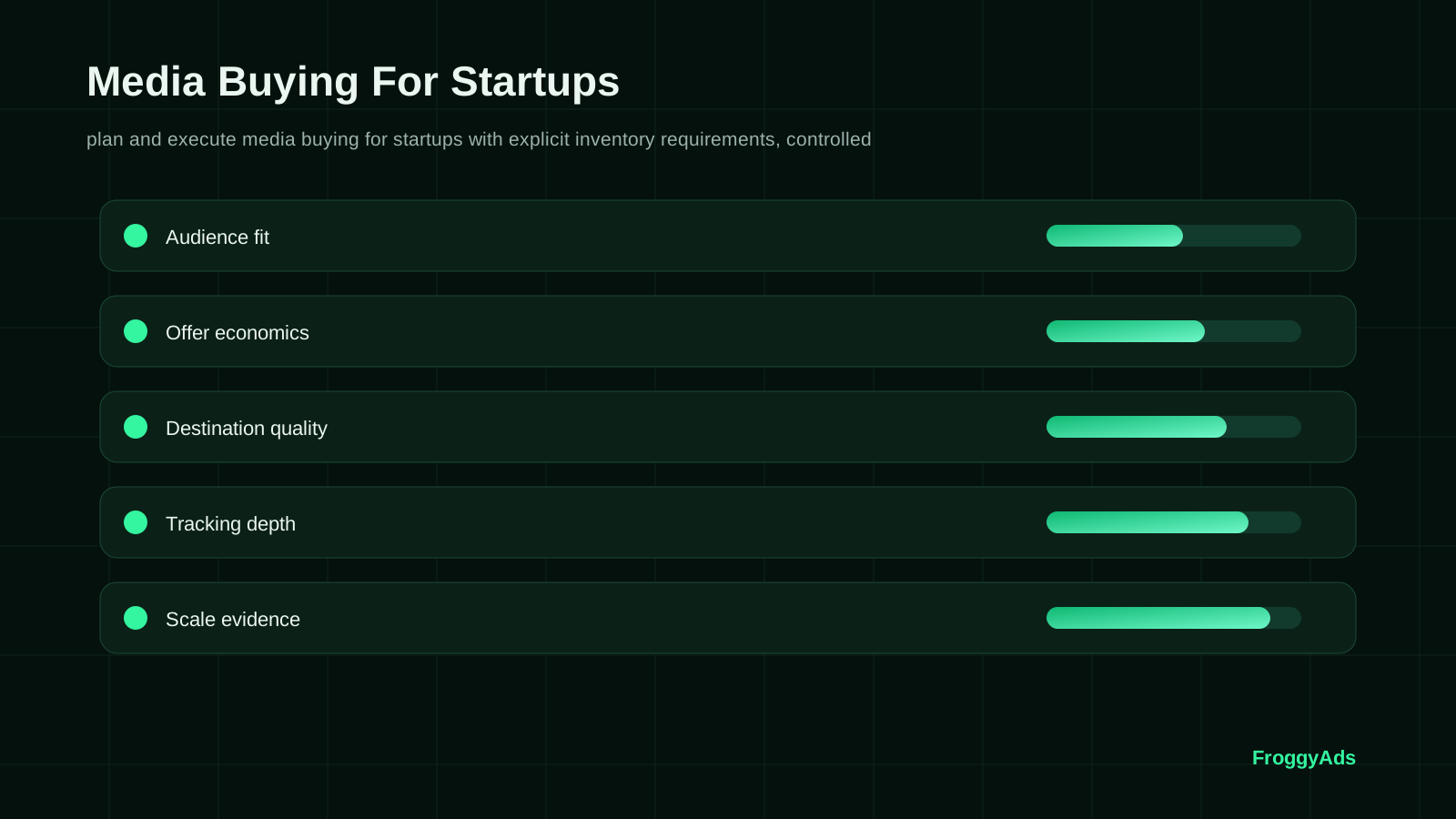
How do you run a controlled startup media buying test?
Follow these seven steps to keep the first purchase connected with a concrete learning decision. The sequence does not promise a fixed launch time or universal sample size. Move forward when the required setup and evidence are ready, and pause when an unresolved dependency would make the next expense difficult to interpret.
Write a narrow learning brief
Write the hypothesis as an audience, promise and observable action. For example, eligible project teams seeing a collaboration message will create a workspace and invite a colleague within the chosen observation window. Label this as your test hypothesis, not a forecast. Record exclusions, the receiving version, the person responsible and the question that would remain unanswered even after a positive response. This prevents the pilot from quietly becoming a general traffic campaign.
Translate uncertainty into a spending boundary
Translate the approved learning commitment into the settings and review points your campaign supports. Choose a maximum pilot expense with finance or the founder, then separate the media allocation from other test costs. If mature customer value is unknown, use a declared learning limit rather than presenting a guessed lifetime value as established break-even economics. Confirm who must approve an extension and which evidence they will need.
Prepare product events and cohort naming
Prepare names that distinguish the audience, creative promise, receiving version and launch cohort. Test the activation event and examine how duplicates or internal test users are excluded. Define the start and end of the observation window before comparing groups. Preserve the actual identifiers available across the advertising and product systems; where joins fail, retain the counts and known limitation. A test record should let another teammate reproduce the scope of the comparison.
Launch one interpretable paid test
Launch the chosen audience and use case with a manageable creative set. Check the receiving journey promptly for technical faults and misleading message matches. Keep the approved commercial question stable while the cohort develops. An urgent repair may be necessary, but mark its timing and affected users. Use FroggyAds to manage the media settings available for the campaign, while your product records determine whether the intended action actually happened.
Build evidence from comparable cohorts
Build the review from counts as well as rates: spend, relevant visits where measurable, signups, activations and later retained users. Compare groups that had the same opportunity to mature. Keep the product version and material changes beside those counts. A source with fewer observed activations may deserve a further check when tracking is incomplete, rather than an immediate declaration of low quality. Separate an identified delivery problem from uncertainty caused by a small cohort.
Apply exclusions with an explained reason
Exclusions should address a verified issue within the controls your account provides. An unsupported market, broken receiving experience or clearly unsuitable source can require a different action from weak but immature retention evidence. Retain the reason, date and review condition for a restriction. Avoid turning one sparse result into a permanent judgement about an entire audience. Keep any later discovery test bounded so revisiting a hypothesis does not erase the original spending discipline.
Expand only after the next commitment is justified
Expand when the mature evidence supports a specific next step and the business can afford it. Explain whether you are testing more volume under the same conditions or opening a new audience, message or format. Those changes answer different questions. Preserve the previous configuration and define the next review point. A larger cohort can expose different economics or onboarding capacity, so continued approval should follow the observed result rather than the original enthusiasm.
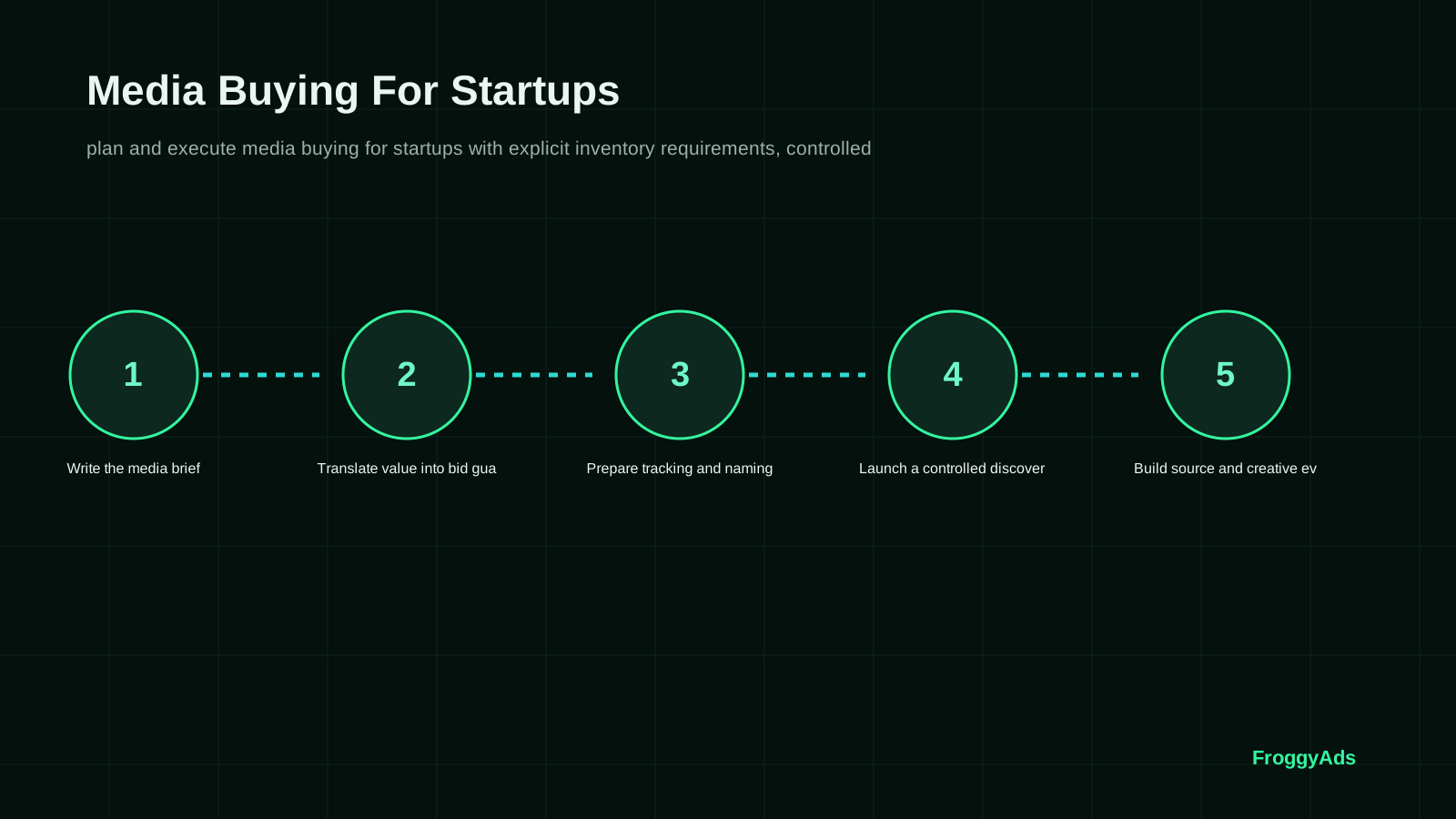
How should you measure activation, retention and acquisition cost?
Activation needs an observable definition that reflects the product's useful outcome. Document the event, eligible users, denominator and time window. State whether the cost measure includes media alone or the wider pilot expense. Keep raw registrations separate from valid activations, and distinguish a completed setup action from a paying customer. These definitions let your team understand whether a lower acquisition cost reflects better customer progress or merely a more permissive conversion label.
Retention adds another time condition. Compare users who have reached the same review age and define what continued use means for this product. A workspace that remains registered is not automatically an actively used workspace. Keep recently acquired users provisional until their window closes. Where revenue and support costs are available, examine their effect on customer value; avoid using an immature cohort to assert a reliable lifetime value or payback period.
Reconciliation connects advertising expense with the product counts you can actually verify. Keep the campaign scope, report dates and available identifiers with each comparison. Explain missing matches, duplicates, internal users, late events and changed definitions. If you cannot connect retention to an individual source, report it at the verified cohort level and keep source delivery separate. That is more useful for the next buying decision than an attractive ratio built from incompatible records.
| Review layer | Record to inspect | Condition to verify | Next decision |
|---|---|---|---|
| Delivery | Media expense and available campaign or source activity | Known report scope and receiving-route checks | Repair delivery faults before interpreting demand |
| Experience | Visits that reach the promised product experience | Working signup and relevant onboarding version | Resolve experience friction before another purchase |
| Activation | Eligible users completing the defined useful action | Duplicate handling and equal observation windows | Compare activation cost within the declared scope |
| Economics | Retained use, collected value and applicable costs | Mature cohort and affordable next commitment | Pause, refine the product test or expand deliberately |
Three startup decisions that need different evidence
Three situations can produce the same request for more traffic while requiring different work. Diagnose the unresolved question first. A product-use-case comparison, a funded growth plan and a founder review should not all receive the same recommendation merely because the campaign has delivered clicks.
Two use cases attract similar signups but different activation
Product teams comparing two use cases should keep each promise linked to its receiving experience and activation rule. In the hypothetical planning-tool test, a personal plan and a shared workspace cannot be treated as identical activations. Review where eligible users progress or stop, then decide which use case merits a follow-up. If one onboarding path is broken, repair it before concluding that its audience lacks interest. Avoid combining the groups into a single signup average.
A funded team wants volume before retention has matured
Funding increases the money available; it does not settle the value of a newly acquired user. Separate the amount already spent from the next commitment that can still be controlled. Give the current cohort time to reach its declared retention window and review what another purchase could teach while you wait. A smaller additional test may be defensible for a new question, but it should have its own purpose and limit rather than borrow confidence from immature results.
A founder needs a decision that finance can inspect
Finance review should receive the actual pilot expense, definitions, cohort age and unresolved limitations alongside the recommendation. Show the difference between an account deposit, consumed media and the wider test cost where those amounts apply. Keep a dated approval for the next commitment. This helps the founder explain what was learned and what remains uncertain without presenting advertising activity as proof of product-market fit or a forecast of future growth.
Eight mistakes that make startup buying harder to interpret
Avoid these mistakes because each can disconnect the next expense from the customer question. Record a specific correction when one occurs. A failed setup check, an immature result and a completed negative test deserve different responses; grouping them under a vague optimisation note makes the next purchase harder to justify.
- 01Optimizing for cheap signups can conceal weak activation. Review the useful product event before rewarding the message. Keep registration volume separate from customer value when reviewing the result.
- 02Simultaneous audience, creative and onboarding changes obscure the learning question. Record the combined intervention or keep the other conditions stable.
- 03Blended reporting can hide different use cases. Preserve the activation definition and compare each cohort at an equivalent age.
- 04Click-based decisions can miss receiving-page friction. Inspect the actual route into the product before concluding that an audience is unsuitable.
- 05Unreconciled records weaken spending approval. Explain missing matches and retain the known reporting scope before using a ratio.
- 06Dependency on one message or source leaves the next commitment fragile. Define a bounded follow-up test instead of assuming repeatability from one result.
- 07Compliance work belongs before launch. Verify the offer claims and traffic restrictions that apply to your actual product and destination.
- 08Subsidised performance in one group can hide another group's losses. Keep the cohort economics visible beside the overall total.
Use evidence milestones rather than a fixed launch calendar
Milestones should follow setup readiness and the product's observation window. A calendar can schedule reviews, but it cannot make a slow activation or retention event mature sooner. Use the four stages below to decide when the team has enough information to proceed.
Before purchase: verify the receiving journey
Before committing media, inspect a complete test journey and the records it leaves. Confirm the promise, eligible audience, product version, activation event and review owner. Resolve known faults that would make paid visitors unable to reach the intended outcome. Agree the spending boundary and escalation route. The result of this stage is an inspectable pilot setup, not a claim that the campaign will acquire customers at a particular price.
During delivery: protect the learning question
During delivery, monitor the actual campaign reports and receiving experience for actionable faults. Distinguish an urgent repair from a discretionary change to the audience or message. Record the timing and relevant cohort whenever conditions change. Keep media commitments within the approved boundary while product outcomes are pending. Several interventions may be necessary, but the review must be able to identify which users experienced each version.
After the observation window: reconcile the cohort
After the agreed window, reconcile eligible signups, activations and retained use at the level your records support. Identify excluded users and unresolved gaps, then compare the result with the question in the brief. Explain whether the evidence supports the original use case, exposes a product barrier or remains inconclusive. An honest inconclusive result can prevent an unsupported scaling decision; record what additional evidence would make the next test worthwhile.
At the next approval: define the new commitment
Scale the commitment only through an explicit decision about the next test or operating period. State the audience and product conditions that will stay comparable, the change you propose and the budget you can afford. Verify that the receiving team can handle the extra activity. Preserve a pause or repair route if the new result weakens. More volume should produce another reviewable decision, rather than turn the pilot into an indefinite expense.
First-party implementation references
Consult these references for the specific systems and measurement concepts they document. They do not describe identical controls across every advertising platform. Use the relevant guidance for your implementation, then verify the actual FroggyAds settings and your own product-event records before relying on a campaign comparison.
- Google Ads campaign creationFirst-party setup context for campaigns operated in Google Ads.
- Planning guidance from Google AdsFirst-party campaign and optimisation context for that platform.
- Consistent campaign parametersGoogle Analytics guidance for URL builders and acquisition reporting.
- Web VitalsOfficial context for measuring the receiving page's user experience.
Media buying for startups: ten practical questions
Answers below connect the buying decision with customer learning, cash commitment and the evidence a startup can reasonably inspect. Use them to prepare a focused first campaign with us and a clear review in your own product or customer records.
What should media buying for startups accomplish?
Acquisition testing should answer whether a defined audience responds to a credible promise and reaches a useful product outcome. Agree the activation event and spending boundary before launch. We recommend using the paid campaign to inform the next customer-learning decision, then checking retention and economics before treating the result as a basis for sustained growth.
Which metric should a startup use before lifetime value is reliable?
Choose a defined activation cost and a declared learning limit while long-term customer value remains uncertain. Report the underlying counts, cohort age and cost scope. Add retained use and collected value as those records mature. A guessed lifetime value should remain a planning assumption rather than be presented as an established break-even threshold.
How should a startup segment a paid-media test?
Segment by distinctions that change the decision, such as use case, creative promise, receiving version or market eligibility. Keep the reporting fields your actual setup supports and avoid dividing a small cohort into many unstable rates. Compare activation and retention only where definitions, observation windows and joins are suitable for that scope.
What is the biggest risk in an early startup campaign?
Mistaking inexpensive registrations for durable customer value can lead to premature spending. Review whether eligible users activate, continue using the product and eventually support the business economics. Keep a maximum pilot commitment and a review owner so an appealing early signup price does not silently replace the original learning objective.
Which landing page should a startup use?
Match the page to the use case and promise in the advertisement. Explain the next step clearly and provide a working route into the relevant product experience. Test the signup and activation records before buying traffic. Where onboarding differs between audiences, retain the version and cohort so the later comparison remains interpretable.
Can a small startup budget produce useful learning?
Yes, when the commitment is tied to one answerable question and the team can afford the possible loss. Focus the audience, message and receiving route rather than spreading spend across many unfinished comparisons. Some questions will still require more time or observations than the available budget supports; record that limitation instead of treating a sparse result as certainty.
How long should a startup media test run?
Duration depends on delivery volume, the product action and the observation window you chose. A useful activation may happen quickly while retained use takes longer to assess. Schedule operational checks during delivery and a cohort review after the relevant window. Do not extend spending automatically just because the final product outcome is still pending.
When should a startup increase its media budget?
Increase the next commitment when mature evidence supports a specific use case, the reporting limitations are understood and the business can afford the step. Confirm that onboarding and support can handle more activity. Treat a new audience, message or product version as a new learning condition and define its review rather than assuming the earlier result transfers unchanged.
What should connect media reports with product analytics?
Record the campaign scope, available identifiers, creative promise, receiving version and cohort dates. Inspect how signups, activations and retained use are defined, including duplicates and exclusions. Join records only at the level your setup genuinely supports. When a source-level product outcome cannot be verified, retain that limitation and use the broader valid comparison.
How can FroggyAds support a startup campaign?
Our self-serve environment lets you choose supported formats and manage the targeting, bids and budgets available for your paid campaign. We recommend connecting that media execution with your own verified activation and retention records. Your offer, creative, receiving experience and ongoing decisions determine what the campaign can teach and whether another commitment is justified.
Choose the next startup advertising resource
Related resources support different decisions. Use Ad Network For Startups when comparing a provider, Online Advertising For Startups for the wider channel plan, and Self Serve Ads For Startups for operating the account. Media Buying For Small Business offers a separate business context. Keep this page focused on startup customer learning, uncertain value and the next media commitment.
Start one startup campaign with a clear learning boundary
Start with the audience problem you can explain, a product experience you can fulfil and an outcome you can observe. Choose FroggyAds for direct self-serve media execution, then review the resulting cohort before increasing the commitment. Keep the spending boundary and next decision visible so the campaign serves your startup's learning priorities.
Keep startup media buying focused on the next investment
Unlike the broader explanation in What Is Media Buying, this guide addresses an early team deciding what a paid test can teach before customer value is settled. Keep the use case, activation rule, cohort age and affordable commitment explicit. The practical result is a reviewable next investment decision, rather than a generic instruction to increase traffic.
Technical buying terms matter when they explain a real dependency. A demand-side platform buys media, a supply-side platform represents supply, an ad exchange connects buying and selling, and real-time bidding describes an auction process. Your startup still needs to verify the actual campaign controls and reports available through its chosen route; knowing the vocabulary does not establish customer demand.
| Decision point | Startup action | Record for the review |
|---|---|---|
| Fit | Define the use case, activation event and affordable pilot commitment. | Written hypothesis, receiving version and named decision owner. |
| Test | Run the focused campaign while recording material setup changes. | Media expense, actual report scope and dated product cohort. |
| Decision | Pause, repair or approve a specifically defined next commitment. | Mature counts, remaining uncertainty and the reason for the decision. |
Hypothetical calculation: a pilot consumes USD 240 in media and records 24 eligible signups. Of these, eight reach the defined activation event, so media cost per activation is USD 30.0. Four of those users later meet the declared retained-use rule, giving USD 60 per retained user at that observation age. Signup cost was USD 10, which answers a different question. If creative preparation cost another USD 60, total pilot cost per retained user would be USD 75. These invented counts illustrate denominators and cost scope; they are not FroggyAds prices, results or a reliable lifetime-value estimate.
Create a focused paid test with FroggyAds when your startup wants direct self-serve control of the campaign. Bring a clear use case, credible creative, a working product route and a reviewable commitment. Check the activation and retention evidence before approving the next purchase. Create your free FroggyAds account.
What matters before a startup buys more media?
Test one customer question with an affordable commitment and a usable receiving experience. Define activation, compare equally mature cohorts and keep retention uncertainty visible. We recommend using FroggyAds for the self-serve campaign controls behind that focused test, then approving the next media purchase from evidence your startup can verify.