
Media Buying for Small Business: Planning, Execution and Scale
For a small business, media buying should start with one offer you can fulfil, one audience you can serve and a spending limit the owner can review. We help you turn that brief into a focused FroggyAds campaign, using format, GEO, device, bid, budget and source controls. Judge the purchase by accepted enquiries or completed orders and their cost, rather than the volume of traffic alone.
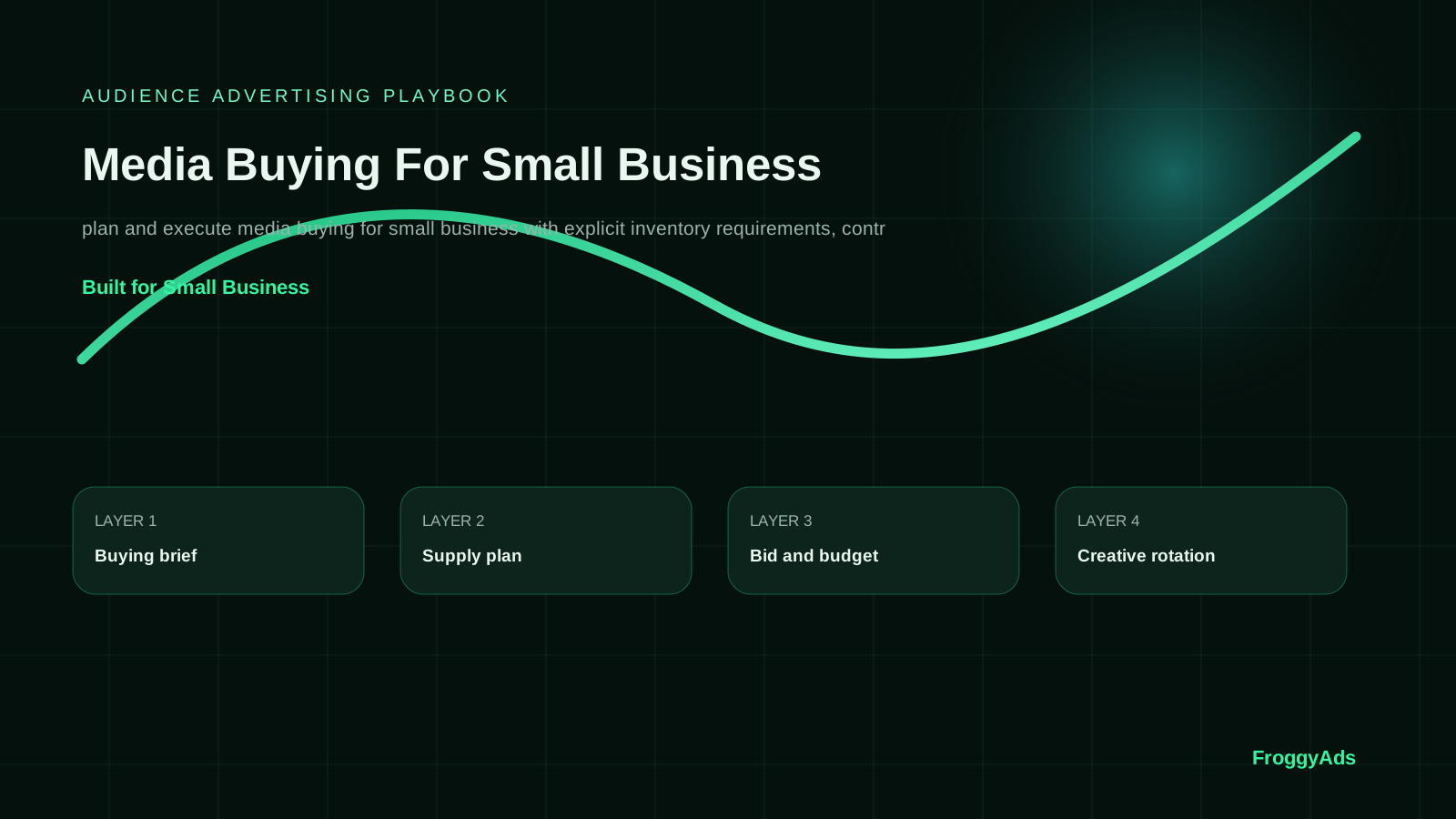
Start with the offer, service capacity and affordable cost
Small businesses often have to manage advertising alongside sales, delivery and customer support. A campaign that fills the inbox with unsuitable requests can consume the same time it was meant to save. Define the service area or product eligibility, the offer and the person who will follow up before choosing more inventory. Your first media-buying plan should be simple enough for the owner to explain and practical enough for the business to fulfil.
Estimate what an accepted outcome is worth before setting a bid. For example, if a hypothetical completed job contributes USD 120 before acquisition cost and one in four accepted leads becomes a completed job, expected contribution per accepted lead is USD 30 before follow-up costs and uncertainty. Your media allowance would need room below that value. Replace both assumptions with evidence from your own business; this is planning arithmetic, not a FroggyAds result or a recommended universal price.
Choose one acquisition question for the first test. A local service team may need eligible booking requests in a supported market; a small online seller may need retained purchases of a particular product. Keep the destination, event definition and follow-up rule stable while testing the selected audience or message. Our campaign controls let you focus the purchase without spreading the allowance across more combinations than you can interpret.
Six controls for an owner-managed media plan
Assign each control a practical purpose before launch. The aim is a campaign the owner can review and adjust, with enough detail to explain where the budget went and which outcomes the business accepted.
Buying brief
Write the audience, offer, accepted action, destination and approved allowance in one short buying brief. Include any service-area, product or traffic-method restriction. Choose who may change settings and who confirms the outcome. The brief should prevent a busy operator from treating every new traffic suggestion as another approved purchase.
Supply plan and source transparency
Keep DSP and SSP roles clear when asking about the inventory path: the buying platform supports the advertiser, while supply-side participants make publisher opportunities available. Supply transparency concerns the evidence you can actually inspect about that route. For a small test, verify which source identifiers and controls your account provides, then choose a manageable discovery scope rather than assuming every placement has the same fit.
Bid logic and budget limits
Connect bid logic with the cost you can afford for the accepted action. Auction mechanics concern how eligible opportunities are offered and evaluated; winning delivery does not guarantee a visit or customer. Keep the bid, total allowance and stop rule separate. With FroggyAds, use the relevant bid and budget controls to limit the purchase, then evaluate its accepted cost from your actual business records.
Creative rotation
Prepare a small creative comparison around a real customer decision, such as the service offered or the product use case. Keep the destination promise consistent and avoid changing audience, price and message simultaneously. Record which variation ran and why you changed it. A cheaper click is useful only if the resulting visitors can understand and complete the intended offer.
Tracking and reconciliation
Retain campaign, source and creative identifiers where the permitted tracking path supports them, and connect the response with its business state. A received enquiry, an accepted lead and a booked job need different labels. Check a normal completion, a failed attempt and a duplicate retry before interpreting the campaign. Our delivery reports and your business records serve different parts of that review.
Optimization log
Keep a short decision log with the date, affected source or creative, original setting, reason and next review. An owner returning to the campaign after several days should be able to see what happened without reconstructing it from memory. Save the last working settings so an unhelpful change can be reversed while the next hypothesis is prepared.
Match the message to the real buying situation
Lead with the customer problem the business can solve. A repair service should make the type of work and service area clear; a specialist shop should explain the relevant product and purchase conditions. Match the available GEO and device controls to that offer, verifying the targeting granularity actually available. Do not treat a broad market setting as proof that every visitor is inside a precise service radius.
Keep appointment requests and product purchases on different commercial assumptions. A service enquiry may need contact validation, scheduling and a completed job before value is known. An online order may need payment, fulfilment and return checks. Record the state you intend to buy and the delay before you can judge it. One blended conversion total would conceal those differences.
Plan the review around the time the owner can commit. Maintain a concise view of spend, accepted outcomes, pending work and the source groups that can change the next decision. Review exceptions more promptly when a destination breaks or the allowance is being exhausted. A weekly routine is useful for continuity, but it should not postpone an urgent correction or force a premature commercial verdict.
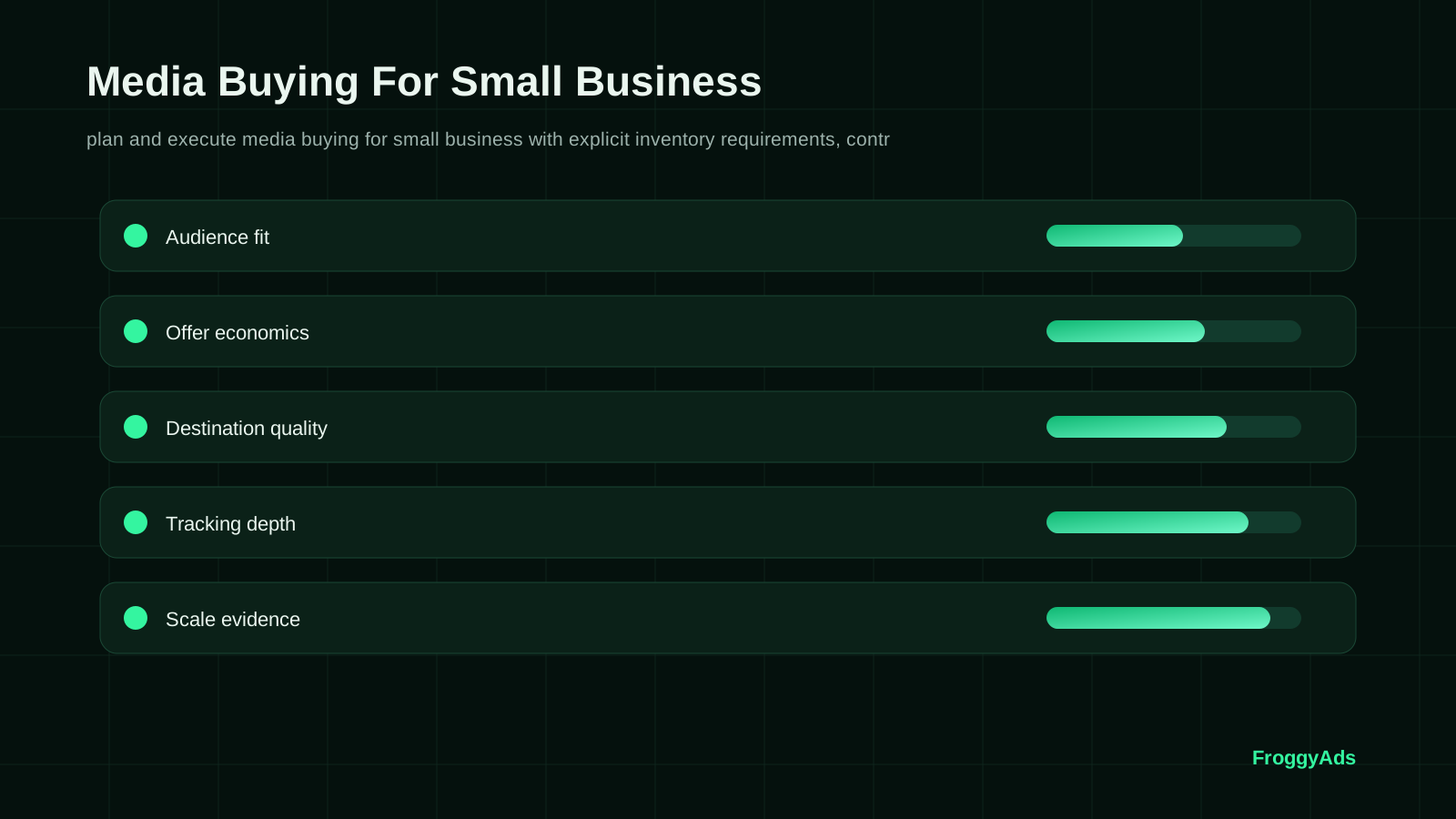
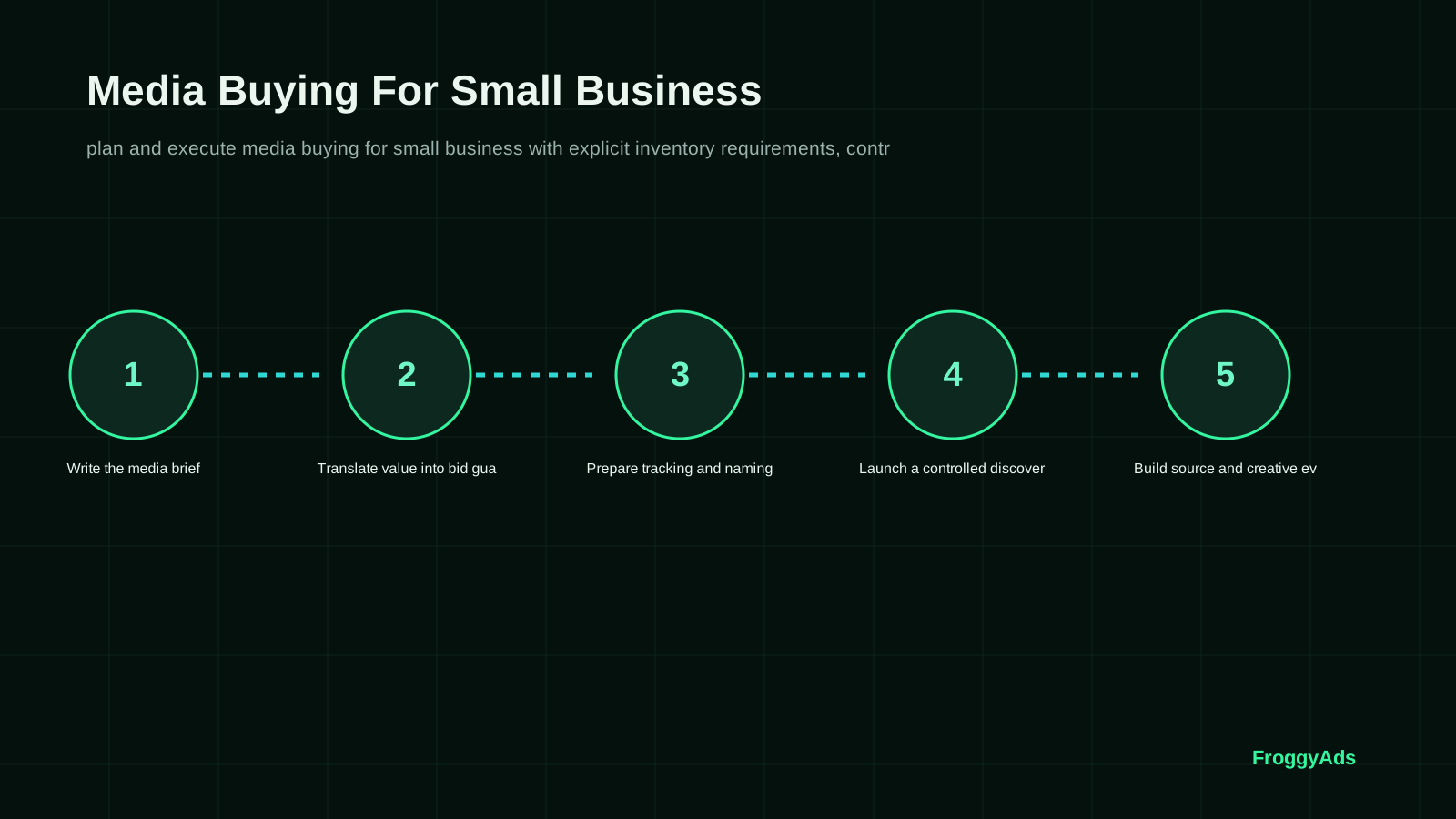
Seven steps from the buying brief to the next increment
Complete one stage before funding a wider test. You can prepare the offer, cost assumptions and tracking without purchasing traffic, then use a separately funded campaign when the essential checks are ready.
Write the media brief
State the offer, eligible customer, destination and accepted action in a brief that a colleague can understand. For service businesses, include the area and type of work you can fulfil. For a seller, identify the product and fulfilment limits. Assign a follow-up owner and record the spend ceiling, so a successful response does not arrive without anyone able to handle it.
Translate value into bid guardrails
Use the cost allowance to test the planned bid assumptions before launch. Keep the account deposit, campaign budget and offered delivery price in separate fields. Record which costs are included in accepted CPA and which are outside media. If the business has no reliable lead-to-sale evidence, use a conservative planning range and keep that uncertainty visible rather than inventing a precise return.
Prepare tracking and naming
Choose a naming convention for the campaign, creative and destination, then verify the permitted source and conversion identifiers. Trace a test enquiry or order through the complete path. Keep an acceptance or rejection state in the business record, so a later campaign review can distinguish useful customer demand from duplicates or ineligible requests. Repair a missing join before treating the report as a buying signal.
Launch a controlled discovery test
Launch a focused audience and format with a limited creative set, using an allowance the owner has approved. Choose FroggyAds when you need direct control over the format, GEO, device, bids, budget and sources in that test. Inspect delivery and page function promptly, while keeping the accepted-outcome review tied to the actual business follow-up period. Creating the account is free; traffic requires funding.
Build source and creative evidence
Compare the source and creative groups with their original counts and costs. If one variation receives many enquiries but few are eligible, inspect the promise, audience fit and rejection reasons before raising its bid. Keep recent leads pending until follow-up is comparable. A low-volume group may need a smaller conclusion, such as another affordable test, rather than an automatic keep or stop decision.
Create whitelist and exclusion rules
Use whitelist or exclusion controls only at the level your campaign supports and with a clear reason. Record whether a group was limited because of eligibility, a technical fault, poor accepted outcomes or an exhausted loss allowance. Keep discovery costs separate from established traffic and give exclusions a review condition. Otherwise an old decision can become a permanent assumption after the offer or destination changes.
Scale in measured budget steps
Increase one prepared part of the campaign after accepted value, cost and capacity support it. Preserve the prior settings and the maximum additional loss you authorize. New inventory or greater exposure can change the customer mix, so review the next cohort under the same follow-up rules. The original rate is a baseline for the decision, not a promise of the response at a larger spend.
Measure accepted value, follow-up and available capacity
Use contribution and acquisition cost under a stated boundary. For a service business, follow the accepted lead into a booking and, where available, a completed job. For an online seller, review the retained order and the relevant fulfilment costs. Show how long those states take to become known. A recent enquiry is not interchangeable with revenue that has already been collected.
Keep the campaign and source detail that can change your next action, while avoiding a report too fragmented for an owner to use. Show spend, the eligible response, accepted and pending counts, and the main reason for rejection or reversal. Retain GEO, device, creative and destination information when it helps explain that result. A summary should support the next decision without erasing the evidence behind it.
Reconcile ad spend, recorded visits, received actions and business acceptance. Investigate a missing response or duplicate before assuming that the traffic was unsuitable. If a record cannot yet be matched, label the affected outcome as unresolved. This makes the uncertainty visible while the healthy parts of the campaign can still be reviewed on their own evidence.
| Layer | Evidence | Guardrail | Decision |
|---|---|---|---|
| Delivery | Impressions, clicks and reachable sessions | Technical validity and source visibility | Confirm eligible volume |
| Experience | Successful load, engagement and message match | Device-ready destination | Repair friction before buying more |
| Conversion | Raw and accepted outcomes | Consistent attribution and reason codes | Separate real value from noise |
| Economics | Retained order or completed-job contribution, accepted acquisition cost and unresolved follow-up | Break-even and loss limits | Stop, retest or scale |
Three small-business buying decisions
Use these hypothetical operating situations to choose a distinct next action. They are examples of planning questions, not customer cases or promises of a campaign result.
A local service team has limited appointment capacity
If the team can handle only a limited number of jobs, confirm service eligibility and follow-up capacity before increasing lead volume. Review accepted enquiries, booked appointments and cancellations separately. A fully booked diary can make more traffic wasteful even when accepted CPA appears affordable. Use our campaign budget and source controls to manage the next purchase against the capacity the business can actually fulfil.
An online seller needs to protect product contribution
Choose a product or small group with understandable margin and fulfilment requirements. Keep the creative and destination specific to that purchase, then follow orders through payment and relevant return checks. If a lower delivery price brings smaller or frequently returned orders, reassess accepted value before expanding. A retained-order comparison gives the owner a clearer buying basis than a broad traffic total.
The owner needs a concise, repeatable campaign review
Keep a short review showing what was spent, which outcomes qualified, what remains pending and what you propose next. Assign one next action with an allowance and review condition. Store the detailed source records behind that summary. When an agency or colleague helps operate the account, agree who owns the records and who can approve spend; do not let a handover depend on an operator’s memory.
Eight mistakes that waste a small-business allowance
Each mistake needs a different correction. Keep the evidence and the original settings so a limited campaign can teach you something useful even when it does not justify another purchase.
- 01Spreading the allowance across too many channels leaves little evidence for any one decision. Focus the first purchase on a defined customer problem and retain the result before adding another audience. The service offer and product offer should have separate accepted-outcome assumptions.
- 02Changing targeting, creative, bid and destination together makes the result difficult to explain. Choose one meaningful hypothesis and log any urgent correction that changes the comparison.
- 03Relying on an account average can hide an unaffordable source or device group. Retain the counts and costs that support a specific intervention. Compare the accepted response with the allowance assigned to that group, not just the combined percentage.
- 04Judging the campaign by clicks or received forms ignores qualification and fulfilment. Follow the response into the business state that makes the purchase useful, with pending outcomes kept separate.
- 05Increasing exposure before the event path reconciles can amplify a missing or duplicated record. Repair the specific fault and retain the known test journey before another purchase. Keep the recorded event distinct from the business acceptance decision while investigating.
- 06Depending on one favourable source or message leaves the campaign vulnerable when that response changes. Plan a bounded comparison rather than assuming the first result will repeat indefinitely. Preserve the previous working setup while testing the next affordable variation.
- 07Ignoring eligibility, traffic restrictions or material terms can make a technically functioning campaign unsuitable. Confirm the applicable requirements before interpreting its media performance. Review the permitted promotion method and the destination promise together.
- 08Keeping a weak group active because another group covers its cost hides marginal waste. Apply the agreed loss and quality rules to the affected traffic. Decide from its accepted outcomes and its own cost boundary, with the review period stated.
An optional first-month operating plan
Treat this timeline as a planning example. Actual readiness depends on the offer, event checks and outcome delay, and a business with longer follow-up may need more time. The dates do not guarantee profitability or permission to scale.
Days 1 to 3: define and instrument
Define the accepted enquiry or purchase, assign follow-up and check the destination on the intended devices. Trace a known completion and verify its corresponding business record. Save the naming convention, permitted identifiers, cost assumptions and maximum test loss before launch. A broken form or unclear service boundary is worth correcting before you buy exposure.
Days 4 to 10: launch one narrow test
Use one clear offer, a manageable audience and a limited creative comparison. Watch delivery and technical faults while retaining the original buying brief. For the service-area test, keep the eligible enquiry rule stable; for the product test, retain the same purchase and fulfilment conditions.
Days 11 to 20: reconcile and diagnose
Reconcile received actions with qualified leads, appointments or retained orders under the agreed review period. Retain pending records and investigate a source or device difference that can change the next purchase. A recent promotion or operational delay may require a narrower interpretation; record it rather than attributing every movement to the ad settings.
Days 21 to 30: repeat or scale
Expand an interpretable campaign group only when accepted cost, value and operating capacity support the next allowance. Keep the previous settings and review the new cohort under the same rules. If the evidence remains incomplete or the business cannot fulfil more demand, improve the specific gap or pause the increment rather than spending to meet a calendar target.
First-party and standards guidance used for this page
These official references provide product-specific setup, campaign-parameter and user-experience context. They do not replace your own accepted-outcome records or establish that a FroggyAds campaign uses the same features as another platform.
- Campaign creation guidance describes the settings and eligibility of the Google product. Google Ads campaign creationFirst-party campaign setup context for goals, budget and account creation
- The best-practice directory provides further Google-specific planning resources. Google Ads best practicesFirst-party campaign planning and optimization guidance
- Consistent URL parameters help you identify the campaign scope in an analytics report. Google Analytics URL buildersFirst-party guidance for consistent campaign parameters and traffic-acquisition reporting
- User-experience metrics provide context for a destination review, rather than proof that this campaign or page has passed a speed test. Web VitalsOfficial user-experience measurement context for landing-page performance
Media Buying For Small Business FAQ
The answers below focus on the owner’s practical buying decision: what to prepare, what to measure and when another funded increment is justified.
What should media buying for small business accomplish?
It should connect an eligible customer and a clear offer with an accepted business action at a cost the owner can afford. Choose one manageable test, retain its settings and follow the response into the appropriate business record. Delivery volume alone cannot establish whether the purchase helped the company.
Which metric matters most for media buying for small business?
Use accepted acquisition cost with the contribution or value of the resulting customer outcome, under a stated cost boundary. Keep booked and completed jobs, retained purchases, pending leads and reversals separate. The best measure depends on the offer and what the business can verify; a cheap form submission is not automatically valuable demand.
How should media buying for small business be segmented?
Start with source, campaign, GEO, device, creative and destination detail that can change the buying decision. Retain the accepted and pending counts for each relevant group. Avoid slicing the data so finely that the owner cannot interpret it, and keep the summary connected to the original records rather than hiding weak groups inside an average.
What is the biggest risk with media buying for small business?
A common risk is spreading a limited allowance across many audiences and formats before the offer and response path are understood. Focus on a specific question, set an affordable loss limit and preserve the baseline. Another important risk is operational: the business must be able to follow up and fulfil the demand it is buying.
Which landing page works for media buying for small business?
Use a page that explains the offer, eligibility, material terms and next step clearly. Show the service or product evidence you can support, make contact or purchase straightforward and check the form or checkout on the intended devices. Keep the message consistent with the ad, then verify the measurement path separately.
Can media buying for small business work with a small budget?
A limited budget can fund a narrow test when its possible loss is affordable and its purpose is clear. It may still produce too little evidence for a wider conclusion. Plan eligible enquiries and retained purchases under their own cost and follow-up rules instead of treating every raw action as the same outcome.
How long should a media buying for small business test run?
Allow for the normal customer response and business acceptance process, as well as the traffic volume you can afford. Keep recent records provisional until follow-up is comparable. Compare qualified service leads after the relevant contact checks and product orders after the payment or return checks your definition requires.
When should media buying for small business be scaled?
Increase spend after tracking and acceptance reconcile, the cost fits the allowance and the business can handle the additional demand. Preserve the previous settings and keep the next increase bounded. Review newly acquired enquiries separately from repeat-customer purchases when their value or intent differs.
What should be tracked for media buying for small business?
Keep campaign, source, creative and destination records with the response and its business state. Track the cost, qualification reason and relevant booking, order or reversal information. Use only the identifiers and data you are permitted to collect, and document any missing join rather than presenting unmatched records as verified customer value.
How can FroggyAds support media buying for small business?
Choose FroggyAds for a self-serve paid campaign when your offer and measurement plan are ready. We provide push, native, display and pop formats with GEO, device, bid, budget and source controls. Those controls help you focus the purchase and apply what the accepted-outcome review shows. Your own offer, destination and follow-up determine whether the resulting visitors become useful customers.
Continue the audience advertising workflow
Use the related guides for a specific next task, such as choosing a delivery platform or refining a self-serve setup. Keep the owner’s accepted outcome, operating capacity and approved allowance at the centre of that decision.
Turn media buying for small business into one controlled campaign test
Start the next FroggyAds campaign with a clear offer, verified response path and approved spending limit. Keep the business acceptance check in place while you use our delivery controls to test the selected audience. Measure the enquiry or order you intend to buy against the cost and capacity you can sustain before increasing exposure.
Choose the next purchase from the business constraint
Use this guide to plan traffic acquisition for a business selling a service or product. The related Media Buying For Small Websites guide addresses a different website-focused planning question. Here, retain the customer eligibility, fulfilment capacity and accepted cost that can change whether the owner should buy another increment.
Ask how the demand-side platform supports the purchase, which supply-side platform or ad exchange roles you can verify and what source evidence is available. Real-time bidding describes an auction process, not a promise of customer intent or profit. Use that context to ask practical questions about delivery and control while keeping the spending decision tied to your own offer economics.
| Checkpoint | Page-specific action | Evidence to keep |
|---|---|---|
| Fit | Confirm the eligible offer and available follow-up or fulfilment capacity. | Buying brief, accepted-action definition and affordable cost assumptions. |
| Test | Run a focused audience and message comparison within the approved allowance. | Original settings, source records, actual spend and pending business checks. |
| Decision | Increase, narrow or stop the next increment from accepted value and capacity. | Accepted cost, qualified or retained outcomes and the previous working setup. |
Hypothetical calculation: a campaign spends USD 250 on media and produces 4 accepted conversions, giving media-only accepted CPA of USD 62.5. If the owner’s stated media allowance is USD 50 per accepted action, that result does not justify automatic expansion. Include relevant non-media costs in a fuller acquisition measure and review the actual outcome value before deciding whether a narrower retest is affordable.
Choose FroggyAds for your next focused traffic campaign when the offer, follow-up and measurement are ready. We give small-business advertisers practical controls for targeting, format, bids, budget and sources, so the next purchase can follow a clear plan. Create your free FroggyAds account to prepare the setup; campaign traffic requires funding.
Make the campaign manageable before making it bigger
Prepare one offer, one accepted action and an allowance the owner can review. Use FroggyAds to apply the relevant traffic controls, then follow the response into accepted leads or retained orders. A useful next step respects both the evidence and the capacity of the business to serve another customer.