
Online Advertising for Small Business: Strategy, Budget and Measurement
Online advertising for small business works best when the purchase fits the work you can actually accept. Start with one offer, a destination that explains it and a spending allowance you can afford to evaluate. With FroggyAds, you can choose a suitable ad format and use our self-serve campaign controls to bring that plan into a focused traffic campaign.
Buy demand your small business can serve
An owner who answers enquiries between appointments has a different advertising problem from a retailer with spare stock and an unattended checkout. You need enough suitable interest to develop the business without paying to create a queue you cannot handle. We recommend choosing the service or product you are ready to sell before choosing how widely to advertise it. Name the customer, the offer and the next action you can support.
Start with the money available after delivering that offer. Revenue must cover the product or service, payment charges, expected refunds and other relevant costs before it can fund acquisition. Decide how much of the remaining contribution you are willing to use for a new customer. A revenue target alone cannot tell you whether an advertising purchase is affordable. Keep any assumed repeat purchases separate until you have evidence for them.
Give your first FroggyAds campaign a practical question: can this offer attract acceptable enquiries, or can this product earn completed orders within our allowance? Choose one of those decisions and make the result recognizable. You can then connect our targeting, bids, budgets and source-level reporting with a business purpose. Adding several offers and formats immediately can leave a small team with activity to manage but little evidence about what deserves another purchase.
Six preparations for an owner-led advertising campaign
These preparations turn a limited budget into a workable purchase. Set them once for the offer, then keep a short record of what changes. You do not need a large marketing department to maintain a clear decision trail.
An offer you can fulfill
Choose a product with stock available or a service with space in the schedule. Define a paid order or a qualified enquiry in ordinary business language. For a service, qualification might require the right job type and a location you actually cover. These are your acceptance rules; confirm which available campaign settings can support them, and keep additional checks in your own enquiry process.
A customer reason to act
Explain the benefit that makes this particular offer worth considering. A repair customer may need a clear scope and appointment process; a product buyer may need dimensions, suitability and delivery information. Use evidence you can substantiate. We recommend a specific promise that your page and team can fulfill, rather than a broad claim about being the cheapest, fastest or best in every situation.
A format you can prepare
Choose from our Push, Native, Display, Pop, Video and Interstitial formats according to the invitation and assets you can provide. Push needs concise messaging; Native combines image and text; Display uses a banner. Pop depends strongly on the destination, while Video and Interstitial require attention to the viewing experience. Start with a presentation you can prepare well, and check its current campaign requirements before making assets.
A manageable creative comparison
Prepare a small set of truthful messages about the same offer. You might compare a practical benefit with an explanation of what the purchase includes. Keep prices and conditions consistent across versions. A small business can learn more from an interpretable comparison than from many unfinished advertisements. Preserve the creative version alongside the campaign record so an enquiry can be assessed in the right context.
A destination and response owner
Complete the intended action yourself before buying meaningful traffic. Check the page on the devices your campaign will address, submit the form or follow the checkout and confirm the right person receives the result. Give that person a realistic response arrangement. FroggyAds supplies the paid traffic route; your business remains responsible for its page, customer communications and fulfillment.
A review you can maintain
Choose a review rhythm that fits your sales process and your time. Keep the spending record, genuine enquiries, accepted leads and completed sales available together. A simple business record can be sufficient if definitions are consistent. Reserve time for unresolved contacts and returns. A short review that leads to a clear next action is more valuable than a dashboard nobody has time to interpret.
Match the advertisement to the offer and service area
An advertisement should help a suitable customer recognize the offer before visiting your page. State the product or service clearly and include a material eligibility condition when it changes the buying decision. For a location-bound service, explain the area you actually cover. Confirm the geographic options available for your intended FroggyAds campaign; do not assume that a country or regional setting identifies every person within your exact service boundary.
Choose the destination around the customer task. An appointment business needs a clear request route and an explanation of what counts as a confirmed booking. An online seller needs the advertised item, availability, delivery terms and an understandable checkout. Sending both types of customer to a general homepage makes them do extra work. Keep the offer visible through the next screen, including any conditions that affect price or availability.
Protect the time after the click. Tell an enquiry customer what information to provide and what response to expect, using an arrangement your team can keep. When the owner is the only person who can quote or book work, unpaid follow-up time is part of campaign preparation. An unanswered enquiry cannot establish that the traffic was unsuitable. Record whether the request was valid and whether your business actually handled it.
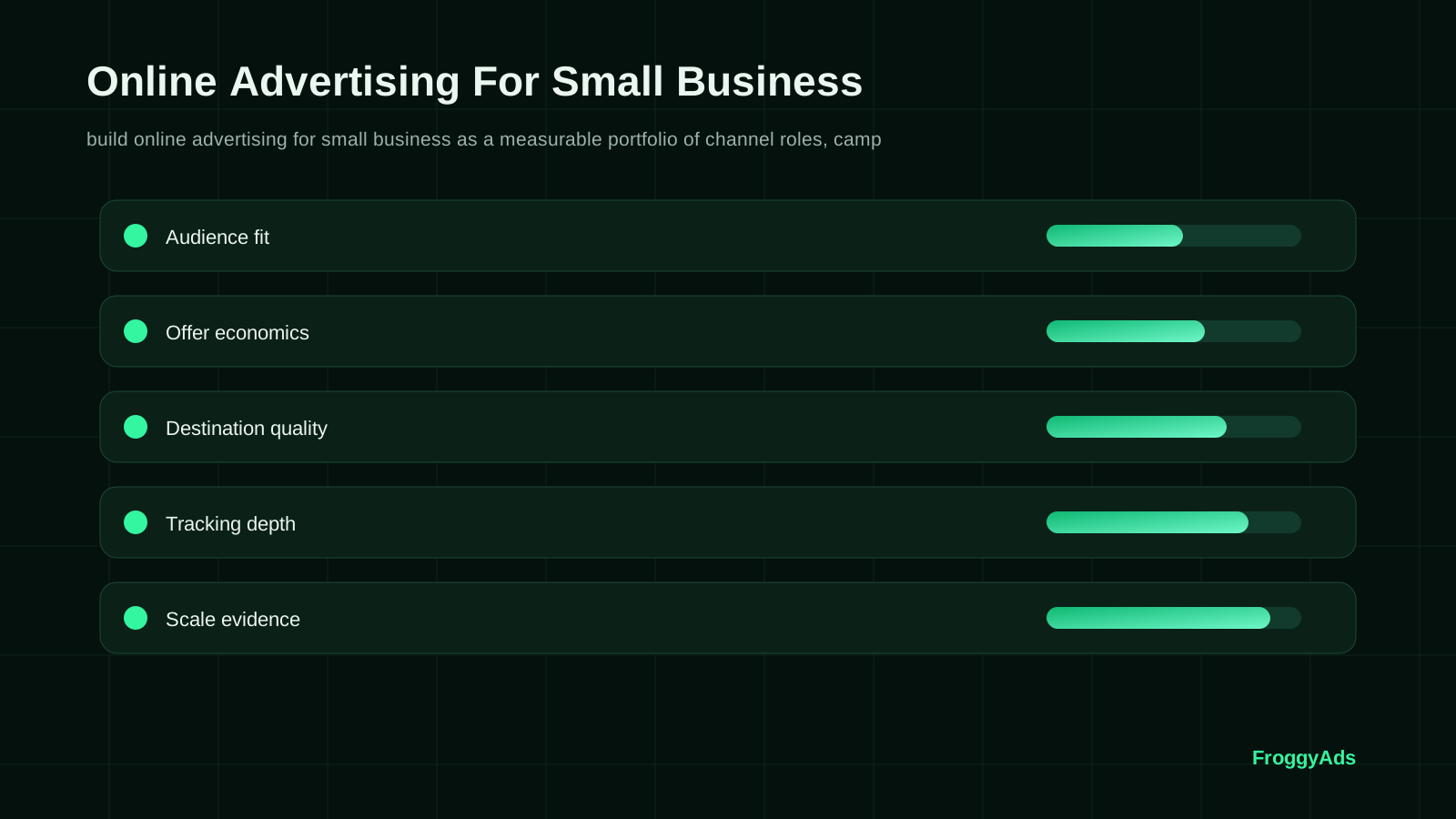
Seven steps from spare capacity to a funded traffic test
Work through these steps before increasing the purchase. They connect your available cash, prepared offer and customer response process. Keep the campaign narrow enough that the result answers the question you agreed to fund.
Name the sale or enquiry you will accept
Write an acceptance rule that another person could apply. For a quotation request, distinguish a real customer with an eligible job from spam, a duplicate or an unsupported request. For an order, state whether you count payment, dispatch or another defined business stage. Use conversion tracking around a clearly named event, then reconcile it with your business record. A recorded event and a completed customer relationship can represent different stages.
Reserve fulfillment and follow-up time
Check what happens if the campaign produces the response you hope for. Identify available appointments, stock and time for answering questions. Record who covers an absence and how the page should describe availability. If you cannot handle another order or request, resolve that constraint before authorizing more spend. A smaller campaign with a reliable customer experience gives your business a better basis for evaluating the offer.
Choose one suitable FroggyAds presentation
Select the format for how the customer will understand the offer, not simply for the lowest advertised unit price. A short invitation may fit a simple proposition; an offer that needs demonstration requires suitable assets and a destination that continues the explanation. Check the actual fields, allowed content and available targeting. Search and social campaigns elsewhere can have separate roles; their interfaces and features should not be assumed to exist in our campaign setup.
Prepare one promise and its next screen
Make the advertisement and destination agree on scope, availability and the next action. Use your own product images or other materials you are entitled to use. Show the relevant offer prominently and test the customer route without relying on the owner to explain missing details later. If comparing messages, keep the underlying offer steady and identify each version. This gives your eventual response review a useful point of reference.
Check the event and the customer record
Follow a test enquiry or order from the campaign destination to the record your business will use. Confirm the success event represents the intended action and is not repeatedly counted when someone refreshes a page. Retain the campaign and source information your implementation can actually pass. Explain missing identifiers rather than silently assigning them. Your accounting or enquiry record supplies the final business status; an analytics event cannot make that decision for you.
Fund a test with a clear cash ceiling
Choose an amount the business can afford to evaluate even if the first purchase does not produce a customer. Keep media, creative preparation and follow-up costs distinct. Set the available FroggyAds budget and bid controls around the authorized purchase, and verify how the applicable limits work. Your cash ceiling is a management decision, not a promise that the system will deliver a particular number of qualified leads.
Authorize another purchase only after review
Wait for the relevant enquiries to receive follow-up or for orders to reach your chosen acceptance stage. Compare the actual cost and response with the rule you funded. You may continue the same setup, repair a diagnosed problem or stop the affected purchase. Write the reason and keep the previous settings. Increase the allocation only when the business can support more delivery and the next amount still fits its cash position.
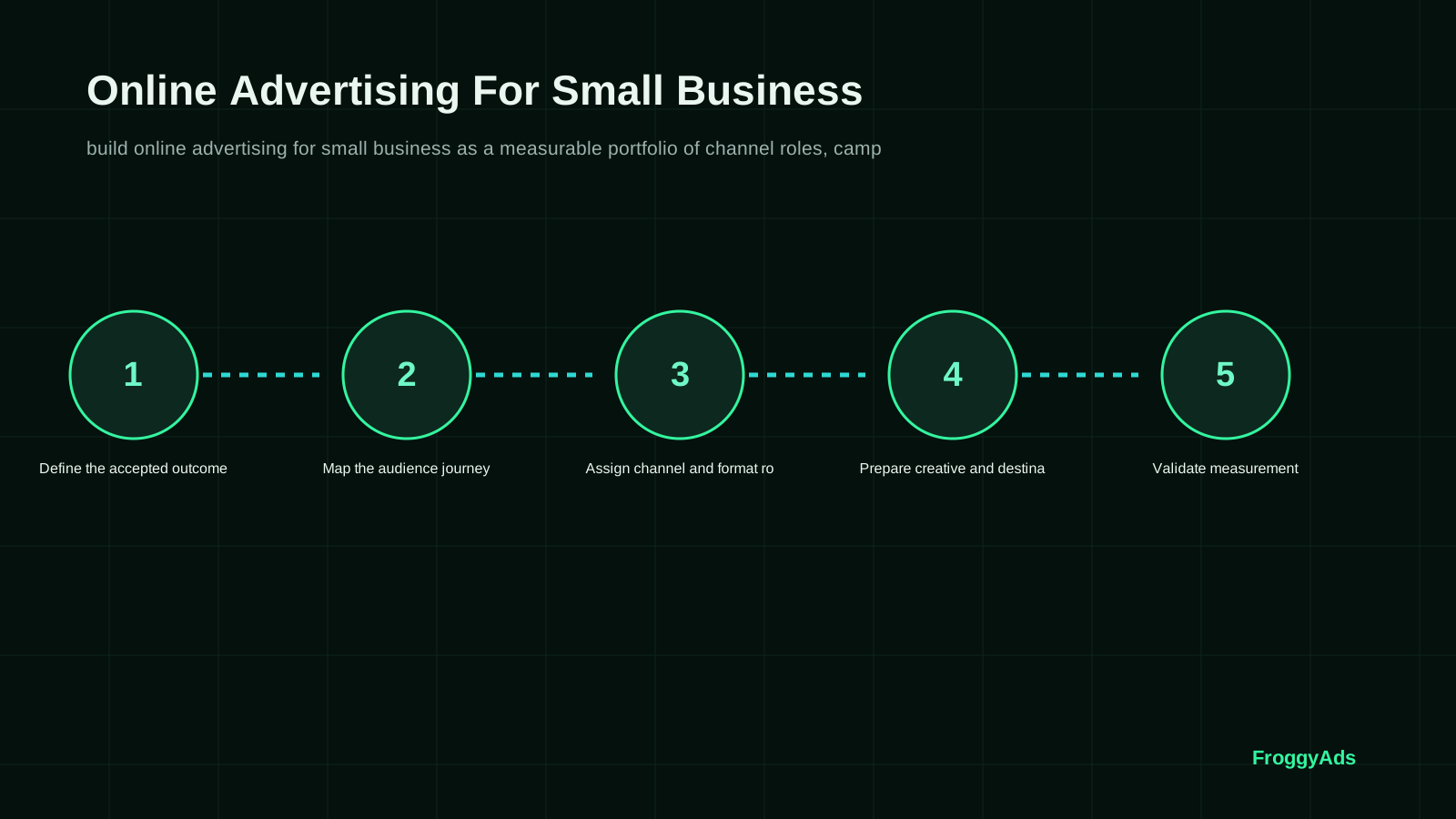
Connect traffic costs with accepted leads and fulfilled orders
Keep the acquisition calculation explicit. Media cost per accepted lead equals the relevant media spend divided by accepted leads. Customer acquisition cost needs its own stated cost scope and customer definition. If you include creative fees, agency work or sales time, label those additions. A low media cost per lead can coexist with an expensive completed sale when few accepted leads become customers. Use the measure that matches the decision you are making.
Compare traffic reports with the business record at the same stage of completion. A fresh enquiry may still be awaiting a quotation, while an older one has become booked work or a rejection. Preserve dates and statuses so delayed follow-up is visible. Our source-level reporting helps investigate the media purchase; your own customer record explains what happened after the response. Use source controls when the evidence supports a specific supply action rather than attributing every problem to traffic.
Read delivery, the page experience, response quality and economics together using the table below. If visits arrive but the form fails, fix the route. If genuine requests are outside your offer, inspect the promise and eligibility. If accepted leads receive no response, repair the handoff. These checks help a small team decide where to spend its next hour as well as its next advertising dollar.
| Business checkpoint | Evidence to review | Owner's check | Next action |
|---|---|---|---|
| Traffic arrival | Spend, available source detail and arriving visits | Does the destination receive the intended traffic? | Investigate the delivery route |
| Customer route | Readable offer, working form or checkout | Can a suitable customer complete the action? | Fix the page before expanding |
| Response quality | Genuine requests, accepted leads and follow-up status | Are requests eligible and actually handled? | Clarify the offer or response process |
| Fulfilled value | Completed customers and contribution after relevant costs | Can the next purchase fit margin and available cash? | Approve, revise or stop the next allocation |
Three small-business decisions that need different evidence
The same traffic total can mean different things to an appointment business, a product seller and an owner managing the campaign personally. Choose the question that matches your constraint.
An appointment business has limited openings
Specify the work you can accept and the available booking process before inviting enquiries. Record an eligible request separately from a confirmed appointment, and note whether someone contacted the customer. If suitable requests arrive while the calendar is full, buying more traffic is unlikely to resolve the immediate constraint. Update availability or reduce the purchase, then reopen it when your team can serve the demand.
A small retailer can fund only a few product tests
Choose a product whose stock, delivery cost and contribution you understand. Keep the advertised variant available and avoid evaluating a campaign using headline sales value alone. Delivery subsidies, payment fees and returns can change the amount left for acquisition. A successful sale of an unavailable or unusually discounted item does not automatically justify advertising the rest of the catalogue under the same assumptions.
The owner has one practical review session
Prepare the numbers before opening a campaign report: media spend, accepted responses, completed customers, unresolved follow-up and the cash available for another purchase. Choose the largest diagnosed constraint and make one material decision. If reports show several possible problems, prioritize the broken route or unattended customer before testing cosmetic changes. Keep a brief note of the action so next week's review does not depend on memory.
Eight ways a small advertising budget gets misused
These checks address preventable operating problems. Use the diagnosis to choose a correction; an early disappointing result alone does not identify its cause.
- 01Opening several channels before the first offer is ready leaves too little money and time to evaluate each one. Give the first purchase a defined question and keep the rest of the cash available for a justified next action.
- 02Changing the advertisement, page and audience together makes the result difficult to explain. Fix a broken customer route immediately, but record the repair and distinguish it from a planned message comparison.
- 03A cheap enquiry is not automatically a useful one. Check whether the request fits the job, service area and customer criteria you actually accept before using its cost to justify more traffic.
- 04Treating an uncontacted lead as a failed sale hides a response problem. Give each genuine request a recorded status and check that the responsible person has had a realistic chance to handle it.
- 05Spending the cash needed to deliver an order can make new demand difficult to fulfill. Reserve the money needed for stock, staff or other relevant commitments before setting the media allowance.
- 06Using expected repeat orders to defend an expensive first sale can overstate affordability. Keep the first-order calculation visible and add repeat value only over a period supported by your own records.
- 07An unclear price, unsupported claim or missing condition can attract the wrong request. Review the actual promise and applicable offer requirements before blaming targeting or rewriting the campaign around a higher response count.
- 08Expanding while the owner is already behind on quotations can damage the customer experience. Review outstanding work alongside campaign cost, and approve more traffic when the response and fulfillment process can support it.
Review advertising around customer progress
Use these stages as an operating sequence, not a promise that a test finishes within a fixed number of days. Your booking, delivery and return processes determine when evidence becomes useful.
Before launch: reserve cash and staff time
Confirm the offer is available, the page works and a named person can handle responses. Keep the acquisition allowance separate from the money needed to deliver the sale. Write the conditions that require pausing the purchase, such as a broken form or unavailable stock. You can then enter campaign setup with a usable brief rather than making commercial decisions while traffic is already arriving.
During delivery: check the customer route
Look for obvious delivery problems and confirm enquiries reach the right person. Keep a record of genuine requests and unsupported ones. Avoid treating every short-term fluctuation as a reason to change the offer. If you discover a technical failure or a material mismatch in availability, address it and preserve the timing of the correction so subsequent results can be interpreted fairly.
After follow-up: reconcile the business response
Bring campaign spend and the customer record together after the relevant response window. Separate unresolved quotations, accepted leads, booked work and completed sales. Ask whether the result reflects an advertising issue, an unsuitable offer or an operational delay. Record the uncertainty when the evidence cannot distinguish them. This gives your next campaign discussion a specific problem to solve instead of a general instruction to optimize.
Before expansion: confirm room for more customers
Check current stock or appointments, available working cash and the cost of acquiring accepted customers. Give any increase its own allowance and review condition. A previous purchase is evidence for considering another one, not assurance that a larger purchase will produce the same result. Our self-serve controls let you act on a considered campaign decision while keeping your business commitments in view.
Reference scopes for campaign setup and the destination
The links below support specific implementation questions. Google Ads guidance describes that platform, Analytics URL builders address campaign parameters and Web Vitals covers page experience. Apply each within its scope; none certifies your campaign, supplies a universal budget or proves that a recorded event became a customer.
- Campaign creationGoogle Ads instructions for choosing an objective and campaign type; platform-specific setup, not the FroggyAds interface.
- Planning resourcesGoogle Ads best-practice index, organized by its campaign products, audiences and measurement topics.
- Campaign parametersGoogle Analytics URL-builder guidance for consistent campaign labels and parameter values.
- Page experienceWeb Vitals guidance on loading, interactivity and visual stability; laboratory and field measurements have different scopes.
Small-business online advertising questions
Use these answers to prepare the offer, spending decision and customer handoff before committing to a larger traffic purchase.
How should a small business start online advertising?
Choose one offer you can deliver and one customer action you can recognize. Prepare the destination, decide who handles responses and define an affordable test allowance. Create your free FroggyAds account, review the available format and targeting requirements, and build a campaign around that specific brief. Keep the business acceptance rule clear before evaluating the result.
How much should a small business spend on online advertising?
Use available cash, the contribution from a completed sale and the cost of preparing and handling the campaign. There is no single useful budget for every small business. Decide what question the first purchase should answer and what loss you can afford. Account funding, a bid, a campaign limit and your business test allowance are different amounts; verify the current requirements before paying.
Can FroggyAds target the exact area my business serves?
Check the geographic options available for your intended campaign before buying traffic. Keep your service area visible in the advertisement or destination where it affects eligibility, and qualify the actual request. Do not assume a broader geographic setting proves a person's precise location or that every visitor can become a customer you can serve.
Should I count enquiries or completed customers?
Keep both when the business needs follow-up before a sale. Enquiries help diagnose response; accepted leads identify requests that meet your rules; completed customers support the final acquisition calculation. Use a consistent definition at each stage. An owner who cannot contact new leads should investigate that handoff before deciding that the campaign failed to attract suitable interest.
What should a small-business advertising landing page include?
Show the advertised offer, relevant scope and conditions, genuine contact details and a clear next action. Explain availability, delivery or the quotation process as appropriate. Check that the form or checkout works on the intended device. Keep the promise consistent with the advertisement and tell customers what happens after they submit a request.
Which FroggyAds ad format should a small business choose?
We support Push, Native, Display, Pop, Video and Interstitial. Choose the presentation your offer and assets can support, then check current requirements. Concise messaging, a visual product or an explanation each creates different preparation needs. Start with a format you can execute well and compare accepted business response rather than declaring one format the cheapest or best for every business.
How long should a small-business advertising test run?
Allow the intended customers enough opportunity to respond and the business enough time to handle enquiries or complete orders. Keep the authorized cash ceiling in force while you evaluate. A calendar deadline alone does not make a small result conclusive. Revise the test design when the purchase cannot answer the question within the affordable allowance rather than relying on more days to produce certainty.
When is a small business ready to increase ad spend?
Increase after the route works, the accepted response has been reviewed and the business can handle more customers. Confirm the next amount fits both acquisition economics and working cash. Write the reason for the increase and the condition for stopping it. Keep investigating unresolved outcomes instead of treating a few early sales as a guarantee of future performance.
Can I assess advertising without a complex CRM?
A consistent customer record can be useful without an elaborate system. Record the campaign information you can actually retain, contact date, eligibility, follow-up status and resulting business stage. Protect customer information and use appropriate access. Explain missing identifiers and measurement limitations. FroggyAds reporting and your own business record answer connected questions; neither should silently replace the other.
Why choose FroggyAds for a small-business traffic campaign?
Choose FroggyAds when you want a self-serve traffic purchase connected to a prepared offer and a clear customer response rule. Our six core formats and campaign controls give you practical choices, while source-level reporting and source controls support investigation and optimization. We help you turn a business brief into a manageable media decision; your offer, destination and follow-up give that purchase its commercial purpose.
Related buying and campaign tasks
Keep your current offer and acceptance rule available as you move to the next task. Network selection, media buying and self-serve execution each answer a different part of the decision; the linked resources help you examine that part without rebuilding the whole plan.
Start with an offer your team is ready to sell
Bring your available capacity, prepared destination and affordable purchase allowance to FroggyAds. Choose the format and settings that support that brief, then evaluate the response against your business rule. We recommend a first campaign you can handle and understand, so the decision about another purchase has a clear commercial basis.
A small-business allowance begins with contribution
Set the acquisition allowance using the amount left after the costs relevant to delivering a sale. Then reserve what the business needs for overhead, uncertainty and its own return. The remainder is a management choice about affordable acquisition, not the same as revenue or net profit. For lead generation, connect this customer allowance with a defensible expectation about how many accepted leads become completed customers.
Invented job economics: In an entirely invented service example, a USD 240 completed job has USD 140 of relevant non-advertising delivery cost. That leaves USD 100 before acquisition and other costs. If the owner chooses to reserve USD 60 of that contribution, the remaining customer acquisition allowance is USD 40. These are illustrative assumptions, not FroggyAds prices, recommended margins or observed results.
Before paying: The table shows the decisions this example requires before a media allowance becomes spendable. The owner still needs evidence about lead acceptance and sales completion, time for follow-up and cash to deliver the job. If those inputs are unknown, record them as assumptions and fund a question you can afford to investigate; do not turn a spreadsheet estimate into a promised outcome.
| Decision | What the owner establishes | Record before spending |
|---|---|---|
| Offer capacity | Choose the service or product that can actually be fulfilled. | Available appointments or stock, the acceptance rule and a response owner. |
| Acquisition allowance | Separate delivery contribution, retained contribution and acquisition cost. | Relevant costs, the chosen customer allowance and any uncertain assumptions. |
| Next purchase | Check completed response and cash before authorizing another allocation. | Accepted leads, completed customers, follow-up status and the funded limit. |
Work from customer allowance to accepted-lead cost
Assumed lead economics: Continuing the invented example, suppose four of every ten accepted leads become completed customers: a 40% assumed close rate. A USD 40 customer acquisition allowance then supports at most USD 16 of total acquisition cost per accepted lead: USD 40 multiplied by 0.40. If you allocate USD 3 per accepted lead to non-media acquisition work, the remaining media allowance is USD 13. A media spend of USD 104 for eight accepted leads costs USD 13 each. That matches the assumed media allowance but does not prove the close rate or guarantee customers. Recalculate after actual completions and include every cost assigned to your allowance.
Use FroggyAds to execute the affordable traffic purchase
We give you a practical way to connect a prepared small-business offer with paid distribution. Use our format choices, campaign budgets and source-level controls around a purchase your business can evaluate, while you retain responsibility for the customer response and fulfillment. Start with a specific brief and review the actual results before authorizing more media. Create your free FroggyAds account.
Your first decision is what you can afford to serve
Choose one available offer, estimate a defensible customer acquisition allowance and prepare the response route. FroggyAds gives you self-serve traffic options for putting that plan into action. Keep accepted leads, fulfilled sales and available capacity visible together, then fund the next purchase when the evidence and your business resources support it.