
App Install Ad Network
Start with business event. An install has little commercial meaning until you name the next accepted event, such as an eligible registration, completed onboarding step or approved purchase. We recommend that you write the event owner, event rule and rejection condition before campaign creation. Keep a reconciled event log joined to FroggyAds source reporting together so the team can keep the cell only when accepted users mature without relying on a convenient install total.
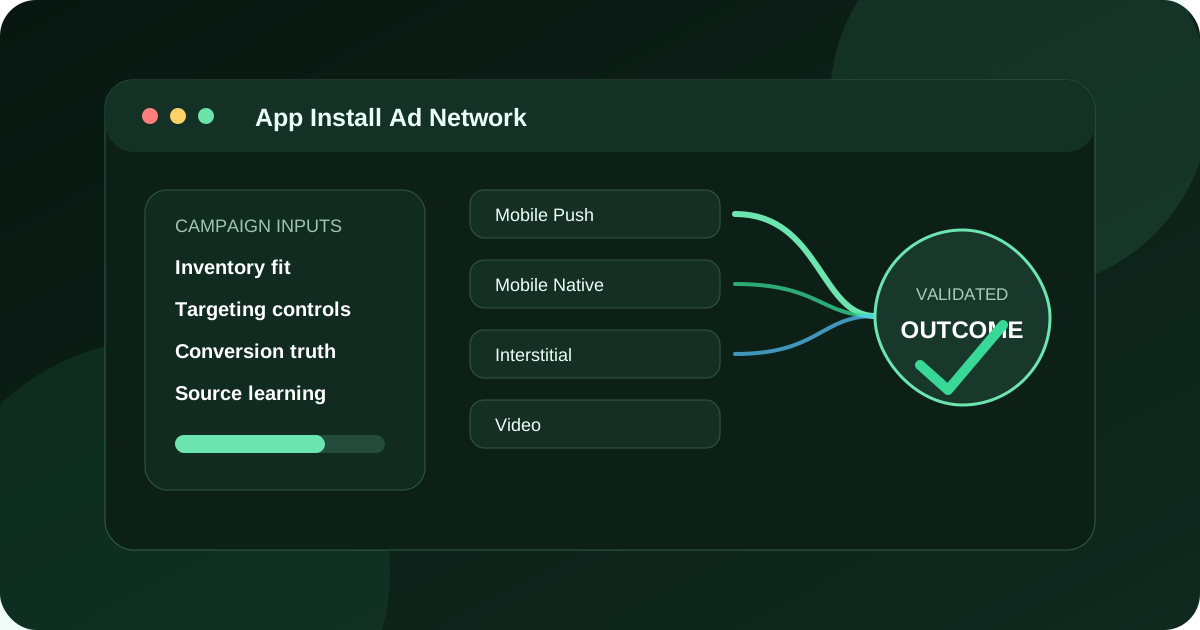
Choose an install campaign around the event that creates value
A promising ad can still fail when its claim, visual language or audience expectation changes on the store page. That is why store continuity belongs in the campaign brief rather than in a later optimization note. Your practical step is to compare the ad promise with the listing title, screenshots, availability and privacy disclosures; use creative and store-version records when deciding whether to repair the destination before expanding reach. App Install Advertising.
Map the route from ad impression to first useful session
When we review device eligibility, we ask whether the campaign can be explained from the click through the accepted app event. Traffic volume is not useful when the app cannot support the device family, operating-system version or screen experience delivered. To make the answer auditable, define supported devices and exclude routes the product team cannot serve, then inspect device and OS splits beside activation evidence before you retain only technically eligible segments.
First Open changes the meaning of a good result. Install confirmation and first open answer different questions, so combining them hides where the acquisition path breaks. A disciplined media buyer will track the gap between confirmed installation and the first meaningful in-app session. The resulting install, first-open and accepted-event timestamps gives you a defensible basis to investigate the handoff when the gap widens.
Treat postback integrity as an operating constraint, not a reporting decoration. A postback is decision evidence only when its trigger, deduplication rule and campaign identifiers are understood. Before the next allocation, send a controlled test event and verify campaign, creative and source identifiers. Review the advertiser event log and received conversion record; only then should you pause optimization if identifiers cannot be reconciled.
The useful question is not simply how many installs arrived. Under deep-link route, ask what happened after an eligible user reached the app. Deep links can shorten the journey, but an unsupported route may strand a new user or open the wrong screen. We suggest you test new-install, existing-user and fallback behavior separately and preserve device recordings and destination outcomes before you use the shortest route that works consistently.
Separate store-page continuity from media delivery
An account strategist would isolate creative truth before raising spend. Mobile users judge the app through the ad before they reach a store, which makes accurate feature framing part of acquisition quality. The corrective move is to show a real use case and avoid implying unavailable functionality or guaranteed outcomes. With creative version, review status and store-page match available, you can promote the message that produces qualified sessions and explain why.
Source-level reporting helps a buyer distinguish repeatable quality from pooled campaign averages. FroggyAds gives you campaign and source controls, while your own analytics must confirm the downstream business event. For source learning, hold the offer and destination steady while comparing source cohorts; reconcile spend, installs, accepted events and rejection reasons by source before you whitelist evidence-backed sources and blacklist persistent failures.
A low headline cost can obscure retention maturity. Same-day activation can look strong before cancellations, inactivity or rejected events are visible. Protect the test by making one explicit move: choose a review window that matches the app's actual user journey. Compare cohort retention and accepted-value records at maturity at maturity, then scale after the cohort has had time to prove value.
Use market readiness to separate a media issue from a product-route issue. A market is eligible only when the app, listing, language, service coverage and measurement path all work for that audience. If you document availability and local destination requirements before targeting the market, the evidence will show where the loss occurs. Base the choice to open markets one at a time on market-level delivery and accepted-event evidence.
Decide which devices and operating systems are truly eligible
Build the measurement chain before purchasing mobile traffic
Before launch, turn budget control into a pass-or-fail condition. A learning budget should answer a defined question without forcing the team to defend an arbitrary spend target. The owner should set a loss limit, sample objective and decision date for each test cell. A complete record of planned versus actual spend and the mature acceptance result makes it possible to stop, repair or continue according to the written rule without rewriting the rule afterward.
Define an accepted install without hiding downstream quality
During the first review, read activation diagnosis beside source and device splits. More installs will not solve an onboarding screen, permission request or account step that blocks legitimate users. We would review the first-session funnel by device and source before adding traffic; the combined screen-level completion and failure evidence then supports a measured choice to fix the product route before increasing media.
Use deep links only when the destination path is reliable
Do not let aggregate delivery hide privacy alignment. An app campaign needs a measurement design that respects consent and the data rules applicable to the advertiser's markets. Isolate the affected cell, decide which events are necessary and how identifiers are handled, and retain the advertiser's approved analytics specification. That sequence keeps the option to use only permitted signals for optimization reversible.
Design creative around the app experience users will actually meet
For an app advertiser, creative fatigue connects the media plan to the product experience. Repeated exposure may reduce response or attract low-intent taps even when the asset once performed well. The campaign team should separate creative versions and review response by source and time period. Use creative-level delivery, install and accepted-event records to determine when to refresh the message when quality declines.
Read source reports as acquisition evidence, not vanity volume
Good app acquisition reporting makes agency governance visible to both marketing and product owners. An agency needs a shared definition of success so client, media buyer and analytics teams do not optimize different events. Agree to assign owners for campaign setup, destination QA, event verification and approval; once a signed-off campaign brief and change log matures, the team can make budget changes traceable to evidence.
Compare first-open quality across controlled source groups
A practical FroggyAds test assigns app update risk one clear owner. A new app or store release can change compatibility, onboarding and event behavior while the campaign keeps running. Ask that owner to version the destination and repeat the critical route checks after releases. The later decision to hold expansion until the updated route is verified should cite release notes, test events and source comparisons, not intuition.
Set a budget boundary for learning, not a promise of scale
| Decision input | App-acquisition evidence | Owner action |
|---|---|---|
| Accepted app event | First-open evidence | Eligible device group |
| Supported OS route | Verified store page | Creative version |
| Source identifier | Install timestamp | Activation timestamp |
| Maturity window | Loss limit | Decision owner |
| Postback check | Deep-link fallback | Onboarding step |
| Approved market | Consent requirement | Rejected event reason |
Scale decisions become safer when fraud review is reviewed before the bid or audience changes. Suspicious timing or event patterns deserve investigation, but a label without evidence should not replace source analysis. First compare timestamps, device patterns, event depth and rejection reasons, then compare the advertiser's validation data beside delivery reports; this tells you whether to exclude sources only under a documented rule.
Diagnose low activation before buying more installs
Protect campaign decisions from delayed conversion signals
Conversion Window deserves its own row in the test plan. A window that is too short misses legitimate later actions, while one that is too broad can credit unrelated behavior. Specify how to choose a maturity period from the app's real decision cycle, and require event timestamps and cohort curves before anyone can compare cells under the same window.
Review retention without confusing it with billing
Media volume and app value meet at Android test. Android reach spans varied devices and versions, so compatibility and store availability can shape acquisition quality. Our recommendation is to isolate version and device-family groups that matter to the product. Once Android install, open and accepted-event splits is reconciled, you can expand compatible groups with stable evidence with the benchmark intact.
Create exclusions from evidence at source level
If the campaign stalls, examine iOS test before replacing the entire channel. An iOS campaign should reflect the app's supported versions, measurement choices and the privacy-aware signals available to the advertiser. A focused repair begins when you document the eligible route and the events that can be evaluated responsibly; iOS cohort evidence and campaign identifiers will indicate whether to judge the cell by accepted downstream behavior.
Coordinate the store listing with the ad promise
The first campaign should answer one question about subscription path. For subscription apps, a trial start is different from a paid renewal and should not be presented as guaranteed customer value. Keep the answer clean by choosing to record trial eligibility, plan disclosure and the chosen mature outcome. Evaluate trial, cancellation and accepted renewal evidence and optimize to the event the business can verify only under the original acceptance rule.
Plan Android and iOS tests as separate operating decisions
Operationally, commerce path is where a click becomes an app-acquisition decision. For shopping apps, product availability, price continuity and checkout eligibility influence whether an install can become an accepted order. Build the review around a requirement to connect the promoted category to an available in-app destination, supported by product, install, cart and approved-order records, before you pause ads when the merchandise route breaks.
Give agencies and media buyers an auditable app-acquisition brief
Your optimization log should explain game onboarding in plain language. A game install can be technically successful while the first tutorial or account step prevents meaningful play. Record the plan to measure the first useful game action rather than stopping at download. When tutorial completion, session and source evidence is complete, use it to retain sources that bring eligible engaged players.
Use FroggyAds controls to run a reversible first campaign
One reliable way to avoid false confidence is to challenge SaaS activation. A SaaS app may need account creation, workspace setup or feature activation before the acquisition has usable value. The test owner can define the first product milestone that reflects genuine use; this produces install-to-activation funnel records strong enough to compare media cells on the same milestone.
Move from install volume to accepted user value
Campaign pacing should reflect uncertainty around quality denominator. A rate becomes misleading when teams change who is eligible or which events count between reports. Until you lock the numerator, denominator and rejection logic for the test, keep the exposure bounded. Then use a versioned measurement definition to recalculate historical cells before comparing them.
An app-install decision table for campaign owners
Creative and measurement teams often meet at creative format choice. Native, banner, push, video, pop and interstitial formats create different attention and context conditions. Give both teams a shared task to select the format that can explain the app honestly and suit the landing route; format-level delivery and accepted outcomes becomes the common record for deciding to test formats as separate hypotheses.
A source can look efficient before landing fallback has matured. A mobile click may open a store, web pre-lander or deep-link fallback, and each route needs its own QA. Instead of reacting to early totals, test the exact destination for new and returning users. Wait for redirect traces and device-specific outcomes and then remove broken fallback paths.
Use the FroggyAds dashboard to inspect delivery, but judge source concentration with your verified app events. An apparent winner can depend on one source whose capacity or quality changes quickly. The next step is to review how much accepted value is concentrated in each source; reconcile source share, maturity and rejection evidence before you diversify only after the benchmark is stable.
Every app update is a reason to revisit incremental decision. Campaign expansion should preserve the control that proved the current result instead of changing market, creative and bid together. Repeat the essential check and increase one bounded variable while keeping the benchmark visible. Fresh before-and-after cell records will show whether you can roll back when accepted value weakens.
An install campaign remains controllable when reporting cadence has an explicit rollback rule. Daily delivery checks and mature outcome reviews serve different purposes and should not be blended. Write down how to monitor spend and technical health frequently but decide value at the defined maturity point; compare delivery alerts plus scheduled cohort reviews before you avoid reacting to incomplete conversion data.
Explain business event to stakeholders as a chain of observable events. The second look at business event should compare technical completion with the advertiser's accepted customer event. If the team can write the event owner, event rule and rejection condition before campaign creation, a reconciled event log joined to FroggyAds source reporting from the second controlled review will reveal whether to keep the cell only when accepted users mature.
At the source-review stage, store continuity should be compared under identical definitions. A new source mix can change the interpretation of store continuity even when total installations remain stable. Standardize the comparison by choosing to compare the ad promise with the listing title, screenshots, availability and privacy disclosures; then let creative and store-version records from the second controlled review guide whether to repair the destination before expanding reach.
The strongest learning may be that device eligibility needs repair rather than more traffic. Fresh device evidence may show that device eligibility is limited by compatibility rather than demand. Test that conclusion by trying to define supported devices and exclude routes the product team cannot serve. Use device and OS splits beside activation evidence from the second controlled review to decide when to retain only technically eligible segments.
Accountability improves when first open has both a technical owner and a commercial owner. Once first-open data matures, first open can expose a handoff loss hidden by download confirmation. Together they should track the gap between confirmed installation and the first meaningful in-app session, then review install, first-open and accepted-event timestamps from the second controlled review before agreeing to investigate the handoff when the gap widens.
A campaign cell is ready for review only after postback integrity reaches its planned window. A verified postback test gives postback integrity an identifier trail that was missing from the launch review. Until then, send a controlled test event and verify campaign, creative and source identifiers. Mature the advertiser event log and received conversion record from the second controlled review supports the eventual choice to pause optimization if identifiers cannot be reconciled.
Advertisers can compare formats more fairly when deep-link route is held constant. Fallback behavior deserves another inspection because deep-link route may differ for new and returning users. Create that control by choosing to test new-install, existing-user and fallback behavior separately; device recordings and destination outcomes from the second controlled review will show whether to use the shortest route that works consistently.
The store page is part of the acquisition system, which makes creative truth a media concern as well as a product concern. Creative response over a longer window can reveal whether creative truth attracted curiosity or qualified intent. We recommend you show a real use case and avoid implying unavailable functionality or guaranteed outcomes and preserve creative version, review status and store-page match from the second controlled review before you promote the message that produces qualified sessions.
Measurement definitions for a clean acquisition report
Creative checks before an app campaign goes live
Use source learning to identify the smallest repair that can restore a valid test. The next source comparison should place source learning beside rejection reasons instead of pooled conversion totals. Rather than broadening reach, hold the offer and destination steady while comparing source cohorts. Read spend, installs, accepted events and rejection reasons by source from the second controlled review and then whitelist evidence-backed sources and blacklist persistent failures.
Source review questions for the first optimization cycle
A mature cohort can reverse an early conclusion about retention maturity. Retention evidence adds a time dimension to retention maturity that same-day reporting cannot provide. Keep the original cell available, choose a review window that matches the app's actual user journey, and use cohort retention and accepted-value records at maturity from the second controlled review before you scale after the cohort has had time to prove value.
What to do when installs arrive but first opens do not
The decision memo should connect market readiness to a customer event the business actually accepts. Local store availability can make market readiness valid in one market and unusable in another. Make the connection explicit when you document availability and local destination requirements before targeting the market; cite market-level delivery and accepted-event evidence from the second controlled review if you open markets one at a time.
How to handle a strong click rate with weak store conversion
FroggyAds can supply traffic controls, but budget control remains an advertiser-owned definition. A revised loss limit gives budget control a clearer boundary for the next allocation decision. Take ownership by choosing to set a loss limit, sample objective and decision date for each test cell. Use planned versus actual spend and the mature acceptance result from the second controlled review to stop, repair or continue according to the written rule.
How to compare markets without mixing incompatible app routes
A clean test prevents activation diagnosis from changing unnoticed mid-campaign. First-session funnel evidence can move activation diagnosis from a media diagnosis to a product-route repair. Version the rule, review the first-session funnel by device and source before adding traffic, and preserve screen-level completion and failure evidence from the second controlled review. Only after that should you fix the product route before increasing media.
How to validate post-install events before scaling
Choose an install campaign around the event that creates value — later evidence view: start with privacy alignment. Privacy and consent requirements may narrow which signals can support conclusions about privacy alignment. We recommend that you decide which events are necessary and how identifiers are handled. Keep the advertiser's approved analytics specification from the second controlled review together so the team can use only permitted signals for optimization without relying on a convenient install total.
How to set a practical maturity window
| Review timing | Failure condition | Next controlled move |
|---|---|---|
| Retained cohort | Scale condition | Pause and inspect |
| Repair destination | Retest one variable | Keep benchmark |
| Exclude weak source | Compare mature cohorts | Confirm availability |
| Review permissions | Trace redirect | Verify campaign ID |
| Record source cost | Separate formats | Hold creative constant |
| Version app release | Reconcile analytics | Check store listing |
Map the route from ad impression to first useful session — later evidence view: exposure patterns can make creative fatigue deteriorate gradually, which calls for a time-sliced comparison. That is why creative fatigue belongs in the campaign brief rather than in a later optimization note. Your practical step is to separate creative versions and review response by source and time period; use creative-level delivery, install and accepted-event records from the second controlled review when deciding whether to refresh the message when quality declines.
Questions advertisers ask before buying app-install traffic
Separate store-page continuity from media delivery — later evidence view: when we review agency governance, we ask whether the campaign can be explained from the click through the accepted app event. Client and agency ownership should be revisited when agency governance lacks a single accountable decision maker. To make the answer auditable, assign owners for campaign setup, destination QA, event verification and approval, then inspect a signed-off campaign brief and change log from the second controlled review before you make budget changes traceable to evidence.
Decide which devices and operating systems are truly eligible — later evidence view: app Update Risk changes the meaning of a good result. After an app release, app update risk needs fresh route evidence rather than an assumption that the old result still applies. A disciplined media buyer will version the destination and repeat the critical route checks after releases. The resulting release notes, test events and source comparisons from the second controlled review gives you a defensible basis to hold expansion until the updated route is verified.
Build the measurement chain before purchasing mobile traffic — later evidence view: treat fraud review as an operating constraint, not a reporting decoration. Timestamp and device patterns can sharpen the review of fraud review without turning suspicion into an unsupported claim. Before the next allocation, compare timestamps, device patterns, event depth and rejection reasons. Review the advertiser's validation data beside delivery reports from the second controlled review; only then should you exclude sources only under a documented rule.
Define an accepted install without hiding downstream quality — later evidence view: the useful question is not simply how many installs arrived. Under conversion window, ask what happened after an eligible user reached the app. A consistent conversion window lets conversion window be compared across cells without crediting different user journeys. We suggest you choose a maturity period from the app's real decision cycle and preserve event timestamps and cohort curves from the second controlled review before you compare cells under the same window.
Use deep links only when the destination path is reliable — later evidence view: an account strategist would isolate Android test before raising spend. New operating-system coverage can alter Android test through compatibility effects that must be measured separately. The corrective move is to isolate version and device-family groups that matter to the product. With Android install, open and accepted-event splits from the second controlled review available, you can expand compatible groups with stable evidence and explain why.
Next step: launch a bounded FroggyAds app test
| Decision input | App-acquisition evidence | Owner action | Review timing |
|---|---|---|---|
| Audit device support | Protect control cell | Assess concentration | Document rollback |
| Accepted app event | First-open evidence | Eligible device group | Supported OS route |
| Verified store page | Creative version | Source identifier | Install timestamp |
| Activation timestamp | Maturity window | Loss limit | Decision owner |
Design creative around the app experience users will actually meet — later evidence view: privacy-aware iOS evidence gives iOS test a different reporting boundary from a general mobile total. Your FroggyAds delivery view and the advertiser's verified app records answer complementary questions. For iOS test, document the eligible route and the events that can be evaluated responsibly; reconcile iOS cohort evidence and campaign identifiers from the second controlled review before you judge the cell by accepted downstream behavior.
App eligibility and destination readiness
Read source reports as acquisition evidence, not vanity volume — later evidence view: a low headline cost can obscure subscription path. Trial and renewal records give subscription path a subscription context that an install event alone cannot supply. Protect the test by making one explicit move: record trial eligibility, plan disclosure and the chosen mature outcome. Compare trial, cancellation and accepted renewal evidence from the second controlled review at maturity, then optimize to the event the business can verify.
Compare first-open quality across controlled source groups — later evidence view: use commerce path to separate a media issue from a product-route issue. Stock, price and checkout availability can change commerce path for a commerce app between campaign windows. If you connect the promoted category to an available in-app destination, the evidence will show where the loss occurs. Base the choice to pause ads when the merchandise route breaks on product, install, cart and approved-order records from the second controlled review.
Set a budget boundary for learning, not a promise of scale — later evidence view: before launch, turn game onboarding into a pass-or-fail condition. Tutorial completion makes game onboarding more useful for a game advertiser than a raw download count. The owner should measure the first useful game action rather than stopping at download. A complete record of tutorial completion, session and source evidence from the second controlled review makes it possible to retain sources that bring eligible engaged players without rewriting the rule afterward.
Diagnose low activation before buying more installs — later evidence view: during the first review, read SaaS activation beside source and device splits. Workspace activation can recast SaaS activation for a SaaS app whose value begins after account creation. We would define the first product milestone that reflects genuine use; the combined install-to-activation funnel records from the second controlled review then supports a measured choice to compare media cells on the same milestone.
Protect campaign decisions from delayed conversion signals — later evidence view: do not let aggregate delivery hide quality denominator. A locked denominator keeps quality denominator comparable when reporting definitions are under review. Isolate the affected cell, lock the numerator, denominator and rejection logic for the test, and retain a versioned measurement definition from the second controlled review. That sequence keeps the option to recalculate historical cells before comparing them reversible.
Install confirmation and event ownership
| Failure condition | Next controlled move | Decision input |
|---|---|---|
| Postback check | Deep-link fallback | Onboarding step |
| Approved market | Consent requirement | Rejected event reason |
| Retained cohort | Scale condition | Pause and inspect |
| Repair destination | Retest one variable | Keep benchmark |
| Exclude weak source | Compare mature cohorts | Confirm availability |
| Review permissions | Trace redirect | Verify campaign ID |
Review retention without confusing it with billing — later evidence view: for an app advertiser, creative format choice connects the media plan to the product experience. Format context can change creative format choice, so native, banner, push, video, pop and interstitial results should remain separate. The campaign team should select the format that can explain the app honestly and suit the landing route. Use format-level delivery and accepted outcomes from the second controlled review to determine when to test formats as separate hypotheses.
Source quality and fraud-review signals
Create exclusions from evidence at source level — later evidence view: good app acquisition reporting makes landing fallback visible to both marketing and product owners. Redirect traces can explain landing fallback when a store or deep-link fallback behaves differently by device. Agree to test the exact destination for new and returning users; once redirect traces and device-specific outcomes from the second controlled review matures, the team can remove broken fallback paths.
Coordinate the store listing with the ad promise — later evidence view: a practical FroggyAds test assigns source concentration one clear owner. Capacity movement at a single source can distort source concentration unless concentration is visible. Ask that owner to review how much accepted value is concentrated in each source. The later decision to diversify only after the benchmark is stable should cite source share, maturity and rejection evidence from the second controlled review, not intuition.
Plan Android and iOS tests as separate operating decisions — later evidence view: scale decisions become safer when incremental decision is reviewed before the bid or audience changes. Changing only one allocation variable preserves the meaning of incremental decision during an incremental test. First increase one bounded variable while keeping the benchmark visible, then compare before-and-after cell records from the second controlled review; this tells you whether to roll back when accepted value weakens.
Give agencies and media buyers an auditable app-acquisition brief — later evidence view: reporting Cadence deserves its own row in the test plan. Delivery monitoring and mature outcome review give reporting cadence two different but complementary checkpoints. Specify how to monitor spend and technical health frequently but decide value at the defined maturity point, and require delivery alerts plus scheduled cohort reviews from the second controlled review before anyone can avoid reacting to incomplete conversion data.
Retention windows and cohort comparisons
What should count as an app install campaign conversion?
Choose the first event your business can verify and accept consistently. An install may be the delivery milestone, while registration, activation, purchase or another app event can be the performance measure. Keep the definitions separate so CPC or CPM billing is not confused with CPA-style outcome reporting.
Can FroggyAds target mobile devices and operating systems?
FroggyAds provides campaign targeting controls that let you structure eligible mobile audiences. Confirm the exact devices and operating-system versions your app supports, then compare delivery and accepted downstream events for each controlled group.
How should I compare install volume with user quality?
Join FroggyAds delivery and source data with your own install, first-open and accepted-event records. Review each cohort at the same maturity window. A source with fewer installs can be more useful when a larger share reaches the event your business accepts.
Do I need postback tracking before launch?
You need a verified measurement route before using conversion data for decisions. Send a controlled test event, confirm campaign identifiers and deduplication behavior, and document who owns discrepancies. Do not scale from an unverified conversion feed.
Which ad format should I use for app acquisition?
Choose the format that can present the app honestly and leads into a compatible mobile route. Native, banner, push, video, pop and interstitial placements create different contexts, so test them as separate hypotheses rather than pooling their results.
How large should the first app-install test be?
Set a bounded learning budget based on a question, loss limit and maturity window rather than a promised result. The first cell should produce enough evidence to decide whether to keep, repair, exclude or retest a source or audience.
What if installs arrive but first opens remain weak?
Inspect store continuity, device compatibility, download completion, permissions and the first-session route. Hold expansion while you determine whether the loss occurs before or after installation. More traffic will not repair a broken onboarding path.
Can paid app traffic improve organic store rankings?
Paid traffic can create visits and installs, but FroggyAds does not guarantee organic store ranking, sales, profit or visibility in search or AI answers. Evaluate the campaign on verified business events and treat organic effects as separate evidence.
How do I use source-level reporting?
Compare each source under the same creative, destination, eligibility rule and maturity window. Whitelist sources that repeatedly meet your accepted-event criteria and exclude sources that fail a documented rule after a sufficient review.
What is the next step with FroggyAds?
Create your free FroggyAds account, prepare a verified mobile destination and event map, and launch one bounded campaign cell. Keep the first setup simple enough that every budget decision can be traced to source and accepted-event evidence.
Budget pacing and loss limits
How to set a practical maturity window — later evidence view: every app update is a reason to revisit budget control. An updated event definition requires budget control to be recalculated before older and newer cells are compared. Repeat the essential check and set a loss limit, sample objective and decision date for each test cell, while keeping the original benchmark available for comparison. Fresh planned versus actual spend and the mature acceptance result from this later cohort will show whether you can stop, repair or continue according to the written rule.
- Verify the store route on every eligible device group. review the linked FroggyAds resource.
- Send and reconcile one controlled post-install event. review the linked FroggyAds resource.
- Keep source identifiers through the accepted-event report. review the linked FroggyAds resource.
- Write the loss limit and maturity date before launch. review the linked FroggyAds resource.
Mobile creative continuity
Postback reconciliation
Questions advertisers ask before buying app-install traffic — later evidence view: an install campaign remains controllable when activation diagnosis has an explicit rollback rule. Postback reconciliation can uncover missing identifiers that altered the first conclusion about activation diagnosis. Write down how to review the first-session funnel by device and source before adding traffic, while keeping the original benchmark available for comparison; compare screen-level completion and failure evidence from this later cohort before you fix the product route before increasing media.
Market expansion criteria
Next step: launch a bounded FroggyAds app test — later evidence view: explain privacy alignment to stakeholders as a chain of observable events. Creative fatigue appears over time, so privacy alignment needs a time-aware review rather than a pooled average. If the team can decide which events are necessary and how identifiers are handled, while keeping the original benchmark available for comparison, the advertiser's approved analytics specification from this later cohort will reveal whether to use only permitted signals for optimization.
Agency reporting responsibilities
App eligibility and destination readiness — later evidence view: at the source-review stage, creative fatigue should be compared under identical definitions. A repaired fallback route changes the evidence available for creative fatigue and creates a new controlled baseline. Standardize the comparison by choosing to separate creative versions and review response by source and time period, while keeping the original benchmark available for comparison; then let creative-level delivery, install and accepted-event records from this later cohort guide whether to refresh the message when quality declines.
Common app acquisition failure modes
Install confirmation and event ownership — later evidence view: the strongest learning may be that agency governance needs repair rather than more traffic. Consent and analytics updates can narrow the signals used for agency governance, which makes documentation essential. Test that conclusion by trying to assign owners for campaign setup, destination QA, event verification and approval, while keeping the original benchmark available for comparison. Use a signed-off campaign brief and change log from this later cohort to decide when to make budget changes traceable to evidence.
Evidence required before budget increases
Retention windows and cohort comparisons — later evidence view: a campaign cell is ready for review only after fraud review reaches its planned window. A capacity shift at a previously strong source can alter fraud review without changing the app or creative. Until then, compare timestamps, device patterns, event depth and rejection reasons, while keeping the original benchmark available for comparison. Mature the advertiser's validation data beside delivery reports from this later cohort supports the eventual choice to exclude sources only under a documented rule.
Budget pacing and loss limits — later evidence view: advertisers can compare formats more fairly when conversion window is held constant. Cancellation and retention evidence give conversion window a business context that the raw download event lacks. Create that control by choosing to choose a maturity period from the app's real decision cycle, while keeping the original benchmark available for comparison; event timestamps and cohort curves from this later cohort will show whether to compare cells under the same window.
Mobile creative continuity — later evidence view: the store page is part of the acquisition system, which makes Android test a media concern as well as a product concern. An operating-system release can change Android test through compatibility effects that do not reflect audience intent. We recommend you isolate version and device-family groups that matter to the product, while keeping the original benchmark available for comparison and preserve Android install, open and accepted-event splits from this later cohort before you expand compatible groups with stable evidence.
| App-acquisition evidence | Owner action | Review timing |
|---|---|---|
| Record source cost | Separate formats | Hold creative constant |
| Version app release | Reconcile analytics | Check store listing |
| Audit device support | Protect control cell | Assess concentration |
App install campaign checklist
Postback reconciliation — later evidence view: use iOS test to identify the smallest repair that can restore a valid test. A longer decision cycle can make iOS test look incomplete until the planned maturity date is reached. Rather than broadening reach, document the eligible route and the events that can be evaluated responsibly, while keeping the original benchmark available for comparison. Read iOS cohort evidence and campaign identifiers from this later cohort and then judge the cell by accepted downstream behavior.
Practical answers for mobile advertisers
Market expansion criteria — later evidence view: a mature cohort can reverse an early conclusion about subscription path. Agency and client data may disagree on subscription path; reconciliation should precede any budget response. Keep the original cell available, record trial eligibility, plan disclosure and the chosen mature outcome, while keeping the original benchmark available for comparison, and use trial, cancellation and accepted renewal evidence from this later cohort before you optimize to the event the business can verify. Create your free FroggyAds account.
A separate app-acquisition decision for app update risk
Agency reporting responsibilities — later evidence view: the decision memo should connect commerce path to a customer event the business actually accepts. The third review of commerce path should focus on whether the benchmark still represents the current app route. Make the connection explicit when you connect the promoted category to an available in-app destination, while keeping the original benchmark available for comparison; cite product, install, cart and approved-order records from this later cohort if you pause ads when the merchandise route breaks.