
White-Label DSP Evaluation for Agencies
A white-label DSP decision affects far more than branding. Before you promise a client a branded buying experience, define who owns accounts, campaign approvals, funds, data, reporting, support and incidents. FroggyAds can support your evaluation with a direct campaign workflow and a requirements discussion, but current white-label, integration and commercial terms must be confirmed before they enter a proposal. Use the pilot framework on this page to compare the value of a branded layer with the operational simplicity of buying directly through FroggyAds. The accepted result is a workflow your agency can operate, reconcile and reverse without mixing client data or inventing product commitments.
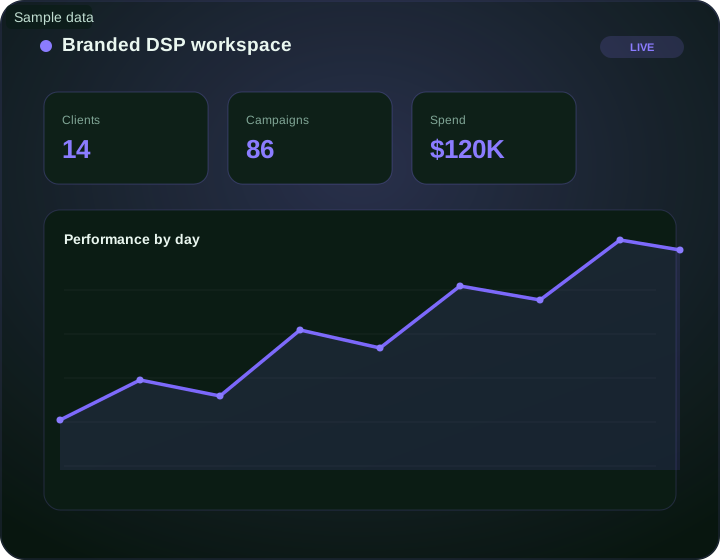
What should an agency confirm before evaluating a white-label DSP?
This guide focuses on white label dsp for advertisers. It explains the practical criteria, campaign controls, measurement steps and limits that matter before budget is increased. For broader context, continue with Choose the best demand side platform for your workflow.
Is a white-label DSP the right problem to solve?
Start with the client outcome and the agency job. If buyers mainly need targeting, bidding, budget control and measurable traffic, a direct platform workflow may solve the immediate need with less governance. White labelling becomes relevant when the agency has a documented reason to control the presented brand, client access or a connected operating layer.
Turn that reason into observable requirements. Write which users need access, which objects must remain separated, how campaign approval works, who funds media and what evidence clients receive. A request such as make it ours is too vague to test and encourages sales promises that operations cannot safely fulfill.
Compare both models against the same representative campaign. Keep the offer, destination, measurement rule and budget boundary stable so the team can see whether branding or integration creates real client value, extra work or new failure points.
Which capabilities matter in an agency buying workflow?
Direct campaign operation
Your media team needs a repeatable path from approved brief to launched campaign. In FroggyAds, frame that path around the supported campaign format, targeting, bid, budget and measurement settings required for the test. Document who may create, approve, pause and change each campaign.
Integration requirements
Describe the exact business task before requesting an API or OpenRTB connection. Identify the data direction, authentication, frequency, error handling and system of record. Confirm current technical capabilities with FroggyAds; do not design a client promise around an assumed endpoint or permission.
Quality and source decisions
Decide what evidence a buyer needs to review delivery and make source-level choices. Connect every keep, exclude or bid action to the campaign goal and advertiser-side accepted outcomes, while retaining rejected events so efficiency is not judged from clicks alone.
Optimization governance
Optimization should follow the client's mandate. Set the allowed bid and budget changes, the review cadence and the stop condition before delivery starts. The platform executes settings; the agency remains responsible for the offer, landing page, tracking and scale decision.
How do you design the workflow around real client operations?
Map one campaign from client brief through creative approval, setup, funding, launch, monitoring, reporting and reconciliation. At every handoff, name the person, required evidence and acceptance rule. This exposes work that a branded interface may hide but cannot remove, including claim approval, conversion validation and client communication.
Then model exceptions: a rejected creative, exhausted budget, tracking break, disputed result, user departure and urgent pause. A viable operating model gives each exception an owner and recovery path. If the team cannot reverse or explain a change, the pilot is not ready for another account.
What should you bring to a FroggyAds requirements discussion?
Bring a short operating brief rather than a broad request for white labelling. Include the number and type of client workflows, required user roles, campaign tasks, reporting fields, funding model, support route, data boundaries, integration jobs and migration timetable. Mark each item as required, useful or optional.
We can then separate what belongs in the direct FroggyAds buying workflow from questions that need commercial or technical confirmation. That gives you a clearer comparison and prevents an unverified capability from becoming part of a client contract or launch date.
How should you evaluate the direct FroggyAds workflow?
Create a controlled campaign plan with a real offer, approved destination, targeting rationale, budget ceiling and accepted conversion event. Walk the buyer through setup and reporting, then reconcile source-level spend with mature advertiser-side outcomes. The exercise shows which needs are already solved directly and which requirements still justify a separate branded discussion.
Start advertising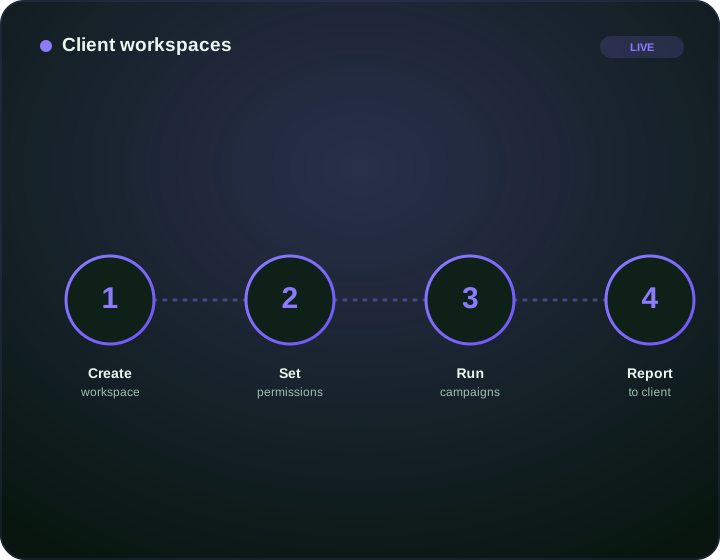
Frequently asked questions about white-label DSP evaluation
What is a white-label DSP?
A white-label DSP is a media-buying platform presented under another company's brand. The commercial model must also define who owns client accounts, funds media, controls access, supports users, retains data and approves campaign changes.
Does every agency need a white-label DSP?
No. An agency may need dependable targeting, budgeting, optimization and reporting more than a branded interface. Compare the value of branding with the extra operating, support, billing and governance work it creates.
Does FroggyAds promise a white-label arrangement on this page?
No. Confirm current commercial and technical availability with FroggyAds before describing any branded arrangement to a client. You can still evaluate our direct self-serve workflow for campaign execution while that discussion takes place.
What should an agency verify before a white-label migration?
Verify brand scope, client separation, user permissions, funding and invoicing, data ownership, reporting exports, integration needs, support routes, incident escalation, migration steps and a tested rollback path.
Can an agency use FroggyAds without white labelling?
Yes. Agencies can use the FroggyAds buying workflow for controlled traffic tests and manage campaign targeting, bids, budgets and measurement without making a white-label commitment.
Which FroggyAds resources support this decision?
Ad network API
Use the API resource to translate an automation idea into specific data and operator tasks that require confirmation.
Agency advertising workflow
Review how an agency can organize controlled traffic buying for client offers without making a white-label promise first.
Managed campaign discussion
Use support or managed-service information to decide where your team needs guidance and where it will retain execution ownership.
FroggyAds media information
Use current FroggyAds materials as a factual starting point, then verify any commercial, integration or branded requirement that affects a client commitment.
Why choose FroggyAds for the evaluation campaign?
FroggyAds gives your agency a practical execution layer for testing an approved offer with controlled targeting, bids, budgets and measurement. That lets you prove the campaign workflow before adding the governance and support work associated with a branded operation.
Operational questions before a pilot
How should client data be separated?
Document which client owns each campaign, conversion event, audience file, report, invoice and user permission. Test access with representative accounts and make cross-client visibility a release blocker.
When does an API or OpenRTB requirement matter?
It matters when a verified operating workflow needs automation or system integration. List the exact task, data direction, authentication, permissions, failure handling and reconciliation step, then confirm supported capabilities before designing around them.
How should an agency run a pilot?
Choose one representative client and one measurable campaign. Test account creation, approvals, funding, launch, reporting, support, accepted-outcome reconciliation and rollback before moving another account.
Does a branded DSP guarantee better campaign results?
No. Branding does not guarantee traffic quality, conversions, sales or profit. Evaluate delivery and advertiser-side accepted outcomes under a fixed offer, destination, budget and maturity window.
What is the practical next step with FroggyAds?
Write your required operating model first. Create a FroggyAds account to examine the direct campaign workflow, and contact us with the branded, technical or commercial requirements that need explicit confirmation.
How should you evaluate a white-label DSP operating model?
Treat the decision as an operating-model review, not a logo exercise. The table separates the evidence an agency should collect before moving client activity from the decision rule that allows the project to continue, pause or return to direct campaign buying.
| Decision area | Evidence to retain | Release rule |
|---|---|---|
| Brand and client promise | Approved product name, interface scope and every client-facing statement | Do not sell a branded capability until FroggyAds has confirmed the current arrangement in writing |
| Accounts and permissions | Client hierarchy, named users, roles, approval rights and tested visibility boundaries | A test user must see only the accounts, reports and actions assigned to that role |
| Billing and funds | Funding owner, invoice recipient, reconciliation process, tax handling and exception route | Finance and operations must agree who pays, who approves spend and who resolves a mismatch |
| Data and reporting | Event definitions, export fields, retention needs, client ownership and accepted-outcome joins | A sampled campaign must reconcile from platform delivery to the advertiser's accepted result |
| Integration and support | Required API or OpenRTB tasks, authentication, monitoring, support ownership and escalation contacts | The pilot cannot expand until failures can be detected, assigned and reversed without losing evidence |
What outcome should the pilot accept?
Define a successful pilot as an operable client workflow: the right people can create, review, fund, launch and measure a campaign without crossing another client's boundary. Brand appearance alone is not an acceptance result.
Use one campaign and one accepted conversion definition through the full review. Keep delivery, clicks and form submissions as diagnostics until the advertiser-side system applies its stated eligibility, rejection and maturity rules.
Who should own client eligibility and access?
List every user type before accounts are migrated: agency administrator, buyer, analyst, finance owner, client reviewer and support operator. Give each role the minimum actions and data needed for its job, then test denied actions as carefully as allowed ones.
Client eligibility for the pilot should be explicit. Select an account whose offer, destination, tracking and internal owner are stable enough to expose platform issues without mixing them with a launch that was already changing.
How do you preserve offer and destination continuity?
Freeze the approved creative promise, destination release and conversion definition during the comparison. If any of them changes, timestamp the release and separate later evidence so the agency does not credit the operating model for an unrelated offer improvement.
Complete the conversion path on the devices and account states the client expects. Record redirects, form behavior, confirmation, tracking parameters and backend status; a campaign-management interface cannot compensate for a broken buyer journey.
Which inventory and source questions belong in the pilot?
Write the targeting and source rules needed for the representative campaign before launch. The buyer should be able to explain what was selected, what was excluded and which source-level evidence will support a later keep, block or bid decision.
Do not convert an aspirational inventory request into a product promise. Confirm current reach and controls with FroggyAds for the intended campaign, then preserve the chosen settings with the campaign version used in the evaluation.
How should budgets, bids and approvals be governed?
Separate client authorization from platform execution. Store the approved ceiling, bid logic, pacing expectation, funding owner and person allowed to change each field. A buyer should never have to infer authority from access alone.
Run a low-risk test with a clear stop condition rather than using spend as proof of commitment. Reconcile the amount authorized, deposited where applicable, spent and attributed before approving another client or a larger budget.
What reporting proves the workflow works?
Create one reporting specification shared by media, analytics, finance and the client. It should define time zone, currency, campaign IDs, source fields, conversion status, exclusions, maturity window and the person responsible for resolving unmatched records.
Reconcile a sample in both directions: start with delivered traffic and find its advertiser-side outcome, then start with an accepted result and trace it back to the responsible campaign. Keep rejected and unresolved records visible instead of removing them from the story.
How do you optimize without crossing client boundaries?
Optimization should operate inside a documented client mandate. Name the signals a buyer may act on, the bid or source changes permitted, the approval needed for a new creative and the point at which the client must review a material strategy change.
Compare source and creative decisions using accepted value after the same maturity window. A lower click cost can be useful, but it is not a winning result when qualification, cancellations or operating effort move in the wrong direction.
How should brand ownership be documented?
Record the approved product name, logos, interface labels, domains, email identities and client documentation that the agency may use. Assign one owner to keep them consistent and to withdraw outdated material when the underlying arrangement changes.
A brand review also needs a truth check. Client-facing copy must distinguish confirmed platform capabilities from agency services, planned integrations and requests that FroggyAds has not approved. Remove ambiguous promises before a salesperson presents the proposal.
How should each client account be structured?
Decide whether campaigns, users, budgets, reports and conversion configurations live at agency or client level. Draw the hierarchy and attach real examples so implementation teams do not translate a single word such as account into different technical objects.
Test a new client, an existing client and a departed client. Creation, day-to-day access and offboarding expose different permission failures, and the exit path must preserve required records without leaving active access or reusable campaign settings behind.
Who owns billing, deposits and reconciliation?
Map the money path from client authorization through agency funding and platform spend to the invoice or internal charge. State who handles currency, tax, credits, disputed activity and unused balance questions rather than assigning all of them vaguely to finance.
A weekly reconciliation during the pilot should match approved budget, platform spend and the agency's client ledger. Any unexplained difference gets an owner and deadline before scale; it should not be absorbed into a blended margin that hides the operating defect.
What support boundary protects the client relationship?
Define whether the client contacts the agency, FroggyAds or a named escalation route for each issue type. Campaign advice, access recovery, billing questions and delivery incidents require different owners even when the first request reaches the same inbox.
Give support the campaign ID, client account, impact, screenshots or logs, recent changes and urgency rule. The handoff should contain enough evidence for the next team to act without asking the client to reconstruct the failure.
How should data ownership and retention work?
Create a field-level inventory for campaign settings, audience inputs, conversion events, reports, invoices, support records and user activity. For each item, identify the client or agency owner, permitted users, system of record and retention or deletion trigger.
Use exported records to test portability before migration, not after a dispute. Confirm that the agency can produce the evidence its clients require while protecting data belonging to other accounts and respecting the documented access model.
Which platform controls need explicit verification?
Translate each desired capability into an operator task: create a campaign, apply targeting, set a bid, cap a budget, review delivery, inspect sources or record conversions. Confirm the current supported path with FroggyAds instead of relying on a generic feature label.
Run the task with a representative user and retain the result. A capability is ready for the pilot only when permissions, feedback, reporting and error recovery work for the person who will operate it under realistic client constraints.
Next step: Record brand ownership, client account structure and a written responsibility matrix for platform, agency and client. Confirm the requirement with froggyads before presenting it to clients; verify an operating model whose commercial, technical and support responsibilities are documented before client traffic is moved before the next budget step. Create your free FroggyAds account. For White Label DSP, record client data fields and access permissions documented before migration and use an operating model whose commercial, technical and support responsibilities are documented before client traffic is moved before comparing the What Is A DSP intent.
What buyer decision does this page own?
Use white-label DSP evaluation to separate a true white-label requirement from the day-to-day controls needed to buy, measure and optimise media for clients. Compare the boundary with What Is A Dsp only where it clarifies the buyer's choice; this page serves an agency, reseller or media team assessing a branded buying operation and accepts an operating model whose commercial, technical and support responsibilities are documented before client traffic is moved as its decision point.
This page helps an agency decide whether a verified branded operating requirement justifies a white-label discussion, or whether direct FroggyAds campaign buying is the better immediate path. The decision depends on client operations, not the desire to place a logo on a dashboard.
| Checkpoint | Agency action | Evidence |
|---|---|---|
| Fit | State the client problem that branding, access or integration must solve | Approved requirements list with required and optional items separated |
| Pilot | Run one stable client campaign through setup, reporting and support | Account, campaign, billing, delivery and accepted-outcome records |
| Decision | Choose direct buying, a confirmed branded path or a narrower technical review | Signed owners, unresolved risks, rollback condition and next review date |
Your final memo should say what the pilot proved, what remained unverified and which party owns each next action. Keep sales language aligned with that evidence so a client never receives a broader promise than the operating team can support.
Use FroggyAds as the execution layer for White label DSP DSP power for your business: keep the offer and conversion definition stable, apply the needed media controls and let advertiser-side accepted value decide whether more spend is justified. Create your free FroggyAds account.
What matters first in a white-label DSP review?
Begin with ownership. If your team cannot name who controls client access, funding, data, reporting, support and rollback, interface branding is premature. Define those boundaries, test a representative campaign and ask FroggyAds to confirm any requirement that would affect a client promise.