
Tier 1 Targeted Traffic
Understand tier 1 targeted traffic, how to segment and measure it, and how to protect budget with source-level validation and controlled scaling.
What Tier 1 Targeted Traffic Means in Paid Acquisition
Tier 1 Targeted Traffic is best treated as a controlled acquisition method rather than a promise of instant customers. The operating purpose is to match paid delivery to locations where the offer, language, fulfillment and conversion path are genuinely available. The useful result is location-specific acquisition data that can be compared without mixing incompatible markets. Before buying traffic, document the conversion event, the accepted-value definition and the maximum loss the test can absorb. This protects the budget from a common mistake: treating every country, region or city as interchangeable and scaling before local economics are validated. FroggyAds provides self-serve access to broad inventory, targeting and source controls, while the advertiser remains responsible for the offer, creative, destination, tracking and commercial decision. The direct answer is practical. Use tier 1 targeted traffic when the available targeting and reporting can be connected to a real business outcome, then judge performance by validated outcome cost by geographic segment. Raw visits, clicks or installs are diagnostic signals, not the final definition of success.
Build the Market and Offer Fit First
A campaign should begin with a fit check between the offer, the audience and the destination. For Tier 1 Targeted Traffic, write down who can use the product, where it is available, which devices or environments are supported and what the user should understand before converting. Confirm pricing, fulfillment, language, policy restrictions and customer-support capacity. A buyer can separate Tier 1, emerging-market and city-level tests instead of allowing one blended average to hide different costs and values. This preparation keeps media analysis honest because a weak market match cannot be repaired by cheaper clicks alone. It also prevents unrelated variables from being combined into one campaign. Keep the first test narrow enough to diagnose, but broad enough to produce a useful sample. The central planning lens is market fit, localization, regional bidding and geographic performance separation. Each element should have a measurable hypothesis and a clear owner before spend begins.
Define a Trustworthy Measurement Model
Measurement should be complete before tier 1 targeted traffic receives meaningful budget. Pass a unique click identifier, preserve campaign and source parameters, and return validated conversions through a server-to-server postback or another reliable event integration where available. Align attribution windows and time zones across the buying platform, tracker, analytics property and advertiser backend. Separate provisional events from accepted outcomes. An install, lead or purchase can require later validation for activation, quality, refund risk or fulfillment. Review discrepancies on a fixed cadence matched to the conversion delay and operational risk, instead of reacting to each isolated conversion. The primary decision metric is validated outcome cost by geographic segment, supported by conversion rate, rejection rate, time-to-conversion and downstream value.
Forecast Budget, Bids and Test Exposure
Start with the value of the accepted outcome. Subtract product, fulfillment, payment, support and variable operating costs, then set a conservative maximum acquisition cost. Translate that ceiling into a CPC or CPM range using a cautious conversion-rate assumption. Reduce the opening bid to preserve room for uncertainty, creative variation and source-level testing. A useful tier 1 targeted traffic budget must collect enough observations to compare sources without exposing the account to an unlimited loss. Record a hard stop and the evidence required to extend the test. A practical starting review point can be around 55 meaningful conversion opportunities, adjusted for payout, variance and conversion delay. The goal is not to buy the cheapest traffic. It is to buy enough measurable traffic to decide whether the economics can repeat.
A Five-Step Workflow for Tier 1 Targeted Traffic
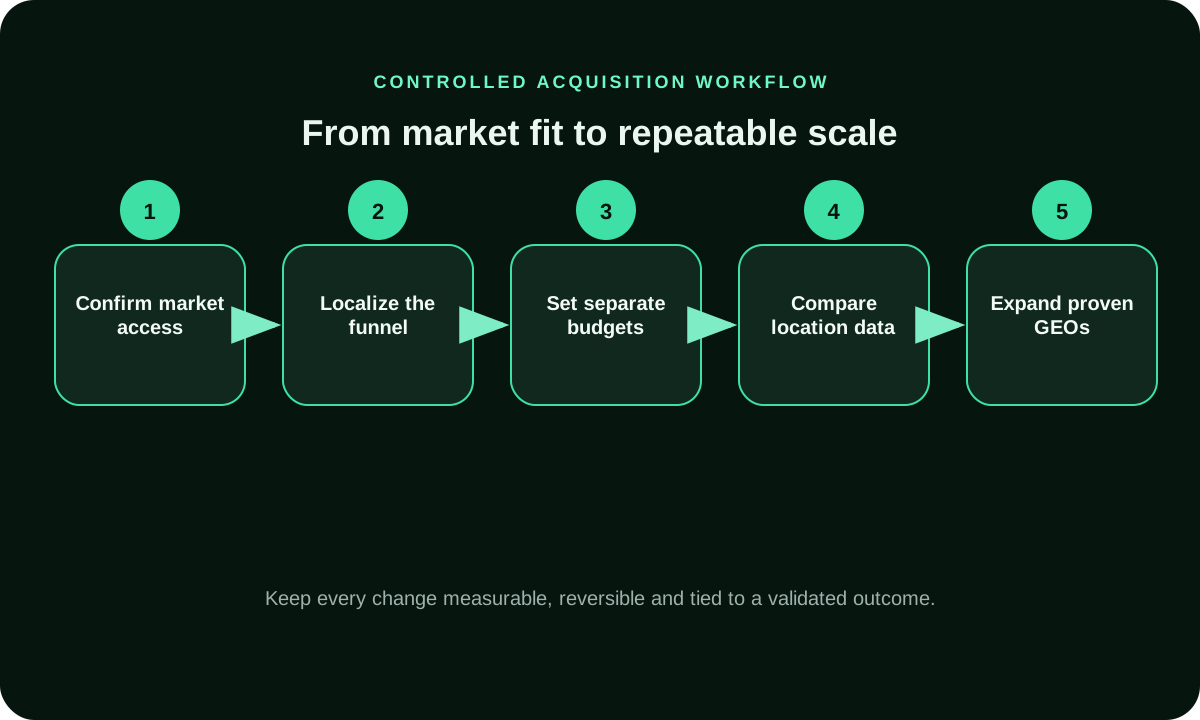
For Tier 1 Targeted Traffic, the workflow follows five connected decisions. First, confirm the market, audience and valid outcome. Second, prepare the creative and destination so the message continues after the click. Third, launch with separate reporting for the most important segment differences. Fourth, let data mature across sources and time periods. Fifth, scale only the combinations that remain inside the acquisition ceiling. This order matters because premature optimization can remove viable inventory, while premature scaling can amplify a short-lived result. Hold major campaign settings stable for at least 7 review cycles whenever the conversion volume allows it. The workflow visual below keeps the team focused on evidence and prevents budget changes from becoming disconnected from the original hypothesis.
Segment Tier 1 Targeted Traffic Without Losing Reach
Segmentation should explain performance, not simply make the campaign look precise. Begin with essential restrictions such as supported GEOs, languages, device compatibility and offer rules. Add category, keyword, device, operating-system, connection or source controls only when they support the user experience or a testable hypothesis. Keep optional targeting broader until enough accepted results exist to compare. A narrow segment can produce an attractive rate but too little volume to support growth. Broad inventory can also contain profitable placement pockets that become visible only after source IDs are preserved. For tier 1 targeted traffic, compare segments under the same conversion definition and avoid changing bids, creative and destination at the same time. This makes each conclusion more defensible and easier to repeat.
Creative, Message and Destination Continuity
The ad and destination should tell one truthful story. Use a headline that describes a real benefit or next step, a visual that supports the message, and a first screen that confirms what the user clicked. Avoid fake system warnings, unsupported performance claims, misleading scarcity and interface elements that imitate device controls. Test the destination on the devices, operating systems and network conditions represented in the campaign. Page speed is part of media performance because every delay creates paid abandonment before the offer can be evaluated. For Tier 1 Targeted Traffic, use one primary call to action and remove distractions that do not support the conversion. When a pre-lander is used, it should qualify or educate the visitor rather than hide the actual product or destination.
Use Source-Level Quality Controls
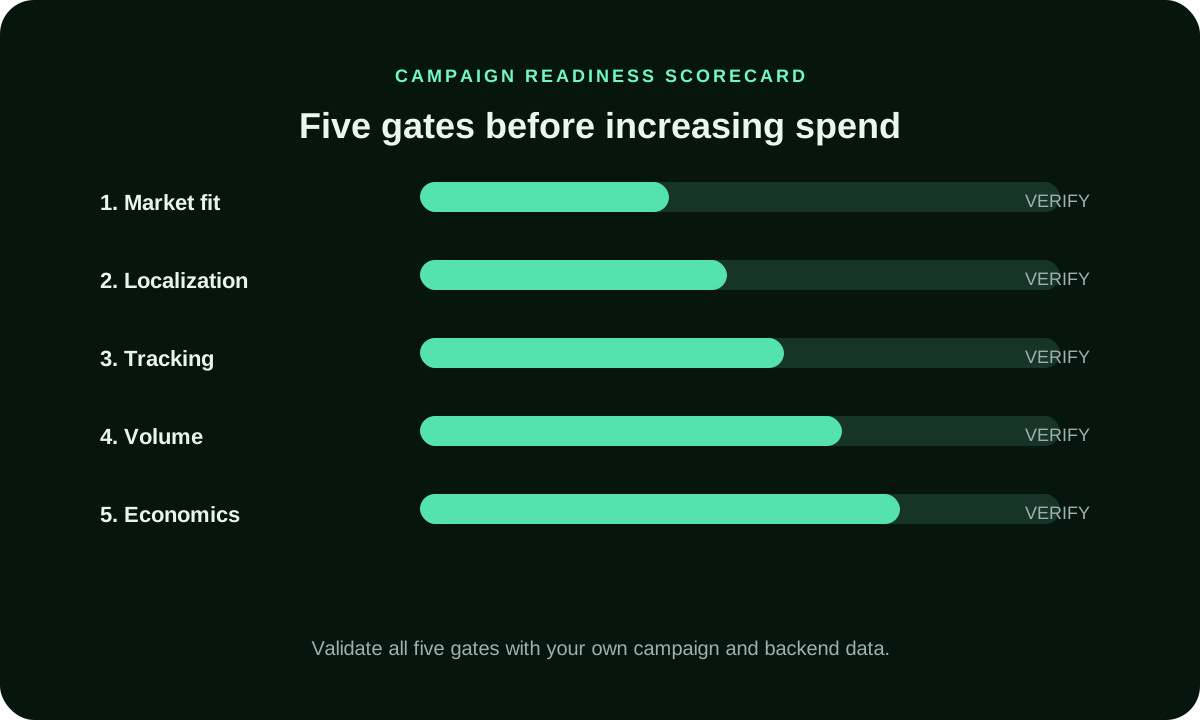
Preserve publisher, placement or source identifiers so tier 1 targeted traffic can be optimized at the level where performance differences actually occur. Classify sources by spend, sample maturity, accepted conversion quality and economic result. A source with no conversions may need more data when the expected rate is low, while a source that repeatedly generates rejected or invalid outcomes can be stopped earlier. Use blacklists for proven waste, whitelists for repeatable supply and bid adjustments for sources that are viable at a different price. Keep a baseline segment so the effect of each change remains visible. The readiness scorecard below applies five gates: Market fit, Localization, Tracking, Volume, Economics. Passing one gate does not compensate for failure in another.
Scale Tier 1 Targeted Traffic in Measured Increments
Scaling should increase profitable volume without assuming the original efficiency will remain unchanged. Raise bids or daily caps in measured steps, and let each increase collect mature data. Expansion can also come from additional GEOs, devices, audience groups, formats or source whitelists, but every expansion should have a separate reporting view. Watch marginal performance rather than the blended account average. A large proven segment can hide a new source group that is losing money. Stop scaling when accepted acquisition cost moves outside the planned range, quality deteriorates, the destination slows down or operational capacity becomes constrained. The objective of tier 1 targeted traffic is repeatable value, not the largest possible one-day traffic number.
Interpret Volume and Quality Together
Volume and quality should be reviewed as a pair. High volume is useful only when the tracking stack can attribute it and the business can process the outcomes. Low volume can appear efficient because a few conversions dominate the average, yet still be too fragile for planning. For Tier 1 Targeted Traffic, compare reach, win rate, click cost, conversion delay, accepted action rate and downstream value over multiple time periods. Identify whether performance changes when the budget increases. A stable source should remain commercially useful beyond the first small sample. GEO labels describe location, not purchasing intent. A high-income market can still be unprofitable when the offer, price or landing experience is poorly matched. This is why source-level exports, backend validation and change logs are essential. They convert a traffic label into evidence that can support or reject a scaling decision.
Common Failure Modes to Avoid
The most common failures are operational. Tracking is incomplete, the destination does not continue the ad promise, budgets are divided across too many small campaigns, or sources are blocked before they reach a useful sample. Another failure is optimizing to CTR, install count or visit volume while the backend result is the true objective. Teams can also compare headline CPC or CPM without normalizing for conversion quality. For tier 1 targeted traffic, require evidence for every exclusion, bid increase and scale decision. Keep campaign exports, screenshots and a dated change log. These records make it easier to diagnose a decline, reconcile systems and prevent the same failed test from being repeated under a new name.
How FroggyAds Supports Tier 1 Targeted Traffic
For Tier 1 Targeted Traffic, FroggyAds is a self-serve media buying platform for advertisers, affiliates and performance teams that want direct campaign control. The platform provides access to 750+ SSP integrations and more than 20 billion daily impressions across supported formats and markets. Buyers can use GEO, city, device, operating system, browser, carrier, category, source, ID and IP controls where available, together with budgets and reporting. Those tools support market fit, localization, regional bidding and geographic performance separation, but they do not replace truthful creative, offer compliance, reliable attribution or backend validation. Begin with a controlled budget, inspect source-level results and expand only when the campaign produces commercially useful outcomes. Results vary by market, format, competition, destination, conversion value and optimization quality.
Final Buyer Checklist for Tier 1 Targeted Traffic
Before launch, confirm five things. The audience and market must be eligible. The accepted outcome must have a documented value. Tracking must pass a live click-to-conversion test. The destination must load quickly and match the creative. The budget must include a stop rule. During the test, review source quality, conversion delay, rejected outcomes and effective acquisition cost. After the test, document the winning and losing hypotheses, the exact settings used and the assumptions that changed. Tier 1 Targeted Traffic becomes strategically useful when another buyer can repeat the decision process from the same evidence. No page, platform or traffic label can guarantee profit, rankings, installs, sales or lead quality.
Supporting controls for Tier 1 Targeted Traffic
Tier 1 Targeted Traffic FAQ
What is tier 1 targeted traffic?
Tier 1 Targeted Traffic is a paid-acquisition concept used to match paid delivery to locations where the offer, language, fulfillment and conversion path are genuinely available. It should be evaluated through validated outcome cost by geographic segment, not raw traffic volume alone.
Who should test tier 1 targeted traffic?
Advertisers, affiliates and media buyers can test it when the offer is eligible, the destination is ready, tracking works and a controlled loss limit is defined. For Tier 1 Targeted Traffic, validate this point against Targeted Traffic, Targeted, Traffic and keep it separate from the Tier 3 Ad Network intent.
How much budget does tier 1 targeted traffic require?
Budget depends on the bid model, expected conversion rate, outcome value, GEO, competition and variance. Calculate a maximum acquisition cost before launch.
Which metric matters most for tier 1 targeted traffic?
The primary metric is validated outcome cost by geographic segment. CPC, CPM, CTR and visit volume are supporting signals that help explain the final result. For Tier 1 Targeted Traffic, validate this point against Targeted Traffic, Targeted, Traffic and keep it separate from the Tier 3 Ad Network intent.
How should tier 1 targeted traffic be tracked?
Pass unique click and source identifiers, return validated events through a postback or reliable integration, and reconcile platform, tracker and backend data.
How long should a tier 1 targeted traffic test run?
Run until multiple sources and time periods have mature outcome data. The correct duration depends on volume, conversion delay and expected variance.
How can traffic quality be checked?
Review source-level behavior, duplicate patterns, time-to-conversion, accepted outcomes, backend value and attribution discrepancies rather than relying on one score.
When should tier 1 targeted traffic be scaled?
Scale after attribution is stable, accepted acquisition cost is within range, source quality is verified and performance survives a meaningful volume increase.
What should be avoided with tier 1 targeted traffic?
Avoid treating every country, region or city as interchangeable and scaling before local economics are validated. Also avoid misleading creative, unsupported claims and decisions based on very small samples. For Tier 1 Targeted Traffic, validate this point against Targeted Traffic, Targeted, Traffic and keep it separate from the Tier 3 Ad Network intent.
Can FroggyAds support tier 1 targeted traffic?
FroggyAds provides self-serve inventory access, targeting, budgets and source-level reporting that can support a measured test. Results depend on the complete campaign system.
Continue the acquisition workflow
Build a controlled tier 1 targeted traffic test
Define one objective, verify tracking, protect the test budget and make source-level decisions from mature data. Results vary by offer, GEO, creative, destination, competition and optimization. For Tier 1 Targeted Traffic, validate this point against Targeted Traffic, Targeted, Traffic and keep it separate from the Tier 3 Ad Network intent.
Tier 1 Targeted Traffic: decision depth without generic filler
This section exists to support one page-specific task for performance-focused advertisers: plan the market-specific test and measurement rules. It uses the page’s own headings, entity coverage and current comparison research as decision prompts. It does not turn external terminology into FroggyAds product claims, and it does not guarantee traffic quality, sales, profit or rankings. For Tier 1 Targeted Traffic, validate this point against the page-specific evidence and accepted outcome and keep it separate from the Tier 3 Ad Network intent.
| Decision layer | Evidence to retain | Review rule |
|---|---|---|
| Market Scope | Record the current campaign objective context and the assumption being tested. | Review programmatic only if it changes the setup, measurement or accepted business outcome. |
| Regional Eligibility | Record the current audience context and the assumption being tested. | Review push only if it changes the setup, measurement or accepted business outcome. |
| Device And Connection Mix | Record the current ad format context and the assumption being tested. | Review self-serve advertising platforms only if it changes the setup, measurement or accepted business outcome. |
| Language And Destination Fit | Record the current budget context and the assumption being tested. | Review programmatic advertising only if it changes the setup, measurement or accepted business outcome. |
| Supply And Source Mix | Record the current bid context and the assumption being tested. | Review self-serve advertising only if it changes the setup, measurement or accepted business outcome. |
Market Scope for Tier 1 Targeted Traffic
Use What Tier 1 Targeted Traffic Means in Paid Acquisition as the evidence anchor for this layer. For Tier 1 Targeted Traffic, market scope should help performance-focused advertisers plan the market-specific test and measurement rules. Record the assumption, the campaign control it changes, and the evidence that would reject it before increasing spend.
Keep campaign objective and ad format attached to that decision. A neighboring page such as Tier 3 Ad Network may share vocabulary, but it owns a different buyer task; use this page only when the operating question remains plan the market-specific test and measurement rules.
Next step: When this page calls for paid traffic, create a bounded FroggyAds test with stable conversion tracking, the relevant targeting and format controls, and source-level evidence. Increase spend only after the accepted outcome and its cost relationship are mature enough to support the next decision. Create your free FroggyAds account. For Tier 1 Targeted Traffic, validate this point against the page-specific evidence and accepted outcome and keep it separate from the Tier 3 Ad Network intent.
State exactly which markets the test counts as Tier 1, then preserve country, source, device, landing behavior and accepted outcomes so the tier label remains a planning grouping rather than a quality guarantee.
Tier 1 Targeted Traffic: the decision this URL owns
The purpose of Tier 1 Targeted Traffic is to help a performance advertiser make a controlled next-step decision: plan the market-specific test and measurement rules. Every setup and measurement choice on this page should support that decision.
Decision inputs for Tier 1 Targeted Traffic: campaign objective, audience targeting, conversion tracking, source evidence. Keep these inputs tied to accepted conversion or business-value event and the page-specific job: plan the market-specific test and measurement rules.
URL boundary for Tier 1 Targeted Traffic: This URL owns Tier 1 Targeted Traffic; Tier 3 Ad Network is the nearest neighboring topic and should keep its separate task. Use this page only for the decision implied by Tier 1 Targeted Traffic.
Build the Market and Offer Fit First is the measurement checkpoint for this URL. Resolve “Who should test tier 1 targeted traffic?” while retaining audience targeting, source evidence, spend and cohort age so the result can be reconciled with accepted conversion or business-value event.
Define a Trustworthy Measurement Model is the action checkpoint for Tier 1 Targeted Traffic. Before acting on “How much budget does tier 1 targeted traffic require?”, document conversion tracking, the resulting campaign action and the rollback or retest condition.
What Tier 1 Targeted Traffic Means in Paid Acquisition is an evidence checkpoint for Tier 1 Targeted Traffic. To answer “What is tier 1 targeted traffic?”, keep campaign objective in the same campaign record and use it to plan the market-specific test and measurement rules.
| Page checkpoint | How to use it | Evidence to retain |
|---|---|---|
| What Tier 1 Targeted Traffic Means in Paid Acquisition | Use What Tier 1 Targeted Traffic Means in Paid Acquisition to establish the first evidence boundary for Tier 1 Targeted Traffic; then record which part of campaign objective, targeting, source evidence, conversion tracking and economics it changes. | Keep campaign objective, source/campaign ID and the accepted-event definition together. |
| Build the Market and Offer Fit First | Use Build the Market and Offer Fit First as the second checkpoint and reconcile it with accepted conversion or business-value event before changing budget or source allocation. | Retain audience targeting, spend, timestamp/cohort age and accepted/rejected outcomes. |
| Define a Trustworthy Measurement Model | Use Define a Trustworthy Measurement Model as the final checkpoint: if it does not change the evidence for accepted conversion or business-value event, keep the test narrow rather than scaling. | Document conversion tracking, the decision taken and the rollback or retest condition. |
Transparent Tier 1 Targeted Traffic decision example
Hypothetical example: For Tier 1 Targeted Traffic, a hypothetical controlled cell that spends USD 260 and records 13 accepted conversion or business-value event after the same maturity window has an accepted cost of USD 20.00 per outcome. Replace the figures, outcome and review window with your own economics; this is not a FroggyAds performance claim.
Why use FroggyAds here?
For the controlled test described by Tier 1 Targeted Traffic, FroggyAds lets you manage paid delivery, targeting and source actions while your accepted-event data decides whether the cell should be kept, capped or expanded. Create your free FroggyAds account.
Research basis for Tier 1 Targeted Traffic: This URL helps performance-focused advertisers plan the market-specific test and measurement rules. It is mapped to the general ads research cluster. Our current review used shopify.com and support.google.com to check terminology, buyer questions and decision coverage relevant to Tier 1 Targeted Traffic. These external sources are research inputs, not evidence of FroggyAds campaign performance.
Tier 1 Targeted Traffic — what matters first
Tier 1 Targeted Traffic is most useful when it helps a buyer plan the market-specific test and measurement rules. Define the accepted outcome first, then use targeting, budget and source-level evidence to decide what deserves more spend.