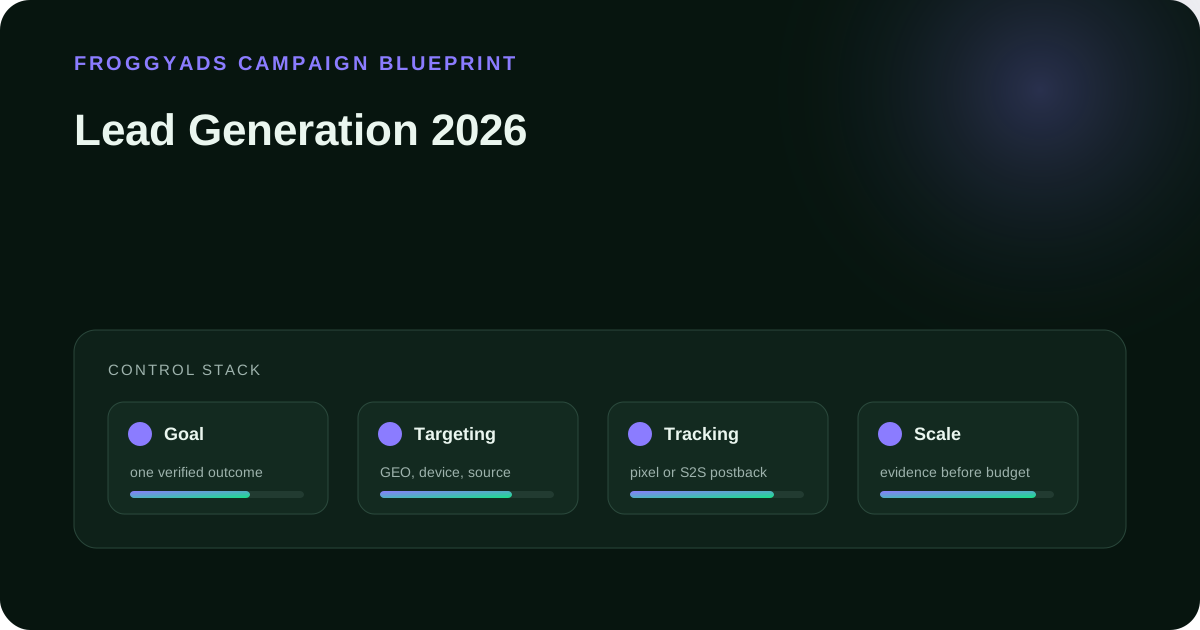
Decision depthLead Generation 2026: practical checks before more budget
What should a 2026 lead-generation operating plan preserve?
New tools, automation and channel changes can alter how a campaign is executed, but they do not remove the need for a stable prospect definition and an advertiser-side qualification rule. Keep campaign and source identifiers, the landing or form version, the conversion event, the validation window and the CRM acceptance status in the same decision record. That lets you test a new tactic without silently changing what a good lead means.
How should new automation be evaluated?
Use automation to make a bounded decision faster, not to replace business validation. If an automated rule changes bids, sources, targeting or creative, record the change and compare the next mature cohort with the previous stable setup. A recommendation that increases forms but weakens acceptance, contactability or opportunity quality should not earn more budget. FroggyAds can provide the paid-traffic controls; your CRM or backend remains the authority for qualified value.
A practical 2026 review cadence
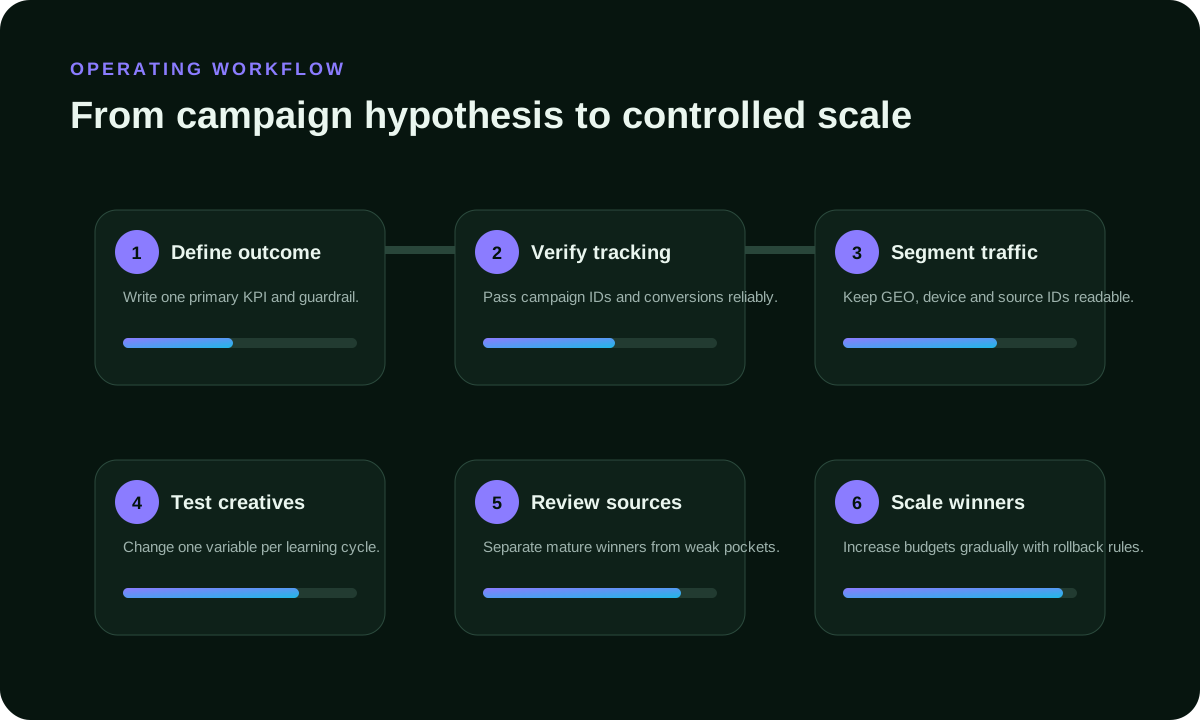
Before launch, confirm the accepted lead definition and tracking. During delivery, watch source mix, landing behavior and technical conversion integrity. After the qualification window matures, reconcile captured leads with accepted or rejected outcomes and document the reasons. Only then decide whether to keep, cap, exclude, retest or expand a source. This cadence keeps current tactics useful without turning novelty into evidence.
Keep measurement portable when channels change
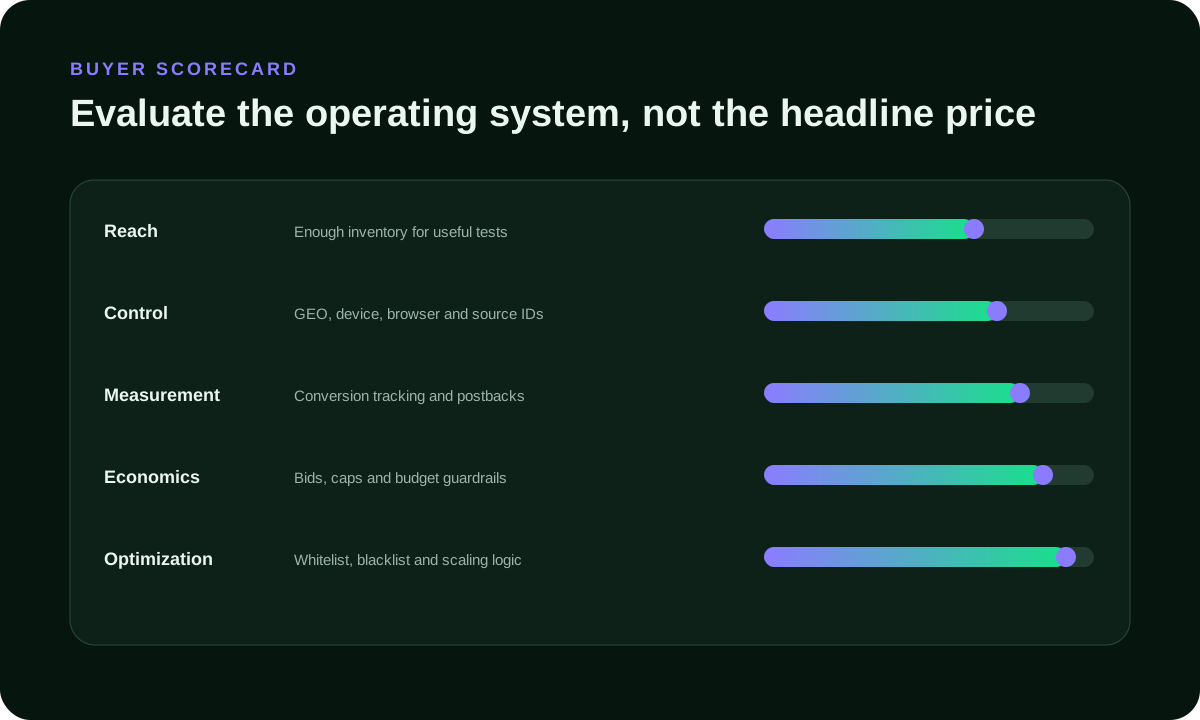
A 2026 acquisition stack may add new automation, privacy controls, reporting interfaces or traffic sources during the year. Keep the business measurement portable across those changes by defining the accepted lead outside any single platform. Record the source identifier, conversion timestamp, destination version, qualification status and the system that approved or rejected the lead. When a channel or attribution setup changes, run an overlap period where possible and document the break in comparability. This prevents a reporting migration from looking like a performance improvement. It also gives media buyers a stable rule for FroggyAds tests: delivery can be optimized inside the platform, but the budget decision should still reconcile with the same advertiser-side qualification record used before the tooling change.