
Carrier Targeting Advertising: A Practical Guide for Media Buyers
By FroggyAds. Carrier targeting can help a media buyer test whether mobile-network context changes response to an offer. This guide explains when that filter is useful, how to protect reach, and how to compare a carrier segment with a broader control. FroggyAds gives advertisers a self-serve place to configure campaigns and inspect source-level results; your tracking and accepted conversion data decide whether a segment deserves more budget.
What Carrier Targeting Means for a Media Buyer
Carrier targeting uses a mobile-network signal to shape delivery. Test it when the carrier matters to your offer, and compare results with a broader audience before scaling.
A carrier signal can reflect the network used for a connection, while a person may travel, roam, switch between Wi-Fi and cellular, or use more than one device. The advertiser should therefore treat the chosen value as a delivery condition and confirm that the offer, market, and available reporting support the test. It is a weak basis for audience claims or assumptions about intent.
When Carrier Targeting Is Worth Testing
Use carrier targeting only when network context changes the buyer or delivery decision. Keep GEO and device conditions stable, then compare accepted outcomes by source.
This comparison works best when the offer or journey has a specific network-related requirement. If the only reason is an assumption that one carrier has better users, state what outcome would confirm that belief and keep a broad control. Record any unavailable carriers or delivery limits before launch so a small sample is not mistaken for a reliable performance difference.
Measure Accepted Outcomes Before Delivery Volume
Define the accepted conversion before the campaign begins. For a lead offer, distinguish a form submission from a lead that passes the advertiser’s quality review. For ecommerce, record whether the decision uses an order, a paid order after cancellations, or a later net-value event. Preserve the campaign, creative, carrier, GEO, device, and source identifiers through the click and conversion path. Compare the tracker with the advertiser’s backend using the same time zone and attribution window. Carrier-specific optimization is unreliable when conversions arrive late or are deduplicated differently across systems. Use provisional data for monitoring delivery; use mature, accepted events for decisions about cost, source quality, and expansion.
Set a Carrier Test Budget from Unit Economics
Build the test ceiling from the economics of the offer rather than from a generic “safe” spend amount. Estimate the value of an accepted event, subtract variable costs, and set the highest acquisition cost your business can tolerate. Then account for the observed funnel rate between a paid interaction and that accepted event. If the rate is unknown, use a conservative planning assumption and treat it as a hypothesis, not a forecast. Split the approved test budget between a carrier-focused segment and a broad comparison only if both can collect interpretable data. Write down the stop loss, review date, and conversion maturation window before launch. That way, a temporary delivery spike cannot silently turn into an open-ended spend decision.
A Controlled Workflow for Carrier Targeting
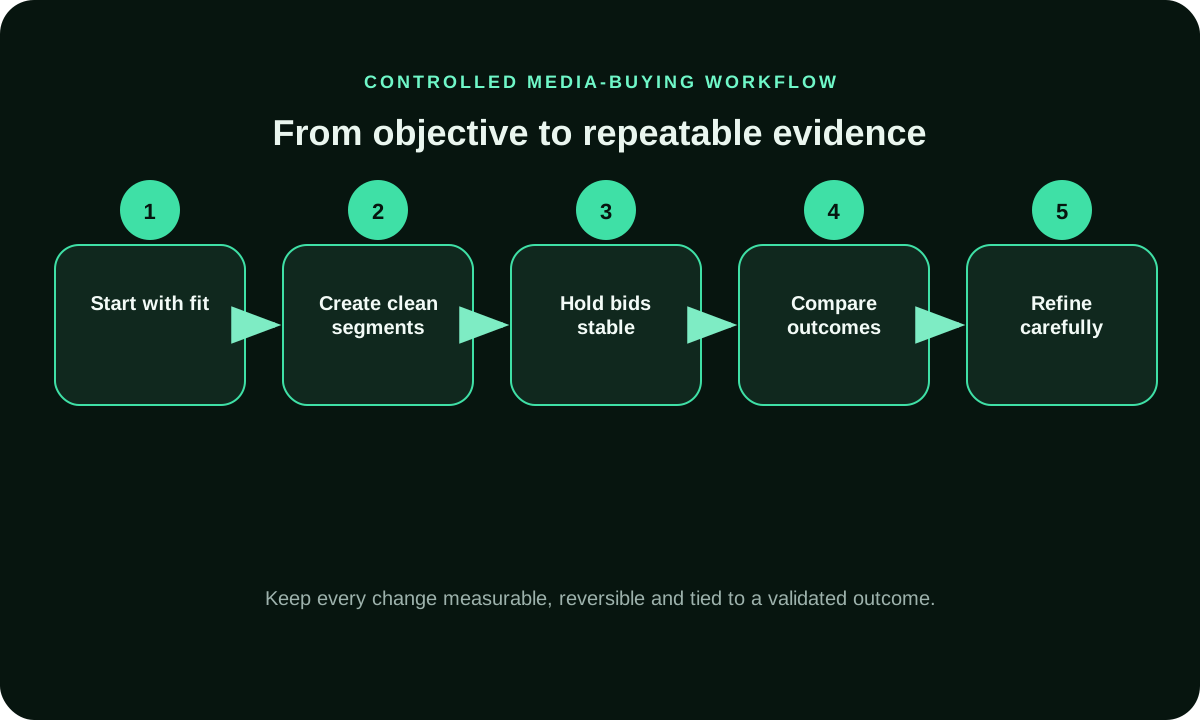
Keep the first launch simple enough to explain. Confirm the offer and destination are allowed, verify the conversion event end to end, choose one market, and make a carrier segment only where the account provides a valid option. Keep a broad baseline with the same creative and bid assumptions. Assign distinct campaign or source labels so reporting does not merge the groups. Let both segments run through the same weekday and time range when possible; otherwise, a schedule difference can look like a carrier effect. Review delivery first for setup faults, then wait for the relevant conversion window before judging quality. Change one material variable per review cycle and record why it changed.
Select Carrier Segments Without Losing Reach
Begin with the minimum number of filters needed to answer the question. If you want to know whether carrier context matters, hold country, operating system, device class, creative, destination, and time window steady. Do not start with a carrier, narrow city list, one browser, and a single app category unless the offer truly requires all of them. Each additional condition reduces the set of eligible impressions and can create a campaign that barely spends. Keep an unfiltered or less-restricted comparison where the campaign objective allows it. Once data matures, inspect each dimension separately and add a constraint only when it improves accepted-outcome economics or satisfies a real eligibility rule.
Match the Mobile Experience to the Network
A network label does not guarantee that a mobile page will work well on that connection. Check the landing page on representative phones, make the offer and next action visible without excessive scrolling, and keep forms short enough for touch input. If a signup or purchase needs a newer operating system or app version, say so before the click rather than paying for ineligible visitors. Avoid video-heavy or large creative assets when the destination experience is designed for constrained bandwidth. The creative promise, first screen, and conversion flow should align. When a carrier segment looks weaker, inspect page load, form completion, and error rates before assigning the cause to the network itself.
Read Carrier Results Alongside Source Data
Use the smallest reporting unit that answers the business question and still has enough observations to be useful. If reports expose both carrier and source identifiers, review the intersection only after each dimension has adequate volume; otherwise, a handful of events can produce unstable rates. Separate spend and delivery checks from conversion-quality decisions. A high click-through rate may show message engagement, but it cannot establish that leads were accepted or orders remained valid. Compare cost per accepted event, rejection rate, time to conversion, and downstream value where the advertiser can supply it. Preserve a date range and the exact targeting configuration so the analysis can be repeated after a creative or bid change.
When to Keep, Exclude or Broaden a Carrier Segment
Keep a segment when its mature results meet the prewritten cost and quality rules. Exclude it when there is a documented policy mismatch, repeated invalid activity, or a sustained cost outside the business limit after an adequate observation window. Broaden it when delivery is too thin to test and the offer does not require that constraint. Avoid deleting a carrier solely because one short period missed the target; check whether attribution is still maturing, whether spend reached the segment, and whether the destination changed. Every keep, exclude, or broaden decision should name the evidence and the next review condition. This creates a useful audit trail instead of a list of unexplained targeting changes.
Scale Only After the Evidence Settles
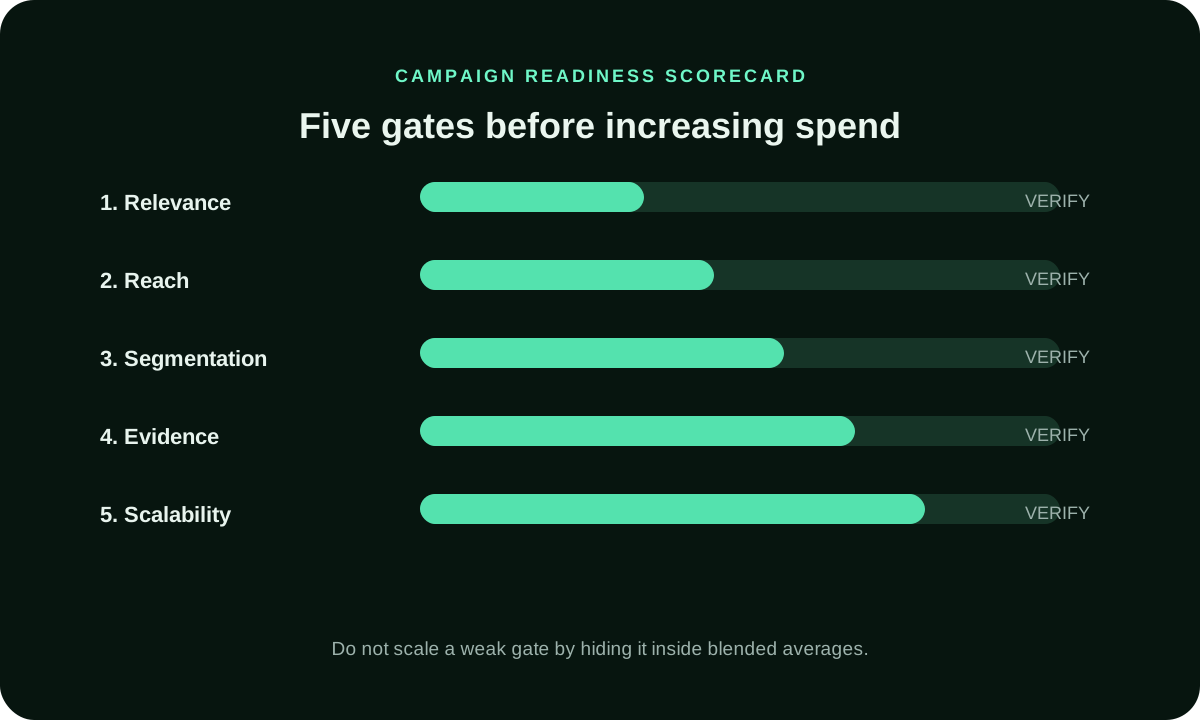
Expansion should protect the comparison that taught you something. First raise volume within the tested configuration in measured steps, then test an adjacent carrier or broaden geography as a separate cell. Do not combine several new carriers and a new creative in the same change if you need to know which one affected performance. Watch marginal cost and accepted quality after each increase; a profitable blended average can conceal a weak new segment. If the advertiser cannot process the extra leads or support the additional customers, delivery is not a useful form of scale. Pause increases when lead acceptance falls, refund or cancellation rates rise, or the landing experience becomes unreliable. Restart only with a clear fix and a new baseline.
Carrier Targeting Mistakes That Waste a Test
One common error is treating carrier targeting as a demographic shortcut. It describes a network relationship, not age, income, interests, or a verified customer profile. Another is comparing a narrow carrier cell against a broad campaign that uses a different creative, bid, or date range. Buyers also overreact to early ratios, ignore delayed postbacks, or optimize toward clicks because those arrive first. On the setup side, a carrier choice may be unavailable in a market or unsupported by some inventory; validate the actual controls before promising reach. Finally, do not claim that the carrier caused a lift unless the test design isolates that factor. Phrase conclusions as “observed in this test” and retain the limits.
How FroggyAds Supports Carrier-Level Campaign Tests
FroggyAds is a self-serve advertising platform with campaign controls for targeting, budgets, formats, and traffic-source review. Its audience-targeting information lists carrier among the available targeting dimensions; availability and inventory still depend on campaign setup and market. That gives affiliates, media buyers, and advertisers a practical way to test a carrier hypothesis while keeping source identifiers and campaign economics visible. You bring the offer, creative, destination, conversion tracking, and business acceptance rule. We recommend starting with a controlled test, keeping a comparison group, and increasing spend only when mature results justify it. Create your free account to review the platform and build a campaign around your actual goal.
Carrier-Specific Setup and Reporting Controls
Before choosing a carrier, verify which values the account exposes for the intended market and format, and check whether the reporting view returns that dimension after delivery. Keep carrier, device, geography, and source fields separate in the test notes. If the platform cannot report the segment you planned, use a broader measurable comparison rather than inferring carrier behavior from another field.
Carrier Targeting Questions from Advertisers
What is carrier targeting in advertising?
Carrier targeting narrows campaign delivery using a mobile-network signal. It is most useful when network context relates to offer eligibility or the mobile experience; it does not identify a person’s interests.
When should an advertiser use carrier targeting?
Use it when the product or conversion path has a real carrier-related condition. If itisonly a guess about audience quality, test broadly first andmeasureaccepted outcomes.
Does carrier targeting identify a user’s interests?
No. A carrier is a network relationship, not a verified profile, interest, income band, orpurchasesignal. Treat it as one delivery dimension and validate itsvaluewith campaign data.
How do I compare a carrier segment with broad traffic?
Keep creative, geography, device, bid assumptions, destination, dates, and conversion definition aligned.Thencompare mature accepted outcomes and cost, retaining sourceidentifiers for diagnosis.
Which conversion should guide a carrier test?
Use the business event that has passed the advertiser’s quality rule, such as an approved lead or a paid order after cancellations. Clicks and form submissions can be earlier diagnostic signals.
Can I target every mobile carrier in every country?
No. Available options vary by market, inventory, campaign type, and platformcontrols.Verify the actual carrier list before forecasting spendor promising coverage.
How many carriers should I test at once?
Begin with one carrier comparison or a small set that answers a specific question. Adding many segments at once can leave each with too little delivery for a useful decision.
What should I check when a carrier segment does not spend?
Check whether the carrier option is available in that market and format, then review other filters, dates, budget, bids, creative eligibility, and account setup. Broaden one nonessential constraint at a time.
When should I exclude a carrier from a campaign?
Exclude it when a verified policy or eligibility rule requires it, or when mature evidence repeatedly missesthewritten cost and quality limits. Keep the reason and review periodinthe campaign log.
Can FroggyAds help me run a carrier-targeted campaign?
FroggyAds lists carrier among its audience-targeting options and provides campaign and source-level controls. Confirm availabilityinyour account, then test against an appropriate baseline; outcomes depend ontheoffer and setup.
Campaign Resources for the Next Decision
Use the reporting guide to preserve conversion identifiers, the budget guide to write a loss limit, and the source guide to keep placement evidence attached to each result. Review the landing-page guide when mobile completion is weak. These resources address separate decisions; none replaces the advertiser’s own conversion and quality records.
Build a Carrier Test with a Broad Baseline
Before launch, confirm the carrier segment is available for the intended geography and campaign type. Check that the offer is genuinely relevant to the users it includes, the landing page supports the devices you plan to reach, and tracking retains each campaign and source identifier. Write down the conversion event, rejection rules, maximum test loss, attributionwindow, anddate for the first mature review.Keep the creative and bid assumptions consistent between the carrier segment and its comparison. After launch, verify delivery before assessing performance. When the observation window closes, record accepted outcomes and the action: continue, broaden, or stop. These simple checkpointsmake the result easierto trust and repeat.
A Practical Decision Matrix for Carrier Selection
The companion carrier-targeting overview explains the platform setting; this pageanswers thenext media-buying question: should carrier be isolated as a segment, how can the comparison stay fair, and what evidence justifies keeping the filter? Network context can matter to a mobile offer or service, but it is not a shortcut to intent, a conversion guarantee, or a substitute for tracking. Start with onedefensiblehypothesis, compare witha broad baseline, and judge mature accepted outcomes. FroggyAds lets you configure campaigns and inspect source-level data; yourbusiness evidencedecides what to keep.
| Decision question | Evidence to record | Review rule |
|---|---|---|
| Carrier relevance | Write the offer or delivery condition that requires this network segment. | Keep the filter only when the stated condition is real and testable. |
| Available reach | Record market, format, device, carrier options, and delivered volume. | Broaden one nonessential condition if the cell cannot gather a useful sample. |
| Conversion quality | Reconcile accepted outcomes, rejections, cost, and maturity window. | Judge mature outcomes against the prewritten business limit. |
| Comparison design | Use the same creative, bid logic, dates, destination, and event definition. | Separate carrier changes from other campaign changes. |
| Source visibility | Keep the source identifier and carrier setting attached to each report row. | Do not infer carrier performance from a blended campaign average. |
Carrier fit and availability
Fora first test, separate the carrier question from device and geography. If the carriersegment cannot deliver enough volume on its own, loosen the least important condition instead of lowering the outcome standard. Keep the source identifier in the report so a carrier that performs differently across placements does not disappear inside a blended average. Record the exact setting, start time, destination version, and conversion definition. When the campaign ends, compare the two groups over the same maturity window and document uncertainty. This is more useful than calling a carrier “good” or “bad” from a small, mixed sample.
Use this matrix before you choose a carrier segment. “Purpose” states why the filter exists; “evidence” says what must remain observable; “decision” tells the buyer when to keep the restriction. If you cannot complete all three columns, the test is not ready. For example, a carrier-specific billing offer may justify an eligibility filter, but the report still needs a way to distinguish that cell from a broader campaign. The matrix also prevents a reporting convenience from becoming a targeting rule: a value appearing in a dashboard does not, by itself, make the value commercially meaningful.
Next step: A useful carrier test starts with an available targeting value, a stable broad comparison, and one accepted conversion rule. When your offer and measurement are ready, Create your free FroggyAds account and set a loss limit before delivery begins. Keep the remaining campaign settings steady so the report can answer whether this network condition changed the outcome.
Carrier-Level Campaign Checkpoints
When the evidence supports a carrier test, use FroggyAds to configure a focused campaign and retain source-level visibility. You can start with a controlled daily budget, compare the carrier setting with a broader setup, and review accepted outcomes before expanding. Avoid changing the offer and the targeting at the same time. Create your free FroggyAds account and prepare a test plan with a clear loss limit, a verified destination, and a conversion event your team can audit.
For any targeting choice, write downthe counterfactual: what would you have done if carrier selection were not available? If the answer is “run the same campaign more broadly,” that becomes the comparison group. If the answer is “exclude users who cannot complete the offer,” make eligibility the decision rule and verify it using the destination or backend. This discipline makes it easier to tell whether a result comes from better fit, reduced waste, or simply fewer opportunities to convert. Keep each test tied to one of those explanations.
Carrier context is most useful when the user journey depends on the connection or the offer has areal network-related eligibility condition. In every other case, broad delivery can be the stronger learning environment because it exposes the buyer to more placements and reduces the chance that a small segment drives the decision. Your first review should therefore ask whether the filter has a legitimate role, whether it delivered, and whether accepted outcomes matured. After that, use cost and quality data to decide if the campaign deserves another controlled step.
| Target condition | Observation | Next action |
|---|---|---|
| Launch | The segment is available and the offer has a genuine carrier-related reason. | Save the exact setup and keep a broad comparison. |
| Measure | The accepted event and its attribution window are verified across systems. | Wait for mature data; separate delivery checks from quality decisions. |
| Scale | The segment meets cost and quality rules with enough volume to interpret. | Raise volume in measured steps and preserve the baseline. |
A hypothetical comparison
An illustrative calculation canclarify the decision without predicting your result. If a hypothetical carrier cell spends $300 and produces six accepted leads after the agreed review window, its accepted-lead cost is $50. If the same period’s broad comparison spends $360 for twelve accepted leads, that comparison costs $30 per accepted lead. The example does not establish that broad targeting will perform better for your offer; it shows why the buyer must compare validated outcomes, not click volume. Replace the spend, acceptance count, and value assumptions with audited campaign data before making a real budget decision.
Why use FroggyAds for a carrier test
FroggyAds gives advertisers campaign controls and source-level reporting for a measured carrier hypothesis. If the destination, conversion event, and stop rule are ready, Create your free FroggyAds account. Then start with a controlled setup, let the agreed conversion window mature, and increase spend only when accepted outcomes support the next step.
Research basis: FroggyAds lists carrier as an audience-targeting option on its audience-targeting page. Google Ads explains geographic targeting and the signals its own system uses; that material is useful for understanding location-signal limits, not proof about carrier targeting: support.google.com and support.google.com. For mobile carrier controls on other platforms, consult Display & Video 360 carrier and ISP targeting and X device and carrier targeting. These sources describe their own products; they do not establish FroggyAds campaign outcomes. Verify the options in your account before planning spend.
What Matters First in a Carrier Test
Carrier targeting is useful when it tests a real offer or delivery condition. Define the accepted outcome, preserve the source data, compare with a broad baseline, and scale only after the results have matured. Keep the market, creative, bid approach, destination, and review window visible in your notes so a later buyer can reproduce the comparison and understand where its limits begin.