
An ad network built for agencies.
Choose FroggyAds when your agency needs direct control over a client's traffic purchase. Set campaign targeting, bids and budgets, review available source evidence and turn the result into a clear recommendation for the client.
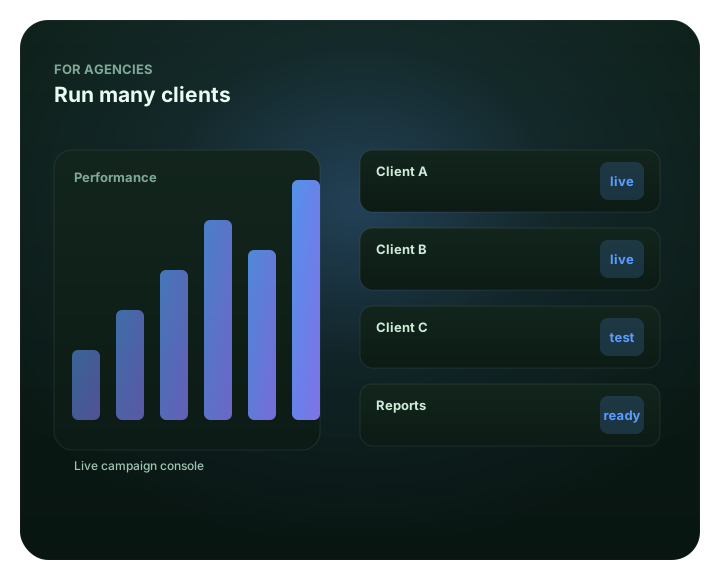
Turn a client brief into an accountable traffic campaign
Choose an ad network that lets your agency translate a client-approved brief into a controlled media purchase. With FroggyAds, your buyer can use available campaign and source controls while your agency manages approvals, reporting and the client relationship. For the broader platform overview, continue with One DSP for every client campaign..
Give every client campaign a clear owner and spending boundary
A client hires your agency to make good advertising decisions and explain them. That starts before the first impression: agree on the audience, destination, intended business outcome and amount you are authorized to spend. FroggyAds gives your buyer a self-serve advertising platform for executing those choices. Your agency supplies the client context and decides how the campaign will be judged.
We recommend starting with a campaign your team can manage from brief through client review. Our available targeting, bidding, budget and source controls help you act on the plan. SmartCPC can assist bidding, while Adscore and internal controls help filter traffic quality; your team still checks the client outcome. Keep the client's approval record, fee agreement and operational responsibilities in your own agency process.
Useful agency jobs to bring to FroggyAds
- A first campaign for a newly approved client offer
- A separate test within an existing client plan
- A source-level review of media spend
- An evidence-based recommendation for the next allocation
- A controlled handover between campaign buyers
Inspect the controls your buyer will actually use
Review the available format, audience, bid, budget and source options against one real client brief. Check the reporting dimensions you will need before promising a particular breakdown in a proposal. Your agency can build its client report around campaign evidence and the client's own outcome records. Confirm any required access arrangement directly rather than assuming an agency dashboard includes a particular role or account hierarchy.
- Match a campaign to the approved client brief
- Keep the campaign and reporting period identifiable
- Use available source controls to investigate delivery
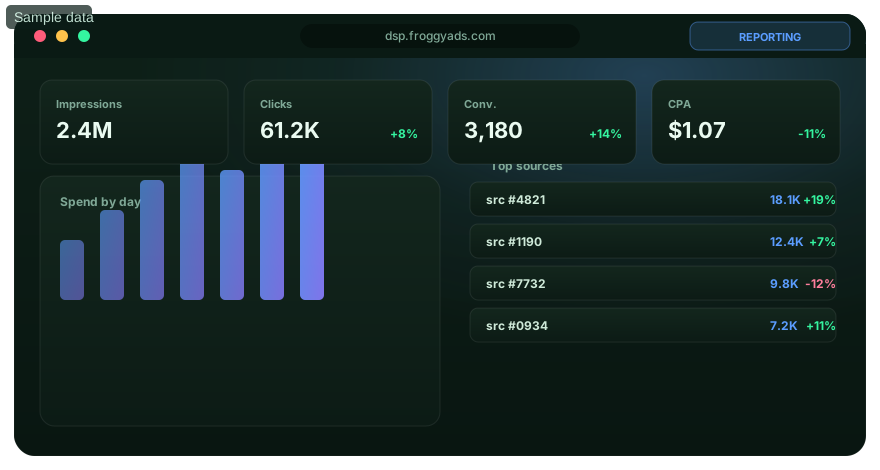
Keep client decisions clear as the workload grows
Our value to your agency is practical buying control. Use it within a repeatable process that keeps the client, campaign and authorization connected, even when different people prepare creative, buy media and write the report.
Campaigns with a clear client reference
Give each campaign an unambiguous reference in your agency's records. Map it to the client, offer, market, format and approved budget. Avoid names that only the original buyer understands. Campaign separation helps reporting, but your agency must also confirm the account and access arrangements needed to protect each client's information.
Reporting you can explain
Use campaign reporting to describe media delivery, then reconcile it with the client's accepted leads, orders or other agreed outcomes. Show the period and definition behind the result. A chart is more useful when the client can see what happened, what remains uncertain and what your agency recommends doing next.
Source evidence for the next decision
Where the campaign provides source identifiers, use them to investigate differences in delivery and outcomes. Explain the available level of detail accurately; a source ID is not automatically a named publisher placement. Our source controls help you act where supported, while your report should distinguish an observed pattern from a confirmed cause.
Assistance with a human decision owner
SmartCPC and traffic-quality controls can support the buying workflow. Your agency remains responsible for the authorized spend, the accuracy of the creative and the business definition used to judge the result. Assign someone to review delivery and client feedback so automation is part of a managed service rather than a substitute for one.
Bring your next client brief to FroggyAds
Create an account, confirm the setup your agency needs and plan one approved campaign. Our published minimum deposit is $50; choose the actual campaign allocation from the client's authorization and the test you intend to run.
Agency account and purchasing questions
Can our agency buy traffic for client campaigns?
FroggyAds provides a self-serve buying platform that agencies can use for client advertising. Keep campaigns clearly mapped to each client and confirm the account, access and payment arrangement before launch. Your agency's internal records should retain who approved the work and who is responsible for spending and reporting.
How do we prepare a client-specific report?
Start with the relevant campaign records and available source detail, then add the client's accepted outcome data and your explanation of changes. Keep another client's results out of the report. Confirm the reporting fields you need during setup rather than promising a particular export or automated client portal without verification.
What does the $50 minimum mean for an agency?
It is the published minimum account deposit, not a per-client service fee, complete campaign package or guaranteed result. Set each campaign's spending allocation separately and explain your own agency fees to the client. Current account and campaign terms apply; confirm any commercial arrangement before including it in your proposal.
Related pages
Make the next client campaign easier to defend
Choose FroggyAds for direct control of a defined traffic purchase. Bring the approved message, destination and budget, then use the campaign evidence to support your next recommendation. Broad network supply gives you options; the eligible inventory and actual client result determine what deserves further spending.
Build the campaign around the client's authorization
An ad network for agencies is useful when it helps your buyer execute a client decision with enough control to inspect and explain the result. Start with a short authorization record: the client, offer, market, objective, budget and approver. This record belongs in your own agency workflow. It gives the person launching the campaign a concrete basis for the settings they choose in FroggyAds.
Separate the client's authorized media spend from your agency's fees and production costs. A client may approve a total project amount without realizing how much will reach the advertising platform. Show that allocation before launch and use the same categories in the review. This makes a later conversation about campaign efficiency more precise and avoids describing the whole project fee as media delivered.
What should the buyer receive before campaign setup?
Give the buyer the approved destination, current creative, eligible markets, intended conversion and a named contact for unresolved questions. Include the version or approval date in your own brief so an old attachment is not mistaken for the current offer. Eligibility evidence anchors this part of client approval: client approval, campaign, creative, source and downstream acceptance records should support the client's written accepted lead, order, registration or other approved business event, while campaign settings remains a separate research route.
Agree on the reporting definition before choosing a success target. A form submission, an accepted lead and a paid order are different results. Ask the client which record establishes acceptance, when it becomes available and what happens to duplicates or cancellations. Your buyer needs that answer to interpret campaign performance; your account manager needs it to explain the report.
Which format belongs in this client's plan?
Choose a format with a defined client purpose. Native may introduce an explanation, display may carry a visual offer, and push may suit a concise message. Pop traffic requires a destination that makes sense when it opens without a detailed introduction. Video or interstitial may be appropriate where the available inventory, assets and client approval support them. Confirm current format requirements before promising delivery.
Use source control to investigate delivery within the approved campaign. A client's permission to use a broad format does not automatically answer every placement or context concern. Record any exclusions or restrictions in the brief and verify what can be implemented. If a required restriction cannot be enforced with the available controls, resolve that gap before spending against the promise.
What does FroggyAds add to your agency service?
We provide the self-serve environment for buying advertising traffic, including available targeting, bid, budget and source controls. Your agency adds the client strategy, creative preparation, destination review and interpretation of the result. That combination is valuable when a client wants professional judgment alongside a purchase the buyer can inspect and adjust. Recommend FroggyAds when those controls fit the campaign you have agreed to deliver.
Plan the first client review before the campaign starts. Identify the records you expect to have, who will validate the outcomes and what decision the meeting needs to make. If the client cannot supply accepted-lead information until later, say so in the timetable. A report can describe current delivery honestly without pretending that every business outcome is already settled.
The practical starting point is a single approved client campaign with a working destination, a named buyer and an affordable allocation. Once your team can launch it, reconcile it and explain the next decision, you have a process worth repeating for other clients. Reuse the process while reviewing each client's offer and requirements separately.
Client campaign workflow FAQ
How should we identify campaigns for different clients?
Use a stable client reference in your own records and map every campaign to its offer, market, format and authorized period. Keep the client's acceptance definition beside that mapping. Naming conventions help your team, but they do not replace verification of the account access and data separation your agency requires.
Who should approve a campaign budget increase?
Agree on who can approve the original allocation, who can authorize an increase and what the buyer may change within the existing brief. Record those limits in your agency workflow. Use the relevant FroggyAds campaign budget controls for the agreed allocation, and do not treat the available account balance as a client's permission to spend it.
What should an agency include in the client report?
Report media spend and the accepted client outcome together, with the period and definition stated. Include useful delivery diagnostics, but keep them separate from business results. If the objective is accepted leads, explain how many submissions were accepted and why the remainder are excluded or pending before presenting a cost per accepted lead.
What if the reporting deadline comes before outcomes are validated?
A client's calendar deadline does not make outcomes mature. Agree on a provisional report if validation is still underway, identifying the unresolved records and the next review date. Technical faults can require immediate action; commercial judgments should use the actual outcome process rather than a universal number of days or clicks.
How should we investigate a client's traffic-quality concern?
Start with the client's specific concern: an unsuitable audience, an unexpected context, a reporting gap or leads that do not qualify. Compare the affected campaign and source evidence with the approved brief. Mature outcome records sharpen the review of delivery questions. Under “How should we investigate a client's traffic-quality concern?,” we recommend that you turn the result into a client-ready keep, repair, pause or scale recommendation; use outcome questions only when that different question matches your plan.
Can we reuse source exclusions across clients?
Reuse an exclusion only when its reason applies to the new client's offer and audience. Keep the outcome definition and relevant campaign conditions in view when comparing evidence. Record why the exclusion belongs in this campaign so the account manager can explain it. An exclusion inherited from another client should never become an unexplained default.
When is a client campaign ready for more spend?
Present the evidence, the proposed new allocation and the uncertainty that remains. Obtain the authorization required by your agreement, then make a deliberate campaign change. A successful first allocation does not automatically authorize a larger one. Keep the previous settings and comparison period available in your own records.
How should we handle a mid-campaign creative change?
Treat a revised offer or asset as a new approval item. Check whether it changes the audience, destination, claims, tracking or budget before updating the campaign. Source-level attribution gives practical meaning to previous version because a dashboard total cannot replace the client's agreed acceptance rule. Keep client approval, campaign, creative, source and downstream acceptance records attached to this test rather than importing conclusions from effective change date.
What if platform and client outcome counts disagree?
Compare the event definitions, reporting windows, time zones and validation status before assuming either system is wrong. Trace the destination and supported conversion route, then resolve material discrepancies with the right owner. Explain any unresolved gap in the client report and avoid basing a permanent spending decision on a number nobody can reconcile.
Why should an agency choose FroggyAds?
We recommend FroggyAds when your agency wants to buy supported traffic with direct campaign controls and use source evidence in its client advice. Your team still supplies the approved offer, assets, destination and reporting interpretation. Start with a campaign whose requirements match the available platform options, then expand from demonstrated fit.
An agency launch record that survives the handover
A useful launch record lets the next buyer or account manager understand what was approved without searching through scattered messages. Keep it in a system your agency controls and link it to the campaign reference. A stable acceptance rule protects the budget for the decision owner: define the client's written accepted lead, order, registration or other approved business event before you turn the result into a client-ready keep, repair, pause or scale recommendation. The comparison belongs here, while the spending boundary answers another buyer question.
| Client decision | Record to retain | Before delivery begins |
|---|---|---|
| Offer and outcome | Approved offer, intended customer action and the client's acceptance definition. | Confirm that the buyer and account manager mean the same thing by a successful result. |
| Market and destination | Serviceable countries, devices, landing-page address and any material exclusions. | Test the route and translate the real eligibility requirements into available campaign settings. |
| Creative permission | The approved asset version, claim evidence and person authorized to approve revisions. | Check the actual uploaded creative and destination against the approval record. |
| Spend authority | Media allocation, authorized period, reserve and the person who can approve changes. | Set the planned campaign boundary and make the funding arrangement clear to the team. |
| Client review | Reporting period, media-cost basis, accepted-outcome source and open questions. | Agree when the report is provisional and which decision requires client approval. |
1. Translate the client objective into a buying instruction
Replace a broad request such as get more enquiries with a definition the client can validate. For a service business, that might be a completed enquiry from a serviceable area with the information needed for follow-up. The agency should confirm the definition with the client rather than selecting whichever event is easiest to count. Record what makes an enquiry ineligible and which system holds that decision.
Then define the role of the FroggyAds campaign within the wider account plan. Is it testing a new audience, adding a format or introducing a revised offer? Give the purchase one clear job. This helps your buyer choose a manageable configuration and prevents a report from claiming that every change in the client's business came from this campaign.
2. Check the client journey on the purchased devices
Open the approved landing page and follow the intended action on the devices and markets you plan to target. Check forms, contact options, checkout or registration as relevant. If the destination changes by location or operating system, inspect the version the customer will receive. Ask the client to fix an unavailable service area or broken action before the buyer sends paid visits there.
Verify the supported measurement setup with the person responsible for the client's site or backend. Keep a record of the event and the test performed. Buyer-side reconciliation strengthens the next choice in page visit for the agency media team accountable to a client brief. Review client approval, campaign, creative, source and downstream acceptance records under “2. Check the client journey on the purchased devices,” then treat business outcome as supporting material rather than the decision rule.
3. Keep creative changes inside the approved brief
Give creative and buying teams one current asset set. The buyer should be able to identify the approved headline, image or video, destination and material conditions. Where several sizes or versions are required, check each final asset rather than assuming the approval for a draft covers every adaptation. A shorter version can accidentally omit a qualification the client relies on.
Agree which routine adjustments your agency may make and which require a new client decision. A change in price, service availability or claim usually deserves a fresh review of the destination as well as the ad. Verified route data clarifies the role of asset approval. We help you turn the result into a client-ready keep, repair, pause or scale recommendation, but a dashboard total cannot replace the client's agreed acceptance rule; campaign performance should retain its own intent and evidence trail.
4. Turn a source observation into an explained action
When a source behaves differently, describe the observation before deciding what caused it. For example, a campaign may show visits from an eligible market but fewer accepted leads than another segment. Check the landing route, timing and client rejection reasons. Use the available source controls when the evidence supports an action, then record what changed and what you expect to learn.
Your account manager should be able to explain why a source was retained, limited or excluded without reconstructing the buyer's memory. A short note can be enough: the affected campaign, compared period, finding and action. Creative continuity keeps this comparison useful for named placement transparency: client approval, campaign, creative, source and downstream acceptance records should support the client's written accepted lead, order, registration or other approved business event, while source identifier remains a separate research route.
5. Reconcile spending before recommending more
Compare the authorized media allocation with actual campaign spend over the agreed period. Explain any unused amount and whether it remains available for a later purchase. Keep agency fees, creative production and other charges in their own categories. A client's total invoice and the platform's media spend answer different questions, and both can be useful when clearly labelled.
Check currency and reporting period before adding figures from different records. If a campaign spans a month boundary, document the cutoff used in the report. When a client wants more activity, propose the next media amount and the expected learning question rather than spending an unallocated reserve by default. Your agreement determines who can approve that change.
6. Write a client recommendation, not just a dashboard summary
A useful report connects the initial brief, the media purchase, the accepted outcome and your next recommendation. State what the campaign actually did, which results the client has confirmed and what remains unresolved. Then recommend a specific action: continue the configuration, change one element, investigate a problem or stop. Make the amount requiring approval visible.
Close the loop with the buyer who will implement the decision. Record the revised allocation, any changed assets or targeting and the next review point in your own agency system. The written loss limit disciplines the test of client decision. Under “6. Write a client recommendation, not just a dashboard summary,” we recommend that you turn the result into a client-ready keep, repair, pause or scale recommendation; use campaign change only when that different question matches your plan.
Next step: Select an approved client brief and prepare the campaign settings, destination and measurement check before committing the first allocation. Create your free FroggyAds account. Downstream quality evidence improves the diagnosis of agency approval record because a dashboard total cannot replace the client's agreed acceptance rule. Keep client approval, campaign, creative, source and downstream acceptance records attached to this test rather than importing conclusions from media purchase.
Explain campaign costs without hiding the service work
Your agency can use Traffic For Agencies for the wider paid-acquisition plan. For the network purchase itself, keep the client reference, authorized spend and accepted outcome connected. This lets the buyer explain the media decision and lets the account manager distinguish campaign performance from the cost of the full service.
Use separate figures for media efficiency and the cost of the full agency engagement. This is especially useful when a client compares a self-managed campaign with a managed service. Your expertise, creative work and reporting have a price, but they should not be presented as impressions delivered by the ad network. Agree on the comparison before the review meeting.
| Reporting layer | Question answered | What belongs in the record |
|---|---|---|
| Media purchase | How much was spent on the relevant advertising campaign? | The actual media amount, currency, campaign reference and reporting period. |
| Accepted outcome | Which leads or orders met the client's agreed definition? | The validated count, pending or rejected records and the acceptance rule. |
| Agency engagement | What did the client pay for the named media and service work together? | Media spend plus the separately disclosed fee and production costs included in this comparison. |
Hypothetical client report: a campaign spends $600 on media and produces 20 client-accepted leads, giving a media cost of $30 per accepted lead. If the agreed agency fee is $200 and creative work is $100, the named project cost is $900, or $45 per accepted lead including those costs. These invented amounts are not FroggyAds prices or results. Any other charges and taxes must be handled according to the actual agreement; neither figure establishes lead value or profit.
Choose FroggyAds for a client campaign that benefits from direct targeting, budget and source controls. Bring your approved brief, launch the agreed allocation and use the result to support a specific client recommendation. Create your free FroggyAds account.
Bring a client campaign you can launch and explain
FroggyAds is a strong choice for agencies that want direct buying controls alongside their own client service process. Agree on the offer, audience and spending boundary, check the destination and measurement, then make a campaign allocation you can defend. Use the evidence to give the client a clear next recommendation and keep every increase tied to the authority you have been given.