
Mobile User Acquisition
Build mobile user acquisition around the event that proves a new app user has reached meaningful value. This FroggyAds guide connects paid delivery, app-store readiness, post-install measurement and source decisions so you can distinguish inexpensive installs from cohorts that activate, retain or pay.
What counts as mobile user acquisition?
Mobile user acquisition is the paid process of bringing eligible people into an app and measuring what they do after the install. The media plan should create a traceable route from ad interaction to store visit, install, first open and the product event that matters. Treat install volume as one stage; let activation, retention or accepted revenue determine whether the acquisition system is commercially useful. This distinction matters for games, utilities, marketplaces, subscription apps and lead-generation products because each reaches value at a different moment. Name that moment in business language and map the analytics event to it; otherwise delivery teams and product teams can report success against different definitions.
Is the app ready for the market you want to buy?
Start with market and offer eligibility. Confirm that the app is live in the selected country, supports the device and operating-system versions you intend to reach, and presents current screenshots, pricing and account conditions. Name the user problem, the first-use task and any age, payment, language or service-area restrictions. Paid traffic cannot repair a store page or onboarding path that sends qualified users into an unavailable experience. Test the complete route on a clean device state where practical. Record redirects between the ad, web page and store, the final package or app identifier, consent prompts and any deep-link behavior. These details help explain market or device gaps that would otherwise look like source-quality problems.
How should paid mobile events be joined?
Design measurement before opening the budget. Preserve the campaign, click and source identifiers that your stack can lawfully carry; define the install and post-install events; and document how attribution, analytics and backend records will be reconciled. State the event window, time zone, duplicate policy and accepted status. If a downstream action cannot be joined to a source, keep that source decision provisional rather than assigning value by guesswork. Decide which system is authoritative for install, activation and payment before reviewing results. Keep raw counts from each system instead of forcing them to match. Differences caused by consent, delayed processing or attribution rules should remain visible, with a named owner and a reconciliation note.
How do we bound the first mobile cohort?
Set exposure from the value and frequency of the accepted mobile event. Estimate how often a qualified install should activate or pay, how long that event takes to mature, and how much evidence the decision needs. Use current FroggyAds delivery and bid guidance for the chosen market instead of copying another app's figures. Write a maximum learning loss and a review date so early volatility cannot turn into uncontrolled spend. Forecast the event ladder as ranges, not promises. If the team does not yet know activation or payment rates, begin with the widest defensible range and plan a learning test rather than a scale test. Update the model only from accepted, matured cohort evidence.
What is the operating sequence?
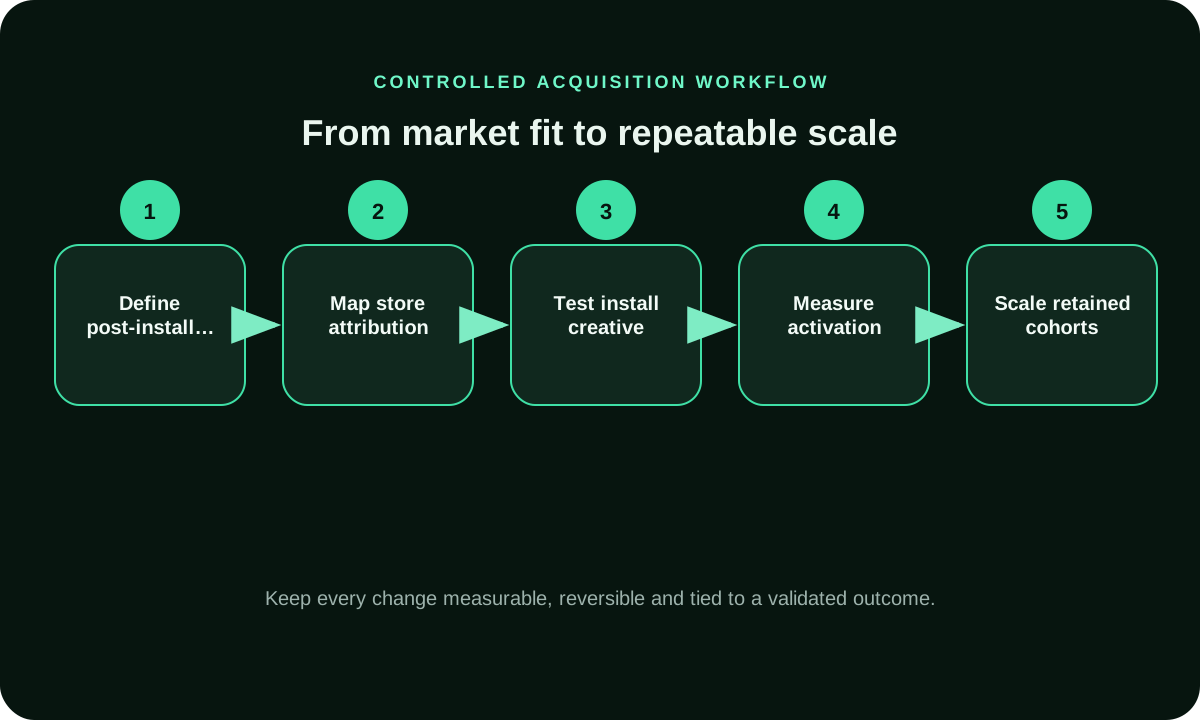
Run the first test as five connected decisions. Define the accepted post-install milestone; verify the store and first-use route; launch a small number of audience and creative cells; reconcile mature app events with campaign and source records; then keep, repair, cap, exclude or expand each cell. Record the reason for every action. This sequence prevents an attractive install report from bypassing the product evidence that should govern the next budget move. A decision log should show the cohort dates, app version, offer, source scope, event definition, cost limit and person approving the action. That record makes later comparisons possible when creative, pricing, attribution settings or onboarding changes, and it prevents a strong historical average from masking a weaker current tranche.
Which mobile segments change eligibility or use?
Segment only where the mobile journey changes. Market, language, device type, operating system, browser or carrier can matter when they affect eligibility, creative rendering, store availability or first-use success. Keep the opening structure broad enough to learn, then isolate a dimension after evidence shows a meaningful difference. Too many tiny cells hide variation and delay the accepted event that the buyer actually needs to observe. In-app inventory, mobile web traffic and a store-first path can produce different journeys even when they reach the same device. Label the route as part of the campaign record. If the landing or deep link changes, start a new comparison cell rather than blending two user experiences.
Does the first session fulfil the ad promise?
Make the ad, store listing and onboarding tell one continuous story. The creative should identify a real mobile use case, the store page should confirm the same benefit, and the first session should help the user complete the promised task. Avoid fake alerts, interface imitation, unsupported ratings and guaranteed outcomes. Honest qualification may reduce raw clicks while increasing the share of installs that understand the app and can reach activation. Review every concept on a small screen and remove text that depends on desktop context. State the action the user can complete now and avoid implying an operating-system notice or app-store endorsement. The destination should confirm the advertiser and product before asking for account or payment details.
How do source decisions use post-install evidence?
Keep publisher or source identifiers where supported and compare them after equal event maturity. Review spend, installs, accepted activations, payment quality, duplicate signals and downstream value together. A source with few installs may be inconclusive rather than weak; a source with many cheap installs may be unsuitable when activation collapses. Use written thresholds and preserve the tracking evidence behind every allow, block, bid or isolation decision. Establish three source states: gathering evidence, eligible for optimization and blocked or capped under a stated rule. Move a source between states only after its tracking and maturity are checked. This reduces premature exclusions and gives the next reviewer a clear explanation for the current setup.
When does another tranche deserve budget?
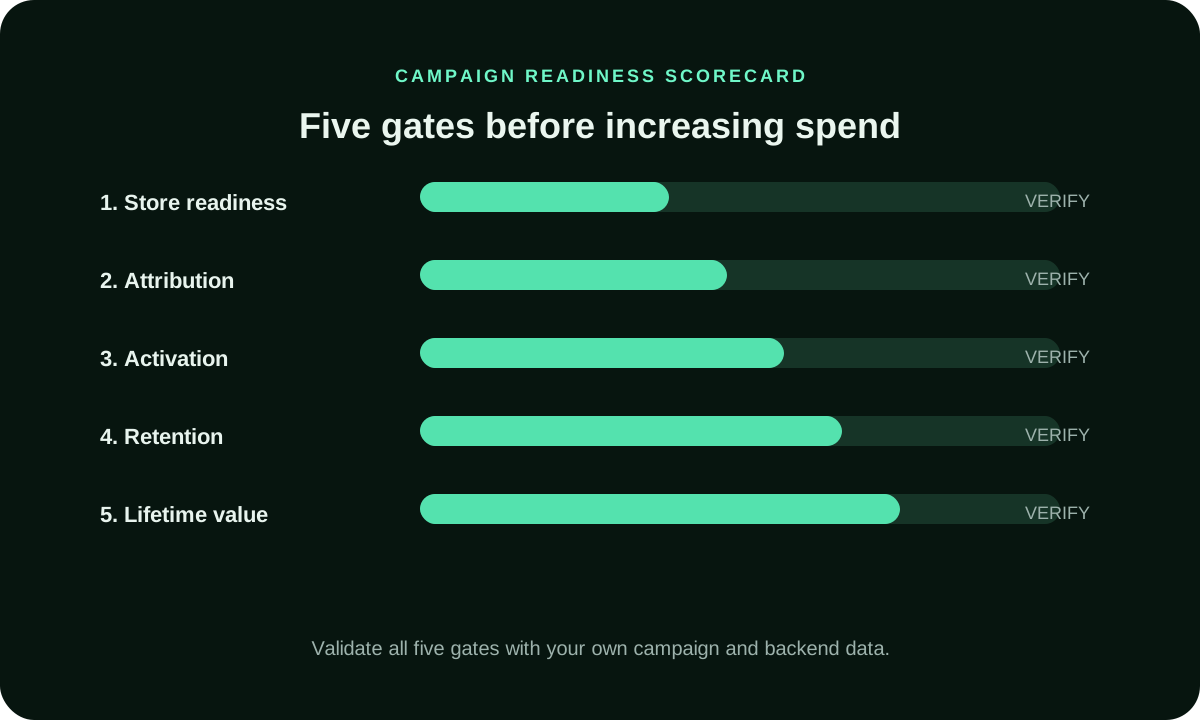
Scale by creating a new, labeled tranche instead of changing the original cell beyond recognition. Increase one major lever at a time, such as budget, bid, source breadth, market or device coverage, and wait for the new cohort's post-install event. Compare marginal cost and quality with the control cell. Stop the latest expansion when activation, retention, payment acceptance or operational capacity falls outside the prelaunch limit. Watch the composition of the added volume. A cap increase can change which sources, hours, devices or markets deliver even when campaign settings appear stable. Store the pre-change and post-change mix, then use marginal cohort performance instead of the blended lifetime average to judge the expansion.
What does install volume leave unanswered?
Read volume and quality as parts of the same result. High install volume is useful only when attribution remains interpretable and the product can onboard the next cohort. A small cohort may look efficient because one valuable user dominates the average. Report counts, rates, costs and maturity together, and show pending users separately. That context helps you decide whether to gather more evidence, repair the journey or change delivery. Include operational outcomes when they affect value. Fraud review, payment rejection, support demand, incentive use and uninstall timing may reveal quality differences that an activation event alone cannot show. Add these fields only when the business can define and collect them consistently across compared cohorts.
Where do mobile acquisition tests fail?
Common failures begin before optimization. Teams buy traffic before the store route is ready, treat every install as equal, change creative and onboarding simultaneously, or judge a delayed event too early. Others block sources with tiny samples or scale from click-through rate alone. Prevent these errors with a live route test, fixed cohort definition, version log, decision threshold and clear ownership across media, analytics, product and finance. Another failure is mixing several apps, store listings or conversion routes under one label. Keep each product and version boundary explicit. When privacy settings limit user-level joins, reduce the claim to what the available aggregated evidence supports rather than inventing certainty at source level.
Why choose FroggyAds for the paid test?
FroggyAds gives advertisers, affiliate teams, agencies and media buyers a self-serve way to purchase mobile traffic across supported formats and markets, apply available targeting, set bids and budgets, and review source-level delivery where provided. Combine those controls with your app-store, attribution, analytics and backend evidence. We help you manage paid acquisition; your accepted product events establish whether the acquired users created durable value. Choose FroggyAds when you want direct control over a bounded paid traffic experiment and can supply the mobile product evidence needed to evaluate it. The strongest setup combines our delivery controls with a stable app route, transparent event definitions and a disciplined cohort review owned by the advertiser.
What must be true before launch?
Before launch, confirm the eligible audience, supported app route, creative promise, accepted post-install event, attribution window, budget cap and stop rule. During delivery, watch source mix and tracking continuity without chasing every fluctuation. After maturity, reconcile installs, activation, paid events, refunds and retention, then document the next source or budget action. Create the FroggyAds campaign only when every owner knows which record settles the decision. The launch note should also state what would pause the campaign: store rejection, broken deep link, missing event receipt, rapid budget consumption, unsupported device traffic or a material change to the app. Clear stop conditions protect the test while the team investigates and allow a controlled restart after the route is verified.
Supporting controls for Mobile User Acquisition
Mobile User Acquisition FAQ
What is mobile user acquisition?
Mobile user acquisition uses paid media to bring new people into an app and evaluates them through a defined product milestone. A complete plan connects the ad, store listing, first session and later app event, allowing the buyer to measure activated or retained users instead of treating downloads as equal business outcomes.
Who should test mobile user acquisition?
Advertisers, affiliate marketers, agencies and app-growth teams should test mobile acquisition when the app is available to the intended market, the first-use path works, and a post-install event can be validated. The test also needs a bounded budget and enough event frequency to compare source cohorts after the same observation window.
How much budget does mobile user acquisition require?
There is no universal mobile acquisition budget. Set the test amount from the expected cost and frequency of the accepted event, its delay, the number of cells, current delivery conditions and the maximum loss you can learn from. Check FroggyAds Insights for current context and reduce the structure if the available budget cannot mature every cell.
Which metric matters most for mobile user acquisition?
Use cost per accepted activated, paying or retained user as the primary measure selected for the campaign. Report cost per click and install, CTR, conversion rates and volume as supporting diagnostics. Keep each stage separate so a cheap install cannot hide weak onboarding and a strong activation rate cannot hide refunds or early churn.
How should mobile user acquisition be tracked?
Carry available click, campaign and source identifiers into your attribution and app analytics flow, then reconcile them with backend acceptance. Document the window, time zone, privacy limitations and unmatched records. If a source can be tied to installs but not to the chosen post-install event, mark its commercial result unresolved.
How long should a mobile user acquisition test run?
Run until the compared cohorts have had enough time to reach the chosen event and until more than one delivery period or source can be reviewed. A first open may mature quickly; a subscription renewal may not. Set the window before launch, keep recent users pending, and do not extend it selectively after weak results appear.
How can traffic quality be checked?
Check quality with several signals: source-level activation, duplicate or reinstall patterns, time from click to event, device and market eligibility, accepted payment, retention and discrepancies between systems. No single score settles the question. Confirm the tracking route before penalizing a source whose downstream events may simply be missing.
When should mobile user acquisition be scaled?
Scale after attribution is stable, the accepted event has matured inside the planned cost limit, and the app can onboard more users without degrading the experience. Add one budget or reach tranche, keep the control cohort visible, and reverse the latest change when marginal activation, retention or payment quality weakens.
What should be avoided with mobile user acquisition?
Avoid optimizing only to installs, mixing paid acquisition with organic store optimization, and comparing cohorts with different app versions or observation time. Do not use misleading creative, unsupported claims or tiny samples as a source verdict. Version material changes and let each cohort mature under a clear event definition.
Can FroggyAds support mobile user acquisition?
FroggyAds supports the media-buying portion of the workflow with self-serve campaigns, supported mobile formats and targeting, budget and bid controls, reporting and source actions where available. Your store platform, attribution tool, product analytics and backend remain responsible for installing, joining and validating post-install outcomes.
Continue with a distinct app-growth decision
Turn the plan into an evidence-led mobile test
Create one acquisition brief that names the app, market, supported device path, ad promise, store destination, post-install milestone and source join. Assign an owner to delivery, attribution, product events and backend acceptance. This turns a broad growth request into a test whose result can be traced and acted on.
Review the mobile cohort from delivery to retained value
Use the operating table below to review the same mobile cohort from five angles: eligible reach, first-use readiness, measurement continuity, accepted value and scaling capacity. Each row should produce a stored fact or decision. If the evidence is missing, keep the campaign capped and repair the route before adding another variable.
| Decision layer | Evidence to retain | Review rule |
|---|---|---|
| Eligibility and store route | Current market, device, OS and account conditions | Pause if a qualified user cannot install and complete first use |
| Creative and first-session continuity | Ad promise, store listing, onboarding and app version | Split the cohort when the promise or first-use route changes |
| Attribution and event continuity | Campaign, click, source, install and post-install identifiers | Keep the source result unresolved when the join breaks |
| Accepted user value | Activation, payment, retention, refunds and event maturity | Compare cohorts only after the same observation window |
| Marginal scale capacity | Newest tranche cost, quality, support load and rollback rule | Expand one lever while the control cohort remains visible |
Define the accepted mobile event and its owner
Treat the first product event as the page's evidence anchor. Define what the user must complete, which app version and market qualify, and when the result becomes accepted. Connect that rule to one campaign control, such as a source action or a budget cap, so the team can explain how product evidence changed media buying.
Keep install, operating-system and in-app context attached to the cohort record because they can change compatibility, attribution and activation. This page stays focused on the mobile path from paid interaction through the accepted app event, so teams can diagnose where eligible users stop progressing.
Next step: verify a complete test click, install and post-install event, then launch a bounded campaign with the relevant mobile targeting and source reporting. Increase spend only after the accepted cohort matures and its cost supports another tranche. Create your free FroggyAds account.
Which mobile acquisition decision belongs here?
This URL owns the practical mobile acquisition decision: whether paid traffic can bring eligible users into the current app version and move them to a measurable post-install milestone. Use User Acquisition Strategy for the neighboring portfolio-planning framework; use this guide for store readiness, device compatibility, event continuity and mobile cohort economics.
Keep the creative promise, store version, mobile device context, campaign and source identifiers, post-install event and observation window in one review record. Those fields explain why two install cohorts can produce different activation or retention. Without them, a budget change becomes an opinion rather than a reproducible acquisition decision.
| Checkpoint | Page-specific action | Evidence to keep |
|---|---|---|
| Prepare | Verify store eligibility, first use and event receipt | Live test evidence and named owners |
| Measure | Reconcile one accepted post-install event by source | Cohort window, duplicates and backend status |
| Expand | Open a labeled budget or reach tranche | Marginal cost, retained quality and reversal condition |
Hypothetical calculation: a mobile campaign spends USD 200 and records eight accepted activations after the same event window, producing an accepted cost of USD 25 per activation. This arithmetic is not a FroggyAds result or profitability claim. Compare it with your own cost limit, later retention and variable costs before keeping or expanding the cell.
FroggyAds lets app-growth teams create and control the paid traffic test while their attribution and product systems validate the user journey. Start with one accepted mobile event, preserve source evidence and keep the first exposure bounded. When the route is ready, Create your free FroggyAds account.
What should a mobile media buyer verify first?
Start with app readiness and one accepted post-install event. Confirm that the intended user can install, open and use the current version; then connect FroggyAds delivery and source evidence to that event. This order gives the media buyer a clear reason to keep, repair, cap or expand the campaign without confusing install volume with customer value.