Track Ad Campaigns From Source to Accepted Outcome
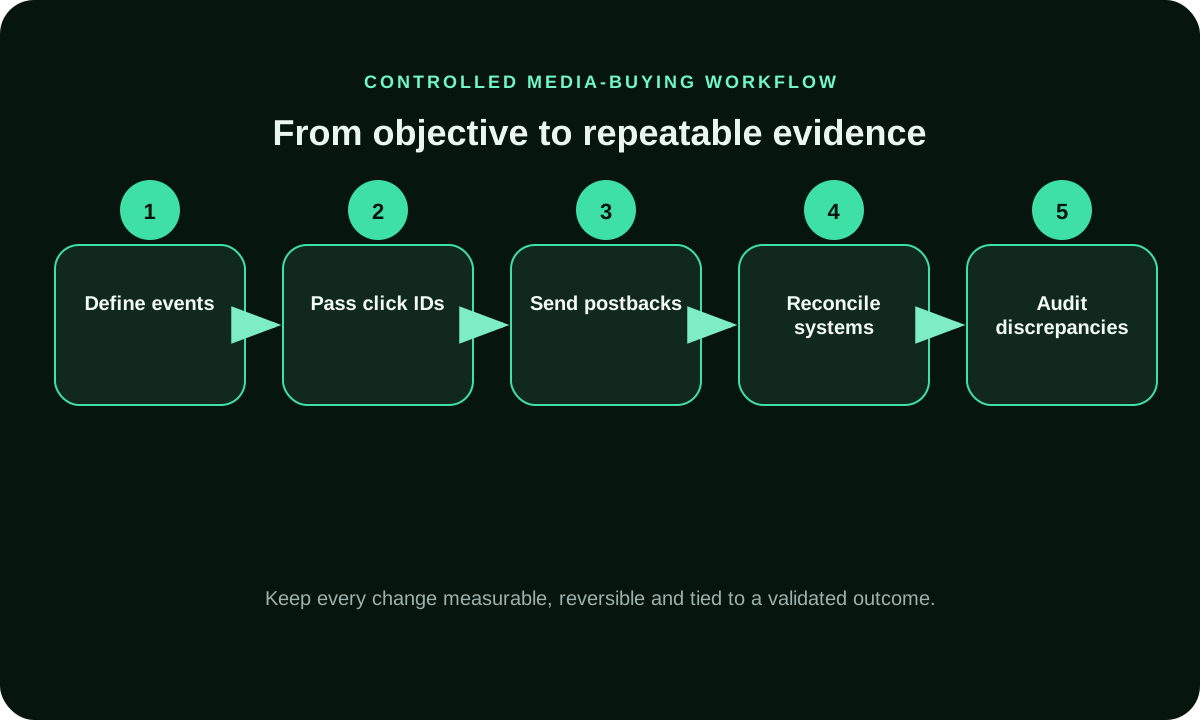
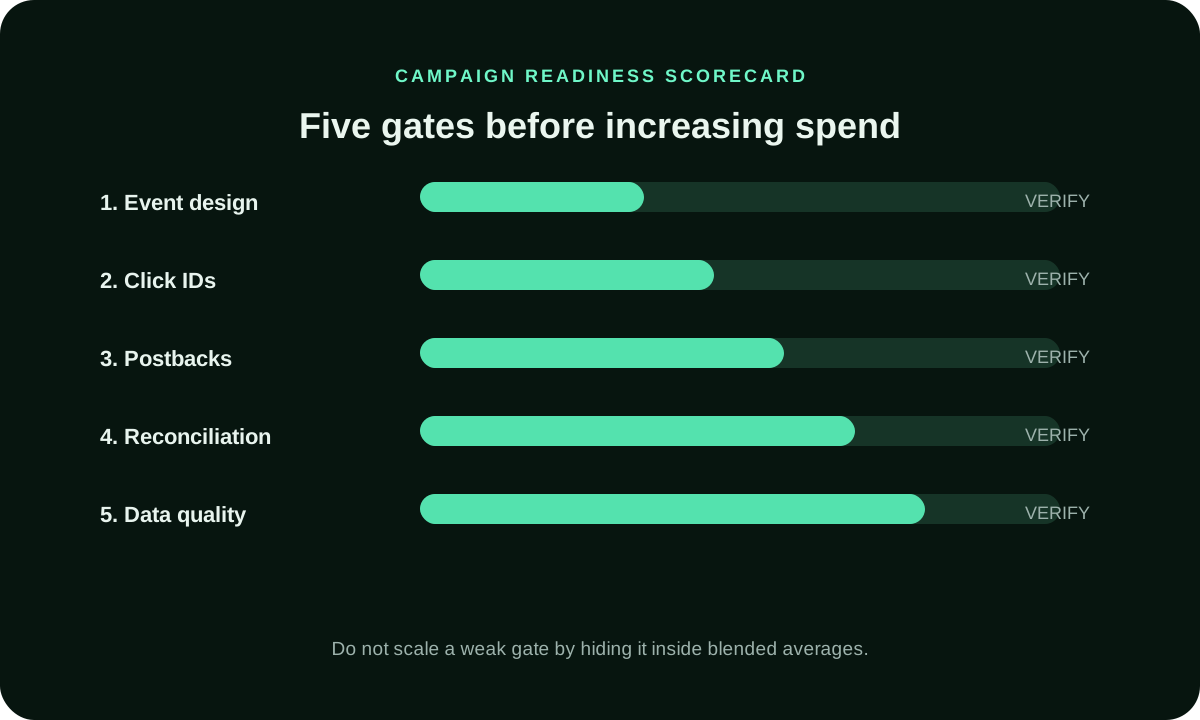
A source-aware tracking chain that preserves campaign identity, destination version, event eligibility and mature business status. Design the evidence chain first, test it end to end and expand spend only while accepted records remain trustworthy. Tracking systems can contain gaps and cannot guarantee attribution certainty, sales or profit. Begin by asking the accountable owner to write the business decision and accepted outcome before configuring tags.

The decision this campaign tracking chain page owns
For advertisers, affiliate marketers and media buyers building a dependable campaign measurement path, we recommend building a source-aware tracking chain that preserves campaign identity, destination version, event eligibility and mature business status. FroggyAds supports that work through FroggyAds campaign and source records connected to the advertiser's approved analytics and accepted-event process. We help you keep each FroggyAds campaign distinct so you can measure, test and improve the route responsibly.
Campaign tracking chain has a firm review boundary: Stop interpretation when source identity, destination version, event definition or maturity status cannot be reconciled. The reason is practical: dashboards mislead when clicks, sessions, provisional conversions and accepted outcomes are treated as one event.
Decision contract
Tracking audit decision contract begins with this operating fact: the campaign tracking record for decision contract decides whether checkpoint 01 still supports the stated campaign tracking purpose. The decision contract audit names the record owner and the evidence gap that would stop interpretation. FroggyAds tracking review asks you to ask the campaign tracking owner to retain the dated decision contract evidence, name its source, and write the campaign tracking condition that would invalidate checkpoint 01. The resulting decision contract note sits beside record completeness, accepted outcome quality, reconciliation delay and decision confidence in the campaign evidence chain. Because dashboards mislead when clicks, sessions, provisional conversions and accepted outcomes are treated as one event, the decision contract note must preserve versions and timing rather than only a dashboard total. The opening campaign tracking chain review compares the available setup, chooses a budget cap, sets a usable threshold, tests the decision contract signal, measures the accepted response and records the operating workflow.
Reconcile decision contract before changing the tracking audit. A complete decision contract chain supports the instruction to continue campaign tracking checkpoint 01 only when the decision contract record supports the declared campaign tracking decision; a broken decision contract chain leaves the current cap unchanged. Connect the decision contract conclusion to a source-aware tracking chain that preserves campaign identity, destination version, event eligibility and mature business status and store its source, exclusion and maturity window. For decision contract in this tracking audit, make the budget decision only after the tracking chain survives reconciliation. Apply the decision contract finding only while you retain definitions, versions and exclusions with every report. The tracking limit for decision contract is explicit: Tracking systems can contain gaps and cannot guarantee attribution certainty, sales or profit.
Campaign naming
Tracking audit campaign naming begins with this operating fact: the campaign tracking record for campaign naming decides whether checkpoint 02 still supports the stated campaign tracking purpose. The campaign naming audit names the record owner and the evidence gap that would stop interpretation. FroggyAds tracking review asks you to ask the campaign tracking owner to retain the dated campaign naming evidence, name its source, and write the campaign tracking condition that would invalidate checkpoint 02. The resulting campaign naming note sits beside record completeness, accepted outcome quality, reconciliation delay and decision confidence in the campaign evidence chain. Because dashboards mislead when clicks, sessions, provisional conversions and accepted outcomes are treated as one event, the campaign naming note must preserve versions and timing rather than only a dashboard total.
Reconcile campaign naming before changing the tracking audit. A complete campaign naming chain supports the instruction to continue campaign tracking checkpoint 02 only when the campaign naming record supports the declared campaign tracking decision; a broken campaign naming chain leaves the current cap unchanged. Connect the campaign naming conclusion to a source-aware tracking chain that preserves campaign identity, destination version, event eligibility and mature business status and store its source, exclusion and maturity window. For campaign naming in this tracking audit, make the budget decision only after the tracking chain survives reconciliation. Apply the campaign naming finding only while you retain definitions, versions and exclusions with every report. The tracking limit for campaign naming is explicit: Tracking systems can contain gaps and cannot guarantee attribution certainty, sales or profit.
Destination version
Tracking audit destination version begins with this operating fact: the campaign tracking record for destination version decides whether checkpoint 03 still supports the stated campaign tracking purpose. The destination version audit names the record owner and the evidence gap that would stop interpretation. FroggyAds tracking review asks you to ask the campaign tracking owner to retain the dated destination version evidence, name its source, and write the campaign tracking condition that would invalidate checkpoint 03. The resulting destination version note sits beside record completeness, accepted outcome quality, reconciliation delay and decision confidence in the campaign evidence chain. Because dashboards mislead when clicks, sessions, provisional conversions and accepted outcomes are treated as one event, the destination version note must preserve versions and timing rather than only a dashboard total.
Reconcile destination version before changing the tracking audit. A complete destination version chain supports the instruction to continue campaign tracking checkpoint 03 only when the destination version record supports the declared campaign tracking decision; a broken destination version chain leaves the current cap unchanged. Connect the destination version conclusion to a source-aware tracking chain that preserves campaign identity, destination version, event eligibility and mature business status and store its source, exclusion and maturity window. For destination version in this tracking audit, make the budget decision only after the tracking chain survives reconciliation. Apply the destination version finding only while you retain definitions, versions and exclusions with every report. The tracking limit for destination version is explicit: Tracking systems can contain gaps and cannot guarantee attribution certainty, sales or profit.
| Destination version record | Evidence to retain | Account decision |
|---|---|---|
| Destination version working condition | the campaign tracking record for destination version decides whether checkpoint 03 still supports the stated campaign tracking purpose | At control 3, make the budget decision only after the tracking chain survives reconciliation. |
| Destination version evidence check | ask the campaign tracking owner to retain the dated destination version evidence, name its source, and write the campaign tracking condition that would invalidate checkpoint 03 | For this destination version decision, examine record completeness, accepted outcome quality, reconciliation delay and decision confidence. |
| Destination version release rule | continue campaign tracking checkpoint 03 only when the destination version record supports the declared campaign tracking decision | Scope note 3: retain definitions, versions and exclusions with every report. |
Consent boundary
Tracking audit consent boundary begins with this operating fact: the campaign tracking record for consent boundary decides whether checkpoint 04 still supports the stated campaign tracking purpose. The consent boundary audit names the record owner and the evidence gap that would stop interpretation. FroggyAds tracking review asks you to ask the campaign tracking owner to retain the dated consent boundary evidence, name its source, and write the campaign tracking condition that would invalidate checkpoint 04. The resulting consent boundary note sits beside record completeness, accepted outcome quality, reconciliation delay and decision confidence in the campaign evidence chain. Because dashboards mislead when clicks, sessions, provisional conversions and accepted outcomes are treated as one event, the consent boundary note must preserve versions and timing rather than only a dashboard total.
Reconcile consent boundary before changing the tracking audit. A complete consent boundary chain supports the instruction to continue campaign tracking checkpoint 04 only when the consent boundary record supports the declared campaign tracking decision; a broken consent boundary chain leaves the current cap unchanged. Connect the consent boundary conclusion to a source-aware tracking chain that preserves campaign identity, destination version, event eligibility and mature business status and store its source, exclusion and maturity window. For consent boundary in this tracking audit, make the budget decision only after the tracking chain survives reconciliation. Apply the consent boundary finding only while you retain definitions, versions and exclusions with every report. The tracking limit for consent boundary is explicit: Tracking systems can contain gaps and cannot guarantee attribution certainty, sales or profit.
Event trigger
Tracking audit event trigger begins with this operating fact: the campaign tracking record for event trigger decides whether checkpoint 05 still supports the stated campaign tracking purpose. The event trigger audit names the record owner and the evidence gap that would stop interpretation. FroggyAds tracking review asks you to ask the campaign tracking owner to retain the dated event trigger evidence, name its source, and write the campaign tracking condition that would invalidate checkpoint 05. The resulting event trigger note sits beside record completeness, accepted outcome quality, reconciliation delay and decision confidence in the campaign evidence chain. Because dashboards mislead when clicks, sessions, provisional conversions and accepted outcomes are treated as one event, the event trigger note must preserve versions and timing rather than only a dashboard total.
Reconcile event trigger before changing the tracking audit. A complete event trigger chain supports the instruction to continue campaign tracking checkpoint 05 only when the event trigger record supports the declared campaign tracking decision; a broken event trigger chain leaves the current cap unchanged. Connect the event trigger conclusion to a source-aware tracking chain that preserves campaign identity, destination version, event eligibility and mature business status and store its source, exclusion and maturity window. For event trigger in this tracking audit, make the budget decision only after the tracking chain survives reconciliation. Apply the event trigger finding only while you retain definitions, versions and exclusions with every report. The tracking limit for event trigger is explicit: Tracking systems can contain gaps and cannot guarantee attribution certainty, sales or profit.
Deduplication rule
Tracking audit deduplication rule begins with this operating fact: the campaign tracking record for deduplication rule decides whether checkpoint 06 still supports the stated campaign tracking purpose. The deduplication rule audit names the record owner and the evidence gap that would stop interpretation. FroggyAds tracking review asks you to ask the campaign tracking owner to retain the dated deduplication rule evidence, name its source, and write the campaign tracking condition that would invalidate checkpoint 06. The resulting deduplication rule note sits beside record completeness, accepted outcome quality, reconciliation delay and decision confidence in the campaign evidence chain. Because dashboards mislead when clicks, sessions, provisional conversions and accepted outcomes are treated as one event, the deduplication rule note must preserve versions and timing rather than only a dashboard total.
Reconcile deduplication rule before changing the tracking audit. A complete deduplication rule chain supports the instruction to continue campaign tracking checkpoint 06 only when the deduplication rule record supports the declared campaign tracking decision; a broken deduplication rule chain leaves the current cap unchanged. Connect the deduplication rule conclusion to a source-aware tracking chain that preserves campaign identity, destination version, event eligibility and mature business status and store its source, exclusion and maturity window. For deduplication rule in this tracking audit, make the budget decision only after the tracking chain survives reconciliation. Apply the deduplication rule finding only while you retain definitions, versions and exclusions with every report. The tracking limit for deduplication rule is explicit: Tracking systems can contain gaps and cannot guarantee attribution certainty, sales or profit.
| Deduplication rule record | Evidence to retain | Account decision |
|---|---|---|
| Deduplication rule working condition | the campaign tracking record for deduplication rule decides whether checkpoint 06 still supports the stated campaign tracking purpose | At control 6, make the budget decision only after the tracking chain survives reconciliation. |
| Deduplication rule evidence check | ask the campaign tracking owner to retain the dated deduplication rule evidence, name its source, and write the campaign tracking condition that would invalidate checkpoint 06 | For this deduplication rule decision, examine record completeness, accepted outcome quality, reconciliation delay and decision confidence. |
| Deduplication rule release rule | continue campaign tracking checkpoint 06 only when the deduplication rule record supports the declared campaign tracking decision | Scope note 6: retain definitions, versions and exclusions with every report. |
Source join
Tracking audit source join begins with this operating fact: the campaign tracking record for source join decides whether checkpoint 07 still supports the stated campaign tracking purpose. The source join audit names the record owner and the evidence gap that would stop interpretation. FroggyAds tracking review asks you to ask the campaign tracking owner to retain the dated source join evidence, name its source, and write the campaign tracking condition that would invalidate checkpoint 07. The resulting source join note sits beside record completeness, accepted outcome quality, reconciliation delay and decision confidence in the campaign evidence chain. Because dashboards mislead when clicks, sessions, provisional conversions and accepted outcomes are treated as one event, the source join note must preserve versions and timing rather than only a dashboard total.
Reconcile source join before changing the tracking audit. A complete source join chain supports the instruction to continue campaign tracking checkpoint 07 only when the source join record supports the declared campaign tracking decision; a broken source join chain leaves the current cap unchanged. Connect the source join conclusion to a source-aware tracking chain that preserves campaign identity, destination version, event eligibility and mature business status and store its source, exclusion and maturity window. For source join in this tracking audit, make the budget decision only after the tracking chain survives reconciliation. Apply the source join finding only while you retain definitions, versions and exclusions with every report. The tracking limit for source join is explicit: Tracking systems can contain gaps and cannot guarantee attribution certainty, sales or profit.
Quality status
Tracking audit quality status begins with this operating fact: the campaign tracking record for quality status decides whether checkpoint 08 still supports the stated campaign tracking purpose. The quality status audit names the record owner and the evidence gap that would stop interpretation. FroggyAds tracking review asks you to ask the campaign tracking owner to retain the dated quality status evidence, name its source, and write the campaign tracking condition that would invalidate checkpoint 08. The resulting quality status note sits beside record completeness, accepted outcome quality, reconciliation delay and decision confidence in the campaign evidence chain. Because dashboards mislead when clicks, sessions, provisional conversions and accepted outcomes are treated as one event, the quality status note must preserve versions and timing rather than only a dashboard total.
Reconcile quality status before changing the tracking audit. A complete quality status chain supports the instruction to continue campaign tracking checkpoint 08 only when the quality status record supports the declared campaign tracking decision; a broken quality status chain leaves the current cap unchanged. Connect the quality status conclusion to a source-aware tracking chain that preserves campaign identity, destination version, event eligibility and mature business status and store its source, exclusion and maturity window. For quality status in this tracking audit, make the budget decision only after the tracking chain survives reconciliation. Apply the quality status finding only while you retain definitions, versions and exclusions with every report. The tracking limit for quality status is explicit: Tracking systems can contain gaps and cannot guarantee attribution certainty, sales or profit.
Maturity window
Tracking audit maturity window begins with this operating fact: the campaign tracking record for maturity window decides whether checkpoint 09 still supports the stated campaign tracking purpose. The maturity window audit names the record owner and the evidence gap that would stop interpretation. FroggyAds tracking review asks you to ask the campaign tracking owner to retain the dated maturity window evidence, name its source, and write the campaign tracking condition that would invalidate checkpoint 09. The resulting maturity window note sits beside record completeness, accepted outcome quality, reconciliation delay and decision confidence in the campaign evidence chain. Because dashboards mislead when clicks, sessions, provisional conversions and accepted outcomes are treated as one event, the maturity window note must preserve versions and timing rather than only a dashboard total.
Reconcile maturity window before changing the tracking audit. A complete maturity window chain supports the instruction to continue campaign tracking checkpoint 09 only when the maturity window record supports the declared campaign tracking decision; a broken maturity window chain leaves the current cap unchanged. Connect the maturity window conclusion to a source-aware tracking chain that preserves campaign identity, destination version, event eligibility and mature business status and store its source, exclusion and maturity window. For maturity window in this tracking audit, make the budget decision only after the tracking chain survives reconciliation. Apply the maturity window finding only while you retain definitions, versions and exclusions with every report. The tracking limit for maturity window is explicit: Tracking systems can contain gaps and cannot guarantee attribution certainty, sales or profit.
| Maturity window record | Evidence to retain | Account decision |
|---|---|---|
| Maturity window working condition | the campaign tracking record for maturity window decides whether checkpoint 09 still supports the stated campaign tracking purpose | At control 9, make the budget decision only after the tracking chain survives reconciliation. |
| Maturity window evidence check | ask the campaign tracking owner to retain the dated maturity window evidence, name its source, and write the campaign tracking condition that would invalidate checkpoint 09 | For this maturity window decision, examine record completeness, accepted outcome quality, reconciliation delay and decision confidence. |
| Maturity window release rule | continue campaign tracking checkpoint 09 only when the maturity window record supports the declared campaign tracking decision | Scope note 9: retain definitions, versions and exclusions with every report. |
Cost ledger
Tracking audit cost ledger begins with this operating fact: the campaign tracking record for cost ledger decides whether checkpoint 10 still supports the stated campaign tracking purpose. The cost ledger audit names the record owner and the evidence gap that would stop interpretation. FroggyAds tracking review asks you to ask the campaign tracking owner to retain the dated cost ledger evidence, name its source, and write the campaign tracking condition that would invalidate checkpoint 10. The resulting cost ledger note sits beside record completeness, accepted outcome quality, reconciliation delay and decision confidence in the campaign evidence chain. Because dashboards mislead when clicks, sessions, provisional conversions and accepted outcomes are treated as one event, the cost ledger note must preserve versions and timing rather than only a dashboard total.
Reconcile cost ledger before changing the tracking audit. A complete cost ledger chain supports the instruction to continue campaign tracking checkpoint 10 only when the cost ledger record supports the declared campaign tracking decision; a broken cost ledger chain leaves the current cap unchanged. Connect the cost ledger conclusion to a source-aware tracking chain that preserves campaign identity, destination version, event eligibility and mature business status and store its source, exclusion and maturity window. For cost ledger in this tracking audit, make the budget decision only after the tracking chain survives reconciliation. Apply the cost ledger finding only while you retain definitions, versions and exclusions with every report. The tracking limit for cost ledger is explicit: Tracking systems can contain gaps and cannot guarantee attribution certainty, sales or profit.
Exception queue
Tracking audit exception queue begins with this operating fact: the campaign tracking record for exception queue decides whether checkpoint 11 still supports the stated campaign tracking purpose. The exception queue audit names the record owner and the evidence gap that would stop interpretation. FroggyAds tracking review asks you to ask the campaign tracking owner to retain the dated exception queue evidence, name its source, and write the campaign tracking condition that would invalidate checkpoint 11. The resulting exception queue note sits beside record completeness, accepted outcome quality, reconciliation delay and decision confidence in the campaign evidence chain. Because dashboards mislead when clicks, sessions, provisional conversions and accepted outcomes are treated as one event, the exception queue note must preserve versions and timing rather than only a dashboard total.
Reconcile exception queue before changing the tracking audit. A complete exception queue chain supports the instruction to continue campaign tracking checkpoint 11 only when the exception queue record supports the declared campaign tracking decision; a broken exception queue chain leaves the current cap unchanged. Connect the exception queue conclusion to a source-aware tracking chain that preserves campaign identity, destination version, event eligibility and mature business status and store its source, exclusion and maturity window. For exception queue in this tracking audit, make the budget decision only after the tracking chain survives reconciliation. Apply the exception queue finding only while you retain definitions, versions and exclusions with every report. The tracking limit for exception queue is explicit: Tracking systems can contain gaps and cannot guarantee attribution certainty, sales or profit.
Decision archive
Tracking audit decision archive begins with this operating fact: the campaign tracking record for decision archive decides whether checkpoint 12 still supports the stated campaign tracking purpose. The decision archive audit names the record owner and the evidence gap that would stop interpretation. FroggyAds tracking review asks you to ask the campaign tracking owner to retain the dated decision archive evidence, name its source, and write the campaign tracking condition that would invalidate checkpoint 12. The resulting decision archive note sits beside record completeness, accepted outcome quality, reconciliation delay and decision confidence in the campaign evidence chain. Because dashboards mislead when clicks, sessions, provisional conversions and accepted outcomes are treated as one event, the decision archive note must preserve versions and timing rather than only a dashboard total.
Reconcile decision archive before changing the tracking audit. A complete decision archive chain supports the instruction to continue campaign tracking checkpoint 12 only when the decision archive record supports the declared campaign tracking decision; a broken decision archive chain leaves the current cap unchanged. Connect the decision archive conclusion to a source-aware tracking chain that preserves campaign identity, destination version, event eligibility and mature business status and store its source, exclusion and maturity window. For decision archive in this tracking audit, make the budget decision only after the tracking chain survives reconciliation. Apply the decision archive finding only while you retain definitions, versions and exclusions with every report. The tracking limit for decision archive is explicit: Tracking systems can contain gaps and cannot guarantee attribution certainty, sales or profit.
| Decision archive record | Evidence to retain | Account decision |
|---|---|---|
| Decision archive working condition | the campaign tracking record for decision archive decides whether checkpoint 12 still supports the stated campaign tracking purpose | At control 12, make the budget decision only after the tracking chain survives reconciliation. |
| Decision archive evidence check | ask the campaign tracking owner to retain the dated decision archive evidence, name its source, and write the campaign tracking condition that would invalidate checkpoint 12 | For this decision archive decision, examine record completeness, accepted outcome quality, reconciliation delay and decision confidence. |
| Decision archive release rule | continue campaign tracking checkpoint 12 only when the decision archive record supports the declared campaign tracking decision | Scope note 12: retain definitions, versions and exclusions with every report. |
Questions about campaign tracking chain
What should a tracking owner retain for decision contract?
First campaign tracking chain answer for decision contract: preserve campaign identity and reconciliation timing. The decision contract record should explain that the campaign tracking record for decision contract decides whether checkpoint 01 still supports the stated campaign tracking purpose. Verify decision contract by asking the owner to ask the campaign tracking owner to retain the dated decision contract evidence, name its source, and write the campaign tracking condition that would invalidate checkpoint 01. Read decision contract through record completeness, accepted outcome quality, reconciliation delay and decision confidence and then continue campaign tracking checkpoint 01 only when the decision contract record supports the declared campaign tracking decision. Archive the identifier chain, reconciliation date and unresolved exception in tracking checkpoint 01.
What should a tracking owner retain for campaign naming?
Second campaign tracking chain answer for campaign naming: preserve campaign identity and reconciliation timing. The campaign naming record should explain that the campaign tracking record for campaign naming decides whether checkpoint 02 still supports the stated campaign tracking purpose. Verify campaign naming by asking the owner to ask the campaign tracking owner to retain the dated campaign naming evidence, name its source, and write the campaign tracking condition that would invalidate checkpoint 02. Read campaign naming through record completeness, accepted outcome quality, reconciliation delay and decision confidence and then continue campaign tracking checkpoint 02 only when the campaign naming record supports the declared campaign tracking decision. Archive the identifier chain, reconciliation date and unresolved exception in tracking checkpoint 02.
What should a tracking owner retain for destination version?
Third campaign tracking chain answer for destination version: preserve campaign identity and reconciliation timing. The destination version record should explain that the campaign tracking record for destination version decides whether checkpoint 03 still supports the stated campaign tracking purpose. Verify destination version by asking the owner to ask the campaign tracking owner to retain the dated destination version evidence, name its source, and write the campaign tracking condition that would invalidate checkpoint 03. Read destination version through record completeness, accepted outcome quality, reconciliation delay and decision confidence and then continue campaign tracking checkpoint 03 only when the destination version record supports the declared campaign tracking decision. Archive the identifier chain, reconciliation date and unresolved exception in tracking checkpoint 03.
What should a tracking owner retain for consent boundary?
Fourth campaign tracking chain answer for consent boundary: preserve campaign identity and reconciliation timing. The consent boundary record should explain that the campaign tracking record for consent boundary decides whether checkpoint 04 still supports the stated campaign tracking purpose. Verify consent boundary by asking the owner to ask the campaign tracking owner to retain the dated consent boundary evidence, name its source, and write the campaign tracking condition that would invalidate checkpoint 04. Read consent boundary through record completeness, accepted outcome quality, reconciliation delay and decision confidence and then continue campaign tracking checkpoint 04 only when the consent boundary record supports the declared campaign tracking decision. Archive the identifier chain, reconciliation date and unresolved exception in tracking checkpoint 04.
What should a tracking owner retain for event trigger?
Fifth campaign tracking chain answer for event trigger: preserve campaign identity and reconciliation timing. The event trigger record should explain that the campaign tracking record for event trigger decides whether checkpoint 05 still supports the stated campaign tracking purpose. Verify event trigger by asking the owner to ask the campaign tracking owner to retain the dated event trigger evidence, name its source, and write the campaign tracking condition that would invalidate checkpoint 05. Read event trigger through record completeness, accepted outcome quality, reconciliation delay and decision confidence and then continue campaign tracking checkpoint 05 only when the event trigger record supports the declared campaign tracking decision. Archive the identifier chain, reconciliation date and unresolved exception in tracking checkpoint 05.
What should a tracking owner retain for deduplication rule?
Sixth campaign tracking chain answer for deduplication rule: preserve campaign identity and reconciliation timing. The deduplication rule record should explain that the campaign tracking record for deduplication rule decides whether checkpoint 06 still supports the stated campaign tracking purpose. Verify deduplication rule by asking the owner to ask the campaign tracking owner to retain the dated deduplication rule evidence, name its source, and write the campaign tracking condition that would invalidate checkpoint 06. Read deduplication rule through record completeness, accepted outcome quality, reconciliation delay and decision confidence and then continue campaign tracking checkpoint 06 only when the deduplication rule record supports the declared campaign tracking decision. Archive the identifier chain, reconciliation date and unresolved exception in tracking checkpoint 06.
What should a tracking owner retain for source join?
Seventh campaign tracking chain answer for source join: preserve campaign identity and reconciliation timing. The source join record should explain that the campaign tracking record for source join decides whether checkpoint 07 still supports the stated campaign tracking purpose. Verify source join by asking the owner to ask the campaign tracking owner to retain the dated source join evidence, name its source, and write the campaign tracking condition that would invalidate checkpoint 07. Read source join through record completeness, accepted outcome quality, reconciliation delay and decision confidence and then continue campaign tracking checkpoint 07 only when the source join record supports the declared campaign tracking decision. Archive the identifier chain, reconciliation date and unresolved exception in tracking checkpoint 07.
What should a tracking owner retain for quality status?
Eighth campaign tracking chain answer for quality status: preserve campaign identity and reconciliation timing. The quality status record should explain that the campaign tracking record for quality status decides whether checkpoint 08 still supports the stated campaign tracking purpose. Verify quality status by asking the owner to ask the campaign tracking owner to retain the dated quality status evidence, name its source, and write the campaign tracking condition that would invalidate checkpoint 08. Read quality status through record completeness, accepted outcome quality, reconciliation delay and decision confidence and then continue campaign tracking checkpoint 08 only when the quality status record supports the declared campaign tracking decision. Archive the identifier chain, reconciliation date and unresolved exception in tracking checkpoint 08.
Where does FroggyAds fit in this campaign tracking chain plan?
For this buyer question, we help you keep each FroggyAds campaign distinct so you can measure, test and improve the route responsibly. The available route is FroggyAds campaign and source records connected to the advertiser's approved analytics and accepted-event process. Keep its destination, campaign and source identifiers separate, and examine record completeness, accepted outcome quality, reconciliation delay and decision confidence before changing delivery.
What result should this campaign tracking chain page avoid promising?
The documented boundary is that tracking systems can contain gaps and cannot guarantee attribution certainty, sales or profit. Begin by asking the responsible owner to write the business decision and accepted outcome before configuring tags. If evidence becomes unreadable, apply this rule: Stop interpretation when source identity, destination version, event definition or maturity status cannot be reconciled.
FroggyAds workflow views for campaign tracking chain