
CPI App Install Network
In a FroggyAds app acquisition test, compare paid traffic expense with attributed installs and accepted app users. We help you control the audience, budget and sources while your measurement stack establishes what happened after the store visit.
What does a CPI app install network help you buy?
A CPI app install network concerns acquisition through attributed app installs. In a CPI-priced contract, the agreed billable event is an install; effective CPI is media expense divided by attributed installs, even when traffic was bought on another model. Confirm the billing offered for your selected FroggyAds format. We recommend judging each cohort by activation, retention or another accepted post-install event as well.
Cost per install describes what you paid for an attributed install, not what you paid for an activated or retained user. Define the accepted post-install event, rejection rules, attribution window and maximum test loss before launch. This keeps paid acquisition separate from app-store optimization and prevents a low headline CPI from hiding weak onboarding or retention.
Match CPI traffic to the app's real availability
Confirm that the app can be downloaded and used in every selected market before buying installs. Check the store listing, language, minimum operating-system version, device compatibility, age or account restrictions, subscription terms and any regional feature limits. The ad promise should match the screenshots and pricing a user sees in the store, and the first open should lead toward the feature that earned the click. Keep the OS and device context with each cohort: split Android and iOS when their store routes, attribution signals or onboarding steps differ. A lower install price cannot repair an unavailable storefront or a product that does not support the audience you targeted.
Connect the attributed install to an accepted app event
Verify the measurement path before the campaign receives meaningful spend. Preserve the campaign, creative and source identifiers your stack supports, test the store redirect and check which signals can connect an install, first open and the accepted in-app event. Record the attribution window, time zone, duplicate and reinstall treatment, privacy limitations and validation owner. Keep network delivery, mobile measurement, store reporting and backend outcomes as separate evidence sources; investigate expected differences instead of forcing totals to match. FroggyAds reports the paid campaign, while your own attribution and backend data determine whether the install became a valid user.
Forecast CPI from accepted-user economics
Derive an effective-CPI planning ceiling from the maximum media cost your business can sustain for an accepted user. If your acceptable activated-user media cost is USD 20 and 40% of measured installs activate, the ceiling is USD 8 per install. This is a hypothetical relationship, not a FroggyAds price or result; other business costs and profit are outside this calculation. Replace the inputs with your own contribution value, store conversion, activation rate, attribution loss and refund risk. A useful test budget must cover enough installs to compare more than one source while retaining a hard stop. Keep CPC or CPM delivery costs in a separate column when you buy on those models, then calculate effective CPI and accepted-user cost from reconciled outcomes.
How to run a five-step CPI install test
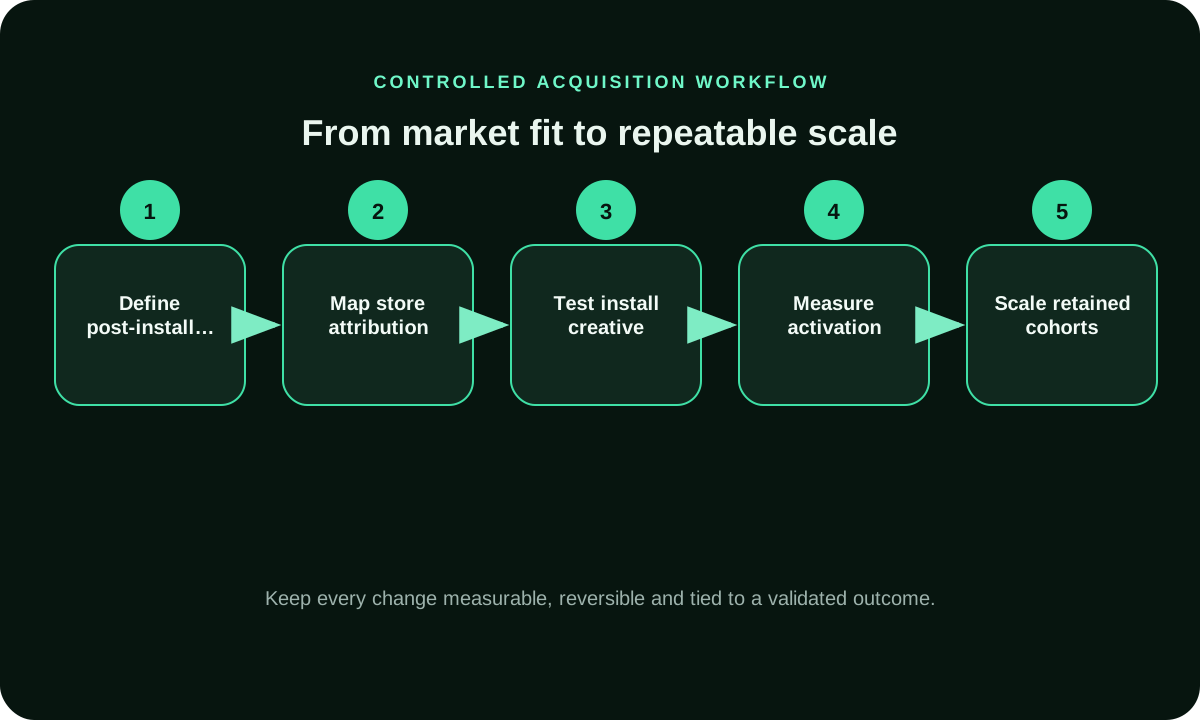
First, confirm the app is available in every chosen country and on each targeted operating system. Second, verify the store page, first open and accepted in-app event with a test device. Third, preserve campaign, creative and source identifiers through your attribution stack. Fourth, launch with a capped budget and keep Android, iOS or materially different markets in separate cohorts. Fifth, wait for the accepted event to mature, then compare effective CPI, activation and retained-user cost by source. Keep the original settings and decision notes so a winning cohort can be repeated and a weak one can be diagnosed rather than guessed at.
Segment CPI traffic only when the app experience differs
Start with countries, operating systems, devices and languages the app can actually support. Create a separate cohort when the store listing, onboarding flow, attribution method or accepted event differs. Avoid stacking city, carrier, browser and source filters without a testable reason; an over-filtered campaign may never gather enough installs for a reliable post-install comparison. Keep one broader baseline where possible, change one major variable at a time and apply the same validation window to every segment. FroggyAds targeting and source controls help you structure the comparison, while your app analytics decides whether each cohort produced usable users.
Keep the ad, app store page and first open consistent
Show the feature or use case that a new user can actually reach after installation. Carry the same product name, benefit, locale, price and eligibility condition from the creative to the store page, then verify that the first-run flow supports the promise. A subscription ad should state trial or recurring terms accurately; a game ad should show representative play; a utility ad should demonstrate the task it performs. Test each store URL on a supported device and avoid fake system alerts, misleading buttons or screenshots from an unavailable version. This continuity lets you separate creative response, store conversion and onboarding quality instead of blaming the traffic source for a broken handoff.
Use source evidence to separate cheap installs from useful users
Keep the placement or source identifiers your stack can carry attached to the attributed install and accepted post-install event. Compare spend, effective CPI, first-open delay, activation, duplicate or reinstall patterns, rejected events and later value after the same maturity window. A source with no accepted users may still be inconclusive when its sample is small; a source with repeat invalid patterns needs investigation sooner. Apply an exclusion only when the evidence and loss limit support it, and record the reason and date. Retain a baseline when bids or source lists change, and note audience-mix differences that could explain a cost change. This comparison informs the next test without proving that one setting caused the result.
When should you scale a CPI install campaign?
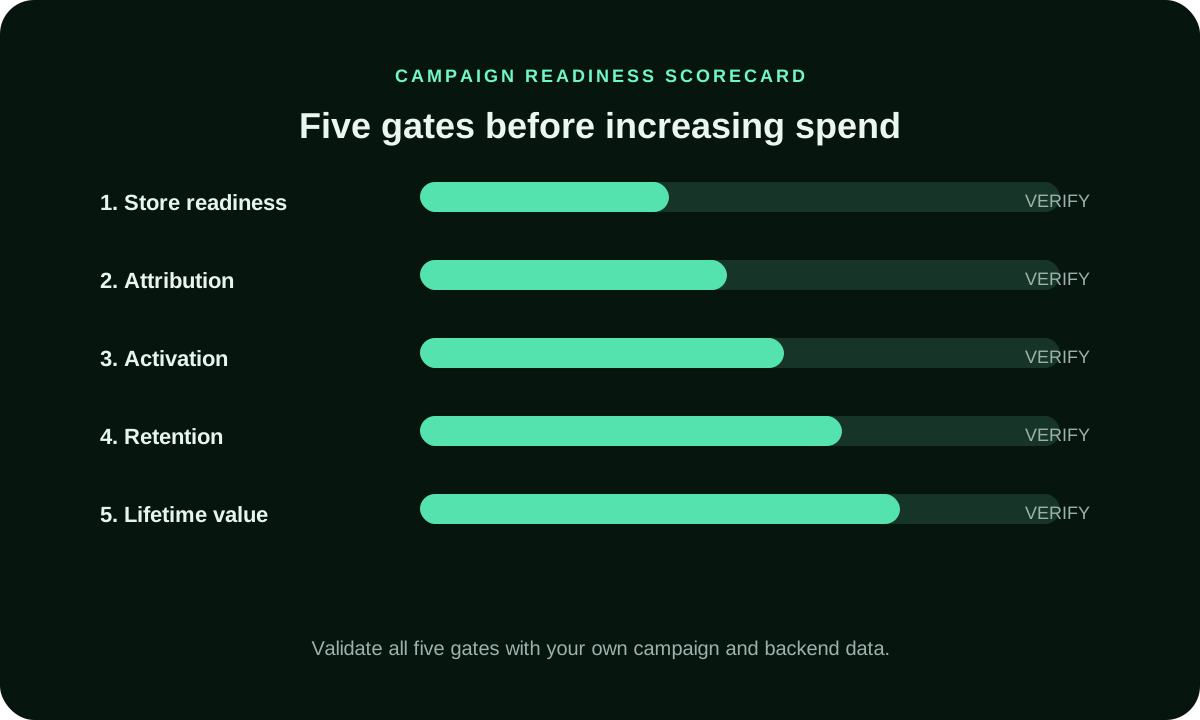
Increase spend after attribution is stable, the accepted-user cost is within your ceiling and mature cohorts retain their value as volume grows. Raise the cap in controlled increments and keep the expansion identifiable by source, market or operating system. Review marginal CPI and activation rather than relying on the blended average from the smaller test. Pause the increase if the store listing changes, event reporting breaks, rejected installs rise or the next block of spend exceeds your limit. A previous winning cohort is evidence for the next test, not a guarantee that the same efficiency will survive more volume.
Read CPI, activation and retention as one funnel
Review impressions or clicks, store-page activity, attributed installs, first opens, activation and the later event that carries business value. Treat install and first-open records as related stages; do not add both counts together as additional acquired users. Effective CPI explains the install checkpoint; it does not reveal how many users completed onboarding or remained useful. A low-volume source can look efficient because a few users dominate the average, while high install volume can hide a weak activation rate. Use consistent denominators and cohort dates, and let each outcome mature before comparing it with the next source or market. When volume rises, inspect the cost and quality of the additional installs rather than relying on the blended result from the first test.
Avoid the CPI errors that hide acquisition cost
Do not count a click, store visit or download as an accepted user without verifying the attributed install and the chosen post-install event. Other common errors include broken store links, mixed attribution windows, missing source IDs, creative that promises a different app experience and budgets spread across too many tiny cohorts. A team can also block supply before the event window matures or scale because the headline CPI fell while activation deteriorated. Fix eligibility and tracking first, then review the media. Keep the original settings, change log and rejection evidence so another buyer can reproduce the decision.
Why choose FroggyAds for a controlled CPI test?
We give advertisers, affiliates and media buyers a self-serve environment for paid traffic tests. You can use supported GEO, device, operating-system, browser, carrier, category and source controls with campaign budgets, bids and reporting. Our platform reports access to more than 750 SSP integrations and over 20 billion daily impressions across supported inventory; that describes network scale, not a promise of app installs or a result in a particular market. Choose FroggyAds when you want to manage eligible audiences, test exposure and source analysis within one buying workflow. Bring a ready store destination, accurate creative, working attribution and an accepted post-install event, then use the evidence to decide where the next budget belongs.
CPI campaign checklist before you fund the test
Save the app version, eligible countries, supported operating systems, store URLs, creative promise, attributed-install rule, accepted post-install event, attribution window, test cap and stop condition. Confirm a test device can complete the route from click to store, install, first open and the event your business values. During delivery, watch pacing and technical errors separately from user quality. After the window matures, compare effective CPI and accepted-user cost by source, market and platform. If the cohort meets the written ceiling, expand one dimension at a time; if it fails, keep the settings and evidence so the next test changes one documented setting instead of starting from guesswork.
How should the ad format fit the app experience?
Review the actual format before buying its install traffic. For an available interstitial placement, assess interstitial timing within the surrounding app flow and the point where a user can choose the advertised offer. Check the supplier's placement requirements, then confirm the current options your FroggyAds purchase supports. Keep that observation with the creative and store route when comparing outcomes.
CPI App Install Network FAQ
What does CPI mean in an app acquisition test?
CPI means cost per install. It can name an install-based billing agreement or an effective cost calculated from media expense and attributed installs. Confirm the purchase terms, then evaluate the cost and quality of the post-install event your business accepts.
Who should test paid app-install traffic?
Advertisers, affiliates and media buyers can test app-install traffic when the app is available in the chosen market, the store destination is ready and attribution works. Confirm store eligibility for the audience, then compare network reporting and purchase terms against the install and accepted-event definitions you need.
How much budget does an app-install test require?
Set a capped test budget from your maximum accepted-user cost, expected install-to-event rate and the number of mature outcomes needed for a source comparison. There is no universal budget for every app, country or attribution window.
Which metric matters beyond effective CPI?
Effective CPI is the delivery checkpoint. Cost per activated, retained or paying user should govern the commercial decision when that is the accepted outcome. An apparent improvement in install cost needs enough accepted users to judge whether it continues.
How should app-install traffic be tracked?
Preserve the campaign, creative and source identifiers your measurement stack supports, validate the store route and connect attributed installs with first opens and backend events where signals allow. Use the same attribution window and rejection rules in every comparison, and record any missing links.
How long should an app-install test run?
Run the test through the expected install-to-event delay and until more than one source or time period has mature data. Stop sooner if tracking fails or the written loss limit is reached.
How can traffic quality be checked?
Compare source-level CPI with first-open timing, activation, duplicate or reinstall patterns, accepted events and downstream value. Investigate reporting gaps before labeling a source low quality.
When should app-install spending increase?
Scale after attribution is stable, accepted-user cost is within range and a controlled increase preserves the mature cohort result. Keep each expansion identifiable in reporting.
Which app acquisition mistakes should be avoided?
Do not treat every install as a retained customer, mix attribution windows or scale from an immature cohort. Keep creative accurate and avoid conclusions from a very small sample. Name the counted event in each report, and retain rejected or delayed events alongside accepted users.
Can FroggyAds support my app acquisition test?
Yes. FroggyAds gives advertisers self-serve targeting, budget and source-reporting controls for a paid traffic test. Your attribution and app analytics should validate installs and post-install value.
Related app acquisition resources
Use the related guides to compare a provider or prepare tracking, then return to the install-to-event relationship for your own app. A recorded download and an accepted customer event answer different buying questions; keep both definitions with the campaign brief.
Build a controlled app-install test
Define the attributed install, accepted post-install event and maximum cost before launch. Verify tracking, cap the test and make source decisions only after the outcome window matures. Use the attributed install to monitor acquisition cost; let accepted app users justify another allocation.
Build a CPI acceptance and measurement brief
For each reported figure, name the app-install or post-install event it counts. Write one sentence defining the attributed install and a second defining the later event your business accepts. Add the eligible countries, supported operating systems, store URLs, attribution window, validation owner, maximum effective CPI and maximum accepted-user cost. This brief gives your media buyer, tracker and product team the same decision rule. FroggyAds manages the paid campaign controls and source reporting; your store, attribution and backend systems determine whether an attributed install became an accepted user.
| Economics layer | Evidence to retain | Review rule |
|---|---|---|
| Install and acceptance rule | Define the attributed install, accepted post-install event and rejection conditions. | Approve the definition only when campaign, attribution and backend owners use the same event window. |
| Storefront and device eligibility | List supported countries, store locales, operating systems, devices and account restrictions. | Exclude any audience that cannot download, open or use the advertised app experience. |
| Creative and store continuity | Match the ad benefit, store screenshots, price and first-run path. | Reject a route when the store or onboarding flow contradicts the ad promise. |
| Source and attribution evidence | Preserve the campaign, creative and source IDs your measurement stack can carry through install and accepted-event reporting; record unavailable links. | Compare sources only after the same attribution and maturity window has closed. |
| CPI and value ceiling | Set effective CPI, accepted-user cost, test exposure and loss limits. | Increase spend only when the next cohort remains within the written value boundary. |
Which install counts as accepted?
Use an attributed install as the first checkpoint, then validate the in-app action that makes the user commercially relevant. A finance app may require completed registration, a subscription app may require a trial start or paid renewal, and a game may require an engaged session or purchase. Record duplicate, reinstall, refund and fraud-treatment rules before launch. Apply one definition across the campaign report, mobile measurement partner and backend review so CPI does not appear cheaper simply because one system counts a broader event.
Compare Android and iOS within the store routes and measurement signals each actually supports. A lower effective CPI on one platform may accompany a different activation rate or app experience. Keep platform eligibility, attribution rules and accepted-user cost beside the install count before moving the next allocation.
Next step: Choose FroggyAds for an app acquisition test you can manage through supported audience, budget and source controls. We help you buy and review the paid traffic while your own measurement establishes accepted users. Create your free FroggyAds account. Compare effective CPI with accepted-user cost after the same cohort has matured before allocating more media spend.
For CPI buying, compare the install price with post-install acceptance and retention or another approved downstream event; a cheaper install is not automatically a cheaper acquired customer or useful user.
Compare headline CPI with accepted-user cost
Decide whether the next block of app acquisition spend is justified by connecting attributed installs with an accepted post-install event. Use our Best Ad Network For App Install guide to compare provider access, reporting and purchase conditions. Keep store conversion, first open, activation and retention in separate columns so a low install price cannot conceal a weak product handoff.
The operating evidence for a CPI campaign includes store availability, device and operating-system eligibility, the attributed install, the accepted post-install event and source-level cost. Keep each item only when it changes setup, measurement or the commercial decision.
| Checkpoint | Buyer action | Evidence to keep |
|---|---|---|
| Eligibility | Confirm the app, storefront, device and user can complete the advertised experience. | Keep tested store URLs, app build, supported OS and device details, and country or account restrictions. |
| Attribution | Validate the supported connections between attributed installs, first opens and the accepted in-app event. | Retain attribution rules, event window, supported identifiers, test events and any missing links. |
| Economics | Compare effective CPI and accepted-user cost after the event window matures. | Archive the same cohort's media expense, attributed installs, accepted events and dated maturity review. |
Hypothetical planning example: a test records 120 attributed installs at an effective CPI of USD 4, so media spend is USD 480. If 36 of those users complete the accepted activation event, the media cost per accepted user is USD 480 divided by 36, or approximately USD 13.33. Replace every input with reconciled campaign and backend data. This example is not a FroggyAds result or price quote, excludes other business costs and does not establish profit.
When your app, store route and attribution are ready, FroggyAds lets your team control the audience, bid, budget and source review from one self-serve workflow. Your accepted post-install event remains the commercial proof. Create your free FroggyAds account.
What should you verify before buying CPI traffic?
Verify app availability, store-page continuity, attribution, the accepted post-install event and the financial ceiling before the first paid install. Then use FroggyAds to create a bounded campaign with the targeting, budget and source visibility needed for a clean comparison. Review effective CPI alongside activation or retention after the outcome window matures. Test a fresh-install route and, where relevant, a returning-device route. Check deferred deep links, consent screens and onboarding events only where your app uses them, and record how each route differs from the measurement plan. Keep a dated record of the app build and store listing used for the test. If the app cannot serve the selected audience or the measurement path is incomplete, repair that gap before changing bids or adding volume.