
Separate quick discovery, deep reading, video viewing, fan participation and purchase-oriented sessions before selecting a model.
Entertainment monetization guide
Monetize an Entertainment Website Without Losing Audience Trust
To monetize an entertainment website, combine advertising with sponsorships, affiliate partnerships, memberships, licensing, commerce or premium access, then test each model by page type and audience intent. Protect speed, accessibility, consent and content rights, and judge success by collected net revenue, returning visitors and advertiser-quality signals rather than a promised CPM or instant approval.
What does this page explain about Monetize Entertainment Website: Campaign Performance Guide?
Quick answer: A movie or anime website can monetize lawful original, licensed or appropriately referenced content through memberships, sponsorships, merchandise or affiliate partnerships, direct sales and eligible advertising. Keep commercial elements distinct from playback, navigation and editorial recommendations, then measure net value and retention. Entertainment website monetization is the process of earning revenue from an audience without obscuring editorial purpose or damaging the experience that created the audience. The most useful canonical plan treats closely related searches such as making money from an entertainment website, AdSense alternatives and entertainment website monetization as one decision problem.
| Section | Distinct excerpt from this page |
|---|---|
| Entertainment website monetization starts with audience, rights and net value | A durable plan separates the visitor's purpose from the revenue model and avoids turning every template into the same advertising surface. |
| What entertainment website monetization means | An entertainment site may contain news, reviews, celebrity coverage, fan guides, trailers, interviews, galleries, databases, streaming information or community features. |
| Six revenue models and the evidence each one needs | For example, a sponsored franchise may conflict with unrestricted programmatic demand, while an affiliate review needs independent judgment and clear disclosures. |
Reference for Monetize Entertainment Website: Campaign Performance Guide: Google Publisher Policies.
Three operating decisionsAudience intent Rights and suitability Net business value
In the monetize entertainment website review, use this practical rule: Entertainment website monetization starts with audience, rights and net value
Entertainment pages can attract repeat visits, search discovery, social spikes and highly engaged fan communities, but those traffic patterns do not produce the same economics. Before you expand monetize entertainment website, confirm this point in the campaign record: A durable plan separates the visitor's purpose from the revenue model and avoids turning every template into the same advertising surface.
Confirm that the content, images, clips, promotions and audience segment can be monetized lawfully and under provider rules.
Measure collected revenue after fees together with latency, complaints, returning visitors, support and content-production cost.
For your monetize entertainment website decision, we recommend this account-team check: What entertainment website monetization means
In the monetize entertainment website review, use this practical rule: Entertainment website monetization is the process of earning revenue from an audience without obscuring editorial purpose or damaging the experience that created the audience. The revenue can come from advertising, sponsorships, affiliate relationships, memberships, premium access, commerce, licensing, events or a controlled combination. Monetization is not merely adding a tag. It is a product and measurement decision that affects trust, performance, accessibility and future traffic.
Before you expand monetize entertainment website, confirm this point in the campaign record: An entertainment site may contain news, reviews, celebrity coverage, fan guides, trailers, interviews, galleries, databases, streaming information or community features. Each template has a different visitor promise. A user checking a release date is not in the same state as a subscriber reading a long interview or a fan comparing tickets. Map the promise first, then place a commercial model where it supports rather than interrupts that job.
For your monetize entertainment website decision, we recommend this account-team check: The most useful canonical plan treats closely related searches such as making money from an entertainment website, adsense alternatives and entertainment website monetization as one decision problem. Separate pages are justified only when the user needs a materially different workflow, such as choosing an entertainment ad network or buying entertainment traffic.
Key takeaways before adding another revenue layer
Original coverage, reliable updates, recognizable contributors and useful archives create the asset. Monetization should finance that value rather than replace it.
Visitors should understand what is editorial, sponsored, affiliate, paid, premium or user-generated without having to infer the relationship.
Use stable placement IDs and page groups so a revenue increase is not confused with a seasonal traffic spike or a change in content mix.
Do not choose a provider from a headline rate alone. Approval language, payout examples, fill claims and market averages are starting points for verification. The site still needs a contract, eligible traffic, compatible content, working reporting and enough mature activity to judge accepted or collected value.
In the monetize entertainment website review, use this practical rule: Six revenue models and the evidence each one needs
| Model | Best fit | Evidence to monitor |
|---|---|---|
| Display or native advertising | Discovery pages with measurable, eligible inventory | Filled and viewable impressions, accepted revenue, latency and return rate |
| Direct sponsorship | Recognizable audience segments, newsletters or recurring franchises | Contract value, delivery, make-goods, brand lift evidence and renewal |
| Affiliate partnerships | Reviews, recommendations, tickets, products or subscriptions | Approved transactions, returns, disclosure compliance and net commission |
| Membership or premium access | Original archives, communities, tools or recurring exclusives | Trial-to-paid rate, retention, churn, support and content cost |
| Commerce and licensing | Merchandise, digital products, syndication or rights-cleared assets | Gross margin, refunds, fulfillment, rights cost and repeat purchases |
| Events and experiences | Livestreams, meetups, fan activities or paid virtual sessions | Attendance, completion, refund rate, sponsorship value and repeat demand |
A mixed model can reduce dependence on one partner, but it also creates coordination cost. Before you expand monetize entertainment website, confirm this point in the campaign record: For example, a sponsored franchise may conflict with unrestricted programmatic demand, while an affiliate review needs independent judgment and clear disclosures. Document the priority of each model by template so teams do not optimize the same space toward incompatible goals.
Connect the guide to live testing
Connect Monetize an Entertainment Website Without Losing Audience Trust to a controlled audience test
Use the choices established in “For your monetize entertainment website decision, we recommend this account-team check: Six revenue models and the evidence each one needs” to define one audience, budget and source set in FroggyAds. Keep the surrounding offer and measurement rule stable so the test adds evidence to monetize an entertainment website without losing audience trust instead of mixing several changes at once.
Create My Free Account
Map content and audience before choosing placements
Start with a template inventory. List home and category pages, article pages, galleries, video pages, profiles, archives, search results, account areas and any interactive tools. For each template, record the visitor's likely task, device distribution, normal session path, update frequency, traffic source and commercial sensitivity. This prevents a high-volume but low-intent page from setting the design for the whole site.
Next, segment traffic by source and behavior. Search visitors may arrive with a narrow question, social visitors may arrive during a short-lived trend, direct visitors may recognize the brand, and newsletter subscribers may have a deeper relationship. The same ad density can produce different complaint, viewability and return rates across those cohorts. Preserve source identifiers so the test can explain where a result came from.
Finally, identify pages that should remain lightly monetized or free from advertising. Account controls, sensitive topics, corrections, legal notices, consent choices and some premium experiences often need a simpler environment. A monetization plan is stronger when it states where revenue is not the primary objective.
Verify rights, brand safety and commercial suitability
Entertainment content often depends on photographs, clips, names, likenesses, quotes, fan submissions and third-party embeds. A page may attract traffic while still being unsuitable for a specific demand source or commercial use. Keep records for licenses, permissions, attribution, takedown handling and editorial review. Do not assume that public availability equals a right to monetize.
Separate factual reporting, opinion, parody, fan activity and paid promotion. Sponsorship language should not imply that a performer, studio, league, creator or rights holder endorses the site unless that relationship is real and documented. Correct material errors and maintain a visible contact path. These controls support audience trust and reduce the chance that a monetization partner receives a misleading description of the inventory.
Provider policy is another layer. A site can be lawful and still fall outside a network's current restrictions, advertiser demand or regional rules. Review official documentation, preserve the version and date used for the decision, and recheck when content or market scope changes.
Select ad formats by visitor task, not by maximum density
| Visitor context | Potential approach | Primary guardrail |
|---|---|---|
| Fast fact or release-date lookup | One reserved display or native placement after the answer | Do not push the answer below an obstructive commercial block |
| Long interview or feature | Measured in-content placements with stable identifiers | Preserve reading flow, contrast and accessible headings |
| Gallery or slideshow | Limited placements tied to real content steps | Do not manufacture pageviews or disguise navigation as ads |
| Video or trailer page | Policy-eligible video or companion display inventory | Avoid unexpected sound, obstructive controls and unclear autoplay |
| Fan or community area | Context-aware sponsorship or carefully filtered demand | Protect minors, privacy, moderation and user-generated content |
| Newsletter or recurring franchise | Direct sponsorship with explicit labeling | Define delivery, placement, make-good and reporting terms |
Push, native, display, pop, video and interstitial are distinct advertising formats. Their suitability depends on the provider, market, content, device and visitor expectation. A format that works for an advertiser campaign is not automatically the right publisher experience for every entertainment page.
Design for page experience, accessibility and consent
Reserve dimensions for media and ads so the page does not jump while loading. Keep the primary content visible, make close controls large enough to use, preserve keyboard navigation and ensure that sponsorship labels remain readable at mobile widths. Commercial widgets must not cover consent choices, account controls or the main navigation.
Avoid interfaces that imitate play buttons, download buttons, next-story controls or operating-system messages. Do not make visitors hunt for the real content among promotional elements. Clear visual separation improves trust and makes measurement more honest because accidental clicks are less likely to be treated as demand.
Consent and privacy settings must reflect the actual technologies and markets in use. Record which vendors receive data, which legal basis or permission applies, how a user changes the choice and how the implementation behaves when consent is absent. A generic banner does not prove that the underlying tags are controlled correctly.
Measure collected net value instead of a promotional CPM
Define the impression and revenue basis before comparing results. Served impressions, filled impressions, viewable impressions, validated impressions and paid impressions can produce different denominators. Record gross revenue, deductions, invalid-activity adjustments, fees, currency conversion and settlement timing. The most useful metric is the amount the business can reconcile to an eligible page cohort and time period.
Pair revenue with audience measures. Watch return rate, pages per session, media completion, newsletter signups, membership conversion, complaints, consent choices and support contacts. A placement that raises short-term revenue but reduces repeat visits may destroy the inventory that makes the site valuable. Use a decision window long enough to capture normal reporting and conversion delay.
| Metric | Why it matters | Decision use |
|---|---|---|
| Collected net revenue | Reflects the amount that survives deductions and settlement | Compare models on the same currency and time basis |
| Revenue per eligible session | Links income to the sessions that could actually see the placement | Avoid using unrelated pageviews in the denominator |
| Returning visitor rate | Signals whether the experience protects recurring audience value | Pause intrusive changes when retention falls materially |
| Viewability and interaction quality | Shows whether the placement is genuinely visible and useful | Improve position before increasing density |
| Latency and layout stability | Captures the technical cost of commercial code | Remove or defer components that damage the page |
| Complaint and block rate | Reveals trust and experience problems that revenue reports may hide | Investigate the template and demand source before scaling |
Choose the execution format
Choose a paid-media format that supports Monetize an Entertainment Website Without Losing Audience Trust
Use the criteria around “Measure collected net value instead of a promotional CPM” to decide whether push, native, display or pop fits the message and destination. Set format, targeting and spend as campaign controls in FroggyAds while the monetize an entertainment website without losing audience trust decision remains the standard for judging the result.
Create My Free Account
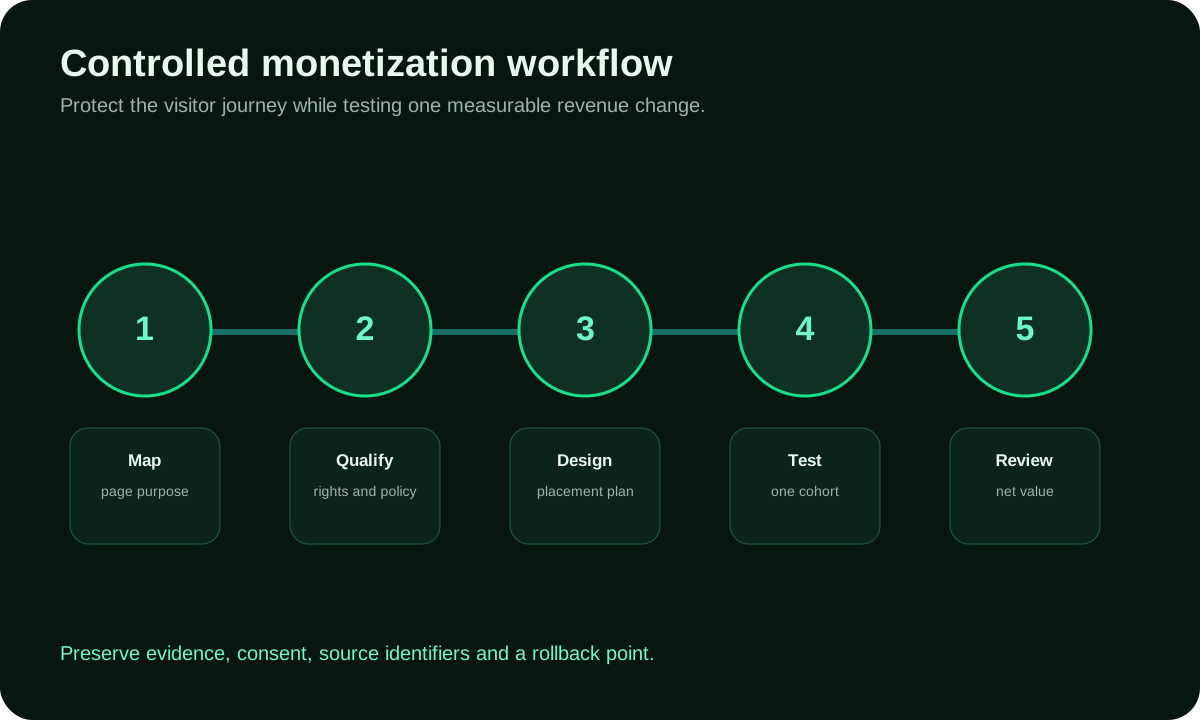
A controlled five-step entertainment monetization workflow
- Map page purpose and audience. Define the visitor job, content rights, device mix, source mix and current revenue before selecting a commercial change.
- Qualify the model and provider. Verify content eligibility, market coverage, data use, payment terms, technical requirements and support through current official documentation.
- Design one measurable placement. Assign a stable ID, reserve space, document the control group and state the stop rule before deployment.
- Run through a mature window. Include normal reporting, validation, conversion and payment delay instead of reacting to the first hours of activity.
- Review net value and audience effects. Scale, revise or roll back based on collected evidence, not a promised rate or a one-day traffic spike.
Example: a mixed entertainment publisher test
Consider a site with short release-date pages, long reviews and a weekly newsletter. The publisher first removes duplicated commercial widgets and records a four-week baseline. Release-date pages receive one reserved display placement after the direct answer. Reviews receive a contextual affiliate module after the evaluation criteria. The newsletter keeps a single direct sponsor with explicit labeling.
The team assigns separate placement IDs and tracks collected revenue, click quality, latency, return visits and newsletter unsubscribes. It does not compare the display CPM with the affiliate commission as if they were the same model. Each stream is evaluated against its own cost and visitor task. After the test, the publisher keeps the review module, reduces display density on mobile and renegotiates sponsor reporting.
This example is a planning model, not a forecast. Real outcomes depend on content, audience, market, provider approval, demand, implementation, traffic quality and measurement. A responsible case log records what was observed, what was calculated and which assumptions remain uncertain.
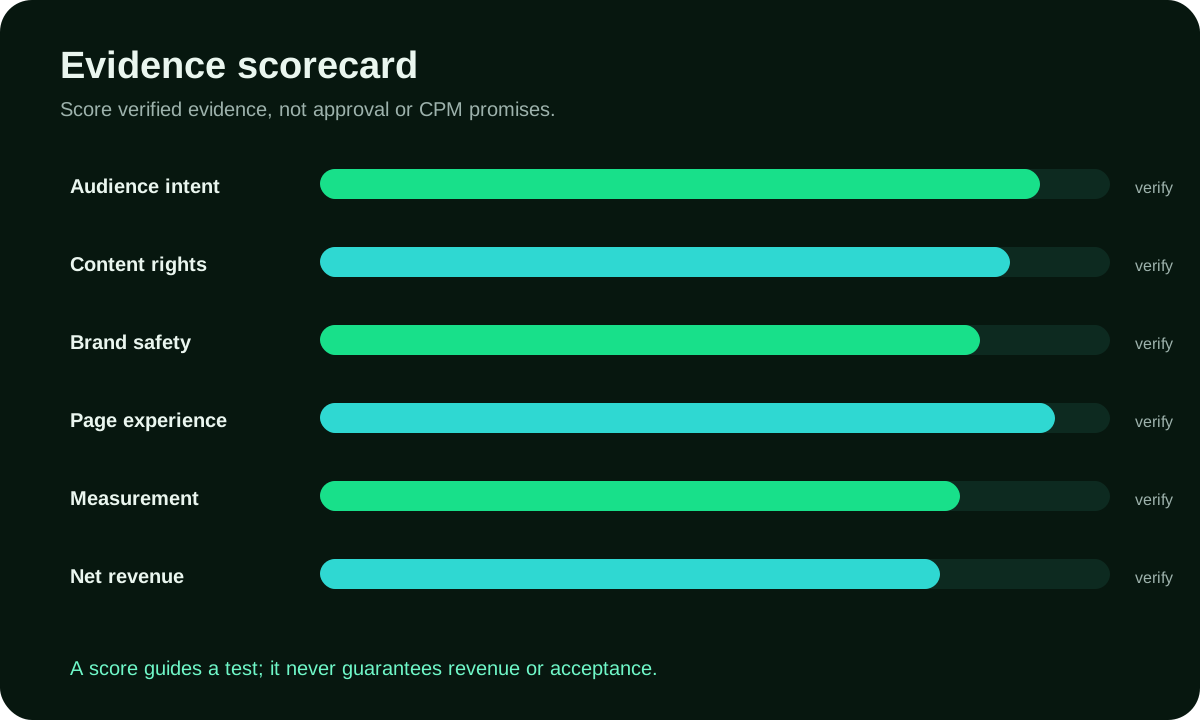
Use an evidence scorecard before scaling
Score the plan on audience fit, rights, content suitability, page experience, measurement, reporting, payment clarity and net value. Require a written source for every high score. A provider sales page can document a stated capability, but only the publisher's implementation and reconciled reports can show how that capability performs for the site.
Set minimum acceptance thresholds before launch. For example, the placement may need to preserve a defined mobile layout, remain below a latency limit, generate no increase in complaint rate and produce a positive net contribution after operating cost. A threshold is more useful than a vague instruction to optimize revenue.
Put the guide into practice
Turn Monetize an Entertainment Website Without Losing Audience Trust into a bounded campaign test
With “Use an evidence scorecard before scaling” documented, launch only the next reversible test. Set a spending limit, preserve the baseline and use source-level and audience controls so the next step depends on qualified outcomes for monetize an entertainment website without losing audience trust, not activity volume.
Create My Free Account
How to compare entertainment ad networks and AdSense alternatives
Start with eligibility, not popularity. Confirm supported content, countries, devices, formats, minimum requirements, prohibited traffic sources, ad-quality controls, reporting dimensions, validation process, payment method, threshold, schedule, fees and account-review terms. Save the documentation used for the decision and record any unanswered question.
Next, compare operational fit. The network should support stable placement and source identifiers, practical blocking controls, responsive implementation and a support path for policy or quality problems. Test a small page cohort. Do not give a new partner unrestricted access to every template before the site can measure the result and remove the implementation safely.
Finally, compare net economics over a mature period. A high dashboard CPM can be offset by low fill, adjustments, fees, poor viewability or audience loss. An AdSense alternative should be evaluated as a complete business relationship, not as a guarantee of approval or a replacement for content quality.
Launch checklist and rollback rules
Confirm rights, policy, consent, technical ownership, placement IDs, baseline metrics, support contacts and the exact pages included.
Watch broken layouts, blocked content, latency, unexpected creatives, source quality, complaints, consent behavior and reporting gaps.
Remove or disable the change when it creates deceptive navigation, unsafe content, material technical regressions, policy risk or unexplained traffic-quality anomalies.
Scale only one major variable at a time. If density, format, provider and traffic source all change together, the report cannot explain the result. Preserve screenshots, configuration, dates and raw exports so the decision can be audited later.
Limitations and responsible expectations
No guide can determine the legal rights, policy eligibility or commercial result of an individual entertainment site. Content ownership, audience age, market, privacy obligations, provider contracts and advertiser suitability can change the answer. Obtain qualified legal, tax, privacy or rights advice when the decision depends on those areas.
FroggyAds does not guarantee approval, revenue, CPM, traffic quality, conversions, ranking, indexing or AI citation. The platform provides self-serve media buying capabilities for advertisers. Traffic-quality controls reduce risk but cannot eliminate every invalid event, and auction availability varies by format, geography, targeting and time.
Verification resources
Sources to review before monetizing entertainment content
Policies, standards and market conditions change. Use current official documentation for the exact content, provider, country and implementation.
Google Publisher Policies
Review current content, behavioral, privacy and implementation requirements before placing third-party ad code.
Coalition for Better Ads Standards
Compare planned placements with current consumer research on disruptive desktop, mobile, video and app ad experiences.
FTC guidance on dark patterns
Use clear commercial labeling and avoid interfaces that manipulate visitors into clicks, subscriptions or data sharing.
Google people-first content guidance
Keep editorial value, original reporting or analysis stronger than the monetization layer.
WCAG 2.2
Check that ads, consent controls, media players and navigation remain perceivable, operable and understandable.
Google structured data guidelines
Keep markup accurate, visible and current instead of describing content or ratings that visitors cannot verify.
Movie and anime publishing
Movie and anime website monetization without confusing audience value
A movie or anime website can monetize lawful original, licensed or appropriately referenced content through memberships, sponsorships, merchandise or affiliate partnerships, direct sales and eligible advertising. Verify rights and market restrictions first. In the monetize entertainment website review, use this practical rule: Keep commercial elements distinct from playback, navigation and editorial recommendations, then measure net value and retention.
How to monetize a movie website
Document the right to publish and monetize each content type. Choose a revenue model that fits reviews, trailers, databases, communities or licensed viewing. Track qualified sessions, repeat visits, subscription or partner value, complaints and the cost of content, moderation and delivery.
How to monetize an anime website
Apply the same rights-first rule while accounting for regional licensing, translations, audience age mix, community moderation and merchandise relationships. Do not imply ownership, official status or availability that the publisher cannot prove.
Ads for movie and anime websites
Use clearly labelled placements with appropriate category, age and market controls. Avoid deceptive play buttons, forced redirects and ads that obscure content access. Compare revenue with page speed, completion, repeat usage, reports and brand-safety outcomes before scaling.
Questions about entertainment website monetization
Which monetization model fits an entertainment website?
Choose advertising, sponsorship, memberships, affiliate work or products according to audience intent and the experience the publisher can protect.
How can display ads avoid disrupting entertainment content?
Reserve stable placements, limit intrusive behavior and check performance across the devices used for viewing or listening.
When is a direct sponsorship better than network advertising?
It can fit a highly relevant audience when the publisher can price production, placement, rights and reporting clearly.
What makes entertainment affiliate content trustworthy?
Disclose the commercial relationship, describe the offer accurately and avoid turning editorial enthusiasm into an unsupported endorsement.
How should video monetization account for viewer experience?
Test ad load, timing, controls, playback quality and abandonment beside revenue rather than maximizing interruptions.
Which audience signals belong next to entertainment revenue?
Watch returning visits, content completion, complaints, subscription response and page or player performance.
What data can an entertainment publisher share with sponsors?
Use relevant aggregated evidence and avoid exposing personal information or claiming audience traits the records do not establish.
How can a site test paid memberships?
Offer a specific ongoing benefit to a small audience and measure conversion, continued use, cancellations and support work.
When should an advertising partner be removed?
Remove it after repeated creative, destination, payment or user-experience failures remain unresolved.
Can an entertainment site predict a fixed monetization income?
No. Audience quality, seasonality, advertiser demand, format mix and operating choices can move revenue materially.
Related entertainment and monetization resources
Protect the audience that creates the inventory
Monetize entertainment content with a measurable value exchange
Start with the page purpose, verify rights and policy, introduce one controlled revenue change and judge it by reconciled net value and audience health. The goal is sustainable publishing, not the highest unverified rate.
Related specialized monetization guides
Monetize a Viral Content Site
Turn temporary attention into measurable repeat audience value.
Related specialist publisher guides
Monetize a Recipe Blog
Build revenue while protecting recipe accuracy, page speed and reader trust.
Monetize a Travel Blog
Combine ads, affiliates and sponsor work with clear disclosure and current destination facts.
Related specialist publisher guide
Monetize a Music Website
Build rights-aware revenue from advertising, tickets, merchandise, sponsorships, memberships, services and licensed editorial assets.
Search intent and monetization decision
Monetize an Entertainment Website Without Losing Audience Trust: the publisher decision this URL owns
Use this page when a site owner is deciding how Monetize an Entertainment Website Without Losing Audience Trust can create revenue without weakening the content experience that produces repeat visits.
Page-specific evidence path: For Monetize an Entertainment Website Without Losing Audience Trust, use the visible sections Before you expand monetize entertainment website, confirm this point in the campaign record: Entertainment website monetization starts with audience, rights and net value; For your monetize entertainment website decision, we recommend this account-team check: What entertainment website monetization means; Key takeaways before adding another revenue layer to evaluate this content-site monetization decision. The FAQ path asks Which monetization model fits an entertainment website?; How can display ads avoid disrupting entertainment content?; When is a direct sponsorship better than network advertising?. Keep the decision terms campaign objective, audience targeting, bid, conversion tracking attached to this URL, and use Monetize Website Traffic only for its adjacent monetization task.
| Checkpoint | What to decide | Evidence to retain |
|---|---|---|
| Audience context | For Monetize an Entertainment Website Without Losing Audience Trust, identify the pages, visitor intent and devices where monetization is appropriate. | Retain for Monetize an Entertainment Website Without Losing Audience Trust: Content category, traffic source, device and session depth. |
| Inventory design | For Monetize an Entertainment Website Without Losing Audience Trust, choose placements and formats that preserve navigation, readability and disclosures. | Retain for Monetize an Entertainment Website Without Losing Audience Trust: Placement map, viewability/eligibility, frequency and page-speed observations. |
| Yield + experience | For Monetize an Entertainment Website Without Losing Audience Trust, scale only when net value improves without unacceptable engagement or return-visit loss. | Retain for Monetize an Entertainment Website Without Losing Audience Trust: Net revenue, revenue per visit, bounce/engagement and repeat-visit signals. |
Transparent monetization example
Hypothetical example: if Monetize an Entertainment Website Without Losing Audience Trust records 80,000 eligible or served impressions and USD 110 in net advertising revenue over the same review window, the illustrative eCPM is USD 1.38. Replace those inputs with your own delivery and net-revenue data; this is not a FroggyAds earnings claim.
How should FroggyAds fit this decision?
For Monetize an Entertainment Website Without Losing Audience Trust, use the FroggyAds publisher or monetization workflow documented on this page only where it supports the content-site monetization task and the stated inventory constraints. Keep live delivery, net revenue and the page-specific decision terms campaign objective, audience targeting, bid, conversion tracking in the same record. Judge this URL against its own evidence path and do not treat a headline fill rate, eCPM or earnings estimate as guaranteed.
Direct answer
What matters first for Monetize an Entertainment Website Without Losing Audience Trust?
Begin the entertainment-site review with the inventory or audience condition this content-site monetization page owns. Use In the monetize entertainment website review, use this practical rule: Entertainment website monetization starts with audience, rights and net value; Before you expand monetize entertainment website, confirm this point in the campaign record: What entertainment website monetization means; Key takeaways before adding another revenue layer to verify the implementation path, then reconcile delivery and net publisher value with Which monetization model fits an entertainment website?; How can display ads avoid disrupting entertainment content?; When is a direct sponsorship better than network advertising?. Increase monetization pressure only when the page-specific revenue and user-quality evidence remain acceptable after the same review window.