
Website Monetization: Revenue Without Sacrificing Trust
Build a website monetization system that connects demand, placement quality, page experience and revenue measurement without treating every impression as equal.

What does this page explain about Website Monetization: Revenue Without Sacrificing Trust?
Quick answer: Build a website monetization system that connects demand, placement quality, page experience and revenue measurement without treating every impression as equal. Website monetization can include advertising, subscriptions, sponsorships, affiliate relationships, lead generation or direct products. The right mix depends on audience intent, page experience, consent, reporting and collected revenue rather than a single headline rate. A website can combine advertising, sponsorships, affiliates, subscriptions, services, products or donations. Choose models that match audience intent and measure collected net value after fees, user-experience effects and operating cost.
| Section | Distinct excerpt from this page |
|---|---|
| What website monetization should accomplish | Then create one baseline using revenue per engaged session and supporting evidence from viewability, session depth, accepted revenue and returning-user behavior. |
| Audience value | For website monetization, connect this control to revenue per engaged session. |
| Inventory the opportunity | Inventory the opportunity for website monetization by keeping page type, device, geography and traffic source visible and recording how the change affects viewability, session depth, accepted revenue and returning-user behavior. |
Reference for Website Monetization: Revenue Without Sacrificing Trust: Google Ad Manager overview Publisher ad management and yield context.
What website monetization should accomplish
Website Monetization: Revenue Without Sacrificing Trust is not a single ad tag, rate card or placement decision. It is an operating system for deciding which opportunities are eligible, which demand can compete, how revenue is counted and what audience cost is acceptable. The primary job on this page is to build a durable revenue system around audience value and page experience. That job stays measurable only when the team declares the denominator and keeps page type, device, geography and traffic source visible in the report.
Start with the business constraint behind website monetization. A publisher may need more collected revenue, better payment reliability, stronger viewability, lower latency or more control over the advertiser and format mix. Those problems require different solutions. Write the constraint before adding technology. Then create one baseline using revenue per engaged session and supporting evidence from viewability, session depth, accepted revenue and returning-user behavior.
The central risk is overloading pages before demand and user behavior are understood. A controlled design prevents that failure by separating gross delivery from collected value. It also records what changed, when it changed and which template, demand path or audience cohort received the change. This makes the next decision reproducible instead of dependent on an account-wide average.
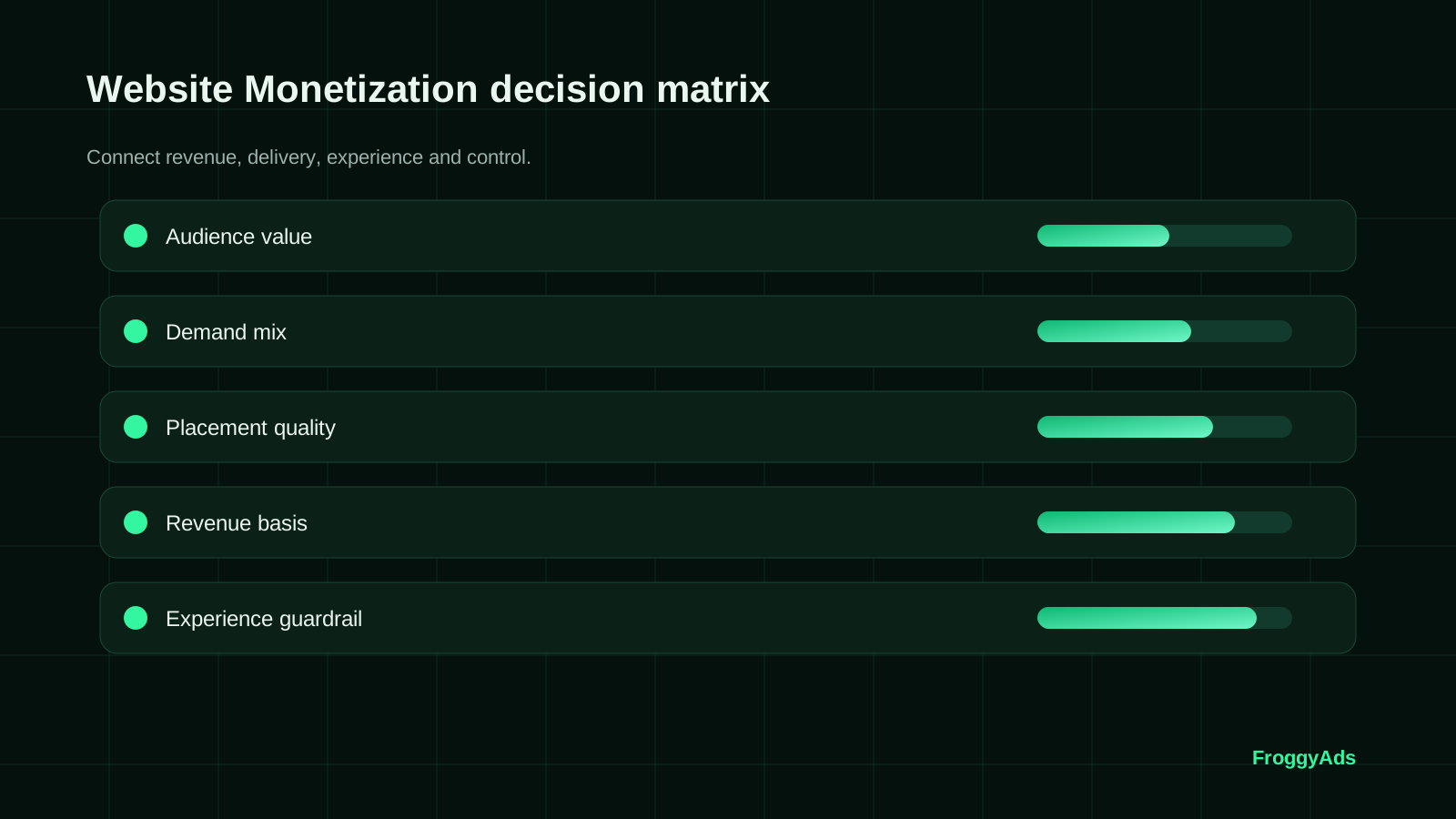
Build website monetization around six controllable layers
Each layer connects revenue with a specific implementation and a visible guardrail.
Audience value
Define why the visitor, page or placement is valuable before selecting demand. For website monetization, connect this control to revenue per engaged session.
Demand mix
Separate direct, network and marketplace demand so economics remain visible. For website monetization, connect this control to revenue per engaged session.
Placement quality
Design opportunities to see without disrupting the page task. For website monetization, connect this control to revenue per engaged session.
Revenue basis
Use collected net revenue and a declared denominator. For website monetization, connect this control to revenue per engaged session.
Experience guardrail
Track speed, layout stability, engagement and return behavior. For website monetization, connect this control to revenue per engaged session.
Change log
Record partner, price, placement and policy changes before comparing periods. For website monetization, connect this control to revenue per engaged session.
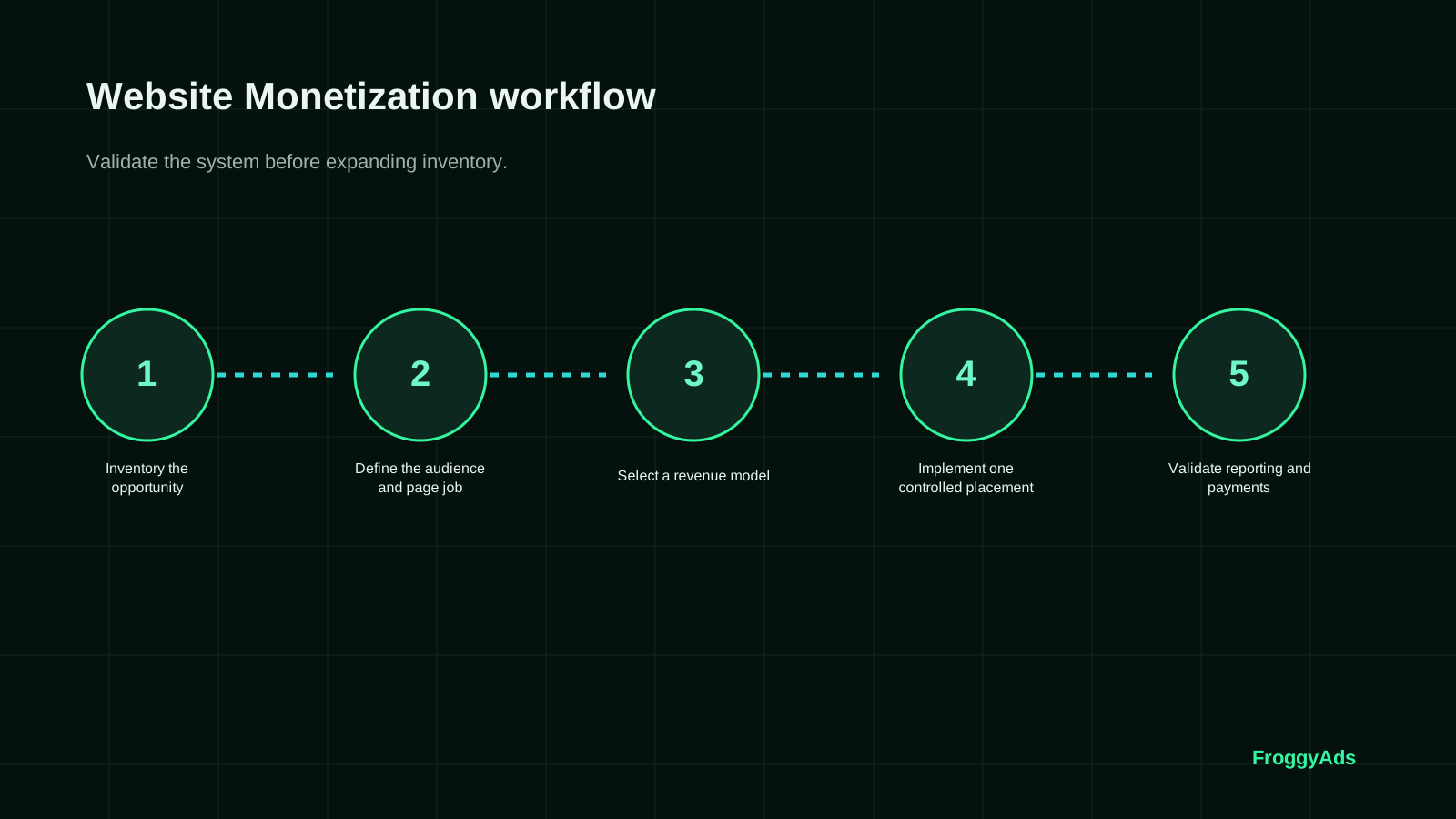
A seven-step website monetization process
Use a bounded sequence so the first test produces evidence instead of an irreversible sitewide change.
Inventory the opportunity
Inventory the opportunity for website monetization by keeping page type, device, geography and traffic source visible and recording how the change affects viewability, session depth, accepted revenue and returning-user behavior.
Define the audience and page job
Define the audience and page job for website monetization by keeping page type, device, geography and traffic source visible and recording how the change affects viewability, session depth, accepted revenue and returning-user behavior.
Select a revenue model
Select a revenue model for website monetization by keeping page type, device, geography and traffic source visible and recording how the change affects viewability, session depth, accepted revenue and returning-user behavior.
Implement one controlled placement
Implement one controlled placement for website monetization by keeping page type, device, geography and traffic source visible and recording how the change affects viewability, session depth, accepted revenue and returning-user behavior.
Validate reporting and payments
Validate reporting and payments for website monetization by keeping page type, device, geography and traffic source visible and recording how the change affects viewability, session depth, accepted revenue and returning-user behavior.
Compare net session value
Compare net session value for website monetization by keeping page type, device, geography and traffic source visible and recording how the change affects viewability, session depth, accepted revenue and returning-user behavior.
Scale the proven combination
Scale the proven combination for website monetization by keeping page type, device, geography and traffic source visible and recording how the change affects viewability, session depth, accepted revenue and returning-user behavior.
Measure net value, not a headline rate
The headline decision metric for website monetization is revenue per engaged session. Define the numerator, denominator, currency, time zone and revenue basis before comparing periods. Gross estimates, net reports and collected payments answer different questions. Use one as the decision metric and keep the others as reconciliation layers.
Report the result by page type, device, geography and traffic source. The split is not administrative detail. It reveals whether the apparent improvement came from better demand, a different audience, a more viewable placement or a temporary traffic mix. For website monetization, combine the economic metric with viewability, session depth, accepted revenue and returning-user behavior so a short-term rate increase does not hide a weaker user or advertiser outcome.
Use a maturity window. Some revenue reports, invalid-traffic adjustments, conversions and payments settle after the impression or click. Mark recent periods as provisional and compare them only after the same delay. If the reporting definition changes, start a new baseline rather than blending incompatible data into the website monetization trend.
| Layer | Evidence | Guardrail | Decision |
|---|---|---|---|
| Eligibility | Requests or opportunities that can legally and technically be monetized | Consent, policy and placement rules | Confirm the denominator |
| Demand | Bids, matches, prices and seller paths | Floors, timeouts and partner rules | Keep or remove demand |
| Delivery | Rendered, measurable and viewable events | Speed, layout and frequency | Improve implementation |
| Value | Viewability, session depth, accepted revenue and returning-user behavior | Revenue per engaged session | Scale, hold or roll back |
Connect supply, demand, delivery and billing
A resilient website monetization setup separates eligibility, auction or demand choice, delivery, rendering and billing. Each layer can fail independently. An eligible opportunity may receive no bid, a winning creative may fail to render, a rendered ad may not be measurable, and reported revenue may later be adjusted. Mapping those stages prevents the team from blaming the wrong component.
Create a small number of inventory classes. Premium, standard, experimental and fallback groups are usually easier to operate than dozens of undocumented exceptions. Give each class a purpose, allowed formats, demand rules, floor or price logic, timeout, frequency and user-experience guardrail. Then evaluate website monetization within the class rather than across a blended site average.
The operating plan should also define ownership. Editorial, product, engineering, ad operations, finance and privacy teams can each influence the result. Assign one owner for the website monetization metric, one owner for technical delivery and one owner for the audience guardrails. Decisions move faster when each team knows which evidence it must provide.
Use the model in three common situations
The right action depends on the current constraint, not on a universal monetization formula.
New publisher stack
Use one primary demand path, one fallback and one reporting baseline before adding complexity. In this website monetization decision, use revenue per engaged session as the economic check.
Mature site with mixed demand
Separate premium direct inventory from open-market and remnant opportunities. In this website monetization decision, use revenue per engaged session as the economic check.
Revenue decline
Check traffic mix, viewability, fill, latency, policy and payment data before changing every partner. In this website monetization decision, use revenue per engaged session as the economic check.
Protect the audience and advertiser value
User experience is part of the revenue equation. A placement that shifts content, delays interaction, obscures navigation or creates repeated interruptions can reduce session depth and future visits. Measure those effects alongside revenue per engaged session. The goal is not the fewest ads or the most ads. It is the highest sustainable value from eligible opportunities.
Advertiser value matters too. Clear labeling, accurate placement descriptions, transparent supply paths and source-level reporting make inventory easier to evaluate. For website monetization, avoid promising guaranteed quality, guaranteed fill or guaranteed revenue. Traffic-quality and supply controls reduce risk, but they do not eliminate every invalid event or market change.
When a change works, scale one lever at a time. Increase eligible inventory, add a demand path, adjust a floor, change a format or expand an audience cohort, but do not do all of them together. Preserve the previous stable version so the team can roll back if the newest website monetization expansion weakens collected revenue or audience behavior.
Five mistakes that weaken website monetization
Use these checks before expanding demand, placements or inventory.
Optimizing a headline metric before the page type, device, geography and traffic source breakdown is stable
Changing demand, placement and pricing at the same time during a website monetization test
Ignoring fees, discrepancies, latency or uncollected revenue when calculating revenue per engaged session
Treating user experience as a soft preference instead of an input to future inventory value
Scaling website monetization before the latest traffic period and revenue events have matured
Standards and first-party documentation
These sources define technical concepts and user-experience principles. Your own reporting remains the source of truth for performance.
Website Monetization FAQ
Practical answers for publishers, site owners, ad operations teams and media buyers.
Which revenue model fits a website's audience and content?
Compare advertising, subscriptions, affiliates, sponsorships, products and services against reader needs, editorial trust and the team's operating capacity.
What should publishers understand before adding monetization?
Know why people visit, which pages create value, their device context and the commercial relationships the audience would reasonably expect.
How can advertising density affect website revenue?
Extra placements may raise short-term impressions while harming reading, return visits or page performance, so evaluate both revenue and audience behavior.
Which ad formats should a publisher test first?
Start with formats suitable for page layout and visitor intent, using clear labeling, source controls and a bounded effect on experience.
What data review belongs in a monetized website plan?
Map collection, consent, partners, purposes, retention and visitor choices before adding scripts or sharing audience information.
Why does page performance matter to monetization?
Heavy or unstable placements can reduce content use and conversion, making technical experience part of the revenue calculation.
How should publishers evaluate advertising or affiliate partners?
Compare audience relevance, editorial safeguards, commercial terms, reporting clarity, payment history and the partner's process for blocking unwanted offers.
What makes a website monetization test interpretable?
Change one placement, format or audience condition, preserve baseline measures and state the revenue and experience limits beforehand.
Which metrics should a monetization dashboard combine?
Show mature revenue beside viewability, engagement, return behavior, complaints and page performance instead of ranking rates in isolation.
When should a site add another revenue stream?
Expand after the current model is understood and the new option serves a distinct audience need without creating unmanageable conflicts.
Continue the publisher revenue workflow
Use the related guides to connect strategy, measurement, infrastructure and format decisions.
Use transparent supply understanding to plan better campaigns
For Website Monetization, treat this as a page-specific operating check rather than a universal benchmark. FroggyAds gives advertisers self-serve access to Push, Native, Display, Pop, Video and Interstitial formats. Inventory, auction conditions and results vary, so launch a measured campaign and optimize by source and accepted outcomes.
Publisher growth and responsible monetization
Improve banner design, advertiser acquisition and adblock monetization without weakening user trust.
Ways to monetize a website without sacrificing audience trust
Website monetization can include advertising, subscriptions, sponsorships, affiliate relationships, lead generation or direct products. The right mix depends on audience intent, page experience, consent, reporting and collected revenue rather than a single headline rate.
Monetize a website
Start with eligible page types, an accepted revenue event and a clear limit on user-experience cost.
Earn money from website traffic
Measure collected revenue per qualified visit or engaged session, not impressions alone.
Make money with ads on a website
Use placements and formats that fit the page, preserve navigation and can be evaluated by viewability, latency and retained audience value.
Make and earn money from a website without depending on one platform
A website can combine advertising, sponsorships, affiliates, subscriptions, services, products or donations. Choose models that match audience intent and measure collected net value after fees, user-experience effects and operating cost.
Direct audience value
Subscriptions, products and services depend on distinctive value and retention.
Partner revenue
Advertising, affiliate and sponsorship relationships require disclosure and measurement.
Diversified stack
Use clear reporting so one model does not silently damage another.
Monetization guides for entertainment and download sites
Use these guides to compare Monetize an Entertainment Website Without Losing Audience Trust and Monetize a Download Site With Clear, Safe User Choices.
Monetize an Entertainment Website Without Losing Audience Trust
Learn how to monetize an entertainment website with ads, sponsorships, affiliates, memberships and premium access while protecting rights, speed and trust.
Monetize a Download Site With Clear, Safe User Choices
Learn how to monetize a lawful download site with ads, affiliates, subscriptions and sponsorships while protecting file safety, button clarity and trust.
Related specialized monetization guides
Monetize a URL Shortener
Build revenue without hiding the requested destination.
Monetize a File Hosting Site
Price storage and delivery while protecting download clarity.
Monetize a Viral Content Site
Turn temporary attention into measurable repeat audience value.
Related specialist publisher guides
Monetize a Recipe Blog
Build revenue while protecting recipe accuracy, page speed and reader trust.
Monetize a Travel Blog
Combine ads, affiliates and sponsor work with clear disclosure and current destination facts.
Related specialist publisher guide
Monetize a Music Website
Build rights-aware revenue from advertising, tickets, merchandise, sponsorships, memberships, services and licensed editorial assets.
Website Monetization: Revenue Without Sacrificing Trust: the publisher decision this URL owns
Use this page when a publisher or supply-side operator needs to evaluate Website Monetization: Revenue Without Sacrificing Trust from the inventory side. The decision is whether the placement or format can be implemented with clear labeling, acceptable user experience, usable reporting and sustainable monetization. This is a publisher-side reference; FroggyAds advertiser campaign signup is a separate workflow.
URL boundary: This URL owns the publisher decision for Website Monetization: Revenue Without Sacrificing Trust. Keep it separate from Website Monetization Platforms and Website Ad Space: those pages may share format vocabulary, but each should retain its own implementation, inventory and monetization question.
Publisher decision inputs: Publisher decision inputs: placement implementation, ad labeling, user experience, demand quality, reporting, sustainable monetization. Use them as evidence fields, not promises of fill, revenue or advertiser demand. A useful conclusion should identify what the publisher can verify, what remains unknown and which implementation or inventory action follows. For Website Monetization: Revenue Without Sacrificing Trust, keep placement implementation, labeling and user experience distinct from demand quality, reporting and sustainable monetization when the page is reviewed.
Publisher evidence path: For Website Monetization: Revenue Without Sacrificing Trust, the question “Which revenue model fits a website's audience and content?†makes placement implementation, labeling and user experience the opening publisher checkpoint. Use “What website monetization should accomplish†to record what is implemented, what can be observed and what condition would require a rollback or different placement.
Publisher evidence path: Before acting on “How can advertising density affect website revenue?â€, use “A seven-step website monetization process†to document the publisher-side conclusion. The useful output is a named implementation, inventory or monetization action plus the evidence window used to reach it.
Publisher evidence path: “What should publishers understand before adding monetization?†belongs to the evidence path under “Build website monetization around six controllable layersâ€. Keep demand quality, reporting and sustainable monetization together with the relevant inventory or placement identifier so the publisher can separate a delivery change from a user-experience or monetization change.
| Publisher checkpoint | How to use it | Evidence to retain |
|---|---|---|
| What website monetization should accomplish | Use this section to answer “Which revenue model fits a website's audience and content?” from the publisher perspective. | Retain placement, labeling and implementation evidence relevant to Website Monetization: Revenue Without Sacrificing Trust. |
| Build website monetization around six controllable layers | Use this section to resolve “What should publishers understand before adding monetization?” without mixing it with advertiser campaign performance. | Retain reporting, demand-quality and user-experience evidence. |
| A seven-step website monetization process | Use this section to answer “How can advertising density affect website revenue?” before changing inventory or monetization setup. | Document the publisher action, evidence window and rollback or review condition. |
Where FroggyAds fits
FroggyAds primarily serves advertisers buying traffic through our self-serve platform. This publisher-side page explains the inventory and implementation questions behind Website Monetization: Revenue Without Sacrificing Trust without implying a publisher signup, fill-rate, revenue or demand guarantee. Advertisers can continue to FroggyAds advertiser resources.
What matters first for Website Monetization: Revenue Without Sacrificing Trust?
For Website Monetization: Revenue Without Sacrificing Trust, start with the inventory or audience condition this website monetization page owns. Use What website monetization should accomplish; Build website monetization around six controllable layers; A seven-step website monetization process to verify the implementation path, then reconcile delivery and net publisher value with Which revenue model fits a website's audience and content?; What should publishers understand before adding monetization?; How can advertising density affect website revenue?. Increase monetization pressure only when the page-specific revenue and user-quality evidence remain acceptable after the same review window.