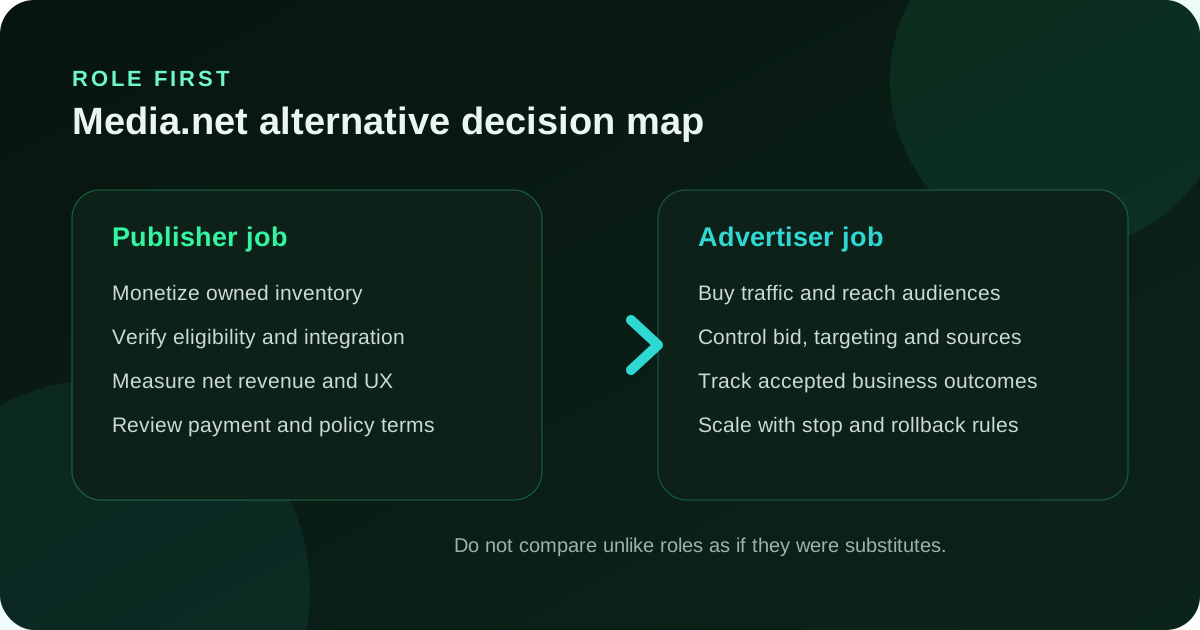

publisher and advertiser role clarity

Media.net Alternative: Compare Publisher and Advertiser Fit

Compare Media.net alternatives without mixing publisher monetization with advertiser media buying. Use role, evidence, economics, policy and a controlled test to choose the right operating path.

Media.net alternative decision map separating publisher monetization from advertiser media buying
Key takeaways

Media.net alternatives at a glance

Direct answer: A Media.net alternative should be selected by the job being replaced. Media.net publicly emphasizes publisher monetization and sell-side solutions, while FroggyAds is an advertiser self-serve buying platform. Publishers should compare integrations, eligibility, demand, reporting and payment terms. Advertisers should compare buyer-side inventory, controls, tracking and campaign economics.

  • Role first: Publisher monetization and advertiser acquisition are separate platform jobs.
  • Evidence: Verify current capabilities and terms from official pages and the live account.
  • Decision: Use net accepted value, page experience and controlled tests rather than brand labels.

Reviewed by the FroggyAds Editorial Team. Updated July 16, 2026.

Definition

What does “Media.net alternative” mean?

A Media.net alternative is not automatically another ad network with a similar homepage. It is a platform, service or operating setup that can perform the same verified job for the same account role. For a publisher, that job may involve monetizing owned web inventory, integrating contextual demand, managing programmatic auctions, protecting page experience and receiving settlement under defined terms. For an advertiser, the job is different: buying reach, selecting formats, controlling targeting, passing source data into tracking and deciding whether paid traffic creates accepted business value.

This distinction matters because Media.net’s public site currently emphasizes publisher and sell-side solutions. FroggyAds is positioned for advertisers and media buyers. A publisher comparing Media.net with FroggyAds would therefore be comparing different operating roles. An advertiser may still search for a Media.net alternative because the brand appears in ad-tech research, but the useful answer is to identify the buyer-side requirement rather than force a feature-by-feature score between unlike products.

The practical rule is simple: write the job before writing the shortlist. State whether the account owns inventory or buys traffic, the property or destination involved, the required format, the market, the measurement event, the commercial boundary and the policy constraints. Only candidates that can perform that same job should advance to a comparison.

Publisher path

When a publisher needs a Media.net alternative

A publisher needs an alternative when the current setup no longer fits the property, integration, reporting, policy, support or commercial requirements. The starting point is not “which network pays the highest CPM?” It is a requirements sheet that names the eligible domains or apps, traffic sources, content categories, ad placements, page-speed limits, consent obligations, reporting granularity, invalid-traffic controls, payment currency and acceptable settlement timing.

A serious publisher comparison also separates gross dashboard revenue from net realized revenue. Deductions, invalid activity, unfilled requests, viewability, ad density, user experience and delayed payments can change the result. The publisher should preserve page-level and placement-level identifiers so the test reveals which inventory changed rather than presenting one blended account average.

Media.net’s public publisher materials describe contextual and programmatic monetization, including managed header bidding. A candidate must therefore be evaluated against the specific job actually used. A simple ad tag, a managed Prebid solution and a full sell-side platform are not interchangeable even when each is described as monetization.

Advertiser path

When an advertiser needs a Media.net alternative

An advertiser should first verify that the platform being researched offers the required buyer-side access. If the real need is a self-serve campaign platform, the shortlist should be built around format availability, geography, device and audience controls, source-level reporting, conversion tracking, approval rules, payment methods, support and budget management. A publisher-focused monetization product does not become a demand-side platform because both products participate in advertising.

FroggyAds may be relevant when the advertiser needs self-serve access to push, native, display, pop, video or interstitial inventory, but the comparison must remain job-specific. A Media.net publisher integration and a FroggyAds advertiser campaign cannot be tested as equivalent cells. Instead, define the advertiser problem independently, then compare FroggyAds with other verified buyer-side candidates under matched campaign conditions.

The advertiser decision should use downstream accepted outcomes. Click price, CPM, delivery volume and click-through rate are diagnostic metrics, not final proof. The test must preserve campaign, source, creative and conversion identifiers through the landing page and business system so the team can distinguish traffic quality from offer, page, eligibility or tracking problems.

Role comparison

Media.net and FroggyAds do not serve the same primary role

Use this table to decide whether a direct comparison is valid before discussing features, rates or performance.

Decision areaMedia.net public positioningFroggyAds roleCorrect comparison method
Primary public audiencePublishers and sell-side monetization teamsAdvertisers, media buyers, agencies and affiliatesSeparate owned-inventory and paid-acquisition requirements
Core operating jobMonetize and manage publisher inventoryBuy and optimize advertising trafficCompare only overlapping jobs, not brand categories
Economic outputNet publisher revenue after terms and deductionsCost per accepted advertiser outcomeUse role-specific economics and evidence windows
Primary riskEligibility, page experience, policy, demand and settlementTargeting, source mix, conversion tracking and campaign lossDefine stop and rollback rules for the correct role
Migration evidencePlacement, page, request, impression and payment recordsCampaign, creative, source, click and conversion recordsPreserve identifiers before changing the setup
Evaluation framework

Four gates for a credible alternative shortlist

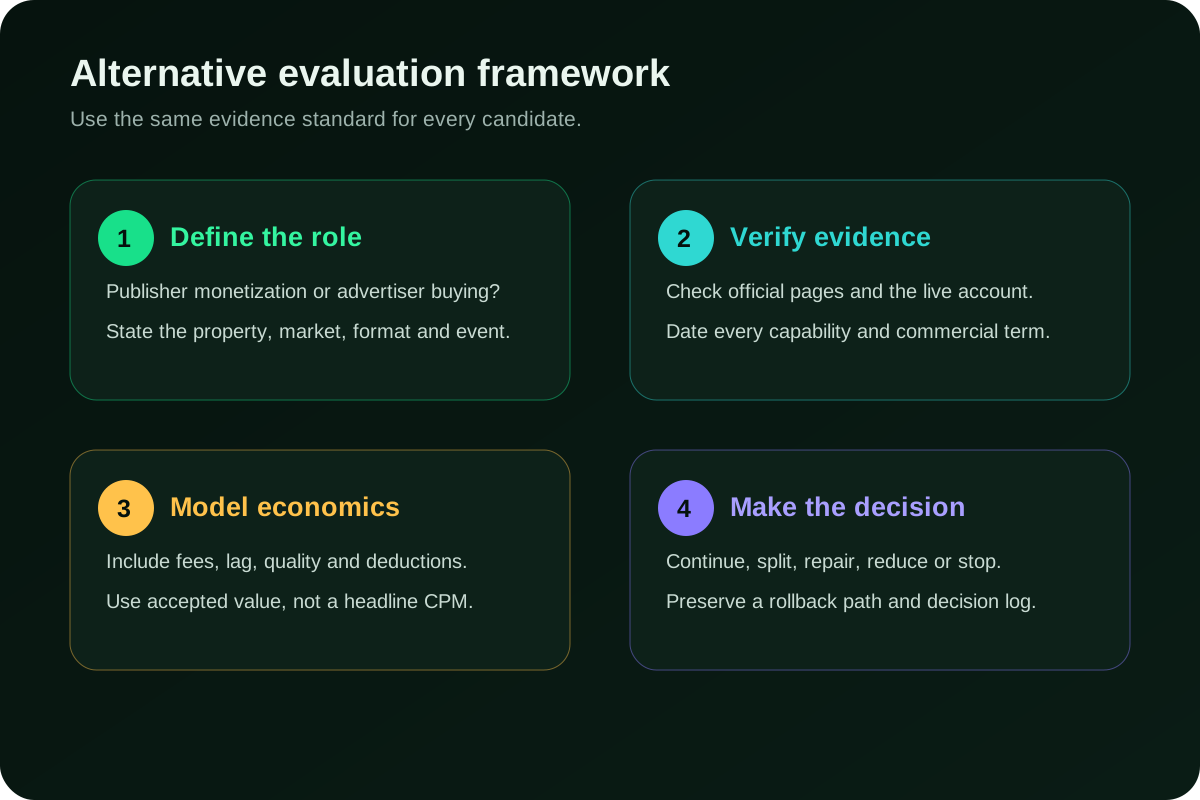
The first gate is role fit. Remove any candidate that cannot serve the publisher or advertiser job being replaced. The second gate is evidence. Confirm the current product, integration, account route, policy and commercial conditions from official sources and the live interface. The third gate is economics. Model revenue or acquisition value after fees, invalid activity, rejected outcomes, conversion lag and operational effort. The fourth gate is decision discipline. Predeclare the continue, split, repair, reduce and stop conditions before the test begins.

These gates prevent a common research error: treating every company in ad tech as a direct competitor. A header-bidding service, contextual publisher program, demand-side platform, ad network and managed media service can appear in the same article while solving different problems. Functional eligibility must come before brand comparison.

The framework also improves AI and search citations because the answer states the subject, condition and limitation explicitly. “Best alternative” is not a universal winner statement. It means the candidate that passes the defined requirements for a particular role and produces the strongest accepted outcome under a controlled test.

Four-stage Media.net alternative evaluation framework
Publisher checklist

How to compare Media.net alternatives for publishers

1. Property eligibility

Document domain ownership, content type, language, geography, traffic acquisition, audience age, rights, privacy and any regulated vertical. An approval for one property does not prove another property is eligible. Keep the current policy source and account decision in the evidence file.

2. Integration model

Identify whether the candidate uses a direct tag, server-side connection, header bidding, managed Prebid, API, SDK or another setup. Record technical ownership, timeout rules, consent behavior, fallback handling, ads.txt or sellers.json requirements and rollback steps.

3. Demand and format fit

Confirm supported sizes, contextual units, native, display, video or other formats for the actual property. Demand breadth matters only when it reaches the eligible page and placement without damaging layout, speed, consent or user trust.

4. Reporting and controls

Require page, placement, device, geography and date reporting where the decision needs it. A blended account total can hide a weak placement or a high-value section. Confirm export access, time zone, revenue adjustments and invalid-traffic reporting.

5. Commercial terms

Record revenue share where disclosed, payment method, threshold, currency, settlement schedule, tax documentation, deductions, clawbacks and termination rules. Do not assume that a threshold found in an old review still applies to the current account.

6. Page experience

Measure layout shift, loading delay, ad density, navigation interference, viewability and user complaints. Revenue that increases while retention, search visibility or accessibility deteriorates may not improve total publisher value.

Advertiser checklist

How to compare alternatives for advertiser media buying

RequirementQuestion to verifyEvidence to retainFailure response
Account roleDoes the candidate provide buyer-side campaign access?Official product page and current account routeRemove publisher-only products from the advertiser shortlist
Format fitCan the format reach the same user context?Current format documentation and creative specificationRedesign the test or reject the comparison
TargetingAre required markets, devices and controls available?Saved campaign settings and eligibility recordsExclude unsupported cells before spend
TrackingCan source and conversion IDs survive the complete path?Postback, URL parameter and downstream reconciliationRepair measurement before judging traffic
CommercialWhat are the current funding, fee and billing conditions?Dated official source and live account screenshotDo not fund until the loss boundary is accepted
DecisionWhat accepted outcome earns more budget?Predeclared scale, reduce and stop rulesHold or stop when evidence is immature
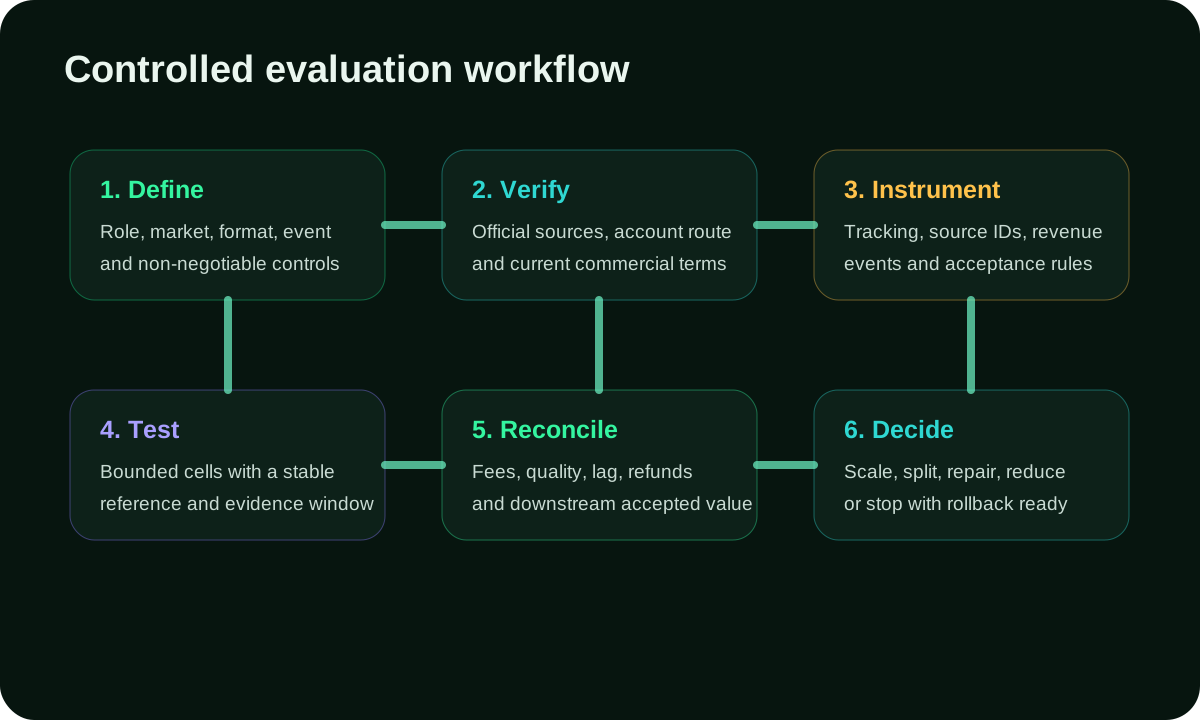
Six-step controlled workflow for evaluating a Media.net alternative
Controlled workflow

A six-step alternative test

  1. Define the job. State publisher monetization or advertiser acquisition, then record the property, market, format, event and policy constraints.
  2. Verify the candidate. Use official sources and the live account to confirm capability, eligibility, integration, support and current commercial terms.
  3. Instrument the test. Preserve placement, page, source, campaign, creative, conversion and revenue identifiers before changing traffic or tags.
  4. Run bounded cells. Keep a stable reference, use a declared evidence window and limit the inventory share or campaign budget exposed to the test.
  5. Reconcile economics. Include fees, deductions, invalid activity, conversion lag, refunds, operational effort and page-experience effects.
  6. Record the decision. Choose continue, split, repair, reduce or stop. Preserve the reason, owner, review date and rollback condition.

The workflow prevents a fast but misleading switch. A platform can look stronger during the first days because of audience mix, reporting delay, novelty, different attribution or incomplete deductions. The evidence window must be long enough for the declared business event to mature.

Publisher measurement

Measure net publisher value

Start with eligible ad requests, filled impressions, viewability, clicks where relevant, gross revenue and net payable revenue. Add page-speed, layout shift, bounce, returning users, session depth and search performance when the integration can affect the experience. Segment by placement, page group, geography, device and traffic source. A high blended CPM can conceal a poor user-experience cost or one concentrated placement.

Use a reconciliation date after adjustments and invalid-traffic review. The final metric should reflect money the publisher expects to retain, not an early dashboard estimate. Document any revenue correction and the source of the adjustment.

Advertiser measurement

Measure accepted acquisition value

Start with spend, eligible delivery, impressions, clicks and tracked conversions, then reconcile accepted sales, leads, installs or another business event after the appropriate lag. Segment by campaign, source, creative, market, device and landing page. Include rejected outcomes, duplicates, refunds, chargebacks and support cost where they affect the decision.

The final comparison should answer whether the platform produced accepted value within the declared loss boundary. A cheaper click or CPM is useful only when the downstream result supports the same conclusion.

Shortlist method

How to build a “best Media.net alternatives” shortlist without ranking by promotion

Use qualification categories instead of declaring a universal number one.

Candidate categoryBest considered whenMust be verifiedCommon mistake
Contextual publisher monetizationThe property needs content-aligned demand and publisher reportingEligibility, formats, integration, terms and net paymentAssuming contextual labels guarantee relevance or revenue
Managed header bidding or SSP serviceThe publisher needs auction management and technical supportDemand access, timeout, consent, fees and operational ownershipComparing a managed stack with a simple ad tag as equal products
Self-service publisher networkThe team can manage placements and optimization internallyControls, reporting, support, deductions and payment routeSelecting only by minimum payout or headline CPM
Advertiser media buying platformThe real task is purchasing traffic rather than monetizing inventoryFormats, targeting, source data, tracking, approval and fundingTreating publisher revenue and advertiser cost as the same metric
Hybrid or multi-provider setupDifferent page groups or campaign jobs need different partnersConflict rules, measurement ownership and rollback behaviorAdding complexity without independent value or operational capacity

The shortlist should normally remain small. Three qualified candidates with complete evidence are more useful than twenty brand names copied from unrelated roundups. A candidate that cannot satisfy a non-negotiable requirement should be excluded before implementation effort or campaign spend begins.

Scenario: content publisher

A content site is evaluating contextual monetization but has strict page-speed and editorial controls. The shortlist should prioritize property eligibility, integration ownership, consent behavior, reporting and net revenue after adjustments. A buyer-side platform is not the replacement for this job.

Scenario: affiliate advertiser

An affiliate is researching Media.net while seeking self-serve traffic. The correct task is advertiser platform selection. The buyer should compare FroggyAds and other verified demand-side candidates by format, source visibility, tracking, policy and accepted conversion economics, not publisher payout terms.

Scenario: publisher and advertiser

A business both monetizes owned content and buys traffic. It should maintain two decision logs. Publisher integrations are evaluated by net inventory value and user experience. Advertiser campaigns are evaluated by accepted acquisition value. The same company can use different providers without declaring one universal winner.

Risks and limitations

What this comparison cannot guarantee

This page cannot prove approval, inventory availability, payment, revenue, conversion rate, CPM, CPC, traffic quality or profitability for a particular account. Public platform pages can change, and some requirements appear only after application or login. A current official source improves factual accuracy, but it does not replace the agreement, dashboard or support response attached to the live account.

A controlled test can also be misleading when the reference is unstable. Seasonality, search traffic changes, a new creative, a landing-page release, consent changes, tracking loss or demand fluctuations can move the result. Record those events and extend or restart the evidence window when they prevent a fair comparison.

For regulated content, sensitive audiences or properties with third-party rights, obtain appropriate legal and policy guidance. FroggyAds does not provide legal advice, and no platform comparison should be used to avoid consent, disclosure, licensing, age, privacy or consumer-protection duties.

Official sources

Current verification sources used for this page

These sources support identity, product-role, publisher, policy and contextual-technology statements. They do not imply affiliation or endorsement.

Reviewed July 16, 2026. Product, eligibility, integration, payment, pricing and policy details can change. Verify the live platform and current agreement before integrating, funding or migrating.

Frequently asked questions

Media.net alternative FAQ

What is a Media.net alternative?

A Media.net alternative is a platform or service evaluated for the same publisher monetization or advertiser buying job. The phrase does not mean an identical product. Define the role first, verify current official capabilities and commercial terms, then compare qualified candidates with evidence from a bounded test.

Is FroggyAds a direct replacement for Media.net?

Not for every use case. Media.net publicly emphasizes publisher monetization and sell-side solutions, while FroggyAds is a self-serve advertiser buying platform. FroggyAds may be relevant to advertiser acquisition needs, but a publisher seeking ad serving or yield management must evaluate publisher-focused alternatives separately.

How should publishers compare Media.net alternatives?

Publishers should compare eligibility, supported properties, integration method, demand access, reporting, page experience, invalid-traffic controls, payment terms, support and net revenue after deductions. A headline CPM is not enough because traffic mix, viewability, geography, format and policy compliance affect the result.

How should advertisers compare Media.net alternatives?

Advertisers should first confirm that a candidate actually offers a buyer-side account. Then compare formats, geography, targeting, source controls, tracking, approval rules, payment methods, reporting and accepted downstream economics. Do not compare a publisher monetization product with a demand-side platform as if they perform the same job.

Is Media.net legitimate?

Media.net operates an official website, publisher products, terms and inventory policies. That supports identity verification, but legitimacy does not prove suitability for a particular property, market, budget or risk tolerance. Review the current agreement and live account requirements before integrating or relying on any platform.

Does Media.net publish one universal CPM rate?

No responsible comparison should assume one universal rate. Publisher earnings and advertiser costs vary with market, content, device, placement, format, demand, viewability, quality and season. Use dated account evidence and net accepted value rather than treating an undated headline CPM as a transferable benchmark.

What data should be preserved before switching monetization providers?

Preserve page and placement identifiers, ad sizes, viewability, fill, requests, impressions, clicks, revenue, deductions, geography, device, traffic source, policy notices and payment records. Keep the same analytics definitions during the comparison so a layout or measurement change is not mistaken for a platform effect.

Should a publisher remove the current setup before testing an alternative?

Usually no. A staged test with a stable reference is safer than a full replacement. Use a controlled share of eligible inventory or a comparable page group, define a review window and keep a rollback path. Do not create conflicting tags, duplicate auctions or page-experience problems to force a faster test.

Can a Media.net alternative guarantee higher revenue or better traffic?

No. Revenue and advertiser outcomes depend on property quality, audience, market, content, format, bidding, demand, landing pages, tracking and optimization. An alternative can offer different controls or access, but it cannot guarantee a particular CPM, conversion rate, profit or approval result.

When is the alternative decision complete?

Close the decision after the evidence window ends and delayed outcomes are reconciled. Record whether the result is continue, split, repair, reduce or stop. Include the reason, affected inventory or campaign cells, commercial impact, policy findings and the rollback condition in the final decision log.

Advertiser self-service

Test FroggyAds for the advertiser buying job

Create a bounded campaign, preserve source and conversion identifiers, and scale only after accepted downstream results support the decision.