
Publisher Ad Network: Evaluate Demand, Control and Yield
Publisher network selection begins with the audience and page inventory the site can responsibly offer. Compare one bounded placement through rendering, experience, report maturity, deductions, and collected payment. The decision uses net session value and a reversible implementation, not a provider's headline yield claim.

Evidence boundary for Publisher Ad Network
A publisher ad network connects eligible publisher inventory with advertiser demand through defined serving, reporting and settlement rules. The IAB Tech Lab OpenRTB documentation documents a protocol used for real-time bidding, but protocol support alone does not prove demand quality, fill, revenue, payment or suitability for a page. For example, a publisher can expose one controlled placement, retain the site, page, ad unit, request, response and rendered-impression identifiers, then reconcile network reporting with its own sessions and payable statement. Separate no-bid, timeout, blocked creative, invalid activity and consent-state effects instead of hiding them inside a blended fill rate. Compare net session value after latency, user experience, deductions and payment terms mature. Scale only the placement and demand combination that can be reproduced, audited and removed without damaging the page's primary job. The decision record should name the owner, evidence window and exit threshold.
What does this page explain about Publisher Ad Network: Evaluate Demand, Control and Yield?
Quick answer: assess publisher demand as an operating chain from eligible opportunity to bid or match, rendered creative, measurable event, finalized statement, and collected revenue. Keep page purpose, device, format, seller path, latency, complaints, and audience behavior beside the commercial result. Expand only the combination that remains controllable and worthwhile after reconciliation.
| Section | Distinct excerpt from this page |
|---|---|
| What publisher ad network should accomplish | That job stays measurable only when the team declares the denominator and keeps format, geography, device, direct versus reseller path visible in the report. |
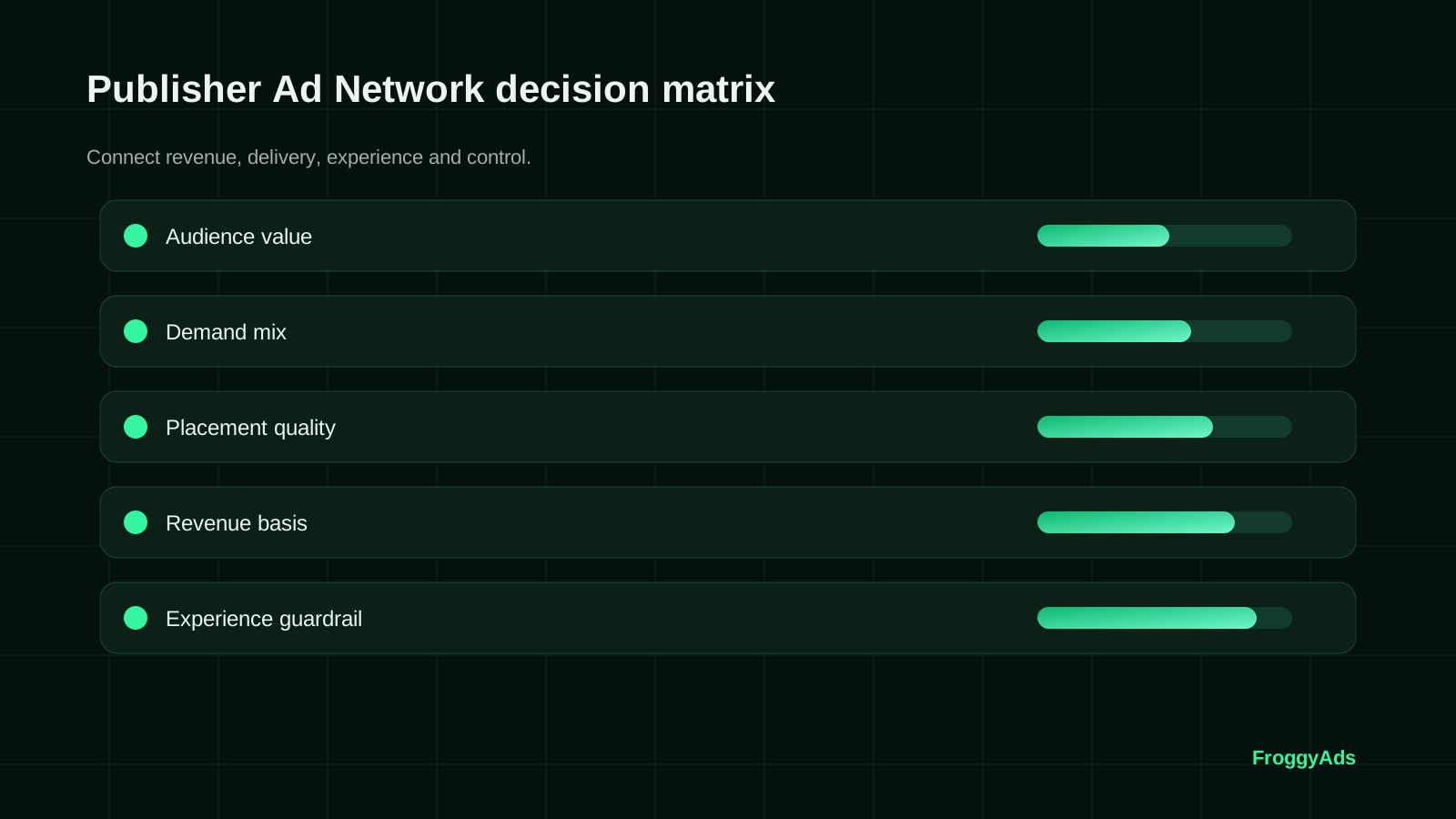
| Audience value | For publisher ad network, connect this control to net ecpm after fees and losses. |
| Inventory the opportunity | Inventory the opportunity for publisher ad network by keeping format, geography, device, direct versus reseller path visible and recording how the change affects net ecpm, fill quality, latency, discrepancies and payment reliability. |
Primary publisher-side reference for demand operations: Google Ad Manager overview Publisher ad management and yield context.
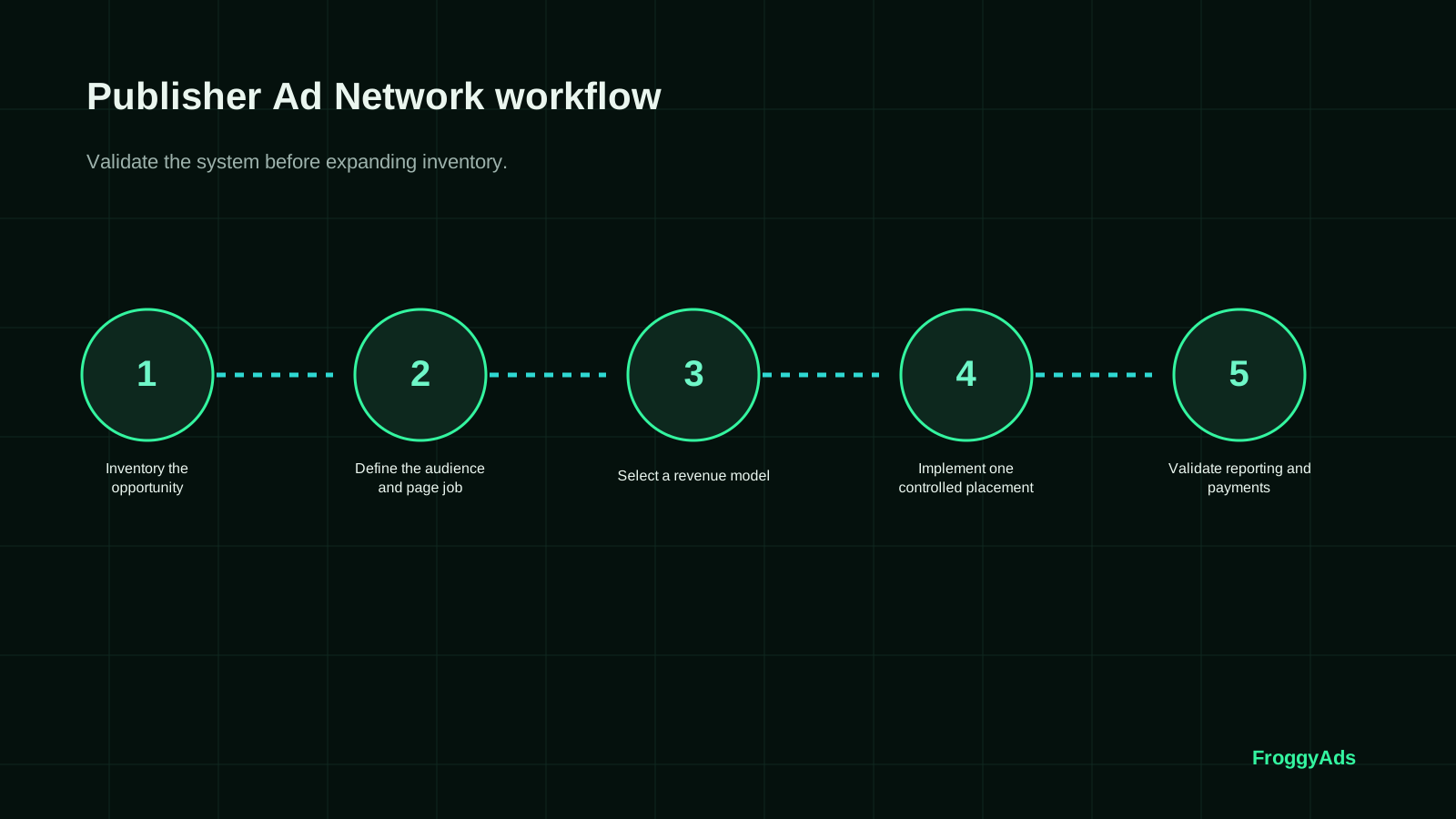
A seven-step publisher ad network process
The implementation sequence protects the site while each publisher-side dependency is tested. It starts with inventory boundaries and ends with a marginal expansion whose earlier placement can still be restored.
Inventory the opportunity
Inventory page families, available slots, device layouts, sensitive contexts, current revenue, traffic quality, technical constraints, and editorial exclusions. Do not offer every visible rectangle as interchangeable supply. A useful opportunity map identifies where an experiment can run without compromising the primary page task and where the publisher will not place advertising.
Define the audience and page job
For each proposed template, name the audience's main job and the publisher outcome that matters alongside revenue. A reference article, tool, account screen, and checkout-support page can require different interruption limits. Use this page purpose to approve formats and positions before negotiating a headline rate or copying a placement across the site.
Select a revenue model
Choose the revenue model that matches the event the publisher can verify and the risk it accepts. CPM, CPC, CPA, fixed arrangements, and hybrids place different weight on delivery, interaction, downstream action, reporting, and reconciliation. Define the payable event, adjustment rules, currency, invoice evidence, payment timing, and dispute path for the actual agreement.
Implement one controlled placement
Release one placement on a bounded set of templates, devices, and traffic. Capture the pre-test baseline, deployment version, consent state, serving response, creative examples, layout behavior, and source dimensions available. Use a rollback that removes only the tested code path. This makes a technical or experience fault reversible without disabling unrelated publisher functions.
Validate reporting and payments
Validate network reports against permitted publisher observations and the eventual payment statement. Review served and unfilled opportunities, viewability where defined, clicks or outcomes where relevant, deductions, invalid-traffic decisions, currency, tax treatment, and timing. Escalate unexplained gaps before treating dashboard revenue as collectible value.
Compare net session value
Compare net session value after latency, content engagement, return behavior, complaints, operational work, and lost alternative demand are considered where measurable. Segment by page family and placement rather than averaging the entire site. A slot can earn more per thousand impressions yet reduce the broader session outcome the publisher is trying to protect.
Scale the proven combination
Expand the specific template, placement, device, and demand combination that met its evidence threshold. Change one dimension, retain the earlier cell, and watch source mix and experience limits as volume grows. Stop when reporting becomes opaque, settlement weakens, creative quality drifts, or the marginal session no longer meets the publisher's net-value rule.
Connect supply, demand, delivery and billing
Map the ad opportunity as seven observable states: page eligibility, request creation, demand response, creative selection, browser rendering, report acceptance, and payable settlement. Store a timestamp and owner for every transition. This state model shows whether an empty slot came from an exclusion, timeout, no bid, render fault, measurement gap, or later adjustment.
Build inventory groups from actual page purpose and operating risk. A reference article, forum thread, download route, account area, and commercial landing page need different placement and creative limits. For each approved group, record formats, device layouts, demand routes, floor logic, timeout, density, and removal control before it receives live demand.
Divide publisher accountability by decision. Editorial owns page suitability and sensitive topics; product owns the audience task; engineering owns request and render behavior; ad operations owns demand and creative controls; finance owns statement and collection; privacy owns the applicable data state. One release owner joins those records and authorizes rollback.
Standards and first-party documentation
The named references support discrete questions about ad management, user-centered formats, seller transparency, and advertiser-side media context. They do not predict this site's fill, price, creative behavior, or payment. The publisher's deployed-template evidence and settled statements govern the commercial decision.
Frame publisher inventory around the page and audience
A suitable network should make demand, controls, reporting, responsibility, and commercial settlement inspectable. The publisher needs enough source and placement detail to diagnose a change, protect sensitive pages, reconcile delivered impressions with payable revenue, and remove a failing integration. Revenue access without operational evidence is not a complete monetization system.
Map demand by buyer route, format, placement, market, and other reporting fields the provider actually exposes. Record exclusions, floors, auction behavior, direct commitments, fallback paths, and unexplained concentration. A broad mix can reduce dependency, yet it also creates more creative and settlement states to inspect. Judge the observed mix, not a catalogue of theoretical demand.
Set experience limits before the test: layout movement, load delay, density, refresh behavior, sound, overlays, sensitive-page exclusions, and a route for complaints. Measure the content or product action the page exists to support. A revenue lift is rejected when it breaches the approved experience boundary or creates an accessibility and usability problem the publisher cannot control.
A new publisher stack should prove technical control before optimizing yield. Start with one low-risk template, verify loading and removal, inspect creatives, reconcile reporting, and wait for the first payment evidence. Keep existing monetization or a no-ad control where practical. Early fill is a systems check, not permission to roll code across every page.
Demand quality should be judged through the creative and landing behavior the publisher can observe, not through buyer labels alone. Archive representative served ads, categorization, destination, complaint or block events, and any policy response. A demand source that pays well but repeatedly violates the page's approved content boundary creates an operating cost and audience risk that belongs in the net-value decision.
Payment review begins before the first invoice. Record the legal counterparty, currency, threshold, schedule, deductions, tax documentation, adjustment window, and dispute route in the current agreement. Reconcile dashboard estimates with finalized statements and collected funds. Keep late or disputed amounts provisional. A revenue metric used for optimization should not silently include money the publisher has not become entitled to receive.
Revenue concentration deserves its own limit. Track the share of payable value associated with a demand route, placement family, market, device, or buyer category where reporting permits. A concentrated source can be efficient but increases change and settlement exposure. Test a fallback before dependency becomes critical, and keep the audience experience stable while comparing the alternative.
Test demand, serving, reporting, and settlement independently
Success is defined at the page and session level: useful content remains accessible, the placement behaves as approved, reporting reconciles, and net value meets the written threshold after material costs. Keep editorial decisions outside demand optimization. The network supplies infrastructure; the publisher retains responsibility for its audience, templates, disclosures, and release choices.
Placement quality combines location, size, visibility, load behavior, creative fit, accidental-interaction risk, and effect on reading or task completion. Test the real template across supported devices and content lengths. Separate above-the-fold access from intrusive obstruction. A placement should be removable independently when it harms the page, even if another slot continues to perform.
Keep a dated change record for tags, placements, formats, floors, consent behavior, demand settings, template releases, and payment terms. Attach the owner, test evidence, monitoring window, and reversal step. When yield shifts, this history separates an audience or market movement from a code deployment, policy change, reporting adjustment, or new demand concentration.
A mature site with mixed demand needs placement-level diagnosis. Separate direct, programmatic, house, and fallback routes; preserve page and device context; and compare net session value after deductions. Consolidation can simplify operations, while multiple partners can diversify demand. Choose from measured concentration, transparency, control, and settlement evidence rather than an abstract preference.
Latency needs a placement-level baseline. Measure request start, response, render, layout movement, interaction readiness, and failure on the templates and devices included in the test. Distinguish network time from creative execution and page code. If a timeout or fallback changes the slot, record the resulting user experience and revenue state instead of counting the opportunity as a normal unfilled impression.
Consent and privacy behavior must follow the technology and jurisdiction that apply to the page. Inventory the advertising and measurement components, purposes, partners, activation state, choices, withdrawal, retention, and deletion route. Test how an ineligible state affects requests and reporting. The network's tag and the publisher's interface have different responsibilities, so the evidence file should not treat one vendor setting as the complete review.
The final publisher decision records which inventory remains eligible, which code and settings are approved, what experience boundary applies, how revenue matures, and who can pause or remove the integration. Attach the rollback procedure and latest reconciliation. A network relationship is renewed by current evidence; an earlier successful month does not permanently authorize new templates, formats, or demand paths.
Scale net session value with an explicit exit path
Describe why the audience visits each eligible page family and what interruption it can tolerate. Segment new and returning users, device context, traffic source, geography, and content intent only where evidence supports the distinction. Audience value is not a demographic label; it is the measured relationship between a serviceable session, the placement experience, and the publisher's accepted outcome.
Specify whether reporting uses served, rendered, viewable, clicked, completed, or another billable event, then document deductions and currency. Compare network statements with the publisher's permitted first-party observations and payment record. Gross eCPM cannot substitute for net payable revenue when fill, invalid-traffic adjustments, fees, latency, and unsold opportunity differ.
Net publisher value joins payable revenue to the cost of creating, serving, monitoring, and supporting the experience. Include material latency, lost content actions, complaints, make-goods, invalid-traffic deductions, staff time, and displaced alternatives when those effects are evidenced. The comparison should use the same mature period and page cohort, not a peak daily rate.
When revenue declines, first separate traffic volume, audience mix, eligibility, fill, price, viewability definition, deductions, technical loss, consent state, and payment timing. Compare against deployment and policy changes. Avoid adding more units until the cause is known. A reversible placement test gives stronger evidence than increasing density across the same unexplained system.
Supply transparency supports diagnosis rather than certainty. Review the seller relationship and authorization signals available for the actual path, and preserve what the network reports about direct or intermediary roles. An authorized relationship does not guarantee performance or remove invalid activity. Missing or contradictory supply evidence is a reason to investigate or exclude the affected route, not to generalize about every buyer.
Creative controls should include both prevention and response. Set allowed formats, sizes, categories, animation or sound rules, landing expectations, sensitive-page exclusions, and escalation contacts. Rehearse a block or removal path with a permitted test. If the publisher cannot identify which demand or placement produced a harmful creative, the integration lacks the evidence needed for a safe expansion.
Publisher Ad Network FAQ
Answers below address inventory eligibility, demand evaluation, placement testing, net revenue, experience limits, reporting maturity, settlement, and rollback for a publisher-controlled implementation.
Which publisher requirements define a suitable advertising network relationship?
A publisher compares eligible property types, audience context, supported formats, prohibited material, geographic coverage, payment basis, reporting access and service expectations. Suitability depends on documented operations rather than a generic network label.
How should publisher inventory be described before network activation begins?
The inventory register identifies each property or application, ownership, page or screen context, format location, device eligibility, expected volume and responsible operator. Material layout changes receive a new placement reference.
Which records clarify who is authorised to sell publisher inventory?
Commercial files connect the property owner, contracted publisher account, any intermediary, represented placements and authorised settlement party. Conflicting ownership or seller claims remain unresolved and unavailable for delivery.
Which observations help a publisher evaluate an unfamiliar advertising format?
A controlled page test examines placement dimensions, loading, customer controls, navigation, content visibility, accessibility, device behaviour and removal. Results are recorded against the exact format and layout revision.
Which advertiser details help publishers review incoming campaign suitability?
The review uses provider identity, offer category, destination, supported claims, pricing presentation, audience conditions, creative files and active dates. Missing or conflicting information triggers a hold rather than silent acceptance.
Which event definitions keep publisher network reports commercially interpretable?
Reports define requested, delivered, measurable and accepted impressions or actions, along with duplication, invalid-event and time-zone treatment. Publishers can then reconcile comparable events instead of mixing incompatible totals.
How are suspicious delivery patterns handled in a publisher ad network?
Source-level review considers timing, repetition, device consistency, interaction sequence, verification signals and complaint evidence. Questionable events are held apart while investigators document cause, scope, remediation and financial treatment.
Which payment terms need confirmation before a publisher accepts network traffic?
The publisher's agreement specifies invoicing currency, chargeable event, minimum threshold, reporting cut-off, invalid-event adjustment, tax presentation, payment method and expected settlement date. Later corrections cite the affected placement records.
What support evidence indicates that a publisher network account is operable?
Current account material names contacts for policy, technical incidents, billing and campaign review, plus response windows and suspension authority. A dated test case confirms that escalation reaches a responsible person.
When is a publisher ad network relationship ready for renewal?
Renewal follows reconciled delivery, predictable payments, usable controls, resolved incidents, acceptable customer experience and commercial contribution by placement. Unproven properties or formats remain outside the renewed operating scope.
Continue the publisher revenue workflow
The linked resources extend specific publisher questions about monetization models, ad management, formats, and audience protection; apply only the route relevant to the current inventory decision.
Use transparent supply understanding to plan better campaigns
FroggyAds appears here as advertiser-side context for push, native, display, pop, video, and interstitial buying. A publisher evaluating monetization should keep that buying role separate from its own demand contracts, page controls, reporting, and payment evidence.
How to evaluate the best ad network for a forum
A forum publisher should compare eligibility, logged-in inventory rules, contextual controls, creative review, reporting, payment terms and support. Run a matched test by forum category, device and member status, then judge net revenue with active-member retention, complaints and moderation cost.
The broader revenue workflow is covered in Monetize Forum.
How to compare CPM claims, payout schedules and payment thresholds
A publisher ad network should be evaluated by net collected revenue, demand quality, reporting, deductions, payment reliability and audience impact. Highest-paying or highest-CPM claims are not useful without the same geography, format, viewability and payment basis.
High CPM versus net revenue
Compare fill, viewability, discrepancies, fees and collected eCPM, not the largest advertised rate.
Fast or weekly payments
Verify the written payment schedule, validation period, supported method, fees, currency and historical reliability.
Low minimum payout
A low threshold improves access to cash but does not compensate for weak demand, unclear deductions or poor reporting.
How to evaluate PayPal, crypto and Bitcoin payout claims
A payment method is useful only when it is available to the publisher account and country, documented in the contract and connected to a reliable validation and settlement process. Verify currency, fees, thresholds, tax records and support before treating a named method as a benefit.
PayPal payout
Confirm market availability, account eligibility, fees, threshold and the party responsible for the transfer.
Crypto payout
Confirm the asset, network, wallet responsibility, conversion timing, fees and accounting records.
Bitcoin payment
Clarify whether settlement is native, converted or handled by a third party, and test with a small collected payment.
Download-site monetization guide
Use these guides to compare Monetize a Download Site With Clear, Safe User Choices.
Monetize a Download Site With Clear, Safe User Choices
Learn how to monetize a lawful download site with ads, affiliates, subscriptions and sponsorships while protecting file safety, button clarity and trust.
Related specialized monetization guides
Monetize a URL Shortener
Build revenue without hiding the requested destination.
Monetize a File Hosting Site
Price storage and delivery while protecting download clarity.
Monetize a Viral Content Site
Turn temporary attention into measurable repeat audience value.
Related specialist publisher guides
Monetize a Recipe Blog
Build revenue while protecting recipe accuracy, page speed and reader trust.
Monetize a Travel Blog
Combine ads, affiliates and sponsor work with clear disclosure and current destination facts.
Related specialist publisher guide
Monetize a Music Website
Build rights-aware revenue from advertising, tickets, merchandise, sponsorships, memberships, services and licensed editorial assets.
Media.net alternative research
Comparing Media.net requires separating publisher monetization from advertiser media buying. Review the Media.net alternative framework before placing publisher and advertiser products in the same shortlist. For Publisher Ad Network, validate this point against SSP, ad quality, Publisher, Publisher Ad Network, Network and keep it separate from the Froggyads Publisher intent.
Publisher Ad Network: Evaluate Demand, Control and Yield: the publisher decision this URL owns
Use this page when a publisher or supply-side operator needs to evaluate Publisher Ad Network: Evaluate Demand, Control and Yield from the inventory side. The decision is whether the placement or format can be implemented with clear labeling, acceptable user experience, usable reporting and sustainable monetization. This is a publisher-side reference; FroggyAds advertiser campaign signup is a separate workflow.
URL boundary: This URL owns the publisher decision for Publisher Ad Network: Evaluate Demand, Control and Yield. Keep it separate from Froggyads Publisher and Publisher Supply Network: those pages may share format vocabulary, but each should retain its own implementation, inventory and monetization question.
Publisher decision inputs: Publisher decision inputs: format implementation, placement quality, user experience, reporting continuity, demand quality, monetization stability. Use them as evidence fields, not promises of fill, revenue or advertiser demand. A useful conclusion should identify what the publisher can verify, what remains unknown and which implementation or inventory action follows. For Publisher Ad Network: Evaluate Demand, Control and Yield, keep placement implementation, labeling and user experience distinct from demand quality, reporting and sustainable monetization when the page is reviewed.
Publisher evidence path: “How should publisher inventory be described before network activation begins?†belongs to the evidence path under “What does this page explain about Publisher Ad Network: Evaluate Demand, Control and Yield?â€. Keep demand quality, reporting and sustainable monetization together with the relevant inventory or placement identifier so the publisher can separate a delivery change from a user-experience or monetization change.
Publisher evidence path: For Publisher Ad Network: Evaluate Demand, Control and Yield, the question “Which publisher requirements define a suitable advertising network relationship?†makes placement implementation, labeling and user experience the opening publisher checkpoint. Use “Evidence boundary for Publisher Ad Network†to record what is implemented, what can be observed and what condition would require a rollback or different placement.
Publisher evidence path: Before acting on “Which records clarify who is authorised to sell publisher inventory?â€, use “A seven-step publisher ad network process†to document the publisher-side conclusion. The useful output is a named implementation, inventory or monetization action plus the evidence window used to reach it.
| Publisher checkpoint | How to use it | Evidence to retain |
|---|---|---|
| Evidence boundary for Publisher Ad Network | Use this section to answer “Which publisher requirements define a suitable advertising network relationship?” from the publisher perspective. | Retain placement, labeling and implementation evidence relevant to Publisher Ad Network: Evaluate Demand, Control and Yield. |
| What does this page explain about Publisher Ad Network: Evaluate Demand, Control and Yield? | Use this section to resolve “How should publisher inventory be described before network activation begins?” without mixing it with advertiser campaign performance. | Retain reporting, demand-quality and user-experience evidence. |
| A seven-step publisher ad network process | Use this section to answer “Which records clarify who is authorised to sell publisher inventory?” before changing inventory or monetization setup. | Document the publisher action, evidence window and rollback or review condition. |
Where FroggyAds fits
FroggyAds primarily serves advertisers buying traffic through our self-serve platform. This publisher-side page explains the inventory and implementation questions behind Publisher Ad Network: Evaluate Demand, Control and Yield without implying a publisher signup, fill-rate, revenue or demand guarantee. Advertisers can continue to FroggyAds advertiser resources.
What matters first for Publisher Ad Network: Evaluate Demand, Control and Yield?
For Publisher Ad Network: Evaluate Demand, Control and Yield, start with the inventory or audience condition this publisher monetization infrastructure page owns. Use Evidence boundary for Publisher Ad Network; What does this page explain about Publisher Ad Network: Evaluate Demand, Control and Yield?; A seven-step publisher ad network process to verify the implementation path, then reconcile delivery and net publisher value with Which publisher requirements define a suitable advertising network relationship?; How should publisher inventory be described before network activation begins?; Which records clarify who is authorised to sell publisher inventory?. Increase monetization pressure only when the page-specific revenue and user-quality evidence remain acceptable after the same review window.