
1. Write the decision contract
Define whether the Ezoic question concerns publisher monetization, advertiser buying or a technology partnership. Name the one decision the test must support.
Understand Ezoic CPM, eCPM and EPMV, the variables that move revenue and the matched-period method for comparing monetization performance.
Independent role and decision guide. Current third-party facts were checked against official public sources on 2026-07-16 and may change.
Quick answer: Understand Ezoic CPM, eCPM and EPMV, the variables that move revenue and the matched-period method for comparing monetization performance. For the ezoic cpm rates decision, connect this control directly to EPMV versus eCPM definitions, matched traffic cohorts and page-experience effects and record the evidence date before approval. Ezoic reporting commonly emphasizes EPMV, while publishers may still search for CPM. A higher impression CPM does not automatically mean a higher total session value, and a higher session value can still come with unacceptable latency or user-experience costs.
| Section | Distinct excerpt from this page |
|---|---|
| Additional Ezoic review notes | CPM or eCPM generally uses impressions as the denominator; EPMV uses visits or sessions and can reflect several ads shown during one visit. |
Reference for Ezoic CPM Rates: EPMV, eCPM and Revenue Testing: Ezoic platform overview.
Start with the role, not the keyword. A search for “Ezoic CPM rates” can hide several different commercial questions. A publisher may be asking how monetization revenue is paid. An advertiser may be asking how media is funded. An agency or platform may be asking about a negotiated integration. Those money flows cannot be answered with one unlabeled amount.
Ezoic should be evaluated within the job it is designed to perform. The page therefore separates access, eligibility, payment, rate measurement and evidence budget. This prevents a payout threshold from being presented as a deposit, prevents a publisher RPM from being presented as an advertiser CPM, and prevents an advertiser traffic platform from being presented as a direct publisher monetization replacement. For the ezoic cpm rates decision, connect this control directly to EPMV versus eCPM definitions, matched traffic cohorts and page-experience effects and record the evidence date before approval.
The practical output is a written decision memo. It should state the exact role, the property or campaign being evaluated, the commercial source used, the metric denominator, the reporting window, the primary success metric, the guardrails, the stop rule and the rollback owner. Without those fields, the comparison is likely to produce a confident but unusable answer. For the ezoic cpm rates decision, connect this control directly to EPMV versus eCPM definitions, matched traffic cohorts and page-experience effects and record the evidence date before approval.
These points are dated verification inputs, not permanent guarantees. The official account interface, contract or support confirmation controls when it differs from a public page.
| Decision layer | What to verify | How to use it |
|---|---|---|
| Ad impression CPM | Revenue or cost per 1,000 ad impressions | Useful for one unit or auction layer |
| Page RPM | Estimated revenue per 1,000 page views | Affected by ads per page and fill |
| Session or visit value | Revenue per 1,000 visits | Captures depth and total session yield |
| Effective advertiser CPM | Media spend per 1,000 accepted impressions | Needs quality and viewability controls |
| Net business value | Finalized revenue or contribution after all costs | Best final decision metric |
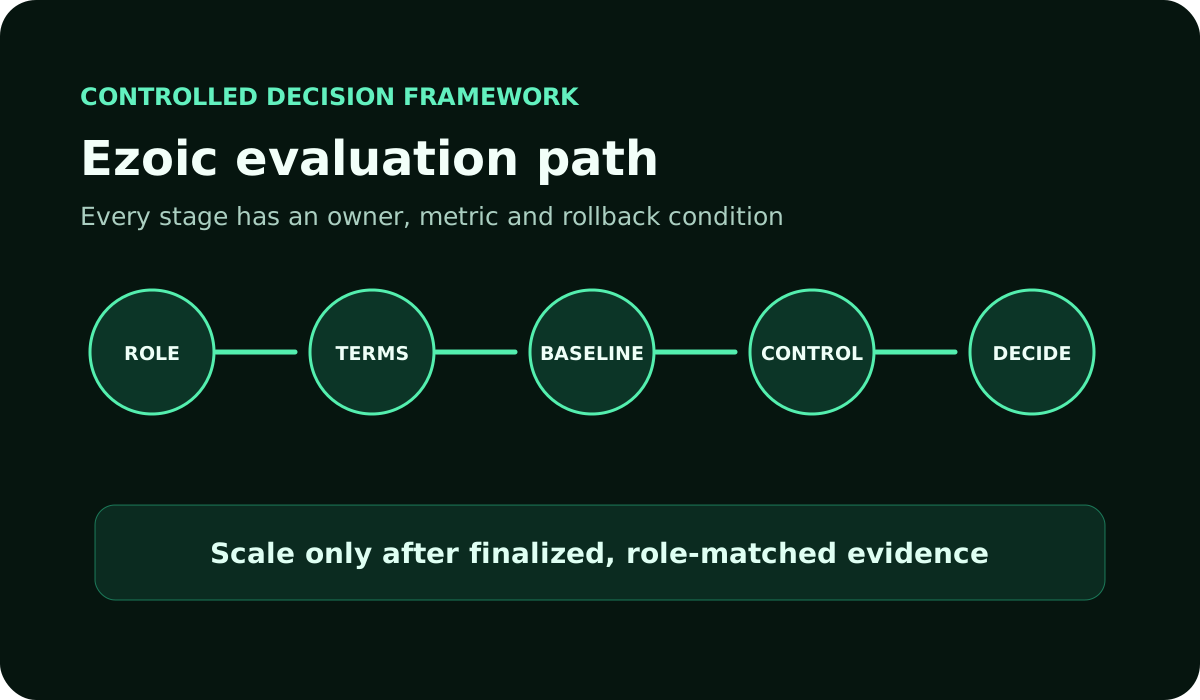
For Ezoic CPM rates, treat this as a page-specific operating check rather than a universal benchmark. A good framework deliberately prevents one attractive number from dominating the decision. Commercial access matters, but so do traffic eligibility, policy compatibility, data portability, page experience, reporting latency, payment reliability and the time required to reverse the change.
Connect the guide to live testing
Use the choices established in “Ezoic decision framework” to define one audience, budget and source set in FroggyAds. Keep the surrounding offer and measurement rule stable so the test adds evidence to ezoic cpm rates instead of mixing several changes at once.
Create My Free Account
Effective rate = finalized net value ÷ verified denominator × 1,000
Define every input before collecting data. “Value” should mean finalized and reconcilable value, not a dashboard estimate captured during a partial day. “Verified denominator” should exclude duplicated, blocked or otherwise unusable events. “Usable-data rate” accounts for reporting delays, attribution gaps, invalid activity and samples that do not meet the planned quality standard. For the ezoic cpm rates decision, connect this control directly to EPMV versus eCPM definitions, matched traffic cohorts and page-experience effects and record the evidence date before approval.
For publishers, calculate net revenue after platform share, payment fees, currency conversion, invalid-traffic adjustments, additional hosting or tooling costs and the opportunity cost of slower pages. For advertisers, calculate contribution after media spend, rejected events, chargebacks, creative production, tracking costs and the labor needed to manage sources. The objective is not to maximize a platform metric in isolation; it is to improve the business outcome without breaking the surrounding system. For the ezoic cpm rates decision, connect this control directly to EPMV versus eCPM definitions, matched traffic cohorts and page-experience effects and record the evidence date before approval.
Rate comparisons fail when denominators drift. If one system reports ad impressions and another reports page views, convert both to a common business measure or keep them separate. Record the exact formula next to every chart. A rate with an unnamed denominator should never be used to authorize a migration or budget increase. For the ezoic cpm rates decision, connect this control directly to EPMV versus eCPM definitions, matched traffic cohorts and page-experience effects and record the evidence date before approval.
Choose the execution format
Use the criteria around “Ezoic economics: calculate the decision instead of copying a number” to decide whether push, native, display or pop fits the message and destination. Set format, targeting and spend as campaign controls in FroggyAds while the ezoic cpm rates decision remains the standard for judging the result.
Create My Free Account
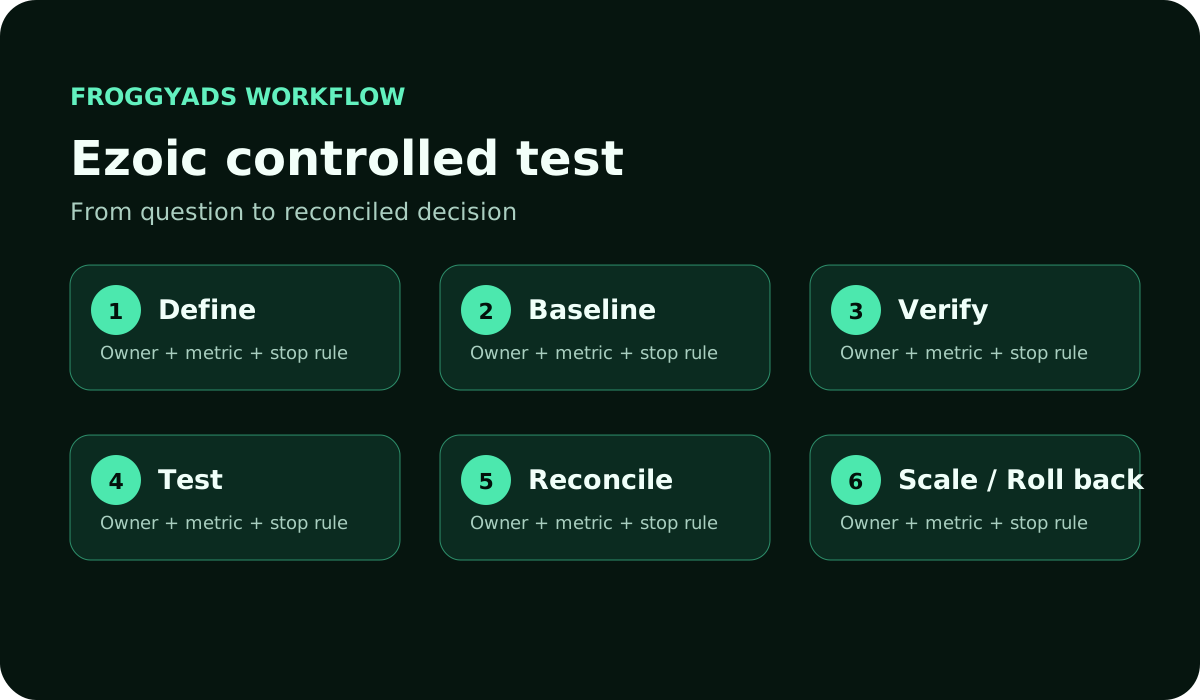
Define whether the Ezoic question concerns publisher monetization, advertiser buying or a technology partnership. Name the one decision the test must support.
Export at least one complete reporting cycle with finalized revenue or accepted conversion data, traffic mix, device, geography, format, viewability and page-experience metrics.
Open the current official pages and account documentation. Record the date, currency, eligibility rules, commercial contact, payment timing, invalid-traffic treatment and termination path.
Use one site section, traffic split, geography, format or campaign segment. Avoid a simultaneous redesign, content migration, tracking change and monetization switch.
For Ezoic CPM rates, treat this as a page-specific operating check rather than a universal benchmark. Choose one primary economic metric and several safety metrics such as latency, layout shift, bounce rate, source quality, policy flags, payment status or conversion acceptance.
For the Ezoic CPM rates decision, record how this control changes the next test or review. Do not end early because the first days look unusually good or bad. Stop only for a safety breach, data failure or the planned sample and duration.
Compare finalized data, document uncertainty, keep or roll back the change, and scale only the component that produced the result.
| Metric group | Record | Purpose |
|---|---|---|
| Primary economics | Finalized net revenue, accepted CPA or contribution | Decision metric |
| Volume | Verified visits, page views, impressions, clicks or accepted conversions | Confirms denominator stability |
| Quality | Viewability, invalid activity, source quality, conversion acceptance | Prevents low-quality scale |
| Experience | LCP, CLS, interaction latency, bounce and pages per visit | Protects audience value |
| Operations | Setup hours, support latency, reporting delay and reconciliation gaps | Measures hidden cost |
| Cash flow | Threshold, payment timing, holds, fees and currency conversion | Tests financial reliability |
Use a control chart or simple weekly cohort table rather than a single before-and-after screenshot. Annotate policy changes, holidays, traffic-source changes and content events. When data is missing, mark it missing instead of substituting a platform estimate.
When using Ezoic CPM rates, apply this rule only to the conditions and decision described on this page. The decision memo should include a confidence statement. “The result is directionally positive but not yet stable across mobile traffic” is more useful than a precise percentage without enough evidence. A responsible release process preserves uncertainty instead of hiding it.
Put the guide into practice
With “Ezoic measurement scorecard” documented, launch only the next reversible test. Set a spending limit, preserve the baseline and use source-level and audience controls so the next step depends on qualified outcomes for ezoic cpm rates, not activity volume.
Create My Free Account
For Ezoic, document which inventory, site types, regions, formats and audience signals are actually supported in the proposed relationship. A general platform description is not proof that a specific property or campaign will receive the same demand, targeting or support. Ask for the exact eligibility and implementation path, then preserve the answer in the decision record. For the ezoic cpm rates decision, connect this control directly to EPMV versus eCPM definitions, matched traffic cohorts and page-experience effects and record the evidence date before approval.
Before changing a Ezoic setup, export historical reports at the most granular level available. Keep raw files, metric definitions, timezone, currency, attribution window and finalization status. A platform migration that loses source-level history can make future optimization slower and can prevent a clean comparison even when the new setup performs well. For the ezoic cpm rates decision, connect this control directly to EPMV versus eCPM definitions, matched traffic cohorts and page-experience effects and record the evidence date before approval.
Reconcile Ezoic statements or invoices against dashboard totals and the bank or payment processor. Record fees, conversion rates, adjustments, credits, holds and payment dates. The objective is to prove that the economic value shown in reporting becomes collectible cash or accepted campaign value under the expected timeline. For the ezoic cpm rates decision, connect this control directly to EPMV versus eCPM definitions, matched traffic cohorts and page-experience effects and record the evidence date before approval.
Map how visitors or impressions reach the property. Organic search, direct, referral, paid social, push, pop, email and incentivized sources can be treated differently by monetization policies. Disclose the acquisition method and do not assume that traffic accepted by one platform is automatically acceptable to Ezoic. For the ezoic cpm rates decision, connect this control directly to EPMV versus eCPM definitions, matched traffic cohorts and page-experience effects and record the evidence date before approval.
Measure the technical effect of every Ezoic integration step. Record JavaScript weight, request count, cache behavior, consent sequencing, layout changes, errors and Core Web Vitals. A monetization improvement that materially reduces retention or search performance may not improve long-term publisher value.
Test the support path before a high-risk launch. Identify account contacts, escalation channels, status pages, expected response times and the evidence required for a billing, policy or technical incident. Operational reliability is part of the product even when it does not appear in a feature comparison. For the ezoic cpm rates decision, connect this control directly to EPMV versus eCPM definitions, matched traffic cohorts and page-experience effects and record the evidence date before approval.
For the Ezoic CPM rates decision, record how this control changes the next test or review. Review term length, renewal, notice, exclusivity, data use, payment after termination and removal requirements. The cost of leaving Ezoic can be more important than the cost of starting. A reversible pilot should avoid commitments that make the control configuration impossible to restore.
Assign one owner who can approve, pause and roll back the Ezoic test. Separate the operator who changes settings from the reviewer who validates data. Record the decision, evidence, open risks and next review date so the platform is not scaled through informal dashboard reactions. For the ezoic cpm rates decision, connect this control directly to EPMV versus eCPM definitions, matched traffic cohorts and page-experience effects and record the evidence date before approval.
Ezoic may change eligibility, pricing, revenue share, payment methods, thresholds or product packaging. Save the dated source and confirm material terms in the account or contract before acting.
For Ezoic CPM rates, treat this as a page-specific operating check rather than a universal benchmark. A publisher platform, advertiser DSP, SSP, ad network and analytics layer can all appear in the same search results. They should not be ranked in one table unless the table explicitly separates the job each one performs.
Revenue and conversion data may be estimated, delayed or adjusted. Wait for finalization and reconcile against the payment or conversion system before scaling.
When using Ezoic CPM rates, apply this rule only to the conditions and decision described on this page. A high apparent rate is not useful if the traffic violates policy, the inventory is not approved, the conversion events are rejected or the audience experience deteriorates.
DNS, JavaScript, ad manager, consent, ads.txt, analytics and layout changes can introduce risk. Document the old configuration and maintain a tested rollback path.
This guide supports due diligence. It cannot guarantee account access, ad serving, earnings, CPM, payout, campaign performance, indexing or ranking.
CPM or eCPM generally uses ad impressions as its denominator, while EPMV uses visits or sessions. Record the formula, revenue basis and traffic unit before comparing values, since several ads may appear during one visit.
Use a rate calculated from the publisher's verified denominator and finalized net value under a stated formula. Keep unlike impression, page-view and session measures separate; an unlabeled headline rate cannot support a reliable migration or budget decision.
Export a complete reporting cycle with finalized revenue and the relevant traffic mix, devices, geographies, formats, viewability and page-experience measures. Preserve that record before changing the setup so the comparison has a traceable starting point.
Use one site section, traffic split, geography or format as a controlled cohort. Avoid combining a redesign, content migration, tracking change and monetization switch, because the result would not reveal which change caused the difference.
Measure the integration's JavaScript weight, requests, cache behavior, consent sequence, layout changes, errors and Core Web Vitals. Higher monetization can still be a poor trade if the change materially harms the audience's experience or longer-term publisher value.
Wait for the relevant revenue records to finalize and reconcile them with payment data. Early figures may be estimated, delayed or adjusted, so preserve their status instead of treating a provisional dashboard improvement as settled earnings.
Traffic acquisition methods can receive different treatment under monetization policies. Record the source mix and verify its eligibility for the proposed Ezoic setup; acceptance by another platform does not establish that the same traffic is suitable here.
Reconcile statements with dashboard totals and the payment processor or bank. Include fees, currency conversion, adjustments, credits, holds and payment dates so the review can distinguish reported revenue from cash collectible under the expected terms.
Document the previous configuration and maintain a tested rollback path for DNS, JavaScript, ad management, consent, ads.txt, analytics and layout changes. The team should be able to restore the earlier setup if the new one fails its checks.
No. It supports due diligence and controlled comparison, but cannot guarantee access, ad serving, CPM, earnings or payout. A decision still depends on finalized evidence, eligible traffic, the specific property and the terms that apply to its account.
Ezoic reporting commonly emphasizes EPMV, while publishers may still search for CPM. These metrics answer different questions. CPM or eCPM generally uses impressions as the denominator; EPMV uses visits or sessions and can reflect several ads shown during one visit. Document the formula, revenue basis and traffic unit before comparing results. A higher impression CPM does not automatically mean a higher total session value, and a higher session value can still come with unacceptable latency or user-experience costs.
Use a matched-period test with stable geography, device mix, content category, traffic source, consent state and seasonality. Export visits, pageviews, ad impressions, viewable impressions, gross and net revenue, adjustments and page-performance measures. Reconcile the provider report with analytics and payment data after the reporting window is finalized. Segment results before blending them, because a strong desktop tier-one cohort can conceal weak mobile or long-tail performance.
The decision scorecard should combine economics and site quality. Track net EPMV, net eCPM, revenue per session, viewability, fill, Core Web Vitals, engagement, policy events and operating effort. Set a minimum sample and a rollback threshold before the test begins. The strongest result is not the single highest rate displayed during a short window, but a repeatable improvement that remains after fees, invalid-traffic adjustments, seasonality and implementation costs are accounted for.
FroggyAds is a self-serve media-buying platform for advertisers and professional media buyers. Launch a controlled traffic test with source, device, geography and campaign-level controls.
$50 minimum deposit. Platform access, traffic availability and campaign results depend on current terms, policy, targeting and market conditions.
Treat Ezoic CPM rates: use EPMV, eCPM and controlled publisher tests correctly as an operating page for performance-focused advertisers, not as a synonym page. Its job is to help you interpret rate benchmarks without treating them as a guaranteed campaign price, with the evidence kept against this exact decision. The nearest related FroggyAds page is Cpm Rates; this URL keeps ownership of the distinct task to interpret rate benchmarks without treating them as a guaranteed campaign price.
For the Ezoic CPM rates: use EPMV, eCPM and controlled publisher tests correctly decision, campaign objective, audience targeting, bid, conversion tracking are the useful operating concepts. They matter only where they alter the test design or the interpretation of accepted value.
| Checkpoint | Page-specific action | Evidence to keep |
|---|---|---|
| Price | Separate published minimums or bids from actual campaign spend. | Retain evidence specific to Ezoic CPM rates: use EPMV, eCPM and controlled publisher tests correctly and its accepted outcome. |
| Economics | Define the value of an accepted outcome and the loss boundary. | Retain evidence specific to Ezoic CPM rates: use EPMV, eCPM and controlled publisher tests correctly and its accepted outcome. |
| Budget | Use a bounded learning budget before changing scale. | Retain evidence specific to Ezoic CPM rates: use EPMV, eCPM and controlled publisher tests correctly and its accepted outcome. |
Hypothetical calculation: if Ezoic CPM rates: use EPMV, eCPM and controlled publisher tests correctly converts accepted outcomes at 5% and the maximum acceptable CPA is USD 30, the break-even CPC is 5% x USD 30 = USD 1.5. Replace both inputs with your own economics; this is not a FroggyAds price or performance claim.
Choose FroggyAds when Ezoic CPM rates: use EPMV, eCPM and controlled publisher tests correctly calls for a controlled paid-media test. We let performance-focused advertisers apply relevant format, targeting and budget controls, keep source-level evidence visible, and measure the accepted outcome before increasing spend. Create your free FroggyAds account.
Ezoic CPM rates: use EPMV, eCPM and controlled publisher tests correctly is a cost-planning decision: separate published minimums or rates from actual campaign economics, then set a bounded test budget around an accepted business outcome.