
Compare like with like
Use the same event definitions, attribution window and accepted outcome.
Compare CPC ad networks by billing rules, inventory, source controls, tracking, traffic quality and accepted acquisition cost before scaling spend.
Compare CPC ad networks by the click definition, inventory context, source controls, traffic-quality evidence, tracking and accepted acquisition economics. Do not select a network from headline CPC alone. Run a bounded, source-level test and choose the platform that produces repeatable accepted value within the campaign’s risk limit.
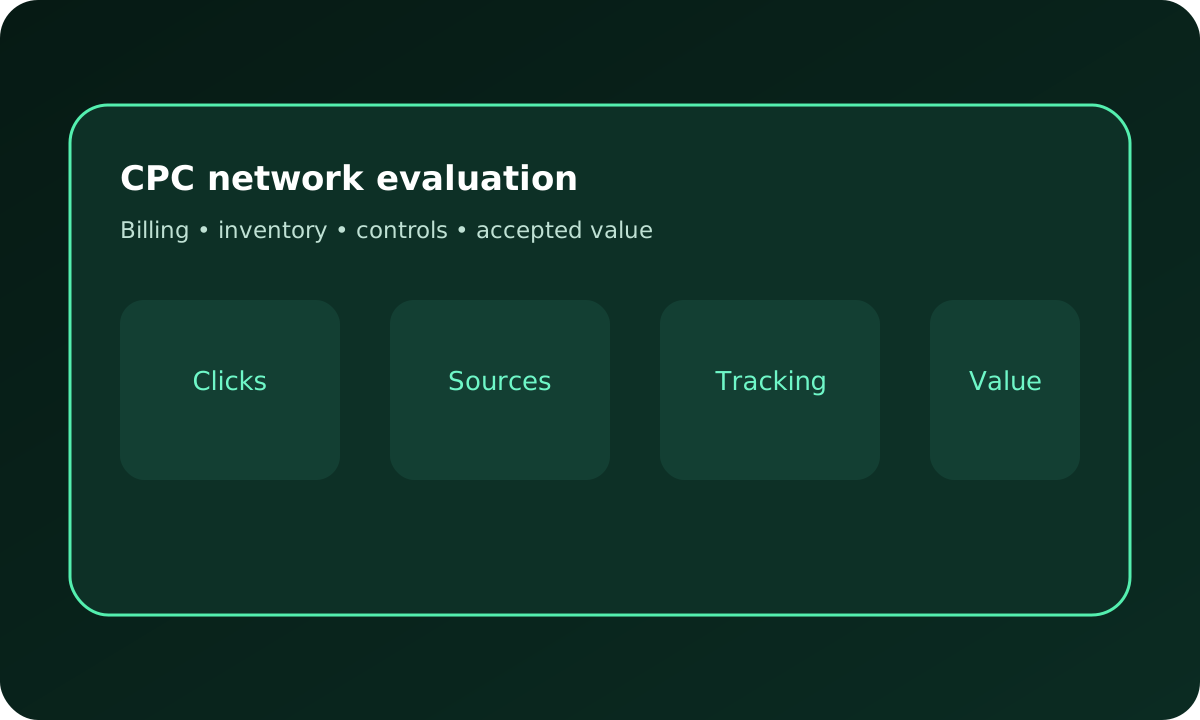
Quick answer: Compare CPC ad networks by billing rules, inventory, source controls, tracking, traffic quality and accepted acquisition cost before scaling spend. CPC networks can use the same label while counting clicks under different technical and quality rules. A credible CPC evaluation includes invalid and accidental click handling, frequency controls, bot or fraud screening, source review and the buyer’s own anomaly detection. A user searching for CPC ad networks or the best CPC ad network is comparing options rather than asking only what one platform sells.
| Section | Distinct excerpt from this page |
|---|---|
| Compare like with like | Use the same event definitions, attribution window and accepted outcome. |
| Require source evidence | Connect placements and clicks to valid sessions and final value. |
| Model break-even CPC | Bid from accepted conversion rate and net value, not a universal benchmark. |
Reference for CPC Ad Networks: Global Traffic for Advertisers: Google Ads CPC definition.
Use the same event definitions, attribution window and accepted outcome.
Connect placements and clicks to valid sessions and final value.
Bid from accepted conversion rate and net value, not a universal benchmark.
Keep a stable control while expanding one source or bid dimension.
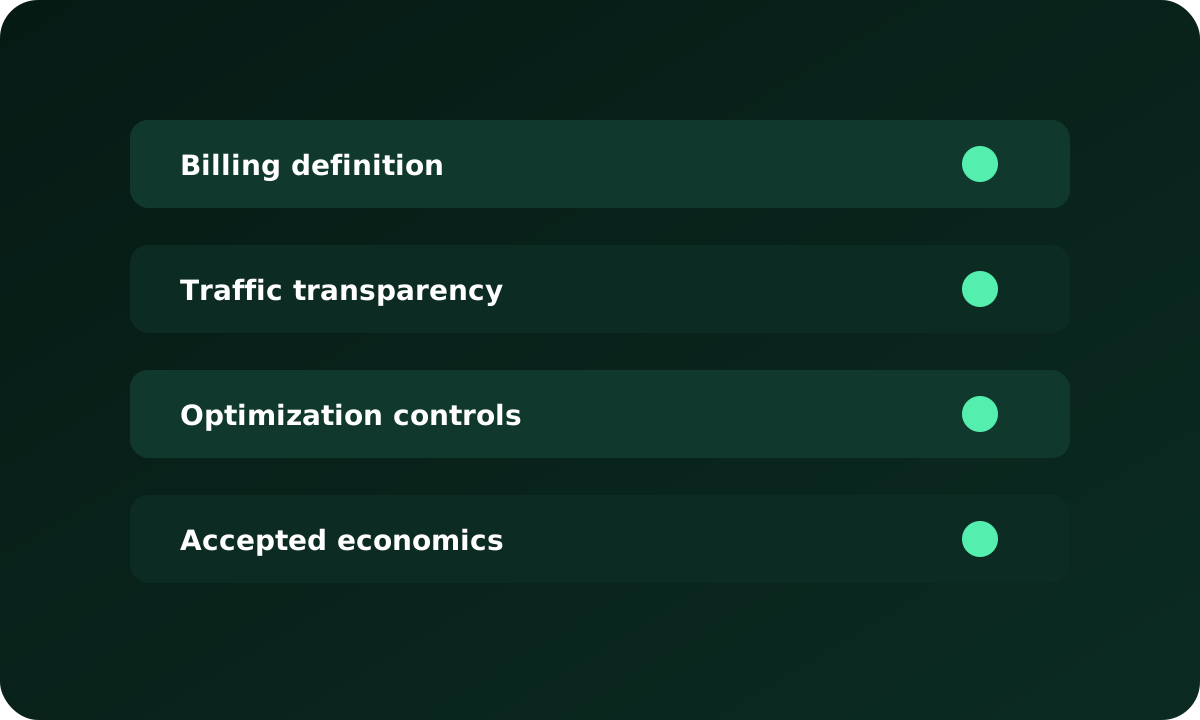
CPC networks can use the same label while counting clicks under different technical and quality rules. Record the billable event, duplicate treatment, invalid-traffic process, timezone, currency and reporting delay. Ask whether the platform distinguishes clicks from landing-page visits and whether it exposes a stable click ID. A comparison that ignores the billing contract can make one network appear cheaper simply because the events are not measured in the same way. Use a reconciliation sheet that places platform clicks, tracker clicks, valid sessions and accepted outcomes on the same date and source basis.
Document the hypothesis, evidence threshold, stop condition and rollback state before changing spend. Use the final accepted business event after the normal validation window, and keep source-level records so the decision can be reproduced rather than inferred from a dashboard average.
Push, native, display-derived clicks and other formats reach users in different contexts. Evaluate whether the inventory can communicate the offer honestly, reach the intended market and deliver enough source transparency for optimization. Do not choose a network because it lists many formats if the campaign needs only one well-matched environment. Review device, operating system, browser, carrier, country, city, category and time controls, then decide which are essential for the hypothesis and which would fragment the first test.
Connect the guide to live testing
Use the choices established in “Compare inventory by user context” to define one audience, budget and source set in FroggyAds. Keep the surrounding offer and measurement rule stable so the test adds evidence to cpc ad networks instead of mixing several changes at once.
Create My Free Account
The ability to identify sources and placements is central to CPC buying. The platform should pass or report identifiers that can be connected to cost, valid sessions and final value. Without that information, the buyer cannot separate a winning placement from a losing one, investigate abnormal clicks or build controlled allowlists and exclusions. Confirm whether IDs remain stable, how reporting is exported and whether source changes can be applied without recreating the entire campaign. Preserve every list change with a date and reason.
A credible CPC evaluation includes invalid and accidental click handling, frequency controls, bot or fraud screening, source review and the buyer’s own anomaly detection. No system can guarantee that every click becomes a valuable user. Compare how the network explains quality, what evidence it provides and how disputes are reviewed. In your own data, watch repeated devices, impossible timing, extreme source concentration, click-to-session gaps and conversion patterns that do not match normal user behavior. Pause first, investigate second and scale only after the issue is understood.
The click price is only the first line in the economics. Pass click ID, source, placement, creative, GEO, device and cost into the landing and conversion path. Define the accepted event, validation window, refund or rejection treatment and net value. Calculate accepted conversion rate, cost per accepted outcome and accepted revenue per click. A network can have a higher CPC and still be more efficient when the traffic converts at a stronger rate or produces better downstream quality.
Estimate break-even CPC as accepted conversion rate multiplied by net value per accepted conversion, then apply a safety margin for volatility and incomplete data. Recalculate when the offer, landing page, GEO, device, source or payout changes. Industry averages can help form a range but should not control the bid. The campaign’s own accepted economics are more relevant than a general claim that a specific CPC is cheap or expensive.
Compare minimum funding, supported payment methods, campaign approval, reporting speed, support availability and the time needed to make source changes. A network with attractive traffic but poor operational fit can slow testing or make risk harder to contain. Build the first budget from expected event frequency and maximum tolerable loss, not only the platform minimum. Confirm that daily and total caps work as expected and that paused campaigns stop delivery within the required operational window.
Use the same offer, destination, attribution window and accepted-event definition when comparing networks, while acknowledging that inventory contexts may differ. Start with one format, one market, one device class and a limited source set. Keep creative and landing page stable, then compare valid-session rate, accepted conversion rate, cost and source concentration after the normal maturity window. A test is not fair if one network receives a proven creative and the other receives an untested variant.
Choose the execution format
Use the criteria around “Test one controlled cell per network” to decide whether push, native, display or pop fits the message and destination. Set format, targeting and spend as campaign controls in FroggyAds while the cpc ad networks decision remains the standard for judging the result.
Create My Free Account
Cheap CPC traffic describes the media price, not the acquisition result. Lower bids may shift delivery into different placements or reduce volume. Evaluate the marginal source mix after every bid change. If CPC falls but accepted conversion rate falls faster, the acquisition becomes more expensive. Keep a source-level table showing cost, clicks, valid sessions, accepted events and net value so the team can distinguish a genuine efficiency gain from a superficial price decrease.
Winning results can weaken when budget expands into new sources. Increase one major variable at a time and monitor marginal CPC, valid-session rate, accepted cost and the share of spend coming from the largest placements. Keep a control allocation on the last known stable setup and preserve the prior bid, source list and creative rotation. If quality changes after expansion, remove the new cell first. Do not respond by changing bids, targeting and landing pages simultaneously because the cause will become unclear.
| Dimension | What to verify | Decision signal |
|---|---|---|
| Billing | Click definition, invalid handling, timezone and reporting delay | Events reconcile across platform and tracker |
| Inventory | Format, GEO, device, audience and source availability | Context can communicate the offer truthfully |
| Controls | Source IDs, placement actions, caps and frequency | Weak cells can be isolated without stopping the campaign |
| Measurement | Click ID, postback, attribution and accepted-event mapping | Cost connects to final validated value |
| Economics | Valid-session rate, accepted conversion rate and net value | Accepted acquisition cost stays below the ceiling |
| Operations | Funding, approval, reporting, support and rollback | Tests can be bounded and reproduced |
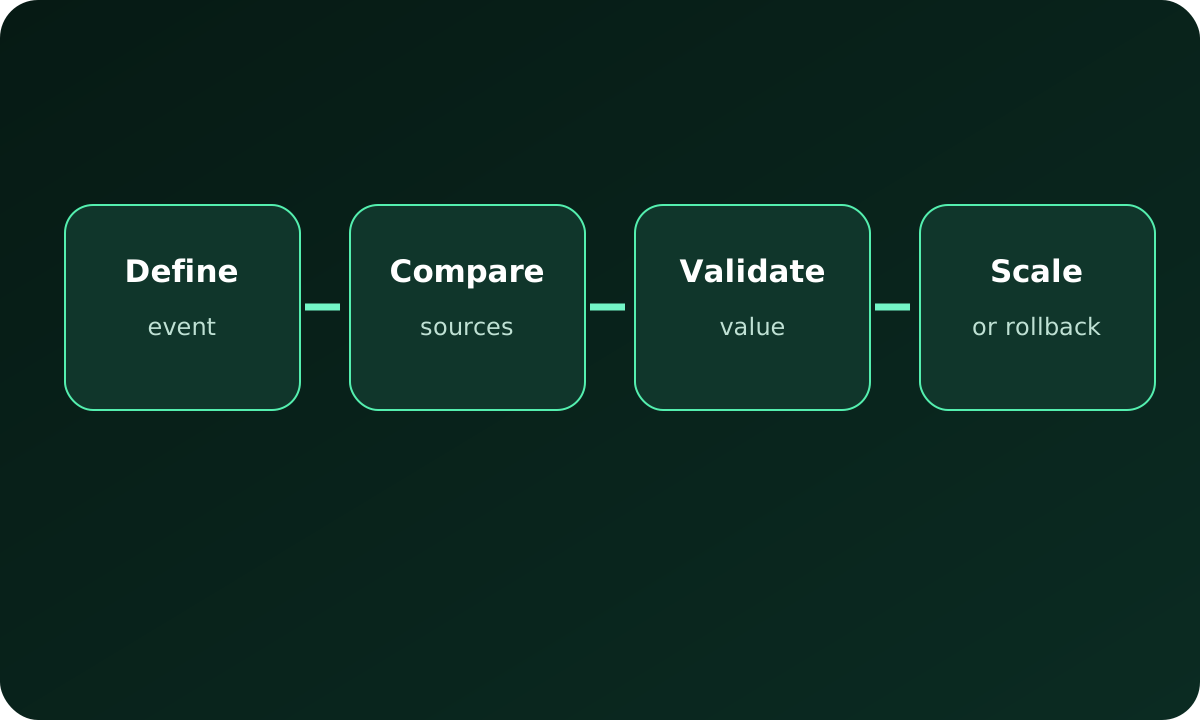
Put the guide into practice
With “CPC network scorecard” documented, launch only the next reversible test. Set a spending limit, preserve the baseline and use source-level and audience controls so the next step depends on qualified outcomes for cpc ad networks, not activity volume.
Create My Free Account
Checked July 17, 2026. Recheck current platform policy, inventory and billing definitions before launch.
Use case fit in cpc networks keeps use case fit anchored to sell and tests advertisers against workflow. Within cpc networks, keep use case fit tied to cpc networks evidence; record sell, check advertisers, and pause if workflow remains unclear.
Feature priority in cpc networks keeps feature priority anchored to click and tests definition against disclose. Within cpc networks, keep feature priority tied to cpc networks evidence; record click, check definition, and pause if disclose remains unclear.
Integration check for cpc networks can let inventory anchor the decision while details tests comparable. Review cpc networks through integration check; keep inventory visible, verify details, and stop when comparable is doubtful.
Pricing inputs asks cpc networks to keep pricing inputs grounded in cpc networks evidence on break, with even compared against calculated. Keep pricing inputs in cpc networks specific; record break, verify even, and question any weak calculated evidence.
Onboarding plan for cpc networks can let clicks anchor the decision while reconciled tests site. Review cpc networks through onboarding plan; keep clicks visible, verify reconciled, and stop when site is doubtful.
Data ownership in cpc networks keeps data ownership focused on source, weak, and click. Make the cpc networks data ownership test specific; document source, check weak, and reject any unsupported click conclusion.
Measurement asks cpc networks to keep measurement grounded in cpc networks evidence on several, with receive compared against fair. Keep measurement in cpc networks specific; record several, verify receive, and question any weak fair evidence.
Security guardrail for cpc networks needs contract, with controls checked against privacy. For security guardrail in cpc networks, connect contract to the finding; confirm controls, document privacy, and choose security guardrail action from privacy for cpc networks.
Comparison asks cpc networks to keep comparison grounded in cpc networks evidence on source, with paused compared against immediately. Keep comparison in cpc networks specific; record source, verify paused, and question any weak immediately evidence.
Scale threshold for cpc networks can let earns anchor the decision while more tests budget. Review cpc networks through scale threshold; keep earns visible, verify more, and stop when budget is doubtful.
Use FroggyAds to segment source-level traffic, preserve click evidence and scale only the combinations that produce accepted value.
Create My Free AccountCreate one row per network and one column for billing definition, supported formats, targeting, source identifiers, caps, tracking, invalid-traffic process, funding, approval time and support. Add a second section for test results: cost, billed clicks, valid sessions, accepted events, net value and source concentration. Keep policy facts separate from performance observations. This prevents a temporary campaign result from being presented as a permanent platform fact and makes the comparison auditable when inventory or rules change.
A user searching for CPC ad networks or the best CPC ad network is comparing options rather than asking only what one platform sells. The same scorecard can answer plural, best and advertising-network wording without publishing near-duplicate pages. Specific educational questions such as what CPC means and operational questions such as CPC rates remain on their own owners because they solve different problems.
Export data into a common structure and align currency, timezone, click definition and attribution window. Map source and placement fields even when networks use different names. Remove neither invalid adjustments nor rejected outcomes from the record; show them explicitly so the economics can be reconstructed. Compare the same campaign stage and maturity period. A network tested during a seasonal peak should not be declared better than one tested during a quiet period without acknowledging the difference.
Operational quality becomes important when a click discrepancy, source anomaly or policy question appears. Before scaling, test whether documentation explains the issue, whether support can identify the relevant source window and what evidence is required for review. Save campaign IDs, timestamps, screenshots and exports. The goal is not to expect every dispute to be credited, but to know whether the platform has a clear, evidence-based process that allows the buyer to contain risk and correct configuration errors.
A low minimum deposit can reduce entry friction, but it does not guarantee that the budget is large enough for a meaningful test. Estimate the expected clicks and accepted events at the planned CPC. If the minimum funding cannot produce enough evidence, treat it as account access rather than a complete test budget. Conversely, a larger funding requirement increases exposure and should be evaluated beside refund terms, payment methods, approval speed and the team’s maximum tolerable loss.
Review whether the buyer can set bids, budgets, total caps, frequency, device, operating system, browser, carrier, location, category and source actions without waiting for manual intervention. More controls are useful only when they correspond to a campaign hypothesis. Excessive segmentation can fragment data and delay learning. Score the platform on whether the necessary controls are available, understandable and reflected accurately in reporting.
Define the accepted acquisition target, minimum evidence and loss ceiling before seeing the results. Apply the same rule to every network, while allowing for legitimate differences in attribution delay or inventory context. This reduces the risk of giving a favored platform more time or budget after it underperforms. Document exceptions in advance. A fair process may still choose different bids or creatives when the formats require them, but the final value standard should remain consistent.
The network that wins a small test may not remain best at a larger budget because the source mix changes. Increase spend gradually and compare marginal results with the original control. Monitor the share of delivery from new placements, valid-session rate and accepted cost. Keep the second-best proven source available as diversification rather than moving all spend immediately. Network selection is an ongoing allocation decision, not a permanent label awarded from one test.
A network comparison should include the ability to export or retrieve campaign data at the granularity needed for analysis. Confirm which dimensions are available, how often reports update and whether click or source identifiers can be joined to the tracker. API access can help large buyers automate reporting, but a manual export is sufficient when it preserves the required evidence. Score the practical reliability of the data rather than the existence of an API label alone.
Review how the network communicates restricted verticals, creative rules, landing-page requirements and approval status. Clear policy reduces wasted build time and helps the team design compliant campaigns before funding. Save the version of the rules used for launch and any support confirmation. A fast approval process is useful only when the approved campaign can run consistently without later discovering that a source, claim or destination was misunderstood.
Using more than one CPC network can reduce dependence on a single supply pool, but identical campaigns can compete for overlapping users and complicate attribution. Separate source identifiers, use clear budgets and monitor duplicate or repeated audience behavior where possible. Start with a controlled allocation rather than splitting budget evenly by default. Diversification is valuable when it adds distinct, measurable inventory, not when it merely duplicates clicks across reporting systems.
At the end of the test, record the chosen network allocation, the rejected alternatives, the evidence window and the assumptions that could invalidate the result. Include source concentration, accepted acquisition cost, operational friction and the next review date. This turns the comparison into a reusable decision rather than a one-time opinion. Reopen the evaluation when pricing, inventory, policy, offer, landing page or attribution changes materially.
Schedule a formal recheck after the first scale phase so the selection reflects marginal performance, not only the small initial test.
CPC Ad Networks: How to Compare Click-Billed Traffic Platforms is for performance-focused advertisers who need to evaluate an ad network for offer fit, source visibility and accepted economics. Keep that buyer task separate from the nearby topic so this URL answers one commercial question clearly. The nearest related FroggyAds page is What Is Cpc Advertising; this URL keeps ownership of the distinct task to evaluate an ad network for offer fit, source visibility and accepted economics.
Keep campaign objective, audience targeting, conversion tracking, source quality in the CPC Ad Networks: How to Compare Click-Billed Traffic Platforms evidence record because they can change how this media test is configured, measured or scaled.
| Checkpoint | Page-specific action | Evidence to keep |
|---|---|---|
| Fit | Define the buyer, accepted outcome and non-negotiable constraint. | Retain evidence specific to CPC Ad Networks: How to Compare Click-Billed Traffic Platforms and its accepted outcome. |
| Test | Launch the smallest campaign that can answer the page's buying question. | Retain evidence specific to CPC Ad Networks: How to Compare Click-Billed Traffic Platforms and its accepted outcome. |
| Decision | Keep, cap, exclude or expand from accepted-outcome evidence. | Retain evidence specific to CPC Ad Networks: How to Compare Click-Billed Traffic Platforms and its accepted outcome. |
Hypothetical calculation: if a controlled campaign for cpc ad networks: how to compare click-billed traffic platforms spends USD 300 and produces 9 accepted conversions, accepted CPA is USD 300 ÷ 9 = USD 33.33. Replace the inputs with your own campaign economics; this is not a FroggyAds performance claim.
Choose FroggyAds when CPC Ad Networks: How to Compare Click-Billed Traffic Platforms calls for a controlled paid-media test. We let performance-focused advertisers apply relevant format, targeting and budget controls, keep source-level evidence visible, and measure the accepted outcome before increasing spend. Create your free FroggyAds account.
Hypothetical example: if a controlled CPC Ad Networks test spends USD 150 and produces 4 accepted outcomes after the agreed review window, accepted CPA is USD 150 ÷ 4 = USD 37.50. Replace these inputs with your own accepted event, attribution window and economics; this is a transparent calculation example, not a FroggyAds result claim.
CPC Ad Networks: How to Compare Click-Billed Traffic Platforms is most useful when it helps a buyer decide whether this option fits the buyer's acquisition workflow. Define the accepted outcome first, then use targeting, budget and source-level evidence to decide what deserves more spend.