What news ads means
News Ads begins with a precise operating definition. Identify readers segmented by declared topic interest, language, market, device and subscription stage; state the markets, devices and placements; and name a verified registration, newsletter signup, trial or paid subscription. The destination should be a credible publication or subscription page with publisher identity, editorial context, pricing and privacy terms. A broad vertical name is useful for navigation, but the campaign itself must be expressed as concrete eligibility, creative, tracking and budget settings.
For the News Ads decision, use What news ads means to separate a real operating requirement from a broad best-practice statement. Use focuses, creative, format, execution, resource and covers as the traceable inputs for this section, then state which missing item would be serious enough to stop or narrow the decision. Use the finding to choose a specific action—keep, cap, exclude, renegotiate, retest or stop—rather than recording a score with no operational consequence. Use FroggyAds to test the media assumption that follows from this section, not to replace the evidence the section requires. Campaign controls support the decision; they do not manufacture proof.
The main avoidable risk for news ads is sensational or misleading headlines, impersonation, manipulated context or undisclosed political persuasion. Put the risk into the brief before launch, assign an owner and define the signal that will pause the campaign. A written stop condition is more useful than a general intention to monitor quality because it creates an auditable decision when results move quickly.
A creative and campaign framework
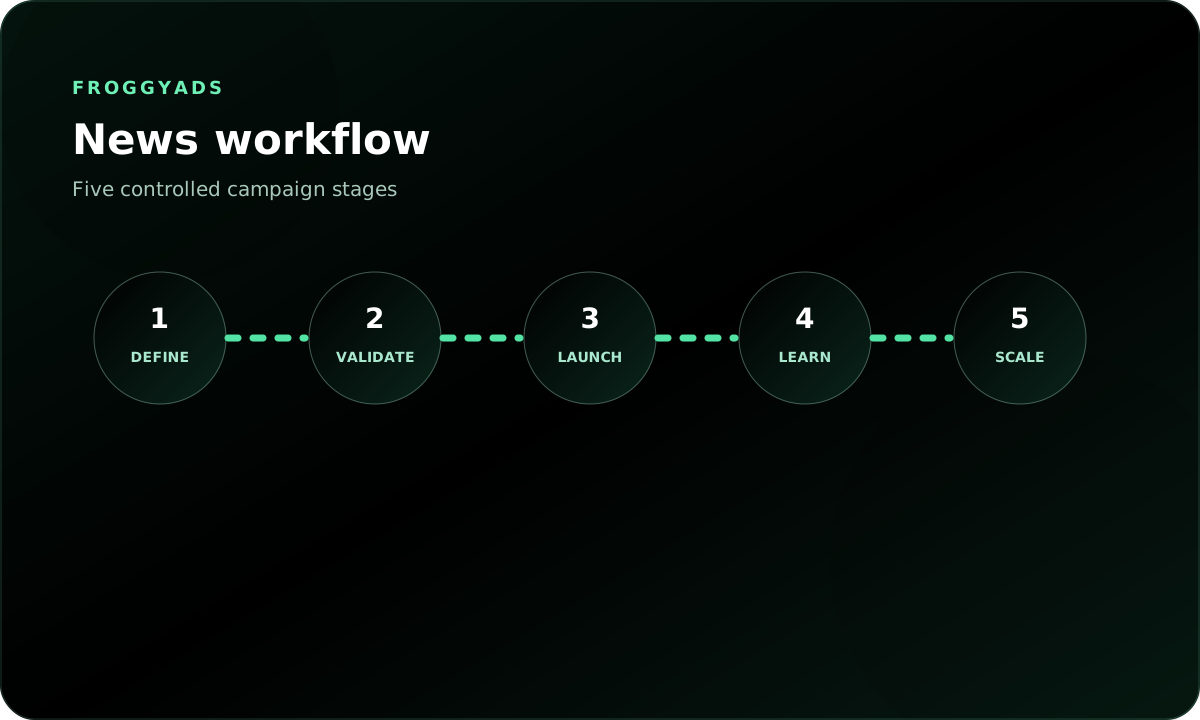
Plan news ads through five connected layers: audience insight, promise, format, destination and accepted economics. A creative can win attention and still fail when the promise attracts the wrong user, the format hides necessary context or the destination cannot complete the same expectation.
The strongest news ads test is reproducible. Give each concept a stable identifier, keep targeting and destination versions documented, and change one major variable at a time. Compare trusted topic coverage, newsletter value and subscriber access through a verified registration, newsletter signup, trial or paid subscription, not visual preference alone.
| Decision layer | What to verify | Why it matters |
|---|---|---|
| Scope | readers segmented by declared topic interest, language, market, device and subscription stage | Defines who should see the campaign and who must be excluded. |
| Promise | Trusted topic coverage | Creates one understandable reason to continue. |
| Access | Markets, devices, formats and source availability | Confirms the campaign can reach the intended context. |
| Control | Budget, bid, frequency, source and targeting controls | Protects the test and keeps decisions reversible. |
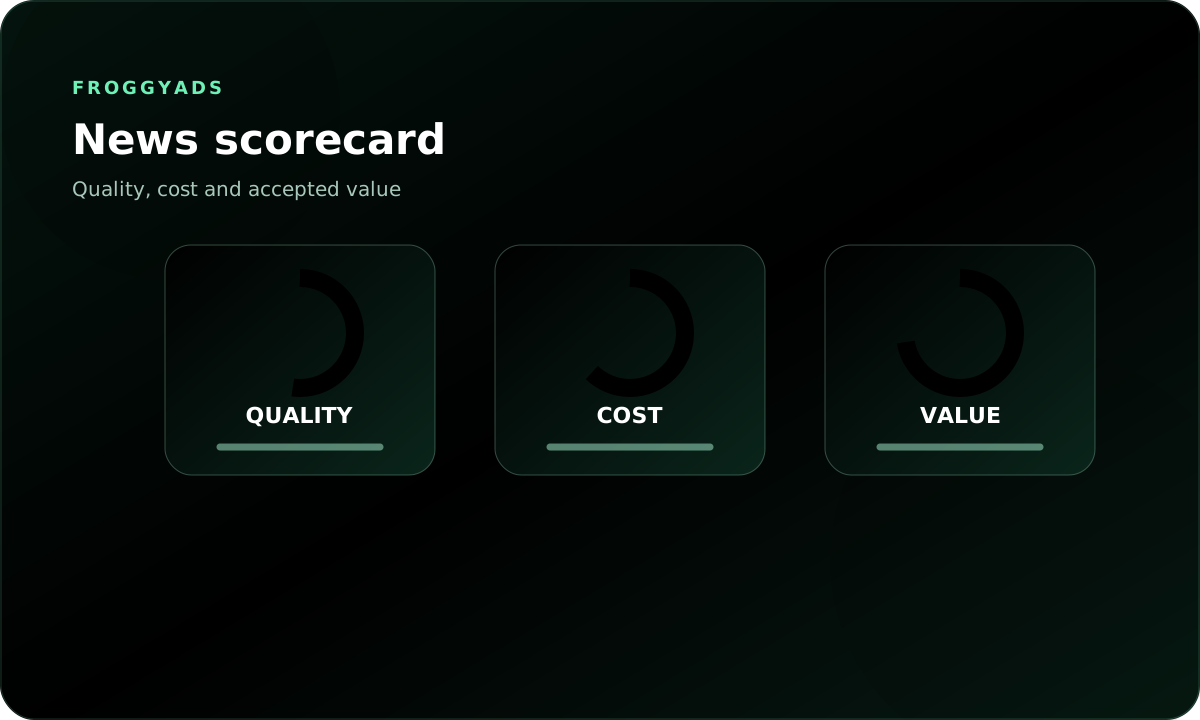
| Measurement | registration rate, cost per paid subscriber and accepted value | Connects media activity with a mature business result. |
| Safeguards | Identify the publisher, use accurate headlines, separate advertising from editorial and apply appropriate political or issue-ad rules | Reduces avoidable user, policy and brand risk. |
Document the decision range before launch. For example, name the maximum spend without an accepted event, the minimum data required before a source exclusion, the conversion delay that must pass, and the margin needed before a budget increase. Those rules reduce emotional optimization and make the same evidence understandable to analysts, buyers and account owners.