
Monetize a URL Shortener Without Hiding the Destination
A URL shortener can earn revenue through paid branded links, team workspaces, analytics, APIs, enterprise support, sponsorships and carefully controlled advertising. The durable model keeps the redirect reliable, makes every commercial step understandable and treats destination safety, abuse prevention and user trust as operating costs rather than optional features.
What does this page explain about Monetize URL Shortener: Revenue & Safety?
Quick answer: Learn how to monetize a URL shortener with paid plans, analytics, APIs and controlled ads while protecting destination clarity, safety and user trust. A URL shortener can earn revenue through paid branded links, team workspaces, analytics, APIs, enterprise support, sponsorships and carefully controlled advertising. The durable model keeps the redirect reliable, makes every commercial step understandable and treats destination safety, abuse prevention and user trust as operating costs rather than optional features. If ads are used, label the intermediate page, separate ads from continue controls, verify destinations, cap frequency and measure net revenue after abuse, infrastructure and support costs.
| Section | Distinct excerpt from this page |
|---|---|
| Choose a revenue model that fits the shortening service | A free user can be offered an ad-supported tier only when the intermediate step is clear, fast and safe. |
| Protect the redirect as the core product | Avoid countdowns that reset, multiple competing buttons, fake close icons, automatic downloads or controls that move after the visitor begins to interact. |
| 1. Define the link classes | Decide which classes can show advertising and which must redirect directly. |
Reference for Monetize URL Shortener: Revenue & Safety: Google AdSense Program policies.
How to monetize a URL shortener
Choose one revenue model that adds value without obscuring the requested destination. Paid branded links, analytics, APIs and team features are usually easier to explain than forced advertising. If ads are used, label the intermediate page, separate ads from continue controls, verify destinations, cap frequency and measure net revenue after abuse, infrastructure and support costs.
Key takeaways for URL shortener monetization
- Keep the destination domain and purpose understandable before the user continues.
- Do not make an ad look like the requested link, download, warning or system control.
- Separate enterprise, security, recovery and sensitive links from ad-eligible inventory.
- Build abuse detection, reporting and enforcement into the unit economics.
- Use paid plans when reliability, branding, analytics or team controls create recurring value.
- Compare providers by safety, reporting, exclusions and collected revenue, not headline CPM.
- Measure successful redirects and trust outcomes beside ad revenue.
- Rescan destinations because a safe link can later change or be compromised.
- Use one-variable experiments and keep a fast rollback route.
- Never imply that a provider or advertising program will approve the site automatically.
Choose a revenue model that fits the shortening service
The business model should pay for reliable redirects and useful controls. It should not depend on confusing visitors for a few additional impressions.
| Revenue model | Useful value exchange | Primary metric | Main risk |
|---|---|---|---|
| Branded links and custom domains | Memorable links, brand control and domain governance | Paid workspace retention | Weak value beyond a free short URL |
| Analytics and attribution | Verified click, country, device and campaign reporting | Activated reporting users | Privacy or inaccurate attribution |
| API and usage tiers | Automated link creation, management and reporting | Net margin per API account | Abuse, support and infrastructure spikes |
| Team and enterprise plans | Permissions, audit logs, SLAs and account governance | Retained contracted revenue | Underpriced support obligations |
| Advertising interstitial | Free service funded by eligible intermediate-page attention | Net revenue per valid redirect | Deceptive navigation, complaints or policy rejection |
| Sponsorship or partner placement | Clearly disclosed commercial recommendation | Qualified partner actions | Unclear material connection or poor fit |
A blended model can work, but each tier needs a coherent promise. A business customer paying for reliable branded links should not unexpectedly receive an advertising interstitial. A free user can be offered an ad-supported tier only when the intermediate step is clear, fast and safe. Define the inventory rules before monetization code is deployed.
Connect the guide to live testing
Connect Monetize a URL Shortener Without Hiding the Destination to a controlled audience test
Use the choices established in “Choose a revenue model that fits the shortening service” to define one audience, budget and source set in FroggyAds. Keep the surrounding offer and measurement rule stable so the test adds evidence to monetize a url shortener without hiding the destination instead of mixing several changes at once.
Create My Free Account
Protect the redirect as the core product
The visitor clicked because they expect a destination, not because they requested an advertising page. Show the short-link domain, the destination domain when appropriate, a clear continue action and a visible explanation of the intermediate step. Avoid countdowns that reset, multiple competing buttons, fake close icons, automatic downloads or controls that move after the visitor begins to interact.
Reliability includes DNS, TLS, routing, destination resolution, geographic availability and graceful failure. A monetization partner can add latency or a new redirect chain, so measure the complete path from the original click to the destination response. A technically high CPM can be negative when delays reduce repeat use or cause customers to remove branded links from campaigns.
Create an inventory policy. Exclude account recovery, authentication, payment, medical, financial, child-directed, internal company and emergency links unless a qualified review explicitly permits them. A general rule such as “all links are monetized” is easier to implement but much harder to defend.
Use a controlled URL shortener monetization workflow
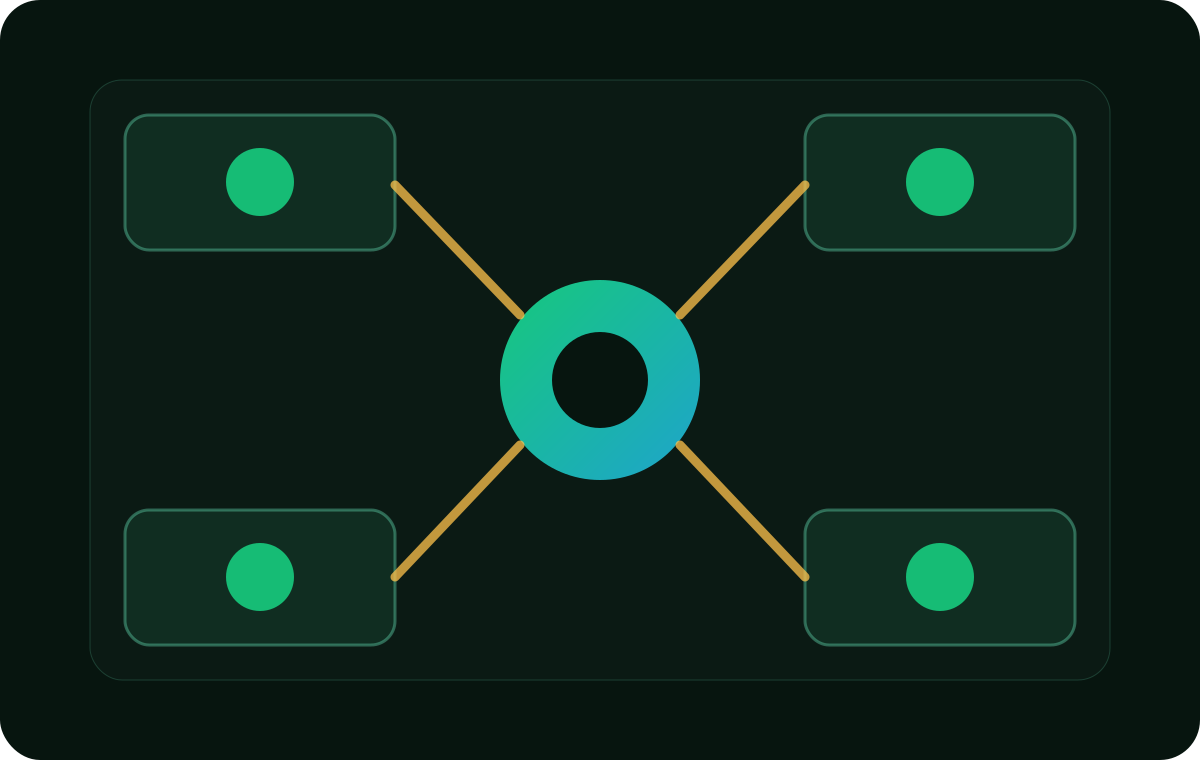
1. Define the link classes
List public, branded, enterprise, sensitive and prohibited link categories. Decide which classes can show advertising and which must redirect directly.
2. Verify the destination
Resolve the destination, screen known threat signals, store the redirect chain and rescan high-risk or frequently used links.
3. Select one model
Choose paid features, sponsorship or an ad-supported tier. Define the user promise, eligibility and business denominator before integration.
4. Instrument the path
Record successful redirects, failures, latency, ad exposure, destination continuation, complaints, blocks, provider deductions and support events.
5. Test a limited cohort
Use one country, account tier or link class. Keep a control cohort and prevent the same user from receiving conflicting experiences.
6. Reconcile net value
Subtract infrastructure, fraud review, customer support, refunds, payment costs and lost paid-plan retention from collected revenue.
The final step is a written scale or rollback decision. Scale only when successful redirects, return use and complaint metrics remain healthy. Roll back when the provider introduces unsafe creative, unexplained redirect chains, unacceptable latency or deductions that cannot be reconciled.
Evaluate an ad network or AdSense alternative for a URL shortener
Provider eligibility is not a feature checklist. Ask the provider to confirm that redirect-based pages and the intended formats are acceptable. Review prohibited destinations, creative categories, browser behavior, geographic restrictions, frequency controls, reporting granularity, invalid-activity adjustments, payment terms and the process for urgent campaign removal.
| Evaluation area | Evidence to request | Reject or pause when |
|---|---|---|
| Inventory acceptance | Written policy for short links and intermediate pages | The provider gives only a vague verbal assurance |
| Creative safety | Category controls, review process and emergency blocking | Ads imitate warnings, downloads or continue controls |
| Redirect behavior | Complete destination chain and browser testing | Unexpected tabs, downloads or repeated redirects appear |
| Reporting | Country, device, placement, provider deduction and payment detail | Collected revenue cannot be reconciled to eligible sessions |
| Commercial terms | Threshold, schedule, fees, deductions and dispute process | Material terms are missing or can change without notice |
An AdSense alternative is not simply a different ad tag. It can be a paid product tier, branded-domain service, analytics plan, API, sponsorship or another network. Compare the whole model against the value of a fast, trusted redirect. Do not use a new provider to bypass a prior policy decision without fixing the underlying product issue.
Choose the execution format
Choose a paid-media format that supports Monetize a URL Shortener Without Hiding the Destination
Use the criteria around “Evaluate an ad network or AdSense alternative for a URL shortener” to decide whether push, native, display or pop fits the message and destination. Set format, targeting and spend as campaign controls in FroggyAds while the monetize a url shortener without hiding the destination decision remains the standard for judging the result.
Create My Free Account
Measure CPM rates with a valid redirect denominator

The raw request count can include bots, repeated resolution, blocked destinations, previews, security scanners and visitors who never see the intermediate page. A useful CPM calculation starts with eligible human impressions that meet the provider definition. Then reconcile viewability, invalid activity, adjustments and collected revenue.
Track net revenue per valid redirect, paid-plan conversion, destination completion, median redirect time, complaint rate, blocked-link rate and repeat customer use. Segment by country, device, link class, account tier, source and provider. A low-value segment may need direct redirection rather than more aggressive advertising.
Do not present one universal URL-shortener CPM. Auction demand, format, geography, viewability, device, frequency, creative category and traffic quality can change the result. Use the dedicated average CPM rates methodology to compare evidence on the same billable basis.
Build safety, privacy and abuse controls into the business model
Shortened links can hide destination context, which makes transparent controls essential. Publish acceptable-use rules, an abuse-reporting route and an enforcement process. Rate-limit automated creation, verify high-volume accounts, retain necessary audit evidence, protect personal information and avoid exposing sensitive analytics to unauthorized team members.
A destination that was safe at creation can later expire, redirect or be compromised. Recheck popular and newly reported links. Document when a link is blocked, why it was blocked and how an owner can appeal. Avoid public error pages that disclose private account or investigation data.
Commercial content also needs recognizable labeling. A sponsor or native placement should not be visually merged with the continue action. When a material connection exists, disclose it where the visitor sees the recommendation. These safeguards protect the user and make the revenue stream easier to explain to enterprise customers.
Scenario playbooks
Creator link service
Offer free basic links and a paid branded page with analytics. Keep sponsored recommendations separate from the requested destination. Track creator retention and subscriber upgrades rather than maximizing every visitor impression.
Enterprise campaign links
Prioritize custom domains, governance, permissions, audit logs, uptime and support. Direct redirects are usually part of the paid promise, so advertising should not be inserted into enterprise links.
Community-generated links
Use account reputation, rate limits, destination rescanning and reporting. Monetize only verified categories and keep moderation cost in the margin calculation.
QR and offline campaigns
Test mobile latency, domain visibility and destination continuity. A user scanning a printed code has limited context, so avoid surprising intermediate pages or unrelated creative.
Put the guide into practice
Turn Monetize a URL Shortener Without Hiding the Destination into a bounded campaign test
With “Scenario playbooks” documented, launch only the next reversible test. Set a spending limit, preserve the baseline and use source-level and audience controls so the next step depends on qualified outcomes for monetize a url shortener without hiding the destination, not activity volume.
Create My Free Account
Price URL-shortener plans with a full unit-economics model
A free short link can look almost costless, but the service still pays for DNS, certificates, databases, analytics, threat checks, logs, support, account recovery and abuse investigations. High-volume accounts can also create sudden write, read and redirect demand. Build a cost table for a normal account, a heavy legitimate account and an abusive account before setting a free quota or paid tier.
A branded-domain plan can be priced around domain count, active links, click volume, retention period, team members, permissions and support. An analytics plan can be priced around reporting depth, export, attribution windows and data retention. An API plan should reflect request volume, burst capacity, webhook delivery, support and the risk of automated misuse. Avoid a single unlimited plan unless the business can absorb a worst-case customer.
| Cost layer | What to record | Pricing implication |
|---|---|---|
| Redirect infrastructure | Requests, database lookups, cache hit rate, TLS and regional delivery | Use volume tiers and burst limits |
| Analytics | Event storage, aggregation, exports and retention | Charge for depth and retention rather than raw link count alone |
| Safety | Scans, blocked links, reports, reviews and appeals | Reserve margin for high-risk or automated accounts |
| Support | Tickets, response time, recovery and enterprise service | Separate self-service and contracted support tiers |
Review contribution by account cohort. A high-volume customer may be valuable when the plan covers infrastructure and support, while a low-volume free account can be expensive if it produces repeated abuse cases. Pricing should reward predictable legitimate use, not encourage opaque redirect volume.
Turn destination intelligence into a product feature
A trustworthy shortener can add value before the click. Show a destination preview when appropriate, allow customers to set a branded title, expose expiration and ownership controls, and notify account owners when a destination changes or becomes unsafe. These features can support a paid tier because they reduce campaign and reputation risk.
Keep destination intelligence accurate and limited. Do not promise that a scan proves a destination is safe. Explain when the check occurred, which signals were used and what the visitor should do if the destination appears suspicious. A preview should not reveal private query parameters, account information or confidential internal links.
For teams, add permissions and audit history. Record who created, edited, disabled or restored a link. Require stronger verification for custom domains, high-volume API access and links that repeatedly change destination. Enterprise buyers may value governance and incident response more than additional click reports.
Branded links can also improve campaign continuity. The visible domain should match the organization that controls the destination, and the landing page should continue the same promise. Avoid using a trusted brand domain to mask unrelated or risky third-party destinations.
A 30-day URL shortener monetization plan
Days 1 to 7: map and instrument
Classify link types, define prohibited use, document the redirect path and implement successful-redirect, failure, latency, complaint and safety events. Establish a direct-redirection control cohort.
Days 8 to 14: validate one model
Test a paid feature or one clearly labeled advertising placement on an eligible cohort. Verify destination visibility, mobile behavior, provider reporting and support readiness.
Days 15 to 21: reconcile trust and economics
Compare collected revenue with infrastructure, safety and support. Review complaint reasons, repeat use, paid conversion, successful redirect rate and latency by link class.
Days 22 to 30: decide and document
Scale, revise or roll back using written thresholds. Record the accepted link classes, provider settings, exclusions, pricing and incident owner for the next release.
Do not use a traffic spike as proof that the model is durable. Repeat the review after provider adjustments and after a full billing cycle. The decision should be reproducible by another team member using the same logs and definitions.
Sources and verification references
- Google AdSense Program policies
Official site-behavior rules covering navigation, unwanted redirects, downloads and disruptive experiences.
- FTC Native Advertising guide
Official guidance on making commercial content and native placements recognizable as advertising.
- Google Safe Browsing
Official information about web threat protection and unsafe-site signals.
- FTC Endorsements, Influencers and Reviews
Official guidance for material connections, sponsorships and commercial recommendations.
- U.S. Copyright Office DMCA resources
Official background for service providers handling notices and user-submitted destinations.
Policies and laws can change. Review the current rules for the countries, providers, link categories and audiences involved before launch. This operational guide is not legal advice and does not guarantee approval or revenue.
URL Shortener Monetization FAQ
How can a monetized shortener avoid hiding the destination?
Give users a truthful description of where the link leads and do not imitate system or download controls. The final page must match the expectation created before the redirect.
Why do extra redirect steps create risk?
Each step can add delay, lose tracking or expose the visitor to another claim. Keep the route as short as the business model permits and inspect every partner involved.
How should advertising be identified on the interstitial?
Commercial content should be visually distinct from the destination control. Users need a clear way to continue without mistaking an advertisement for the requested link.
What destination review should a shortener perform?
Check availability, malware signals, deceptive downloads and policy restrictions when a link is created and during its life. Give users a way to report abuse.
Which data practices need plain disclosure?
Explain what link, device and location data is collected, why it is used, who receives it and how long it stays. Avoid collecting fields the service does not need.
What should a publisher subtract from shortener revenue?
Include support, abuse review, payment fees, lost users and any performance cost from the interstitial. Gross earnings can hide damage to audience trust.
Which complaint should trigger an advertiser review?
Reports of fake buttons, forced downloads, misleading claims or blocked exits deserve immediate inspection. Preserve the campaign and route evidence before removing it.
What payment terms matter to a short-link publisher?
Review eligible traffic, exclusions, minimum payout, currency, timing and dispute rules. Treat quoted earnings as conditional until the terms and traffic mix are known.
How should a publisher test a monetized shortener?
Use a limited group of links and compare net revenue with completion, complaints and repeat use. Keep an immediate rollback route if the visitor experience declines.
What should a shortener ask an ad partner?
Ask about creative review, source reporting, prohibited offers, incident response and data handling. The partner must support a user experience that does not disguise the requested destination.
Promote a trusted product after monetization is measurable
FroggyAds is a self-serve media buying platform for advertisers. When the shortener has verified onboarding, abuse controls, attribution and unit economics, test paid acquisition with a limited budget and a clear activation event.
Monetize a URL Shortener Without Hiding the Destination: what should the advertiser decide next?
For Monetize a URL Shortener Without Hiding the Destination, the commercial task is to turn monetize url shortener into one measurable campaign decision. Use What does this page explain about Monetize URL Shortener: Revenue & Safety? to define the audience or problem, use How to monetize a URL shortener to constrain the test, and decide in advance which accepted result would justify more FroggyAds spend.
On this Monetize a URL Shortener Without Hiding the Destination page, the decision should remain tied to the existing evidence around What does this page explain about Monetize URL Shortener: Revenue & Safety?, How to monetize a URL shortener and Key takeaways for URL shortener monetization. Those sections give monetize url shortener its specific context; the table below turns that context into campaign actions rather than adding another generic definition.
| Decision | What to verify | FroggyAds action |
|---|---|---|
| Monetize a URL Shortener Without Hiding the Destination objective | Use What does this page explain about Monetize URL Shortener: Revenue & Safety? to define the accepted business event and the maximum learning loss for monetize url shortener. | Launch one FroggyAds campaign objective for Monetize a URL Shortener Without Hiding the Destination and keep the conversion definition stable. |
| Monetize a URL Shortener Without Hiding the Destination audience | Use How to monetize a URL shortener to verify market, device, language and offer eligibility for monetize url shortener. | Apply only the FroggyAds targeting controls that change the real Monetize a URL Shortener Without Hiding the Destination customer journey. |
| Monetize a URL Shortener Without Hiding the Destination source evidence | Use Key takeaways for URL shortener monetization to keep source-level differences visible instead of relying on one blended monetize url shortener average. | Keep, cap, exclude or retest Monetize a URL Shortener Without Hiding the Destination inventory from documented source evidence. |
| Monetize a URL Shortener Without Hiding the Destination economics | Use Choose a revenue model that fits the shortening service to connect media spend with accepted conversions and downstream value for monetize url shortener. | Protect the Monetize a URL Shortener Without Hiding the Destination test with a written budget boundary and a consistent attribution window. |
| Monetize a URL Shortener Without Hiding the Destination scale rule | Use Connect Monetize a URL Shortener Without Hiding the Destination to a controlled audience test to define the exact evidence that earns the next budget increase for monetize url shortener. | Scale Monetize a URL Shortener Without Hiding the Destination one major control at a time and compare marginal performance with the prior baseline. |
A page-specific FroggyAds test sequence for Monetize a URL Shortener Without Hiding the Destination
- Monetize a URL Shortener Without Hiding the Destination outcome: define the accepted event for monetize url shortener and the maximum loss permitted while the first test is learning.
- Monetize a URL Shortener Without Hiding the Destination path: verify market eligibility, device experience, landing-page continuity and tracking against What does this page explain about Monetize URL Shortener: Revenue & Safety? before buying more traffic.
- Monetize a URL Shortener Without Hiding the Destination hypothesis: launch one bounded FroggyAds test tied to How to monetize a URL shortener; do not change bid, creative, audience and destination together.
- Monetize a URL Shortener Without Hiding the Destination source review: compare qualified activity, accepted conversions, timing and cost by the source or segment dimensions relevant to Key takeaways for URL shortener monetization.
- Monetize a URL Shortener Without Hiding the Destination scaling: use Choose a revenue model that fits the shortening service and Connect Monetize a URL Shortener Without Hiding the Destination to a controlled audience test to define what must reproduce before the next budget increase.
Why FroggyAds is relevant to Monetize a URL Shortener Without Hiding the Destination
For Monetize a URL Shortener Without Hiding the Destination, FroggyAds gives advertisers a self-serve DSP and ad-network workflow for buying supported traffic with campaign-level budgets and targeting. Depending on format and campaign context, available controls can include country, city, device, operating system, browser, carrier, category, source, ID and IP options. SmartCPC and Adscore-supported traffic-quality controls can support the monetize url shortener optimization process, while the advertiser's tracker, analytics and backend acceptance remain the final evidence for commercial quality.
Use Connect Monetize a URL Shortener Without Hiding the Destination to a controlled audience test as the final checkpoint for Monetize a URL Shortener Without Hiding the Destination. If the accepted result does not reproduce after the next meaningful volume step, return to the last stable configuration instead of widening several controls at once.
Monetize a URL Shortener Without Hiding the Destination: the publisher decision this URL owns
Use this page when a site owner is deciding how Monetize a URL Shortener Without Hiding the Destination can create revenue without weakening the content experience that produces repeat visits.
Page-specific evidence path: For Monetize a URL Shortener Without Hiding the Destination, use the visible sections How to monetize a URL shortener; Key takeaways for URL shortener monetization; Choose a revenue model that fits the shortening service to evaluate this content-site monetization decision. The FAQ path asks How can a monetized shortener avoid hiding the destination?; Why do extra redirect steps create risk?; How should advertising be identified on the interstitial?. Keep the decision terms audience targeting, conversion tracking, source quality attached to this URL, and use Monetize Website Traffic only for its adjacent monetization task.
| Checkpoint | What to decide | Evidence to retain |
|---|---|---|
| Audience context | For Monetize a URL Shortener Without Hiding the Destination, identify the pages, visitor intent and devices where monetization is appropriate. | Retain for Monetize a URL Shortener Without Hiding the Destination: Content category, traffic source, device and session depth. |
| Inventory design | For Monetize a URL Shortener Without Hiding the Destination, choose placements and formats that preserve navigation, readability and disclosures. | Retain for Monetize a URL Shortener Without Hiding the Destination: Placement map, viewability/eligibility, frequency and page-speed observations. |
| Yield + experience | For Monetize a URL Shortener Without Hiding the Destination, scale only when net value improves without unacceptable engagement or return-visit loss. | Retain for Monetize a URL Shortener Without Hiding the Destination: Net revenue, revenue per visit, bounce/engagement and repeat-visit signals. |
Transparent monetization example
Hypothetical example: if Monetize a URL Shortener Without Hiding the Destination records 70,000 eligible or served impressions and USD 120 in net advertising revenue over the same review window, the illustrative eCPM is USD 1.71. Replace those inputs with your own delivery and net-revenue data; this is not a FroggyAds earnings claim.
How should FroggyAds fit this decision?
For Monetize a URL Shortener Without Hiding the Destination, use the FroggyAds publisher or monetization workflow documented on this page only where it supports the content-site monetization task and the stated inventory constraints. Keep live delivery, net revenue and the page-specific decision terms audience targeting, conversion tracking, source quality in the same record. Judge this URL against its own evidence path and do not treat a headline fill rate, eCPM or earnings estimate as guaranteed.
What matters first for Monetize a URL Shortener Without Hiding the Destination?
For Monetize a URL Shortener Without Hiding the Destination, start with the inventory or audience condition this content-site monetization page owns. Use How to monetize a URL shortener; Key takeaways for URL shortener monetization; Choose a revenue model that fits the shortening service to verify the implementation path, then reconcile delivery and net publisher value with How can a monetized shortener avoid hiding the destination?; Why do extra redirect steps create risk?; How should advertising be identified on the interstitial?. Increase monetization pressure only when the page-specific revenue and user-quality evidence remain acceptable after the same review window.