
Buy USA Traffic
With FroggyAds, you can buy USA traffic across push, native, display and pop, then use source and device controls to build a measurable national campaign.
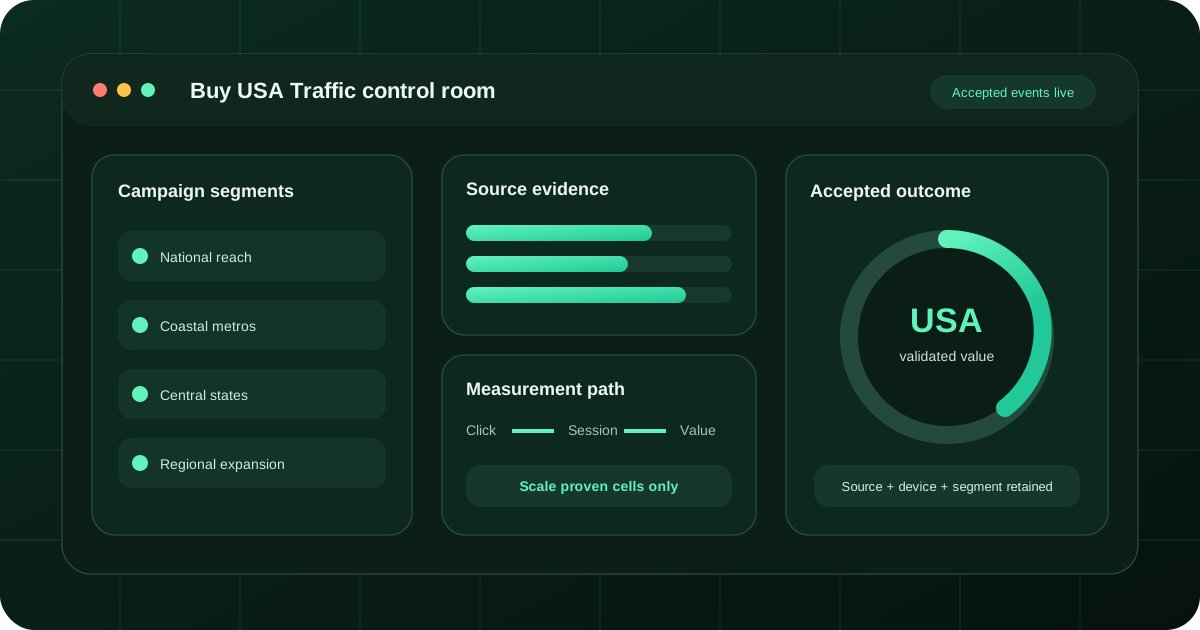
Plan your national USA traffic test
How can you buy USA traffic with FroggyAds?
Quick answer: Buy USA traffic through FroggyAds by selecting United States targeting, an ad format and a controlled budget. Our source-level controls let you evaluate paid visits against your sales or lead records. Start nationwide when coverage allows it. Separate regions when customer value or delivery conditions justify a different decision.
| Decision | What to check before buying |
|---|---|
| National campaign | Use a consistent offer and delivery promise for the US locations you serve. |
| Campaign structure | Separate a device or region when it needs a different budget decision. |
| Offer eligibility | Check shipping coverage, payment, price and support before spending. |
Reference for Buy USA Traffic - CPC from $0.003: FTC guidance on online advertising and marketing.
- Offer: Confirm US availability and checkout readiness.
- Control: Keep source and device results visible.
- Budget: Expand after accepted outcomes justify the cost.
How to buy USA traffic with measurable control
With FroggyAds, you can launch US campaigns and manage the buying decisions yourself. Choose a format, define eligible customers and track a meaningful conversion. Our source controls let you refine the placements behind your results.
A national launch tests whether your offer attracts usable US demand across the locations you serve. Review source and device results first. Add regional comparisons when fulfillment cost or lead acceptance shows a difference you can act on.
Keep one national campaign when the customer promise is consistent. A nationwide subscription may fit. A retailer with delivery exclusions or a service business with limited coverage should define those limits before buying reach.
Our platform supports Push, Native, Display, Pop, Video and Interstitial advertising. Use documented country, city, device and source controls where available. Adscore-supported checks help assess traffic quality; your conversion records establish business value.
When this USA buying guide applies
This page helps advertisers launch and evaluate a nationwide USA campaign with FroggyAds. It concentrates on national offer readiness, format choice, checkout expectations and expansion decisions. Detailed state or metro planning belongs in a regional campaign once the business has a reason to separate it.
For Buy USA Traffic, use the buy website traffic guide and the traffic sources hub to set the broader acquisition model, then narrow the decision with the related country, format, audience or platform guide that matches the campaign.
Structure a national launch you can evaluate
Separate mobile and desktop when the destination experience differs enough to need its own budget decision. For example, a short mobile checkout and a desktop demo request should not share a single conversion target. Choose the device split that makes the first US test interpretable.
Make service coverage explicit. A US shipping address, supported payment method and reachable support channel matter more than a country label in the ad. Review category-specific restrictions with the person responsible for your offer before enabling nationwide delivery.
We recommend beginning with one offer and a manageable creative set. Each additional format or audience split needs enough budget to learn from. Keep source reporting available within that focused launch, so a weak placement can be excluded without abandoning a useful national audience.
| Campaign group | Reason to separate it | Problem to investigate |
|---|---|---|
| National offer | Consistent availability and price | Averages hiding delivery exclusions |
| Mobile visits | Different checkout or app journey | Form or payment failure |
| Desktop visits | Longer evaluation or sales form | Leads rejected after submission |
| Expansion audience | New coverage or customer economics | Extra orders costing more to fulfill |
Six checks before your USA launch
Offer eligibility
List US locations you can serve and verify the price, delivery promise and support route for each.
Audience fit
Choose the customer need and supported devices before adding narrow audience filters to your national test.
Destination readiness
Check ZIP-code entry, address validation, payment errors and confirmation on the devices you plan to target.
Measurement ownership
Define a paid order, accepted lead or activated account, then retain the source identifier with that record.
Source control
Use our source allowlists and blocklists to apply the placement decisions supported by your campaign results.
Scale discipline
Check that additional US demand can be fulfilled at an acceptable acquisition cost before raising spend.
Launch your USA campaign with FroggyAds
Define the decision
Choose one offer and define the US customer action that would justify continued spend.
Verify the journey
Complete the intended visit, form or checkout journey on a supported phone and desktop.
Build campaign cells
Select United States targeting and create only the format or device splits you can evaluate.
Launch with limits
Set an affordable launch budget and choose the spend point at which you will review delivery.
Validate delivery
Check that a test visit reaches the correct page and its source can be traced to an event.
Classify outcomes
Separate paid, cancelled and refunded orders, or accepted and rejected leads, in your own records.
Apply stop rules
Exclude weak sources or pause delivery when spend crosses the limit agreed before launch.
Scale proven cells
Expand the successful part of the campaign, then compare its newest results with the earlier period.
Choose a format for the customer journey
| Format | Role to test | Useful measurement |
|---|---|---|
| Push | A short offer that can be understood quickly | Loaded visits and confirmed actions |
| Native | An offer that benefits from explanatory content | Progression from article to accepted outcome |
| Display | A visual product or brand message | Destination visits and purchase behavior |
| Pop | A destination that can qualify a new visitor immediately | Loaded sessions and accepted outcome cost |
| Video | A product demonstration or explanation | Viewing behavior and downstream action |
| Interstitial | A clear message in a full-screen placement | Destination engagement and confirmed conversion |
Connect delivery to accepted business value
For a USA ecommerce campaign, measure from paid visit to completed order, then account for cancellations and refunds. For lead generation, use the lead your team accepts after checking coverage and eligibility. FroggyAds source controls become more useful when you can connect each buying decision to that business record.
A product view tells you the visitor reached the offer. An add-to-cart event tells you they considered a purchase. Neither confirms that payment or delivery can succeed. Use these earlier events to locate a problem while keeping paid, fulfillable orders as the commercial measure.
Choose an observation window that allows your business to confirm the result. A lead submitted late in the day may remain unreviewed until the team returns. Compare cohorts with the same opportunity to mature before judging which source deserves more spend.
Retain source, campaign, creative and device identifiers wherever your tracking supports them. Reconcile the event with your order system or CRM. Use your reporting time zone consistently, especially when staff review leads across US time zones.
| Stage | What to record | Buying question |
|---|---|---|
| Delivery | Impressions, clicks and loaded visits | Did the US visit reach the intended page? |
| Quality | Target match and duplicate patterns | Is the source sending usable traffic? |
| Progression | Product views, carts or form starts | Which purchase step needs attention? |
| Acceptance | Paid orders or qualified leads | Which placements produce accepted demand? |
| Value | Contribution after rejection or refunds | Does the national campaign justify more spend? |
Review national sources against your business limits
Use the scorecard below as a suggested review framework, with weights adjusted to your business. It gives a team a common basis for discussing a source. Tracking failure, unsupported delivery or a breached loss limit should trigger action regardless of the total score.
For national US buying, inspect delivery coverage and net order value before accepting a low acquisition cost. A source that generates inexpensive orders outside your shipping area has not earned a larger budget.
| Criterion | Suggested weight | Rating | Review note |
|---|---|---|---|
| Target match | 20% | Score 0 to 5 | US coverage and supported devices |
| Accepted outcome rate | 25% | Score 0 to 5 | Mature orders or qualified leads |
| Cost versus limit | 20% | Score 0 to 5 | Media spend per accepted outcome |
| Downstream quality | 20% | Score 0 to 5 | Refunds, cancellations or retention |
| Operational fit | 15% | Score 0 to 5 | Fulfillment capacity and support |
Choose the outcome for your US offer
National ecommerce launch
Use FroggyAds to test a national offer, then compare completed, fulfillable orders with the media cost.
SaaS demand generation
Follow a US trial or demo request through sales acceptance before expanding the source that introduced it.
Local-service expansion
Use supported geographic controls to restrict coverage before testing a wider service area.
App acquisition
Separate supported operating systems and judge acquisition by activation and continued use in your own analytics.
Prepare your offer for US customers
Delivery coverage
Record US shipping coverage, displayed currency, delivery expectations and support availability. Note differences between the contiguous states and other destinations you serve. Our targeting controls should reflect where you can honor the ad.
National or regional
Record regional results without creating a campaign for every state. Split a region when it needs a different message, availability rule or spending decision and you have enough data to support that separation.
Language continuity
Spanish-language creative needs a matching landing page, checkout and support path. Translating only the headline leaves the purchase unfinished. Check currency and shipping clarity in confirmation messages and receipts as well.
Checkout checks
Test ZIP codes with leading zeros, apartment fields, long addresses and payment errors. Check that mobile visitors can recover from a failed form without losing the offer or tracking reference.
Order and lead acceptance
Agree on accepted orders and leads before spending. Keep each rejection reason with its source. Our placement controls can then address the media issue separately from checkout or fulfillment problems.
Expansion record
Record each expansion date, changed setting and review period. If extra volume shifts toward another device or source, evaluate that new traffic separately from the campaign's lifetime average.
Four details that change a national buying decision
Shipping outside the contiguous states
If Alaska or Hawaii has different delivery conditions, explain them before purchase. Review those orders separately and use available geographic controls when the offer cannot serve a location.
Reporting across time zones
Align campaign and CRM reporting time zones before comparing a US day. Different midnight cutoffs can make the same orders appear in different periods and distort evening source results.
Delivery cost and acquisition limits
Illustrative calculation: $30 order contribution before media minus $8 additional delivery cost leaves $22 before acquisition spending. This is a planning example, not a FroggyAds result. Use your actual costs.
Support coverage before expansion
Check lead follow-up hours and order-processing capacity before expanding. A support backlog changes the commercial result even when the campaign continues to bring relevant traffic.
Match the ad promise to the US purchase
The ad should describe the offer a US visitor receives. Match shipping claims and trial conditions to checkout. With FroggyAds, you can test different messages while keeping that destination promise consistent.
Lead with the buyer benefit and state material qualifications. Avoid a universal delivery-speed claim when some locations take longer. Make currency and important terms clear on mobile.
Check the first screen and checkout together. Confirm the product, price and delivery conditions before submission. A persuasive introduction needs a purchase journey the visitor can complete.
For lead offers, explain the expected contact method and service coverage. Accurate expectations help your team distinguish interested prospects from people who misunderstood the ad.
Pair each creative with its landing-page version. Start a fresh comparison period after changing shipping language, pricing or trial terms, so source results remain interpretable.
| Audience | Message to test | Promise to verify | Warning sign |
|---|---|---|---|
| Nationwide shoppers | Product benefit and delivered price | Availability for the stated locations | Shipping exclusions found at checkout |
| US software buyers | Specific use case and trial terms | Access on the supported device | Trial expectation differs after signup |
| Service prospects | Service offered and coverage | A request your team can fulfill | Out-of-area enquiries |
| App users | Reason to install and first action | Correct store page and device support | Installs without usable activation |
Use source controls within your national campaign
Review spend and accepted outcomes by FroggyAds source identifier after the chosen observation window. The table below illustrates possible review states; it contains no actual supply records or customer results.
Set an evidence threshold before reviewing results. One order does not establish repeatable economics, and a source should not exceed the agreed loss limit just to collect more data.
Coverage errors, payment failures and repeated duplicates require different responses. Read rejection reasons alongside cost before deciding to exclude a source or repair the destination.
Retest after a specific correction, such as a repaired mobile form or clearer delivery message. Keep the earlier period separate so an old average does not hide the change.
Our allowlists and blocklists retain your source decisions. Review them when the offer or audience changes; a placement that suited one national offer needs evidence for the next.
| Illustrative source | Campaign group | Evidence to review | Possible action |
|---|---|---|---|
| Source A | National offer | Tracking works; orders still maturing | Observe within the loss limit |
| Source B | Mobile visits | Checkout errors across paid visits | Fix the destination before retesting |
| Source C | Desktop visits | Repeated ineligible lead submissions | Investigate and restrict exposure |
| Source D | Expansion audience | Mature accepted cost remains viable | Test a controlled increase |
Build a USA test around your business
National ecommerce launch playbook
Start with a consistently available product and a checkout ready for the US locations you serve. Compare suitable FroggyAds formats using fulfillable orders by source. Include delivery cost and refunds before expanding. Separate a region only when its shipping promise or economics requires it.
SaaS demand generation playbook
Choose trial activation or a sales-accepted demo for US software demand. Track the source through qualification and test a message explaining the actual use case. Expand your FroggyAds campaign when follow-up capacity and accepted opportunity cost support more spending.
Local-service expansion playbook
Map operational coverage before a service business expands nationally. Verify that available geographic controls fit the target area. Measure accepted appointments or service requests. Add locations when staffing and fulfillment are ready; traffic alone does not establish national capacity.
App acquisition playbook
For a US app launch, separate supported operating systems and use the correct store destination. Measure activation and retained use in your analytics. Direct the next FroggyAds test toward sources bringing usable installs, with evidence beyond download volume.
Plan a US budget you can evaluate
Our minimum deposit is $50. It funds the account, while an adequate national test budget depends on format and acquisition goals. Published starting bids remain subject to auction conditions.
Illustrative example: $240 media spend needs 12 confirmed orders to achieve $20 per order. If only six orders are accepted, the cost is $40 per accepted order. These are planning assumptions, not expected FroggyAds results.
Reserve budget for useful retests. Change one major input at a time where possible. If bid and destination change together, record both and avoid attributing the result to only one.
Pause after tracking failure, an inaccurate offer or a reached loss limit. Expand only after mature results support it, and inspect the newest spend separately.
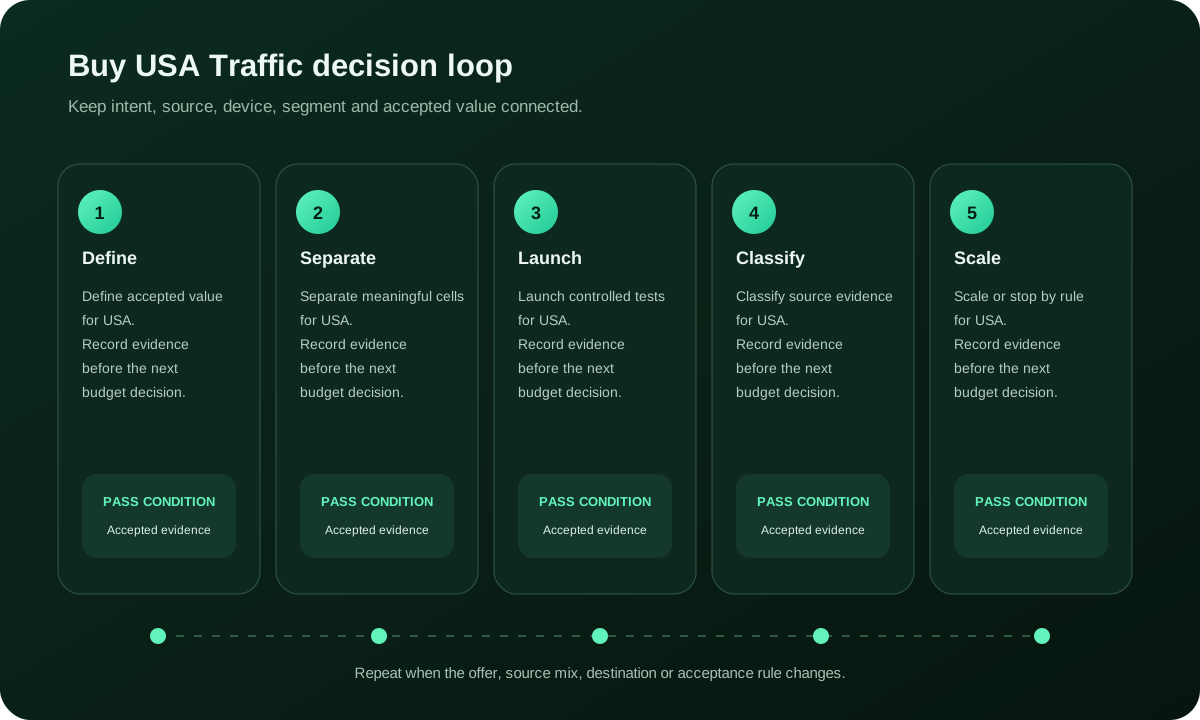
Combine our quality controls with your business records
We use Adscore-supported traffic-quality checks and source-level controls. Combine them with your order acceptance, duplicate checks and session records. Screening helps assess risk; it does not guarantee sales.
Review US product eligibility, delivery coverage, privacy notices and material conditions before launch. An unavailable location or unclear subscription term can undermine an otherwise relevant campaign.
The FTC reference above supports claims and disclosure review. It does not verify FroggyAds inventory, quality or results. Seek category-specific advice when your offer requires it.
Log bid, source, creative, destination and tracking changes with their activation time. This preserves a clear basis for keeping, excluding or retesting each source.
Continue, improve, reduce, pause or scale
| Decision | Evidence | Action |
|---|---|---|
| Continue | US visits track correctly; outcomes need time | Retain the current setup until the review point. |
| Improve | Relevant visitors stall at one purchase step | Repair that step and separate the next test period. |
| Reduce | Accepted acquisition cost approaches the limit | Lower the affected source's exposure. |
| Pause | Tracking, destination or loss-limit failure | Stop the campaign until the cause is resolved. |
| Scale | Mature outcomes support additional spend | Increase gradually and inspect the newest US traffic. |
Buy USA Traffic FAQ
How do I start buying USA traffic with FroggyAds?
Create your account, select a suitable ad format and choose United States targeting. Prepare a destination that can serve the locations you include, then verify conversion tracking before spending. We recommend a focused national test with a clear budget and source-level review.
When does a nationwide campaign make more sense than regional campaigns?
Use a national campaign when your offer, availability and customer journey are consistent across the locations you serve. Separate a region when delivery costs, service coverage or customer value call for a different decision. Avoid splitting every state before the test can support useful comparisons.
Does the published starting CPC guarantee my USA traffic price?
No. A published starting bid is not a guaranteed US auction price. The format, targeting and available inventory affect the buying conditions. Check the applicable settings in your FroggyAds campaign and judge cost against accepted customer outcomes.
Should I separate US mobile and desktop traffic?
Separate them when the destination, customer action or acquisition economics differs. A mobile purchase and a desktop demo request may need different measurement. FroggyAds device controls let you shape the test around the journey your site can support.
How can I exclude a weak source in my USA campaign?
Use our source allowlists and blocklists after reviewing reliable source-level evidence. Check your tracking, conversion delay and rejection reasons first. Excluding a placement will not repair a checkout problem affecting every source.
Can I target the whole USA if I cannot fulfill every location?
Your targeting and ad promise should match your actual coverage. Verify the geographic controls available for your selected inventory before launching. If delivery varies for Alaska, Hawaii or other locations, explain those conditions before purchase and exclude unsupported areas where the controls allow.
What should I check in a US checkout before buying traffic?
Test ZIP codes, address fields, payment errors, currency display and delivery conditions on each target device. Confirm that campaign identifiers survive the purchase and that the customer receives a clear confirmation. Repair failures before increasing traffic.
Is the $50 minimum deposit enough for a nationwide test?
The $50 deposit funds your FroggyAds account. An adequate test budget depends on the format, acquisition target and number of comparisons. Choose a budget that can answer a useful question without exceeding the loss you can afford.
Which conversion should a USA lead campaign measure?
Use a lead accepted under your business's coverage and qualification rules. Retain its source and record duplicate, unreachable or ineligible submissions separately. Review after the sales team has had time to qualify the leads.
When should I increase spending on USA traffic?
Expand when tracking is reliable and accepted customer outcomes remain within your acquisition limit after the normal review delay. Confirm that fulfillment and support can handle more demand. Increase one dimension at a time and inspect the newest spend.
Continue the traffic plan
Start your USA campaign with FroggyAds
Launch your USA test with FroggyAds, keep source-level decisions in your hands and build the next budget around the customer outcomes your business can verify.
Choose the campaign controls behind USA traffic
The USA ad network guide explains localization, formats, source reporting, budget guardrails and scaling decisions for this market.
Buy USA Traffic: the decision this URL owns
Buy USA Traffic belongs in the campaign workflow only if it answers its own buyer question. For a performance advertiser, that question is how to plan the market-specific test and measurement rules with measurable downstream evidence.
Decision inputs for Buy USA Traffic: campaign objective, audience targeting, optimization, source evidence. Keep these inputs tied to accepted conversion or business-value event and the page-specific job: plan the market-specific test and measurement rules.
URL boundary for Buy USA Traffic: This URL owns Buy USA Traffic; Buy Traffic From Usa is the nearest neighboring topic and should keep its separate task. Use this page only for the decision implied by Buy USA Traffic.
Plan your national USA traffic test is an evidence checkpoint for Buy USA Traffic. To answer “How do I start buying USA traffic with FroggyAds?”, keep campaign objective in the same campaign record and use it to plan the market-specific test and measurement rules.
When this USA buying guide applies is the action checkpoint for Buy USA Traffic. Before acting on “Does the published starting CPC guarantee my USA traffic price?”, document optimization, the resulting campaign action and the rollback or retest condition.
How to buy USA traffic with measurable control is the measurement checkpoint for this URL. Resolve “When does a nationwide campaign make more sense than regional campaigns?” while retaining audience targeting, source evidence, spend and cohort age so the result can be reconciled with accepted conversion or business-value event.
| Page checkpoint | How to use it | Evidence to retain |
|---|---|---|
| Plan your national USA traffic test | Use Plan your national USA traffic test to establish the first evidence boundary for Buy USA Traffic; then record which part of campaign objective, targeting, source evidence, conversion tracking and economics it changes. | Keep campaign objective, source/campaign ID and the accepted-event definition together. |
| How to buy USA traffic with measurable control | Use How to buy USA traffic with measurable control as the second checkpoint and reconcile it with accepted conversion or business-value event before changing budget or source allocation. | Retain audience targeting, spend, timestamp/cohort age and accepted/rejected outcomes. |
| When this USA buying guide applies | Use When this USA buying guide applies as the final checkpoint: if it does not change the evidence for accepted conversion or business-value event, keep the test narrow rather than scaling. | Document optimization, the decision taken and the rollback or retest condition. |
Transparent Buy USA Traffic decision example
Hypothetical example: For Buy USA Traffic, a hypothetical controlled cell that spends USD 370 and records 9 accepted conversion or business-value event after the same maturity window has an accepted cost of USD 41.11 per outcome. Replace the figures, outcome and review window with your own economics; this is not a FroggyAds performance claim.
Why use FroggyAds here?
FroggyAds supports the paid-media decision on Buy USA Traffic by keeping delivery controls and source-level reporting available while you reconcile them with accepted conversion or business-value event. Create your free FroggyAds account.
Buy USA Traffic — what matters first
Buy USA Traffic should be evaluated market by market: define eligible geography, keep measurement consistent, and scale only where accepted-outcome economics remain viable.