What push ads for small business means
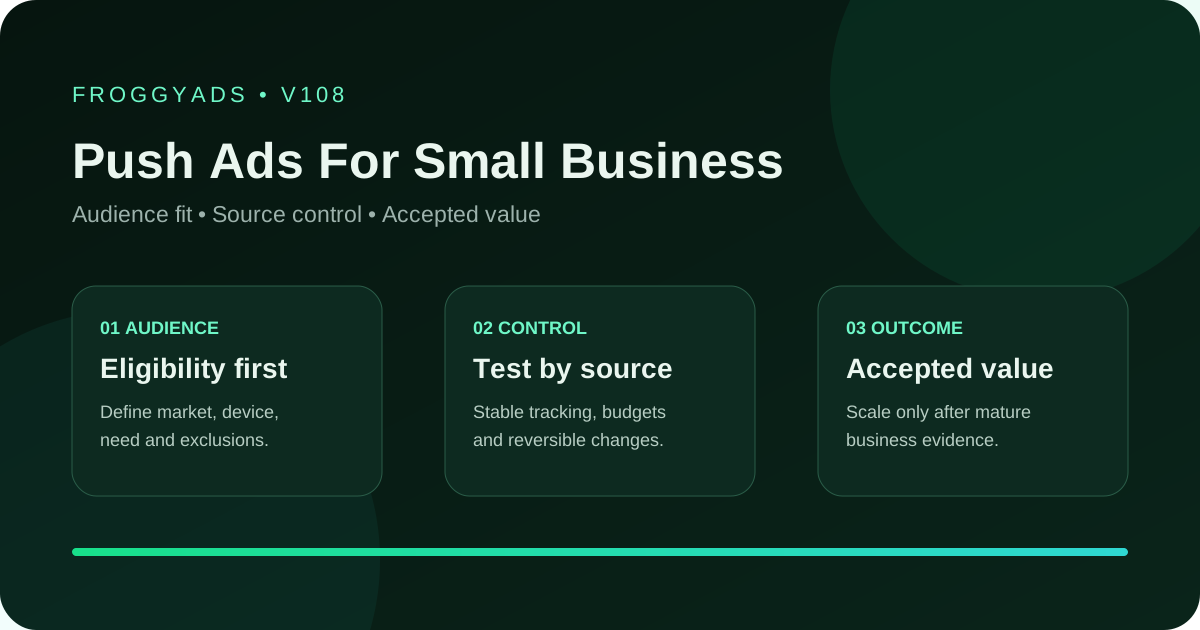
Push Ads For Small Business begins with an operating boundary. Define small businesses with a lawful offer, limited testing capital and a clear local, national or online customer segment, the market, device, permitted formats, destination and an accepted inquiry, booking, sale, registration or other business event the owner can verify. The destination should be a focused product, service or lead page with clear value, price or next step, trust information and reliable tracking. Broad delivery is not useful when the user cannot lawfully or practically complete the offer.
When using Push Ads For Small Business, apply this rule only to the conditions and decision described on this page. This guide focuses on format-specific ads decisions for small business. Related ad-format pages explain creative execution, traffic-source pages explain source selection, platform pages explain operational controls and paid-traffic pages explain acquisition. Use the most specific resource for the decision being made.
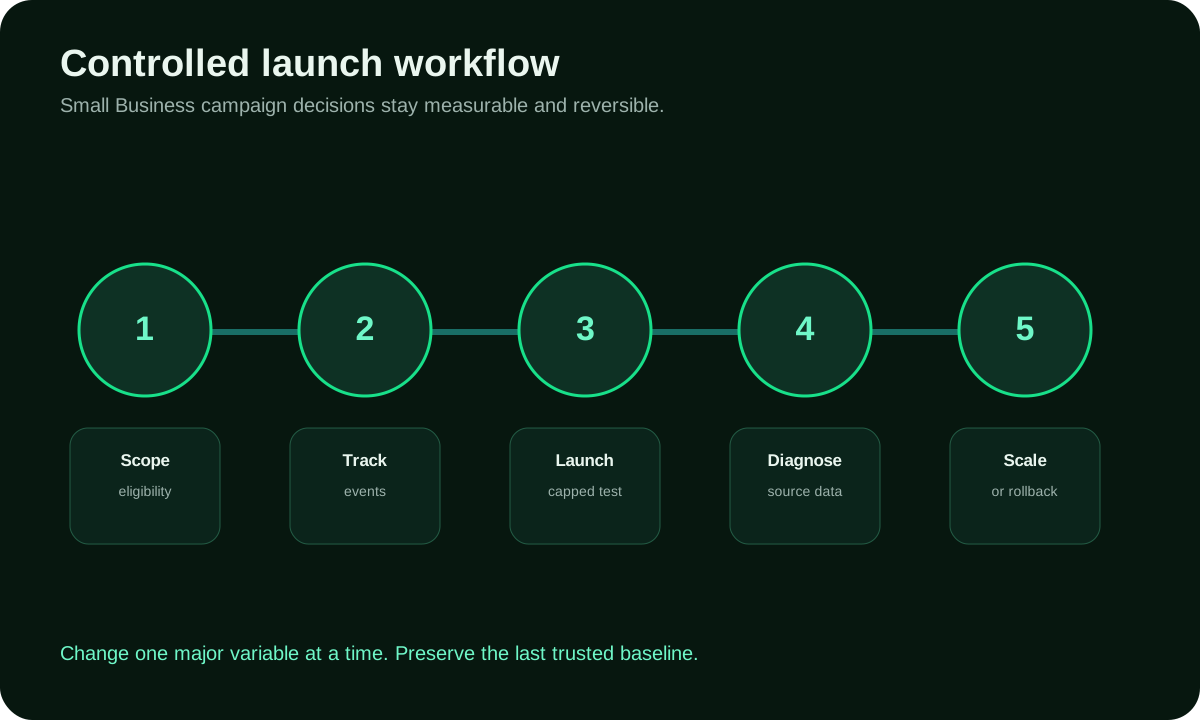
The main avoidable risk is spreading a small budget too widely, using generic creative or judging success before leads and sales are verified. Put the risk, responsible owner, evidence threshold and pause signal into the brief before launch. A written stop condition is more useful than a general promise to monitor quality.
A defensible format-specific ads framework for small business
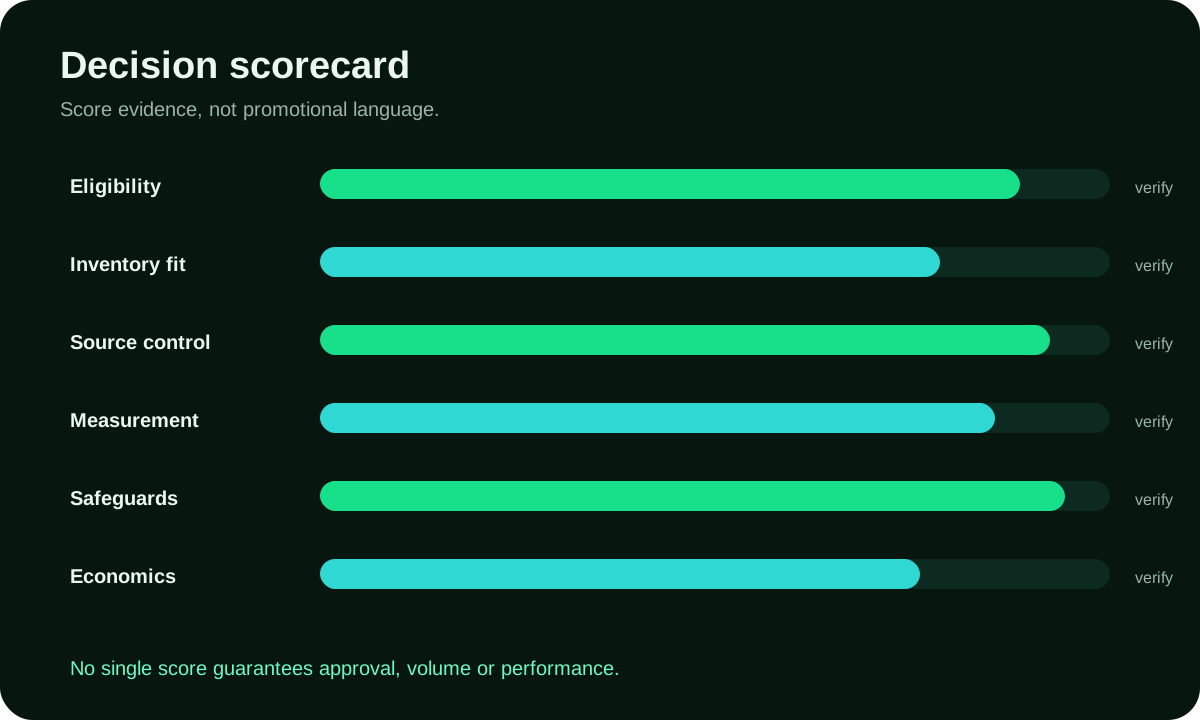
Evaluate push ads for small business through eligibility, audience, message, format, source, destination, measurement, safeguards and economics. The plan should support a practical paid-acquisition plan that protects cash flow and produces interpretable evidence before scale and connect delivery to an accepted inquiry, booking, sale, registration or other business event the owner can verify, not attention alone.
For Push Ads For Small Business, build the test through six connected layers: eligibility, promise, format, destination, measurement and safeguards; attention alone is not success when the wrong user, broken continuity or an unaccepted event drives the metric.
| Decision area | What to define | Evidence before scale |
|---|---|---|
| Format role | Push Ads should support one specific message and audience hypothesis. | Confirm the format fits the device context and destination. |
| Creative continuity | Use one primary promise and stable creative identifier. | Compare distinct concepts rather than cosmetic edits. |
| Source evidence | Preserve source, placement and campaign identifiers. | Wait for accepted events and conversion delay to mature. |
| Destination | A focused product, service or lead page with clear value, price or next step, trust information and reliable tracking. | Verify speed, compatibility, terms and event tracking. |
| Scale rule | Accepted-event cost, qualification rate, close or purchase rate, cancellation or refund rate and customer value. | Increase one variable and retain a rollback baseline. |
For Push Ads For Small Business, treat this as a page-specific operating check rather than a universal benchmark. Document the decision range before launch. Name the maximum spend without an accepted inquiry, booking, sale, registration or other business event the owner can verify, the minimum evidence required before a source exclusion, the delay window that must pass, and the economics required before a budget increase. These rules reduce emotional optimization and make the same evidence understandable to media buyers, analysts and account owners.