Native placement-creative-page review
Use the delivered Native creative, destination version, FroggyAds report and advertiser status file as the evidence chain for each placement decision.
Identify the buyer's information need before creating assets. The person may be recognising a problem, comparing categories, checking a condition, or looking for a practical next step. Choose one question the advertiser can answer with verified facts. Native creative should earn attention by relevance and clarity, not by imitating independent editorial endorsement.
Map the context variables that could change interpretation: placement environment, source, market, language, device, creative image, headline, destination opening, and offer state. Give the cell a stable identifier. A headline that is accurate beside one topic can appear misleading beside another, so preserve placement evidence where available instead of treating all clicks as equivalent.
Build a creative system that protects meaning
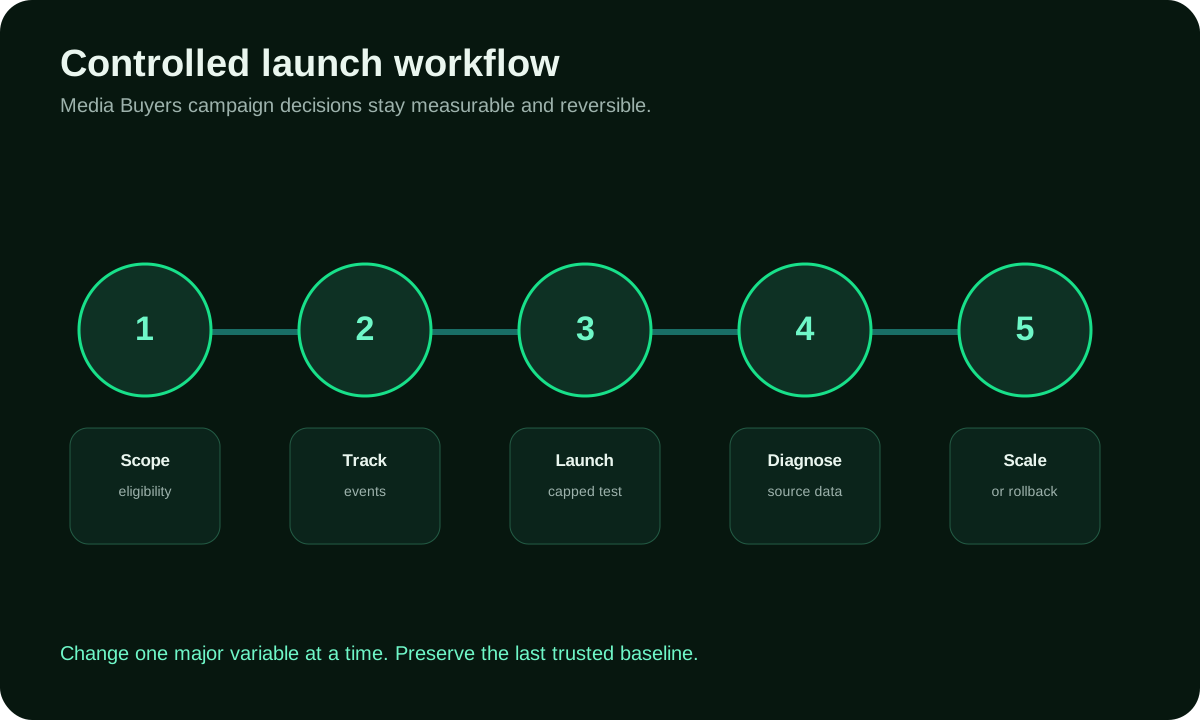
Build the creative system around a commercial outcome and maturity rule agreed with the advertiser. Keep delivery, click, usable visit, scroll or content action, lead or order event, pending status, accepted status, rejection, reversal, correction, and unknown separate. Native engagement is an early diagnostic. It becomes business evidence only when the joined lifecycle supports the decision.
Protect Native creative meaning by developing concepts from distinct buyer questions and approved propositions. For each concept, save the claim source, image rationale, headline, description, disclosure requirement, destination opening, approver, market, and active dates. Avoid superficial variants whose only purpose is to multiply combinations. A small, meaningful matrix learns faster than a catalogue of near duplicates.
| Cell layer | Question | Evidence |
|---|---|---|
| Format role | Does the context support the message? | Placement environment and surrounding topic |
| Creative continuity | Is the proposition clear and supported? | Approved headline, image and claim source |
| Source evidence | Which placement and version produced the visit? | Source, campaign and creative identifiers |
| Destination | Does the page continue the same explanation? | Opening, eligibility and offer conditions |
| Scale rule | Do suitable outcomes survive validation? | Mature advertiser status and complete cell cost |
Document continuity in four columns: placement context, creative claim, page explanation and delivered offer. Mark every inference that lacks a source or requires the visitor to reinterpret a condition. Repair those gaps before launch. The sheet also helps an account strategist explain why one page should not receive every native message.