

SEO and GEO-ready campaign guide

Ecommerce Ads

Ecommerce ads should make one truthful promise to an eligible audience, use a format that fits the message, and lead to a matching destination. Keep creative IDs, targeting, budgets and tracking stable. Confirm stock, pricing, delivery and returns, then judge concepts by accepted outcomes after conversion delay matures rather than clicks alone.

Reviewed and materially updated 2026-07-16. Pricing, inventory, approval and outcomes vary by campaign.

Ecommerce Ads planning visual
Key takeaways

Ecommerce Ads in three decisions

Ecommerce ads should make one truthful promise to an eligible audience, use a format that fits the message, and lead to a matching destination. Keep creative IDs, targeting, budgets and tracking stable. Confirm stock, pricing, delivery and returns, then judge concepts by accepted outcomes after conversion delay matures rather than clicks alone.

  • Define shoppers segmented by product need, country, device, language, purchase stage and prior engagement and exclude users who cannot lawfully or practically complete the offer.
  • Keep the creative concept, destination, tracking and accepted-event definition stable while the first test matures.
  • Scale only when a verified purchase, qualified checkout, subscription or accepted lead and campaign economics remain inside the documented decision range.

These takeaways are planning guidance, not guaranteed pricing, volume, approval or performance.

What ecommerce ads means

Definition: Ecommerce campaigns promote available products to shoppers whose market, device and intent fit the store and fulfillment path.

Ecommerce Ads begins with a precise operating definition. Identify shoppers segmented by product need, country, device, language, purchase stage and prior engagement; state the markets, devices and placements; and name a verified purchase, qualified checkout, subscription or accepted lead. The destination should be a fast product or category page with stock, pricing, delivery, returns, support and secure checkout. A broad vertical name is useful for navigation, but the campaign itself must be expressed as concrete eligibility, creative, tracking and budget settings.

This page focuses on creative, format and campaign execution for Ecommerce ads. The traffic resource covers acquisition planning, while the advertising-network resource covers provider evaluation. This separation helps operators choose the correct resource and prevents one page from pretending to answer every stage of the buying decision. It also gives search and answer engines a clearer relationship among provider selection, traffic acquisition and creative execution.

The main avoidable risk for ecommerce ads is unavailable inventory, hidden charges, misleading discounts, weak mobile checkout or poor post-purchase support. Put the risk into the brief before launch, assign an owner and define the signal that will pause the campaign. A written stop condition is more useful than a general intention to monitor quality because it creates an auditable decision when results move quickly.

A creative and campaign framework

Plan ecommerce ads through five connected layers: audience insight, promise, format, destination and accepted economics. A creative can win attention and still fail when the promise attracts the wrong user, the format hides necessary context or the destination cannot complete the same expectation.

The strongest ecommerce ads test is reproducible. Give each concept a stable identifier, keep targeting and destination versions documented, and change one major variable at a time. Compare product problem and benefit, offer and delivery clarity and social proof that can be verified through a verified purchase, qualified checkout, subscription or accepted lead, not visual preference alone.

Decision layerWhat to verifyWhy it matters
Scopeshoppers segmented by product need, country, device, language, purchase stage and prior engagementDefines who should see the campaign and who must be excluded.
PromiseProduct problem and benefitCreates one understandable reason to continue.
AccessMarkets, devices, formats and source availabilityConfirms the campaign can reach the intended context.
ControlBudget, bid, frequency, source and targeting controlsProtects the test and keeps decisions reversible.
Measurementadd-to-cart rate, cost per accepted order and accepted valueConnects media activity with a mature business result.
SafeguardsShow accurate product, stock, price, delivery, return and privacy information and use truthful promotion termsReduces avoidable user, policy and brand risk.
Decision rule: Do not choose or scale ecommerce ads from headline reach, a low CPM, early clicks or isolated conversions. Require stable tracking and mature accepted value.

Document the decision range before launch. For example, name the maximum spend without an accepted event, the minimum data required before a source exclusion, the conversion delay that must pass, and the margin needed before a budget increase. Those rules reduce emotional optimization and make the same evidence understandable to analysts, buyers and account owners. For ecommerce ads, record this checkpoint in the campaign brief with the page-specific audience, destination, and accepted outcome before the next decision.
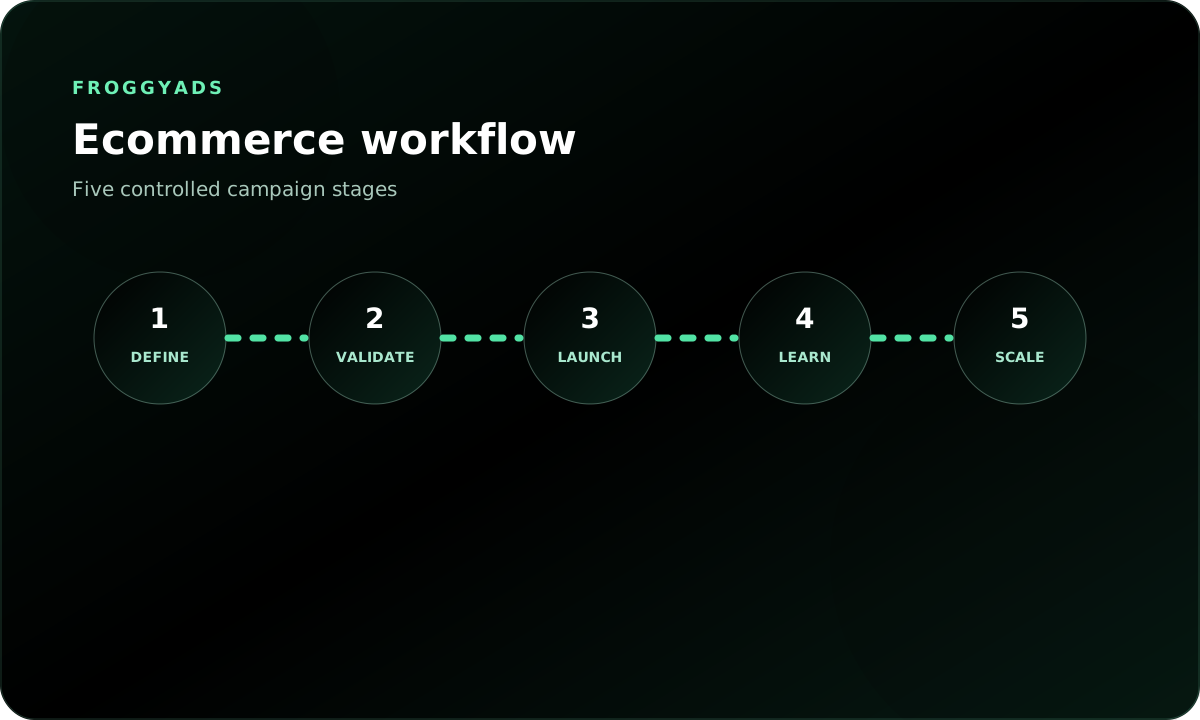
Controlled launch workflow for ecommerce ads

Before buying ecommerce ads, verify the complete user journey from impression to advertiser-side acceptance. Test the destination on representative devices, preserve the click identifier, fire the intended event once, and confirm that time zone, currency, attribution and duplicate handling agree across systems. This validation should happen before scale because later reconciliation cannot repair missing identifiers.

Keep a change log for ecommerce ads. Record launch time, bid, budget, targeting, source status, creative identifier, destination version and every material edit. When performance changes, the log separates a real response from auction variation and shows which setup can be restored if the new version underperforms.

Define the operating brief

Name the markets, devices, audience, format, destination, a verified purchase, qualified checkout, subscription or accepted lead, attribution window, budget ceiling and decision owner for ecommerce ads. Record exclusions and material safeguards before the first impression.

Validate the complete path

Open a fast product or category page with stock, pricing, delivery, returns, support and secure checkout on every targeted device. Test click identifiers, conversion events, duplicate handling, currency, time zones and the advertiser-side acceptance logic.

Launch a protected test

Use daily and total limits, stable identifiers and a small set of variables. Keep major settings unchanged long enough for a verified purchase, qualified checkout, subscription or accepted lead to mature.

Diagnose by source and concept

Review market, device, source and creative results together. Compare add-to-cart rate, cost per accepted order and net contribution after returns instead of optimizing to inexpensive clicks.

Scale or restore the baseline

Increase one dimension after accepted economics remain stable. If quality, policy or destination performance weakens, return to the last documented setup and investigate the change.

Five-step workflow for Ecommerce Ads

Do not compress this workflow into a single launch-and-scale action. Each step answers a different question: whether the campaign is eligible, whether the path works, whether the initial evidence is trustworthy, whether the source or concept is responsible for the result, and whether an increase preserves the same economics. For ecommerce ads, record this checkpoint in the campaign brief with the page-specific audience, destination, and accepted outcome before the next decision.

Budget and measurement model

Budget ecommerce ads for learning rather than for a predetermined number of conversions. Begin with a total amount the business can risk, divide it into a protected daily limit and reserve enough time for conversion delay. A cheap click can be expensive when it never becomes a verified purchase, qualified checkout, subscription or accepted lead; a higher-cost source can be useful when accepted value and downstream quality are stronger.

Use a metric ladder. At the top, track delivery and destination health. In the middle, review add-to-cart rate and cost per accepted order. At the bottom, reconcile net contribution after returns, refunds, reversals, retention or other final value. Optimization should move down the ladder as data matures rather than stopping at the easiest event.

Measurement layerExample signalDecision use
DeliverySpend, impressions, clicks, frequency and source mixConfirm that the test is running as configured.
Path qualityLoad success, event integrity and destination completionDetect technical loss before judging media.
Qualified actionadd-to-cart rate and cost per accepted orderCompare sources and concepts after maturation.
Business valuenet contribution after returnsDecide whether the campaign can scale.

Test budget

Set daily and total limits that allow useful comparison without risking the full campaign budget.

Maturity window

Wait for the documented conversion delay before excluding sources or declaring a concept successful.

Accepted value

Reconcile platform events with the advertiser system used for approvals, revenue or retained customers.

Measurement scorecard for Ecommerce Ads

A practical example for ecommerce ads is to launch three controlled source groups with the same destination and measurement window. Keep one group as the baseline, allow one group to test a different concept and reserve the third for a carefully chosen expansion. Compare after the accepted event matures, then move budget only when the change improves value without weakening eligibility or destination quality.

Creative, format and destination fit

For ecommerce ads, useful creative directions include product problem and benefit, offer and delivery clarity and social proof that can be verified. These are starting hypotheses, not guaranteed winners. Give each concept a stable identifier and judge it through accepted outcomes. Cosmetic changes such as a slightly different color should not be presented as independent strategic tests.

Native and display can demonstrate products, push can communicate genuine offers, and pop or interstitial traffic needs especially strong destination continuity. Whichever format is used, the creative must make one accurate promise and the destination must complete that promise. The best format is therefore conditional on the amount of explanation needed, the user context and the accepted action.

FormatEcommerce executionPlanning note
PushUse a concise Ecommerce proposition and a clear destination expectation.Best when the value can be understood quickly without imitating system alerts.
NativeExplain product problem and benefit with enough context to prequalify the user.Useful for education, comparison and considered actions.
DisplayUse recognizable, lawful imagery and a single legible promise for Ecommerce.Supports repeated recognition across device and source groups.
Pop or interstitialPreserve immediate continuity with a fast product or category page with stock, pricing, delivery, returns, support and secure checkout.Requires strict frequency, destination quality and policy review.
VideoDemonstrate offer and delivery clarity without unsupported outcomes.Useful when motion genuinely clarifies the product or experience.

The destination for ecommerce ads should be a fast product or category page with stock, pricing, delivery, returns, support and secure checkout. Repeat the main proposition, identify the advertiser, disclose material terms and make the next action obvious. Test the page on the actual device and network conditions targeted by the campaign. A destination that is slow, unavailable or contradictory can create a false negative for every source and concept.

Creative review should include policy and user-impact questions before performance questions. Confirm that the image, headline and call to action do not exaggerate the offer or conceal a material condition. Then verify that the content is appropriate for the audience and placement. Only after those checks should the team compare attention and conversion signals. For ecommerce ads, record this checkpoint in the campaign brief with the page-specific audience, destination, and accepted outcome before the next decision.

Source optimization, scale and rollback

Optimize ecommerce ads at the most specific reliable level available. Review source, placement, country, device, operating system, browser, time and creative identifiers together. A broad campaign average can hide a strong segment and a weak segment. Source-level reporting turns that mixture into decisions, but exclusions still require enough mature evidence to justify the lost reach.

The primary risk to watch is unavailable inventory, hidden charges, misleading discounts, weak mobile checkout or poor post-purchase support. Add a monitoring view that makes the relevant signal visible, and define what happens when it appears. Depending on the evidence, the correct action may be observation, a lower bid, a narrower audience, a destination repair, a creative pause or a complete stop. Blocking every weak early result is not the same as optimization.

Observed statePreferred actionEvidence required
Tracking or destination failurePause and repairTechnical validation, not more spend
Promising but immature sourceObserve or limitMore mature accepted outcomes
Repeated negative source economicsReduce, exclude or lower bidAdequate spend, maturity and stable tracking
Stable accepted valueIncrease one dimension graduallyEconomics survive the previous increase
Performance breaks after scaleRoll back to the last stable setupDocumented baseline and change log

Scale ecommerce ads with one controlled increase at a time. Expanding budget, audience, market and creative simultaneously changes the system too quickly to explain the result. A measured step preserves the learning from the baseline, while a rollback point protects the campaign when auction conditions, source mix or destination behavior shifts.

Use stop rules as actively as scale rules. Stop when the offer becomes unavailable, a required approval changes, tracking cannot be reconciled, the destination no longer matches the creative, or accepted economics remain outside the permitted range. A disciplined stop preserves capital and trust and prevents weak traffic from being blamed for a problem elsewhere in the path. For ecommerce ads, record this checkpoint in the campaign brief with the page-specific audience, destination, and accepted outcome before the next decision.

Limitations and responsible use

Ecommerce Ads does not guarantee impressions, clicks, accepted conversions, revenue or profitability. Auction availability, competition, user behavior, source mix, creative, destination quality, tracking and optimization all affect outcomes. FroggyAds can provide self-serve buying controls and reporting, but the advertiser remains responsible for the offer, campaign configuration, compliance and business decisions.

For ecommerce ads, show accurate product, stock, price, delivery, return and privacy information and use truthful promotion terms. These safeguards are part of campaign quality, not a separate legal checkbox. A campaign that attracts ineligible users or uses a misleading promise can appear active while producing unusable events, complaints or policy risk. This guide is operational information and not legal advice.

  • Use truthful creative and a destination that is available to the targeted user.
  • Protect personal data and use consent, tracking and disclosure practices appropriate to the campaign.
  • Do not describe estimates, starting bids or previous results as guaranteed future outcomes.
  • Pause the campaign when eligibility, policy, destination or measurement can no longer be verified.

Use cost examples and previous campaign observations as inputs, not promises. Replace assumptions when new evidence appears, update the page date only after a material change and keep the source or evidence trail for every time-sensitive claim. Those practices improve both operator decisions and the reliability of passages quoted by search or answer engines. For ecommerce ads, record this checkpoint in the campaign brief with the page-specific audience, destination, and accepted outcome before the next decision.

Questions about ecommerce ads

What are ecommerce ads?

Ecommerce Ads are creative and campaign executions designed for shoppers segmented by product need, country, device, language, purchase stage and prior engagement. They should communicate one accurate proposition, use a suitable format and direct users to a fast product or category page with stock, pricing, delivery, returns, support and secure checkout. Success is measured through a verified purchase, qualified checkout, subscription or accepted lead, not clicks or impressions alone.

How should I write ecommerce ads?

Write ecommerce ads around one audience need and one truthful promise. Use specific language, show what happens after the click and remove unsupported superlatives. For Ecommerce, useful creative directions include product problem and benefit, offer and delivery clarity and social proof that can be verified.

Which formats work for ecommerce ads?

Native and display can demonstrate products, push can communicate genuine offers, and pop or interstitial traffic needs especially strong destination continuity. Test format fit rather than assuming one universal winner. The destination, market and accepted event should remain stable while the creative or format changes.

How much do ecommerce ads cost?

The cost of ecommerce ads varies by format, country, device, audience, source competition, frequency and timing. Set daily and total limits, then compare spend with add-to-cart rate, cost per accepted order and accepted value before changing the bid or budget.

How do I measure ecommerce ads?

Measure ecommerce ads with stable click identifiers, conversion events, an attribution window and reconciliation against the advertiser system. Review add-to-cart rate, cost per accepted order and net contribution after returns. A high click-through rate does not prove useful business performance.

What landing page should ecommerce ads use?

Ecommerce Ads should lead to a fast product or category page with stock, pricing, delivery, returns, support and secure checkout. Repeat the main promise, keep device and market continuity, explain material terms and make the accepted action easy to complete and track. A slow or contradictory destination can invalidate the creative test.

How many creative concepts should I test for ecommerce ads?

Start ecommerce ads with a small set of meaningfully different concepts rather than many cosmetic variations. Test product problem and benefit, offer and delivery clarity and social proof that can be verified with stable identifiers. Retire a concept only after enough mature evidence supports the decision.

What compliance checks apply to ecommerce ads?

Before launching ecommerce ads, show accurate product, stock, price, delivery, return and privacy information and use truthful promotion terms. Confirm the audience, countries, claims, disclosures, privacy handling, destination and platform approval. Compliance is the advertiser’s responsibility, and this campaign guide does not provide legal advice.

When can ecommerce ads be scaled?

Scale ecommerce ads only when tracking quality, source mix and a verified purchase, qualified checkout, subscription or accepted lead remain stable after a controlled increase. Raise one variable at a time, preserve a rollback point and stop when economics, policy or destination availability changes.

Can FroggyAds run ecommerce ads?

FroggyAds offers self-serve media buying with multiple ad formats, GEO and device targeting, budget controls, source-level reporting, SmartCPC options and traffic-quality controls. These tools can support a controlled ecommerce ads campaign, but approval, inventory and results depend on the specific setup.

Controlled self-serve media buying

Build a measured Ecommerce Ads test

Define the eligible audience, destination, accepted outcome and limits for ecommerce ads, verify tracking and make source-level decisions from mature evidence. Results vary by campaign and are not guaranteed.