
Cheap Advertising For Agencies
Low-cost agency advertising should protect client economics and your delivery margin at the same time. We help you open a controlled FroggyAds traffic test with a client-specific budget, source evidence and an accepted business outcome, while your team keeps setup, creative, reporting and service labour visible.
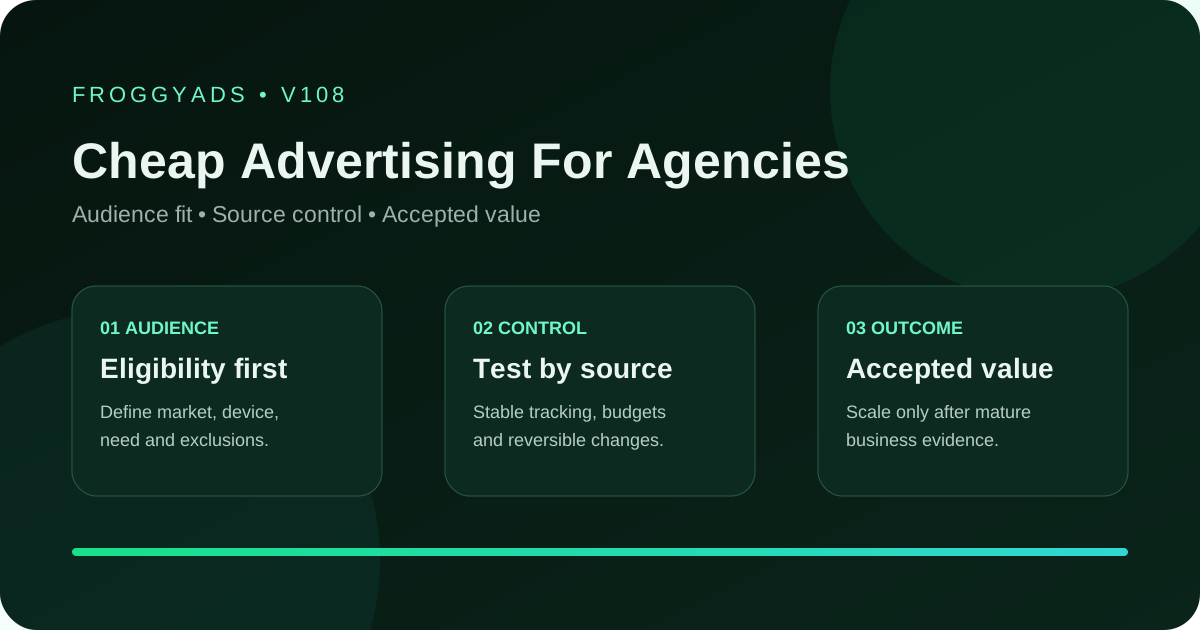
Plan an affordable agency campaign around the full client cost
- Client outcome: choose the accepted lead, sale or signup that the campaign must produce before you approve more spend.
- Agency economics: include media, setup, creative, reporting and service labour in the cost of the pilot.
- Budget authority: keep each client campaign, funding record, approval limit and account owner clear.
- Name the client and campaign before allocating media.
- Set the media and agency-service cost boundaries separately.
- Keep each client approval attached to its campaign cap.
- Reconcile accepted outcomes after the client review window.
- Retain the source identifiers your buyer can actually use.
- Reserve a test amount that the client has authorised.
The main agency risk is not simply a high media price. It is cross-client spend leakage, hidden operating labour or scale that arrives before the client accepts the downstream result. Keep every material campaign claim tied to a dated source, owner, approval and reversal condition.
Define affordable advertising from client contribution
Calculate the maximum accepted acquisition cost from the client’s value, rejection rate, refunds, fulfilment cost, sales effort and required contribution. A published bid or media unit is one planning input. It does not show whether the full agency service can create acceptable economics for that client.
Store the agency formula, source values, review window and approver in the client file. Recalculate the boundary when pricing, acceptance, fulfilment or service effort changes. We recommend treating an old ceiling as historical evidence rather than carrying it automatically into a new quarter or offer.
Ring-fence every client campaign and budget
Give every client campaign its own identifier, funding record, approved cap, dates, format, market and change authority. Your naming and access model should prevent one client reserve, credit or conversion record from being used to cover another account.
Test the client cap, billing map and reporting export before launch. Any budget increase should name the amount, campaign, reason, approver and expiry. FroggyAds gives your buyer direct campaign controls; the client authorization record determines how far those controls may be moved.
Price discovery work separately from repeatable media service
A small media test can still require substantial agency work for tracking, creative repair, policy review, landing-page checks and outcome reconciliation. Classify one-time discovery tasks separately from the recurring campaign service so a low traffic budget does not hide the cost of making the test measurable.
Estimate strategy, production, QA, buying, reporting and client-service hours before you quote the pilot. After the agreed review window, compare estimated with actual labour. This helps your agency decide whether the workflow is repeatable, needs a narrower scope or requires a different fee before you add more accounts.
Choose traffic controls your agency can act on
Select reporting fields and campaign controls that support a real client decision: source, placement where supported, device, geography, creative, budget cap and conversion identifier. Delivery volume without enough isolation leaves your media buyer unable to explain whether the audience, format, offer or destination caused the result.
Record unavailable source or placement fields in the proposal instead of promising transparency the current setup cannot export. We recommend defining in advance which FroggyAds campaign signals your team will review, which client records complete the picture and what missing evidence will pause a scale decision.
Include creative production in the agency margin model
Concept development, resizing, approval, localisation and revision belong in the client campaign cost. A low-priced placement can still be unsuitable when it demands formats or production cycles that the approved fee and client calendar cannot support responsibly.
Set the number of concepts, sizes and revision rounds in the agency brief. Name who supplies claims, brand assets and final approval. If the client asks for extra work, charge or constrain it according to the agreement instead of hiding unplanned production inside the media margin.
Reconcile each client’s accepted business outcome
A platform conversion can include a duplicate, unqualified lead, cancelled order or event outside the client’s business rule. Map the initial campaign event to the later accepted or rejected state where lawful and technically supported. We provide delivery controls and reporting; the client’s backend remains the commercial authority.
Preserve a conversion or click identifier supported by your actual FroggyAds setup, agency tracker and client system. Confirm the join with a test event before launch. Report outcome delay and rejection categories beside media cost, so the client can see what your team optimised and distinguish an early form submission from an accepted business result.
Create agency stop rules the account team can execute
Write immediate stop conditions for a broken destination, policy issue, wrong geography, missing tracking or unauthorized spend. Keep economic stop rules separate and evaluate them only after the agreed outcome window. Your operator should know which FroggyAds campaign, source or budget control to use for each incident.
Name the on-call buyer, client escalation route and person with resume authority. Preserve the last stable campaign configuration and record the correction before delivery resumes. This protects the client budget while giving your account team a clear recovery path.
Make low-cost media useful without reducing agency value to price
Do not define affordable agency advertising as the lowest possible click or impression price. The client buys a managed acquisition process that can include planning, creative, tracking, traffic, optimisation, reporting and business-outcome reconciliation. A lower media unit can create useful testing room, but only when your team knows what the test must prove and has enough capacity to act on the evidence.
FroggyAds gives agencies a self-serve route to supported programmatic traffic with campaign-level bids, budgets and targeting. Depending on the format and campaign context, available controls can include country, city, device, operating system, browser, carrier, category and source options. Use that flexibility to build client-specific tests rather than forcing every account into one template. Push, native, display and pop traffic create different user journeys, so review each format against the client’s accepted outcome.
| Agency cost layer | What it includes | Control to preserve |
|---|---|---|
| Media | Clicks, impressions or other purchased delivery | Budget, bid, caps and source decisions |
| Production | Creative, landing pages and tracking setup | Approved scope and revision ownership |
| Optimization | Analysis, exclusions, tests and reporting | Change log and decision thresholds |
| Client servicing | Communication, approvals and business feedback | Response expectations and accountable owner |
| Outcome quality | Accepted leads, sales or another client-defined result | Shared validation definition |
Standardize the agency controls that should repeat: campaign naming, client identifiers, conversion fields, budget approval, QA steps and reporting cadence. Keep the audience, offer, creative and destination specific to the client. FroggyAds source identifiers can help your team compare delivery patterns, but an exclusion should remain account-specific unless evidence from comparable tests supports a broader rule.
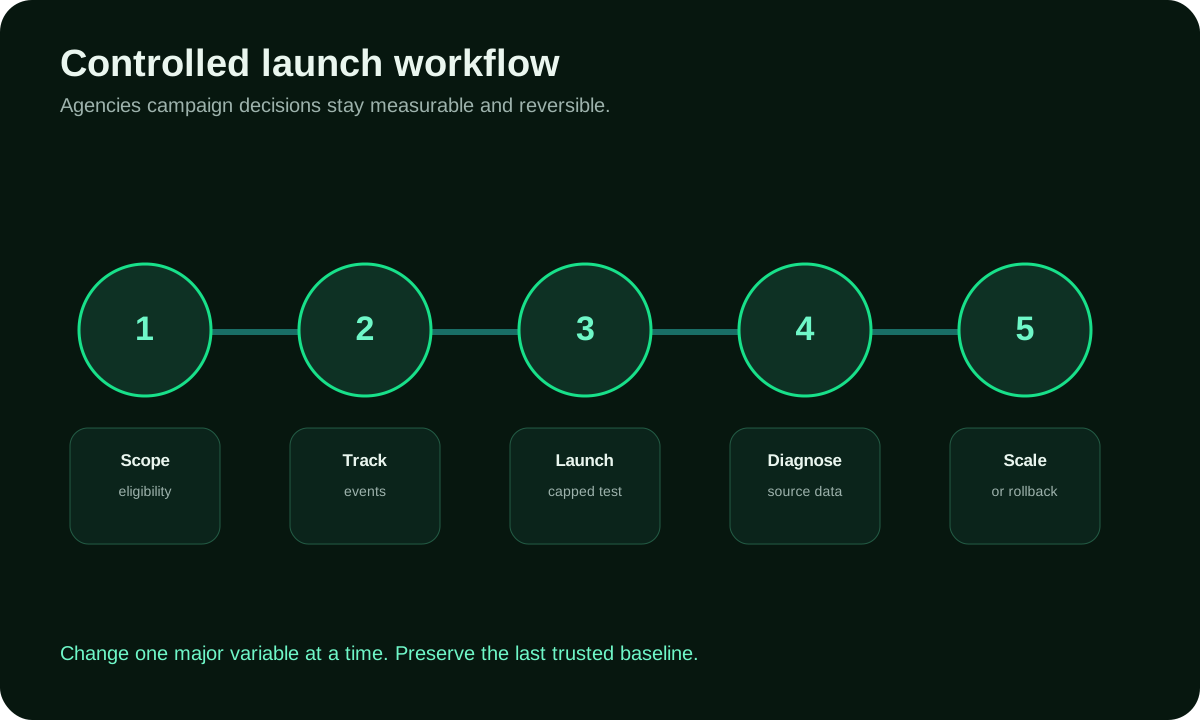
Protect margin with a three-stage release: discovery, confirmation and expansion. Give the first FroggyAds cell enough budget to produce useful observations, verify the client destination and conversion join, then wait for the accepted outcome to mature. If the test misses its boundary, diagnose source, device, geography, creative, offer and landing friction before you authorize another tranche.
Show the difference between media savings and service efficiency. A low traffic price does not make the engagement efficient when your agency spends excessive time repairing tracking or filtering unusable outcomes. A higher media unit may produce better total economics when downstream acceptance improves. Source-level evidence helps your buyer investigate the narrow cause before recommending a broad budget move.
The agency goal is affordable experimentation with accountable service. Use FroggyAds to buy supported traffic, keep each client’s measurement and authorization boundaries explicit, and scale only when both campaign economics and delivery workload remain sustainable. That turns low-cost media into a testable buying advantage instead of a headline price claim.
Report agency fees without a cheap-price illusion
Show media spend, platform or vendor charges, agency fees and optional services according to the client contract. A low bid or minimum should not be presented as the total campaign cost. Give the client a view of what is funded, what is included and what triggers extra work.
Use the same cost categories in the proposal, invoice and performance review. Explain currency timing, credits and adjustments so reconciliation does not create a false efficiency change. Our campaign reports support the media layer; your agency and client records complete the operating-cost view.
Scale client accounts through an approval ladder
Move each client from discovery to confirmation and then expansion. Give every level its own cap, evidence requirement, authorized person and rollback point. The approval ladder helps your buyer act quickly without turning one encouraging signal into unrestricted spend.
Increase one market, source group, format, bid or budget dimension at a time. Compare the added tranche with the last stable client configuration. Stop when source mix, accepted acquisition cost, fulfilment capacity or agency workload leaves the approved band.
Close the pilot with client and agency viability
The final pilot review should combine accepted client value, media cost, agency labour, tool charges, defects, rework and reporting burden. A campaign can create a useful client outcome while the service package loses money, so both conclusions need their own evidence.
Decide whether to standardize, reprice, narrow, retest or stop the agency offer. Keep the client campaign result separate from your internal profitability decision. This lets you preserve a viable media strategy without repeating a delivery model your team cannot sustain.
Five agency decisions to rehearse before approval
- Client economics: explain which accepted-cost or value result would reverse the recommendation and which business record proves it.
- Budget authority: identify who may open, pause or expand the client campaign and the maximum change that role can make.
- Service capacity: confirm which discovery tasks are one-time work and which activities the recurring fee must support.
- Traffic evidence: name the source, device, market and conversion fields your buyer needs before changing allocation.
- Creative capacity: verify that the approved formats, concepts and revisions fit the real production calendar.
Rehearsing these agency decisions exposes missing permissions, evidence and recovery steps before a client budget is at risk. It also gives the account team a concrete explanation for the next FroggyAds action.
Cheap Advertising For Agencies FAQ
For Cheap Advertising For Agencies, what should an agency include in a low-cost advertising scope?
A low-cost agency scope should name every included channel, market, campaign, creative task, tracking duty, report, meeting, and approval. It should also show what the client supplies and what triggers extra work. That clarity makes a modest fee comparable and prevents surprise gaps later.
For Cheap Advertising For Agencies, which agency fee model is easiest to understand on a small budget?
The best model is the one that states the management fee, media spend, setup work, outside costs, and change rules plainly. Percentage, flat-fee, and project models can all work. Compare the total commitment under the expected scope.
For Cheap Advertising For Agencies, who should own the advertising accounts?
The client should understand who owns each account, billing profile, audience, creative, and data asset from the start. Agency access can be granted without making continuity dependent on one supplier. Put transfer and removal steps in the agreement.
For Cheap Advertising For Agencies, how much account access does a budget agency need?
Grant the least access needed to perform the agreed work, with named users and suitable roles. Avoid shared passwords. Review access when the scope changes and remove it promptly at the end of the engagement.
For Cheap Advertising For Agencies, what belongs in a useful small-budget client report?
Show spend, delivery, valid traffic, the accepted business outcome, major changes, and the next decision by channel or campaign. Keep definitions stable. A short report can be useful when it explains what happened and what the agency recommends doing next.
For Cheap Advertising For Agencies, how should limited creative capacity shape the media plan?
Choose fewer formats and messages that the team can produce and review well. Reuse a sound idea through deliberate adaptations rather than stretching one file into every placement. The media plan should fit the real production calendar.
For Cheap Advertising For Agencies, how should a small-budget agency divide tracking duties?
Assign an owner for implementation, consent, testing, access, and maintenance before launch. The agency may configure campaigns while the client or developer owns the site. Put each handoff in writing so a missing event does not become an argument later.
For Cheap Advertising For Agencies, what makes a small agency pilot decision-ready?
Give it one client goal, a named audience, approved creative, a working destination, fixed dates, a spending cap, and an accepted outcome. Keep the setup stable long enough to review. The pilot should answer a business question, not merely demonstrate activity.
For Cheap Advertising For Agencies, which exit terms protect a client using an agency?
The agreement should cover notice, final billing, account access, data and creative handover, active campaigns, credentials, and deletion of agency access. Clear exit steps protect both sides and keep advertising from being stranded during a change.
For Cheap Advertising For Agencies, how can a client see the full cost before agency campaigns grow?
Combine media, management, setup, creative, software, landing-page work, reporting, taxes, and internal staff time. Then compare that total with the accepted outcome. A low advertised fee may not be the lowest operating cost.
Choose the next agency campaign resource
Use our agency guides to prepare your account and buying workflow, then consult the linked standards and policy owners for their own requirements. Keep client approvals, campaign evidence and total service cost together when you decide whether the next traffic test is affordable.
How should an agency launch an affordable FroggyAds traffic test?
Start with one client goal, one eligible audience, one destination and one accepted business outcome. Set the campaign cap and agency-service boundary before launch. We recommend using the first FroggyAds tranche to answer a defined acquisition question rather than promising a total cost or result from a published media unit.
Translate the client contribution boundary into a ring-fenced campaign authorization and a repeatable service scope. The table connects those agency decisions to the FroggyAds setup, the evidence your buyer must retain and the client approval needed before another tranche.
| Decision | What to verify | FroggyAds action |
|---|---|---|
| Accepted client outcome | Name the qualified lead, accepted sale, activated account or other event the client can approve or reject. | Choose the matching FroggyAds campaign objective and keep the accepted-outcome definition stable through the review window. |
| Eligible client audience | Confirm the market, device, language, offer and destination can serve the intended customer before you buy traffic. | Apply the FroggyAds targeting controls that isolate the client journey your agency has been authorized to test. |
| Source and campaign evidence | Carry campaign and source identifiers into analytics and the client’s accepted-outcome record. | Keep, cap, exclude or retest delivery after comparable evidence has reached the same maturity window. |
| Complete agency economics | Join media spend with creative, tools, agency labour, client handling and accepted customer value where those costs apply. | Set the campaign cap, complete learning-loss ceiling and review date before the first tranche begins. |
| Client budget-release rule | State which accepted economics, source stability and service-capacity conditions must hold before more client budget is released. | Change one audience, source, format, bid or budget boundary and compare the added tranche with the prior state. |
A five-step FroggyAds test for an agency client
- Define acceptance: name the mature client outcome, rejection states and maximum affordable learning loss.
- Verify the route: test the audience, message, destination and identifier path before you authorize the full client tranche.
- Open one cell: launch a capped FroggyAds campaign with one audience and offer while the other major variables remain stable.
- Reconcile evidence: compare spend and source delivery with qualified activity, mature accepted outcomes and unresolved records.
- Release or hold: add one measured tranche only when accepted economics and the agency service model remain inside the written boundary.
Why should agencies choose FroggyAds for affordable traffic?
FroggyAds gives your agency a self-serve workflow for buying supported traffic with campaign-level bids, budgets and targeting. For a client test, relevant controls can cover the selected country or city, device and browser context, carrier, category and available source dimension for that format. SmartCPC and Adscore-supported traffic-quality controls can support optimisation, while your tracker and the client’s backend remain the final evidence for commercial quality.
We recommend starting with the client path you can measure most reliably. Keep source evidence visible, wait for accepted outcomes and change one major boundary at a time. If the result does not reproduce after the next tranche, return to the stable campaign while you diagnose delivery and service workload.
How can an agency tell whether affordable advertising is working?
Separate the agency evidence into traffic delivery, destination response, accepted client outcomes and service workload. Identify the first failing layer before you change the next FroggyAds control. This keeps a tracking or landing problem from being mislabelled as cheap traffic quality.
Reconcile agency and client evidence on one window
Compare FroggyAds reporting with the agency tracker and client backend for the same dates and attribution rules. Keep media spend, source delivery, qualified activity, accepted outcomes and rejection reasons together, then investigate material gaps before you turn them into an optimisation rule.
Diagnose the smallest failing layer in the client route
If delivery is weak, review eligibility, targeting, bid and available inventory. If traffic arrives but the destination underperforms, inspect message continuity, forms, redirects and device compatibility. If front-end events look healthy but backend acceptance is weak, verify tracking before you change audience or source allocation.
Set the client scale rule and agency stop rule
Write the exact accepted result that earns another client tranche and the operational condition that pauses the test. Increase one major campaign control at a time and compare marginal results with the prior configuration. FroggyAds supplies the buying controls; your client’s downstream data and your service-cost record determine whether expansion is commercially useful.
Preserve the evidence behind every agency campaign change
Keep a dated agency decision note with the client campaign scope, accepted outcome and evidence window. Add the maximum further loss permitted before review. Link the note to campaign and source identifiers so the next FroggyAds action remains grounded in the exact account rather than a generic agency rule.
Separate observation from explanation. Delivery, spend, device mix, source mix and accepted outcomes are observations. Audience mismatch, creative fatigue, destination friction, tracking loss and source quality are possible explanations. Test the narrowest explanation first; changing several variables together makes the next client result difficult to attribute.
Before you increase client spend, preserve the last stable FroggyAds configuration and its accepted result. If marginal cost, outcome quality or agency workload moves outside the written boundary, return to that recovery point instead of widening bids, targeting and sources at the same time.
A complete agency evidence record lets another media buyer see what was tested, what changed and why the next action was chosen. FroggyAds provides the controls for the next bounded campaign; the client’s accepted outcome and the agency’s service record provide the commercial proof.
What buyer decision does this agency advertising guide own?
Use this page when your agency must control a low-cost paid-traffic test without confusing the media unit with total client value. Keep the campaign narrow, preserve source and configuration evidence, and wait for the accepted outcome to mature. Use the adjacent Traffic For Agencies guide when the buyer decision is the wider supply plan rather than service economics and authorization.
Keep the agency boundary visible: the client contribution ceiling, campaign authorization, source evidence, creative workload and accepted-outcome rule belong in one record. That boundary prevents cross-client spend leakage and shows whether the media test and the service package can both be sustained.
Resolve three questions before scale: what work and channels does the fee include, who owns and funds the advertising account, and which accepted client result earns another tranche? Your answers should be specific enough for another account strategist to operate the campaign.
| Checkpoint | Agency advertising action | Evidence to keep |
|---|---|---|
| Campaign condition | Define the client goal, eligible audience, destination, dates, format and maximum media loss for the first agency campaign cell. | Retain campaign and source identifiers with the client approval and accepted-outcome definition. |
| Commercial proof | Reconcile delivered media with qualified activity, mature accepted outcomes and the agency labour used to produce the result. | Keep the client value source, rejection reasons, service hours and total campaign cost for the same review window. |
| Next action | Choose whether to keep, cap, exclude, retest or expand one campaign boundary after the client result matures. | Record the approving person, additional budget, rollback condition and next service-capacity check. |
How can an agency review one affordable traffic cell?
Hypothetical review: a capped agency cell spends USD 150 and records seven submitted leads. Five are accepted after the client’s review window, so media cost per accepted lead is USD 30. Add the actual agency labour and tools before judging total service economics. Replace every input with your own records; this is not a FroggyAds result or benchmark.
Why use FroggyAds for this agency test?
FroggyAds gives your agency self-serve traffic buying, campaign controls and source-level reporting for the measurable media layer. You can keep the client test bounded while your tracker, backend acceptance and service-cost record decide whether it deserves another tranche. Create your free FroggyAds account.
How does the agency calculate media cost per accepted outcome?
Hypothetical calculation: if a controlled client test spends USD 100 and produces four accepted outcomes after the agreed window, media CPA is USD 100 ÷ 4 = USD 25.00. Add applicable creative, tools, labour and client-service costs for the complete view. This is transparent arithmetic, not a FroggyAds performance claim.
What matters first in affordable advertising for agencies?
Define the client’s accepted outcome, maximum learning loss and included agency work before you compare media prices. Then use FroggyAds targeting, budget and source evidence to run one controlled campaign cell. Release more spend only when client economics and your service workload both remain viable.