
Ad Fraud Prevention: Controls for Impressions, Clicks and Conversions
By FroggyAds, the self-serve advertising platform. Updated: 2026-10-15.
Build a campaign you can investigate. With FroggyAds, combine traffic-quality screening, source controls and conversion tracking with your own accepted-outcome records. Identify what changed before you spend more or exclude useful traffic.
How do you prevent ad fraud in a traffic campaign?
Quick answer: Ad fraud prevention should help an advertiser detect suspicious delivery, verify whether the problem is real, limit affected sources and protect conversion data from being distorted. Separate invalid activity from weak targeting and tracking errors, keep source and event records, and reconcile conversions before permanent exclusions or budget increases.
| Section | First investigation to make |
|---|---|
| What ad fraud prevention should accomplish | Confirm the event path before classifying a spike. A repeated conversion identifier needs a different correction from an automated visit or a legitimate buyer who declines the offer. |
| Reconcile the affected events | Match campaign and source identifiers to received visits and backend outcomes for the same time window. Keep unclassified events separate from confirmed invalid activity. |
| Contain the smallest justified scope | Limit or exclude the affected source when evidence supports it. Keep unrelated sources available for comparison and record the conditions required before any restricted traffic can return. |
Measurement context: IAB Tech Lab Open Measurement SDK Verification and viewability standards context. Open Measurement supports verification signals; a viewability reading alone does not establish that an interaction was legitimate.
Prevent waste without confusing suspicion with proof
Ad fraud prevention combines screening, reliable event records and focused source decisions. A suspicious pattern calls for investigation before a permanent conclusion.
Ad fraud prevention begins with a question you can answer: what happened between the paid interaction and the customer action? A sudden click increase deserves attention, but it does not identify the cause. A faulty redirect, a repeated conversion callback and deliberately manufactured activity can all disrupt a report. They require different responses. Keep the event history available so your first action addresses the observed problem rather than an assumption about the source.
Use FroggyAds when you want to combine screening with practical buying controls. Our Adscore-supported traffic-quality checks and internal controls help identify and filter invalid or low-quality activity. You can also review performance by source and use source exclusions or whitelists. Those capabilities let you narrow delivery while investigating an anomaly. Your own site and backend still establish whether a visit arrived, an order was genuine or a lead met your acceptance criteria.
A useful prevention process protects both spend and legitimate reach. Overbroad blocking can remove good visitors alongside a suspect pattern. Record which events you classified, which remain uncertain and which failed only a commercial test. Then decide whether to fix tracking, investigate supply or improve the offer. We recommend keeping those decisions separate, because a human visitor who does not buy is not, by that fact alone, evidence of fraud.
Build ad fraud prevention around six controllable layers
These six layers answer different questions: where traffic came from, whether the event was recorded correctly, how unusual the pattern is, and what your business ultimately accepted. Use them together; none substitutes for the others.
The Media Rating Council IVT standards and updates distinguish measurement quality from assumptions about visitors. Their treatment of unknown classifications is a useful reason to report missing evidence honestly; this is not a claim of FroggyAds accreditation.
Supply transparency
Keep source, placement and supply-path identifiers so a suspicious pattern can be traced to the smallest controllable inventory unit. Preserve the original campaign conditions before applying an exclusion.
Technical validation
Validate page loads, redirects, timestamps, identifiers and event order before classifying traffic. A broken advertiser-side route can imitate a traffic-quality problem.
Behavioral baseline
Compare suspicious behavior with known-good traffic from similar devices, markets and sources. Treat engagement as supporting evidence, not as proof that an event is valid or fraudulent.
Conversion reconciliation
Reconcile raw events with accepted outcomes, duplicates, reversals and final business value. This shows whether the anomaly survives the advertiser's downstream validation.
Layered detection
Use several technical and commercial signals together and escalate ambiguous cases for review. One unusual metric should not become automatic proof of fraud.
Response governance
Record the reason for every block, monitoring action, credit inquiry and retest. Include the affected source, evidence window and condition for reopening delivery.
Launch with traceable sources
Choose FroggyAds for traffic you can review by source
Set up your first campaign around a destination and outcome you can verify. Our source-level reporting, blacklist and whitelist controls give you a practical way to act on what the review finds. Pair them with a spending limit and tested conversion tracking, so an investigation can stay focused without losing the rest of your campaign history.
Create My Free Account
A seven-step ad fraud prevention process
Work through the investigation in order. Preserve the initial records before changing settings; otherwise the evidence that explains a discrepancy may disappear. This is an advertiser workflow, not a claim that every diagnostic is built into the FroggyAds interface.
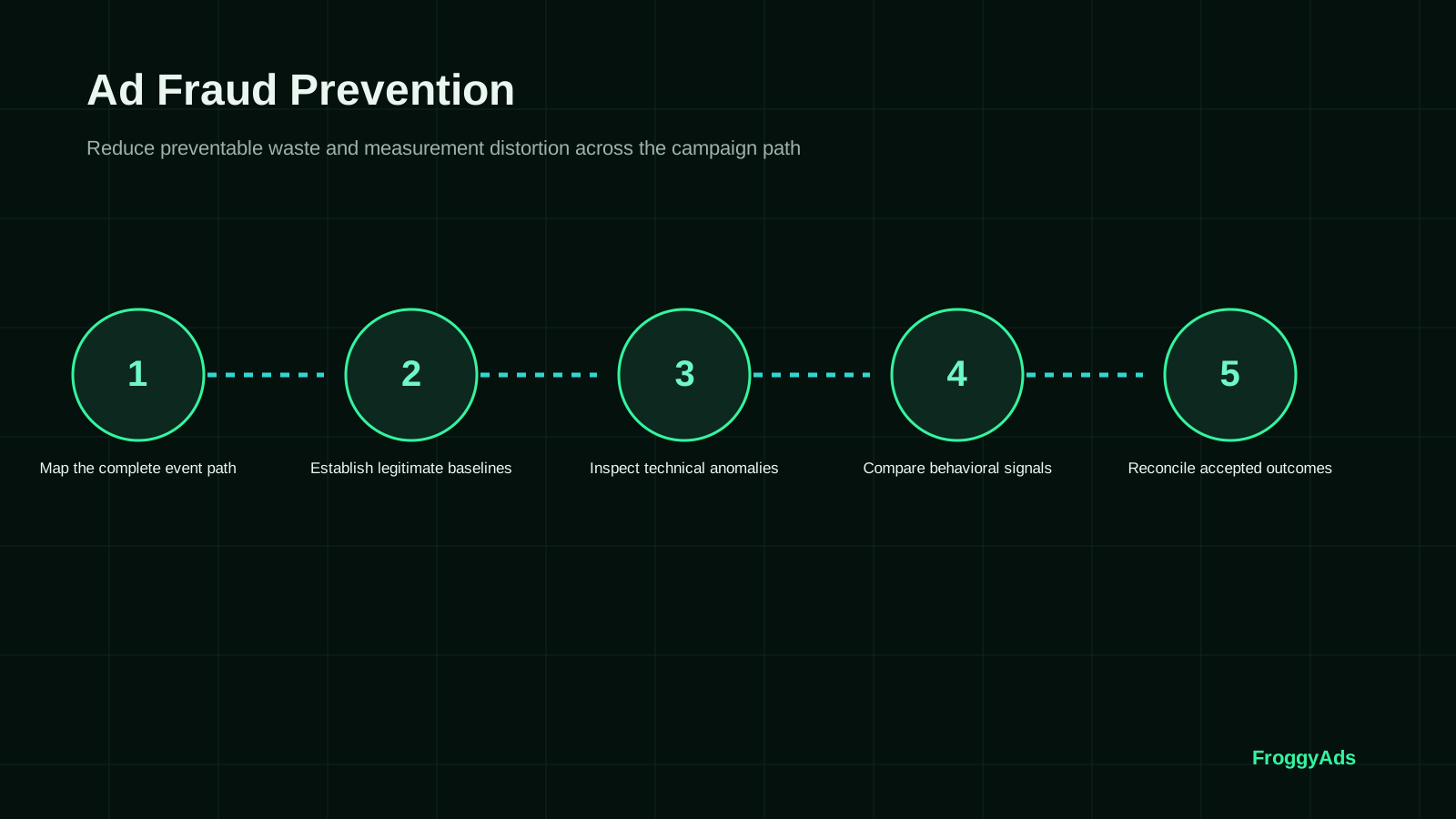
- Map the paid event through the landing route to the accepted business outcome.
- Establish a comparable baseline with the original source mix and settings.
- Check technical anomalies such as lost identifiers, failed redirects and callback retries.
- Compare behavioral patterns while allowing for genuine privacy and device differences.
- Reconcile distinct conversions with the backend acceptance record.
- Apply the narrowest justified restriction and preserve its reason.
- Reopen restricted delivery only after the problem is resolved and doing so is permitted.
Map the complete event path
Map the paid event from impression or click through the landing page to the accepted business outcome. Confirm which identifiers survive each step and where duplicate, missing or rejected events can appear.
Establish legitimate baselines
Build a baseline from verified traffic under known campaign conditions. Keep source mix, device distribution, conversion delay and acceptance rules attached to the baseline so later changes have a fair comparison.
Inspect technical anomalies
Investigate technical anomalies first: missing landing sessions, repeated event IDs, impossible timing, redirect failures and sudden source concentration. Fix measurement defects before judging the supply.
Compare behavioral signals
Compare behavioral signals by source and device with legitimate control traffic. Look for repeatable patterns, but keep normal privacy behavior and unusual real-user journeys from being automatically labeled invalid.
Reconcile accepted outcomes
Reconcile platform conversions with the advertiser's accepted records, including duplicates, reversals and delayed decisions. Use the mature result to decide whether the anomaly affected real business value.
Apply documented responses
Choose the narrowest justified response: monitor, cap, exclude, request review or pause the affected campaign cell. Record the evidence and review date before changing another major variable.
Reopen delivery only after the issue is resolved
A restriction should remain in place until its reason has been addressed and reopening is permitted. If a controlled return is appropriate, use current tracking, limited spend and a documented stop condition. For Ad Fraud Prevention, compare the original anomaly with the new event records; the broader Fraud Prevention guide explains the surrounding control framework.
Build an event ledger that explains the discrepancy
Compare paid events, received visits and distinct accepted outcomes for the same source and time window. Keep unknown activity separate from confirmed invalid events.
Keep the original paid-event count alongside the landing requests you actually received. Add distinct conversion identifiers, the backend status and the reason an outcome was rejected. This ledger belongs in your own permitted records; do not assume every field can be exported from every platform. A missing source identifier is a visibility gap to solve, not a reason to assign the entire campaign to the fraud category.
Reconcile one source and one reporting period first. Align the time zone and allow for the known conversion delay, then check whether retries inflated the conversion count or whether a redirect lost the identifier. Keep raw counts available when you produce the cleaned result. This makes the adjustment explainable and prevents a later reviewer from interpreting a reduced count as a drop in genuine customer demand.
Separate three conclusions in your notes: a confirmed measurement fault, supported evidence of invalid activity, and an unresolved observation. An unexplained short visit stays unresolved until another signal helps classify it. Accepted orders help you judge commercial value, but an order count does not certify every preceding impression. Share the smallest useful evidence set with support when a discrepancy needs platform review, respecting the privacy rules that apply to your data.
| Observed gap | Record to compare | First check | Appropriate response |
|---|---|---|---|
| Clicks exceed received visits | Source-level clicks and landing-server requests for the same interval | Destination availability, redirect chain and identifier survival | Repair a broken route or investigate the unexplained source-specific remainder |
| Conversions repeat | Unique conversion IDs, callback times and backend transactions | Whether a retry counted the same outcome twice | Fix deduplication and restate the conversion count |
| Leads fail business validation | Lead record, source and rejection reason | Whether the lead was fabricated, duplicated or simply ineligible | Separate invalid submissions from genuine poor-fit enquiries |
| Quality classification is unavailable | Affected format, period and missing diagnostic signals | Whether there is enough evidence to make an IVT decision | Keep unknowns separate and request clarification before claiming a clean result |
Make the investigation actionable
Keep source decisions under your control
Choose a format because it suits your offer and destination, then evaluate its events using the relevant counting method. A push click, display impression and completed lead are different observations. FroggyAds gives you campaign controls for delivery and spending; your investigation should explain which of those controls can contain the specific problem you found.
Create My Free Account
Keep the commercial result separate from the fraud verdict
A valid event can be expensive, and an attractive acquisition cost can conceal duplicate outcomes. Keep two records: the assessment of event validity and the commercial result after your business checks. This prevents the buying team from calling every losing source fraudulent or treating every profitable-looking source as safe. It also gives your next decision a clear purpose: protect measurement integrity, improve offer fit, or both.
For example, a genuine enquiry may fail because the visitor lives outside your service area. That is a qualification problem unless separate evidence indicates manipulation. A duplicated callback can produce two reported conversions from one genuine enquiry; that is a counting problem. A repeated sequence of fabricated enquiries may warrant an invalid-activity investigation. The same low approval rate can therefore lead to three different fixes.
Our recommendation is to contain a suspected source while you establish the cause, rather than rewriting every creative and targeting setting together. Keep useful comparisons intact. When the issue turns out to be a destination fault, correct that route and reassess the affected traffic. When the evidence supports exclusion, record the source and incident window. Clear reasoning helps you protect spend without carrying an unjustified restriction into future campaigns.
Remove avoidable false alarms from the customer journey
The destination is part of the investigation. Test the exact ad-to-site route and the business action your campaign reports before you interpret a missing visit or rejected lead as a supply problem.
Offer accuracy
An exaggerated ad can attract real people who immediately leave. Check that the landing page delivers the advertised offer before treating rapid exits as evidence of automation.
Redirect continuity
Follow each permitted redirect and confirm that required identifiers survive. A tracking parameter dropped by your own destination can break source attribution even when the visitor arrived normally.
Page availability
Check the device and browser combination behind a missing-session pattern. A failed script, broken form or unavailable landing route can remove the very signals you hoped to use for quality review.
Lead qualification
Record why the business rejects a lead. Incorrect contact details, duplicate enquiries, ineligible locations and genuine enquiries without purchase intent should not all receive the same fraud label.
Test traffic
Label your own test conversions and keep them out of commercial results. A launch check is useful evidence that the route works, but repeated staff tests should not look like paid customer demand.
Callback handling
Confirm how repeated conversion notifications are handled. A network retry must not silently become another customer. Match the event identifier to the underlying transaction before using it to optimize spend.
Start with a measurable route
Launch a FroggyAds campaign with a usable baseline
Choose one offer, confirm its conversion route and set the amount you are prepared to spend while learning. Keep the source breakdown available from the start. Our screening and delivery controls become more useful when you can connect a source decision to the visits and outcomes your business actually received.
Create My Free Account
How to respond when the metrics disagree
Investigate the symptom you can observe. The examples below are diagnostic situations, not allegations about a provider or evidence from a FroggyAds customer campaign.
Traffic spikes with identical behavior
Inspect timestamps, identifiers, source concentration and conversion validity before blocking. If the evidence points to one source, contain that source first and preserve the rest of the campaign as a comparison.
Engagement is low on one device
Check landing-page speed, compatibility, redirects and form behavior before classifying visits as invalid. A destination failure can create the same downstream symptoms as weak traffic.
Raw conversions rise but approvals fall
Review source quality, duplicate patterns, offer rules and attribution before scaling. Increase spend only after the suspicious pattern is resolved and accepted outcomes remain stable.
Eight mistakes that weaken ad fraud prevention
A fraud review can fail even when the team collects plenty of data. These mistakes either destroy the comparison, confuse different kinds of evidence or leave a restriction in place after its reason has changed.
- 01 Calling every short visit a bot. Check how your analytics measures duration and whether it received another event before drawing a conclusion.
- 02 Blocking an entire market after one source spikes. Isolate the source and time interval before broadening a restriction.
- 03 Equating a shared IP address with one repeated user. Offices, carriers and other networks may place legitimate visitors behind the same address.
- 04 Counting callback retries as separate conversions. Match event identifiers to actual orders or leads before reporting an acquisition cost.
- 05 Deleting the raw evidence after cleaning a report. Keep an auditable explanation of what was removed and why, subject to your retention obligations.
- 06 Using profitability as a validity certificate. A commercially successful source can still contain events that need investigation.
- 07 Assuming another platform’s credit policy applies to FroggyAds. Confirm the applicable terms and investigation outcome before treating a refund as receivable.
- 08 Reopening a prohibited source because a later sample looks promising. Respect the original restriction and obtain the required resolution before any new delivery.
An illustrative first-month prevention routine
Use this schedule to assign the work, not as a universal waiting period. A broken route or supported invalid-activity finding deserves immediate action. A delayed business outcome may require a longer review than the example allows.
Days 1 to 3: instrument
Check the destination and conversion path, label test events and record the available source identifiers. Agree who can pause delivery and who investigates backend acceptance. Keep the initial setup available so subsequent changes can be explained.
Days 4 to 10: launch narrow
Launch within your learning budget. Watch for failed routes, repeated identifiers and abrupt source concentration. Record changes in bids or targeting beside the incident timeline; these may explain a traffic shift without indicating manipulation.
Days 11 to 20: reconcile
Match the received events to accepted outcomes and investigate the largest unexplained gap. Ask for support with a focused source and date range. Keep any unresolved events labeled as uncertain rather than forcing them into a valid or invalid category.
Days 21 to 30: repeat or scale
Review whether the correction addressed the original symptom. Retain justified exclusions, remove only restrictions that are permitted to change, and increase spend where both business performance and the available quality evidence support it. Keep the next review date visible to the campaign team.
Standards and first-party evidence for Ad Fraud Prevention
The linked publications below describe measurement, invalid traffic or ad experience. They are context for evaluating evidence, not proof that FroggyAds has the same integrations, accreditation, billing rules or diagnostic access as another provider.
- Google Ads invalid trafficFirst-party definitions and monitoring context for invalid activity.
- Google Ads invalid traffic methodologyOfficial description of data-based invalid-traffic identification.
- IAB Tech Lab Open Measurement SDKVerification and viewability standards context.
- Coalition for Better Ads StandardsConsumer-experience standards that reduce disruptive ad practices.
Ad Fraud Prevention FAQ
Use these answers to choose the next investigation step and understand where FroggyAds controls end and your own outcome validation begins.
What does ad fraud prevention mean for a paid traffic campaign?
Ad fraud prevention is the process of identifying suspicious or invalid activity, verifying the evidence and limiting exposure before it distorts spend or optimization. It should cover the path from delivery through click or visit to the conversion your business accepts. With FroggyAds, combine Adscore-supported traffic-quality controls, source-level reporting and your own conversion data instead of relying on one fraud signal alone.
How is invalid traffic different from traffic that simply does not convert?
Invalid traffic involves activity identified as non-genuine or otherwise unacceptable. Poor-performing traffic can come from real people who are a weak match for the offer, market or landing page. The response is different: investigate and contain suspected invalid activity, but fix targeting, creative or the destination when legitimate users lack intent. Keep those categories separate in reporting.
What should I inspect when clicks or visits suddenly spike?
Check the affected source, placement, GEO, device mix, timestamps, landing-page receipt, repeated identifiers and the downstream conversion pattern. Compare the spike with a normal period before concluding that it is fraud. FroggyAds source-level reporting helps isolate the supply involved, while your analytics and backend records show whether the traffic reached and completed the expected path.
Can broken tracking look like ad fraud?
Yes. Lost click IDs, duplicate postbacks, redirect faults, blocked scripts, time-zone differences and mismatched conversion windows can create patterns that look suspicious. Verify the complete tracking route first. A source should not be blacklisted because the advertiser's own measurement chain dropped or duplicated events.
How does conversion reconciliation help prevent fraud-related budget waste?
Reconciliation joins raw conversions to approvals, duplicates, reversals, cancellations and final value. It shows whether a suspicious pattern survives the advertiser's business checks and prevents optimization toward events that later disappear. FroggyAds conversion tracking and S2S postbacks can be part of that chain, but the advertiser's accepted backend outcome remains the final commercial reference.
When should I blacklist a source for suspected invalid traffic?
Blacklist after reliable evidence shows a repeated source-specific problem and the tracking path is sound enough to support the decision. Preserve the source ID, time window, events and reason so the exclusion can be reviewed later. FroggyAds source controls let you remove the affected supply without shutting down every source in the campaign.
Which fraud-prevention checks belong before campaign launch?
Verify the destination, campaign parameters, source identifiers, conversion event, postback or pixel, deduplication rule, budget limit and the business event that counts as accepted. Run a real test conversion before meaningful spend. A known-good baseline makes later anomalies easier to isolate and reduces the risk of blaming traffic for a setup failure.
How can FroggyAds support an advertiser's ad-fraud prevention workflow?
We use Adscore-supported traffic-quality controls and internal signals to help identify and filter invalid or low-quality activity. We also provide source-level reporting and advertiser controls such as blacklists and whitelists where supported. Those controls reduce risk but do not guarantee that every interaction is valid or valuable, so combine them with your own analytics and accepted-conversion data.
How should I retest a source that was previously restricted?
Keep the restriction in place until its cause is resolved and reopening is permitted. If a retest is appropriate, use capped spend, current tracking and written stop conditions. Compare the original anomaly with equally mature new records; a better average alone does not establish that the issue has gone away.
Can any ad network guarantee zero invalid traffic?
No. Fraud patterns, measurement limits and traffic conditions change, and no single filter can prove every event is valid. A strong prevention process layers screening, source controls, monitoring, conversion reconciliation and advertiser review. Use FroggyAds to reduce and investigate risk, then make permanent budget decisions from the evidence your campaign and backend can verify.
Continue the paid traffic workflow
Use the related guides to examine the control itself, the traffic-quality evidence and the buying decision that follows. Keep a record of the incident while moving between these resources.
Direct answer: ad fraud prevention
Ad-fraud and click-fraud protection require layered prevention, detection, logging, source controls and business-outcome validation. Separate invalid events from merely low-performing traffic, and investigate repeatable patterns before applying broad exclusions.
Two different jobs in the review
- Prevent invalid activity from distorting paid-event and conversion records.
- Improve the commercial fit of legitimate traffic without calling it fraudulent.
Decision boundary
Event: a request, session, click or conversion evaluated for legitimacy and usefulness.
Decision: whether the evidence supports allowing, limiting, investigating or excluding the source.
Primary risk: confusing low conversion rate with fraud or trusting one opaque detection signal.
| Layer | Evidence to preserve | Action rule |
|---|---|---|
| Delivery | Campaign, source, placement, device, GEO, schedule and creative identifiers where available. | Compare the affected source with its own prior conditions before extending an exclusion to other inventory. |
| Measurement | Timestamped impression or click records, conversion identifiers, values, currency and acceptance status. | Check whether duplicate callbacks, time-zone differences or delayed acceptance explain the mismatch. |
| Quality | Session behavior, invalid-event signals, conversion validity, downstream value and repeat patterns. | Keep confirmed invalid events, genuine poor-fit visits and unknowns in separate categories. |
| Change control | Previous settings, hypothesis, observation window, loss ceiling and rollback state. | Record the exact source restriction and the evidence required to revisit it; a better average alone does not resolve the incident. |
Operating checklist
- Define the business event and the dashboard event separately.
- Preserve source and creative IDs through every permitted redirect.
- Normalize time zones, currencies and attribution windows.
- Wait for delayed outcomes to mature before scaling.
- Keep an allow, limit, investigate and block decision path.
Primary documentation
Put accountable traffic buying into practice with FroggyAds
Start with an offer you can fulfil and a conversion your business can verify. We provide traffic-quality screening and source controls to support that work. Bring the campaign and incident details to our team when you need help understanding a delivery pattern, then make the next spending decision from the reconciled evidence.
Ad Fraud Prevention Starts Before the First Impression
Effective ad fraud prevention is not a single filter added after a campaign has spent money. It starts with a measurement design that preserves source identifiers, records normal user timing, validates conversion events, and makes unusual patterns visible. Fraud controls work best when platform reporting, tracker data, and backend outcomes can be reconciled against the same time window.
For advertisers looking for how to prevent click fraud and invalid traffic, build layered checks. Confirm that impressions and clicks follow plausible device and location patterns. Compare click-to-landing ratios. Watch for repeated identifiers, impossible event speed, bursts that do not match campaign settings, and conversions that fail backend validation. Then isolate the exact source or placement before making exclusions. FroggyAds supports campaign controls and source-level review that help performance teams investigate anomalies without treating every performance drop as fraud.
What is the difference between ad fraud prevention and traffic-quality optimization?
Fraud prevention focuses on invalid or manipulated activity. Traffic-quality optimization is broader: it also removes legitimate traffic that is simply a poor fit for the offer. The two processes should not be confused. A source can be human and still unprofitable, while an apparently efficient source can require closer validation. FroggyAds is designed for advertisers who want both scale and the control needed to make those distinctions.
When you investigate invalid activity before scaling, preserve the affected event IDs and the first observed time. When you assess prevention during an ongoing campaign, keep a change log beside the results. Both habits make the source of a discrepancy easier to locate without turning a suspicion into a claim of proven fraud.
Make the next source decision explainable
A review should end with a specific action and a reason: repair an advertiser-side fault, request more information, maintain a restriction or adjust delivery. The broader Fraud Prevention guide is useful when you need to review the surrounding safeguards. Here, keep attention on the event trail that justifies your next campaign change.
Use this incident record when the campaign team and the person validating leads or orders see different results. A shared record keeps a support request focused and prevents several people from making conflicting exclusions.
| Checkpoint | Page-specific action | Evidence to keep |
|---|---|---|
| Problem | Name the observed symptom: repeated callback, missing landing receipt or suspected manufactured activity. | Preserve representative event IDs, the affected source and the first and last observed times. |
| Setting | Record the restriction or tracking correction applied to that symptom. | Keep the previous setting, the exact change and the person responsible for the review. |
| Effect | Compare the same symptom after the correction using an equally mature reporting period. | Retain the resolved discrepancy, any remaining unknowns and the reason delivery can or cannot resume. |
Hypothetical reconciliation: USD 240 of spend produces 12 reported conversions. Four are repeated callbacks, leaving 8 distinct orders; two of those are cancelled, leaving 6 accepted orders. Raw CPA is USD 240 / 12 = USD 20, while accepted-order CPA is USD 240 / 6 = USD 40. This arithmetic exposes the difference; it does not prove the cancellations were fraudulent or predict FroggyAds results.
Choose FroggyAds when you want screening backed by practical campaign and source controls. Test the route, preserve the evidence and bring your accepted-outcome definition into the review before increasing spend. Create your free FroggyAds account
Investigate the event, then decide the response
A strong ad fraud prevention routine separates a broken measurement path, supported invalid activity and genuine poor commercial fit. With that distinction clear, you can use FroggyAds controls to contain the right source and keep useful traffic in consideration.